 CHAPTER 01
1971–1972
Before the burglary
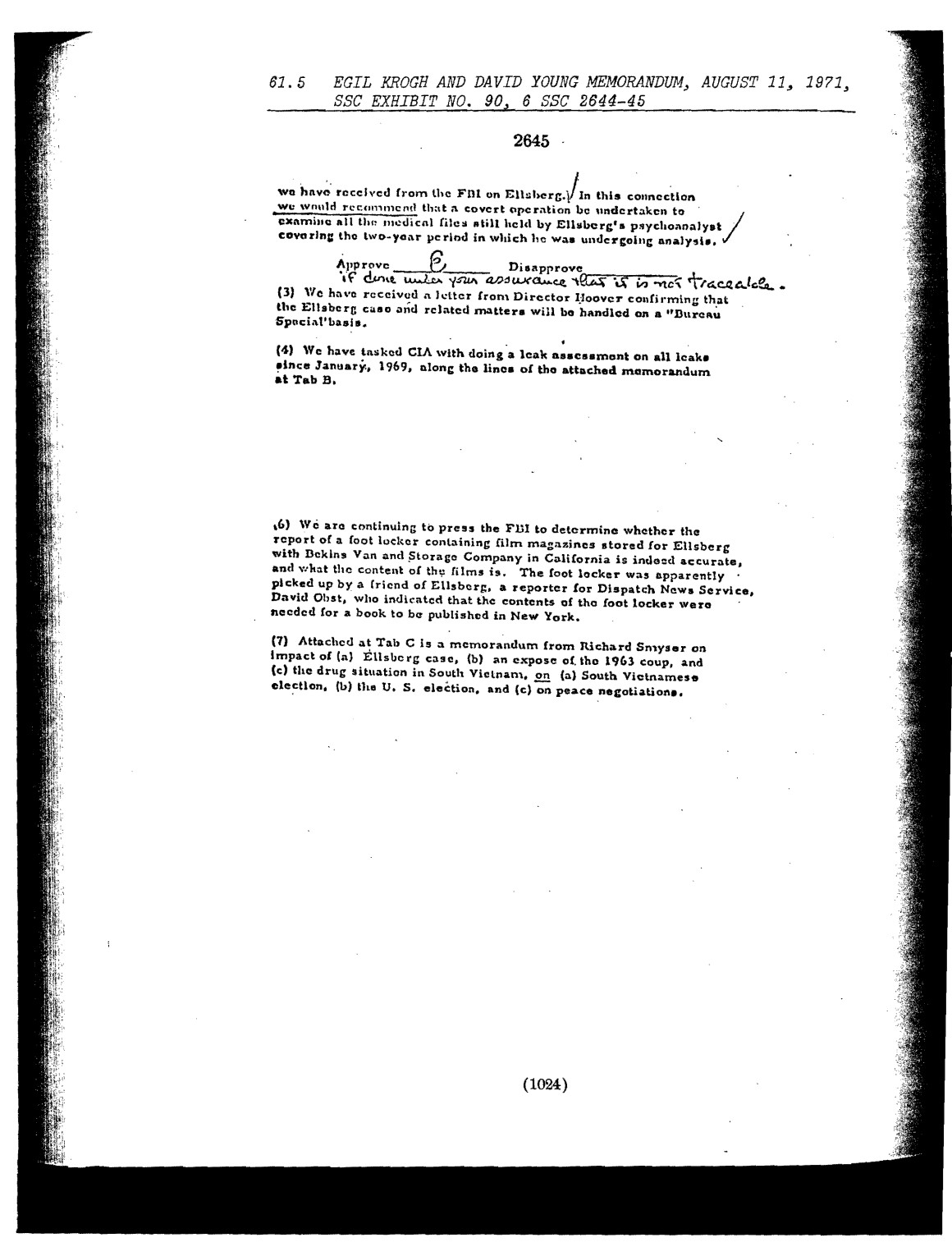
The DNC burglary grew from an existing culture of clandestine political work. Earlier abuses help explain the machinery; they do not prove every later theory.
2 SOURCED ARTICLESOPEN FILE ↗
THE BREAK-IN. THE TAPES. THE PRESIDENCY.
A taped door. Five arrests. A cover-up that reached the Oval Office. Follow the evidence that ended a presidency—and the questions that still surround it.
THE FILE CABINET
Follow the story in order, or open the question you came for. Each chapter has its own chronology, evidence and source notes.
16 CHAPTERS / EACH WITH ITS OWN PAGE
CHAPTER 011971–1972
The DNC burglary grew from an existing culture of clandestine political work. Earlier abuses help explain the machinery; they do not prove every later theory.
 CHAPTER 02
May–June 1972
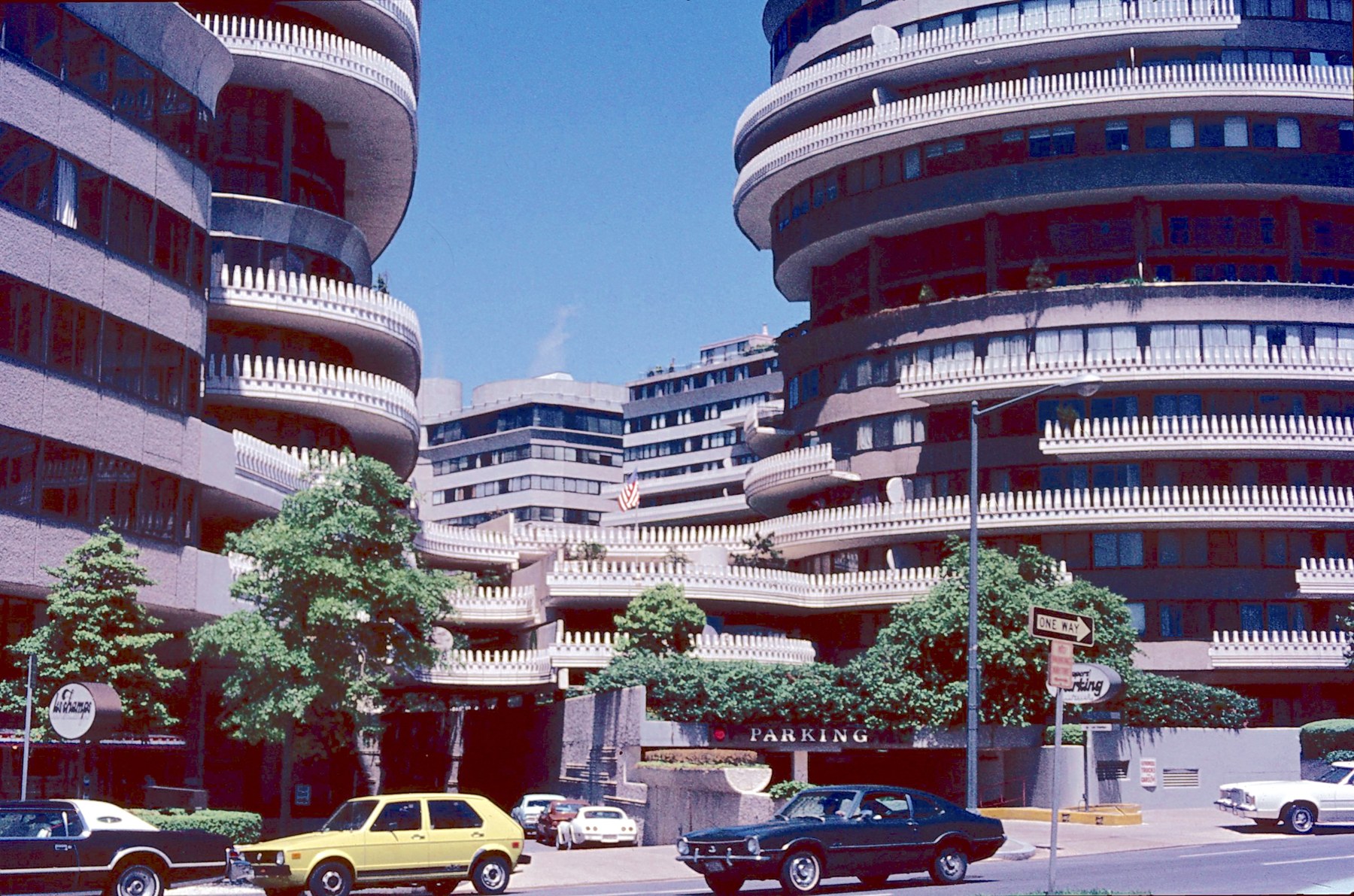
An earlier successful entry planted bugs. The June return ended with a security guard’s call and five men under arrest.
 CHAPTER 03
1972–1973
Two money stories overlap: financing covert work before the arrests and sustaining silence afterward. They should not be collapsed into one check.
 CHAPTER 04
June 1972–April 1973
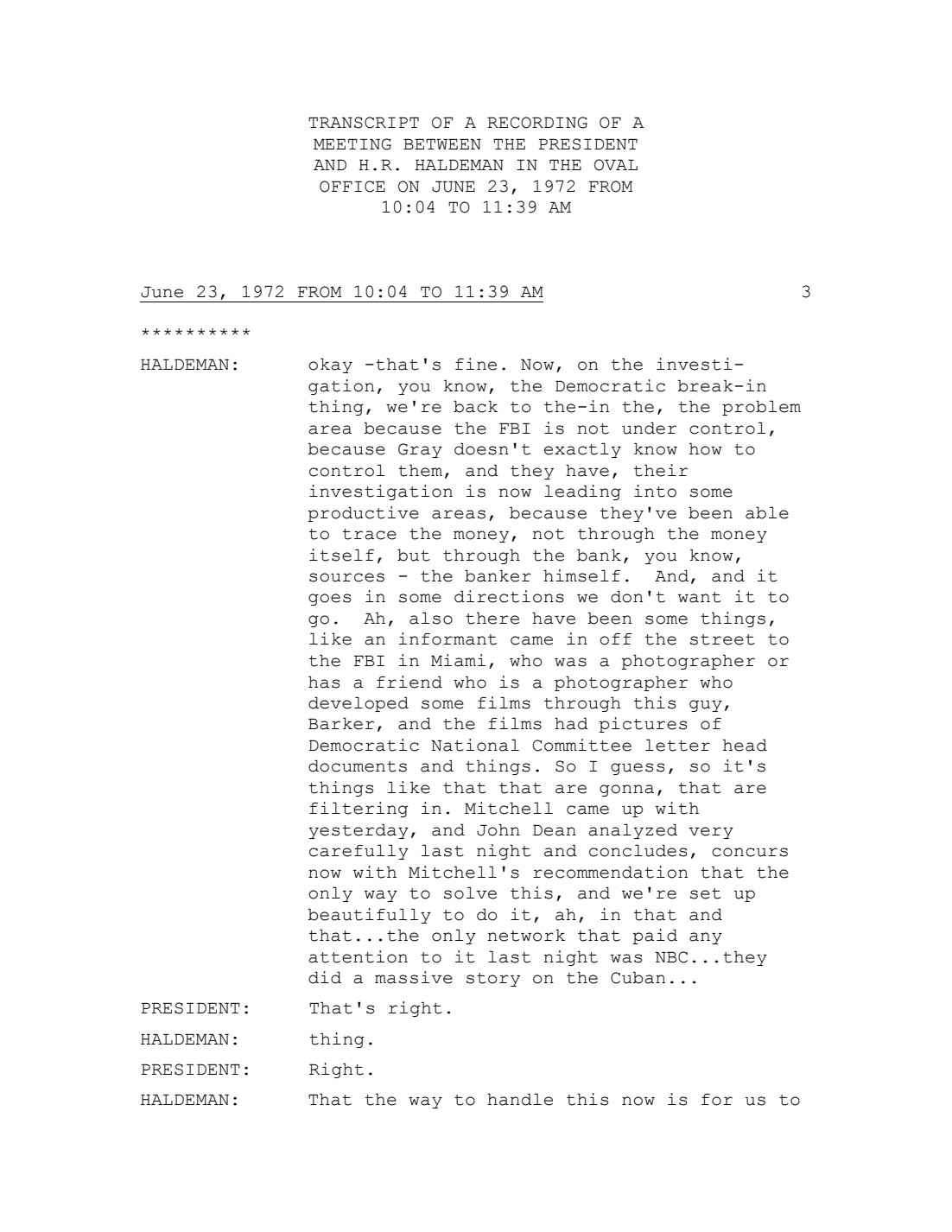
The case against Nixon does not require proof that he ordered the original break-in. His recorded involvement in obstruction is its own evidence.
 CHAPTER 05
1972–1974
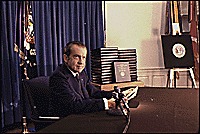
Persistence made a concealed story public; reporting still needed corroboration and institutions with power to compel evidence.
 CHAPTER 06
February–July 1973
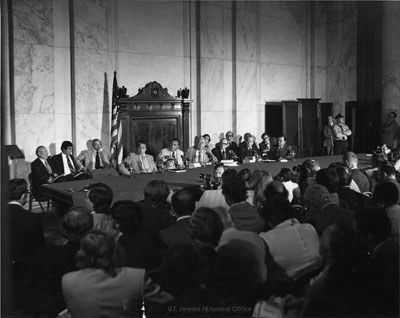
Congress made the scandal visible under oath, but witnesses’ accounts still needed testing against documents and recordings.
 CHAPTER 07
1971–2003 and later archival access
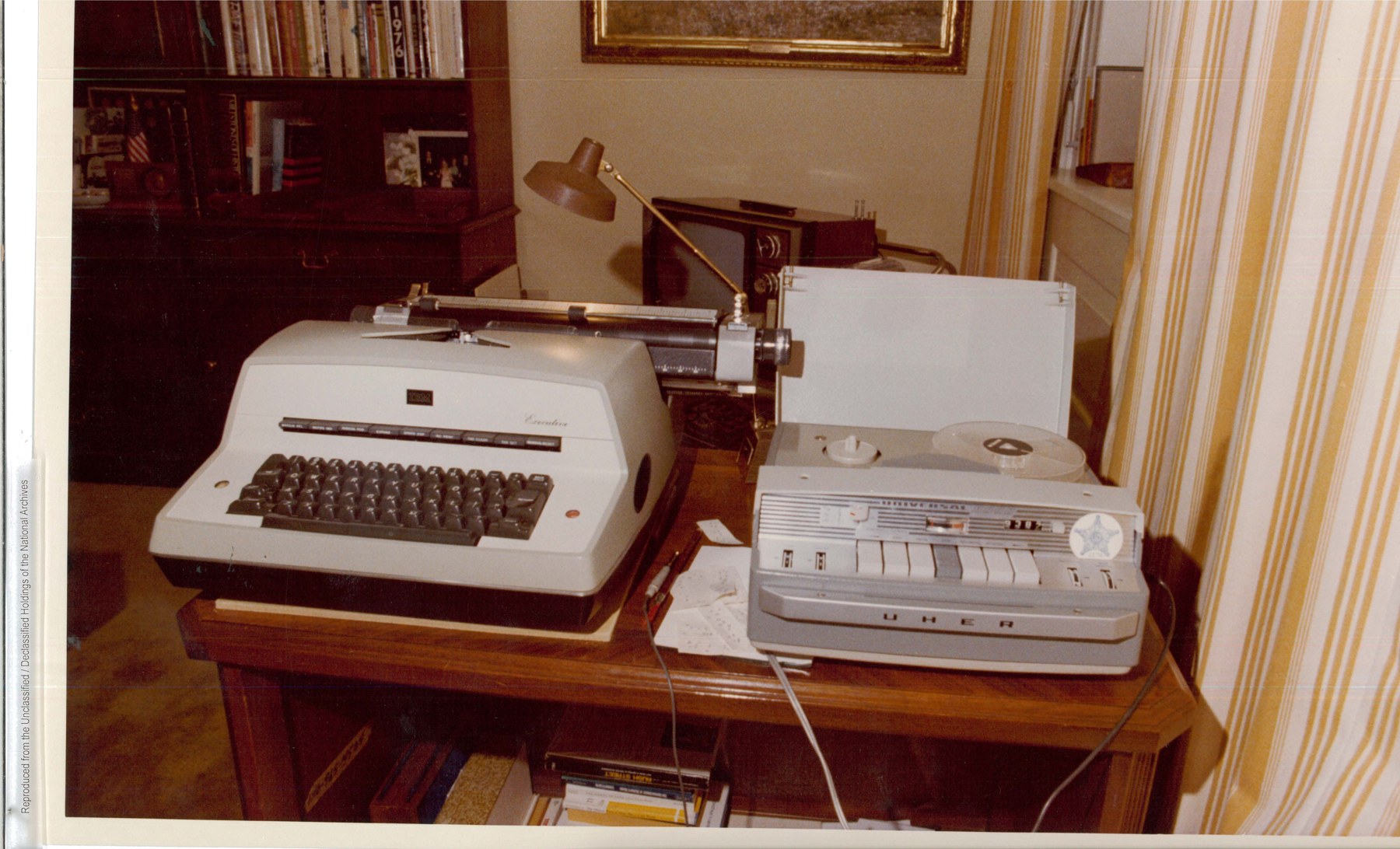
The surviving conversations establish obstruction-related conduct. The infamous erased segment remains a narrower unresolved question.
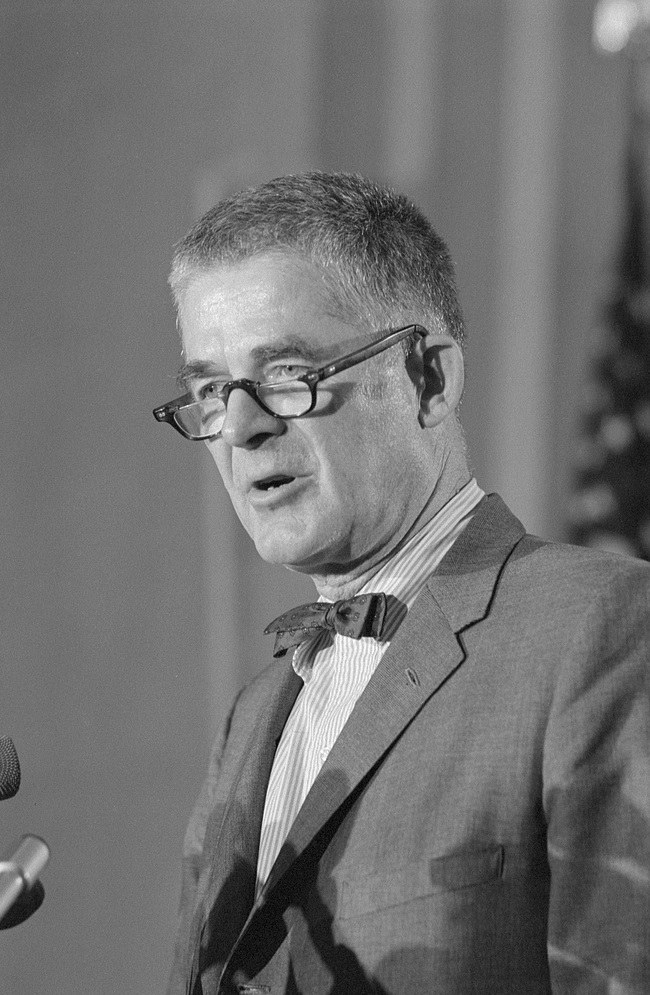 CHAPTER 08
October–November 1973
The October 20, 1973 confrontation exposed the limits of promises of prosecutorial independence—and provoked a legal and political response.
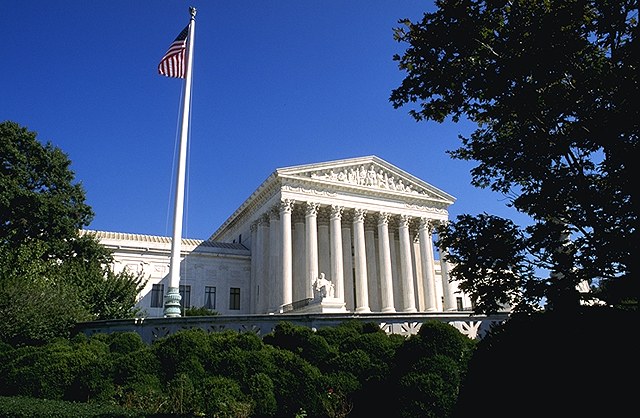 CHAPTER 09
1973–1977
The Supreme Court required evidence; criminal courts convicted individuals. Some defendants pleaded guilty, one was acquitted at the cover-up trial and one conviction was reversed.
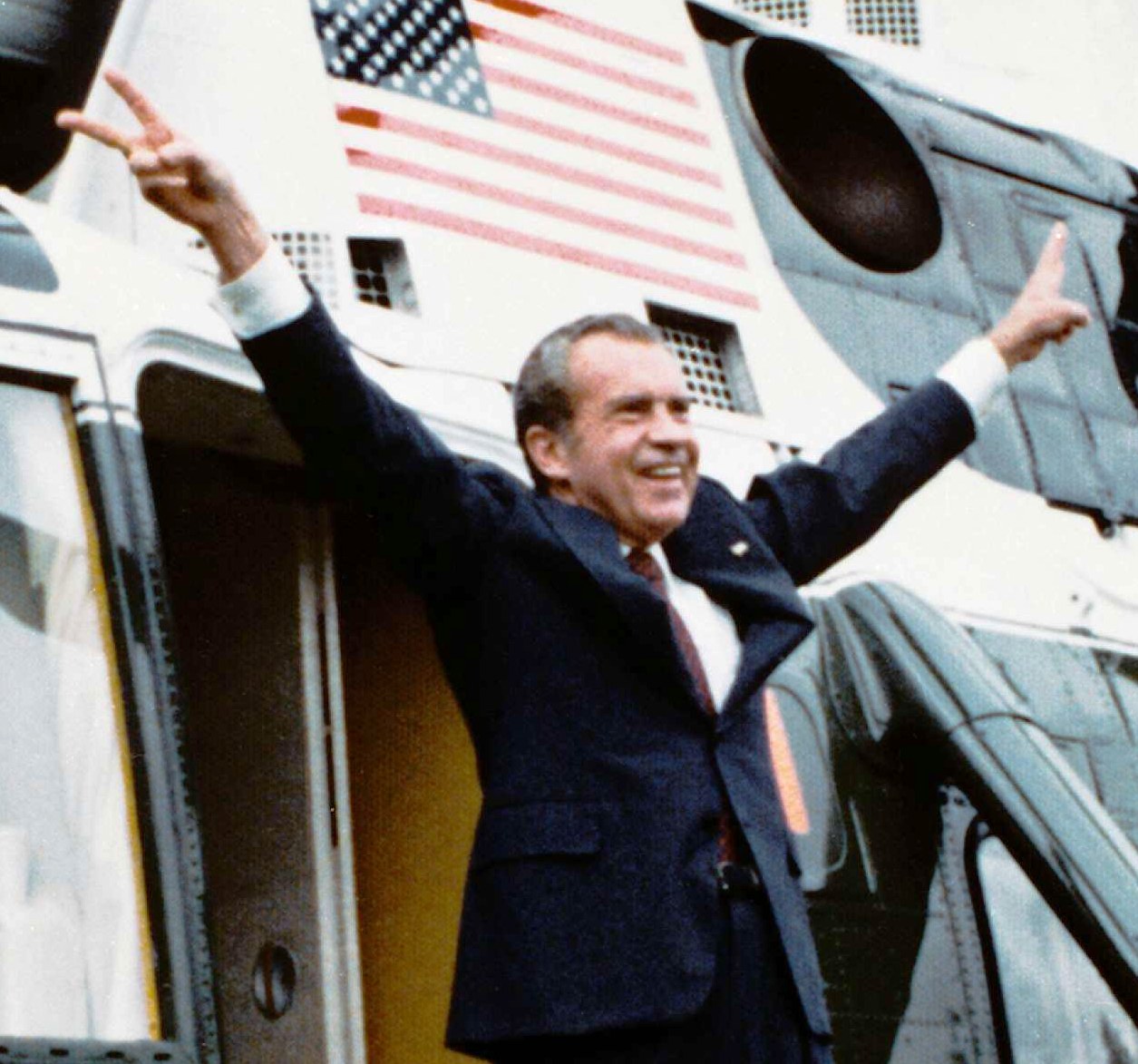 CHAPTER 10
July–August 1974
The Judiciary Committee recommended impeachment before the smoking-gun recording became public. Nixon resigned before a full House vote or Senate trial.
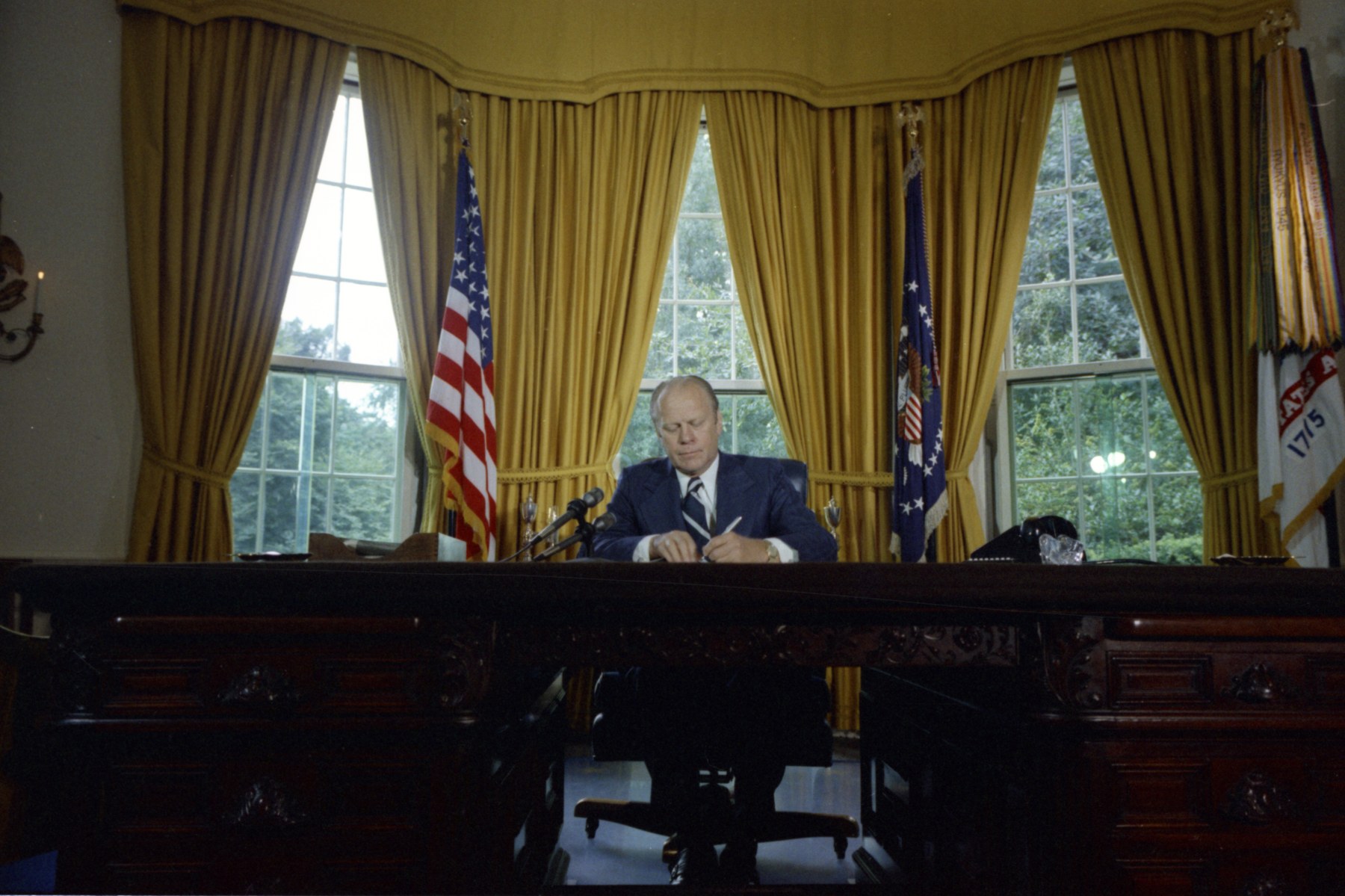 CHAPTER 11
September–October 1974
Ford pardoned Nixon before any indictment. The decision ended the threat of federal prosecution for covered conduct, while leaving the historical evidence and the debate about equal justice intact.
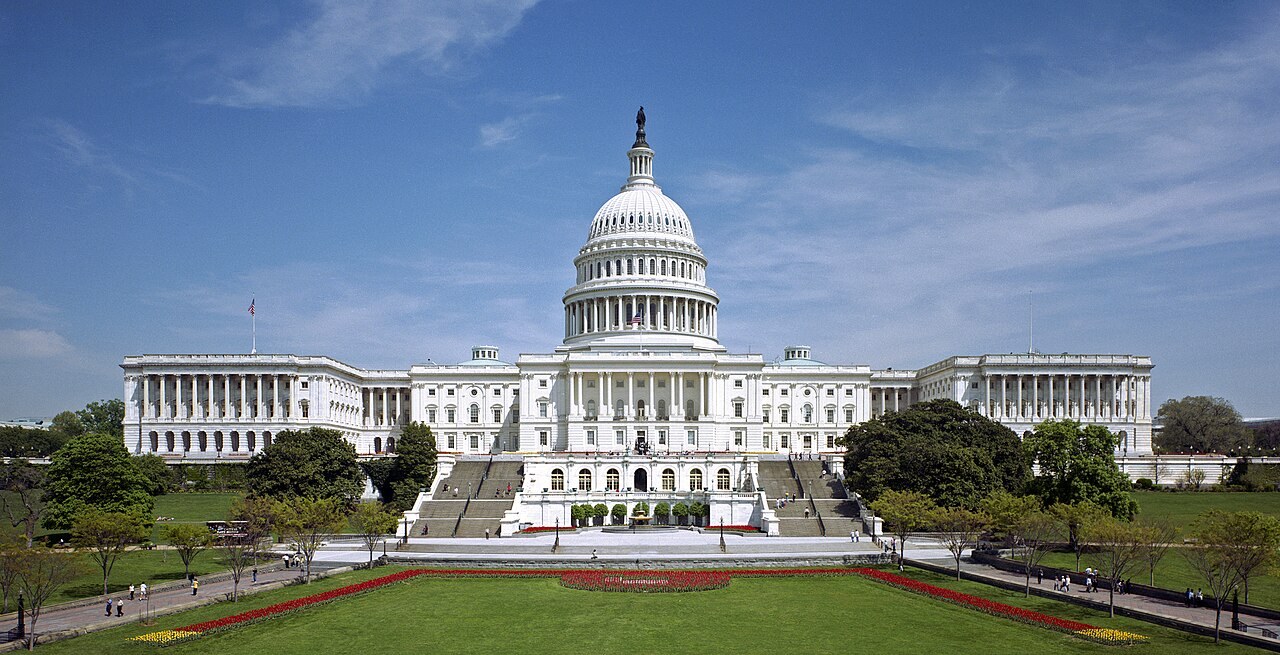 CHAPTER 12
1974–2026
Watergate helped produce disclosure and oversight reforms. Those changes had other roots, faced legal limits and did not permanently settle presidential accountability.
1972–2005
Mark Felt’s leaks, the 2005 identification, and why neither a heroic nor a sinister caricature explains the whole story.
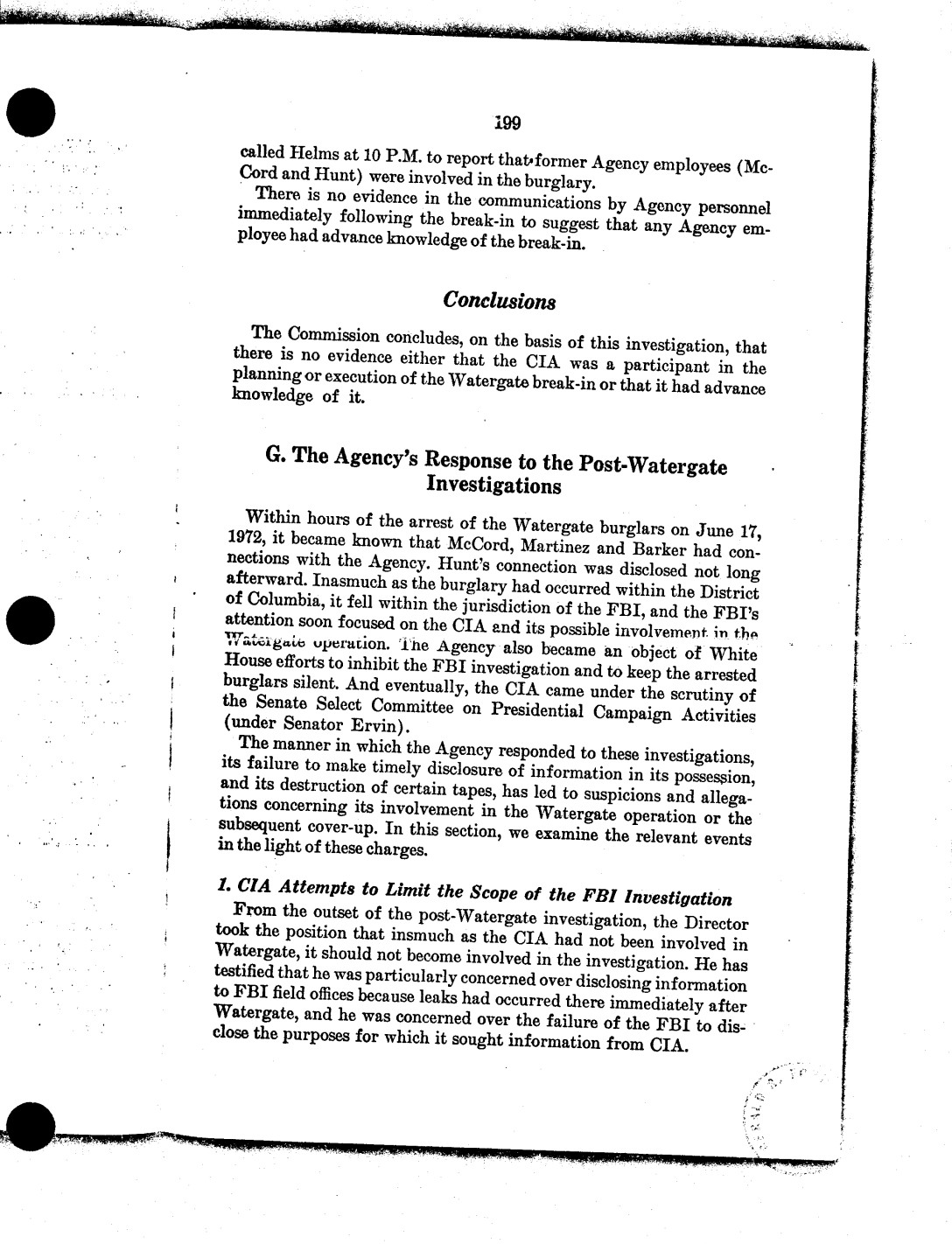 CHAPTER 14
1972–PRESENT
How intelligence ties and unanswered motive questions grew into alternative accounts of who engineered Watergate.
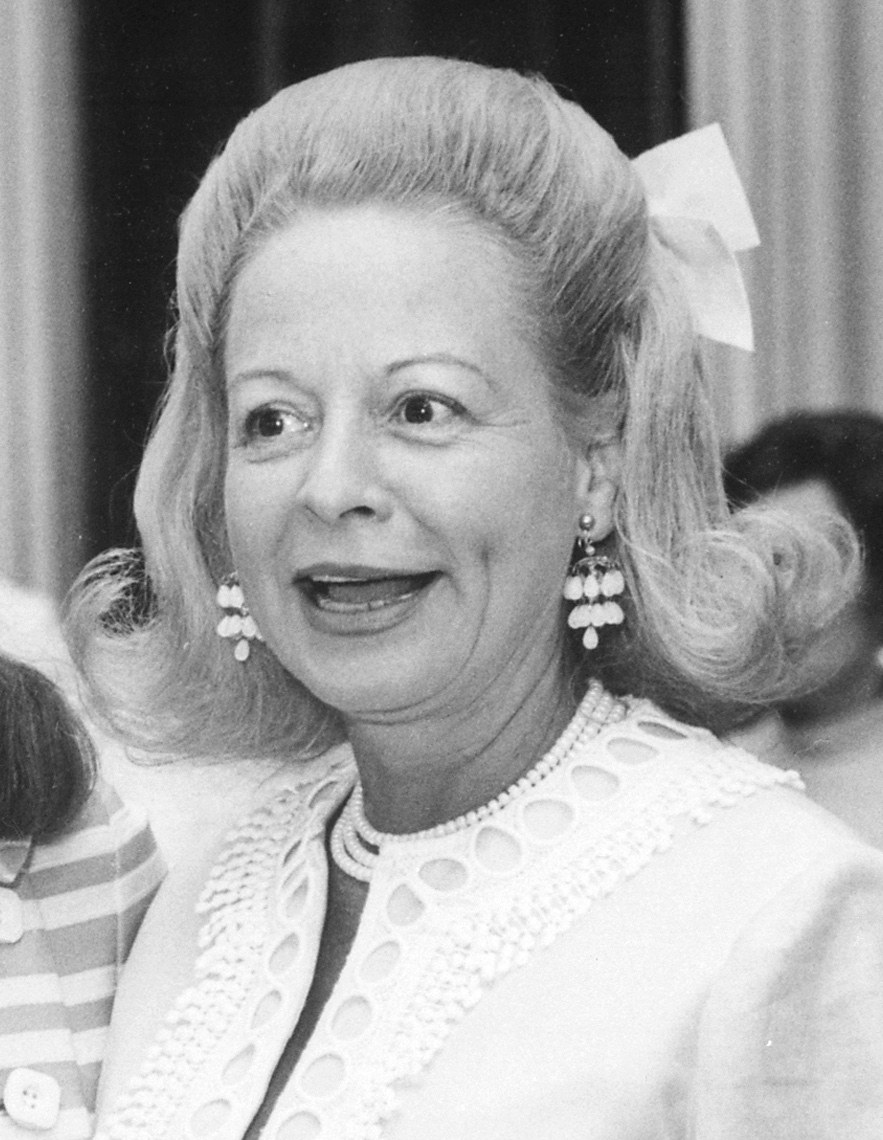 CHAPTER 15
1972–2022
Her interrupted call, allegations of confinement and sedation, corroboration, denials and later portrayals.
 CHAPTER 16
1975–2026
A route into the evidence, with release dates separated from the dates of the underlying events.
No matching case.
THE STORY / IN FOUR MOVEMENTS
Watergate names a place, an operation, a cover-up and a wider crisis of presidential power. The distinction is the beginning of the story.
Leaks, political intelligence and clandestine operations lead to a second entry at Democratic headquarters. Five men are arrested.
Open the break-in file ↗Money, false accounts and interference with the investigation turn a campaign crime into a crisis inside the White House.
Follow the obstruction evidence ↗Reporting, prosecutors and congressional investigators expose the recording system. The fight over access reaches the Supreme Court.
Listen to the original recordings ↗Nixon resigns. Ford pardons him. Aides face trials and appeals; reforms and decades of archival releases follow.
Read the pardon file ↗Richard Milhous Nixon, born in California on January 9, 1913, served in Congress, as vice president under Eisenhower, and as president from January 20, 1969 to August 9, 1974. He won reelection in 1972 before the cover-up unraveled publicly. His wider record includes diplomacy with China and the Soviet Union, Vietnam policy and major domestic initiatives. These provide context; they do not decide the evidence of misconduct. Nixon Library biography and chronology ↗ · The later legacy ↗
LOOK CLOSER / THE MATERIAL RECORD
These are archival photographs and documents. None is an AI reconstruction.
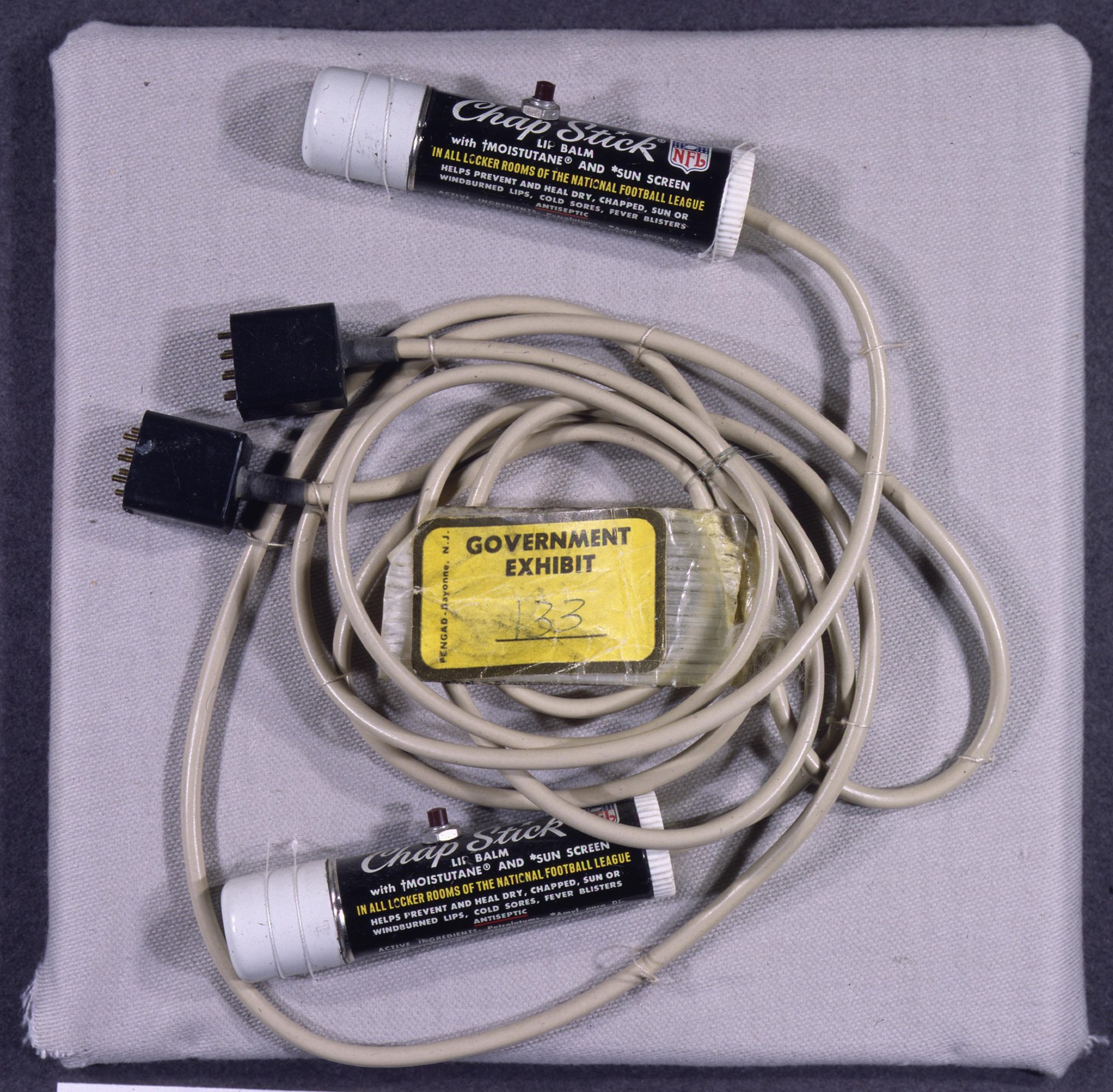
Recovered from Hunt’s White House safe. This exhibit helps document the operation’s tools; it does not prove every claim about where they were used.
The burglary record ↗
Woods’s explanation was tested against the equipment and tape. The entire 18½-minute erasure was not explained by a single photograph.
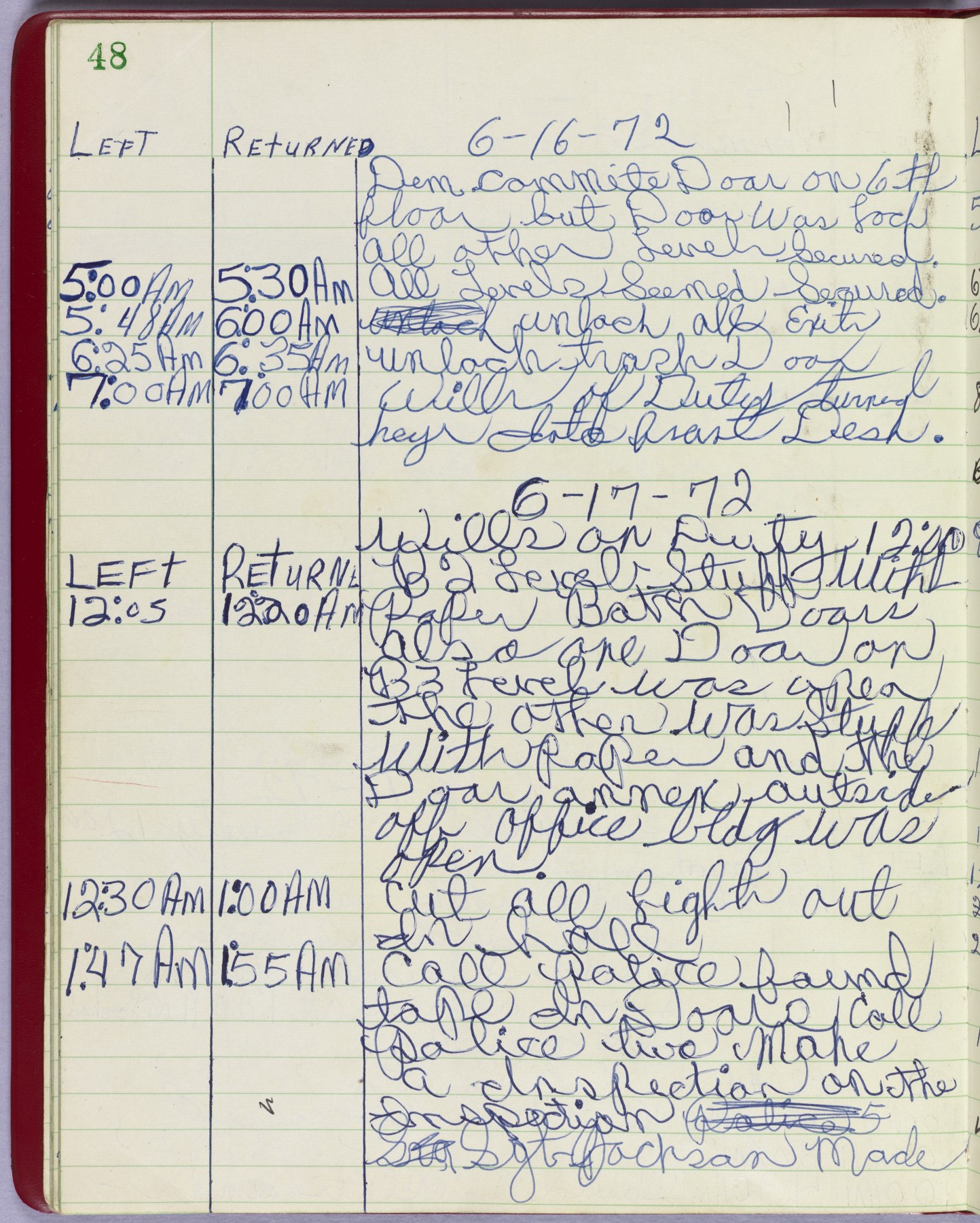
What the experts found ↗The security record places the night’s events in a contemporary document. Frank Wills’s discovery helped expose a much larger operation.
Go into the archive ↗Images: U.S. National Archives, public-domain reproductions; photographers or creators not identified in these records. Sources and credits are linked above and in the full credits.
THE OUTCOME LEDGER
These summaries do not replace the evidence. Open a case for the sources, responses and limits.
The Fielding burglary occurred; proposed schemes and completed operations must remain separate.
The burglary and campaign connections are demonstrated by physical evidence, witnesses and convictions.
The campaign connection and hush-money scheme are well established; a Mexican banking route does not establish foreign direction.
The tapes substantiate obstruction; they do not record Nixon authorizing the initial DNC burglary.
Essential reporting, not a two-person overthrow.
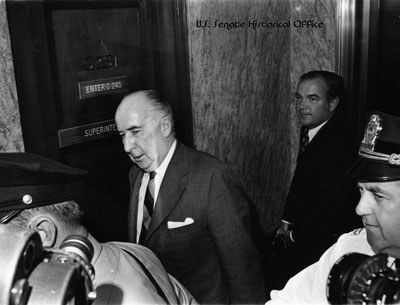
The hearings produced leads and evidence; they were not a criminal trial.
The gap is real; the broader case does not depend on inventing its contents.
Cox was removed. The investigation survived.
Real convictions; no Nixon criminal verdict
Resigned; never formally impeached
Federal pardon; no established secret bargain
Lasting changes, uneven safeguards
Mark Felt was Deep Throat. His insider position helps explain the information he supplied; it does not establish that the FBI fabricated the burglary, money trail or presidential tapes.
Intelligence relationships warrant scrutiny. They do not establish that the CIA organized a trap to remove Nixon, and uncertainty about the burglary’s purpose does not erase the documented cover-up.
Martha Mitchell’s account should not be dismissed as mere fantasy. Sources include contemporary reporting and later support, but dramatizations and every disputed detail remain separate from proved facts.
Later releases let readers test details more directly. A document’s publication date does not make its contents a new finding, and a folder’s title does not establish the truth of every allegation it contains.
HOW TO READ THIS COLLECTION
Contemporary recordings, court opinions, exhibits and testimony sit beside later accounts. A memoir can identify a lead; it cannot settle a contradiction by itself. Source notes identify institutional and participant perspectives.
A transcript helps with difficult audio. The date, participants and surrounding conversation matter. The 18½-minute gap is not the smoking-gun tape; missing words should never be invented.
A committee’s impeachment recommendation is not a full-House impeachment. A pardon is not an acquittal. A conviction, reversal, guilty plea and civil ruling each have their own meaning.
The disputed-claims chapters identify real connections, when alternative accounts appeared, and the extra evidence their broader conclusions would require. A document in a CIA archive is not automatically a CIA finding.
Testimony from 1975, a 2011 release and a 2026 interpretation have different dates. This is a selective research guide, not a claim to have reviewed every box or independently inspected every newly reported page.
Researched through 21 October 2026 within the linked sources. AI-generated writing and AI fact checks can be wrong in either direction. Findings are not the owner’s personal findings, beliefs or endorsements. Revisions are deliberate; no automatic updates are implied.
Peter Christian Riemann; exposure adjustment by RoySmith · CC BY-SA 4.0 · Original & rights ↗
Resized and re-encoded; embedded metadata removed. Layout crops only. No AI enhancement. Source exposure adjustment retained; this derivative remains CC BY-SA 4.0. · CC BY-SA 4.0
National Archives / Watergate prosecution exhibit photographer not identified · Public domain · Original & rights ↗
Resized and re-encoded; embedded metadata removed. Layout crops only. No AI enhancement. · Public domain
National Archives / creator not identified · Public domain · Original & rights ↗
Resized and re-encoded; embedded metadata removed. Layout crops only. No AI enhancement. · Public domain
National Archives / exhibit photographer not identified · Public domain · Original & rights ↗
Resized and re-encoded; embedded metadata removed. Layout crops only. No AI enhancement. · Public domain
National Archives / exhibit photographer not identified · Public domain · Original & rights ↗
Resized and re-encoded; embedded metadata removed. Layout crops only. No AI enhancement. · Public domain
U.S. Senate Historical Office · Public domain · Original & rights ↗
Resized and re-encoded; embedded metadata removed. Layout crops only. No AI enhancement. · Public domain
U.S. Senate Historical Office · Public domain · Original & rights ↗
Resized and re-encoded; embedded metadata removed. Layout crops only. No AI enhancement. · Public domain
Warren K. Leffler / U.S. News & World Report / Library of Congress · Public domain · donated collection · Original & rights ↗
Resized and re-encoded; embedded metadata removed. Layout crops only. No AI enhancement. · Public domain · donated collection
Ollie Atkins / White House; source crop by Beyond My Ken · Public domain · Original & rights ↗
Resized and re-encoded; embedded metadata removed. Layout crops only. No AI enhancement. · Public domain
White House Photographic Office / Gerald R. Ford Library; photographer not identified in source · Public domain · Original & rights ↗
Resized and re-encoded; embedded metadata removed. Layout crops only. No AI enhancement. · Public domain
White House / National Archives; photographer not identified · Public domain · Original & rights ↗
Resized and re-encoded; embedded metadata removed. Layout crops only. No AI enhancement. · Public domain
Ken Hammond / U.S. Department of Agriculture · Public domain · Original & rights ↗
Resized and metadata removed; no AI enhancement. Layout crop only. · Public domain
Architect of the Capitol; derivative edit by O.J. · Public domain · Original & rights ↗
Resized and re-encoded as JPEG; embedded metadata removed. Display may crop and tonally adjust the image. Derivative images retain the source license. · Public domain
U.S. federal government / National Archives presidential-library collection · Public domain · U.S. government work · Original & rights ↗
One complete source page rasterized and resized; no text altered. · Public domain · U.S. government work
U.S. federal government / National Archives presidential-library collection · Public domain · U.S. government work · Original & rights ↗
One complete source page rasterized and resized; no text altered. · Public domain · U.S. government work
White House / National Archives, NAID 194576 · Public domain · Original & rights ↗
Re-encoded from archival GIF; no upscaling or AI enhancement. · Public domain
Watergate Special Prosecution Force / Nixon Library · Public domain · U.S. government work · Original & rights ↗
Complete first page rasterized and resized; text unaltered. · Public domain · U.S. government work
Photographs are documentary; later views are labeled. Document images reproduce complete source pages. Typographic case graphics are navigation aids, not photographs or evidence.