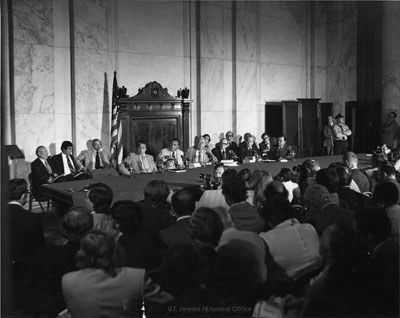
The Senate unanimously created its Select Committee on Presidential Campaign Activities on February 7, 1973. Democrat Sam Ervin chaired it; Republican Howard Baker was vice chair. The inquiry covered the burglary, the cover-up and a wider range of improper campaign conduct. It had investigative and legislative purposes, not the role of a criminal jury. [1]
John Dean began public testimony on June 25. The former White House counsel described the cover-up from inside it, including conversations implicating the president. The preserved broadcast lets readers hear his account directly. Dean was not merely describing misconduct by strangers: his own participation made both his access to information and his incentives relevant. [2]
Baker’s questioning focused on presidential knowledge and timing. The transcript shows why those are separate problems: a witness may have heard explicit words, observed conduct, or drawn inferences from relationships and context. Collapsing those categories into “Dean proved everything” would bypass the central task of corroboration. [3]
The tapes eventually supplied evidence independent of Dean’s memory. The March 21 conversation records his warning about the cover-up, including money and perjury; the June 23, 1972 recording moved the evidence of Nixon’s obstruction involvement much earlier. Those are stronger grounds for assessing particular allegations than either trusting Dean wholesale or dismissing him simply because he was implicated. [4]