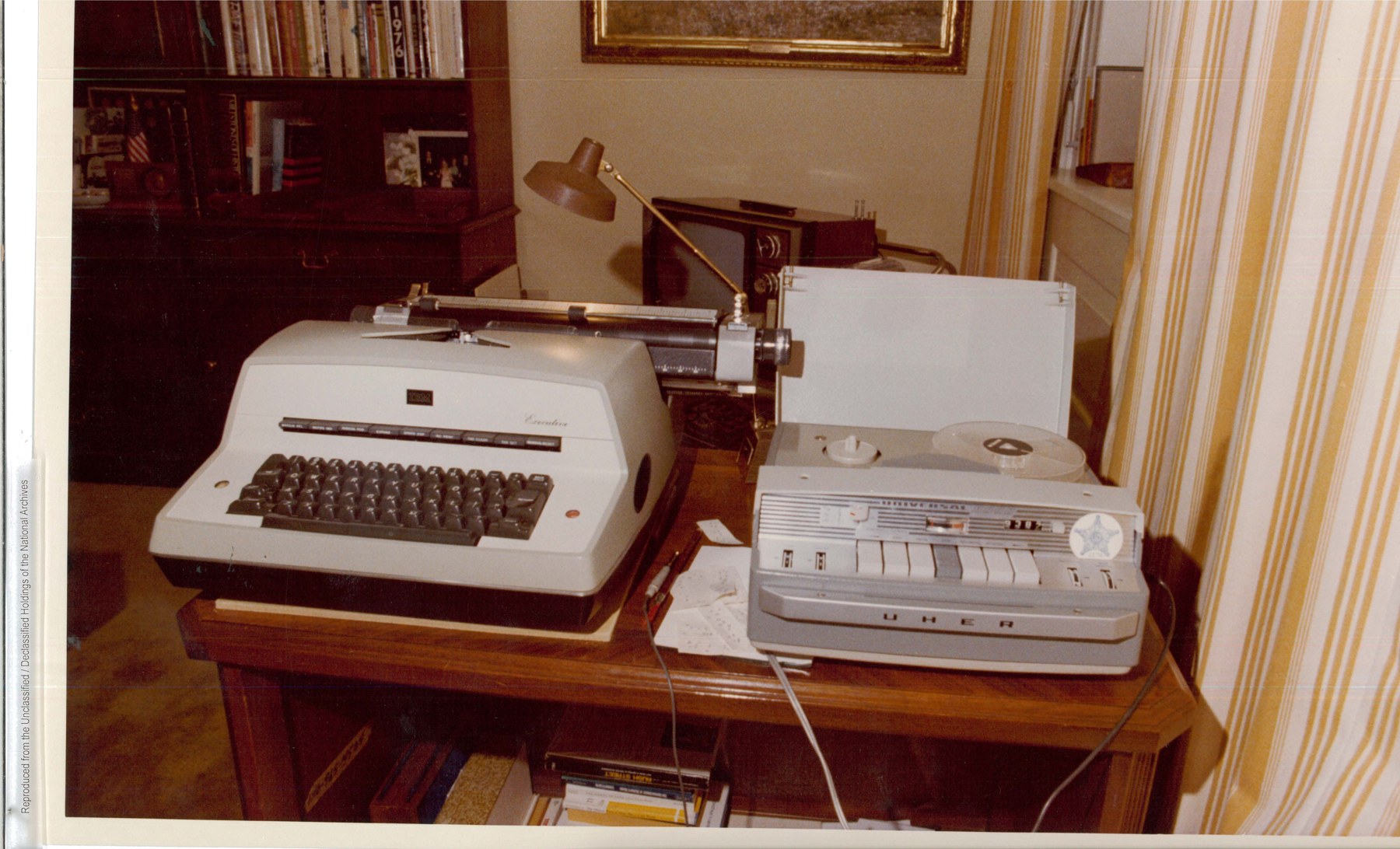
Nixon’s recording system began in February 1971 and expanded to several locations and telephones. Most room recording was sound-activated; the Cabinet Room was an important exception with manual activation. The Secret Service maintained the equipment. The result was an unusually extensive record, not a perfect recording of every presidential conversation everywhere. [1]
On June 23, 1972, Nixon and Haldeman discussed the FBI’s tracing of burglary money and a plan to use the CIA to limit that inquiry. Listen to the surviving exchange, not just the “smoking gun” nickname. Its force lies in the president’s participation in an obstruction-related discussion only six days after the arrests. It does not itself prove that Nixon had ordered the original burglary. [2]
On March 21, 1973, Dean described the cover-up as a danger to the presidency and discussed blackmail, money demands and perjury. This recording documents a detailed conversation about an ongoing problem. It is not the same tape as June 23, and it should not be used to imply that Nixon first learned anything about obstruction that March. [3]
Audio also has limits. These recordings can be difficult to hear; a transcript is an aid to listening, not a guarantee that every uncertain word is settled. Read the participants, date and surrounding discussion before turning a memorable sentence into a claim about an entire conspiracy. The strongest conclusions come from the recorded conduct in context. [1][2][3]