Howard Hunt and James McCord had CIA careers; other participants also had Agency relationships. Hunt obtained CIA assistance for White House work, and the 1975 Rockefeller Commission criticized a pattern of actual and attempted misuse of the Agency. Treating all those connections as imaginary would be wrong. [1]
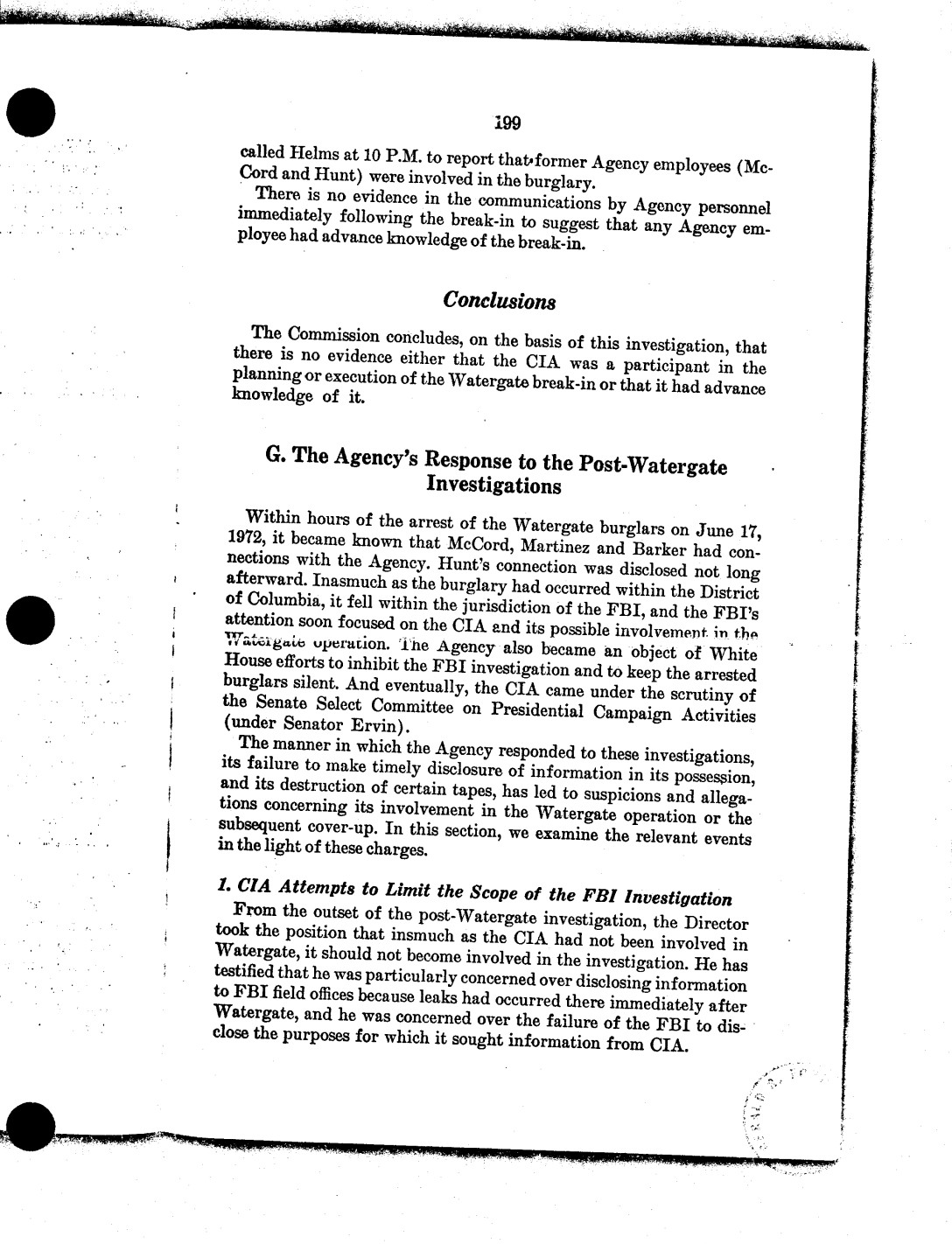
The same commission found no evidence that the CIA planned or executed the Watergate burglary or knew of it in advance. It also criticized the Agency’s inadequate investigation of its own role after disclosures. Its report therefore supports neither a story of spotless institutional conduct nor the stronger theory that CIA leadership engineered the scandal to depose Nixon. [1]
A sabotage theory needs evidence of instruction, intentional operational compromise and a causal link to the alleged objective. A former intelligence officer’s participation or a suspiciously inept burglary does not supply those missing steps. People can carry skills and contacts into a new employer’s operation.
This conclusion has a limit: an official investigation cannot guarantee that no undisclosed evidence exists. The responsible position is that these records do not establish the larger plot. The cover-up evidence must then be assessed on its own, including Nixon’s recorded effort to use the CIA to constrain the FBI.