01 / DOCUMENTED ABUSE
The men already had syphilis.
The infected cohort entered with disease. The abuse was deception and withholding recommended treatment. Correcting the infection myth does not diminish that wrongdoing.
THE MEN. THE BETRAYAL. THE RECORD.
Six hundred men. Forty years. A promise of care that concealed a study of untreated disease—and a betrayal the historical record does not need to exaggerate.
BEGIN WITH THREE DISTINCTIONS
01 / DOCUMENTED ABUSE
The infected cohort entered with disease. The abuse was deception and withholding recommended treatment. Correcting the infection myth does not diminish that wrongdoing.
02 / A DIFFERENT PROGRAM
U.S.-supported researchers deliberately exposed people to infection in Guatemala in 1946–1948. That separate, documented abuse belongs in its own history.
03 / EARNED TRUST
This history gives people reasons to demand transparency. It does not prove every contemporary allegation. Examine the evidence without dismissing the questioner.
THE FILE CABINET
Follow the story in order, or open the question you came for. Each chapter has its own chronology, evidence and source notes.
11 FILES / EACH WITH ITS OWN PAGE
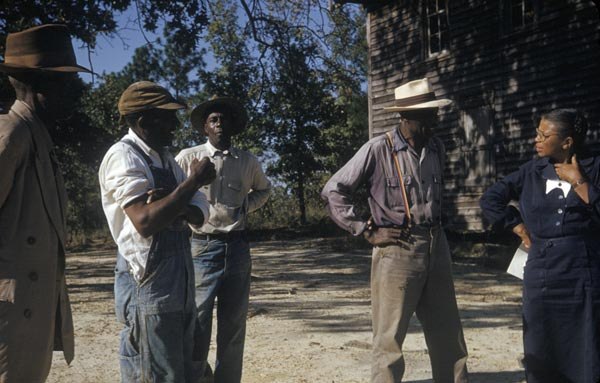
 CHAPTER 01
1930–1932
Macon County, the Public Health Service and the shift from a treatment campaign to observation.
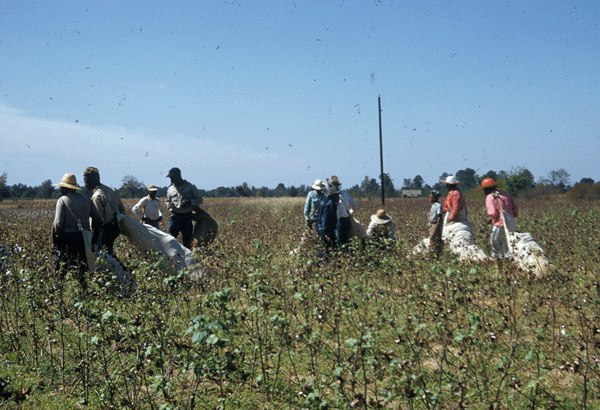
 CHAPTER 02
1932–1972
Who entered the study, what the comparison group means, and why a photograph is not a clinical history.
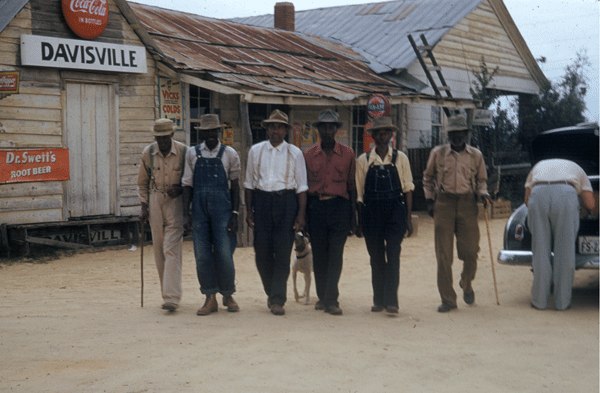
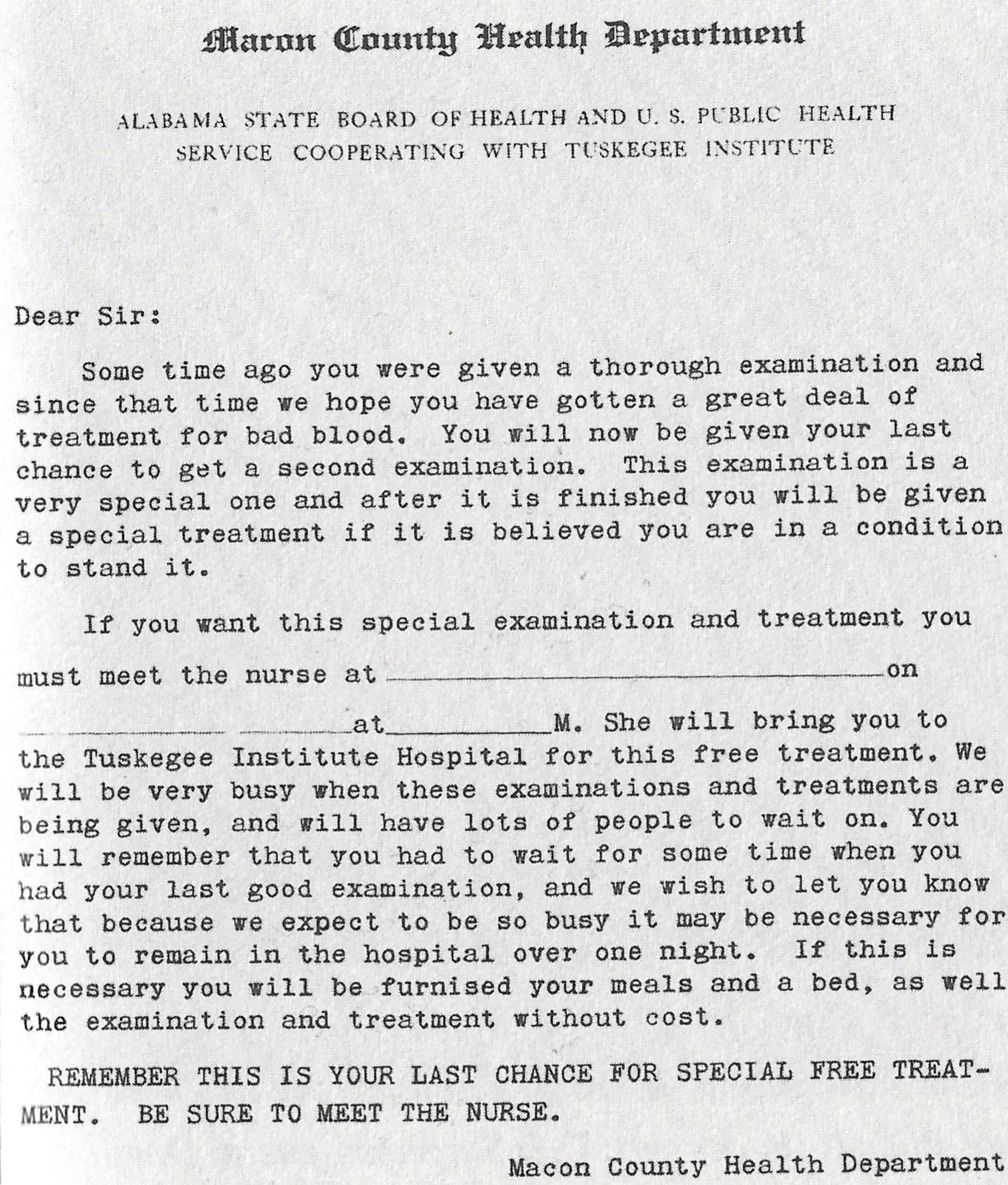 CHAPTER 03
1932–1972
Free examinations, diagnostic procedures and burial benefits concealed the central bargain.
 CHAPTER 04
1940s–1972
Penicillin changed the medical context; the study continued anyway.
 CHAPTER 05
1932–1972
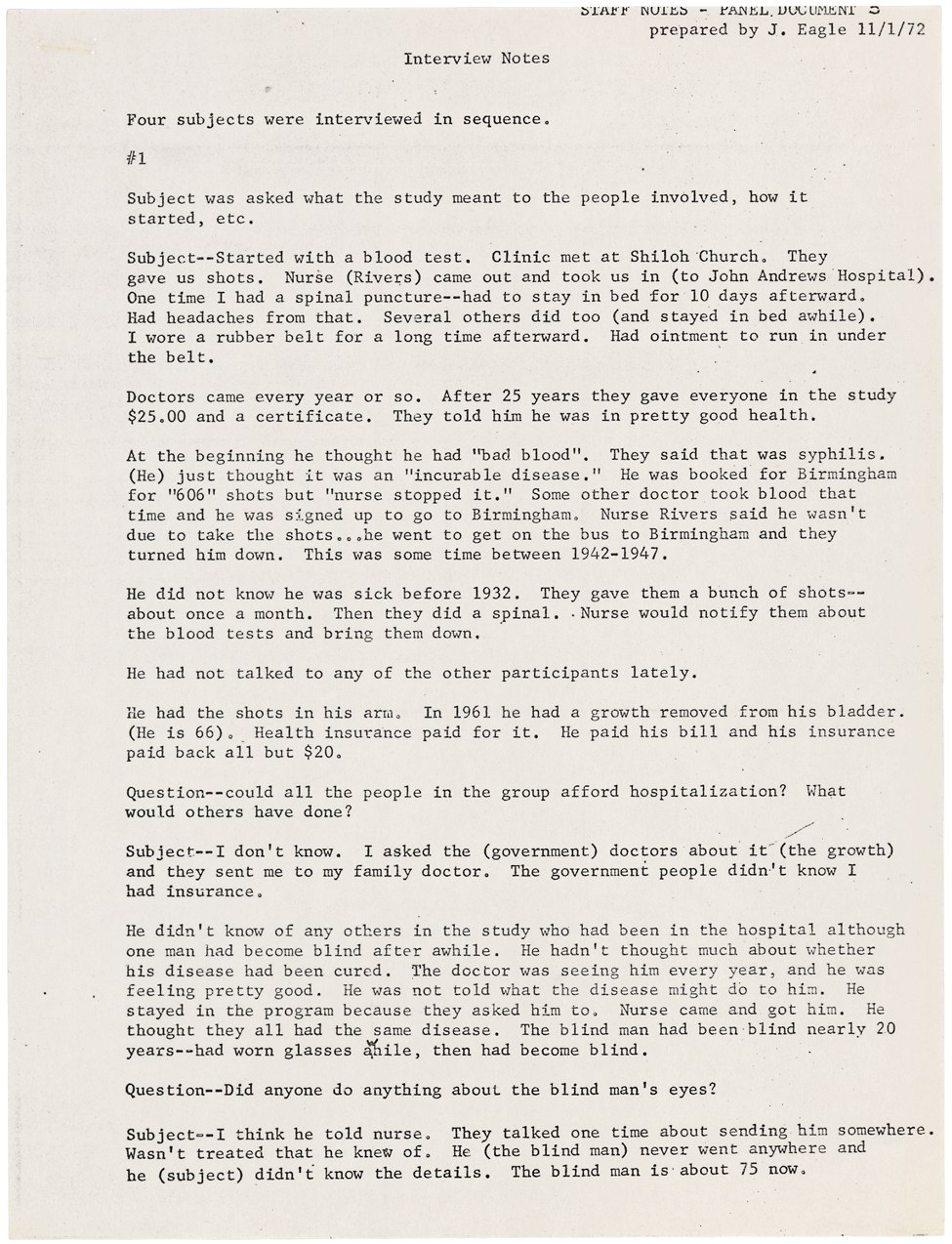
Federal officials, local institutions, clinicians and a nurse whose relationship with the men was central.
 CHAPTER 06
1932 onward
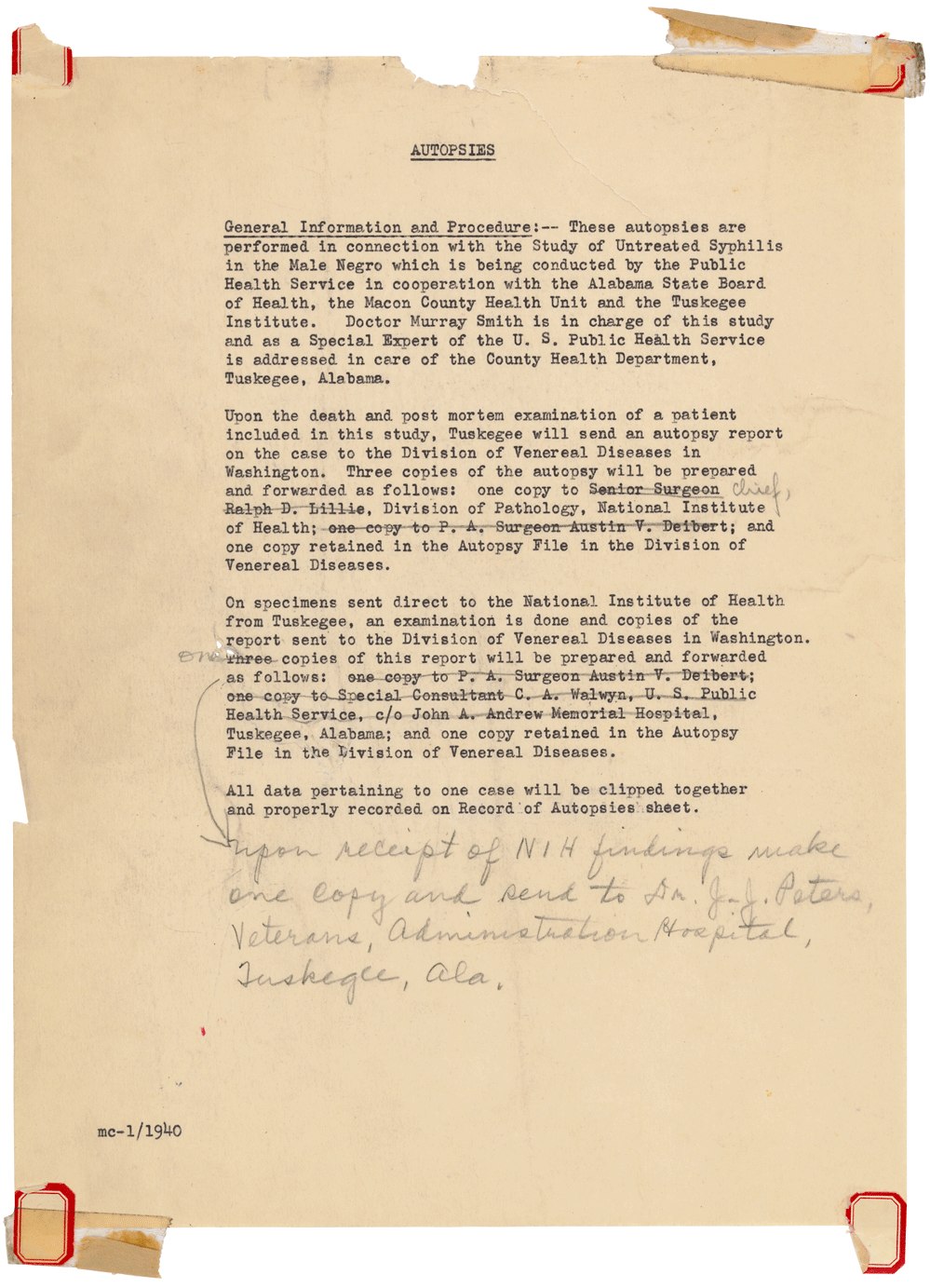
Illness, family consequences, autopsies and the limits of confident-looking casualty statistics.
 CHAPTER 07
1966–1972
Peter Buxtun’s objections, Jean Heller’s reporting and the difference between publication and public accountability.
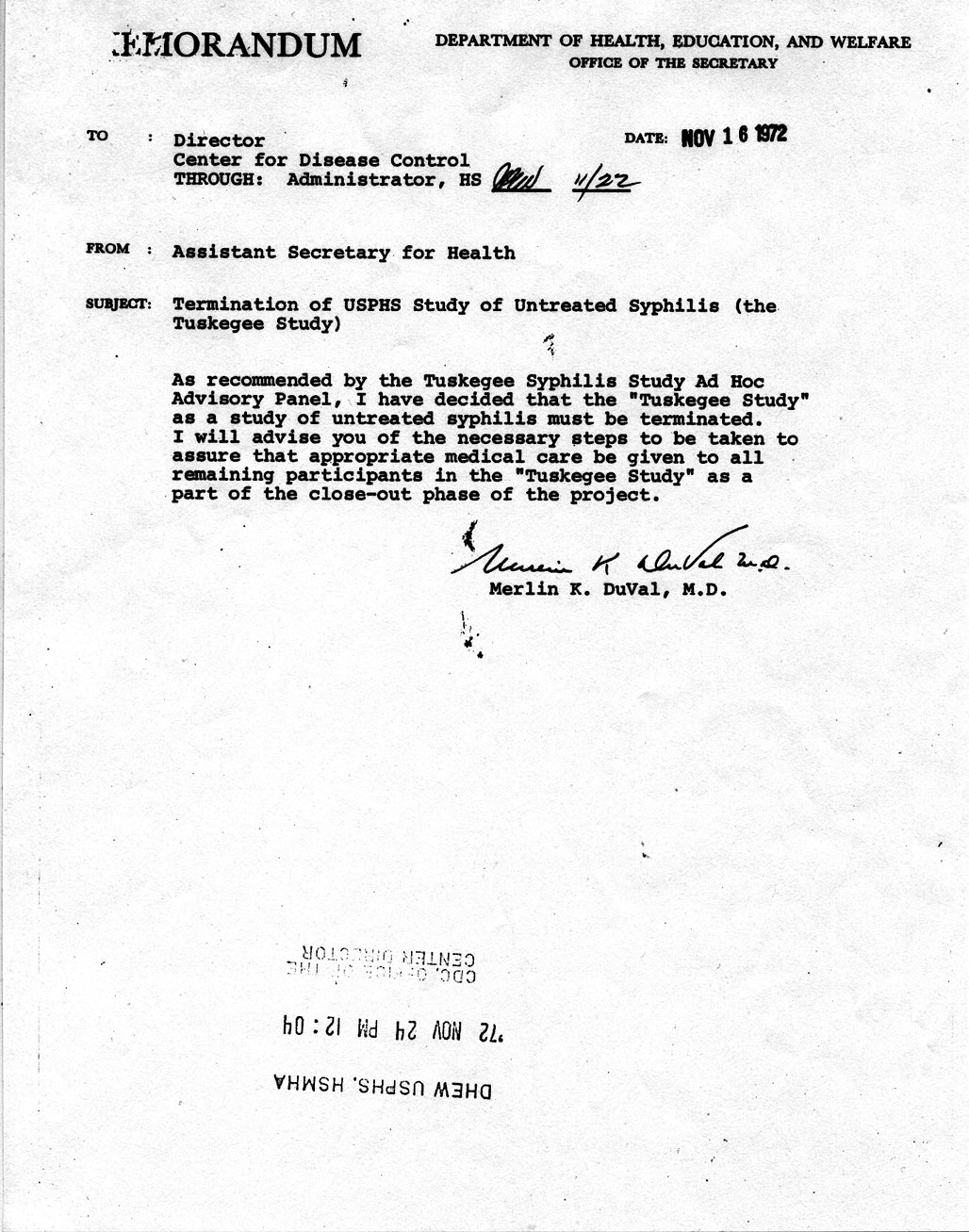 CHAPTER 08
1972–1973
The advisory panel’s findings, methodological criticism and Jay Katz’s sharper challenge.
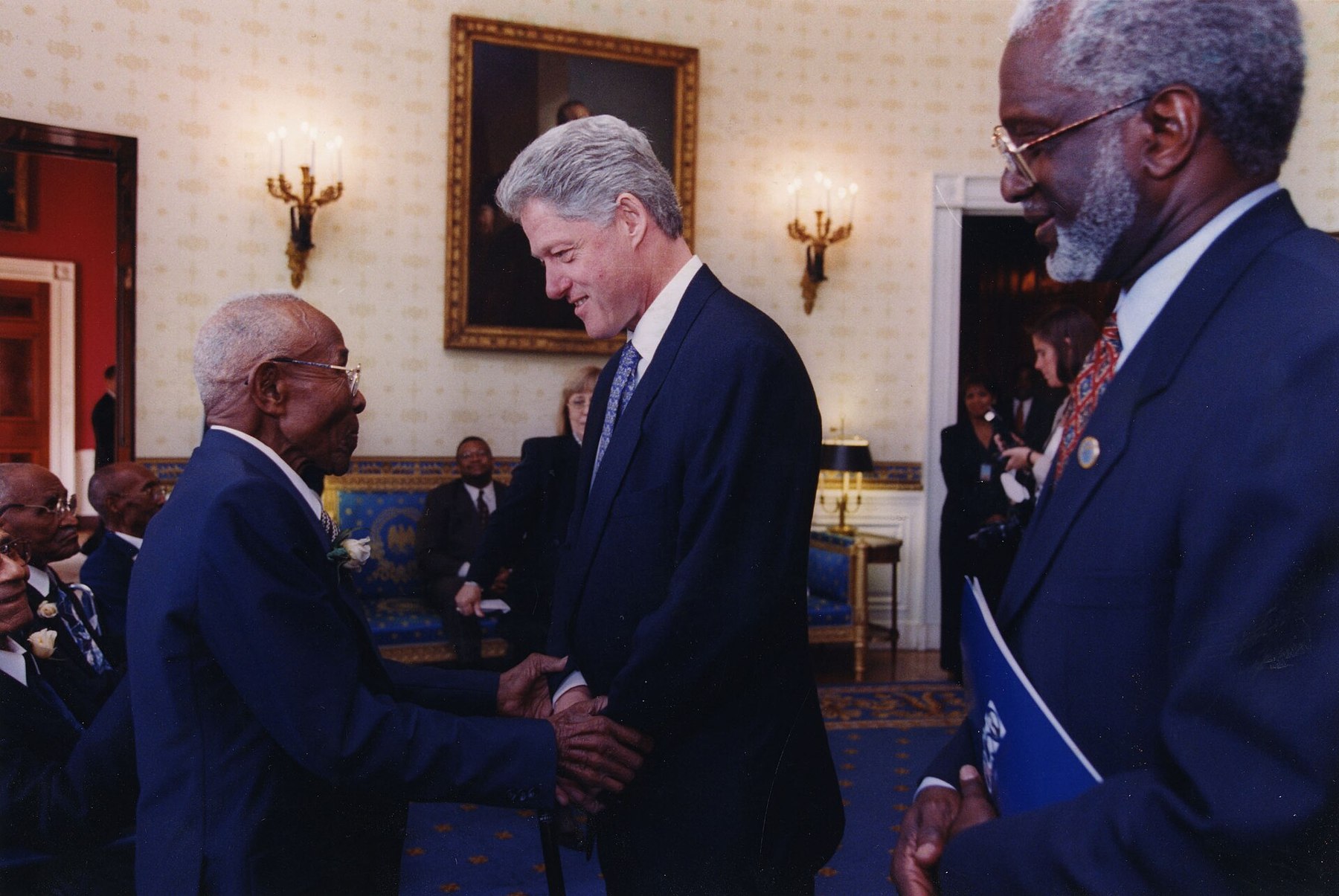 CHAPTER 09
1973–1997 onward
What the government did afterward—and what money or a speech could not undo.
 CHAPTER 10
1947–present
From consent to review boards: important safeguards with a longer history than one scandal.
 CHAPTER 11
1946–present
Correcting a false detail must not minimize a real abuse—or turn that abuse into proof of every new claim.
No matching case.
THE BACKGROUND / BEFORE THE HEADLINES
The U.S. Public Health Service study ran in Macon County, Alabama, from 1932 to 1972. Participants were Black men, initially 399 with syphilis and 201 comparison men without it. They did not give informed consent to the research described in the official record.
PARTICIPANT
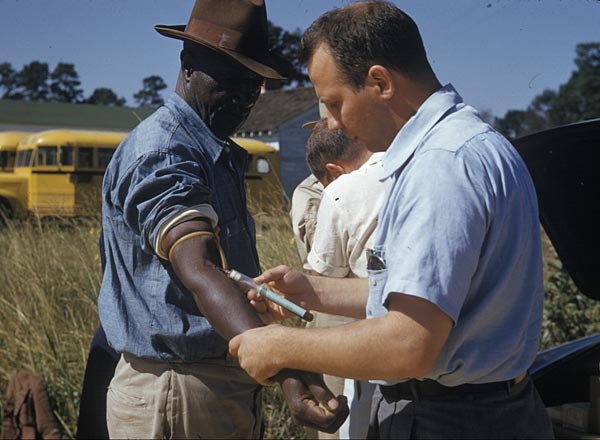
One of the men whose lives were larger than this study. Survivor testimony and family memory deserve attention alongside the administrative files. The photograph is identified by its source; it does not supply a complete medical history.
LOCAL INSTITUTION
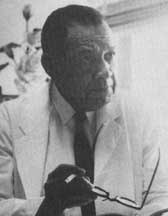
A physician associated with the Tuskegee Institute hospital. Local institutional involvement matters, while federal responsibility must remain clear. This site does not infer anyone’s complete knowledge or private motives from a portrait.
Names follow the archival image descriptions. Image sources and rights ↓ · CDC’s overview and family reflections ↗
READ / WATCH / RETURN TO THE RECORD
1973 / PRIMARY REPORT
Read the advisory panel’s conclusions, the scientific criticism and the separate addenda. An official inquiry can contain disagreements worth preserving.
CDC / FAMILY REFLECTIONS
Memories and reflections place human experience beside the administrative record. Linked video opens only when you choose it.
1997 / OFFICIAL TRANSCRIPT
Read what President Clinton acknowledged—and distinguish official recognition from compensation, medical care and lasting reform.
THE OUTCOME LEDGER
These summaries do not replace the evidence. Open a case for the sources, responses and limits.
The study began in 1932 in a segregated, economically unequal setting; participation did not constitute informed consent.
The initial groups were 399 men with syphilis and 201 without; all were Black men, not a randomized infection experiment.
Medical attendance was represented as care, while participants were not adequately told the research purpose or denied-treatment risks.
Penicillin became the standard treatment, yet the study did not offer participants the recommended care; some received incidental or outside therapy.
The project required continuing institutional choices; a single villain or a single reassuring clinician cannot explain forty years.
Withheld care and deception are established; a cumulative death total requires definitions and individual clinical evidence.
Internal objections preceded the Associated Press story; national attention helped force an end to the study.
The panel condemned the actual study, criticized its scientific quality and called for care and stronger research protections.
A 1974 settlement and benefits program preceded the 1997 presidential apology; none erased the underlying abuse.
Tuskegee helped drive reform, alongside other abuses and ethical debates; Belmont is a framework, not a guarantee of perfect conduct.
Tuskegee was not deliberate infection; the separate Guatemala experiments were. Contemporary claims still need their own evidence.
HOW TO READ THIS COLLECTION
Initial enrollment is not a count of deliberate infections. All deaths are not deaths medically attributed to syphilis. A benefit roster is not a transmission dataset. We distinguish the number, its date and what it measures.
The 1973 advisory panel, its separate opinions, archival correspondence and the 1972 termination memorandum provide the backbone. Later official summaries help orient readers but do not replace every original file.
Families, survivors, journalists and institutions offer different perspectives. A remembered experience is not an agency statistic; an institutional summary is not the whole human story. Links identify those roles.
Checked October 21, 2026. AI generated and fact-checked this historical guide and can be wrong in either direction. Findings are not the owner’s personal findings, beliefs or endorsements. This is a dated static exploration and website demonstration.
No complete individual medical-file, settlement or family-transmission audit is claimed. Contemporary claims require their own evidence. This history does not provide personal medical advice. Linked archives and videos have their own access terms and are not all stored in the local package. The standalone local edition contains no advertising scripts.
U.S. Public Health Service / CDC; National Archives · Public domain · Original & rights ↗
Resized and converted to JPEG; no generated or reconstructed event imagery. · Public domain
U.S. Public Health Service / CDC; National Archives · Public domain · Original & rights ↗
Resized and converted to JPEG; no generated or reconstructed event imagery. · Public domain
U.S. Public Health Service / CDC; National Archives · Public domain · Original & rights ↗
Resized and converted to JPEG; no generated or reconstructed event imagery. · Public domain
U.S. Public Health Service / CDC; National Archives · Public domain · Original & rights ↗
Resized and converted to JPEG; no generated or reconstructed event imagery. · Public domain
Macon County Health Department · Public domain · Original & rights ↗
Resized and converted to JPEG; no generated or reconstructed event imagery. · Public domain
U.S. Public Health Service / CDC; National Archives · Public domain · Original & rights ↗
Resized and converted to JPEG; no generated or reconstructed event imagery. · Public domain
U.S. Public Health Service / CDC; National Archives · Public domain · Original & rights ↗
Resized and converted to JPEG; no generated or reconstructed event imagery. · Public domain
Sharon Farmer White House Photograph Office · Public domain · Original & rights ↗
Resized and converted to JPEG; no generated or reconstructed event imagery. · Public domain
U.S. Public Health Service / CDC; National Archives · Public domain · Original & rights ↗
Resized and converted to JPEG; no generated or reconstructed event imagery. · Public domain
U.S. Public Health Service / CDC; National Archives · Public domain · Original & rights ↗
Resized and converted to JPEG; no generated or reconstructed event imagery. · Public domain
compiled by H. Brody; photo credits: US Public Health Service; Tuskegee University Archives · Public domain · Original & rights ↗
Resized and converted to JPEG; no generated or reconstructed event imagery. · Public domain
compiled by H. Brody; photo credits: US Public Health Service; Tuskegee University Archives · Public domain · Original & rights ↗
Resized and converted to JPEG; no generated or reconstructed event imagery. · Public domain
Photographs are documentary; later views are labeled. Document images reproduce complete source pages. Typographic case graphics are navigation aids, not photographs or evidence.