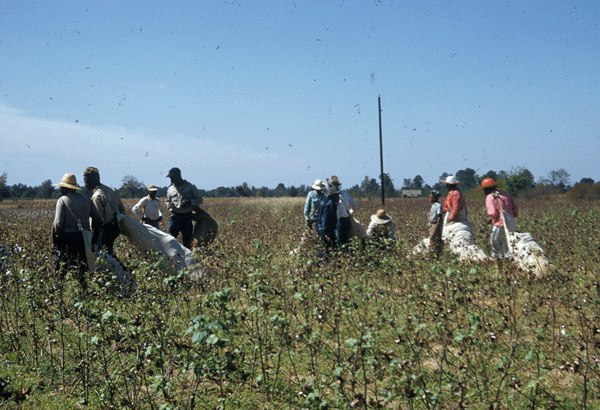
Macon County, Alabama, was not an empty laboratory. It was home to families, farms, churches and the Tuskegee Institute, a major Black educational institution. Federal investigators entered an existing community whose access to medical care was constrained by segregation and poverty. Those conditions helped make an offer of medical attention persuasive; they did not make the men less entitled to know what was being done. [1][2]
The 1973 advisory panel traced an important precursor: syphilis-control demonstrations supported by the Public Health Service, the Julius Rosenwald Fund and state and local authorities in six Southern states. The Macon County survey found substantial disease prevalence. A project concerned with providing treatment therefore helped create the relationships and information later used for an observational study. The two activities should not be collapsed into one unchanged plan. [1]
The panel found no surviving written original protocol establishing a single definitive starting design. Early correspondence suggested a short investigation; by the mid-1930s it had become continuing follow-up. That missing protocol limits confident stories about one moment when the entire forty-year course was decided. It does not erase the documented choices that sustained the study or the unequal setting in which investigators made them. [1]