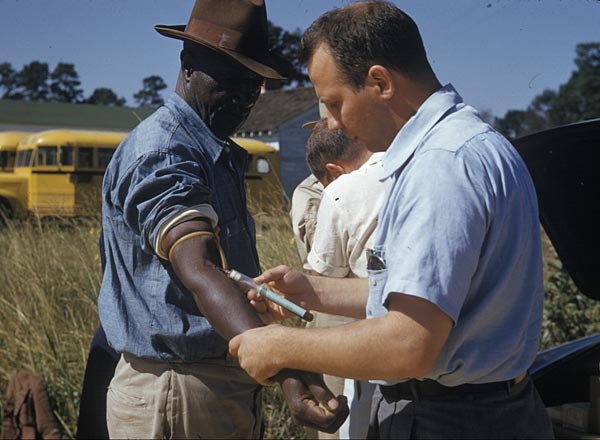
The study began before penicillin became the standard treatment for syphilis. Earlier therapies existed, including arsenical and bismuth preparations, but could be prolonged and hazardous. That history matters when assessing the medical decisions of 1932. It does not establish that there was no treatment at all, nor does it justify continuing the same arrangement after a substantially more effective therapy became available. [1]
CDC’s timeline identifies 1943 as the point when penicillin was becoming the treatment of choice. The advisory panel described a more extended transition in evidence, recommendations and access, including recommendations for latent disease in the late 1940s and broader public availability thereafter. These are different milestones, not proof that the treatment appeared everywhere on one day. The essential finding is consistent: study officials failed to offer the recommended therapy while the project continued for decades. [1][2]
The panel examined arguments about risk in treating older people with late disease, including potential reactions. It did not accept those arguments as a justification for keeping the study running as it had. A difficult clinical decision calls for honest assessment and an informed patient, not deception or a default commitment to preserving an observation series. Acknowledging real historical questions about particular patients therefore strengthens the account; it does not erase the institutional obligation investigators failed to meet. [1]