Popular summaries often repeat a single number of deaths without saying whether it means deaths attributed directly to syphilis, deaths involving conditions possibly related to syphilis, or all deaths among participants during forty years. Those are different categories. The study followed men across decades in which deaths from multiple causes were inevitable. The ethical wrong does not depend on treating every death as a proven consequence of withholding treatment. [1]
The 1973 panel reported what earlier investigators had recorded and criticized serious weaknesses in the scientific design, clinical judgments and treatment histories. Its account of the 1969 review included the contemporary number attributed to syphilis as a primary cause, a figure referring to that review rather than a final audit of all harm. Quoting it as the complete lifetime toll would be misleading in the opposite direction. [1]
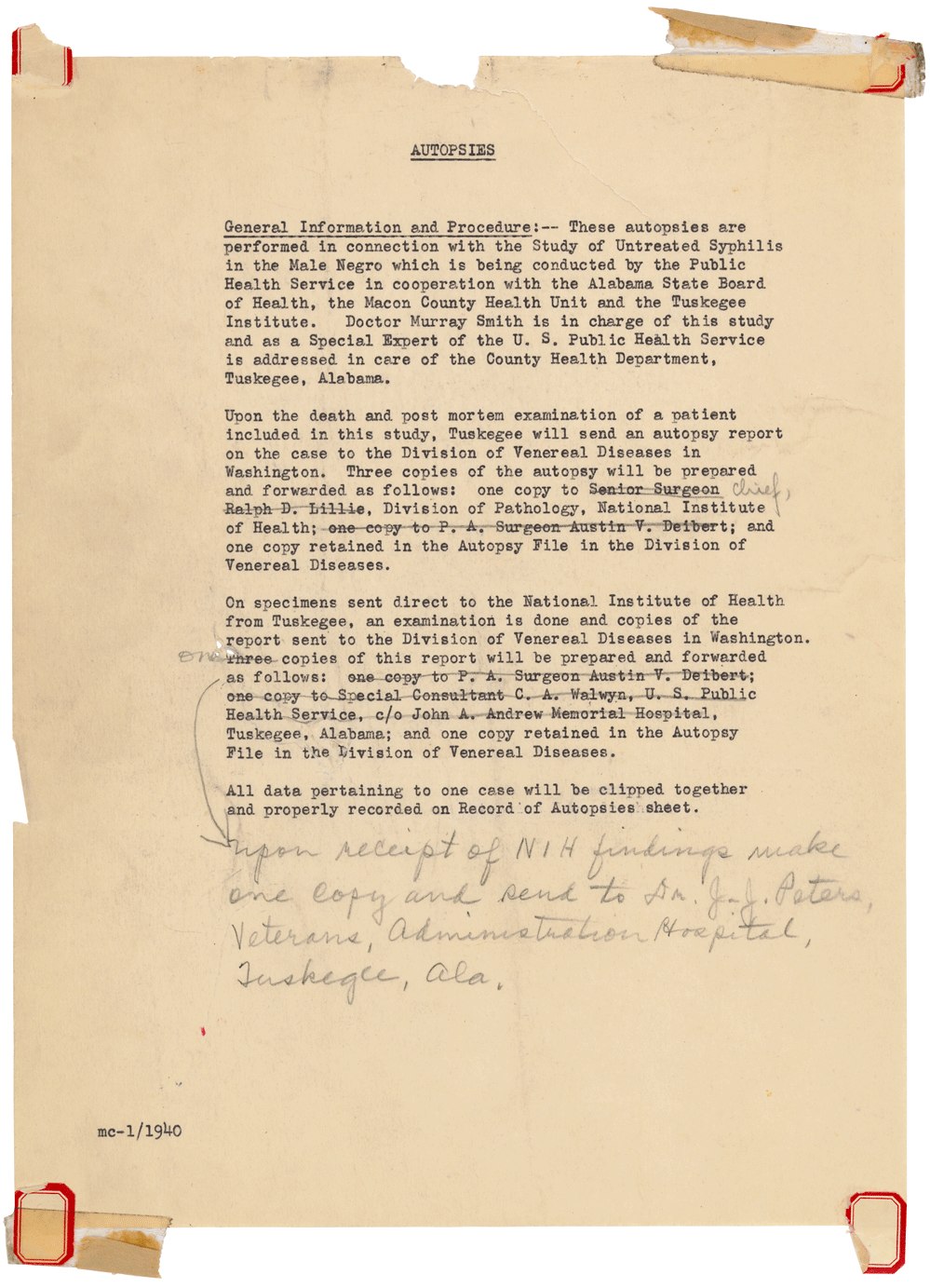
A responsible account can establish that men were exposed to avoidable risk, denied an informed choice and not offered recommended treatment without pretending to assign a counterfactual lifespan to each person. Harm also included the burden on families, the misuse of trust and the pursuit of autopsy data under a deceptive relationship. These are not consolation categories used because mortality is unimportant. They are part of what a tally of deaths alone fails to describe. The available summary records support grave condemnation; they do not justify false numerical certainty. [1][2]