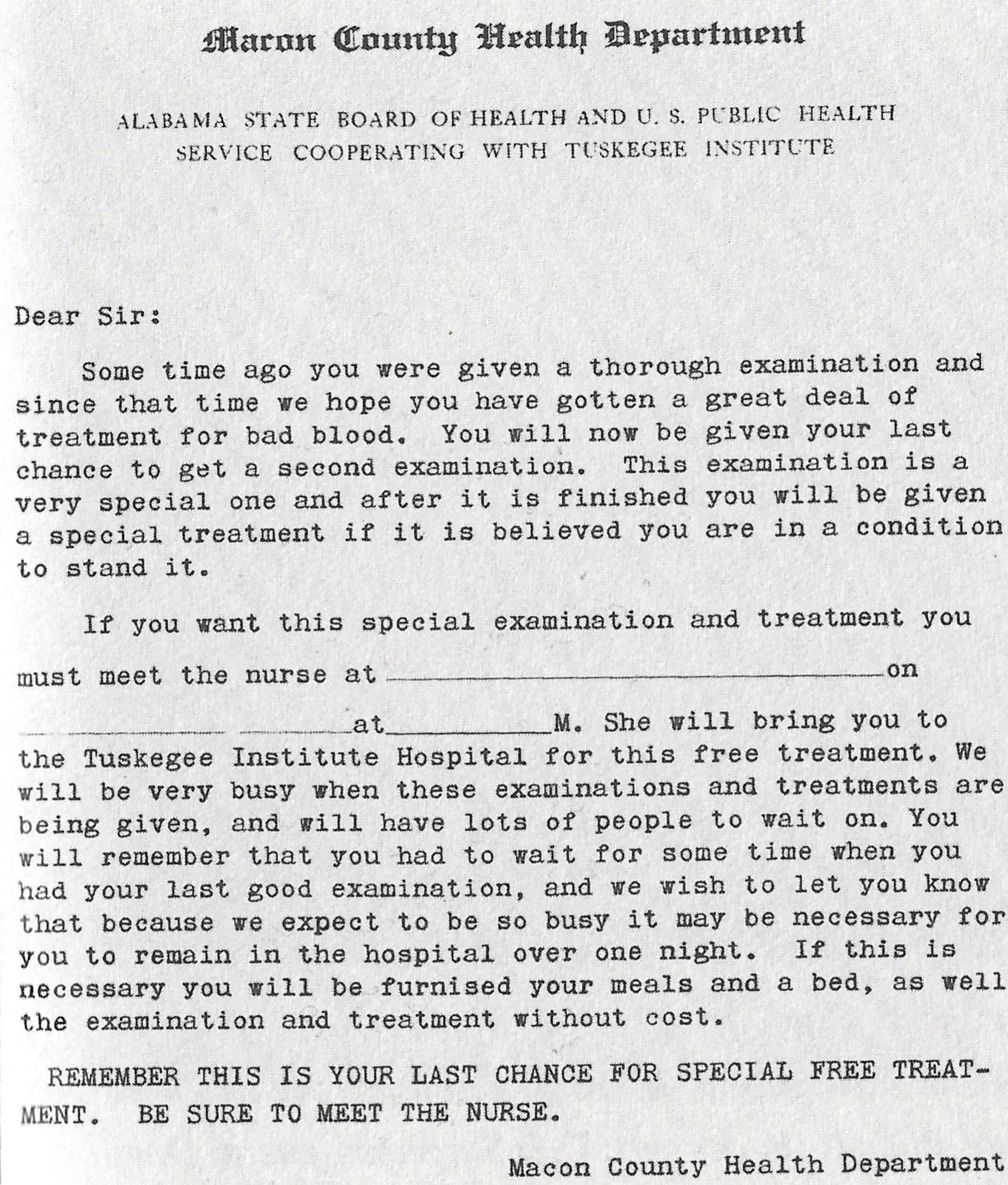
The men were told they were being treated for bad blood, a local expression that could refer to several ailments. Free examinations, meals and burial insurance made participation appear to offer practical help. The essential missing information was that federal investigators were observing the effects of syphilis without providing the recommended treatment program. Saying yes to a visit was not the same as agreeing to that research. [1][2]
The advisory panel’s consent finding was unequivocal: it found no evidence that participants had freely and intelligently agreed with knowledge of the relevant risks. That judgment should not be confused with a claim that the men never made choices or that the entire community was unaware of government medical activity. What was missing was an honest account that would allow a meaningful choice about research participation and care. [2]
The later Belmont Report provides a useful language for the distinction: information, comprehension and voluntariness belong together. A signature alone would not have repaired a misleading explanation, and a free meal did not substitute for disclosure. The study’s failure was therefore deeper than an absent form in a filing cabinet. Researchers managed the relationship so that the men could continue believing that official attention meant their own health was the priority, while the investigation pursued a conflicting objective. [2][3]