The AI Files · Donald Trump · plain reading edition
Iran: “obliterated”?: every entry
All 50 entries of the guide, grouped by period and case, each with its bottom line and its sources. This page needs no JavaScript. The interactive guide adds the story in 20 chapters, the people, the timeline, the theories, the 15 checked claims and the media.
Midnight Hammer Jun 2025
Midnight Hammer
The June 2025 strike
The twelve-day war week
Context · Context
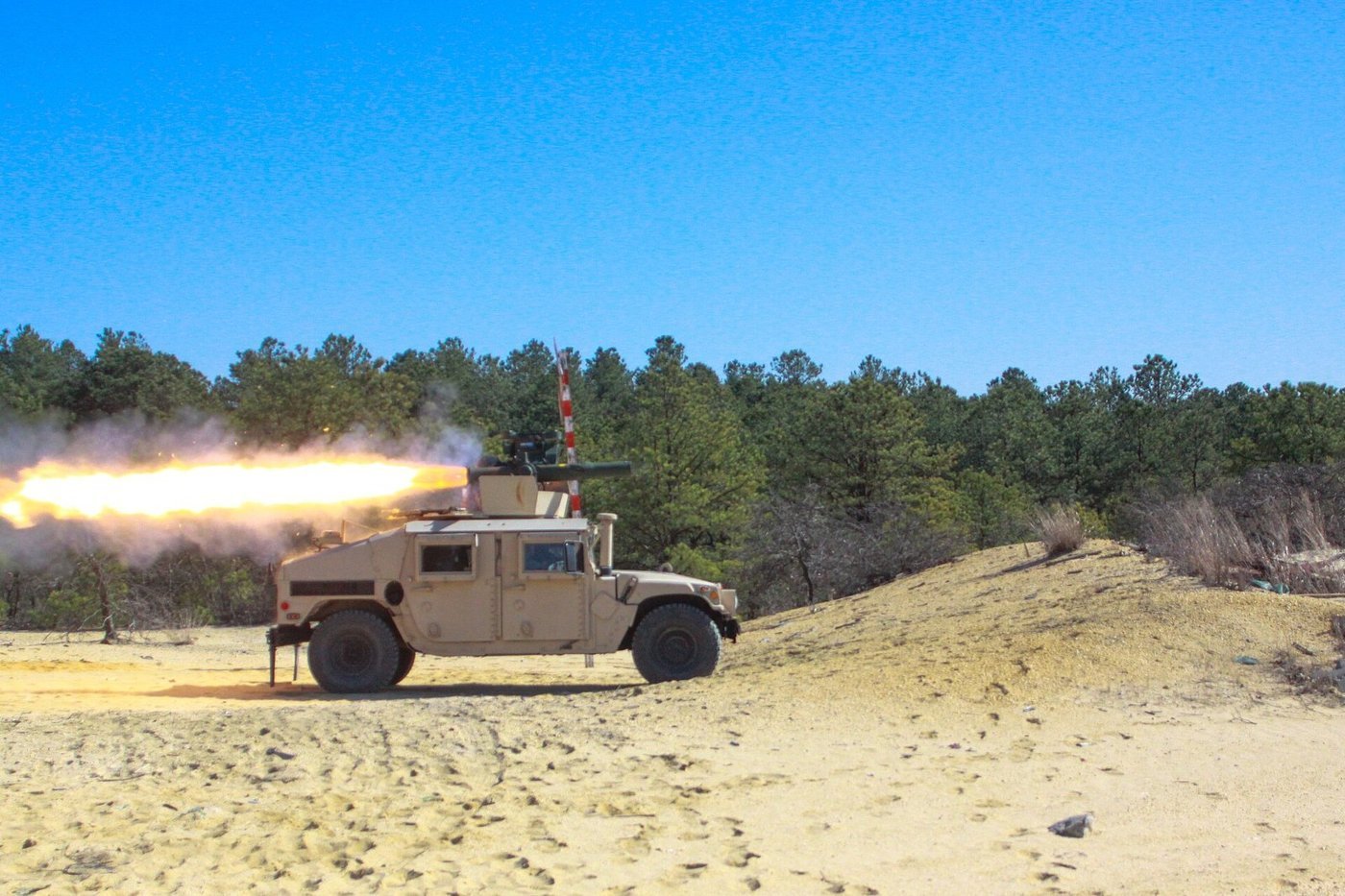
Strike aircraft/munitions stand-in for Operation Midnight Hammer. Re-encoded from images/missiles.jpg · Public domain / prior freely licensed guide pool
In mid-June 2025 Israel and Iran were already in a short, intense air war. Operation Midnight Hammer is a U.S. intervention into that week, not a free-standing peacetime raid. [1][2]
This guide does not rebuild the Israel–Iran twelve-day war. It keeps that week as the clock the U.S. strike ticks on.
Bottom line Context
Context for timing — not a rebuilt Israel guide.
What the record can’t settle
Israel–Iran campaign details live elsewhere; this page keeps the U.S. strike spine.
Strike aircraft/munitions stand-in for Operation Midnight Hammer. Re-encoded from images/missiles.jpg · Public domain / prior freely licensed guide pool
Presidentially ordered CENTCOM strike on three nuclear sites.
On President Trump’s orders, U.S. Central Command executed Operation Midnight Hammer against Fordow, Natanz, and Isfahan. [1]
Secretary Hegseth and Chairman Caine briefed the operation the morning of 22 June 2025. [1][2]
Bottom line Documented
The strike happened; the package is on the DoD transcript.
What the record can’t settle
Transcript is the government’s account, not an independent BDA.
Strike aircraft/munitions stand-in for Operation Midnight Hammer. Re-encoded from images/missiles.jpg · Public domain / prior freely licensed guide pool
Caine described seven B-2 Spirit bombers flying east with a Pacific decoy package, multiple aerial refuelings, and a submarine launching more than two dozen Tomahawks at Isfahan. [1]
Fourteen GBU-57 Massive Ordnance Penetrators — about 30,000 pounds each — were dropped on Fordow and Natanz, the first operational use of the weapon. Roughly seventy-five precision-guided munitions and more than 125 U.S. aircraft participated. [1][2]
Bottom line Documented
First operational MOP use is on the official record.
Strike aircraft/munitions stand-in for Operation Midnight Hammer. Re-encoded from images/missiles.jpg · Public domain / prior freely licensed guide pool
Fifteen years of MOP work → first operational drop.
DoD materials stress the GBU-57’s long development and first combat employment in Midnight Hammer. [1][2]
Bottom line Documented
Weapon existence and first use are DoD-documented.
hegseth — illustrative stand-in for wars-and-strikes guide (re-encoded prior freely licensed pool). Re-encoded from images/hearings.jpg · Public domain / prior freely licensed guide pool
Day-after denial on purpose.
Asked whether regime change was off the table, Hegseth said the Midnight Hammer mission ‘was not and has not been about regime change’ and was a precision operation against the nuclear program. [1]
fordow — illustrative stand-in for wars-and-strikes guide (re-encoded prior freely licensed pool). Re-encoded from images/iran.jpg · Public domain / prior freely licensed guide pool
Caine’s morning-after assessment language.
Caine: initial battle damage assessments indicated all three sites sustained ‘extremely severe damage and destruction,’ while final BDA ‘will take some time.’ [1]
Asked whether nuclear capability remained, he said it was ‘way too early’ to comment. [1]
Bottom line Official
Initial severe-damage claim is official and provisional.
fordow — illustrative stand-in for wars-and-strikes guide (re-encoded prior freely licensed pool). Re-encoded from images/iran.jpg · Public domain / prior freely licensed guide pool
Preliminary assessment described in Reuters/CNN/AP.
Within days, labeled press reported a preliminary Defense Intelligence Agency assessment: the program set back months, not destroyed; some reporting added intact centrifuges and possible pre-strike HEU movement. [1][2][3][4]
Those stories describe classified material via unnamed officials. This page treats them as press about an assessment — not as the assessment itself.
Bottom line Disputed
A low-confidence early cut leaked; it is not a declassified IC consensus.
oval — illustrative stand-in for wars-and-strikes guide (re-encoded prior freely licensed pool). Re-encoded from images/whitehouse.jpg · Public domain / prior freely licensed guide pool
‘Flat-out wrong’; low confidence; leak probe.
Press Secretary Karoline Leavitt called the leaked assessment ‘flat-out wrong.’ Hegseth stressed it was preliminary and low-confidence and said the leak would be investigated. [1][2][3]
Trump mixed ‘inconclusive’ intelligence language with continued obliteration boasts at the NATO summit. [2]
Bottom line Documented
The rejection is documented; that does not by itself prove obliteration.
John Ratcliffe. Re-encoded from AI Files Venezuela-boats assets; EXIF stripped · re-encoded JPEG; EXIF stripped
Ratcliffe’s 25 June public statement.
Director John Ratcliffe stated that credible intelligence indicated Iran’s nuclear program had been ‘severely damaged,’ including that several key facilities were destroyed and would have to be rebuilt over years. [1]
That public line became the administration’s preferred middle against the leaked DIA months cut — still short of literal obliteration. [2]
Bottom line Official
Public CIA line is years-scale rebuild, not ‘months’ and not ‘obliterated forever.’
carrier — illustrative stand-in for wars-and-strikes guide (re-encoded prior freely licensed pool). Re-encoded from images/missiles.jpg · Public domain / prior freely licensed guide pool
CRS: late 2025–February 2026 positioning.
CRS reports that President Trump directed a U.S. force buildup near Iran from late December 2025 through late February 2026 before Epic Fury began. [1]
carrier — illustrative stand-in for wars-and-strikes guide (re-encoded prior freely licensed pool). Re-encoded from images/missiles.jpg · Public domain / prior freely licensed guide pool
Missiles, navy, no nuclear weapon — and mixed regime-change talk.
CRS summarizes early U.S. military objectives: destroy ballistic-missile capabilities, destroy Iran’s navy, and ensure Iran does not acquire a nuclear weapon — alongside intermittent regime-collapse rhetoric. [1][2]
Bottom line Mixed
Public objective lists are clear; priority order shifts in messaging.
What the record can’t settle
Whether ‘imminent threats’ were eliminated is evaluative.
carrier — illustrative stand-in for wars-and-strikes guide (re-encoded prior freely licensed pool). Re-encoded from images/missiles.jpg · Public domain / prior freely licensed guide pool
Renewed exchanges; tanker strikes; no collapse.
CRS’s September 2026 update describes renewed early-September exchanges approaching mid-July intensity, including U.S. strikes on Iranian oil tankers after attacks on Navy ships. [1]
Bottom line Documented
CRS’s September outlook is prolonged low-level conflict.
What the record can’t settle
Future scenarios in CRS are not predictions we treat as fact.
Israeli forces / Israel context. Re-encoded from images/iran.jpg · Public domain / prior freely licensed guide pool
Parallel operations; shifting Israel focus to Lebanon later.
Midnight Hammer was U.S.-operated; Caine said the U.S. took advantage of preparatory work but kept separate airspace. [2]
In 2026 CRS describes closely coordinated opening strikes, then an Israeli focus shift toward Lebanon/Hezbollah while U.S.–Iran attrition continued. [1]
Bottom line Documented
Partnership is real; identical target sets are not claimed.
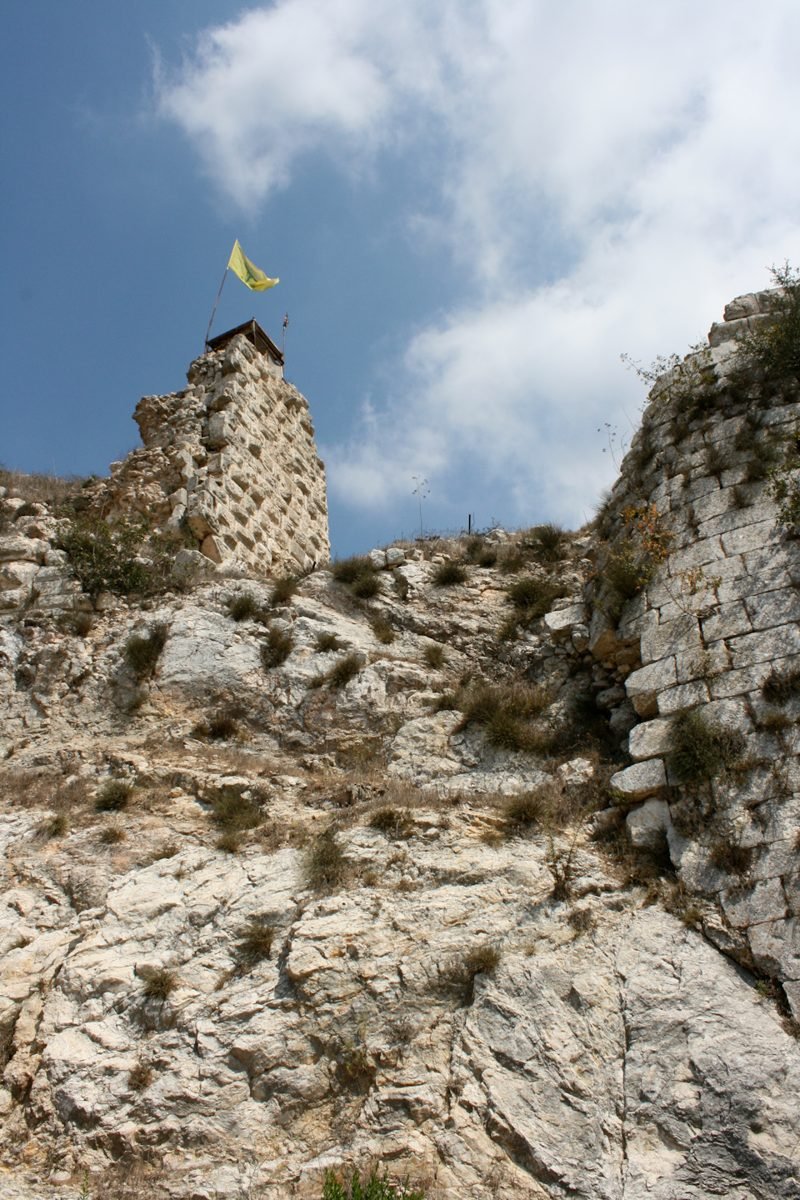
Hezbollah flag imagery (context). Re-encoded from AI Files Iran guide assets; EXIF stripped · re-encoded JPEG; EXIF stripped
Hezbollah resumes fire; Israel occupies buffer areas per CRS.
CRS: Hezbollah resumed attacks into Israel in early March 2026 citing Israeli operations and Khamenei’s death; large-scale Israeli operations and displacement followed. [1]
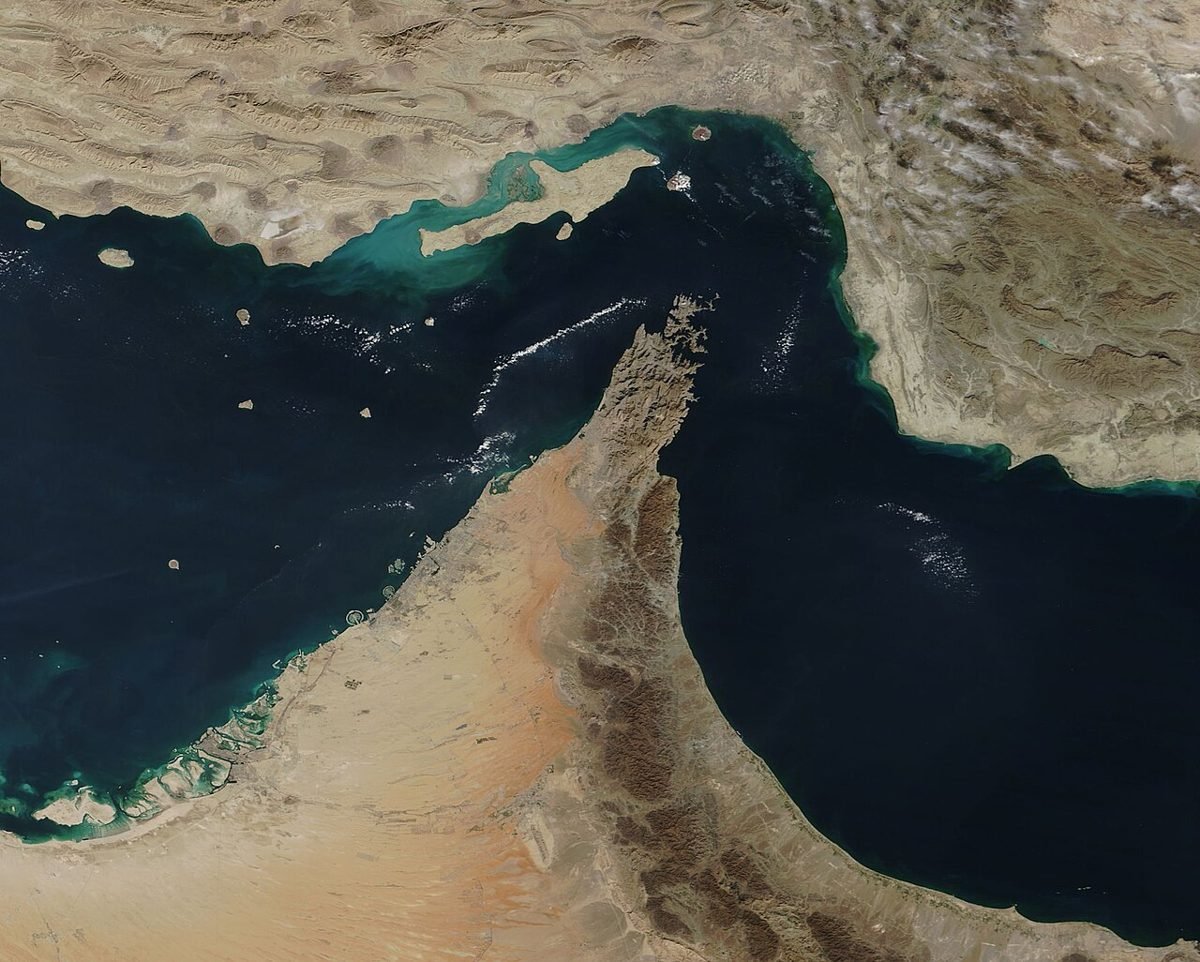
Strait of Hormuz region (illustration/photo as used on AI Files Iran guide). Re-encoded from AI Files Iran guide assets; EXIF stripped · re-encoded JPEG; EXIF stripped
Shipping collapse, oil spikes, blockade politics.
CRS places much of the conflict’s global shock on the Strait of Hormuz: threatened and actual attacks on shipping, traffic collapse, and oil-price spikes across March–September 2026. [1]
U.S. blockade announcements and later MoU language about safe passage sit on that same choke-point politics. [1]
Bottom line Documented
Strait disruption is central in CRS.
What the record can’t settle
Exact attribution for every maritime incident varies.
U.S. Capitol — war powers and AUMF fights. Re-encoded from images/capitol.jpg · Public domain / prior freely licensed guide pool
Day-one Tomahawk; preliminary U.S.-fault inquiry; Congress letters.
CRS recounts a U.S. Tomahawk reportedly hitting a school in Minab on 28 February, killing more than 150 people, mostly children, and notes a preliminary military investigation finding U.S. responsibility with outdated targeting information. [1][2]
Dozens of senators and more than a hundred representatives wrote the Pentagon in March; a July follow-up sought a finalized investigation. [3][1]
Bottom line Documented
Civilian-harm event and oversight asks are documented; final public inquiry package may still be incomplete.
What the record can’t settle
Casualty figures and AI-targeting allegations need the inquiry, not headlines alone.
Strait of Hormuz region (illustration/photo as used on AI Files Iran guide). Re-encoded from AI Files Iran guide assets; EXIF stripped · re-encoded JPEG; EXIF stripped
Two-week pause; Vance channel; no broader deal.
On 7 April 2026 the United States and Iran agreed to a two-week ceasefire that Trump tied to opening the Strait; Vance then met Iranian officials in Islamabad without a broader agreement. [1]
Bottom line Documented
Pause and failed broader talks are CRS-documented.
Strait of Hormuz region (illustration/photo as used on AI Files Iran guide). Re-encoded from AI Files Iran guide assets; EXIF stripped · re-encoded JPEG; EXIF stripped
Announced 13 April after talks stalled.
CRS: Trump announced a U.S. blockade on shipping to or from Iranian ports starting 13 April 2026, later ended under the MoU and then reinstated when the MoU failed. [1]
Bottom line Documented
Blockade announcement is on the CRS spine.
What the record can’t settle
Effectiveness vs Iranian asymmetric tools is contested in the same report.
Strait of Hormuz region (illustration/photo as used on AI Files Iran guide). Re-encoded from AI Files Iran guide assets; EXIF stripped · re-encoded JPEG; EXIF stripped
Signed 17 June; FOIA text; sanctions waivers; Hormuz clauses.
Trump announced an agreement on 14 June; he and President Pezeshkian signed the MoU on 17 June. The text — posted via State FOIA — covered cessation of military operations, sanctions waivers, Hormuz passage, and a 60-day path to a ‘Final Deal,’ including Iran’s reaffirmation it would not develop nuclear weapons. [1][2]
OFAC issued General License X on 21 June for Iranian petroleum-related transactions. [3]
Bottom line Documented
A signed MoU existed; a durable peace did not.
What the record can’t settle
Implementation disputes are part of why it failed.
Strait of Hormuz region (illustration/photo as used on AI Files Iran guide). Re-encoded from AI Files Iran guide assets; EXIF stripped · re-encoded JPEG; EXIF stripped
Post-MoU strikes; ‘over’ in July; 60-day clock ends 17 August.
After Iranian attacks on shipping using a southern Hormuz route, the United States launched post-MoU strikes on 26 June and more extensive strikes on 7 July; Trump declared the MoU ‘over’ the next day. [1]
The MoU’s 60-day Final Deal timeline ended 17 August without a successor agreement. [1]
Bottom line Documented
Collapse sequence is CRS-documented.
What the record can’t settle
Who ‘sabotaged’ the deal is a rival-path question.
U.S. Capitol — war powers and AUMF fights. Re-encoded from images/capitol.jpg · Public domain / prior freely licensed guide pool
CRS/DCAS/CBO tallies as of autumn 2026.
As of 15 September 2026 CRS cites 18 U.S. service members killed and 824 wounded. CBO estimated about $38 billion in U.S. military operations costs as of 1 August. [1][2][3]
CRS also cites HRANA for thousands of Iranian deaths including civilians — an NGO tally, not a DoD figure. [4][1]
Bottom line Documented
Human and fiscal cost figures are on the congressional spine.
What the record can’t settle
Iranian casualty NGO tallies are labeled separately.
pentagon — illustrative stand-in for wars-and-strikes guide (re-encoded prior freely licensed pool). Re-encoded from images/docs.jpg · Public domain / prior freely licensed guide pool
Lead IG / think-tank burn rates via CRS.
CRS relays the September 2026 Lead Inspector General report: munitions expenditure in Epic Fury produced strategic inventory shortfalls and industrial-base bottlenecks. [1][2]
Bottom line Documented
Industrial strain is acknowledged in oversight products.
fordow — illustrative stand-in for wars-and-strikes guide (re-encoded prior freely licensed pool). Re-encoded from images/iran.jpg · Public domain / prior freely licensed guide pool
Not a primary 2026 target set; limited new damage in May reporting.
CRS notes that an April CENTCOM list of thirteen target categories did not include Iran’s nuclear facilities, and quotes Vance saying 2025 destroyed enrichment capacity while 2026 focused on denying rebuild resources. [1][3]
Reuters reported in May 2026, citing unnamed officials, limited new nuclear damage and a roughly nine-to-twelve-month weapon timeline if Iran chose to build — roughly where mid-2025 assessments had left the dispute. [2]
Bottom line Partly true
Public record does not show a second obliteration campaign against enrichment halls.
JD Vance. Re-encoded from AI Files health-and-age assets; EXIF stripped · re-encoded JPEG; EXIF stripped
Enrichment destroyed in 2025; 2026 about money and rebuild denial.
CRS quotes Vice President Vance on 3 September 2026: remember the goal is that Iran never has a nuclear weapon; Midnight Hammer ‘destroyed’ enrichment capacity; current effort denies economic resources to rebuild. [1][2]
U.S. Capitol — war powers and AUMF fights. Re-encoded from images/capitol.jpg · Public domain / prior freely licensed guide pool
Hegseth on War Powers notification timing.
Hegseth said congressional leaders were notified after the aircraft were safely out and that the administration complied with War Powers notification requirements. [1]
Broader AUMF / Article II practice is owned by the wars-and-strikes guide, not rebuilt here. [2]
Bottom line Documented
After-action notice is admitted on the transcript.
What the record can’t settle
Whether that satisfies the War Powers Resolution is a legal fight — see wars sibling for doctrine.
U.S. Capitol — war powers and AUMF fights. Re-encoded from images/capitol.jpg · Public domain / prior freely licensed guide pool
House/Senate votes to direct removal — mixed results.
CRS catalogs multiple House concurrent resolutions directing removal of U.S. forces from hostilities with Iran (several approved) and a longer string of Senate joint resolutions (one approved), plus related arms-sale fights. [1]
Bottom line Documented
The vote record is CRS-documented.
What the record can’t settle
Votes directing removal are not the same as ending the war.
oval — illustrative stand-in for wars-and-strikes guide (re-encoded prior freely licensed pool). Re-encoded from images/whitehouse.jpg · Public domain / prior freely licensed guide pool
Strikes and war documented / obliterated not supported / assessments classified.
The Trump hub short case already carried the right compression: the strikes and the 2026 war are documented; ‘obliterated’ as permanent elimination is not supported by the public assessment fight; full assessments are classified. [1]
oval — illustrative stand-in for wars-and-strikes guide (re-encoded prior freely licensed pool). Re-encoded from images/whitehouse.jpg · Public domain / prior freely licensed guide pool
The page’s compression.
‘Obliterated’ was a boast. ‘The strikes did nothing’ is also wrong. The truthful public answer remains damaged, delayed, and disputed — and then overtaken by a 2026 war whose nuclear aim, per CRS and Vance, shifted toward denying rebuild resources. [1][2][3][4]
Bottom line Verdict lane
Matches the short nest; deep guide adds the 2026 war spine.
Read the Midnight Hammer transcript for what the government says it did; read CRS R48887 for the 2026 war’s dates, dead, and dollars; read Ratcliffe for the public CIA middle; treat DIA-leak stories as labeled press. [1][2][3][4]
Public sources disagree on months versus years. The uranium stockpile’s postwar location and the true state of underground halls remain inside classified lanes and outside IAEA access. [1][2][3]
Press / media imagery from AI Files Iran guide. Re-encoded from AI Files Iran guide assets; EXIF stripped · re-encoded JPEG; EXIF stripped
Anonymous officials describing classified BDA.
Leak narratives matter because they shaped the public fight within forty-eight hours. They still sit below the DoD transcript, CRS synthesis, and CIA public statement on the evidence ladder. [1][2][3]
Bottom line Context
Useful; not primary.
What the record can’t settle
Primary = transcript, CRS, CIA statement, FOIA MoU, CBO letter.
Strike aircraft/munitions stand-in for Operation Midnight Hammer. Re-encoded from images/missiles.jpg · Public domain / prior freely licensed guide pool
Best case for the obliteration camp.
Steelman: fourteen MOPs plus Tomahawks produced functional kills so complete that ‘obliterated’ is fair English, and later CIA ‘years’ language understates success. [1][2][3]
Even this steelman collides with the administration’s own day-one ‘BDA pending’ caveat and with later reporting that 2026 did not re-obliterate enrichment halls. [1]
Bottom line Disputed
Requires treating unfinished/leaked BDA as wrong and Ratcliffe ‘years’ as understatement.
What the record can’t settle
Must still explain May 2026 limited-new-damage reporting.
John Ratcliffe. Re-encoded from AI Files Venezuela-boats assets; EXIF stripped · re-encoded JPEG; EXIF stripped
Ratcliffe middle as the least-bad public summary.
Steelman: the honest public English is Ratcliffe’s — severely damaged, years to rebuild key facilities — not Trump’s obliteration and not ‘the strikes did nothing.’ [1][2]
CRS’s 2026 nuclear aside (not a primary target set; deny rebuild resources) fits this middle better than either extreme. [3]
Bottom line Mixed
Matches ‘damaged and delayed’ short-case bottom line.
Flag of Iran. ConflictFan — Wikimedia Commons — CC0 · CC0
Reads 2026 uprising talk as the real objective.
For Midnight Hammer, Hegseth said the mission was not about regime change. [2]
For Epic Fury, CRS documents Trump rhetoric about Iranians taking over their government and later posts wishing the Islamic Republic gone — a different phase, still not proof of a completed regime-change campaign. [1][3]
Bottom line Disputed
Trump did voice uprising/collapse hopes; Hegseth denied regime change for Midnight Hammer.