Who belongs?
Citizens with different backgrounds are participants in one political community. Historical discrimination belongs inside that national story rather than outside it.
[OW-2008][OW-2015]44th president · 2009–2017
A politics of shared citizenship, tested by the power of the presidency.
Obama’s public language joins inclusion and collective responsibility to a belief in gradual institutional reform. His governing record also raises a harder question: when an executive claims to act within rules, who can independently test the limits?
All subjects
Filters change the graph and event list below. Choose several subjects to combine them.
Ideas in place and time
The apparent continuity in Obama’s speeches is an argument about who belongs: citizenship should connect people across race, religion and party. What changes is the setting. A Senate candidate in 2004 can describe a common national purpose; a president must defend particular decisions, and a departing president can warn that democratic habits are fragile. These are related positions, not one timeless slogan. [OW-2004][OW-2008][OW-2017]
A speech reveals a public argument and its intended audience. It does not settle whether an administration lived up to that argument. The distinction is especially important for security policy, where the official case for restraint and the critics’ case against secret executive discretion address the same decisions. [OW-2009][OW-2013][OW-CRIT-ACLU]
Citizens with different backgrounds are participants in one political community. Historical discrimination belongs inside that national story rather than outside it.
[OW-2008][OW-2015]Organizing, voting, public institutions and cross-group coalitions connect personal opportunity to collective responsibility. Protest can express patriotism.
[OW-2004][OW-2015]He defends rules and oversight while retaining presidential responsibility to use force. Critics contest who defines the exception and how decisions can be challenged.
[OW-2009][OW-2013][OW-CRIT-ACLU]2004-07-27
He presents his mixed family history as evidence of American possibility, connects individual advancement to mutual obligations, and includes Arab Americans facing detention without due process in that civic community. Civic belonging is defined by shared rights and responsibility rather than ancestry or party. This is a governing aspiration, expressed while campaigning for John Kerry.
Emphasis: Opportunity, work, family, public investment and civil liberties.
Inside and outside: Solidarity, opportunity and protected rights are presented as civic goods; cynical racial or partisan division is the antagonist.
Outside this account: The common-purpose appeal gives less attention to how durable conflicts of interest are resolved once goodwill is insufficient.
Limit: A convention speech supplies stated ideals, not evidence that his later policies met them.
[OW-2004]2008-03-18
He traces present inequalities to slavery and discrimination, acknowledges black anger and white economic resentment, condemns Wright’s divisive remarks, and advocates civil-rights enforcement alongside personal responsibility. The unity argument incorporates historical injustice and cross-group economic interests; treating it as simple colorblindness would miss the speech’s substance.
Emphasis: Historical causes, reciprocal empathy and coalition building.
Inside and outside: Historical honesty and cross-racial empathy are favored; racial fatalism and denial of discrimination are rejected.
Outside this account: An electoral reconciliation speech is not an independent investigation of what he heard at Trinity or of every policy proposed to remedy inequality.
Limit: Delivered during the Wright controversy, this also served an immediate electoral purpose. It cannot establish all his private beliefs or the sincerity of any particular choice.
[OW-2008]2009-12-10
Accepting the Nobel Prize as a wartime president, he recognizes nonviolence’s moral authority but argues that protecting a nation can require force. He endorses international standards, diplomacy, human rights and the possibility of humanitarian intervention, while reserving unilateral self-defense. His formulation combines international cooperation with a strong presidential responsibility to protect; peaceful ends do not imply rejection of military means.
Emphasis: Institutions, legitimacy and binding rules in war.
Inside and outside: Peace, rights and cooperation are the ends; force remains permissible against threats under stated constraints.
Outside this account: The account centers the duties of a head of state. It does not supply the civilian experience or operational records of a particular strike or intervention.
Limit: Claims about American leadership and restraint are the speaker’s account. The speech neither establishes the legality of later interventions nor proves compliance with its own standards.
[OW-2009]2013-05-23
He defends targeted strikes as necessary in some cases, acknowledges civilian deaths, announces tighter standards outside active hostilities, and warns against perpetual war. His defense of killing Awlaki relies on executive legal review and congressional briefing. Protection and legal restraint coexist in his argument, but he retains the executive’s authority to decide when lethal action is justified.
Emphasis: Capture when feasible, threat assessment, civilian protection and oversight.
Inside and outside: He identifies violent extremist networks as threats, while distinguishing them from Muslims generally. His announced legal and civilian-protection constraints extend to noncitizens as well as U.S. citizens; being a target does not remove human dignity or legal protection.
Outside this account: The speech gives the executive rationale. It does not open individual targeting files or resolve critics’ demands for independent judicial scrutiny.
Limit: The speech and fact sheet establish announced policy, not implementation, casualty totals or adjudicated legality. Critics’ statements establish their objections, not a legal verdict.
[OW-2013][OW-2013-FACT][OW-CRIT-ACLU][OW-CRIT-AMNESTY][OW-HEARING]2015-03-07
He treats civil-rights protest as an expression of faith in America’s capacity to change. He argues that substantial progress and persistent discrimination can both be true, invoking Ferguson and voting rights. His national story makes reformers insiders and challenges claims that dissent itself is disloyal.
Emphasis: Participation, voting access and the agency of ordinary people.
Inside and outside: Civil-rights marchers are placed inside the patriotic tradition, while exclusion and voter suppression are presented as failures of the national promise.
Outside this account: The commemorative national story does not itself measure current discrimination or evaluate each policy required to address it.
Limit: His account presents progress alongside continuing injustice. The commemorative argument cannot by itself establish the prevalence of discrimination in contemporary policing or voting.
[OW-2015]2017-01-10
He links democracy’s durability to economic opportunity, racial inclusion, shared facts and participation. He rejects a post-racial account of his presidency and presents peaceful succession as a democratic obligation. The farewell broadens the unity message into a warning about social and institutional conditions needed for self-government.
Emphasis: Citizenship, reason, empathy and institutions.
Inside and outside: Participation, equal citizenship and a shared factual basis are conditions of democracy; fear, exclusion and withdrawal are dangers.
Outside this account: The farewell foregrounds citizens’ obligations and his own account of progress rather than an independent assessment of the administration’s tradeoffs.
Limit: This is also a departing president’s defense of his record. Claimed achievements and legal reforms require separate outcome checks.
[OW-2017]The strongest restraint reading takes seriously the distinction between candidate and commander in chief: Obama rejected a simple choice between absolute nonviolence and unlimited force, and proposed safeguards against abuse. That reading gains support if operational files show genuine capture assessments, adherence to civilian-protection thresholds and accountability for departures. The announcement alone cannot supply those results. [OW-2009][OW-2013][OW-2013-FACT]
The strongest civil-liberties objection is that safeguards controlled by the same executive who authorizes lethal force may legitimate concentrated power rather than constrain it. The ACLU welcomed some restrictions but disputed the absence of regular federal-court oversight. Amnesty sought disclosed legal guidance, independent investigation and remedies. These are attributed objections, not a court judgment. Complete legal interpretations, operational decision files and independently reviewed civilian-harm records would make the competing claims more testable. [OW-CRIT-ACLU][OW-CRIT-AMNESTY][OW-HEARING]
The concern also crossed partisan lines. At the April 2013 Senate hearing, Republican Ted Cruz argued that constitutional protections should not depend on trusting whichever party controls the executive, and sought statutory limits beyond an administration’s assurance. That is a distinct institutional objection, not evidence that every operational allegation is true. The hearing preserves disagreement over the source and review of authority, rather than resolving those questions by a party label. [OW-HEARING]
A second debate concerns unity itself. It can be understood as a durable conviction or as coalition-building language suited to an election. Those explanations can coexist. The 2008 confrontation with racial history and the 2015 defense of disruptive protest limit an interpretation of his rhetoric as merely avoiding conflict. Authenticated drafts and contemporaneous deliberations could clarify strategic choices; electoral usefulness would not, by itself, establish insincerity. [OW-2004][OW-2008][OW-2015][OW-2017]
Life and linked files
Life events and dated speeches are combined with selected relevant events from three existing deep-guide timelines. Subject filters operate on this single event array. Linked-guide entries retain their original dates and event identifiers in the data; they are selected context, not a claim that every event in those guides concerns Obama.
20 events
NARA’s biography records Hawaii as his birthplace.
He works with the Developing Communities Project on Chicago’s South Side.
He completes the law degree in 1991 after leading the Harvard Law Review. His return to Chicago follows in 1992.
A state legislative career precedes the national campaign.
He presents his mixed family history as evidence of American possibility, connects individual advancement to mutual obligations, and includes Arab Americans facing detention without due process in that civic community.
The Senate victory follows national exposure at the Democratic convention.
He traces present inequalities to slavery and discrimination, acknowledges black anger and white economic resentment, condemns Wright’s divisive remarks, and advocates civil-rights enforcement alongside personal responsibility.
Hawaii health director says she verified the original birth certificate.
The presidential term begins after the 2008 election.
EO 13491 restricts methods and orders CIA facilities closed, with a short-term transitory exception.
Accepting the Nobel Prize as a wartime president, he recognizes nonviolence’s moral authority but argues that protecting a nation can require force. He endorses international standards, diplomacy, human rights and the possibility of humanitarian intervention, while reserving unilateral self-defense.
The signing remarks present health security as a public responsibility; the remarks do not independently establish later coverage outcomes.
White House posts long-form COLB; Hawaii confirms copies.
He defends targeted strikes as necessary in some cases, acknowledges civilian deaths, announces tighter standards outside active hostilities, and warns against perpetual war. His defense of killing Awlaki relies on executive legal review and congressional briefing.
The public receives the executive summary/findings and additional/minority views; the whole underlying archive is not thereby opened.
He treats civil-rights protest as an expression of faith in America’s capacity to change. He argues that substantial progress and persistent discrimination can both be true, invoking Ferguson and voting rights.
Remarks at the 50th Anniversary of Selma to Montgomery Marches
The president announces additional clearance assistance and describes continuing harm. An announcement does not demonstrate delivery of all funds or clearance of every dangerous area.
He links democracy’s durability to economic opportunity, racial inclusion, shared facts and participation. He rejects a post-racial account of his presidency and presents peaceful succession as a democratic obligation.
NARA records the return to private life.
The first presidential memoir volume provides a retrospective first-person account.
Relationships and their limits
The map distinguishes family and official roles from civic association. Wright’s influence and the later public break both belong in the record; Ayers’s documented contacts do not by themselves establish ideological control. Each line opens a card explaining what the cited evidence can—and cannot—show.
Lines identify the relationship described in the cards. They do not measure influence or imply knowledge of another person’s conduct.
Obama married Michelle Robinson at Trinity United Church of Christ in Chicago in 1992. They have two daughters, Malia and Sasha.
Boundary: Marriage establishes a family relationship. It does not establish shared responsibility for every presidential decision.
[E-michelle]Biden served as vice president throughout Obama’s two presidential terms. The archived biography records Cabinet and interagency work, congressional engagement and foreign travel.
Boundary: The offices establish a governing partnership, not agreement on every policy or foreknowledge of every action.
[E-biden-corrected][E-library-timeline]A rival for the 2008 Democratic nomination, Clinton became Obama’s secretary of state. Her tenure ran from January 21, 2009 to February 1, 2013.
Boundary: Cabinet authority is documented. Responsibility for a particular decision requires the records of that decision.
[E-clinton-nomination][E-clinton-state]Obama described Wright as a long-standing pastor and influence on his Christian faith, wedding and daughters’ baptisms. In March 2008 he condemned controversial statements while defending the relationship; on April 29 he publicly rejected Wright’s subsequent remarks and said the relationship had changed.
Boundary: The relationship and public break are documented. Neither attendance nor a public denial proves what Obama believed privately, heard at every service, or accepted from a particular sermon.
[E-wright-march][E-wright-break]Obama and Ayers had documented civic contacts: Chicago Annenberg Challenge work, a 1995 campaign coffee, overlapping Woods Fund board service in 2000–2002, and a $200 Ayers donation in 2001. Obama chaired the Challenge board in 1995–1999; Ayers worked on a separate operational arm.
Boundary: The contemporaneous document review and interviews establish civic contacts, including an early ex-officio role for Ayers. They do not establish that he selected, controlled or politically directed Obama. The board contact is real; claims of ideological control require additional evidence.
[E-ayers]Jarrett was Obama’s senior adviser, overseeing Public Engagement and Intergovernmental Affairs and chairing the Council on Women and Girls. Her archived biography also records Obama–Biden transition co-chair service.
Boundary: Her portfolio and access are documented. Neither access nor a senior title establishes control over the president or responsibility for every agency decision.
[E-jarrett]The life spine
Born in Honolulu on August 4, 1961, Barack Hussein Obama II grew up across Hawaii and Indonesia. His parents were Barack Obama Sr. and Stanley Ann Dunham. After his parents’ divorce and his mother’s remarriage, he moved to Indonesia in 1967, then returned to Hawaii in 1971 to live with his maternal grandparents. He graduated from Punahou School in 1979, attended Occidental College and completed a political-science degree at Columbia University in 1983. [bio]
Work as a Chicago community organizer began in 1985. Harvard Law School followed; he became the first African American president of the Harvard Law Review and graduated in 1991. Back in Chicago, he directed a voter-registration effort, worked in civil-rights law and taught at the University of Chicago. He married Michelle Robinson in 1992. Their daughters are Malia and Sasha. [bio][E-michelle]
Obama won an Illinois Senate seat in 1996. A failed 2000 congressional primary preceded his rise to national attention in 2004, when he delivered the Democratic convention keynote and won a U.S. Senate seat. He announced his presidential candidacy in 2007 and won in November 2008, becoming the first African American elected president. He took office in January 2009 and served two terms, leaving office on January 20, 2017. The Affordable Care Act became law in March 2010. His post-presidential writing includes A Promised Land, published in 2020. [bio][aca2010][E-promised-publisher-direct]
Three linked files examine different parts of this public record: the documentary basis of the birthplace controversy; the limits and aftermath of the CIA detention program; and the long consequences of the air war in Laos. Their evidence should be assessed separately. A finding about birthplace does not resolve a dispute about executive power, and a policy reversal does not settle responsibility for earlier conduct. [hawaii2011][eo13491][laos2016]
Follow the evidence in depth
Hawaii records, the release of certified copies and the public claims that survived them: a separate deep file follows each claim to its documentary basis.
The program predates Obama. This file distinguishes its legal authorizations, treatment record and accountability debates from Obama’s 2009 restrictions and the later release of Senate findings.
The covert alliance and air war belong to earlier administrations. Obama appears in the aftermath: acknowledgment of bombing and announced clearance assistance in 2016.
The Ezra Klein Google Group, Daily Caller leaks, and fights over how journalists talked about Obama-era politics — a media-coordination file, not a White House ops guide.
The attack, State and CIA response, talking points, and investigations during the Obama administration — Hillary Clinton’s State Department is the hub focus; Obama’s role is part of the decision record.
Oppo research, Fusion GPS, the Steele dossier and related 2016 threads that begin in the Obama years and continue into the Trump transition.
Private email, the Foundation, and FBI Midyear Exam — Obama-era executive and DOJ context sits beside the Clinton-centered spine.
Includes the Obama-era DACA baseline and how later Trump policies reversed or litigated pieces of that framework.
Interference findings, the conspiracy that was not charged, the dossier and Crossfire Hurricane — Obama-administration intelligence and transition decisions are part of the contested path.
Parent collection for detention/interrogation, Laos, and other programs that Obama inherited, restricted, or publicly addressed.
Read and watch
Memoirs describe how an author wishes to explain a life. They are valuable first-person evidence, alongside documents and independent accounts.
An autobiographical account of identity, family and community before national office. Useful as evidence of Obama’s self-understanding, with recollections checked against independent records. The linked edition is hardcover, 2007-01-09; ISBN 9780307383419.
[E-president-bio][E-dreams-publisher]A senator’s argument for common ground and democratic renewal before the presidency. Read as an articulated program, then compare with presidential choices and outcomes. The linked edition is paperback, 2007-11-06; ISBN 9780307237705.
[E-president-bio][E-audacity-publisher]The first volume of Obama’s presidential memoirs, covering his political development and early presidency. It offers retrospective explanations of governing decisions; pair with contemporaneous documents and criticism. The linked edition is hardcover, 2020-11-17; ISBN 9781524763169.
[E-promised-publisher-direct]The dated speech sources above let the reader compare a candidate’s coalition appeal, a wartime president’s defense of force and the farewell warning about democratic habits. These are public self-presentations, not independent verdicts on the record.
[OW-2004][OW-2008][OW-2009][OW-2013][OW-2015][OW-2017]Biographical coverage runs from childhood through the presidency, with a 2020 memoir pointer. Worldview readings concern dated public speeches from 2004–2017; they are interpretations of stated positions, not access to private belief. Linked files hold detailed allegation and historical narratives. Source statements of policy are not findings that the policy succeeded.
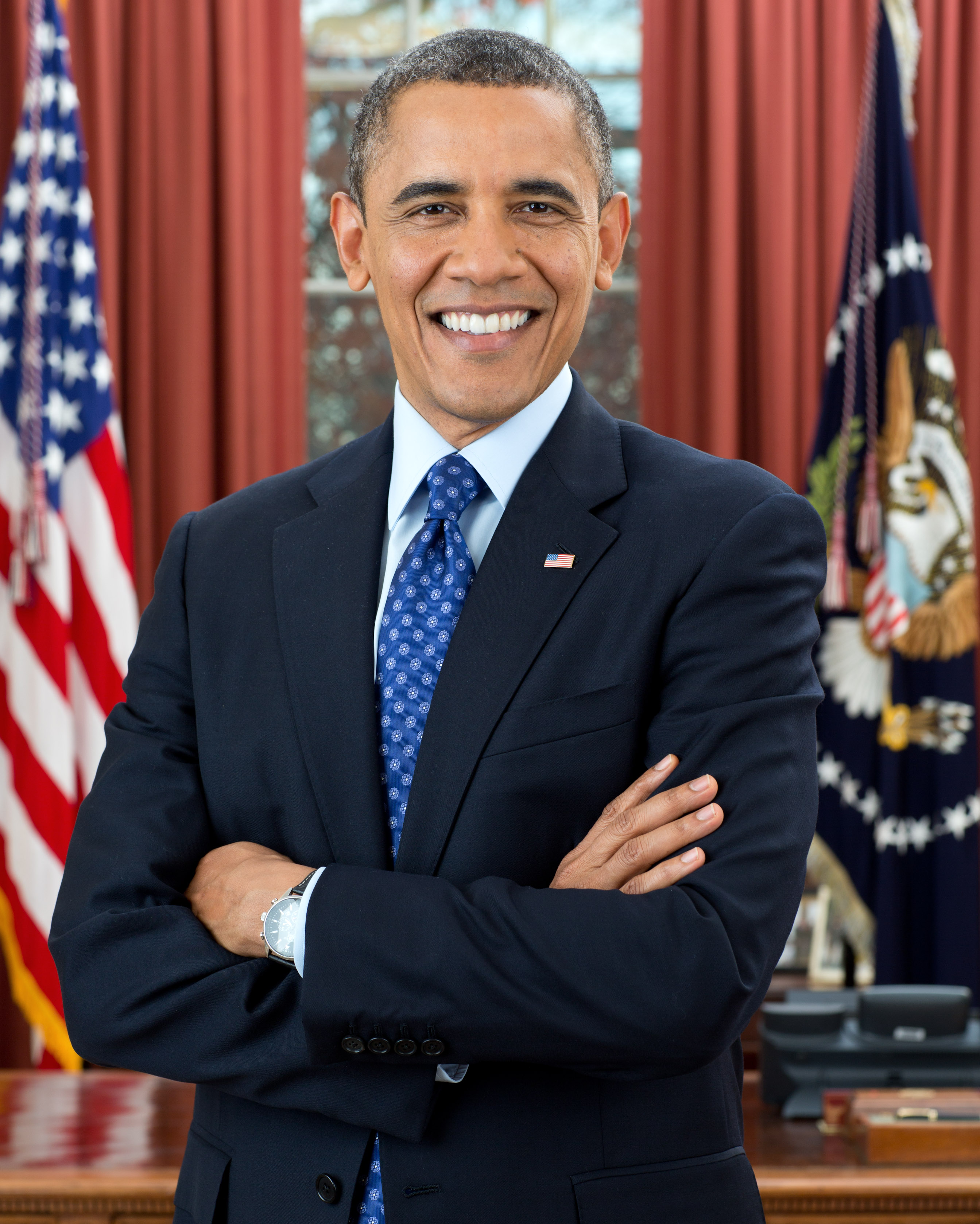
Official White House Photo by Pete Souza. Courtesy Barack Obama Presidential Library. Public domain in the United States: U.S. federal government work (17 U.S.C. § 105). No endorsement implied. Rights policy.