Repeatable measurements to known spots.
A laser station fires a timed light pulse at an array and counts the few photons that come back. The round-trip time gives the distance. The Apache Point team reports fifteen years of data to five arrays with a median nightly accuracy of 1.7 millimeters. [1]
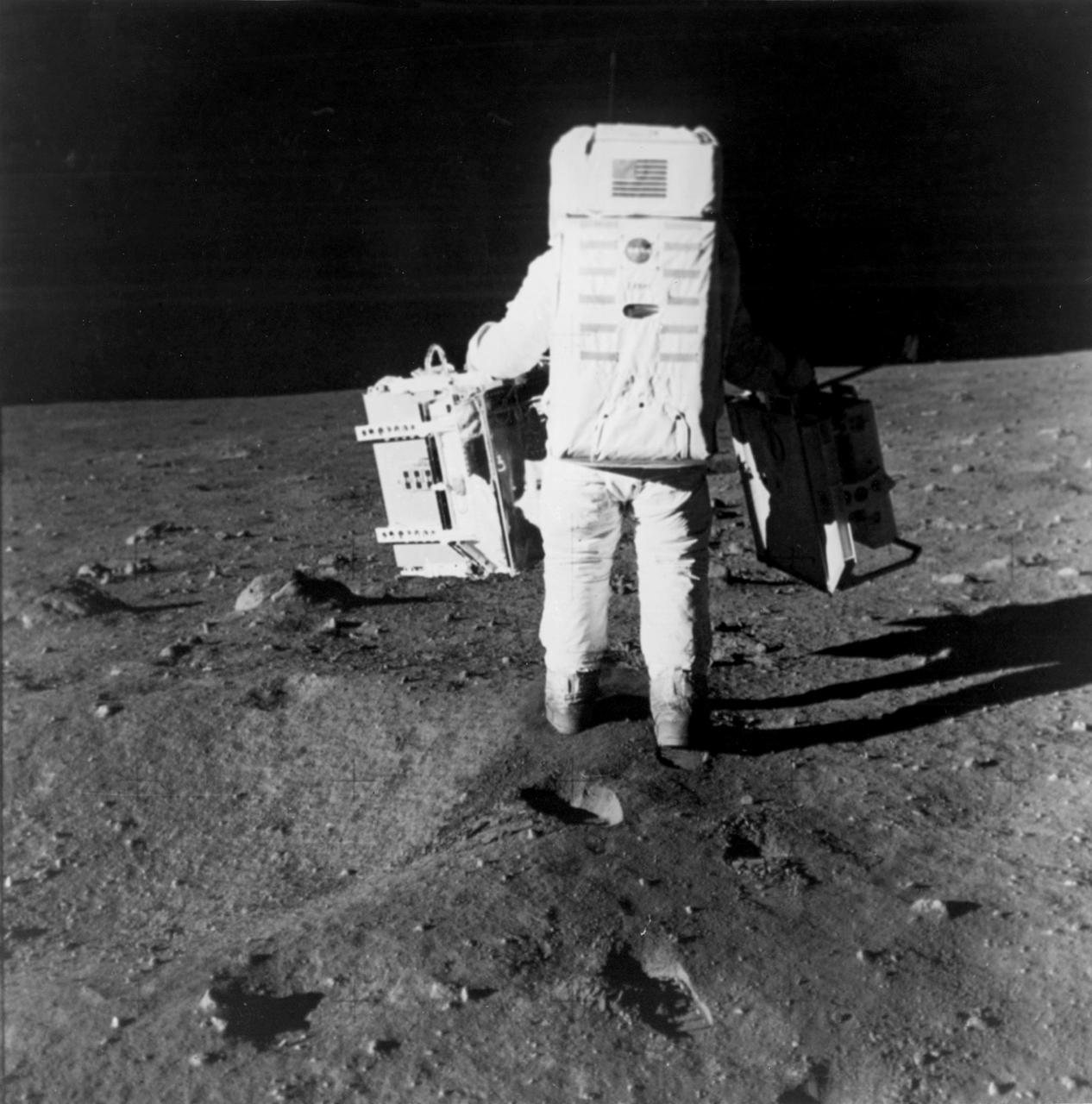
The first returns from the Apollo 11 array were recorded at Lick Observatory on 1 August 1969. [4] Bare lunar soil does return some light, but the arrays give returns far stronger and sharper, and only from the precise coordinates where Apollo crews worked.
A 2024 study found the Apollo arrays have dimmed over the decades, probably because dust has settled on them. [3] The reflectors fit with everything else: the documented sites, the photographs, the samples.
Approved reader comments and ratings appear here when JavaScript is on.