Low thrust, vacuum and no air to carry dust.
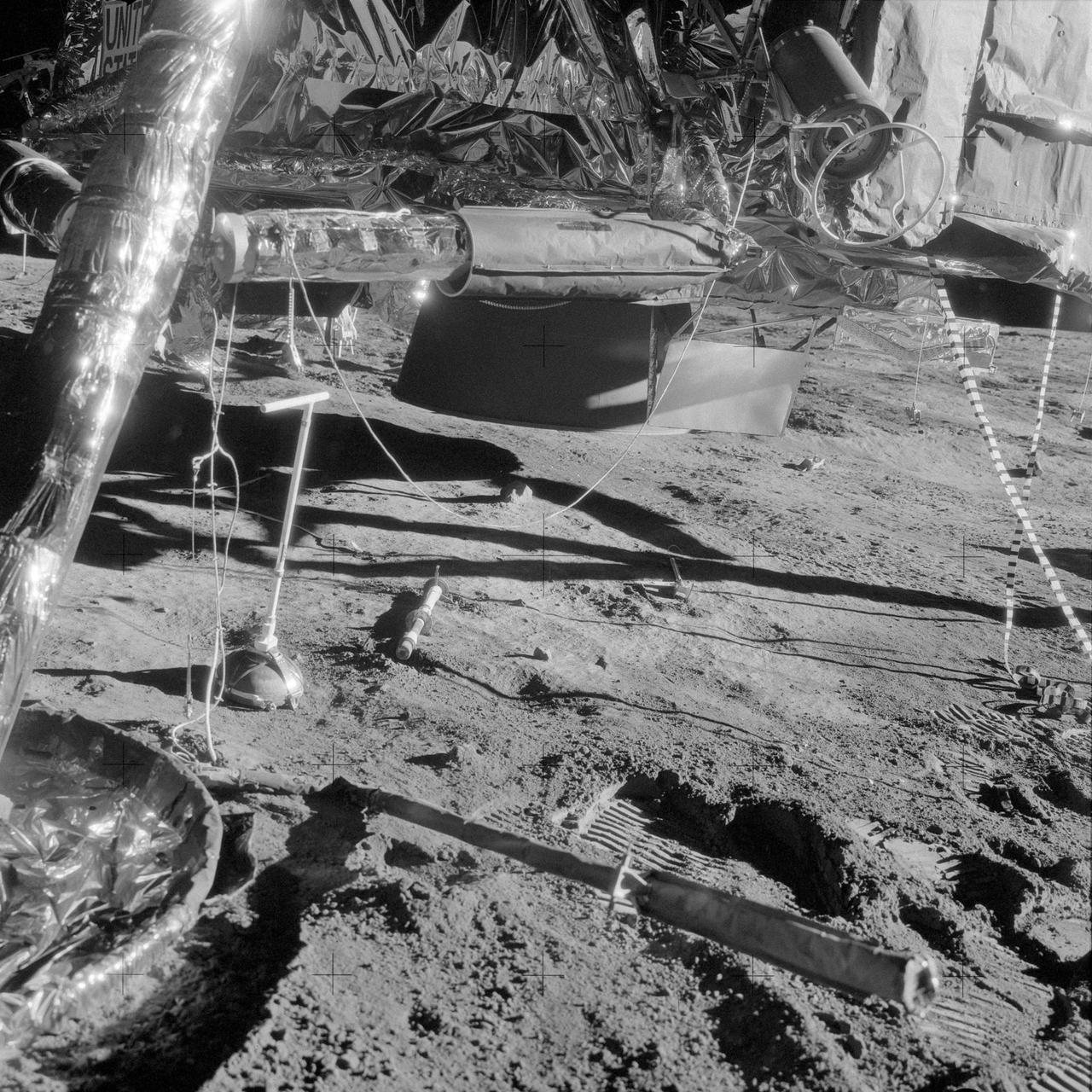
By touchdown the engine was throttled down to a fraction of its maximum, enough only to hold up a lander that weighed one-sixth as much as on Earth. In a vacuum the exhaust spreads out immediately, so its pressure on the ground is low. Armstrong described the result: no crater, but radial streaks where the soil had been blown away. [1]
Dust was a real problem. Apollo 12’s crew could barely see the ground through it during landing. [2] Without air, the dust flew outward in straight lines and fell, rather than billowing and settling on the footpads.
The engine was also cut off at, or just after, first contact. NASA is still testing how plumes and soil interact because Artemis landers are far bigger. [3]
Approved reader comments and ratings appear here when JavaScript is on.