Typographic card: Long march through the institutions

The AI Files · Dutschke’s long march, Gramsci hegemony reception, and the campus-to-admin lineage fight · 1926–2026 (focus 1962–2026)

Long march through the institutions

A German slogan. An Italian notebook. An American faculty lounge.

Rudi Dutschke spoke of a long march through the institutions. Anglophone readers later braided that phrase with Gramsci’s hegemony and Marcuse’s campus influence. One camp hears a deliberate cultural capture plan. Another hears ordinary left generational change inside universities. This guide puts the primary texts, campus chronology, and rival readings on one critical path — and stops short of rebuilding the Sokal or Grievance Studies files, which nest beside it under The Academia Files.

Typographic card: Long march through the institutions Image: Site-made typographic card · CC0 (site-made)

The story

The story

From prison notebooks and SDS halls to DEI statements and court opinions.

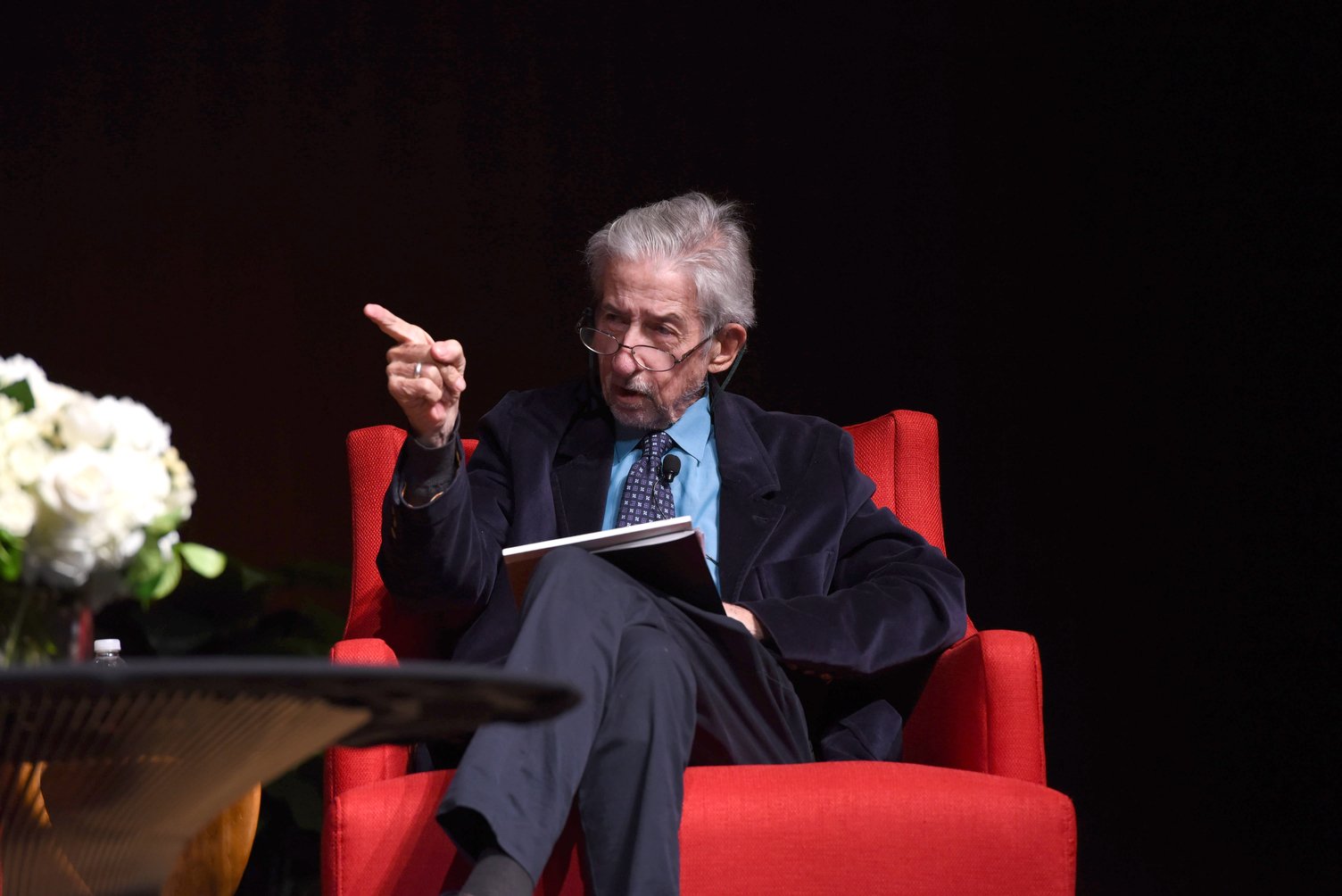
Antonio Gramsci
Antonio Gramsci Prosa · CC BY 4.0

Chapter 1

A prison, not a human-resources office

Antonio Gramsci did not write diversity statements. He wrote notebooks in a Fascist prison — fragmentary, coded, unfinished. The later English word that escaped those pages was **hegemony**: rule that works through consent and intellectual leadership, not only police. [1] [2]

That is the first hinge of this file. Everything after is reception, slogan, campus fight, and argument about whether a 1930s communist theorist secretly explains a 2020s vice-provost for belonging.

Notebooks
Notebooks L.Marie · CC BY 2.0

Chapter 2

Hegemony becomes an English keyword

For decades Gramsci was marginal in the American Left. John Cammett’s 1967 book cracked the door. The 1971 Hoare and Nowell-Smith *Selections from the Prison Notebooks* blew it open. [3] [1] [4]

Perry Anderson’s 1976 *Antinomies* already warned that “hegemony” was traveling faster than careful reading. [5] Stuart Hall’s cultural studies made the word a tool for media and education analysis. [6] By the time North American education faculties paired Gramsci with Freire, the notebook had become a classroom dialect. [7] [8]

Tom Hayden
Tom Hayden Jay Godwin · Public domain

Chapter 3

Port Huron names the campus

Across the Atlantic, before Dutschke’s slogan, American SDS wrote the Port Huron Statement (1962): “housed now in universities, looking uncomfortably to the world we inherit.” [9] [10]

That sentence matters. The US New Left did not need a German formula to treat the university as home base. Tom Hayden’s draft generation already did.

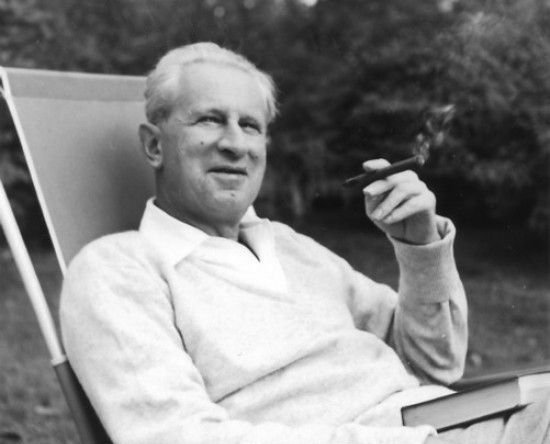
Herbert Marcuse in Newton, Massachusetts 1955
Herbert Marcuse in Newton, Massachusetts 1955 Copyright holder: Marcuse family, represented by Harold Marcuse · CC BY-SA 3.0

Chapter 4

Marcuse on the reading list

Herbert Marcuse’s *One-Dimensional Man* (1964) and “Repressive Tolerance” (1965) circulated as diagnosis and provocation. The second essay argued that extending tolerance to right-wing movements could be a fraud of freedom — a line later quoted as if it were a Title IX training slide. [11] [12]

Hold the distinction: **influence is documented; org-chart command is not.**

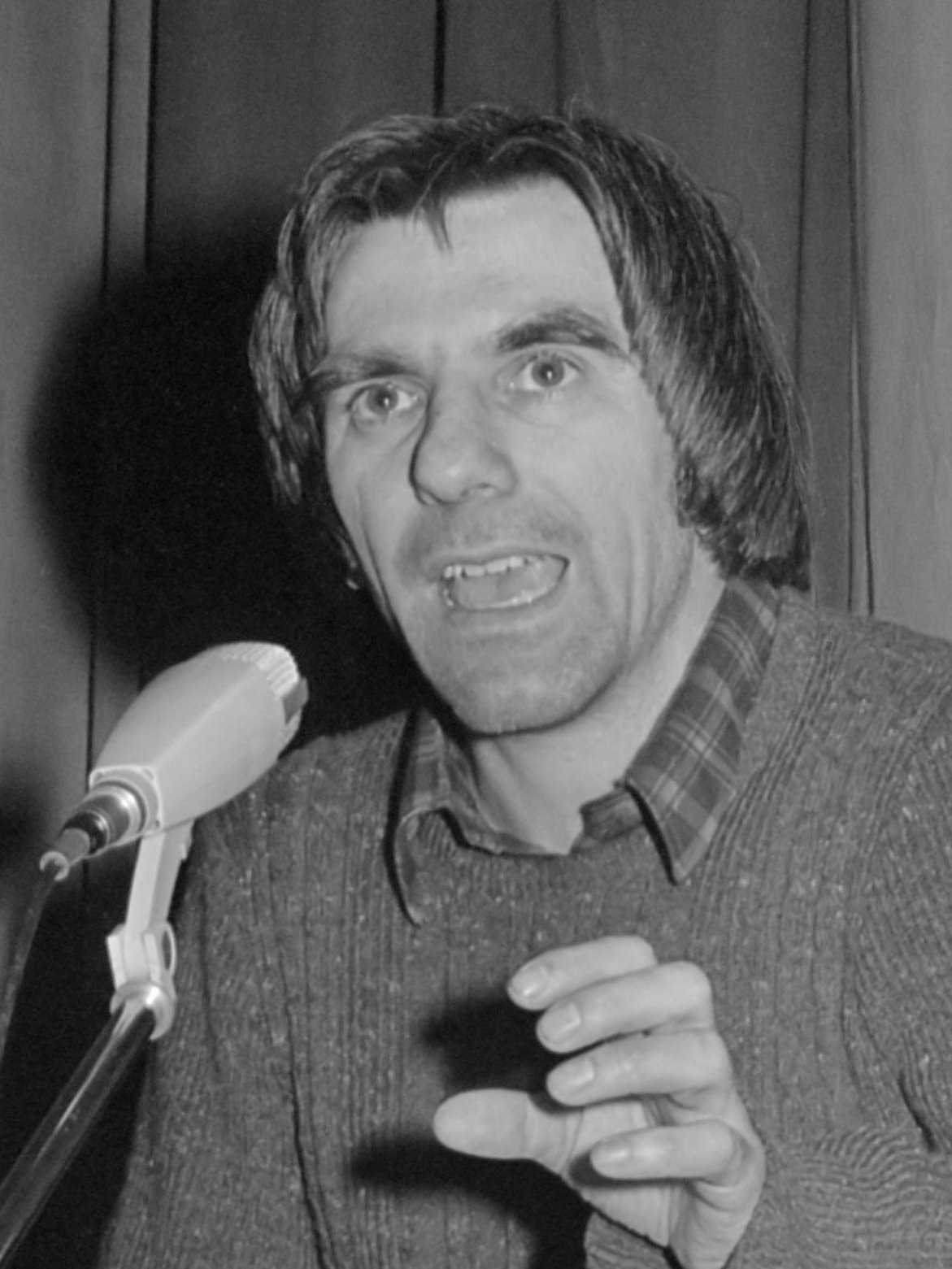
Rudi Dutschke (1976)
Rudi Dutschke (1976) Hans Peters for Anefo · CC0

Chapter 5

Dutschke’s organizational fight

On 5 September 1967, Rudi Dutschke and Hans-Jürgen Krahl addressed the West German SDS in Frankfurt. The tape transcript — not a later meme — treats the university as a social base for irregular struggle against repressive institutions. [13]

Weeks later, on television with Günter Gaus, Dutschke insisted movements could avoid becoming apparatuses that manipulate their own members. [14] He feared capture of the movement by elites. Later American usage would flip the anxiety: capture *of* the institutions *by* the movement.

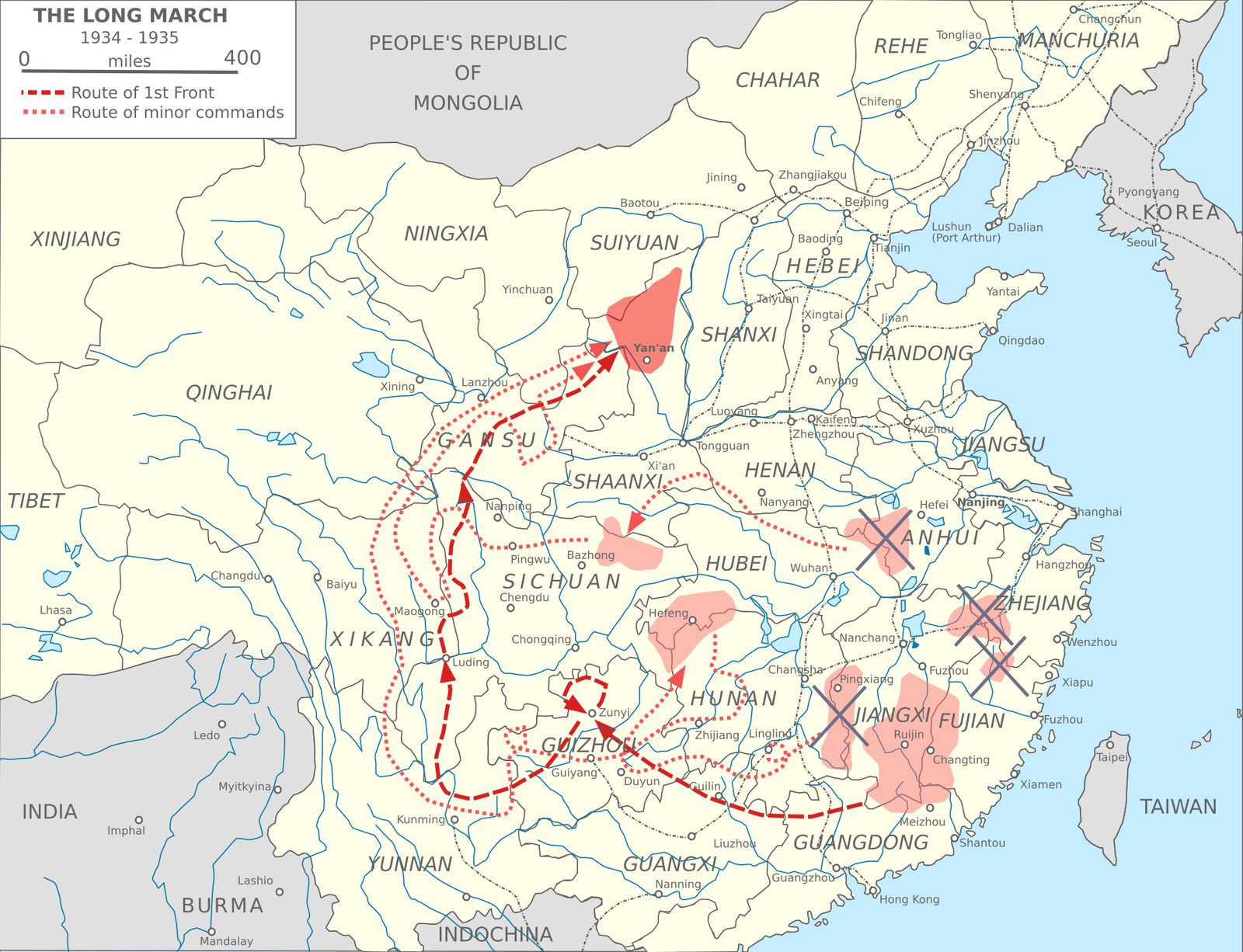
Map of the Long March 1934-1935-en
Map of the Long March 1934-1935-en Chinese_civil_war_map_03.jpg: User:Guimard derivative work: Rowanwindwhistler (talk) · CC BY-SA 3.0

Chapter 6

The sentence everyone quotes

The received wording — permanent revolutionaries entering factories, the Bundeswehr, the bureaucracy; thrown out; entering again; “the long march through the institutions” — lives in a German print path tied to the Voltaire *Briefe an Rudi D.* tradition and later reprints. [15] [16]

It consciously echoes Mao’s Long March as metaphor. [15] Metaphor is not a shipping label from Beijing. And the famous sentence is **not** in the glasnost Organisationsreferat transcript. Philology first; politics second.

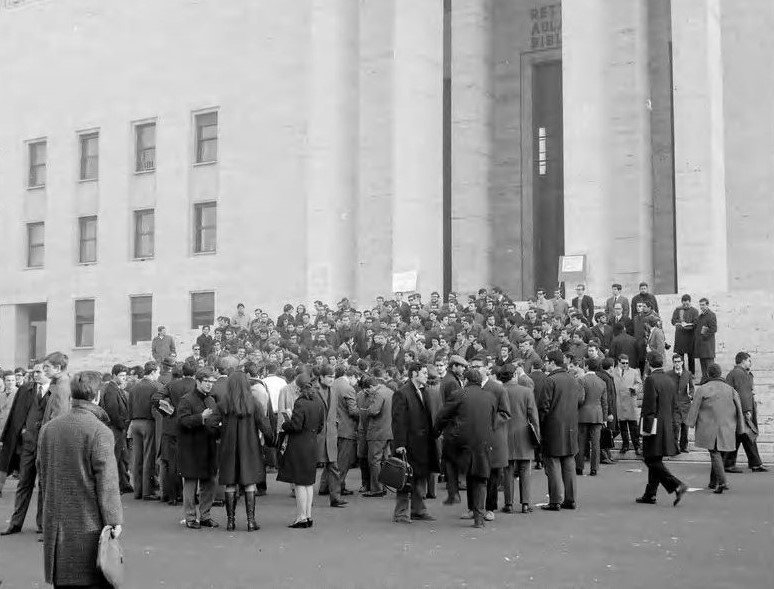
Student occupation, La Sapienza University, Rome, 3 February 1968 (stand-in for 1968 campus revolt wave; not Columbia Yard).
Student occupation, La Sapienza University, Rome, 3 February 1968 (stand-in for 1968 campus revolt wave; not Columbia Yard). Rodrigo Pais · Public domain

Chapter 7

1968 makes the university a stage

Columbia’s occupations, Paris, Berlin, Mexico City — the press taught a planetary lesson: universities were theaters of revolt. [17] [18] [19]

Some militants exited into clandestine violence. Some burned out. Some ran for office. Some took jobs and stayed. Fragmentation is not a footnote; it is the hinge that breaks cartoon continuity. [20] [17]

Lecture hall
Lecture hall Kannan5645 · CC BY-SA 3.0

Chapter 8

From sit-in to department

The 1970s and 1980s turned pressure into programs: ethnic studies, women’s studies, critical theory clusters, new journals, new hires. [21] [22]

This is the strongest non-conspiratorial fact on the capture side of the ledger: **institutions changed their org charts and catalogs.** Why they changed — justice, fashion, foundations, enrollment, ideology — is where the theories split.

Library stacks
Library stacks Omgallusernamesaretaken · CC BY-SA 4.0

Chapter 9

Professionalization without a politburo

Fields can skew without a central committee. Citation communities reward methods; hiring committees copy peers; “war of position” language appears in education scholarship without anyone telexing Dutschke. [6] [8]

Anderson’s warning still applies: the word hegemony can explain too much too quickly. [5]

Typographic card: Closing of the American Mind
Typographic card: Closing of the American Mind Site-made typographic card · CC0 (site-made)

Chapter 10

Bloom nationalizes the anxiety

Allan Bloom’s *The Closing of the American Mind* (1987) sold because parents and alumni already felt a curriculum earthquake. [23] Bloom was not a Gramsci scholar. He did not need to be. The culture war could run on American batteries.

Typographic card: Tenured Radicals
Typographic card: Tenured Radicals Site-made typographic card · CC0 (site-made)

Chapter 11

Kimball names the mechanism

Roger Kimball’s *Tenured Radicals* (1990) said the quiet part in plain English: the sixties did not vanish; they got offices. [24]

Read it as an **argument book**. It is strongest as a field guide to humanities fashion, weakest as a sealed proof that every later DEI statement was pre-written in 1967.

Microphone
Microphone ChrisEngelsma · CC BY 3.0

Chapter 12

Speech becomes the scoreboard

The 1990s–2010s turned “who runs the university?” into measurable fights over codes, shout-downs, and disinvitations. FIRE built databases; AAUP answered with academic-freedom grammar. [25] [22]

Berkeley’s Free Speech Movement complicates simple left-capture nostalgia: the 1960s also produced a student fight *for* speech against administrators. [26] Continuity is not a straight line.

Typographic card: Sokal / Grievance
Typographic card: Sokal / Grievance Site-made typographic card · CC0 (site-made)

Chapter 13

Adjacent epistemology scandals

The Sokal Affair (1996) and later Grievance Studies hoaxes are **neighbors**, not chapters to rebuild here. They live as nest gateways under The Academia Files. [27] [28]

Critics weld them onto the long-march story as proof that theory captured journals. Weld carefully: peer-review failure is a mechanism; it is not automatically Dutschke’s sentence fulfilled.

UC Berkeley campus academic building (Boalt Hall library wing), 2007 — administrative-university chapter image, not a named DEI office.
UC Berkeley campus academic building (Boalt Hall library wing), 2007 — administrative-university chapter image, not a named DEI office. umjanedoan · CC BY 2.0

Chapter 14

The administrative turn

In the 2010s universities multiplied DEI offices, trainings, and — crucially — required diversity statements in hiring. [21] [29] [30]

Official language sounds like AAC&U equity frameworks. [31] Critical language sounds like litmus tests. [32] Both describe the same paperwork. They disagree about the soul inside it.

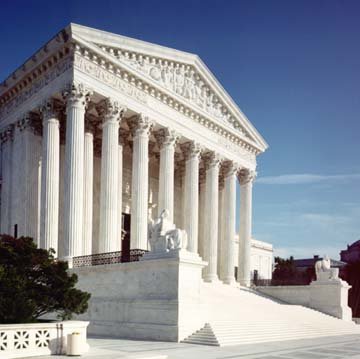
Supreme Court of the United States
Supreme Court of the United States Unknown · Public domain

Chapter 15

SFFA resets admissions law

In 2023 the Supreme Court ended race-conscious admissions at covered universities. [33] Headlines that said “DEI abolished” overspoke. Admissions doctrine moved; offices, curricula, and climate bureaucracies are separate machines — already the site of rollback campaigns. [34] [21]

A stack of newspapers
A stack of newspapers Daniel R. Blume from Orange County, California, USA · CC BY-SA 2.0

Chapter 16

Rollback and rebrand

Christopher Rufo and allied legislators treat DEI as the mature long march and try to unwind it by statute and pressure. [34] Faculty associations answer with academic-freedom and anti-censorship claims of their own. [22]

The fight is live. This guide does not call the winner by technicality.

Freie Universität Berlin (47976884752)
Freie Universität Berlin (47976884752) Trine Syvertsen · CC BY 2.0

Chapter 17

What German memory already knew

A 2018 *Das Parlament* essay revisited the slogan’s home country: how an APO disruption formula was later read as ordinary Green and Social Democratic careers — a dilution story Germans told about themselves before Americans borrowed the phrase for HR. [15] [35]

If even the country of origin argues about dilution, American stock usage should not pretend to archival purity.

Typographic card: Long march through the institutions
Typographic card: Long march through the institutions Site-made typographic card · CC0 (site-made)

Chapter 18

Rival paths, same facts

Put the critical path on the table: Gramsci writes; Port Huron names campuses; Marcuse circulates; Dutschke fights organization; the long-march wording enters print; 1968 stages revolt; English Gramsci arrives; programs institutionalize; Bloom and Kimball nationalize critique; speech metrics accumulate; DEI offices and statements spread; SFFA shocks admissions; rollbacks begin; lineage stays contested.

**Capture**, **drift**, **managerialism**, **justice project**, **memory collapse**, **speech-proxy**, and **fracture** are seven ways to walk that path. Each must say what it removes, adds, or needs to be wrong.

Typographic card: Sokal / Grievance
Typographic card: Sokal / Grievance Site-made typographic card · CC0 (site-made)

Chapter 19

What this file will not do

It will not rebuild Sokal or Grievance Studies. It will not cite Grokipedia. It will not smuggle a Ukraine-war frame. It will not pretend a German student slogan is a complete theory of American bureaucracy — or that American bureaucracy has no politics because the slogan is messy.

Typographic card: Long march through the institutions
Typographic card: Long march through the institutions Site-made typographic card · CC0 (site-made)

Chapter 20

The unfinished march

Rudi Dutschke wanted institutions disordered toward revolution. Many of his American quoters want institutions purged of a revolution they believe already happened. University officers insist they are building inclusion, not executing Gramsci.

The primary spine can settle texts, dates, offices, and court opinions. It cannot, by itself, settle teleology. That is why the theories remain — and why the nest under The Academia Files stays a maintained record, not a verdict stamped true by formatting.

Sources for the story
  1. Antonio Gramsci, Selections from the Prison Notebooks, ed./trans. Quintin Hoare & Geoffrey Nowell-Smith (1971)
  2. Stanford Encyclopedia of Philosophy — Antonio Gramsci (reception section)
  3. John M. Cammett, Antonio Gramsci and the Origins of Italian Communism (1967)
  4. Eric Hobsbawm, 'The Great Gramsci' (NYRB review era of Selections)
  5. Perry Anderson, 'The Antinomies of Antonio Gramsci', New Left Review I/100 (Nov–Dec 1976)
  6. Stuart Hall / CCCS cultural studies writings on hegemony and ideology
  7. Paulo Freire, Pedagogy of the Oppressed (English 1970)
  8. Scholarly surveys of Gramsci in critical education studies (North America)
  9. Students for a Democratic Society, The Port Huron Statement (1962)
  10. University of Michigan — Port Huron / Hayden materials in Resistance and Revolution exhibit
  11. Herbert Marcuse, One-Dimensional Man (1964)
  12. Herbert Marcuse, 'Repressive Tolerance' (1965)
  13. Dutschke/Krahl, Organisationsreferat, 22. SDS-Delegiertenkonferenz (Frankfurt Mensa), 5 Sept 1967 (tape transcript)
  14. Rudi Dutschke interview with Günter Gaus, Zur Person, 3 Dec 1967 (rbb archive)
  15. Das Parlament: 'Marsch an die Schalthebel' (2018) — reprints Dutschke long-march quotation
  16. Ulrike Meinhof essays collection cited as reprint path for Dutschke quotation (Wagenbach eds.)
  17. Contemporaneous New York Times coverage of Columbia University protests, April–May 1968
  18. Time / Newsweek 1968 student revolt cover packages (contemporaneous)
  19. Columbia University / Cox Commission materials on 1968 disturbances
  20. SDS Sixties Project — document archive
  21. Chronicle of Higher Education reporting on DEI offices, hiring statements, and rollbacks (2015–2026)
  22. AAUP statements on academic freedom and shared governance
  23. Allan Bloom, The Closing of the American Mind (1987)
  24. Roger Kimball, Tenured Radicals (1990; later editions)
  25. FIRE — campus speech codes / disinvitation databases
  26. Free Speech Movement archives (UC Berkeley)
  27. The Academia Files — Sokal Affair nest gateway
  28. The Academia Files — Grievance Studies nest gateway
  29. Major newspaper reporting on diversity statements in faculty hiring (2010s–2020s)
  30. University of California / systemwide diversity and hiring guidance pages
  31. University DEI office mission statements and AAC&U diversity frameworks
  32. National Association of Scholars reports on DEI requirements and curricula
  33. Students for Fair Admissions v. Harvard / UNC (2023)
  34. Christopher F. Rufo essays and legislative campaigns on DEI (2020–2026)
  35. German Bundestag magazine historical framing of APO institutional careers

Explore

Go deeper, era by era

Pick an era, or search everything at once: entries, people, dated events, claims, theories and media.

Threads

Follow one thread through the whole story

Each thread pulls together the entries on one question, across all the eras.

Key people

Who was who

Theorists, student leaders, critics, and institutional voices on the path.

Antonio GramsciAntonio GramsciItalian Marxist theorist; Prison Notebooks
Hans-Jürgen KrahlHans-Jürgen KrahlSDS theorist; co-author of 1967 Organisationsreferat

Co-signed the Frankfurt organizational speech with Dutschke; died 1970.

Sources
  1. Dutschke/Krahl, Organisationsreferat, 22. SDS-Delegiertenkonferenz (Frankfurt Mensa), 5 Sept 1967 (tape transcript)
Herbert MarcuseHerbert MarcuseFrankfurt School philosopher

One-Dimensional Man and Repressive Tolerance became New Left campus touchstones — later ammunition in speech debates.

Sources
  1. Herbert Marcuse, One-Dimensional Man (1964)
  2. Herbert Marcuse, 'Repressive Tolerance' (1965)
Tom HaydenTom HaydenSDS leader; Port Huron principal drafter

Drafted the Port Huron Statement; later elected official — himself an exhibit in ‘march into institutions’ arguments.

Sources
  1. Students for a Democratic Society, The Port Huron Statement (1962)
  2. University of Michigan — Port Huron / Hayden materials in Resistance and Revolution exhibit
Perry AndersonPerry AndersonNew Left Review editor/essayist

Wrote the landmark 1976 ‘Antinomies of Antonio Gramsci’ as hegemony talk saturated Anglo Marxism.

Sources
  1. Perry Anderson, 'The Antinomies of Antonio Gramsci', New Left Review I/100 (Nov–Dec 1976)
Stuart HallStuart HallCultural studies; CCCS

Helped make hegemony a working tool for media and education analysis in Britain, then abroad.

Sources
  1. Stuart Hall / CCCS cultural studies writings on hegemony and ideology
Paulo FreirePaulo FreirePedagogy of the Oppressed
John M. CammettJohn M. CammettUS Gramsci scholar

1967 book credited with ending American Left ignorance of Gramsci before the Selections.

Sources
  1. John M. Cammett, Antonio Gramsci and the Origins of Italian Communism (1967)
Allan BloomAllan BloomPhilosopher; Closing of the American Mind

1987 bestseller against relativism in elite universities — culture-war ignition.

Sources
  1. Allan Bloom, The Closing of the American Mind (1987)
Roger KimballRoger KimballCritic; Tenured Radicals

Named the ‘sixties radicals with tenure’ thesis for a wide audience.

Sources
  1. Roger Kimball, Tenured Radicals (1990; later editions)
David HorowitzDavid HorowitzCampus-watch polemicist

Former New Left figure turned faculty-bias activist; contested methods.

Sources
  1. David Horowitz / related campus-watch polemics on faculty politics (2000s)
Christopher F. RufoChristopher F. RufoDEI critic / activist

2020s campaigner framing DEI offices as ideological capture; major rollback entrepreneur.

Sources
  1. Christopher F. Rufo essays and legislative campaigns on DEI (2020–2026)
John SearleJohn SearleBerkeley philosopher; FSM-era faculty voice

Example of faculty entangled in Free Speech Movement-era campus fights (context figure).

Sources
  1. Free Speech Movement archives (UC Berkeley)
Mark RuddMark RuddColumbia SDS / occupation figure

Associated with Columbia 1968 leadership; later Weather Underground path shows one exit from campus revolt.

Sources
  1. Contemporaneous New York Times coverage of Columbia University protests, April–May 1968
  2. Columbia University / Cox Commission materials on 1968 disturbances
Angela DavisAngela DavisActivist-scholar; Marcuse student

Symbolic bridge from Marcuse seminar culture to later radical academic celebrity — contested as exhibit by both camps.

Sources
  1. Herbert Marcuse, One-Dimensional Man (1964)
  2. Herbert Marcuse official archive (marcuse.org)
Quintin HoareQuintin HoareCo-editor, Selections from the Prison Notebooks

With Nowell-Smith, produced the 1971 English Gramsci anthology that remade syllabi.

Sources
  1. Antonio Gramsci, Selections from the Prison Notebooks, ed./trans. Quintin Hoare & Geoffrey Nowell-Smith (1971)
Geoffrey Nowell-SmithGeoffrey Nowell-SmithCo-editor, Selections from the Prison Notebooks
John G. Roberts Jr.John G. Roberts Jr.Chief Justice; SFFA majority

Authored the controlling admissions opinions that reset race-conscious university practice in 2023.

Sources
  1. Students for Fair Admissions v. Harvard / UNC (2023)
Edward BlumEdward BlumSFFA strategist

Organized the litigation vehicle that produced the 2023 admissions rulings.

Sources
  1. Students for Fair Admissions v. Harvard / UNC (2023)
FIREFIRECampus speech advocacy group

Tracks codes and disinvitations; data used heavily by speech-chill narratives.

Sources
  1. FIRE — campus speech codes / disinvitation databases
AAUPAAUPFaculty professional association

Mainstream defender of academic freedom and shared governance against capture and politicization claims alike.

Sources
  1. AAUP statements on academic freedom and shared governance
AAC&UAAC&ULiberal-education association

Publishes diversity/inclusion frameworks universities cite as professional best practice.

Sources
  1. University DEI office mission statements and AAC&U diversity frameworks
National Association of ScholarsNational Association of ScholarsCurriculum/DEI watchdog

Advocacy research shop arguing ideological conformity in hiring and general education.

Sources
  1. National Association of Scholars reports on DEI requirements and curricula
Ulrike MeinhofUlrike MeinhofJournalist; later RAF

Essay collections sit in the reprint chain sometimes cited for Dutschke quotation transmission — and mark how APO memory darkened.

Sources
  1. Ulrike Meinhof essays collection cited as reprint path for Dutschke quotation (Wagenbach eds.)
  2. Das Parlament: 'Marsch an die Schalthebel' (2018) — reprints Dutschke long-march quotation
Mao ZedongMao ZedongChinese Communist leader; Long March namesake
C. Wright MillsC. Wright MillsSociologist; New Left influence

Power Elite / New Left Letter influence on Port Huron generation’s university critique.

Sources
  1. Students for a Democratic Society, The Port Huron Statement (1962)
Alan SokalAlan SokalPhysicist; 1996 Social Text hoax

Cross-link figure: journal epistemology scandal nested under Academia, not rebuilt here.

Sources
  1. The Academia Files — Sokal Affair nest gateway
James LindsayJames LindsayGrievance Studies co-author

Cross-link figure for Sokal Squared nest — lineage debate adjacency only.

Sources
  1. The Academia Files — Grievance Studies nest gateway
Peter BoghossianPeter BoghossianGrievance Studies co-author

Cross-link figure for Sokal Squared nest.

Sources
  1. The Academia Files — Grievance Studies nest gateway
Helen PluckroseHelen PluckroseGrievance Studies co-author

Cross-link figure for Sokal Squared nest.

Sources
  1. The Academia Files — Grievance Studies nest gateway
Günter GausGünter GausInterviewer; Zur Person

Elicited Dutschke’s 1967 televised account of organization and consciousness.

Sources
  1. Rudi Dutschke interview with Günter Gaus, Zur Person, 3 Dec 1967 (rbb archive)

Timeline

Day by day

30 dated events, 1926–2026 (focus 1962–2026), each with its source.

  1. 1926–1935
    Gramsci imprisoned; notebooks Drafts hegemony and intellectuals notes in Fascist prisons. Hegemony arrives · source source
  2. June 1962
    Port Huron Statement SDS manifesto centers universities. American campus New Left · source
  3. 1964
    Berkeley Free Speech Movement Student speech vs admin rules goes national. American campus New Left · source
  4. 1964
    One-Dimensional Man Marcuse book hits New Left reading culture. American campus New Left · source
  5. 1965
    Repressive Tolerance Essay argues asymmetric tolerance. American campus New Left · source
  6. 1967
    Cammett on Gramsci US scholarly Gramsci book. Hegemony arrives · source
  7. 5 Sept 1967
    Dutschke/Krahl Organisationsreferat Frankfurt SDS speech on organization and institutions. The German formula · source
  8. 1967 (print path)
    Long-march wording circulates Received sentence via Voltaire/Briefe-an-Rudi tradition. The German formula · source source
  9. 3 Dec 1967
    Dutschke–Gaus interview Televised organization/consciousness discussion. The German formula · source
  10. Spring 1968
    Columbia and global 1968 Occupations and global student revolt peak. American campus New Left · source source
  11. 1970
    Pedagogy of the Oppressed (English) Freire enters education curricula. Hegemony arrives · source
  12. 1960s–1970s
    APO memory darkens Meinhof path marks violent exit from press/APO world. The German formula · source
  13. 1971
    English Prison Notebooks Selections Hoare/Nowell-Smith anthology. Hegemony arrives · source
  14. 1970s–1980s
    Programs institutionalize Ethnic/women’s/critical studies expand. Programs & professions · source
  15. 1976
    Anderson’s Antinomies NLR critiques hegemony uses. Hegemony arrives · source
  16. 1970s–80s
    Hall/CCCS hegemony tools Cultural studies transmission. Hegemony arrives · source
  17. 1987
    Closing of the American Mind Bloom bestseller. Tenured radicals? · source
  18. 1980s–90s
    Canon / Western civ fights Curriculum wars go national. Tenured radicals? · source source
  19. 1990
    Tenured Radicals Kimball’s capture thesis book. Tenured radicals? · source
  20. c. 1991
    ‘PC’ mass label Political correctness enters mass media. Tenured radicals? · source
  21. 1990s–2010s
    Speech-code conflicts Codes, FIRE databases, AAUP responses. Speech norms · source source
  22. 1996
    Sokal Affair (adjacent) Social Text hoax — Academia nest. Memory & lineage fights · source
  23. 2011–2016
    Title IX guidance era Compliance staffs expand. Speech norms · source source
  24. 2010s
    DEI offices & statements Admin growth and hiring statements spread. DEI administration · source source
  25. 2017–2018
    Grievance Studies (adjacent) Journal hoaxes — Academia nest. Memory & lineage fights · source
  26. 2018
    Das Parlament reassesses slogan German magazine on dilution vs original sense. Memory & lineage fights · source
  27. June 2023
    SFFA decisions SCOTUS ends race-conscious admissions at covered schools. DEI administration · source
  28. 2023–2026
    Proxy admissions fights Race-neutral workarounds litigated in press. DEI administration · source source
  29. 2023–2026
    DEI rollback campaigns State/donor/activist unwind efforts intensify. DEI administration · source source
  30. 2026
    Lineage fight ongoing Capture vs drift still unsettled. Memory & lineage fights · source source

What we know now

What we know now

Settled texts, contested lineages, and the post-2023 admissions legal map.

The yardstick

Critical path

Sixteen links any serious account of the ‘long march’ story must face.

  1. 1
    1926–1935Gramsci writes

    Imprisoned, Gramsci drafts notebooks on hegemony, intellectuals, and war of position — later the conceptual warehouse for cultural-power talk.[1][2]

    On the timeline
  2. 2
    June 1962Port Huron

    US SDS publishes Port Huron (1962): universities are named as the generation’s uncomfortable home and a lever for participatory democracy.[3][4]

    On the timeline
  3. 3
    1964Marcuse on lists

    One-Dimensional Man (1964) and ‘Repressive Tolerance’ (1965) circulate on campuses as tools for diagnosing advanced industrial society and speech.[5][6]

    On the timeline
  4. 4
    5 Sept 1967Dutschke/Krahl org speech

    5 Sept 1967: Dutschke/Krahl tell West German SDS the university is a base for irregular struggle against repressive institutions.[7]

    On the timeline
  5. 5
    1967 (print path)Long-march wording

    The received sentence — permanent revolutionaries entering factories, Bundeswehr, bureaucracy: ‘the long march through the institutions’ — enters print via the Voltaire/Briefe-an-Rudi path and later reprints.[8][9]

    On the timeline
  6. 6
    Spring 19681968 campus wave

    Columbia, Paris, Berlin and peers make universities the visible stage of revolt; contemporaneous press fixes the association.[10][11][12]

    On the timeline
  7. 7
    1967US Gramsci book

    Cammett (1967) and then Hoare/Nowell-Smith Selections (1971) move Gramsci from niche to syllabus-ready English.[13][1][14]

    On the timeline
  8. 8
    1976Anderson antinomies

    Anderson (1976) and cultural-studies work police and popularize ‘hegemony’ as analytic keyword — not a single conspiracy manual.[15][16]

    On the timeline
  9. 9
    1970s–1980sProgram building

    1970s–80s: ethnic studies, women’s studies, critical theory and related programs become departmental facts with hires and curricula.[17][18]

    On the timeline
  10. 10
    1987Bloom bestseller

    Closing of the American Mind (1987) nationalizes the charge that elite universities abandoned truth for relativism.[19]

    On the timeline
  11. 11
    1990Tenured Radicals

    Kimball (1990) names the mechanism: sixties radicals now set humanities fashion from inside tenure.[20]

    On the timeline
  12. 12
    1990s–2010sSpeech-code era

    1990s–2010s speech codes, disinvitations, and FIRE/AAUP counter-datasets become the measurable proxy for ‘who runs campus norms.’[21][18]

    On the timeline
  13. 13
    2010sDEI offices & statements

    2010s: dedicated DEI administrations and required diversity statements spread in hiring; universities publish mission language; critics call it ideological screening.[22][23][24][25]

    On the timeline
  14. 14
    June 2023SFFA 2023

    Supreme Court ends race-conscious admissions at covered universities — a legal shock to DEI practice even where offices remain.[26]

    On the timeline
  15. 15
    2023–2026Rollback campaigns

    State laws, donor pressure, and activist campaigns (Rufo et al.) seek to dismantle DEI bureaucracies; defenders rebrand or resist.[27][17][18]

    On the timeline
  16. 16
    2026Lineage still contested

    Whether DEI admin culture is the fulfillment of Dutschke/Gramsci strategy, a bureaucratic cousin, or a separate justice project remains a live interpretive fight — not a settled fact.[8][22][20][28]

    On the timeline
Sources for the 16 steps
  1. Antonio Gramsci, Selections from the Prison Notebooks, ed./trans. Quintin Hoare & Geoffrey Nowell-Smith (1971)
  2. Stanford Encyclopedia of Philosophy — Antonio Gramsci (reception section)
  3. Students for a Democratic Society, The Port Huron Statement (1962)
  4. University of Michigan — Port Huron / Hayden materials in Resistance and Revolution exhibit
  5. Herbert Marcuse, One-Dimensional Man (1964)
  6. Herbert Marcuse, 'Repressive Tolerance' (1965)
  7. Dutschke/Krahl, Organisationsreferat, 22. SDS-Delegiertenkonferenz (Frankfurt Mensa), 5 Sept 1967 (tape transcript)
  8. Das Parlament: 'Marsch an die Schalthebel' (2018) — reprints Dutschke long-march quotation
  9. Ulrike Meinhof essays collection cited as reprint path for Dutschke quotation (Wagenbach eds.)
  10. Contemporaneous New York Times coverage of Columbia University protests, April–May 1968
  11. Time / Newsweek 1968 student revolt cover packages (contemporaneous)
  12. Columbia University / Cox Commission materials on 1968 disturbances
  13. John M. Cammett, Antonio Gramsci and the Origins of Italian Communism (1967)
  14. Eric Hobsbawm, 'The Great Gramsci' (NYRB review era of Selections)
  15. Perry Anderson, 'The Antinomies of Antonio Gramsci', New Left Review I/100 (Nov–Dec 1976)
  16. Stuart Hall / CCCS cultural studies writings on hegemony and ideology
  17. Chronicle of Higher Education reporting on DEI offices, hiring statements, and rollbacks (2015–2026)
  18. AAUP statements on academic freedom and shared governance
  19. Allan Bloom, The Closing of the American Mind (1987)
  20. Roger Kimball, Tenured Radicals (1990; later editions)
  21. FIRE — campus speech codes / disinvitation databases
  22. University DEI office mission statements and AAC&U diversity frameworks
  23. Major newspaper reporting on diversity statements in faculty hiring (2010s–2020s)
  24. University of California / systemwide diversity and hiring guidance pages
  25. National Association of Scholars reports on DEI requirements and curricula
  26. Students for Fair Admissions v. Harvard / UNC (2023)
  27. Christopher F. Rufo essays and legislative campaigns on DEI (2020–2026)
  28. Scholarly surveys of Gramsci in critical education studies (North America)

RIVAL READINGS

Capture, drift, or something else

Seven framings, each stated at its strongest, then measured against the critical path.

Typographic card: Tenured Radicals
Typographic card: Tenured Radicals Site-made typographic card · CC0 (site-made)
Disputed

Intentional cultural capture

New Left strategists, reading Gramsci and Dutschke, deliberately entered universities and remade norms; DEI admin is the mature form.

  1. 1Gramsci writes
  2. 2Port Huron
  3. 3Marcuse on lists
  4. 4Dutschke/Krahl org speech
  5. 5Long-march wording
  6. 61968 campus wave
  7. 7US Gramsci book
  8. 8Anderson antinomies
  9. 9Program building
  10. 10Bloom bestseller
  11. 11Tenured Radicals
  12. 12Speech-code era
  13. 13DEI offices & statements
  14. 14SFFA 2023
  15. 15Rollback campaigns
  16. 16Lineage still contestedbreaks
  17. +Coordinated decades-long execution planThin evidence
Open the file
Where it started

Kimball Tenured Radicals lineage + later Rufo/NAS framing.[1][2][3]

Why it lives

Dominant on the American right’s campus narrative since the 1990s.

If it were true

Critical path’s institutionalization and DEI steps are read as execution, not coincidence.

How it squares with the record

What holds up Disputed

Strongest on documented political texts + later admin tools; weakest on central coordination and German slogan fidelity.

Against the critical path
  1. 1Gramsci writes
  2. 2Port Huron
  3. 3Marcuse on lists
  4. 4Dutschke/Krahl org speech
  5. 5Long-march wording
  6. 61968 campus wave
  7. 7US Gramsci book
  8. 8Anderson antinomies
  9. 9Program building
  10. 10Bloom bestseller
  11. 11Tenured Radicals
  12. 12Speech-code era
  13. 13DEI offices & statements
  14. 14SFFA 2023
  15. 15Rollback campaigns
  16. 16Lineage still contestedbreaks
  17. +Coordinated decades-long execution planThin evidence
Removes from the critical path
  • 16. Lineage still contested must deny Treats lineage fight as already won for capture What has to be fake or wrong: Drift/managerial evidence would have to be illusory[5]
Adds to the critical path
  • Coordinated decades-long execution plan Thin evidence Inferred from outcomes more than minutes[1]
What would have to turn out fake or wrong
  • Claim that DEI is only race-neutral compliance with no political screening
What new information would make it true
  • Internal movement docs assigning long-term faculty capture as strategy with metrics
  • Hiring archives showing explicit ideological screens tied to 1960s organizations
What would prove it false
  • Field-level evidence that curriculum/admin change tracked non-ideological drivers with no belief screens
Lecture hall
Lecture hall Kannan5645 · CC BY-SA 3.0
Disputed

Ordinary generational drift

Universities moved left because cohorts, urban professionals, and peer norms did — no Dutschkean plot required.

  1. 1Gramsci writes
  2. 2Port Huron
  3. 3Marcuse on lists
  4. 4Dutschke/Krahl org speech
  5. 5Long-march wording
  6. 61968 campus wave
  7. 7US Gramsci book
  8. 8Anderson antinomies
  9. 9Program building
  10. 10Bloom bestseller
  11. 11Tenured Radicalsrecast
  12. 12Speech-code era
  13. 13DEI offices & statements
  14. 14SFFA 2023
  15. 15Rollback campaigns
  16. 16Lineage still contested
  17. +Non-ideological demographic engineSome evidence
Open the file
Who believes it
Who has voiced it
Where it started

AAUP-style institutional self-understanding + social science on faculty partisanship.[1][2]

Why it lives

Default inside many faculty senates.

If it were true

Political texts become atmosphere, not operating system.

How it squares with the record

What holds up Disputed

Strongest against hard conspiracy; weakest against litmus-test hiring tools.

Against the critical path
  1. 1Gramsci writes
  2. 2Port Huron
  3. 3Marcuse on lists
  4. 4Dutschke/Krahl org speech
  5. 5Long-march wording
  6. 61968 campus wave
  7. 7US Gramsci book
  8. 8Anderson antinomies
  9. 9Program building
  10. 10Bloom bestseller
  11. 11Tenured Radicalsrecast
  12. 12Speech-code era
  13. 13DEI offices & statements
  14. 14SFFA 2023
  15. 15Rollback campaigns
  16. 16Lineage still contested
  17. +Non-ideological demographic engineSome evidence
Removes from the critical path
  • 11. Tenured Radicals must recast Reads Kimball as polemic exaggeration What has to be fake or wrong: Systematic litmus evidence[4]
Adds to the critical path
  • Non-ideological demographic engine Some evidence Partisan sorting is real in surveys though methods fight[1]
What would have to turn out fake or wrong
  • A discovered central capture committee running hires
What new information would make it true
  • Robust models showing admin tools track compliance/enrollment not ideology
What would prove it false
  • Widespread scored belief screens in hiring
Books and films that argue it
UC Berkeley campus academic building (Boalt Hall library wing), 2007 — administrative-university chapter image, not a named DEI office.
UC Berkeley campus academic building (Boalt Hall library wing), 2007 — administrative-university chapter image, not a named DEI office. umjanedoan · CC BY 2.0
Mixed

Managerial university

The story is administrative bloat, risk, accreditation, and HR isomorphism — DEI is one module of the compliance university.

  1. 1Gramsci writes
  2. 2Port Huron
  3. 3Marcuse on lists
  4. 4Dutschke/Krahl org speech
  5. 5Long-march wordingrecast
  6. 61968 campus wave
  7. 7US Gramsci book
  8. 8Anderson antinomies
  9. 9Program building
  10. 10Bloom bestseller
  11. 11Tenured Radicals
  12. 12Speech-code era
  13. 13DEI offices & statements
  14. 14SFFA 2023
  15. 15Rollback campaigns
  16. 16Lineage still contested
  17. +Compliance/accreditation driver setSome evidence
Open the file
Who believes it
Where it started

Higher-ed political economy critics across left and right.[1][3]

Why it lives

Gaining as SFFA forces race-neutral redesigns.

If it were true

cp13 is about bureaucracy first, Gramsci second.

How it squares with the record

What holds up Mixed

Strong co-cause; incomplete as total explanation of moralized mission language.

Against the critical path
  1. 1Gramsci writes
  2. 2Port Huron
  3. 3Marcuse on lists
  4. 4Dutschke/Krahl org speech
  5. 5Long-march wordingrecast
  6. 61968 campus wave
  7. 7US Gramsci book
  8. 8Anderson antinomies
  9. 9Program building
  10. 10Bloom bestseller
  11. 11Tenured Radicals
  12. 12Speech-code era
  13. 13DEI offices & statements
  14. 14SFFA 2023
  15. 15Rollback campaigns
  16. 16Lineage still contested
  17. +Compliance/accreditation driver setSome evidence
Removes from the critical path
  • 5. Long-march wording must recast Slogan becomes rhetorical ornament What has to be fake or wrong: Explicit Gramscian admin training pipelines[4]
Adds to the critical path
  • Compliance/accreditation driver set Some evidence Visible in Title IX and ranking behavior[1]
What would have to turn out fake or wrong
  • Claim that budgets prove pure Marxist intent
What new information would make it true
  • Budget histories showing DEI growth locked to compliance triggers
What would prove it false
  • Internal docs prioritizing ideological transformation over risk
Books and films that argue it
UC Berkeley campus academic building (Boalt Hall library wing), 2007 — administrative-university chapter image, not a named DEI office.
UC Berkeley campus academic building (Boalt Hall library wing), 2007 — administrative-university chapter image, not a named DEI office. umjanedoan · CC BY 2.0
Disputed

Separate justice project

DEI and curriculum change are moral responses to racism/sexism, not heirs of European communist strategy.

  1. 1Gramsci writes
  2. 2Port Huron
  3. 3Marcuse on lists
  4. 4Dutschke/Krahl org speech
  5. 5Long-march wording
  6. 61968 campus wave
  7. 7US Gramsci book
  8. 8Anderson antinomies
  9. 9Program building
  10. 10Bloom bestseller
  11. 11Tenured Radicals
  12. 12Speech-code era
  13. 13DEI offices & statements
  14. 14SFFA 2023
  15. 15Rollback campaigns
  16. 16Lineage still contestedbreaks
  17. +Autonomous civil-rights institutionalizationSome evidence
Open the file
Who believes it
Who has voiced it
Where it started

AAC&U / university mission pages.[1][2]

Why it lives

Official campus language.

If it were true

Lineage talk is culture-war projection.

How it squares with the record

What holds up Disputed

Matches public docs; must still answer litmus and viewpoint diversity data.

Against the critical path
  1. 1Gramsci writes
  2. 2Port Huron
  3. 3Marcuse on lists
  4. 4Dutschke/Krahl org speech
  5. 5Long-march wording
  6. 61968 campus wave
  7. 7US Gramsci book
  8. 8Anderson antinomies
  9. 9Program building
  10. 10Bloom bestseller
  11. 11Tenured Radicals
  12. 12Speech-code era
  13. 13DEI offices & statements
  14. 14SFFA 2023
  15. 15Rollback campaigns
  16. 16Lineage still contestedbreaks
  17. +Autonomous civil-rights institutionalizationSome evidence
Removes from the critical path
  • 16. Lineage still contested must deny Denies meaningful Dutschke/Gramsci lineage What has to be fake or wrong: Admissions that offices train on hegemony texts as ops manuals[4]
Adds to the critical path
  • Autonomous civil-rights institutionalization Some evidence Real legal/history drivers[1]
What would have to turn out fake or wrong
  • Claim DEI is only a front for 1967 SDS
What new information would make it true
  • Viewpoint-neutral application of inclusion rules across politics
What would prove it false
  • Patterned punishment of disfavored politics under DEI rules
Books and films that argue it
Typographic card: Long march through the institutions
Typographic card: Long march through the institutions Site-made typographic card · CC0 (site-made)
Mixed

Collapsed memory thesis

Public argument mashed distinct stories — Gramsci, Dutschke, Marcuse, Bloom, DEI — into one cartoon pipeline.

  1. 1Gramsci writes
  2. 2Port Huron
  3. 3Marcuse on lists
  4. 4Dutschke/Krahl org speech
  5. 5Long-march wording
  6. 61968 campus wave
  7. 7US Gramsci book
  8. 8Anderson antinomies
  9. 9Program building
  10. 10Bloom bestseller
  11. 11Tenured Radicalsrecast
  12. 12Speech-code era
  13. 13DEI offices & statements
  14. 14SFFA 2023
  15. 15Rollback campaigns
  16. 16Lineage still contested
  17. +Distinct national reception tracksSome evidence
Open the file
Where it started

Reception historians + this guide’s method.[1][2][3]

Why it lives

Among careful intellectual historians.

If it were true

Many viral explainers fail cp01–cp05 philology.

How it squares with the record

What holds up Mixed

Excellent solvent for slogans; must not erase real institutional politics.

Against the critical path
  1. 1Gramsci writes
  2. 2Port Huron
  3. 3Marcuse on lists
  4. 4Dutschke/Krahl org speech
  5. 5Long-march wording
  6. 61968 campus wave
  7. 7US Gramsci book
  8. 8Anderson antinomies
  9. 9Program building
  10. 10Bloom bestseller
  11. 11Tenured Radicalsrecast
  12. 12Speech-code era
  13. 13DEI offices & statements
  14. 14SFFA 2023
  15. 15Rollback campaigns
  16. 16Lineage still contested
  17. +Distinct national reception tracksSome evidence
Removes from the critical path
  • 11. Tenured Radicals must recast Treats Kimball fusion as rhetorical What has to be fake or wrong: Proof Kimball’s targets were executing Dutschke quotes[4]
Adds to the critical path
  • Distinct national reception tracks Some evidence Italy/Germany/US timelines differ[3]
What would have to turn out fake or wrong
  • A single continuous ops manual from Gramsci to Rufo’s targets
What new information would make it true
  • Show popular pipelines cite wrong texts/dates systematically
What would prove it false
  • Show a continuous intentional organization spanning all eras
Microphone
Microphone ChrisEngelsma · CC BY 3.0
Mixed

Speech norms as the real war

Forget teleology: the measurable fight is who sets campus speech and association rules.

  1. 1Gramsci writes
  2. 2Port Huron
  3. 3Marcuse on lists
  4. 4Dutschke/Krahl org speech
  5. 5Long-march wording
  6. 61968 campus wave
  7. 7US Gramsci book
  8. 8Anderson antinomies
  9. 9Program building
  10. 10Bloom bestseller
  11. 11Tenured Radicals
  12. 12Speech-code era
  13. 13DEI offices & statementsrecast
  14. 14SFFA 2023
  15. 15Rollback campaigns
  16. 16Lineage still contested
  17. +Speech-dataset spineSome evidence
Open the file
Who believes it
Who has voiced it
Where it started

FIRE/AAUP conflict + Marcuse debates.[1][3][2]

Why it lives

Civil-liberties lane.

If it were true

cp12 becomes the center of gravity.

How it squares with the record

What holds up Mixed

Great metrics; incomplete on curriculum/hiring.

Against the critical path
  1. 1Gramsci writes
  2. 2Port Huron
  3. 3Marcuse on lists
  4. 4Dutschke/Krahl org speech
  5. 5Long-march wording
  6. 61968 campus wave
  7. 7US Gramsci book
  8. 8Anderson antinomies
  9. 9Program building
  10. 10Bloom bestseller
  11. 11Tenured Radicals
  12. 12Speech-code era
  13. 13DEI offices & statementsrecast
  14. 14SFFA 2023
  15. 15Rollback campaigns
  16. 16Lineage still contested
  17. +Speech-dataset spineSome evidence
Removes from the critical path
  • 13. DEI offices & statements must recast DEI read mainly as speech/climate enforcement What has to be fake or wrong: DEI primarily about admissions logistics only[4]
Adds to the critical path
  • Speech-dataset spine Some evidence FIRE/AAUP dueling numbers[1]
What would have to turn out fake or wrong
  • Claim campus speech conflicts are imaginary
What new information would make it true
  • Speech metrics track political power shifts tightly
What would prove it false
  • Speech calm while hiring litmus intensifies (or reverse) without correlation
Books and films that argue it
Student occupation, La Sapienza University, Rome, 3 February 1968 (stand-in for 1968 campus revolt wave; not Columbia Yard).
Student occupation, La Sapienza University, Rome, 3 February 1968 (stand-in for 1968 campus revolt wave; not Columbia Yard). Rodrigo Pais · Public domain
Documented

Fractured New Left outcomes

1968 produced militants, liberals, dropouts, and professors — only a slice ‘marched,’ and they disagreed.

  1. 1Gramsci writes
  2. 2Port Huron
  3. 3Marcuse on lists
  4. 4Dutschke/Krahl org speech
  5. 5Long-march wording
  6. 61968 campus waverecast
  7. 7US Gramsci book
  8. 8Anderson antinomies
  9. 9Program building
  10. 10Bloom bestseller
  11. 11Tenured Radicals
  12. 12Speech-code era
  13. 13DEI offices & statements
  14. 14SFFA 2023
  15. 15Rollback campaigns
  16. 16Lineage still contested
  17. +Multiple exit rampsSome evidence
Open the file
Who believes it
Who has voiced it
Where it started

Movement histories; Weather vs electoral vs academic paths.[1][2][3]

Why it lives

Standard movement historiography.

If it were true

Capture thesis must specify which fragment.

How it squares with the record

What holds up Documented

Best anchored in biography splits; does not alone explain 2020s admin.

Against the critical path
  1. 1Gramsci writes
  2. 2Port Huron
  3. 3Marcuse on lists
  4. 4Dutschke/Krahl org speech
  5. 5Long-march wording
  6. 61968 campus waverecast
  7. 7US Gramsci book
  8. 8Anderson antinomies
  9. 9Program building
  10. 10Bloom bestseller
  11. 11Tenured Radicals
  12. 12Speech-code era
  13. 13DEI offices & statements
  14. 14SFFA 2023
  15. 15Rollback campaigns
  16. 16Lineage still contested
  17. +Multiple exit rampsSome evidence
Removes from the critical path
  • 6. 1968 campus wave must recast 1968 as fission, not launch pad of one plan What has to be fake or wrong: Unified post-revolt institutional directorate[4]
Adds to the critical path
  • Multiple exit ramps Some evidence Militancy vs office vs academia[1]
What would have to turn out fake or wrong
  • Claim all serious 1968 actors followed one script
What new information would make it true
  • Prosopography of 1968 cohorts by career outcome
What would prove it false
  • Evidence of unified post-1968 institutional assignment

Genuinely unknown

Open questions

What the published record still does not settle.

Partly knownExact first utterance of the long-march sentence
What is known
  • Print tradition preserves a wording [1]
  • 1967 org speech tape lacks that sentence [2]
What is not

Definitive audio/print first instance with archival citation chain everyone accepts.

Why it is still open

Philology is messy.

Does it change the story?

Slogan authority fights start here.

What would settle it

Archival finding aid with dated MS/audio.

Sources
  1. Das Parlament: 'Marsch an die Schalthebel' (2018) — reprints Dutschke long-march quotation
  2. Dutschke/Krahl, Organisationsreferat, 22. SDS-Delegiertenkonferenz (Frankfurt Mensa), 5 Sept 1967 (tape transcript)
Genuinely unknownQuantitative pipeline from 1968 cohorts to DEI offices
What is known
  • Some biographies enter institutions [1]
What is not

Field-wide causal chain with effect sizes.

Why it is still open

Prosopography incomplete.

Does it change the story?

Separates anecdote from system.

What would settle it

Large-n career studies of SDS/APO cohorts.

Sources
  1. University of Michigan — Port Huron / Hayden materials in Resistance and Revolution exhibit
  2. Roger Kimball, Tenured Radicals (1990; later editions)
Partly knownHow often DEI statements change hiring outcomes
What is known
  • Requirements exist [1]
What is not

Causal weight vs research/teaching metrics across fields.

Why it is still open

Opaque hiring.

Does it change the story?

Litmus claim stands or falls here.

What would settle it

Audited hiring files / randomized evaluation.

Sources
  1. Major newspaper reporting on diversity statements in faculty hiring (2010s–2020s)
  2. National Association of Scholars reports on DEI requirements and curricula
Genuinely unknownShare of DEI staff trained on Gramsci/Marcuse
What is known
  • Ed-school literature cites them [1]
What is not

Prevalence inside admin professional degrees.

Why it is still open

No census.

Does it change the story?

Reading-list vs org-chart gap.

What would settle it

Curriculum audits of higher-ed admin programs.

Sources
  1. Scholarly surveys of Gramsci in critical education studies (North America)
  2. University DEI office mission statements and AAC&U diversity frameworks
Partly knownNet campus speech climate trajectory
What is known
  • FIRE and AAUP publish rival indicators [1] [2]
What is not

Agreed index.

Why it is still open

Methods wars.

Does it change the story?

Proxy war for capture thesis.

What would settle it

Shared metric protocol.

Sources
  1. FIRE — campus speech codes / disinvitation databases
  2. AAUP statements on academic freedom and shared governance
Partly knownEquilibrium after SFFA
What is known
  • Admissions doctrine changed [1]
What is not

Stable practice 5–10 years out.

Why it is still open

Still moving.

Does it change the story?

Whether DEI recenters or shrinks.

What would settle it

Later Court cases + university practice studies.

Sources
  1. Students for Fair Admissions v. Harvard / UNC (2023)
  2. Chronicle of Higher Education reporting on DEI offices, hiring statements, and rollbacks (2015–2026)
Genuinely unknownFunder map for program growth
What is known
  • Foundations and governments fund initiatives [1]
What is not

Complete weighted map by field/decade.

Why it is still open

Diffuse money.

Does it change the story?

Mechanism competition.

What would settle it

Open grant-level datasets tied to curricular outcomes.

Sources
  1. Chronicle of Higher Education reporting on DEI offices, hiring statements, and rollbacks (2015–2026)

WHAT PEOPLE SAY

Claims against the record

Capture, coincidence, bureaucracy — each claim stated and scored.

What the ratings mean
  • Documented Established by primary text, court opinion, or contemporaneous record.
  • Mixed Partly documented; framing contested.
  • Disputed Serious disagreement about meaning, causation, or scope.
  • Unproven Claimed but not shown in the published record.
  • False Contradicted by the available record.
  • History Well documented sequence.
  • Archives Anchored in published primary texts.
  • Debated Live argument among informed camps.
  • Thin Little direct evidence.
  • Discredited Collapsed under scrutiny.

MixedDutschke coined ‘long march through the institutions’ as a clear 1967 strategy slogan.The slogan

What the record shows. The received German sentence is real in print tradition; the Organisationsreferat tape does not contain that sentence. Treat wording path as mixed/contested packaging.

Who says it: Popular histories; Das Parlament reprint

Points for
  • Print tradition preserves the sentence [@parlament-marsch-2018]
  • Dutschke/Krahl speech truly centers institutions [@dutschke-krahl-1967]
Points against
  • Famous sentence absent from glasnost tape transcript [@dutschke-krahl-1967]
  • Later careerist readings may dilute APO sense [@parlament-marsch-2018]
Sources
  1. Das Parlament: 'Marsch an die Schalthebel' (2018) — reprints Dutschke long-march quotation
  2. Dutschke/Krahl, Organisationsreferat, 22. SDS-Delegiertenkonferenz (Frankfurt Mensa), 5 Sept 1967 (tape transcript)
  3. Ulrike Meinhof essays collection cited as reprint path for Dutschke quotation (Wagenbach eds.)
Read the full entry
DisputedGramsci supplied a master plan that New Left academics executed as cultural revolution.Gramsci lineage

What the record shows. Gramsci’s hegemony texts and their reception are documented; a single executable master plan is not.

Who says it: Culture-war narrators; some Marxist educators (opposite valence)

Points for
  • Selections made hegemony syllabus-ready [@gramsci-selections-1971]
  • Education literature uses war-of-position language [@plato-hegemony-use]
Points against
  • Anderson warned about loose uses [@anderson-antinomies-1976]
  • Notebooks are fragmentary prison notes [@stanford-gramsci]
Sources
  1. Antonio Gramsci, Selections from the Prison Notebooks, ed./trans. Quintin Hoare & Geoffrey Nowell-Smith (1971)
  2. Perry Anderson, 'The Antinomies of Antonio Gramsci', New Left Review I/100 (Nov–Dec 1976)
  3. Scholarly surveys of Gramsci in critical education studies (North America)
  4. Stanford Encyclopedia of Philosophy — Antonio Gramsci (reception section)
Read the full entry
DisputedMarcuse’s Repressive Tolerance is the intellectual warrant for modern campus speech double standards.Speech & chill

What the record shows. Essay argues asymmetric tolerance; causal governance of Title IX/HR offices is unproven as direct pipeline.

Who says it: Speech-chill critics

Points for
  • Essay text is explicit [@marcuse-repressive-1965]
  • Later practice sometimes rhymes with asymmetry [@fire-speech]
Points against
  • No org chart from essay to DEI VP [@dei-defenders]
  • FSM-era left also fought for speech [@berkeley-fsm-archive]
Sources
  1. Herbert Marcuse, 'Repressive Tolerance' (1965)
  2. FIRE — campus speech codes / disinvitation databases
  3. Free Speech Movement archives (UC Berkeley)
  4. University DEI office mission statements and AAC&U diversity frameworks
Read the full entry
DisputedSixties radicals took tenure and remade the humanities into an ideological machine.Capture thesis

What the record shows. Cohort and fashion shifts are partly documented; totalizing ‘machine’ claim remains disputed.

Who says it: Kimball and successors

Points for
  • Program founding after 1960s is real [@chronicle-dei]
  • Kimball catalogs field fashion [@kimball-1990]
Points against
  • Fields remain plural; dissent exists [@aaup-academic-freedom]
  • Professionalization and incentives rival conspiracy [@hall-hegemony]
Sources
  1. Roger Kimball, Tenured Radicals (1990; later editions)
  2. Chronicle of Higher Education reporting on DEI offices, hiring statements, and rollbacks (2015–2026)
  3. AAUP statements on academic freedom and shared governance
Read the full entry
DisputedContemporary DEI administration is the fulfillment of Dutschke’s long march.DEI as endpoint

What the record shows. Chronological after≠teleological fulfillment. Offices and statements are documented; lineage is interpretive.

Who says it: Rufo/NAS-style critics

Points for
  • Admin tools can enforce viewpoint clusters [@nas-dei]
  • Slogan’s American stock use points here [@parlament-marsch-2018]
Points against
  • DEI self-describes as equity mission [@dei-defenders]
  • Managerial/compliance causes available [@chronicle-dei]
  • German original emphasized disruption, not HR [@dutschke-krahl-1967]
Sources
  1. Christopher F. Rufo essays and legislative campaigns on DEI (2020–2026)
  2. National Association of Scholars reports on DEI requirements and curricula
  3. University DEI office mission statements and AAC&U diversity frameworks
  4. Dutschke/Krahl, Organisationsreferat, 22. SDS-Delegiertenkonferenz (Frankfurt Mensa), 5 Sept 1967 (tape transcript)
  5. Chronicle of Higher Education reporting on DEI offices, hiring statements, and rollbacks (2015–2026)
Read the full entry
DisputedThere was never any political project inside universities beyond ordinary scholarship.Capture thesis

What the record shows. Overcorrects. Explicit movement texts and program fights exist; denying them is as ideological as maximal capture.

Who says it: Some institutional defenders

Points for
  • Much change is demographic/professional [@aaup-academic-freedom]
  • No central committee minutes [@anderson-antinomies-1976]
Points against
  • Port Huron/Dutschke/Marcuse are political texts [@port-huron-1962]
  • Required DEI statements are political technology claims needing answers [@nyt-dei-hiring]
Sources
  1. AAUP statements on academic freedom and shared governance
  2. Students for a Democratic Society, The Port Huron Statement (1962)
  3. Major newspaper reporting on diversity statements in faculty hiring (2010s–2020s)
Read the full entry
MixedDEI is mostly managerial compliance bloat, not ideology.DEI as endpoint

What the record shows. Partly supported as co-cause; ‘only’ overreaches where statements screen beliefs.

Who says it: Managerial-university analysts

Points for
  • Admin growth is broader than DEI [@chronicle-dei]
  • Title IX/risk management real [@fire-speech]
Points against
  • Mission language is moral-political [@dei-defenders]
  • Critics document litmus patterns [@nas-dei]
Sources
  1. Chronicle of Higher Education reporting on DEI offices, hiring statements, and rollbacks (2015–2026)
  2. University DEI office mission statements and AAC&U diversity frameworks
  3. National Association of Scholars reports on DEI requirements and curricula
Read the full entry
FalseSFFA abolished DEI on campus.DEI as endpoint

What the record shows. False as stated. SFFA rewrote admissions doctrine; offices, trainings, and curricula are separate.

Who says it: Overconfident headlines

Points for
  • Major legal shock [@scotus-sffa-2023]
Points against
  • Opinions target admissions programs [@scotus-sffa-2023]
  • Rollback fights continue after 2023 [@rufo-dei] [@chronicle-dei]
Sources
  1. Students for Fair Admissions v. Harvard / UNC (2023)
  2. Christopher F. Rufo essays and legislative campaigns on DEI (2020–2026)
  3. Chronicle of Higher Education reporting on DEI offices, hiring statements, and rollbacks (2015–2026)
Read the full entry
DisputedToday’s speech climate is continuous with 1960s New Left free-speech demands.Speech & chill

What the record shows. Disputed. FSM fought admin restrictions; later left factions also theorized asymmetric tolerance.

Who says it: Both nostalgic left and some critics (mirror image)

Points for
  • Shared campus stage [@berkeley-fsm-archive]
Points against
  • Marcuse asymmetry cuts against simple continuity [@marcuse-repressive-1965]
  • FIRE cases show progressive-coded restrictions [@fire-speech]
Sources
  1. Free Speech Movement archives (UC Berkeley)
  2. Herbert Marcuse, 'Repressive Tolerance' (1965)
  3. FIRE — campus speech codes / disinvitation databases
Read the full entry
FalseMaoist China directed the Western long march into universities.The slogan

What the record shows. False on available evidence. Metaphorical echo ≠ command.

Who says it: Fringe conflations

Points for
  • Name echoes Long March [@parlament-marsch-2018]
Points against
  • No authenticated command docs on this spine [@dutschke-krahl-1967]
  • Euro/US movements had local causes [@port-huron-1962]
Sources
  1. Das Parlament: 'Marsch an die Schalthebel' (2018) — reprints Dutschke long-march quotation
  2. Dutschke/Krahl, Organisationsreferat, 22. SDS-Delegiertenkonferenz (Frankfurt Mensa), 5 Sept 1967 (tape transcript)
  3. Students for a Democratic Society, The Port Huron Statement (1962)
Read the full entry
ThinTom Hayden’s electoral career proves the long march worked as designed.Capture thesis

What the record shows. Thin. One biography illustrates possibility, not a class-wide design proof.

Who says it: Anecdotal capture narrators

Points for
  • Hayden did enter institutions [@hayden-reunion]
Points against
  • Many radicals did not [@nyt-columbia-1968]
  • Design claim needs more than one life [@kimball-1990]
Sources
  1. University of Michigan — Port Huron / Hayden materials in Resistance and Revolution exhibit
  2. Contemporaneous New York Times coverage of Columbia University protests, April–May 1968
Read the full entry
MixedSokal/Grievance hoaxes prove the long march captured scholarship.Capture thesis

What the record shows. Mixed adjacency. They evidence journal/field problems; they do not by themselves prove Dutschkean teleology.

Who says it: Epistemology critics

Points for
  • Real peer-review failures (see nests) [@sokal-nest] [@grievance-nest]
Points against
  • Different mechanism than admin DEI [@dei-defenders]
  • Hoax ≠ hiring conspiracy proof
Sources
  1. The Academia Files — Sokal Affair nest gateway
  2. The Academia Files — Grievance Studies nest gateway
Read the full entry
DebatedRequired DEI statements function as political litmus tests.DEI as endpoint

What the record shows. Live debate with documentary examples on both ‘teaching plan’ and ‘belief screen’ readings.

Who says it: NAS/FIRE-adjacent critics vs universities

Points for
  • Requirements documented [@nyt-dei-hiring] [@uc-dei-policies]
  • Critics show scored ideology patterns [@nas-dei]
Points against
  • Universities frame as pedagogy/climate [@dei-defenders]
  • Not uniform across all departments
Sources
  1. Major newspaper reporting on diversity statements in faculty hiring (2010s–2020s)
  2. National Association of Scholars reports on DEI requirements and curricula
  3. University of California / systemwide diversity and hiring guidance pages
  4. University DEI office mission statements and AAC&U diversity frameworks
Read the full entry
MixedEven in Germany the slogan was watered into ordinary careerism.The slogan

What the record shows. Supported as a major German interpretive line; relevance to US DEI is analogical.

Who says it: Das Parlament historical essay

Points for
  • 2018 reassessment text [@parlament-marsch-2018]
Points against
  • Analogy to US admin not automatic
Sources
  1. Das Parlament: 'Marsch an die Schalthebel' (2018) — reprints Dutschke long-march quotation
  2. German Bundestag magazine historical framing of APO institutional careers
Read the full entry
UnprovenWhenever HR says ‘belonging,’ that is Gramscian hegemony in action.Gramsci lineage

What the record shows. Unproven as identity. Semantic rhyme is not textual descent.

Who says it: Maximal lineage readers

Points for
  • Some ed schools cite Gramsci explicitly [@plato-hegemony-use]
Points against
  • Most DEI pages never cite Gramsci [@dei-defenders]
  • Corporate HR isomorphic without Marx
Sources
  1. Scholarly surveys of Gramsci in critical education studies (North America)
  2. University DEI office mission statements and AAC&U diversity frameworks
Read the full entry

Media

How the argument traveled

Primary pamphlets, reception essays, culture-war books, and later DEI polemics.

Books & pamphlets 7

Tom HaydenJay Godwin · Public domainpamphlet · 1962The Port Huron StatementSDS / Tom Hayden et al.Primary US New Left campus manifesto.
How it changes the story

Centers universities as the generation’s base.

  1. 1Gramsci writes
  2. 2Port Huronrecast
  3. 3Marcuse on lists
  4. 4Dutschke/Krahl org speech
  5. 5Long-march wording
  6. 61968 campus wave
  7. 7US Gramsci book
  8. 8Anderson antinomies
  9. 9Program building
  10. 10Bloom bestseller
  11. 11Tenured Radicals
  12. 12Speech-code era
  13. 13DEI offices & statements
  14. 14SFFA 2023
  15. 15Rollback campaigns
  16. 16Lineage still contested
Supports
2. Port Huron
Challenges
none
Whose account it centres
SDS founders
For its thesis to hold
Read as living document, not prophecy of DEI.

Matching theories: Fractured New Left outcomes Ordinary generational drift

Open
NotebooksL.Marie · CC BY 2.0book · 1971Selections from the Prison NotebooksGramsci / Hoare & Nowell-SmithEnglish reception hinge.
How it changes the story

Makes hegemony teachable in English.

  1. 1Gramsci writesrecast
  2. 2Port Huron
  3. 3Marcuse on lists
  4. 4Dutschke/Krahl org speech
  5. 5Long-march wording
  6. 61968 campus wave
  7. 7US Gramsci bookrecast
  8. 8Anderson antinomies
  9. 9Program building
  10. 10Bloom bestseller
  11. 11Tenured Radicals
  12. 12Speech-code era
  13. 13DEI offices & statements
  14. 14SFFA 2023
  15. 15Rollback campaigns
  16. 16Lineage still contested
Supports
1. Gramsci writes, 7. US Gramsci book
Challenges
none
Whose account it centres
Gramsci via New Left editors
For its thesis to hold
Not a complete notebooks edition.

Matching theories: Intentional cultural capture Collapsed memory thesis

Open
Herbert Marcuse in Newton, Massachusetts 1955Copyright holder: Marcuse family, represented by Harold Marcuse · CC BY-SA 3.0book · 1964One-Dimensional ManHerbert MarcuseCampus theory staple.
How it changes the story

Diagnoses advanced industrial society for New Left readers.

  1. 1Gramsci writes
  2. 2Port Huron
  3. 3Marcuse on listsrecast
  4. 4Dutschke/Krahl org speech
  5. 5Long-march wording
  6. 61968 campus wave
  7. 7US Gramsci book
  8. 8Anderson antinomies
  9. 9Program building
  10. 10Bloom bestseller
  11. 11Tenured Radicals
  12. 12Speech-code era
  13. 13DEI offices & statements
  14. 14SFFA 2023
  15. 15Rollback campaigns
  16. 16Lineage still contested
Supports
3. Marcuse on lists
Challenges
none
Whose account it centres
Marcuse
For its thesis to hold
Philosophical critique ≠ HR manual.

Matching theories: Speech norms as the real war Intentional cultural capture

Open
Herbert Marcuse in Newton, Massachusetts 1955Copyright holder: Marcuse family, represented by Harold Marcuse · CC BY-SA 3.0essay · 1965Repressive ToleranceHerbert MarcuseAsymmetric tolerance argument.
How it changes the story

Supplies the sharpest speech asymmetry text on the spine.

  1. 1Gramsci writes
  2. 2Port Huronbreaks
  3. 3Marcuse on listsrecast
  4. 4Dutschke/Krahl org speech
  5. 5Long-march wording
  6. 61968 campus wave
  7. 7US Gramsci book
  8. 8Anderson antinomies
  9. 9Program building
  10. 10Bloom bestseller
  11. 11Tenured Radicals
  12. 12Speech-code erarecast
  13. 13DEI offices & statements
  14. 14SFFA 2023
  15. 15Rollback campaigns
  16. 16Lineage still contested
Supports
3. Marcuse on lists, 12. Speech-code era
Challenges
2. Port Huron
Whose account it centres
Marcuse
For its thesis to hold
Causal link to modern offices still argued.

Matching theories: Speech norms as the real war Intentional cultural capture

Open
Typographic card: Closing of the American MindSite-made typographic card · CC0 (site-made)book · 1987The Closing of the American MindAllan BloomCulture-war ignition bestseller.
How it changes the story

Nationalizes university critique without needing Dutschke.

  1. 1Gramsci writes
  2. 2Port Huron
  3. 3Marcuse on lists
  4. 4Dutschke/Krahl org speech
  5. 5Long-march wording
  6. 61968 campus wave
  7. 7US Gramsci book
  8. 8Anderson antinomies
  9. 9Program building
  10. 10Bloom bestsellerrecast
  11. 11Tenured Radicals
  12. 12Speech-code era
  13. 13DEI offices & statements
  14. 14SFFA 2023
  15. 15Rollback campaigns
  16. 16Lineage still contested
Supports
10. Bloom bestseller
Challenges
none
Whose account it centres
Bloom / students of relativism
For its thesis to hold
Straussian frame ≠ Gramscian frame.

Matching theories: Intentional cultural capture Collapsed memory thesis

Open
Typographic card: Tenured RadicalsSite-made typographic card · CC0 (site-made)book · 1990Tenured RadicalsRoger KimballPlain-speech American capture thesis.
How it changes the story

Names mechanism as tenure + humanities fashion.

  1. 1Gramsci writes
  2. 2Port Huron
  3. 3Marcuse on lists
  4. 4Dutschke/Krahl org speech
  5. 5Long-march wording
  6. 61968 campus wave
  7. 7US Gramsci book
  8. 8Anderson antinomies
  9. 9Program buildingrecast
  10. 10Bloom bestseller
  11. 11Tenured Radicalsrecast
  12. 12Speech-code era
  13. 13DEI offices & statements
  14. 14SFFA 2023
  15. 15Rollback campaigns
  16. 16Lineage still contestedbreaks
Supports
11. Tenured Radicals, 9. Program building
Challenges
16. Lineage still contested
Whose account it centres
Kimball
For its thesis to hold
Argument book; verify field claims case-by-case.

Matching theories: Intentional cultural capture

Open
NotebooksL.Marie · CC BY 2.0essay · 1976The Antinomies of Antonio GramsciPerry AndersonNLR corrective to loose hegemony talk.
How it changes the story

Forces readers back to texts.

  1. 1Gramsci writes
  2. 2Port Huron
  3. 3Marcuse on lists
  4. 4Dutschke/Krahl org speech
  5. 5Long-march wording
  6. 61968 campus wave
  7. 7US Gramsci book
  8. 8Anderson antinomiesrecast
  9. 9Program building
  10. 10Bloom bestseller
  11. 11Tenured Radicals
  12. 12Speech-code era
  13. 13DEI offices & statements
  14. 14SFFA 2023
  15. 15Rollback campaigns
  16. 16Lineage still contestedbreaks
Supports
8. Anderson antinomies
Challenges
16. Lineage still contested
Whose account it centres
Anderson / NLR
For its thesis to hold
Marxist internal critique.

Matching theories: Collapsed memory thesis

Open

Official & institutional follow-up 2

Supreme Court of the United StatesUnknown · Public domaincourt opinion · 2023SFFA v. Harvard / UNC opinionsU.S. Supreme CourtPrimary legal hinge. Does not abolish all DEI offices (see claim c-sffa-ends-dei).
How it changes the story

Resets admissions law.

  1. 1Gramsci writes
  2. 2Port Huron
  3. 3Marcuse on lists
  4. 4Dutschke/Krahl org speech
  5. 5Long-march wording
  6. 61968 campus wave
  7. 7US Gramsci book
  8. 8Anderson antinomies
  9. 9Program building
  10. 10Bloom bestseller
  11. 11Tenured Radicals
  12. 12Speech-code era
  13. 13DEI offices & statements
  14. 14SFFA 2023recast
  15. 15Rollback campaigns
  16. 16Lineage still contested
Supports
14. SFFA 2023
Challenges
none
Whose account it centres
Roberts Court
For its thesis to hold
Not a DEI-office abolition order.

Matching theories: Managerial university Separate justice project

Open
Rudi Dutschke (1976)Hans Peters for Anefo · CC0article · 2018Marsch an die SchalthebelDas ParlamentGerman reassessment of slogan dilution.
How it changes the story

Shows home-country memory fight.

  1. 1Gramsci writes
  2. 2Port Huron
  3. 3Marcuse on lists
  4. 4Dutschke/Krahl org speech
  5. 5Long-march wordingrecast
  6. 61968 campus wave
  7. 7US Gramsci book
  8. 8Anderson antinomies
  9. 9Program building
  10. 10Bloom bestseller
  11. 11Tenured Radicals
  12. 12Speech-code era
  13. 13DEI offices & statements
  14. 14SFFA 2023
  15. 15Rollback campaigns
  16. 16Lineage still contestedrecast
Supports
5. Long-march wording, 16. Lineage still contested
Challenges
none
Whose account it centres
German parliamentary historians
For its thesis to hold
Secondary reprint of quotation.

Matching theories: Collapsed memory thesis Fractured New Left outcomes

Open

Public memory

How memory moved

From APO slogan to American culture-war stock phrase.

  1. Rudi Dutschke (1976)
    Hans Peters for Anefo · CC0
    1967–1975 Split into camps

    APO slogan years

    Dominant views
    • SDS/APO Disrupt and enter institutions as revolutionaries[1]
    • German establishment Threat to order[2]
    What drove it
    • June 2, Grand Coalition, campus revolt[1]
  2. Notebooks
    L.Marie · CC BY 2.0
    1971–1985 Converging

    Hegemony on the syllabus

    Dominant views
    • New Left journals Gramsci unlocks Western strategy[3]
    • Orthodox parties Caution/suspicion[4]
    What drove it
    • 1971 Selections; cultural studies[5][6]
  3. Typographic card: Closing of the American Mind
    Site-made typographic card · CC0 (site-made)
    1987–2001 Split into camps

    American culture-war fusion

    Dominant views
    • Bloom/Kimball readers Universities captured[7][8]
    • Faculty defenders Pluralism and overdue canon expansion[9]
    What drove it
  4. Microphone
    ChrisEngelsma · CC BY 3.0
    1991–2014 Split into camps

    PC and speech databases

    Dominant views
    • Civil libertarians Chill is real[11]
    • Admin Harassment control[9]
    What drove it
    • Codes, disinvitations, cable news[11]
  5. UC Berkeley campus academic building (Boalt Hall library wing), 2007 — administrative-university chapter image, not a named DEI office.
    umjanedoan · CC BY 2.0
    2015–2026 Split into camps

    DEI as alleged endpoint

    Dominant views
    • Rollback activists Long march completed[12]
    • Universities Equity infrastructure[13]
    What drove it
    • George Floyd year; SFFA; state bans[14][10]
Sources and polls
  1. Dutschke/Krahl, Organisationsreferat, 22. SDS-Delegiertenkonferenz (Frankfurt Mensa), 5 Sept 1967 (tape transcript)
  2. Rudi Dutschke interview with Günter Gaus, Zur Person, 3 Dec 1967 (rbb archive)
  3. Perry Anderson, 'The Antinomies of Antonio Gramsci', New Left Review I/100 (Nov–Dec 1976)
  4. John M. Cammett, Antonio Gramsci and the Origins of Italian Communism (1967)
  5. Antonio Gramsci, Selections from the Prison Notebooks, ed./trans. Quintin Hoare & Geoffrey Nowell-Smith (1971)
  6. Stuart Hall / CCCS cultural studies writings on hegemony and ideology
  7. Allan Bloom, The Closing of the American Mind (1987)
  8. Roger Kimball, Tenured Radicals (1990; later editions)
  9. AAUP statements on academic freedom and shared governance
  10. Chronicle of Higher Education reporting on DEI offices, hiring statements, and rollbacks (2015–2026)
  11. FIRE — campus speech codes / disinvitation databases
  12. Christopher F. Rufo essays and legislative campaigns on DEI (2020–2026)
  13. University DEI office mission statements and AAC&U diversity frameworks
  14. Students for Fair Admissions v. Harvard / UNC (2023)

Lasting impact

What it changed

Hiring norms, speech fights, and the administrative university.

Laws & institutions 3

Legal and organizational residues of the campus fights.

Lecture hall
Kannan5645 · CC BY-SA 3.0
1970s–In force

Standing interdisciplinary programs

Ethnic/women’s/gender/critical studies as durable departments.

The evidence it changed
  • University catalogs and Chronicle reporting[2]
Lecture hall
Kannan5645 · CC BY-SA 3.0
ongoingIn force

Academic-freedom conflict grammar

AAUP vs advocacy groups as standing interpreters of campus law/norms.

The evidence it changed
  • AAUP and FIRE public dockets[3][4]

People & roles it remade 3

Careers and professional types the arc normalized.

Rudi Dutschke (1976)
Hans Peters for Anefo · CC0
1990s–Documented

Dutschke as American meme

German student leader reused as stock ancestor in US op-eds.

The evidence it changed
  • US stock usage vs German reassessment[7][6]

Things campuses now take for granted 3

Before/after shifts in ordinary university life.

Library stacks
Omgallusernamesaretaken · CC BY-SA 4.0
1990s

Canon plurality as default

Before

Western civ sequences more often required.

After

Distribution requirements and plural canons more common.

The evidence it changed
Microphone
ChrisEngelsma · CC BY 3.0
2010s

Bias-response / climate offices

Before

Speech fights ran mainly through deans and courts.

After

Parallel climate/bias infrastructures are ordinary on many campuses.

The evidence it changed
  • FIRE/Chronicle documentation[4][2]
Sources for this section
  1. Students for Fair Admissions v. Harvard / UNC (2023)
  2. Chronicle of Higher Education reporting on DEI offices, hiring statements, and rollbacks (2015–2026)
  3. AAUP statements on academic freedom and shared governance
  4. FIRE — campus speech codes / disinvitation databases
  5. University DEI office mission statements and AAC&U diversity frameworks
  6. Roger Kimball, Tenured Radicals (1990; later editions)
  7. Das Parlament: 'Marsch an die Schalthebel' (2018) — reprints Dutschke long-march quotation
  8. University of California / systemwide diversity and hiring guidance pages
  9. Major newspaper reporting on diversity statements in faculty hiring (2010s–2020s)
  10. Allan Bloom, The Closing of the American Mind (1987)

How this guide works

Sources and method

Lead with primary materials on the claim spine: Dutschke/Krahl’s 1967 SDS Organisationsreferat (tape transcript); Dutschke’s Gaus interview; the received ‘lange Marsch’ wording as reprinted from the Voltaire/Briefe-an-Rudi path; SDS Port Huron Statement (1962); Gramsci’s Anglophone Selections (1971) and major reception essays; Marcuse’s campus-circulated essays; contemporaneous Columbia/Berkeley reporting; SCOTUS SFFA (2023).

Label mainstream academic self-descriptions (AAUP, AAC&U, university DEI pages) as mainstream. Label Kimball/Horowitz/Rufo/NAS/FIRE as advocacy or argument books/datasets where they are. Do not launder a culture-war verdict through hostile secondaries as if it were the spine.

Rival critical paths: (A) intentional Gramscian/Dutschkean institutional capture culminating in DEI admin culture; (B) ordinary generational and professional leftward drift plus bureaucracy; (C) selective memory that collapses distinct European and American stories. Each theory card states removes/adds/must-be-wrong against the numbered path.

Cross-link The Academia Files nests for Sokal and Grievance Studies; do not rebuild those guides here. Wikipedia is bibliography only. Grokipedia is never cited. Ukraine-war content is out of scope.


By the numbers
  • 48 entries in 6 eras
  • 37 distinct sources cited
  • 30 dated events
  • 15 claims checked
  • 7 theories opened up
  • 9 books, films and follow-ups
  • 16 steps on the critical path
  • 7 open questions
  • 9 lasting changes
  • 18 freely licensed pictures

Pictures & licenses

Picture credits

Every picture is public domain or freely licensed, from Wikimedia Commons. Files are stored on this site with their metadata removed; each credit links to the original.

Antonio Gramsci
Prosa · CC BY 4.0 · original
Rudi Dutschke (1976)
Hans Peters for Anefo · CC0 · original
Herbert Marcuse in Newton, Massachusetts 1955
Copyright holder: Marcuse family, represented by Harold Marcuse · CC BY-SA 3.0 · original
Tom Hayden
Jay Godwin · Public domain · original
Student occupation, La Sapienza University, Rome, 3 February 1968 (stand-in for 1968 campus revolt wave; not Columbia Yard).
Rodrigo Pais · Public domain · original
Freie Universität Berlin (47976884752)
Trine Syvertsen · CC BY 2.0 · original
Lecture hall
Kannan5645 · CC BY-SA 3.0 · original
Library stacks
Omgallusernamesaretaken · CC BY-SA 4.0 · original
Microphone
ChrisEngelsma · CC BY 3.0 · original
A stack of newspapers
Daniel R. Blume from Orange County, California, USA · CC BY-SA 2.0 · original
Supreme Court of the United States
Unknown · Public domain · original
Map of the Long March 1934-1935-en
Chinese_civil_war_map_03.jpg: User:Guimard derivative work: Rowanwindwhistler (talk) · CC BY-SA 3.0 · original
Notebooks
L.Marie · CC BY 2.0 · original
Typographic card: Closing of the American Mind
Site-made typographic card · CC0 (site-made) · original
Typographic card: Tenured Radicals
Site-made typographic card · CC0 (site-made) · original
Typographic card: Sokal / Grievance
Site-made typographic card · CC0 (site-made) · original
Typographic card: Long march through the institutions
Site-made typographic card · CC0 (site-made) · original
UC Berkeley campus academic building (Boalt Hall library wing), 2007 — administrative-university chapter image, not a named DEI office.
umjanedoan · CC BY 2.0 · original

Discussion

Comment, dispute or support a claim, submit a source or rate this page through a short Google Form. It asks you to sign in with Google so we know you are a real person; your email is never shown. Nothing appears here until it has been reviewed. Conversation on X tagged #AIFiles #AIFilesAcademia shows up below after the daily refresh.

CommentSubmit a sourceRate this pageStart a discussion on XFull forum topicSee all disputesFollow updates (Google Group)

Reader comments

Approved reader comments and ratings appear here when JavaScript is on.

On X

Posts from the daily snapshot appear here when JavaScript is on. You can read this subject’s threads on the forum: Forum: #AIFilesAcademia.

Reader comments are shown only after review. Inclusion is not endorsement.