The AI Files · Dutschke’s long march, Gramsci hegemony reception, and the campus-to-admin lineage fight · plain reading edition

Long march through the institutions: every entry

All 48 entries of the guide, grouped by period and case, each with its bottom line and its sources. This page needs no JavaScript. The interactive guide adds the story in 20 chapters, the people, the timeline, the theories, the 15 checked claims and the media.

Notebooks & reception 1926–1971

Hegemony arrives

Prison notes to English readers

Prison notebooks begin

Record · Archives

Antonio Gramsci
Antonio Gramsci Prosa · CC BY 4.0

Antonio Gramsci drafts the Prison Notebooks after his Fascist imprisonment.

G

r

a

m

s

c

i

’

s

s

c

a

t

t

e

r

e

d

n

o

t

e

s

o

n

h

e

g

e

m

o

n

y

,

c

i

v

i

l

s

o

c

i

e

t

y

,

a

n

d

i

n

t

e

l

l

e

c

t

u

a

l

s

w

e

r

e

n

o

t

a

c

a

m

p

u

s

D

E

I

m

a

n

u

a

l

.

T

h

e

y

w

e

r

e

a

c

o

m

m

u

n

i

s

t

t

h

e

o

r

i

s

t

’

s

a

t

t

e

m

p

t

t

o

e

x

p

l

a

i

n

w

h

y

W

e

s

t

e

r

n

r

e

v

o

l

u

t

i

o

n

s

f

a

i

l

e

d

w

h

e

r

e

T

s

a

r

i

s

t

R

u

s

s

i

a

f

e

l

l

.

[

@

g

r

a

m

s

c

i

-

s

e

l

e

c

t

i

o

n

s

-

1

9

7

1

]

[

@

s

t

a

n

f

o

r

d

-

g

r

a

m

s

c

i

]

Bottom line Archives

The conceptual seed of later ‘cultural power’ talk is a 1920s–30s prison manuscript, not a 2015 HR memo.

What the record can’t settle

Notebooks are fragmentary; later editors shaped reception.

Sources

  1. Antonio Gramsci, Selections from the Prison Notebooks, ed./trans. Quintin Hoare & Geoffrey Nowell-Smith (1971) Standard English reception hinge for hegemony / war of position vocabulary in Anglophone New Left and academia. Cite as book; Marxists.org hosts related materials.
  2. Stanford Encyclopedia of Philosophy — Antonio Gramsci (reception section) Peer-reviewed overview of prison writings publication and later hegemony uses. Secondary.

Back to contents · Open in the interactive guide

Hegemony as consent plus leadership

Record · Documented

Antonio Gramsci
Antonio Gramsci Prosa · CC BY 4.0

‘Hegemony’ names rule through intellectual and moral leadership, not only coercion.

A

n

g

l

o

p

h

o

n

e

r

e

a

d

e

r

s

s

e

i

z

e

d

t

h

e

i

d

e

a

t

h

a

t

c

u

l

t

u

r

e

a

n

d

c

i

v

i

l

s

o

c

i

e

t

y

a

r

e

b

a

t

t

l

e

f

i

e

l

d

s

.

P

e

r

r

y

A

n

d

e

r

s

o

n

l

a

t

e

r

w

a

r

n

e

d

t

h

e

c

o

n

c

e

p

t

w

a

s

b

e

i

n

g

u

s

e

d

f

a

s

t

e

r

t

h

a

n

i

t

w

a

s

r

e

a

d

.

[

@

a

n

d

e

r

s

o

n

-

a

n

t

i

n

o

m

i

e

s

-

1

9

7

6

]

[

@

g

r

a

m

s

c

i

-

s

e

l

e

c

t

i

o

n

s

-

1

9

7

1

]

Bottom line Documented

Hegemony is a theory of consent and leadership — later sloganized as ‘capture.’

What the record can’t settle

Popular uses often strip Gramsci’s party/state context.

Sources

  1. Antonio Gramsci, Selections from the Prison Notebooks, ed./trans. Quintin Hoare & Geoffrey Nowell-Smith (1971) Standard English reception hinge for hegemony / war of position vocabulary in Anglophone New Left and academia. Cite as book; Marxists.org hosts related materials.
  2. Perry Anderson, 'The Antinomies of Antonio Gramsci', New Left Review I/100 (Nov–Dec 1976) Influential critical reading of hegemony concept and Anglo reception.

Back to contents · Open in the interactive guide

Cammett brings Gramsci to US readers

Record · History

Notebooks
Notebooks L.Marie · CC BY 2.0

John Cammett’s 1967 book makes Gramsci a serious American scholarly object.

E

u

g

e

n

e

G

e

n

o

v

e

s

e

a

n

d

o

t

h

e

r

s

t

r

e

a

t

e

d

t

h

e

b

o

o

k

a

s

e

n

d

i

n

g

a

d

i

s

g

r

a

c

e

f

u

l

s

i

l

e

n

c

e

o

n

t

h

e

W

e

s

t

e

r

n

M

a

r

x

i

s

t

c

o

r

p

u

s

.

[

@

c

a

m

m

e

t

t

-

1

9

6

7

]

Bottom line History

US academic Gramsci reception has a pre-Selections scholarly hinge in 1967.

What the record can’t settle

Cammett is history of Italian communism first, cultural studies second.

Sources

  1. John M. Cammett, Antonio Gramsci and the Origins of Italian Communism (1967) Major US scholarly introduction before the 1971 Selections; Genovese and others treated it as ending American Left ignorance of Gramsci.

Back to contents · Open in the interactive guide

1971 English Selections

Record · History

Notebooks
Notebooks L.Marie · CC BY 2.0

Hoare and Nowell-Smith publish Selections from the Prison Notebooks.

T

h

e

a

n

t

h

o

l

o

g

y

b

e

c

o

m

e

s

t

h

e

d

e

f

a

u

l

t

s

y

l

l

a

b

u

s

G

r

a

m

s

c

i

f

o

r

d

e

c

a

d

e

s

.

H

o

b

s

b

a

w

m

’

s

r

e

v

i

e

w

h

e

l

p

e

d

p

u

l

l

n

o

n

-

s

p

e

c

i

a

l

i

s

t

s

i

n

.

[

@

g

r

a

m

s

c

i

-

s

e

l

e

c

t

i

o

n

s

-

1

9

7

1

]

[

@

h

o

b

s

b

a

w

m

-

g

r

a

m

s

c

i

]

Bottom line History

1971 is the Anglophone distribution event for hegemony vocabulary.

What the record can’t settle

Selection bias of the anthology is itself a scholarly dispute.

Sources

  1. Antonio Gramsci, Selections from the Prison Notebooks, ed./trans. Quintin Hoare & Geoffrey Nowell-Smith (1971) Standard English reception hinge for hegemony / war of position vocabulary in Anglophone New Left and academia. Cite as book; Marxists.org hosts related materials.
  2. Eric Hobsbawm, 'The Great Gramsci' (NYRB review era of Selections) Widely noted review amplifying Anglophone Gramsci interest after 1971 Selections.

Back to contents · Open in the interactive guide

Anderson’s Antinomies

Record · Documented

Notebooks
Notebooks L.Marie · CC BY 2.0

New Left Review publishes Anderson’s long critique of Gramsci readings.

A

n

d

e

r

s

o

n

a

r

g

u

e

s

h

e

g

e

m

o

n

y

t

a

l

k

o

u

t

r

a

n

c

a

r

e

f

u

l

t

e

x

t

u

a

l

w

o

r

k

—

a

w

a

r

n

i

n

g

l

a

b

e

l

l

a

t

e

r

i

g

n

o

r

e

d

b

y

b

o

t

h

f

a

n

s

a

n

d

e

n

e

m

i

e

s

o

f

‘

c

u

l

t

u

r

a

l

M

a

r

x

i

s

m

’

m

e

m

e

s

.

[

@

a

n

d

e

r

s

o

n

-

a

n

t

i

n

o

m

i

e

s

-

1

9

7

6

]

Bottom line Documented

Even friendly Marxists contested how hegemony was being used by the mid-1970s.

What the record can’t settle

Does not settle later US education-school uses.

Sources

  1. Perry Anderson, 'The Antinomies of Antonio Gramsci', New Left Review I/100 (Nov–Dec 1976) Influential critical reading of hegemony concept and Anglo reception.

Back to contents · Open in the interactive guide

Cultural studies picks up hegemony

Record · Documented

Notebooks
Notebooks L.Marie · CC BY 2.0

Stuart Hall and CCCS operationalize hegemony for media and ideology analysis.

B

r

i

t

i

s

h

c

u

l

t

u

r

a

l

s

t

u

d

i

e

s

b

e

c

o

m

e

s

a

t

r

a

n

s

m

i

s

s

i

o

n

b

e

l

t

i

n

t

o

U

S

E

n

g

l

i

s

h

,

c

o

m

m

u

n

i

c

a

t

i

o

n

,

a

n

d

e

d

u

c

a

t

i

o

n

f

a

c

u

l

t

i

e

s

.

[

@

h

a

l

l

-

h

e

g

e

m

o

n

y

]

[

@

p

l

a

t

o

-

h

e

g

e

m

o

n

y

-

u

s

e

]

Bottom line Documented

Hegemony enters classrooms through cultural studies as much as through party Marxism.

What the record can’t settle

CCCS is not identical to US DEI offices.

Sources

  1. Stuart Hall / CCCS cultural studies writings on hegemony and ideology British cultural-studies reception path that US education/critical-studies later borrowed.
  2. Scholarly surveys of Gramsci in critical education studies (North America) Secondary survey of Gramsci turn in Critical Studies in Education.

Back to contents · Open in the interactive guide

Freire paired with Gramsci in education schools

Record · Mixed

Lecture hall
Lecture hall Kannan5645 · CC BY-SA 3.0

Pedagogy of the Oppressed is braided with Gramscian education readings in North America.

C

r

i

t

i

c

a

l

S

t

u

d

i

e

s

i

n

E

d

u

c

a

t

i

o

n

l

i

t

e

r

a

t

u

r

e

t

r

e

a

t

s

c

l

a

s

s

r

o

o

m

s

a

s

s

i

t

e

s

o

f

h

e

g

e

m

o

n

i

c

s

t

r

u

g

g

l

e

.

[

@

f

r

e

i

r

e

-

p

e

d

a

g

o

g

y

]

[

@

p

l

a

t

o

-

h

e

g

e

m

o

n

y

-

u

s

e

]

Bottom line Mixed

Education schools are a documented reception channel — causation of later DEI admin is contested.

What the record can’t settle

Pairing ≠ identity of projects.

Sources

  1. Paulo Freire, Pedagogy of the Oppressed (English 1970) Pedagogy text often paired with Gramscian education readings in North American critical studies.
  2. Scholarly surveys of Gramsci in critical education studies (North America) Secondary survey of Gramsci turn in Critical Studies in Education.

Back to contents · Open in the interactive guide

Dutschke & 1968 1966–1969

The German formula

SDS, APO, long march

5 Sept 1967 Organisationsreferat

Record · Archives

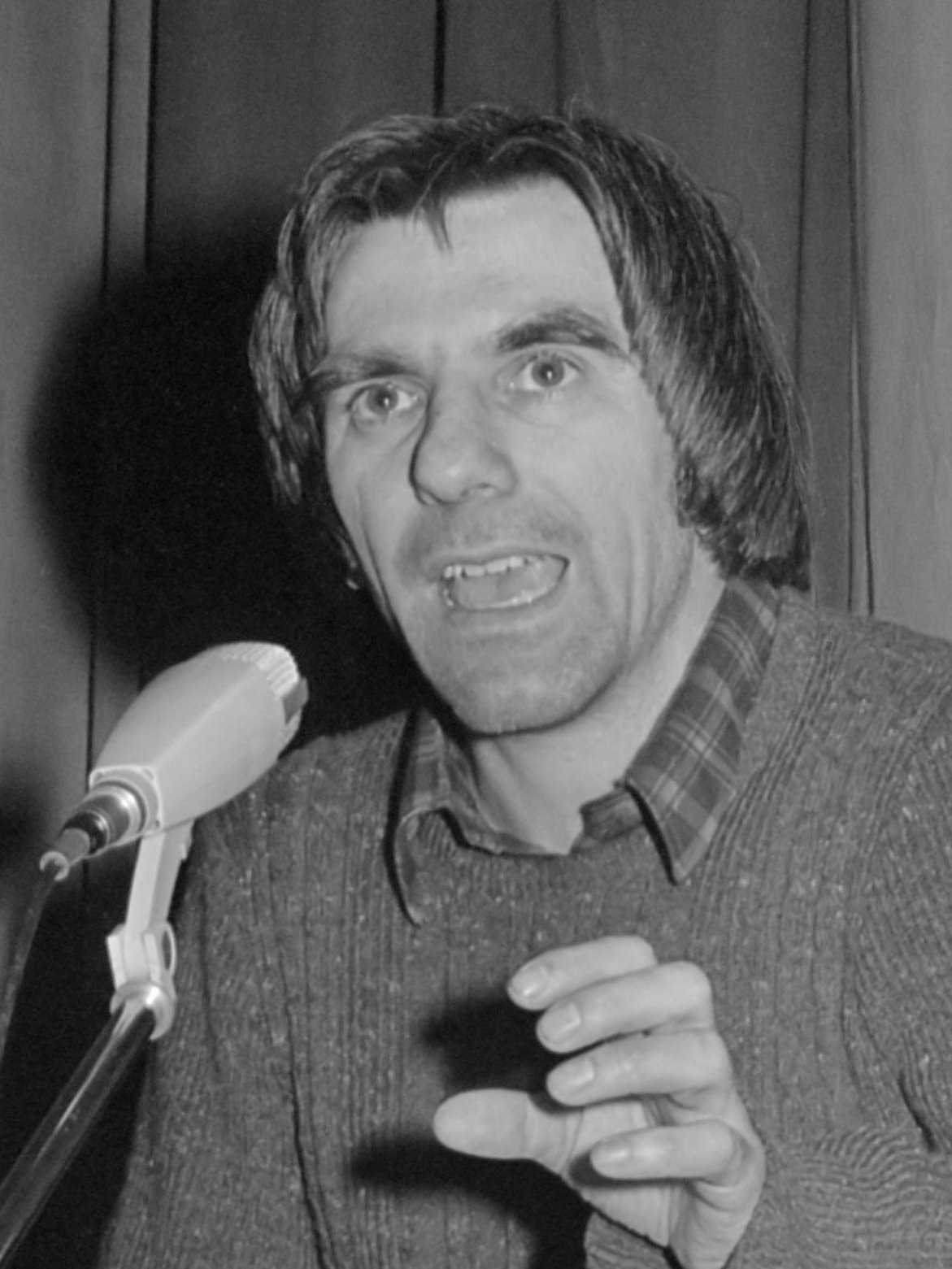
Rudi Dutschke (1976)
Rudi Dutschke (1976) Hans Peters for Anefo · CC0

Dutschke and Krahl address SDS on organization after the June 2 shooting and Grand Coalition.

T

h

e

t

a

p

e

t

r

a

n

s

c

r

i

p

t

f

r

a

m

e

s

t

h

e

u

n

i

v

e

r

s

i

t

y

a

s

t

h

e

u

r

b

a

n

g

u

e

r

r

i

l

l

a

’

s

s

o

c

i

a

l

b

a

s

e

a

n

d

c

a

l

l

s

f

o

r

i

r

r

e

g

u

l

a

r

s

t

r

u

g

g

l

e

a

g

a

i

n

s

t

r

e

p

r

e

s

s

i

v

e

i

n

s

t

i

t

u

t

i

o

n

s

.

[

@

d

u

t

s

c

h

k

e

-

k

r

a

h

l

-

1

9

6

7

]

Bottom line Archives

Primary SDS speech: institutions as targets of disruption and bases of struggle — not a HR career ladder.

What the record can’t settle

Famous ‘lange Marsch’ sentence is not in this transcript.

Sources

  1. Dutschke/Krahl, Organisationsreferat, 22. SDS-Delegiertenkonferenz (Frankfurt Mensa), 5 Sept 1967 (tape transcript) Primary German SDS organizational speech. University as social base; irregular struggle against repressive institutions. Does not itself print the later-famous 'lange Marsch' sentence.

Back to contents · Open in the interactive guide

The received long-march sentence

Record · Mixed

Rudi Dutschke (1976)
Rudi Dutschke (1976) Hans Peters for Anefo · CC0

Print tradition preserves: permanent revolutionaries enter factories, army, bureaucracy — ‘the long march through the institutions.’

D

a

s

P

a

r

l

a

m

e

n

t

(

2

0

1

8

)

r

e

p

r

i

n

t

s

t

h

e

V

o

l

t

a

i

r

e

/

B

r

i

e

f

e

-

a

n

-

R

u

d

i

w

o

r

d

i

n

g

a

n

d

n

o

t

e

s

h

o

w

l

a

t

e

r

c

a

r

e

e

r

s

d

i

l

u

t

e

d

t

h

e

o

r

i

g

i

n

a

l

s

e

n

s

e

.

[

@

p

a

r

l

a

m

e

n

t

-

m

a

r

s

c

h

-

2

0

1

8

]

[

@

m

e

i

n

h

o

f

-

w

u

e

r

d

e

]

Bottom line Mixed

The slogan as Americans hear it has a documented German print path — exact 1967 utterance details remain bibliographically messy.

What the record can’t settle

Treat packaging as contested; meaning contested further.

Sources

  1. Das Parlament: 'Marsch an die Schalthebel' (2018) — reprints Dutschke long-march quotation Secondary German parliamentary magazine reprint of the Voltaire/Briefe-an-Rudi quotation; useful for the received wording, not a 1967 tape.
  2. Ulrike Meinhof essays collection cited as reprint path for Dutschke quotation (Wagenbach eds.) Bibliographic path often cited for the Voltaire 'Briefe an Rudi D.' quotation transmission; secondary reprint chain.
  3. German Bundestag magazine historical framing of APO institutional careers Tracks how the slogan was later read as Green/SPD career path — contested dilution thesis.

Back to contents · Open in the interactive guide

Gaus interview, Dec 1967

Record · Archives

Rudi Dutschke (1976)
Rudi Dutschke (1976) Hans Peters for Anefo · CC0

On television, Dutschke explains organization without a professional politician apparatus.

H

e

i

n

s

i

s

t

s

m

o

v

e

m

e

n

t

s

c

a

n

a

v

o

i

d

e

l

i

t

e

m

a

n

i

p

u

l

a

t

i

o

n

t

h

r

o

u

g

h

c

o

n

s

c

i

o

u

s

n

e

s

s

—

a

c

l

a

i

m

h

i

s

t

o

r

y

w

o

u

l

d

t

e

s

t

h

a

r

s

h

l

y

.

[

@

d

u

t

s

c

h

k

e

-

g

a

u

s

-

1

9

6

7

]

Bottom line Archives

Primary interview shows Dutschke worrying about apparatus capture of movements, not celebrating careerism.

What the record can’t settle

TV interview ≠ full strategy memo.

Sources

  1. Rudi Dutschke interview with Günter Gaus, Zur Person, 3 Dec 1967 (rbb archive) Contemporaneous televised interview on organization, consciousness, and avoiding apparatus capture.

Back to contents · Open in the interactive guide

Mao’s Long March as metaphor

Record · Documented

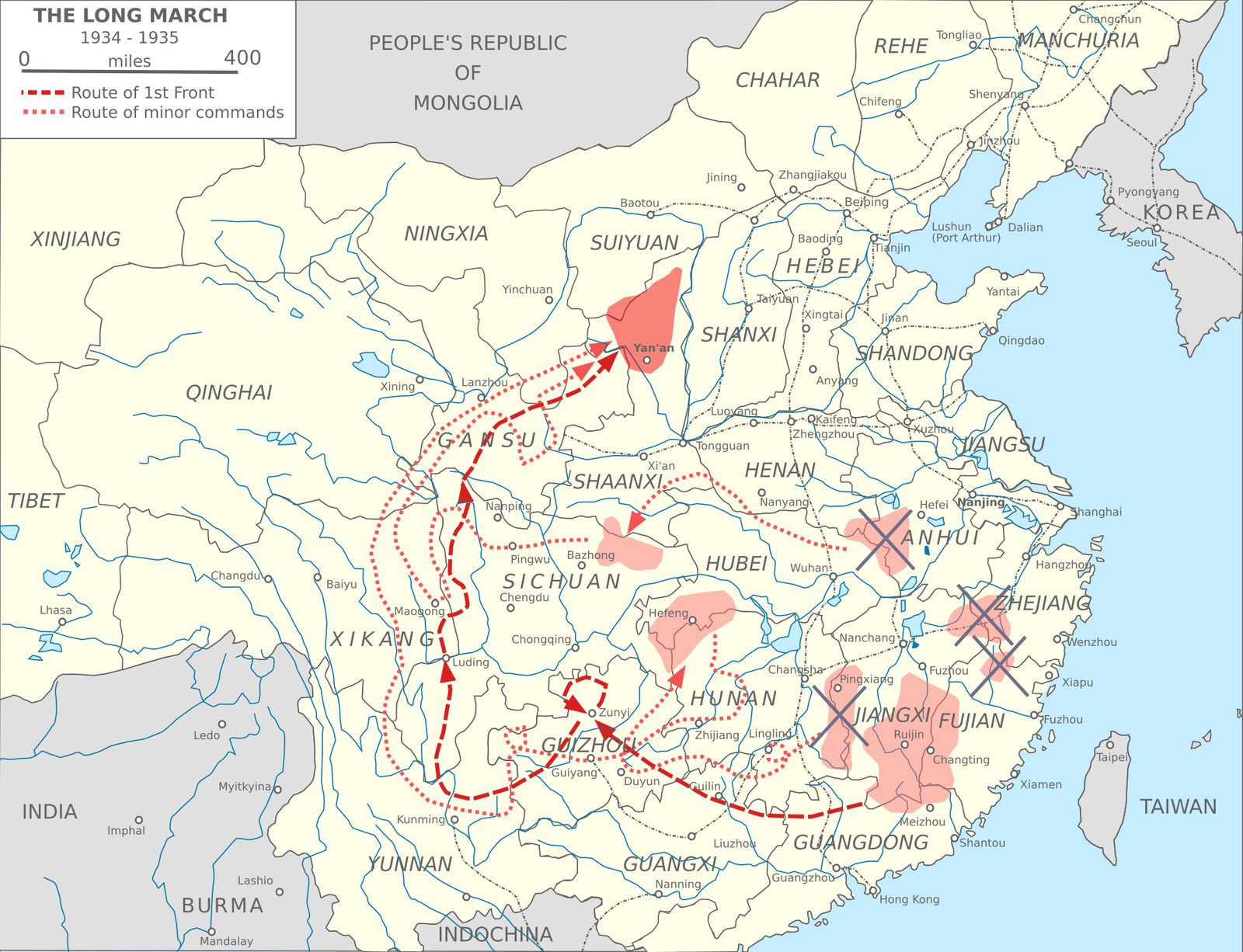
Map of the Long March 1934-1935-en
Map of the Long March 1934-1935-en Chinese_civil_war_map_03.jpg: User:Guimard derivative work: Rowanwindwhistler (talk) · CC BY-SA 3.0

The German formula consciously echoes Mao’s Long March.

M

e

t

a

p

h

o

r

i

s

n

o

t

e

v

i

d

e

n

c

e

t

h

a

t

B

e

i

j

i

n

g

d

i

r

e

c

t

e

d

W

e

s

t

G

e

r

m

a

n

S

D

S

o

r

U

S

f

a

c

u

l

t

y

h

i

r

i

n

g

.

[

@

p

a

r

l

a

m

e

n

t

-

m

a

r

s

c

h

-

2

0

1

8

]

Bottom line Documented

Namesake metaphor is real; operational Chinese control of Western campuses is a different claim.

What the record can’t settle

Do not collapse metaphor into command.

Sources

  1. Das Parlament: 'Marsch an die Schalthebel' (2018) — reprints Dutschke long-march quotation Secondary German parliamentary magazine reprint of the Voltaire/Briefe-an-Rudi quotation; useful for the received wording, not a 1967 tape.

Back to contents · Open in the interactive guide

German afterlife: from APO to office

Record · Mixed

Rudi Dutschke (1976)
Rudi Dutschke (1976) Hans Peters for Anefo · CC0

Das Parlament essay tracks how ‘march’ was later read as Green/SPD institutional careers.

T

h

a

t

E

u

r

o

p

e

a

n

a

f

t

e

r

l

i

f

e

i

s

p

a

r

t

o

f

t

h

e

s

l

o

g

a

n

’

s

m

e

a

n

i

n

g

—

a

n

d

a

w

a

r

n

i

n

g

a

g

a

i

n

s

t

U

S

-

o

n

l

y

r

e

a

d

i

n

g

s

.

[

@

p

a

r

l

a

m

e

n

t

-

m

a

r

s

c

h

-

2

0

1

8

]

[

@

d

a

s

-

p

a

r

l

a

m

e

n

t

-

c

o

n

t

e

x

t

]

Bottom line Mixed

The slogan’s home country already debated dilution decades ago.

What the record can’t settle

German party history ≠ US DEI org charts.

Sources

  1. Das Parlament: 'Marsch an die Schalthebel' (2018) — reprints Dutschke long-march quotation Secondary German parliamentary magazine reprint of the Voltaire/Briefe-an-Rudi quotation; useful for the received wording, not a 1967 tape.
  2. German Bundestag magazine historical framing of APO institutional careers Tracks how the slogan was later read as Green/SPD career path — contested dilution thesis.

Back to contents · Open in the interactive guide

US New Left campus 1960–1970

American campus New Left

Port Huron to occupations

Port Huron Statement, 1962

Record · Archives

Tom Hayden
Tom Hayden Jay Godwin · Public domain

SDS declares itself a generation ‘housed now in universities, looking uncomfortably to the world we inherit.’

P

a

r

t

i

c

i

p

a

t

o

r

y

d

e

m

o

c

r

a

c

y

,

c

i

v

i

l

r

i

g

h

t

s

u

r

g

e

n

c

y

,

a

n

d

C

o

l

d

W

a

r

d

r

e

a

d

f

r

a

m

e

t

h

e

u

n

i

v

e

r

s

i

t

y

a

s

b

o

t

h

p

r

i

v

i

l

e

g

e

a

n

d

r

e

s

p

o

n

s

i

b

i

l

i

t

y

.

[

@

p

o

r

t

-

h

u

r

o

n

-

1

9

6

2

]

[

@

h

a

y

d

e

n

-

r

e

u

n

i

o

n

]

Bottom line Archives

US New Left names the campus as home base years before Dutschke’s slogan.

What the record can’t settle

Port Huron is reformist relative to later Weatherman turns.

Sources

  1. Students for a Democratic Society, The Port Huron Statement (1962) Primary SDS manifesto; universities as sites of discomfort and participatory democracy.
  2. University of Michigan — Port Huron / Hayden materials in Resistance and Revolution exhibit Campus history exhibit with Hayden draft context.
  3. SDS Sixties Project — document archive Bibliography gateway for SDS primary pamphlets and New Left Notes.

Back to contents · Open in the interactive guide

Marcuse becomes campus theory

Record · Documented

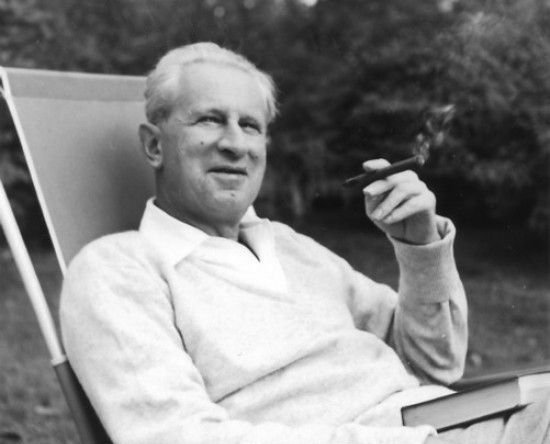
Herbert Marcuse in Newton, Massachusetts 1955
Herbert Marcuse in Newton, Massachusetts 1955 Copyright holder: Marcuse family, represented by Harold Marcuse · CC BY-SA 3.0

One-Dimensional Man and Repressive Tolerance enter New Left reading culture.

‘

R

e

p

r

e

s

s

i

v

e

T

o

l

e

r

a

n

c

e

’

a

r

g

u

e

s

a

g

a

i

n

s

t

e

x

t

e

n

d

i

n

g

t

o

l

e

r

a

n

c

e

t

o

r

i

g

h

t

-

w

i

n

g

m

o

v

e

m

e

n

t

s

—

l

a

t

e

r

a

s

t

a

p

l

e

c

i

t

e

i

n

s

p

e

e

c

h

f

i

g

h

t

s

.

[

@

m

a

r

c

u

s

e

-

o

d

m

-

1

9

6

4

]

[

@

m

a

r

c

u

s

e

-

r

e

p

r

e

s

s

i

v

e

-

1

9

6

5

]

Bottom line Documented

Marcuse is a documented intellectual influence; ‘Marcuse ordered DEI’ is not.

What the record can’t settle

Influence ≠ institutional blueprint.

Sources

  1. Herbert Marcuse, One-Dimensional Man (1964) Frankfurt School text widely read on 1960s campuses; repression/toleration themes later mixed into 'long march' narratives.
  2. Herbert Marcuse, 'Repressive Tolerance' (1965) Essay arguing against extending tolerance to movements of the right; repeatedly cited (and contested) in later campus speech fights.
  3. Herbert Marcuse official archive (marcuse.org) Bibliography and fulltext gateway for Marcuse essays used on campuses.

Back to contents · Open in the interactive guide

Berkeley Free Speech Movement

Record · History

Microphone
Microphone ChrisEngelsma · CC BY 3.0

1964 FSM makes student speech and administrative power a national story before 1968.

B

a

n

c

r

o

f

t

a

r

c

h

i

v

e

s

p

r

e

s

e

r

v

e

t

h

e

c

o

n

f

l

i

c

t

o

v

e

r

a

d

v

o

c

a

c

y

t

a

b

l

e

s

a

n

d

u

n

i

v

e

r

s

i

t

y

r

u

l

e

s

.

[

@

b

e

r

k

e

l

e

y

-

f

s

m

-

a

r

c

h

i

v

e

]

Bottom line History

US campus institutional conflict has a free-speech origin story that cuts against simple left-capture narratives — and against simple continuity.

What the record can’t settle

FSM liberals ≠ later identity admin.

Sources

  1. Free Speech Movement archives (UC Berkeley) Primary campus free-speech / student-power precursor to late-1960s New Left institutional fights.

Back to contents · Open in the interactive guide

Columbia occupations, spring 1968

Record · History

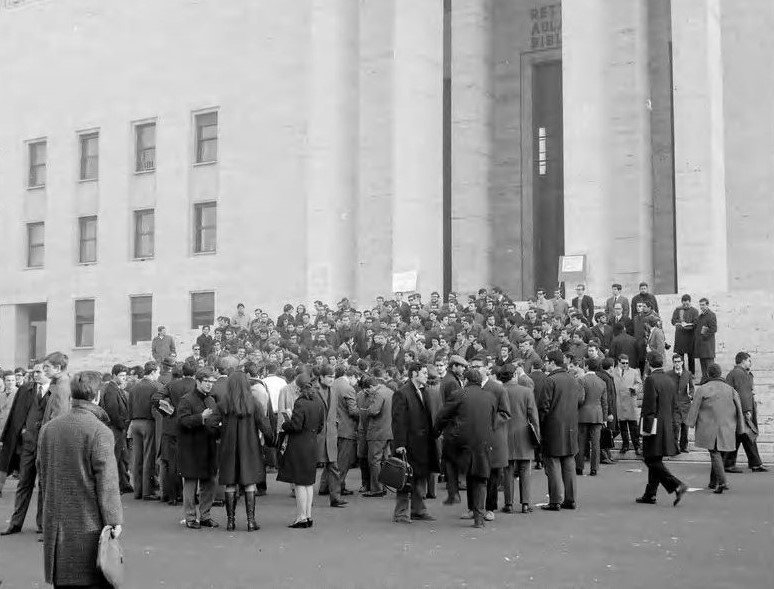
Student occupation, La Sapienza University, Rome, 3 February 1968 (stand-in for 1968 campus revolt wave; not Columbia Yard).
Student occupation, La Sapienza University, Rome, 3 February 1968 (stand-in for 1968 campus revolt wave; not Columbia Yard). Rodrigo Pais · Public domain

Students occupy buildings over gym, IDA, and discipline; police clear campus.

N

Y

T

a

n

d

t

h

e

C

o

x

C

o

m

m

i

s

s

i

o

n

m

a

t

e

r

i

a

l

s

f

i

x

C

o

l

u

m

b

i

a

a

s

t

h

e

A

m

e

r

i

c

a

n

i

c

o

n

o

f

u

n

i

v

e

r

s

i

t

y

r

e

v

o

l

t

.

[

@

n

y

t

-

c

o

l

u

m

b

i

a

-

1

9

6

8

]

[

@

c

o

l

u

m

b

i

a

-

r

e

p

o

r

t

-

1

9

6

8

]

Bottom line History

1968 makes the university the stage — after which careers, departments, and memories diverge.

What the record can’t settle

Occupation ≠ permanent curriculum control.

Sources

  1. Contemporaneous New York Times coverage of Columbia University protests, April–May 1968 Mainstream contemporaneous campus reporting on occupations and police clearance.
  2. Columbia University / Cox Commission materials on 1968 disturbances Institutional aftermath reporting on occupations — primary campus governance record.
  3. Time / Newsweek 1968 student revolt cover packages (contemporaneous) Contemporaneous mass-media framing of global student revolt.

Back to contents · Open in the interactive guide

Global 1968 student wave

Record · History

Student occupation, La Sapienza University, Rome, 3 February 1968 (stand-in for 1968 campus revolt wave; not Columbia Yard).
Student occupation, La Sapienza University, Rome, 3 February 1968 (stand-in for 1968 campus revolt wave; not Columbia Yard). Rodrigo Pais · Public domain

Paris, Berlin, Mexico City, and US campuses synchronize in mass media.

T

i

m

e

/

N

e

w

s

w

e

e

k

p

a

c

k

a

g

e

s

t

e

a

c

h

a

g

e

n

e

r

a

t

i

o

n

t

h

a

t

u

n

i

v

e

r

s

i

t

i

e

s

a

r

e

r

e

v

o

l

u

t

i

o

n

a

r

y

t

h

e

a

t

e

r

s

.

[

@

t

i

m

e

-

1

9

6

8

-

s

t

u

d

e

n

t

s

]

Bottom line History

The media association of campus with revolt is a documented 1968 product.

What the record can’t settle

Global sync ≠ single command structure.

Sources

  1. Time / Newsweek 1968 student revolt cover packages (contemporaneous) Contemporaneous mass-media framing of global student revolt.

Back to contents · Open in the interactive guide

Some exit into militancy

Record · Mixed

Student occupation, La Sapienza University, Rome, 3 February 1968 (stand-in for 1968 campus revolt wave; not Columbia Yard).
Student occupation, La Sapienza University, Rome, 3 February 1968 (stand-in for 1968 campus revolt wave; not Columbia Yard). Rodrigo Pais · Public domain

Factions leave campus politics for clandestine violence.

T

h

a

t

p

a

t

h

i

s

r

e

a

l

a

n

d

d

i

s

a

s

t

r

o

u

s

—

a

n

d

i

t

i

s

n

o

t

t

h

e

p

a

t

h

o

f

d

e

p

a

r

t

m

e

n

t

a

l

i

z

a

t

i

o

n

.

C

a

p

t

u

r

e

t

h

e

o

r

i

s

t

s

w

h

o

i

g

n

o

r

e

t

h

e

s

p

l

i

t

o

v

e

r

s

t

a

t

e

u

n

i

t

y

;

d

e

f

e

n

d

e

r

s

w

h

o

e

r

a

s

e

r

a

d

i

c

a

l

i

z

a

t

i

o

n

u

n

d

e

r

s

t

a

t

e

s

t

a

k

e

s

.

[

@

n

y

t

-

c

o

l

u

m

b

i

a

-

1

9

6

8

]

[

@

s

d

s

-

d

o

c

s

]

Bottom line Mixed

The movement fractured; only some fragments ‘marched’ into offices.

What the record can’t settle

Individual biographies vary widely.

Sources

  1. Contemporaneous New York Times coverage of Columbia University protests, April–May 1968 Mainstream contemporaneous campus reporting on occupations and police clearance.
  2. SDS Sixties Project — document archive Bibliography gateway for SDS primary pamphlets and New Left Notes.

Back to contents · Open in the interactive guide

Institutionalization 1970–1990

Programs & professions

From protest to departments

New programs take root

Record · History

Lecture hall
Lecture hall Kannan5645 · CC BY-SA 3.0

Ethnic studies, women’s studies, and related fields win departmental footholds.

T

h

i

s

i

s

t

h

e

c

l

e

a

r

e

s

t

i

n

s

t

i

t

u

t

i

o

n

a

l

r

e

s

i

d

u

e

o

f

1

9

6

0

s

–

7

0

s

p

r

e

s

s

u

r

e

—

c

u

r

r

i

c

u

l

u

m

a

n

d

f

a

c

u

l

t

y

l

i

n

e

s

,

n

o

t

o

n

l

y

s

i

t

-

i

n

s

.

[

@

c

h

r

o

n

i

c

l

e

-

d

e

i

]

[

@

a

a

u

p

-

a

c

a

d

e

m

i

c

-

f

r

e

e

d

o

m

]

Bottom line History

Program founding is documented institutionalization.

What the record can’t settle

Founding motives mixed: justice, politics, enrollment, foundation funding.

Sources

  1. Chronicle of Higher Education reporting on DEI offices, hiring statements, and rollbacks (2015–2026) Trade press contemporaneous reporting; secondary but useful for admin-growth timeline.
  2. AAUP statements on academic freedom and shared governance Mainstream faculty-governance counter-frame to capture theses.

Back to contents · Open in the interactive guide

Theory becomes a profession

Record · Documented

Library stacks
Library stacks Omgallusernamesaretaken · CC BY-SA 4.0

Critical theory, cultural studies, and related methods professionalize inside humanities.

C

i

t

a

t

i

o

n

c

o

m

m

u

n

i

t

i

e

s

,

j

o

u

r

n

a

l

s

,

a

n

d

h

i

r

i

n

g

p

r

e

f

e

r

e

n

c

e

s

c

a

n

s

h

i

f

t

f

i

e

l

d

s

w

i

t

h

o

u

t

a

c

e

n

t

r

a

l

c

o

m

m

i

t

t

e

e

.

[

@

h

a

l

l

-

h

e

g

e

m

o

n

y

]

[

@

p

l

a

t

o

-

h

e

g

e

m

o

n

y

-

u

s

e

]

Bottom line Documented

Professionalization is a rival mechanism to ‘conspiracy.’

What the record can’t settle

Still compatible with ideological clustering.

Sources

  1. Stuart Hall / CCCS cultural studies writings on hegemony and ideology British cultural-studies reception path that US education/critical-studies later borrowed.
  2. Scholarly surveys of Gramsci in critical education studies (North America) Secondary survey of Gramsci turn in Critical Studies in Education.

Back to contents · Open in the interactive guide

Faculty political skew debates

Record · Disputed

Lecture hall
Lecture hall Kannan5645 · CC BY-SA 3.0

Surveys and polemics argue humanities/social-science faculty lean heavily left.

H

o

r

o

w

i

t

z

-

s

t

y

l

e

l

i

s

t

s

a

n

d

l

a

t

e

r

s

o

c

i

a

l

-

s

c

i

e

n

c

e

s

u

r

v

e

y

s

d

i

s

a

g

r

e

e

o

n

m

a

g

n

i

t

u

d

e

a

n

d

m

e

a

n

i

n

g

.

[

@

h

o

r

o

w

i

t

z

-

p

r

o

f

e

s

s

o

r

s

]

[

@

a

a

u

p

-

a

c

a

d

e

m

i

c

-

f

r

e

e

d

o

m

]

Bottom line Disputed

Skew claims are disputed in method and implication — not whether any left tilt exists.

What the record can’t settle

Skew ≠ proof of Dutschkean plan.

Sources

  1. David Horowitz / related campus-watch polemics on faculty politics (2000s) Polemical secondary line measuring faculty party/ideology skew; treat as contested advocacy, not census truth.
  2. AAUP statements on academic freedom and shared governance Mainstream faculty-governance counter-frame to capture theses.

Back to contents · Open in the interactive guide

Hayden’s own institutional career

Strongest case · Mixed

Tom Hayden
Tom Hayden Jay Godwin · Public domain

Tom Hayden moves from SDS into electoral office — a biographical ‘march.’

C

r

i

t

i

c

s

c

i

t

e

i

t

a

s

p

a

r

a

d

i

g

m

;

H

a

y

d

e

n

f

r

a

m

e

d

p

u

b

l

i

c

o

f

f

i

c

e

a

s

c

o

n

t

i

n

u

i

n

g

r

e

f

o

r

m

.

[

@

h

a

y

d

e

n

-

r

e

u

n

i

o

n

]

[

@

p

o

r

t

-

h

u

r

o

n

-

1

9

6

2

]

Bottom line Mixed

One famous biography can illustrate without proving a class-wide plot.

What the record can’t settle

Anecdote ≠ dataset.

Sources

  1. University of Michigan — Port Huron / Hayden materials in Resistance and Revolution exhibit Campus history exhibit with Hayden draft context.
  2. Students for a Democratic Society, The Port Huron Statement (1962) Primary SDS manifesto; universities as sites of discomfort and participatory democracy.

Back to contents · Open in the interactive guide

‘War of position’ in the classroom

Record · Mixed

Lecture hall
Lecture hall Kannan5645 · CC BY-SA 3.0

Some education scholars explicitly cast teaching as counter-hegemonic war of position.

T

h

a

t

l

i

t

e

r

a

t

u

r

e

e

x

i

s

t

s

a

n

d

c

i

t

e

s

G

r

a

m

s

c

i

/

F

r

e

i

r

e

.

W

h

e

t

h

e

r

i

t

t

y

p

i

f

i

e

s

a

l

l

f

a

c

u

l

t

y

i

s

a

n

o

t

h

e

r

q

u

e

s

t

i

o

n

.

[

@

p

l

a

t

o

-

h

e

g

e

m

o

n

y

-

u

s

e

]

[

@

f

r

e

i

r

e

-

p

e

d

a

g

o

g

y

]

Bottom line Mixed

Explicit Gramscian pedagogy is documented in niches.

What the record can’t settle

Niche literature ≠ entire university.

Sources

  1. Scholarly surveys of Gramsci in critical education studies (North America) Secondary survey of Gramsci turn in Critical Studies in Education.
  2. Paulo Freire, Pedagogy of the Oppressed (English 1970) Pedagogy text often paired with Gramscian education readings in North American critical studies.

Back to contents · Open in the interactive guide

Foundation and state funding channels

Record · Thin

Library stacks
Library stacks Omgallusernamesaretaken · CC BY-SA 4.0

Some program growth tracks foundation initiatives and federal incentives.

F

u

n

d

i

n

g

c

h

a

n

n

e

l

s

m

a

t

t

e

r

;

a

f

u

l

l

f

u

n

d

e

r

m

a

p

e

x

c

e

e

d

s

t

h

i

s

g

u

i

d

e

’

s

s

p

i

n

e

.

[

@

c

h

r

o

n

i

c

l

e

-

d

e

i

]

Bottom line Thin

Money is a plausible mechanism; specifics vary by field.

What the record can’t settle

Avoid unsourced ‘Soros did it’ style claims.

Sources

  1. Chronicle of Higher Education reporting on DEI offices, hiring statements, and rollbacks (2015–2026) Trade press contemporaneous reporting; secondary but useful for admin-growth timeline.

Back to contents · Open in the interactive guide

Student power demands meet shared governance

Record · Mixed

Lecture hall
Lecture hall Kannan5645 · CC BY-SA 3.0

1960s demands for student power collide with AAUP-style faculty governance norms.

O

u

t

c

o

m

e

s

v

a

r

y

:

s

o

m

e

r

e

f

o

r

m

s

s

t

i

c

k

(

r

e

p

r

e

s

e

n

t

a

t

i

o

n

)

,

o

t

h

e

r

s

i

n

v

e

r

t

i

n

t

o

a

d

m

i

n

s

u

p

r

e

m

a

c

y

.

[

@

a

a

u

p

-

a

c

a

d

e

m

i

c

-

f

r

e

e

d

o

m

]

[

@

c

o

l

u

m

b

i

a

-

r

e

p

o

r

t

-

1

9

6

8

]

Bottom line Mixed

Governance fights are part of institutionalization.

What the record can’t settle

Complex causal braid.

Sources

  1. AAUP statements on academic freedom and shared governance Mainstream faculty-governance counter-frame to capture theses.
  2. Columbia University / Cox Commission materials on 1968 disturbances Institutional aftermath reporting on occupations — primary campus governance record.

Back to contents · Open in the interactive guide

Culture wars 1987–2010

Tenured radicals?

Bloom to Kimball

Closing of the American Mind

Record · History

Typographic card: Closing of the American Mind
Typographic card: Closing of the American Mind Site-made typographic card · CC0 (site-made)

Allan Bloom’s 1987 book becomes a surprise bestseller against university relativism.

I

t

n

a

t

i

o

n

a

l

i

z

e

s

a

n

x

i

e

t

y

a

b

o

u

t

c

u

r

r

i

c

u

l

u

m

a

n

d

s

t

u

d

e

n

t

c

h

a

r

a

c

t

e

r

—

o

f

t

e

n

w

i

t

h

o

u

t

c

i

t

i

n

g

D

u

t

s

c

h

k

e

.

[

@

b

l

o

o

m

-

1

9

8

7

]

Bottom line History

Culture-war ignition does not require the German slogan — though later writers fuse them.

What the record can’t settle

Bloom is Straussian, not Gramscian.

Sources

  1. Allan Bloom, The Closing of the American Mind (1987) Best-selling critique of university relativism and curriculum; culture-war hinge. Argument book, not a primary 1960s source.

Back to contents · Open in the interactive guide

Tenured Radicals thesis

Record · Debated

Typographic card: Tenured Radicals
Typographic card: Tenured Radicals Site-made typographic card · CC0 (site-made)

Roger Kimball argues sixties radicals now dictate humanities fashion from tenure.

T

h

e

b

o

o

k

s

u

p

p

l

i

e

s

t

h

e

A

m

e

r

i

c

a

n

p

l

a

i

n

-

s

p

e

e

c

h

v

e

r

s

i

o

n

o

f

‘

l

o

n

g

m

a

r

c

h

’

w

i

t

h

o

u

t

n

e

e

d

i

n

g

G

e

r

m

a

n

p

h

i

l

o

l

o

g

y

.

[

@

k

i

m

b

a

l

l

-

1

9

9

0

]

Bottom line Debated

Kimball is an argument book: strongest as field ethnography of fashion, weakest as total causal theory.

What the record can’t settle

Not a primary 1960s source.

Sources

  1. Roger Kimball, Tenured Radicals (1990; later editions) Explicit 'sixties radicals now run the humanities' thesis. Contested argument book; label as such.

Back to contents · Open in the interactive guide

Western civ / canon fights

Record · History

Library stacks
Library stacks Omgallusernamesaretaken · CC BY-SA 4.0

Stanford and peers fight over required Western culture courses.

C

u

r

r

i

c

u

l

u

m

p

o

l

i

t

i

c

s

b

e

c

o

m

e

n

a

t

i

o

n

a

l

o

p

-

e

d

f

u

e

l

—

m

e

a

s

u

r

a

b

l

e

i

n

s

t

i

t

u

t

i

o

n

a

l

s

t

a

k

e

s

.

[

@

c

h

r

o

n

i

c

l

e

-

d

e

i

]

[

@

b

l

o

o

m

-

1

9

8

7

]

Bottom line History

Canon fights are documented curriculum politics.

What the record can’t settle

‘Which books’ ≠ ‘secret hegemony cell.’

Sources

  1. Chronicle of Higher Education reporting on DEI offices, hiring statements, and rollbacks (2015–2026) Trade press contemporaneous reporting; secondary but useful for admin-growth timeline.
  2. Allan Bloom, The Closing of the American Mind (1987) Best-selling critique of university relativism and curriculum; culture-war hinge. Argument book, not a primary 1960s source.

Back to contents · Open in the interactive guide

‘Political correctness’ enters mass speech

Record · Mixed

A stack of newspapers
A stack of newspapers Daniel R. Blume from Orange County, California, USA · CC BY-SA 2.0

Early 1990s media make ‘PC’ the folk label for campus norm enforcement.

T

h

e

l

a

b

e

l

b

u

n

d

l

e

s

s

p

e

e

c

h

e

t

i

q

u

e

t

t

e

,

c

u

r

r

i

c

u

l

u

m

,

a

n

d

h

i

r

i

n

g

—

s

o

m

e

t

i

m

e

s

a

c

c

u

r

a

t

e

l

y

,

o

f

t

e

n

a

s

c

a

r

i

c

a

t

u

r

e

.

[

@

f

i

r

e

-

s

p

e

e

c

h

]

[

@

a

a

u

p

-

a

c

a

d

e

m

i

c

-

f

r

e

e

d

o

m

]

Bottom line Mixed

Mass label is real; its referents are heterogeneous.

What the record can’t settle

Avoid treating every etiquette fight as Gramsci.

Sources

  1. FIRE — campus speech codes / disinvitation databases Advocacy dataset often used in speech-norm debates; methods contested by critics.
  2. AAUP statements on academic freedom and shared governance Mainstream faculty-governance counter-frame to capture theses.

Back to contents · Open in the interactive guide

Speech norms

Codes, shout-downs, FIRE

Speech codes and disinvitations

Record · Documented

Microphone
Microphone ChrisEngelsma · CC BY 3.0

Universities adopt harassment/speech codes; FIRE builds databases of disinvitations and shout-downs.

A

A

U

P

o

f

t

e

n

c

o

u

n

t

e

r

s

t

h

a

t

t

a

r

g

e

t

e

d

h

a

r

a

s

s

m

e

n

t

r

u

l

e

s

a

r

e

n

o

t

‘

P

C

p

o

l

i

c

e

.

’

[

@

f

i

r

e

-

s

p

e

e

c

h

]

[

@

a

a

u

p

-

a

c

a

d

e

m

i

c

-

f

r

e

e

d

o

m

]

Bottom line Documented

Speech-norm conflict is measurable; what it proves about 1967 strategy is interpretive.

What the record can’t settle

Dataset bias fights cut both ways.

Sources

  1. FIRE — campus speech codes / disinvitation databases Advocacy dataset often used in speech-norm debates; methods contested by critics.
  2. AAUP statements on academic freedom and shared governance Mainstream faculty-governance counter-frame to capture theses.

Back to contents · Open in the interactive guide

Repressive Tolerance as smoking gun?

Strongest case · Disputed

Herbert Marcuse in Newton, Massachusetts 1955
Herbert Marcuse in Newton, Massachusetts 1955 Copyright holder: Marcuse family, represented by Harold Marcuse · CC BY-SA 3.0

Critics cite Marcuse to claim the left abandoned free speech in principle.

T

h

e

e

s

s

a

y

e

x

i

s

t

s

a

n

d

a

r

g

u

e

s

a

s

y

m

m

e

t

r

i

c

t

o

l

e

r

a

n

c

e

.

W

h

e

t

h

e

r

i

t

g

o

v

e

r

n

s

2

0

2

0

s

T

i

t

l

e

I

X

o

f

f

i

c

e

s

i

s

a

c

a

u

s

a

t

i

o

n

c

l

a

i

m

,

n

o

t

a

q

u

o

t

a

t

i

o

n

.

[

@

m

a

r

c

u

s

e

-

r

e

p

r

e

s

s

i

v

e

-

1

9

6

5

]

Bottom line Disputed

Text is real; institutional pipeline from essay to HR is disputed.

What the record can’t settle

Smoking-gun quotes ≠ org charts.

Sources

  1. Herbert Marcuse, 'Repressive Tolerance' (1965) Essay arguing against extending tolerance to movements of the right; repeatedly cited (and contested) in later campus speech fights.

Back to contents · Open in the interactive guide

Title IX / bias-response infrastructure

Record · Mixed

UC Berkeley campus academic building (Boalt Hall library wing), 2007 — administrative-university chapter image, not a named DEI office.
UC Berkeley campus academic building (Boalt Hall library wing), 2007 — administrative-university chapter image, not a named DEI office. umjanedoan · CC BY 2.0

Federal sex-equity law and later bias-response teams expand compliance staffs.

C

o

m

p

l

i

a

n

c

e

c

a

n

l

o

o

k

l

i

k

e

i

d

e

o

l

o

g

y

f

r

o

m

t

h

e

o

u

t

s

i

d

e

a

n

d

l

i

k

e

r

i

s

k

m

a

n

a

g

e

m

e

n

t

f

r

o

m

t

h

e

i

n

s

i

d

e

.

[

@

c

h

r

o

n

i

c

l

e

-

d

e

i

]

[

@

f

i

r

e

-

s

p

e

e

c

h

]

Bottom line Mixed

Legal-compliance pathway is a rival/complementary mechanism to Gramscian intent.

What the record can’t settle

Varies sharply by administration.

Sources

  1. Chronicle of Higher Education reporting on DEI offices, hiring statements, and rollbacks (2015–2026) Trade press contemporaneous reporting; secondary but useful for admin-growth timeline.
  2. FIRE — campus speech codes / disinvitation databases Advocacy dataset often used in speech-norm debates; methods contested by critics.

Back to contents · Open in the interactive guide

Admin & DEI fights 2010–2026

DEI administration

Offices, statements, courts

DEI offices proliferate

Record · Documented

UC Berkeley campus academic building (Boalt Hall library wing), 2007 — administrative-university chapter image, not a named DEI office.
UC Berkeley campus academic building (Boalt Hall library wing), 2007 — administrative-university chapter image, not a named DEI office. umjanedoan · CC BY 2.0

Universities build vice-provost/DEI staff structures with budgets and staffs.

C

h

r

o

n

i

c

l

e

r

e

p

o

r

t

i

n

g

a

n

d

u

n

i

v

e

r

s

i

t

y

o

r

g

c

h

a

r

t

s

d

o

c

u

m

e

n

t

g

r

o

w

t

h

;

m

o

t

i

v

e

s

d

i

s

p

u

t

e

d

(

c

o

m

p

l

i

a

n

c

e

,

j

u

s

t

i

c

e

,

b

r

a

n

d

i

n

g

,

i

d

e

o

l

o

g

y

)

.

[

@

c

h

r

o

n

i

c

l

e

-

d

e

i

]

[

@

d

e

i

-

d

e

f

e

n

d

e

r

s

]

Bottom line Documented

Administrative expansion is a fact; ‘long march endpoint’ is a theory about that fact.

What the record can’t settle

Counts vary by definition of DEI staff.

Sources

  1. Chronicle of Higher Education reporting on DEI offices, hiring statements, and rollbacks (2015–2026) Trade press contemporaneous reporting; secondary but useful for admin-growth timeline.
  2. University DEI office mission statements and AAC&U diversity frameworks Primary institutional self-description of DEI as equity/inclusion mission, not Gramscian conspiracy.
  3. University of California / systemwide diversity and hiring guidance pages Example primary university policy language for DEI in appointments.

Back to contents · Open in the interactive guide

Required diversity statements in hiring

Record · Documented

UC Berkeley campus academic building (Boalt Hall library wing), 2007 — administrative-university chapter image, not a named DEI office.
UC Berkeley campus academic building (Boalt Hall library wing), 2007 — administrative-university chapter image, not a named DEI office. umjanedoan · CC BY 2.0

Many departments require DEI statements from faculty candidates.

S

u

p

p

o

r

t

e

r

s

c

a

l

l

t

h

e

m

i

n

c

l

u

s

i

v

e

-

t

e

a

c

h

i

n

g

p

l

a

n

s

;

c

r

i

t

i

c

s

c

a

l

l

t

h

e

m

p

o

l

i

t

i

c

a

l

l

i

t

m

u

s

t

e

s

t

s

.

[

@

n

y

t

-

d

e

i

-

h

i

r

i

n

g

]

[

@

n

a

s

-

d

e

i

]

[

@

u

c

-

d

e

i

-

p

o

l

i

c

i

e

s

]

Bottom line Documented

The hiring-tool fight is primary for the contemporary chapter.

What the record can’t settle

Not universal across all fields/institutions.

Sources

  1. Major newspaper reporting on diversity statements in faculty hiring (2010s–2020s) Contemporaneous reporting on required DEI statements — secondary journalism.
  2. National Association of Scholars reports on DEI requirements and curricula Advocacy research arguing administrative/ideological capture; label camp.
  3. University of California / systemwide diversity and hiring guidance pages Example primary university policy language for DEI in appointments.

Back to contents · Open in the interactive guide

SFFA v. Harvard / UNC

Record · Archives

Supreme Court of the United States
Supreme Court of the United States Unknown · Public domain

Supreme Court holds race-conscious admissions unlawful at covered universities.

C

h

i

e

f

J

u

s

t

i

c

e

R

o

b

e

r

t

s

’

s

o

p

i

n

i

o

n

s

r

e

s

e

t

t

h

e

l

e

g

a

l

b

a

s

e

l

i

n

e

;

u

n

i

v

e

r

s

i

t

i

e

s

s

c

r

a

m

b

l

e

o

n

r

a

c

e

-

n

e

u

t

r

a

l

p

r

o

x

i

e

s

.

[

@

s

c

o

t

u

s

-

s

f

f

a

-

2

0

2

3

]

Bottom line Archives

2023 is a hard legal hinge on the DEI timeline.

What the record can’t settle

Does not itself abolish all DEI offices.

Sources

  1. Students for Fair Admissions v. Harvard / UNC (2023) Primary SCOTUS opinions ending race-conscious admissions at covered universities — watershed for DEI legal environment.

Back to contents · Open in the interactive guide

Rollback entrepreneur politics

Record · Debated

UC Berkeley campus academic building (Boalt Hall library wing), 2007 — administrative-university chapter image, not a named DEI office.
UC Berkeley campus academic building (Boalt Hall library wing), 2007 — administrative-university chapter image, not a named DEI office. umjanedoan · CC BY 2.0

Christopher Rufo and allies push state bans and institutional unwindings of DEI.

A

d

v

o

c

a

t

e

s

c

l

a

i

m

l

i

b

e

r

a

t

i

o

n

f

r

o

m

i

d

e

o

l

o

g

y

;

o

p

p

o

n

e

n

t

s

c

l

a

i

m

a

u

t

h

o

r

i

t

a

r

i

a

n

c

h

i

l

l

.

[

@

r

u

f

o

-

d

e

i

]

[

@

c

h

r

o

n

i

c

l

e

-

d

e

i

]

[

@

a

a

u

p

-

a

c

a

d

e

m

i

c

-

f

r

e

e

d

o

m

]

Bottom line Debated

Rollback is a documented political project — success and merits contested.

What the record can’t settle

Activist framing ≠ automatic truth of origins story.

Sources

  1. Christopher F. Rufo essays and legislative campaigns on DEI (2020–2026) Leading activist critic of DEI administrations; label as advocacy, not neutral census.
  2. Chronicle of Higher Education reporting on DEI offices, hiring statements, and rollbacks (2015–2026) Trade press contemporaneous reporting; secondary but useful for admin-growth timeline.
  3. AAUP statements on academic freedom and shared governance Mainstream faculty-governance counter-frame to capture theses.

Back to contents · Open in the interactive guide

What DEI offices say they are

Strongest case · Documented

UC Berkeley campus academic building (Boalt Hall library wing), 2007 — administrative-university chapter image, not a named DEI office.
UC Berkeley campus academic building (Boalt Hall library wing), 2007 — administrative-university chapter image, not a named DEI office. umjanedoan · CC BY 2.0

AAC&U and university pages describe equity, inclusion, belonging — not Gramsci.

A

n

y

c

a

p

t

u

r

e

t

h

e

o

r

y

m

u

s

t

e

x

p

l

a

i

n

w

h

y

t

h

e

p

u

b

l

i

c

l

a

n

g

u

a

g

e

l

o

o

k

s

l

i

k

e

p

r

o

f

e

s

s

i

o

n

a

l

i

z

e

d

s

o

c

i

a

l

j

u

s

t

i

c

e

,

n

o

t

S

D

S

m

i

m

e

o

g

r

a

p

h

s

.

[

@

d

e

i

-

d

e

f

e

n

d

e

r

s

]

[

@

u

c

-

d

e

i

-

p

o

l

i

c

i

e

s

]

Bottom line Documented

Self-description is evidence of branding and sincerity claims — not proof against hidden strategy.

What the record can’t settle

Public language can diverge from private incentives.

Sources

  1. University DEI office mission statements and AAC&U diversity frameworks Primary institutional self-description of DEI as equity/inclusion mission, not Gramscian conspiracy.
  2. University of California / systemwide diversity and hiring guidance pages Example primary university policy language for DEI in appointments.

Back to contents · Open in the interactive guide

Administrative growth as rival cause

Record · Disputed

UC Berkeley campus academic building (Boalt Hall library wing), 2007 — administrative-university chapter image, not a named DEI office.
UC Berkeley campus academic building (Boalt Hall library wing), 2007 — administrative-university chapter image, not a named DEI office. umjanedoan · CC BY 2.0

Analysts note non-faculty professional growth across universities independent of New Left ideology.

I

f

b

u

r

e

a

u

c

r

a

c

y

e

x

p

a

n

d

s

f

o

r

c

o

m

p

l

i

a

n

c

e

a

n

d

r

e

v

e

n

u

e

,

D

E

I

m

a

y

b

e

o

n

e

f

a

c

e

o

f

m

a

n

a

g

e

r

i

a

l

i

s

m

—

n

o

t

L

e

n

i

n

i

s

t

v

i

c

t

o

r

y

.

[

@

c

h

r

o

n

i

c

l

e

-

d

e

i

]

[

@

a

a

u

p

-

a

c

a

d

e

m

i

c

-

f

r

e

e

d

o

m

]

Bottom line Disputed

Managerial university thesis competes with capture thesis.

What the record can’t settle

Not mutually exclusive with ideology.

Sources

  1. Chronicle of Higher Education reporting on DEI offices, hiring statements, and rollbacks (2015–2026) Trade press contemporaneous reporting; secondary but useful for admin-growth timeline.
  2. AAUP statements on academic freedom and shared governance Mainstream faculty-governance counter-frame to capture theses.

Back to contents · Open in the interactive guide

From class revolt to identity admin

Record · Disputed

UC Berkeley campus academic building (Boalt Hall library wing), 2007 — administrative-university chapter image, not a named DEI office.
UC Berkeley campus academic building (Boalt Hall library wing), 2007 — administrative-university chapter image, not a named DEI office. umjanedoan · CC BY 2.0

Critics say the long march swapped proletariat for identity categories; defenders say justice broadened.

B

o

t

h

a

r

e

i

n

t

e

r

p

r

e

t

i

v

e

o

v

e

r

l

a

y

s

o

n

r

e

a

l

d

e

m

o

g

r

a

p

h

i

c

a

n

d

c

u

r

r

i

c

u

l

a

r

c

h

a

n

g

e

.

[

@

n

a

s

-

d

e

i

]

[

@

d

e

i

-

d

e

f

e

n

d

e

r

s

]

Bottom line Disputed

Category shift is visible; whether it betrays or fulfills 1968 is debated.

What the record can’t settle

Avoid erasing class-era New Left diversity of aims.

Sources

  1. National Association of Scholars reports on DEI requirements and curricula Advocacy research arguing administrative/ideological capture; label camp.
  2. University DEI office mission statements and AAC&U diversity frameworks Primary institutional self-description of DEI as equity/inclusion mission, not Gramscian conspiracy.

Back to contents · Open in the interactive guide

Race-neutral proxies after SFFA

Record · Debated

Supreme Court of the United States
Supreme Court of the United States Unknown · Public domain

Universities explore essays, geography, class proxies; litigants watch for evasion.

T

h

e

p

o

s

t

-

2

0

2

3

e

q

u

i

l

i

b

r

i

u

m

i

s

u

n

s

e

t

t

l

e

d

.

[

@

s

c

o

t

u

s

-

s

f

f

a

-

2

0

2

3

]

[

@

c

h

r

o

n

i

c

l

e

-

d

e

i

]

Bottom line Debated

Legal hinge did not end the political fight — it relocated it.

What the record can’t settle

Fast-moving; avoid frozen verdicts.

Sources

  1. Students for Fair Admissions v. Harvard / UNC (2023) Primary SCOTUS opinions ending race-conscious admissions at covered universities — watershed for DEI legal environment.
  2. Chronicle of Higher Education reporting on DEI offices, hiring statements, and rollbacks (2015–2026) Trade press contemporaneous reporting; secondary but useful for admin-growth timeline.

Back to contents · Open in the interactive guide

Memory & lineage fights

Who owns the slogan now

Sokal Affair as epistemology neighbor

Record · History

Typographic card: Sokal / Grievance
Typographic card: Sokal / Grievance Site-made typographic card · CC0 (site-made)

1996 Social Text hoax becomes a durable exhibit about theory jargon and journal standards.

N

e

s

t

u

n

d

e

r

A

c

a

d

e

m

i

a

;

u

s

e

a

s

c

r

o

s

s

-

l

i

n

k

,

n

o

t

r

e

b

u

i

l

d

.

[

@

s

o

k

a

l

-

n

e

s

t

]

Bottom line History

Sokal is part of the same broader university-trust fight, different mechanism.

What the record can’t settle

Do not equate physics spoof with Dutschke.

Sources

  1. The Academia Files — Sokal Affair nest gateway Cross-link only; do not rebuild Sokal guide here.

Back to contents · Open in the interactive guide

Grievance Studies as peer nest

Record · History

Typographic card: Sokal / Grievance
Typographic card: Sokal / Grievance Site-made typographic card · CC0 (site-made)

2017–18 journal hoaxes renew Sokal-style arguments about fields and peer review.

C

r

o

s

s

-

l

i

n

k

o

n

l

y

.

[

@

g

r

i

e

v

a

n

c

e

-

n

e

s

t

]

Bottom line History

Peer-review scandals are adjacent evidence some critics weld onto the long-march story.

What the record can’t settle

Welding is an argument move, not automatic identity.

Sources

  1. The Academia Files — Grievance Studies nest gateway Cross-link only; do not rebuild Grievance Studies guide here.

Back to contents · Open in the interactive guide

Slogan becomes American stock phrase

Record · Mixed

Typographic card: Long march through the institutions
Typographic card: Long march through the institutions Site-made typographic card · CC0 (site-made)

US commentators use ‘long march through the institutions’ for universities, media, HR.

G

e

r

m

a

n

h

i

s

t

o

r

i

a

n

s

n

o

t

e

d

i

l

u

t

i

o

n

f

r

o

m

A

P

O

d

i

s

r

u

p

t

i

o

n

t

o

c

a

r

e

e

r

i

s

t

G

r

e

e

n

s

/

S

P

D

s

t

o

r

i

e

s

—

U

S

u

s

a

g

e

d

i

l

u

t

e

s

f

u

r

t

h

e

r

.

[

@

p

a

r

l

a

m

e

n

t

-

m

a

r

s

c

h

-

2

0

1

8

]

[

@

k

i

m

b

a

l

l

-

1

9

9

0

]

Bottom line Mixed

Memory drift of the slogan is itself a documented phenomenon.

What the record can’t settle

Stock phrase ≠ archival precision.

Sources

  1. Das Parlament: 'Marsch an die Schalthebel' (2018) — reprints Dutschke long-march quotation Secondary German parliamentary magazine reprint of the Voltaire/Briefe-an-Rudi quotation; useful for the received wording, not a 1967 tape.
  2. Roger Kimball, Tenured Radicals (1990; later editions) Explicit 'sixties radicals now run the humanities' thesis. Contested argument book; label as such.

Back to contents · Open in the interactive guide

Is DEI the long march’s destination?

Open question · Disputed

Typographic card: Long march through the institutions
Typographic card: Long march through the institutions Site-made typographic card · CC0 (site-made)

Live fight: intentional cultural seizure vs bureaucratic generational drift vs separate equality project.

C

r

i

t

i

c

a

l

p

a

t

h

k

e

e

p

s

t

e

x

t

s

a

n

d

o

f

f

i

c

e

s

a

s

f

a

c

t

s

;

c

a

u

s

a

t

i

o

n

r

e

m

a

i

n

s

t

h

e

o

r

y

-

l

a

d

e

n

.

[

@

d

e

i

-

d

e

f

e

n

d

e

r

s

]

[

@

k

i

m

b

a

l

l

-

1

9

9

0

]

[

@

r

u

f

o

-

d

e

i

]

[

@

p

l

a

t

o

-

h

e

g

e

m

o

n

y

-

u

s

e

]

Bottom line Disputed

This guide maps the fight; it does not crown a winner by technicality.

What the record can’t settle

No single dataset settles teleology.

Sources

  1. University DEI office mission statements and AAC&U diversity frameworks Primary institutional self-description of DEI as equity/inclusion mission, not Gramscian conspiracy.
  2. Roger Kimball, Tenured Radicals (1990; later editions) Explicit 'sixties radicals now run the humanities' thesis. Contested argument book; label as such.
  3. Christopher F. Rufo essays and legislative campaigns on DEI (2020–2026) Leading activist critic of DEI administrations; label as advocacy, not neutral census.
  4. Scholarly surveys of Gramsci in critical education studies (North America) Secondary survey of Gramsci turn in Critical Studies in Education.

Back to contents · Open in the interactive guide

No central committee on the record

Strongest case · Documented

Typographic card: Long march through the institutions
Typographic card: Long march through the institutions Site-made typographic card · CC0 (site-made)

There is no authenticated international committee minutes assigning Western faculty to execute Dutschke’s sentence.

A

b

s

e

n

c

e

o

f

a

c

a

b

a

r

e

t

v

i

l

l

a

i

n

d

o

e

s

n

o

t

r

e

f

u

t

e

s

o

f

t

e

r

m

e

c

h

a

n

i

s

m

s

(

n

o

r

m

s

,

h

i

r

i

n

g

c

l

u

s

t

e

r

s

,

p

e

e

r

r

e

v

i

e

w

f

a

s

h

i

o

n

)

.

[

@

a

n

d

e

r

s

o

n

-

a

n

t

i

n

o

m

i

e

s

-

1

9

7

6

]

[

@

k

i

m

b

a

l

l

-

1

9

9

0

]

Bottom line Documented

Hard conspiracy version fails the document test; soft institutional versions remain arguable.

What the record can’t settle

Soft versions are harder to falsify — and easier to overfit.

Sources

  1. Perry Anderson, 'The Antinomies of Antonio Gramsci', New Left Review I/100 (Nov–Dec 1976) Influential critical reading of hegemony concept and Anglo reception.
  2. Roger Kimball, Tenured Radicals (1990; later editions) Explicit 'sixties radicals now run the humanities' thesis. Contested argument book; label as such.

Back to contents · Open in the interactive guide

Reading lists versus org charts

Open question · Disputed

Library stacks
Library stacks Omgallusernamesaretaken · CC BY-SA 4.0

Do syllabi citing Gramsci/Marcuse explain vice-provost org charts?

W

e

a

k

t

h

e

o

r

i

e

s

e

q

u

a

t

e

c

i

t

a

t

i

o

n

w

i

t

h

c

o

m

m

a

n

d

.

S

t

r

o

n

g

e

r

t

h

e

o

r

i

e

s

t

r

a

c

k

h

i

r

i

n

g

,

a

c

c

r

e

d

i

t

a

t

i

o

n

,

a

n

d

p

r

o

f

e

s

s

i

o

n

a

l

a

s

s

o

c

i

a

t

i

o

n

s

.

[

@

p

l

a

t

o

-

h

e

g

e

m

o

n

y

-

u

s

e

]

[

@

d

e

i

-

d

e

f

e

n

d

e

r

s

]

Bottom line Disputed

Mechanism specification is the real open question.

What the record can’t settle

Needs field-by-field evidence.

Sources

  1. Scholarly surveys of Gramsci in critical education studies (North America) Secondary survey of Gramsci turn in Critical Studies in Education.
  2. University DEI office mission statements and AAC&U diversity frameworks Primary institutional self-description of DEI as equity/inclusion mission, not Gramscian conspiracy.

Back to contents · Open in the interactive guide

What the primary spine actually holds

Record · Documented

Typographic card: Long march through the institutions
Typographic card: Long march through the institutions Site-made typographic card · CC0 (site-made)

Settled: Gramsci texts; Dutschke org speech; received long-march wording path; Port Huron; Marcuse essays; 1968 campus wave; program growth; Bloom/Kimball; DEI offices/statements; SFFA.

N

o

t

s

e

t

t

l

e

d

:

s

i

n

g

l

e

i

n

t

e

n

t

i

o

n

a

l

p

i

p

e

l

i

n

e

f

r

o

m

1

9

6

7

s

l

o

g

a

n

t

o

2

0

2

0

s

D

E

I

.

[

@

d

u

t

s

c

h

k

e

-

k

r

a

h

l

-

1

9

6

7

]

[

@

p

o

r

t

-

h

u

r

o

n

-

1

9

6

2

]

[

@

s

c

o

t

u

s

-

s

f

f

a

-

2

0

2

3

]

Bottom line Documented

Separate record from teleology — that is this guide’s method.

What the record can’t settle

Teleology remains theory space.

Sources

  1. Dutschke/Krahl, Organisationsreferat, 22. SDS-Delegiertenkonferenz (Frankfurt Mensa), 5 Sept 1967 (tape transcript) Primary German SDS organizational speech. University as social base; irregular struggle against repressive institutions. Does not itself print the later-famous 'lange Marsch' sentence.
  2. Students for a Democratic Society, The Port Huron Statement (1962) Primary SDS manifesto; universities as sites of discomfort and participatory democracy.
  3. Antonio Gramsci, Selections from the Prison Notebooks, ed./trans. Quintin Hoare & Geoffrey Nowell-Smith (1971) Standard English reception hinge for hegemony / war of position vocabulary in Anglophone New Left and academia. Cite as book; Marxists.org hosts related materials.
  4. Students for Fair Admissions v. Harvard / UNC (2023) Primary SCOTUS opinions ending race-conscious admissions at covered universities — watershed for DEI legal environment.
  5. Roger Kimball, Tenured Radicals (1990; later editions) Explicit 'sixties radicals now run the humanities' thesis. Contested argument book; label as such.

Back to contents · Open in the interactive guide

Why this nests under Academia, not Media

Record · Documented

Typographic card: Long march through the institutions
Typographic card: Long march through the institutions Site-made typographic card · CC0 (site-made)

The spine is universities, journals, curricula, and faculty/admin norms.

M

e

d

i

a

c

o

o

r

d

i

n

a

t

i

o

n

s

c

a

n

d

a

l

s

l

i

v

e

u

n

d

e

r

T

h

e

M

e

d

i

a

F

i

l

e

s

;

S

o

k

a

l

/

G

r

i

e

v

a

n

c

e

s

t

a

y

i

n

A

c

a

d

e

m

i

a

.

[

@

s

o

k

a

l

-

n

e

s

t

]

[

@

g

r

i

e

v

a

n

c

e

-

n

e

s

t

]

Bottom line Documented

Collection placement is an editorial fact of this site.

What the record can’t settle

Cross-links welcome; merges not.

Sources

  1. The Academia Files — Sokal Affair nest gateway Cross-link only; do not rebuild Sokal guide here.
  2. The Academia Files — Grievance Studies nest gateway Cross-link only; do not rebuild Grievance Studies guide here.

Back to contents · Open in the interactive guide