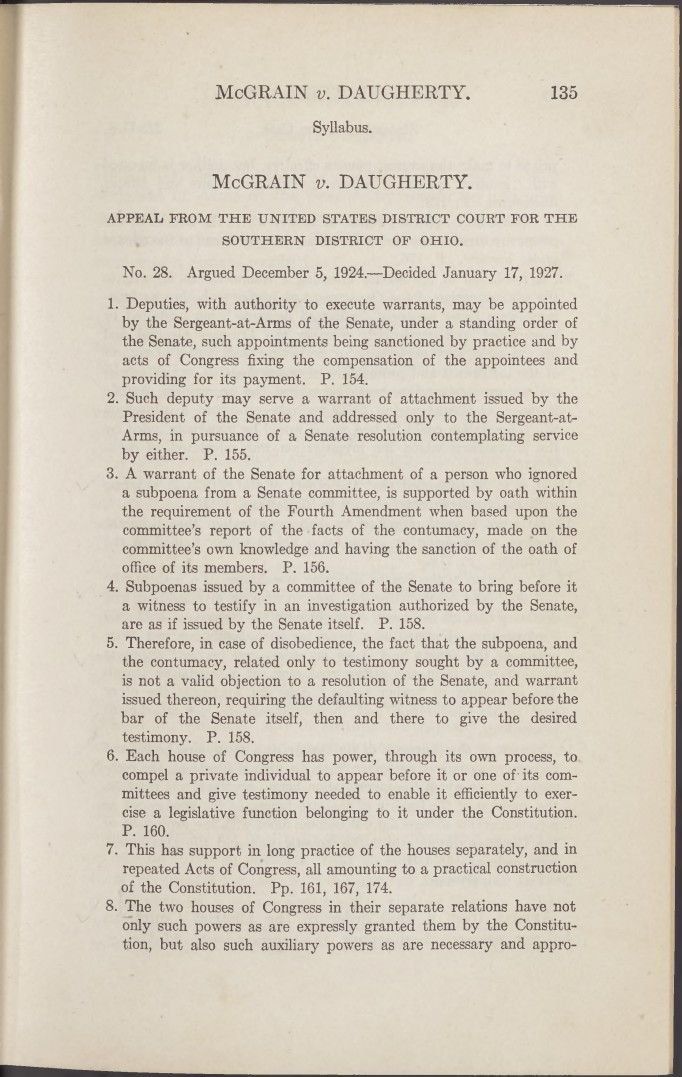
McGrain v. Daugherty was not a criminal bribery judgment against Albert Fall. It arose from the Senate’s investigation into Justice Department administration and a subpoena directed to Mally Daugherty, the attorney general’s brother. In January 1927 the Supreme Court sustained compulsory questioning connected to potential legislation. A legislature needs information to decide whether existing laws and their administration require change.[1]
Sinclair’s 1929 congressional-contempt case applied that principle to the oil-reserve inquiry. His refusal rested on challenges to the committee’s authority, rather than an invocation of self-incrimination. The Court held the questions pertinent to how public lands had been leased and whether legislation was needed. Civil litigation over the lease did not make those legislative questions disappear.[2]
Neither decision authorizes unlimited questioning, and the Court recognized protections when an inquiry exceeds its authority or questions are not pertinent. Nor does losing an objection about congressional power establish every allegation in the underlying scandal. These decisions concern whether a witness had to cooperate with a lawful inquiry. Keeping that procedural question separate from guilt about the oil deals explains why the same affair generated several Supreme Court cases with different legal meanings.[1][2]