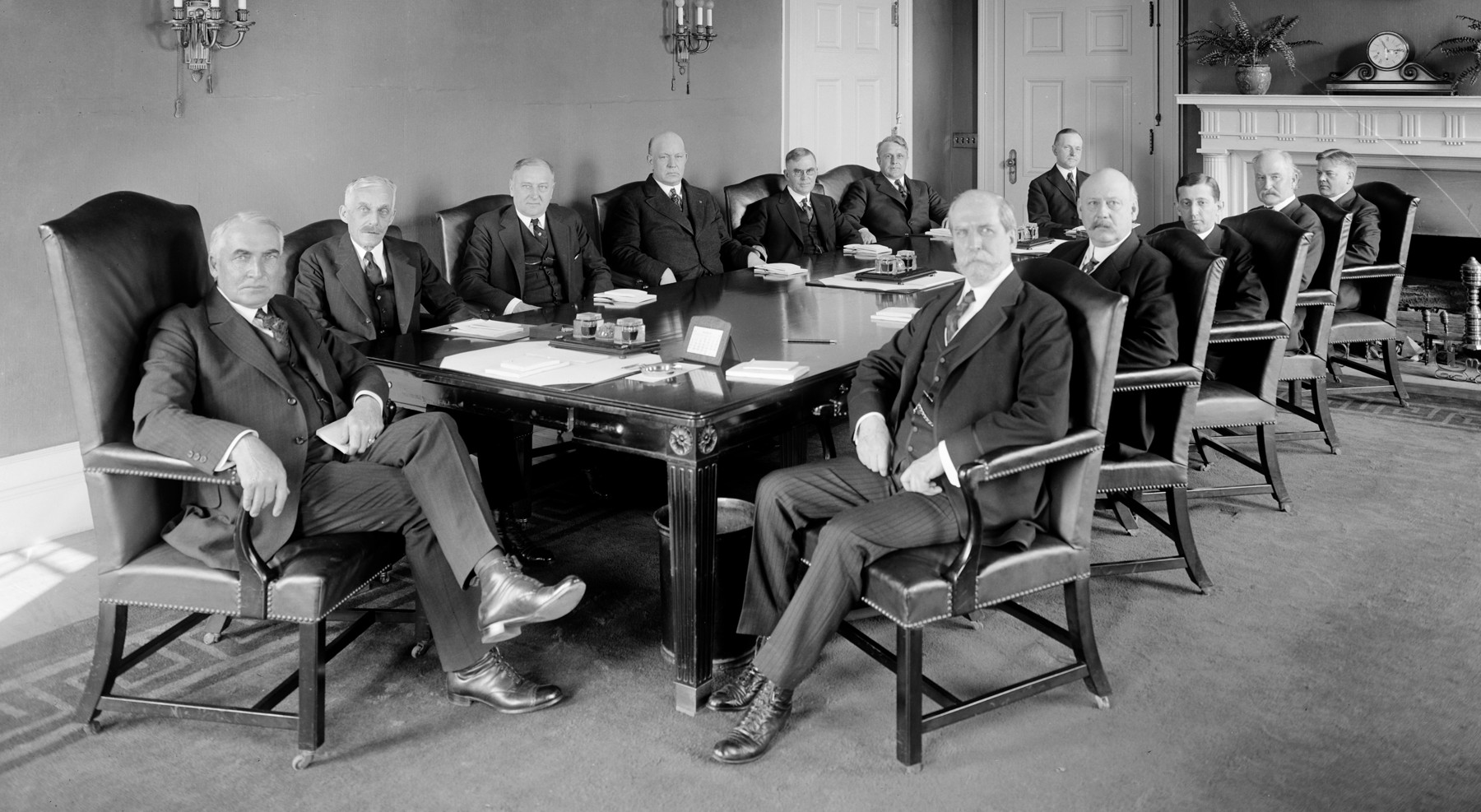
Harding’s role was substantial. He chose Fall as interior secretary and signed the order transferring administration of the reserves. The order retained presidential supervision and required Navy cooperation on general policy. The public document does not say that Fall could enrich himself or disregard existing law. [1]
In June 1922 Harding sent the Senate Fall’s defense of the leasing policy, saying the policy and subsequent acts had his approval. That is stronger evidence of presidential involvement than a photograph of the cabinet or a story about poker-playing friends. It also has limits: approving the transactions as presented is not proof that Harding was told about concealed cash and bonds. [2] [3]
Harding died in August 1923, before Doheny’s January 1924 admission transformed the inquiry. The linked historical record does not establish that Harding personally took the bribes or knowingly joined Fall’s corrupt bargain. His death prevented later questioning and defense of his conduct; it supplies neither automatic innocence nor missing proof of guilt. [3] [4]
It is reasonable to assess his judgment, appointments and willingness to endorse Fall’s policy. It is a further claim to call him a proven bribe recipient. This guide keeps political responsibility and personal criminal participation separate.