The AI Files · Pentagon Papers leak and publication, NYT v. United States; Watergate as neighboring context · plain reading edition
Era: Vietnam / Watergate — Pentagon Papers: every entry
All 56 entries of the guide, grouped by period and case, each with its bottom line and its sources. This page needs no JavaScript. The interactive guide adds the story in 13 chapters, the people, the timeline, the theories, the 40 checked claims and the media.
Visual timeline
52 dated events
The story (chapter edition)
War & credibility 1964-1970
Frame
How to read
How to read this era file
Record · Documented
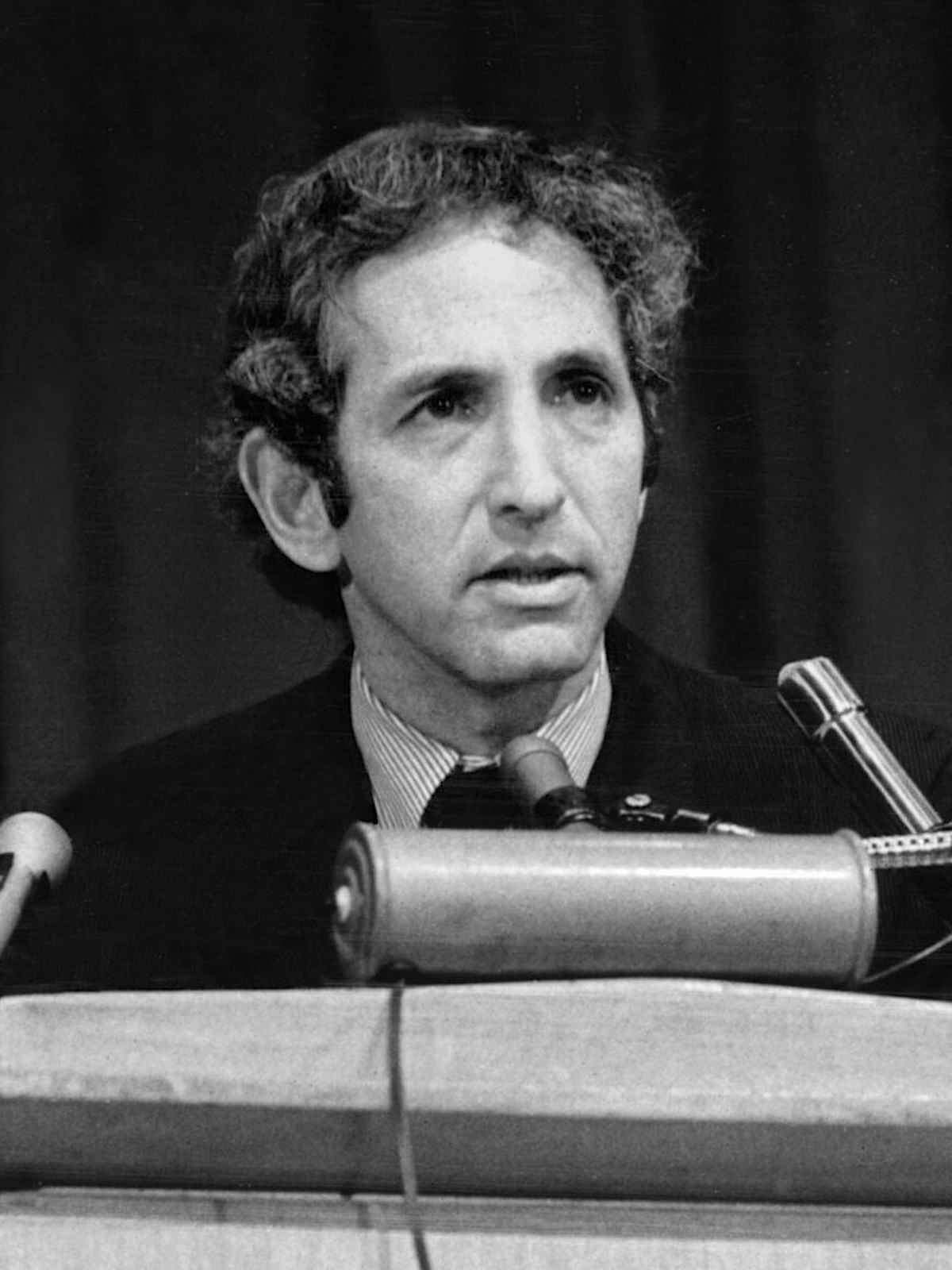
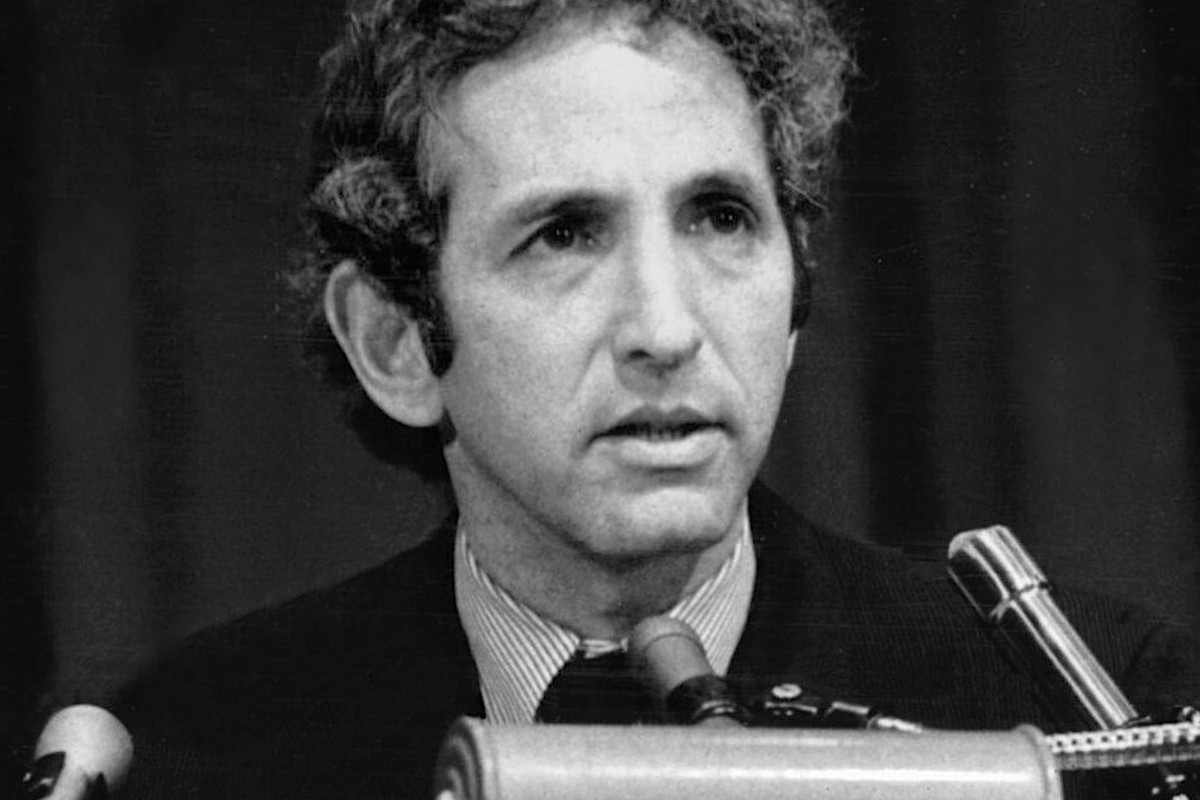
Daniel Ellsberg 1972 Commons · as labeled
Center Pentagon Papers: Ellsberg, Times publication, NYT v. United States. Watergate is neighboring context. Not a hate page.
Center Pentagon Papers: Ellsberg, Times publication, NYT v. United States. Watergate is neighboring context. Not a hate page.
Teaching note for “How to read this era file”: separate the documented primary (court docket, statute, contemporaneous state record, or archival leaflet) from later shorthand and cable-news slogans. Prefer the cited primary URL over a viral summary of the same event. Dates and institutional captions matter more than the street brand alone. [3]
Limits and humility: sealed dockets, destroyed street-camera footage, activist anonymity, and selection bias remain structural. Absence of a memo is not proof of absence; presence of a tactic family is not proof every named person used every tactic. Label contested funding and designation claims as contested. [3]
Cross-link sibling NYT Files nests when the same street episode, designation debate, or media frame appears; do not collapse Duranty dispatches, Pulitzer board materials, Holodomor scholarship, and later memory fights into one blob. YouTube clips belong on the audiovisual spine when they carry the same fact — always label primary footage vs commentary. Quality over speed; wait rather than ship thin. [3][3]
Epistemology for “How to read this era file”: map rival paths on the critical-path board. If a theory removes a node, state what would have to be wrong about the primary reading (mustBeWrong). Steel-man the opposing camp in one clause, then return to the primary. No fact-check-by-technicality shortcuts; no Grokipedia cites. [3]
Bottom line Documented
Center Pentagon Papers: Ellsberg, Times publication, NYT v. United States. Watergate is neighboring context. Not a hate page.
What the record can’t settle
See Theories for rival paths; contested claims stay labeled.
Court opinions; NARA Papers; Ellsberg materials; Army Vietnam photography.
Court opinions; NARA Papers; Ellsberg materials; Army Vietnam photography.
Teaching note for “Primary spine”: separate the documented primary (court docket, statute, contemporaneous state record, or archival leaflet) from later shorthand and cable-news slogans. Prefer the cited primary URL over a viral summary of the same event. Dates and institutional captions matter more than the street brand alone. [5]
Limits and humility: sealed dockets, destroyed street-camera footage, activist anonymity, and selection bias remain structural. Absence of a memo is not proof of absence; presence of a tactic family is not proof every named person used every tactic. Label contested funding and designation claims as contested. [5]
Cross-link sibling NYT Files nests when the same street episode, designation debate, or media frame appears; do not collapse Duranty dispatches, Pulitzer board materials, Holodomor scholarship, and later memory fights into one blob. YouTube clips belong on the audiovisual spine when they carry the same fact — always label primary footage vs commentary. Quality over speed; wait rather than ship thin. [5][5]
Epistemology for “Primary spine”: map rival paths on the critical-path board. If a theory removes a node, state what would have to be wrong about the primary reading (mustBeWrong). Steel-man the opposing camp in one clause, then return to the primary. No fact-check-by-technicality shortcuts; no Grokipedia cites. [5]
Bottom line Documented
Court opinions; NARA Papers; Ellsberg materials; Army Vietnam photography.
What the record can’t settle
See Theories for rival paths; contested claims stay labeled.
Not a claim Times alone ended the war; not a Watergate rewrite erasing the Post; not Grokipedia.
Not a claim Times alone ended the war; not a Watergate rewrite erasing the Post; not Grokipedia.
Teaching note for “What this file is not”: separate the documented primary (court docket, statute, contemporaneous state record, or archival leaflet) from later shorthand and cable-news slogans. Prefer the cited primary URL over a viral summary of the same event. Dates and institutional captions matter more than the street brand alone. [1]
Limits and humility: sealed dockets, destroyed street-camera footage, activist anonymity, and selection bias remain structural. Absence of a memo is not proof of absence; presence of a tactic family is not proof every named person used every tactic. Label contested funding and designation claims as contested. [1]
Cross-link sibling NYT Files nests when the same street episode, designation debate, or media frame appears; do not collapse Duranty dispatches, Pulitzer board materials, Holodomor scholarship, and later memory fights into one blob. YouTube clips belong on the audiovisual spine when they carry the same fact — always label primary footage vs commentary. Quality over speed; wait rather than ship thin. [1][1]
Epistemology for “What this file is not”: map rival paths on the critical-path board. If a theory removes a node, state what would have to be wrong about the primary reading (mustBeWrong). Steel-man the opposing camp in one clause, then return to the primary. No fact-check-by-technicality shortcuts; no Grokipedia cites. [1]
Bottom line Documented
Not a claim Times alone ended the war; not a Watergate rewrite erasing the Post; not Grokipedia.
What the record can’t settle
See Theories for rival paths; contested claims stay labeled.
Ellsberg interviews; oral argument; Vietnam NARA film — labeled.
Ellsberg interviews; oral argument; Vietnam NARA film — labeled.
Teaching note for “Video on the spine”: separate the documented primary (court docket, statute, contemporaneous state record, or archival leaflet) from later shorthand and cable-news slogans. Prefer the cited primary URL over a viral summary of the same event. Dates and institutional captions matter more than the street brand alone. [4]
Limits and humility: sealed dockets, destroyed street-camera footage, activist anonymity, and selection bias remain structural. Absence of a memo is not proof of absence; presence of a tactic family is not proof every named person used every tactic. Label contested funding and designation claims as contested. [4]
Cross-link sibling NYT Files nests when the same street episode, designation debate, or media frame appears; do not collapse Duranty dispatches, Pulitzer board materials, Holodomor scholarship, and later memory fights into one blob. YouTube clips belong on the audiovisual spine when they carry the same fact — always label primary footage vs commentary. Quality over speed; wait rather than ship thin. [4][4]
Epistemology for “Video on the spine”: map rival paths on the critical-path board. If a theory removes a node, state what would have to be wrong about the primary reading (mustBeWrong). Steel-man the opposing camp in one clause, then return to the primary. No fact-check-by-technicality shortcuts; no Grokipedia cites. [4]
Bottom line Documented
Ellsberg interviews; oral argument; Vietnam NARA film — labeled.
What the record can’t settle
See Theories for rival paths; contested claims stay labeled.
Teaching note for “Epistemology labels”: separate the documented primary (court docket, statute, contemporaneous state record, or archival leaflet) from later shorthand and cable-news slogans. Prefer the cited primary URL over a viral summary of the same event. Dates and institutional captions matter more than the street brand alone. [1]
Limits and humility: sealed dockets, destroyed street-camera footage, activist anonymity, and selection bias remain structural. Absence of a memo is not proof of absence; presence of a tactic family is not proof every named person used every tactic. Label contested funding and designation claims as contested. [1]
Cross-link sibling NYT Files nests when the same street episode, designation debate, or media frame appears; do not collapse Duranty dispatches, Pulitzer board materials, Holodomor scholarship, and later memory fights into one blob. YouTube clips belong on the audiovisual spine when they carry the same fact — always label primary footage vs commentary. Quality over speed; wait rather than ship thin. [1][1]
Epistemology for “Epistemology labels”: map rival paths on the critical-path board. If a theory removes a node, state what would have to be wrong about the primary reading (mustBeWrong). Steel-man the opposing camp in one clause, then return to the primary. No fact-check-by-technicality shortcuts; no Grokipedia cites. [1]
Official optimism vs field skepticism (Halberstam generation).
Official optimism vs field skepticism (Halberstam generation).
Teaching note for “Credibility gap before the Papers”: separate the documented primary (court docket, statute, contemporaneous state record, or archival leaflet) from later shorthand and cable-news slogans. Prefer the cited primary URL over a viral summary of the same event. Dates and institutional captions matter more than the street brand alone. [3]
Limits and humility: sealed dockets, destroyed street-camera footage, activist anonymity, and selection bias remain structural. Absence of a memo is not proof of absence; presence of a tactic family is not proof every named person used every tactic. Label contested funding and designation claims as contested. [3]
Cross-link sibling NYT Files nests when the same street episode, designation debate, or media frame appears; do not collapse Duranty dispatches, Pulitzer board materials, Holodomor scholarship, and later memory fights into one blob. YouTube clips belong on the audiovisual spine when they carry the same fact — always label primary footage vs commentary. Quality over speed; wait rather than ship thin. [3][3]
Epistemology for “Credibility gap before the Papers”: map rival paths on the critical-path board. If a theory removes a node, state what would have to be wrong about the primary reading (mustBeWrong). Steel-man the opposing camp in one clause, then return to the primary. No fact-check-by-technicality shortcuts; no Grokipedia cites. [3]
Bottom line Partly documented
Official optimism vs field skepticism (Halberstam generation).
What the record can’t settle
See Theories for rival paths; contested claims stay labeled.
Five o'clock follies reputation as foil to documentary history.
Five o'clock follies reputation as foil to documentary history.
Teaching note for “Briefing culture and body counts”: separate the documented primary (court docket, statute, contemporaneous state record, or archival leaflet) from later shorthand and cable-news slogans. Prefer the cited primary URL over a viral summary of the same event. Dates and institutional captions matter more than the street brand alone. [2]
Limits and humility: sealed dockets, destroyed street-camera footage, activist anonymity, and selection bias remain structural. Absence of a memo is not proof of absence; presence of a tactic family is not proof every named person used every tactic. Label contested funding and designation claims as contested. [2]
Cross-link sibling NYT Files nests when the same street episode, designation debate, or media frame appears; do not collapse Duranty dispatches, Pulitzer board materials, Holodomor scholarship, and later memory fights into one blob. YouTube clips belong on the audiovisual spine when they carry the same fact — always label primary footage vs commentary. Quality over speed; wait rather than ship thin. [2][2]
Epistemology for “Briefing culture and body counts”: map rival paths on the critical-path board. If a theory removes a node, state what would have to be wrong about the primary reading (mustBeWrong). Steel-man the opposing camp in one clause, then return to the primary. No fact-check-by-technicality shortcuts; no Grokipedia cites. [2]
Bottom line Partly documented
Five o'clock follies reputation as foil to documentary history.
What the record can’t settle
See Theories for rival paths; contested claims stay labeled.
Atrocity disclosure is part of era press ethics — dignity rules.
Atrocity disclosure is part of era press ethics — dignity rules.
Teaching note for “My Lai adjacency”: separate the documented primary (court docket, statute, contemporaneous state record, or archival leaflet) from later shorthand and cable-news slogans. Prefer the cited primary URL over a viral summary of the same event. Dates and institutional captions matter more than the street brand alone. [2]
Limits and humility: sealed dockets, destroyed street-camera footage, activist anonymity, and selection bias remain structural. Absence of a memo is not proof of absence; presence of a tactic family is not proof every named person used every tactic. Label contested funding and designation claims as contested. [2]
Cross-link sibling NYT Files nests when the same street episode, designation debate, or media frame appears; do not collapse Duranty dispatches, Pulitzer board materials, Holodomor scholarship, and later memory fights into one blob. YouTube clips belong on the audiovisual spine when they carry the same fact — always label primary footage vs commentary. Quality over speed; wait rather than ship thin. [2][2]
Epistemology for “My Lai adjacency”: map rival paths on the critical-path board. If a theory removes a node, state what would have to be wrong about the primary reading (mustBeWrong). Steel-man the opposing camp in one clause, then return to the primary. No fact-check-by-technicality shortcuts; no Grokipedia cites. [2]
Bottom line Partly documented
Atrocity disclosure is part of era press ethics — dignity rules.
What the record can’t settle
See Theories for rival paths; contested claims stay labeled.
Teaching note for “Escalation markers in study”: separate the documented primary (court docket, statute, contemporaneous state record, or archival leaflet) from later shorthand and cable-news slogans. Prefer the cited primary URL over a viral summary of the same event. Dates and institutional captions matter more than the street brand alone. [3]
Limits and humility: sealed dockets, destroyed street-camera footage, activist anonymity, and selection bias remain structural. Absence of a memo is not proof of absence; presence of a tactic family is not proof every named person used every tactic. Label contested funding and designation claims as contested. [3]
Cross-link sibling NYT Files nests when the same street episode, designation debate, or media frame appears; do not collapse Duranty dispatches, Pulitzer board materials, Holodomor scholarship, and later memory fights into one blob. YouTube clips belong on the audiovisual spine when they carry the same fact — always label primary footage vs commentary. Quality over speed; wait rather than ship thin. [3][3]
Epistemology for “Escalation markers in study”: map rival paths on the critical-path board. If a theory removes a node, state what would have to be wrong about the primary reading (mustBeWrong). Steel-man the opposing camp in one clause, then return to the primary. No fact-check-by-technicality shortcuts; no Grokipedia cites. [3]
Bottom line Partly documented
Tonkin to ground war as Papers narrative arc.
What the record can’t settle
See Theories for rival paths; contested claims stay labeled.
Teaching note for “McNamara commissions the study”: separate the documented primary (court docket, statute, contemporaneous state record, or archival leaflet) from later shorthand and cable-news slogans. Prefer the cited primary URL over a viral summary of the same event. Dates and institutional captions matter more than the street brand alone. [2]
Limits and humility: sealed dockets, destroyed street-camera footage, activist anonymity, and selection bias remain structural. Absence of a memo is not proof of absence; presence of a tactic family is not proof every named person used every tactic. Label contested funding and designation claims as contested. [2]
Cross-link sibling NYT Files nests when the same street episode, designation debate, or media frame appears; do not collapse Duranty dispatches, Pulitzer board materials, Holodomor scholarship, and later memory fights into one blob. YouTube clips belong on the audiovisual spine when they carry the same fact — always label primary footage vs commentary. Quality over speed; wait rather than ship thin. [2][2]
Epistemology for “McNamara commissions the study”: map rival paths on the critical-path board. If a theory removes a node, state what would have to be wrong about the primary reading (mustBeWrong). Steel-man the opposing camp in one clause, then return to the primary. No fact-check-by-technicality shortcuts; no Grokipedia cites. [2]
Bottom line Documented
Internal DoD history of decision-making.
What the record can’t settle
See Theories for rival paths; contested claims stay labeled.
Teaching note for “Ellsberg copies the Papers”: separate the documented primary (court docket, statute, contemporaneous state record, or archival leaflet) from later shorthand and cable-news slogans. Prefer the cited primary URL over a viral summary of the same event. Dates and institutional captions matter more than the street brand alone. [3]
Limits and humility: sealed dockets, destroyed street-camera footage, activist anonymity, and selection bias remain structural. Absence of a memo is not proof of absence; presence of a tactic family is not proof every named person used every tactic. Label contested funding and designation claims as contested. [3]
Cross-link sibling NYT Files nests when the same street episode, designation debate, or media frame appears; do not collapse Duranty dispatches, Pulitzer board materials, Holodomor scholarship, and later memory fights into one blob. YouTube clips belong on the audiovisual spine when they carry the same fact — always label primary footage vs commentary. Quality over speed; wait rather than ship thin. [3][3]
Epistemology for “Ellsberg copies the Papers”: map rival paths on the critical-path board. If a theory removes a node, state what would have to be wrong about the primary reading (mustBeWrong). Steel-man the opposing camp in one clause, then return to the primary. No fact-check-by-technicality shortcuts; no Grokipedia cites. [3]
Bottom line Documented
Analyst becomes whistleblower.
What the record can’t settle
See Theories for rival paths; contested claims stay labeled.
Teaching note for “Sheehan and Times obtain Papers”: separate the documented primary (court docket, statute, contemporaneous state record, or archival leaflet) from later shorthand and cable-news slogans. Prefer the cited primary URL over a viral summary of the same event. Dates and institutional captions matter more than the street brand alone. [3]
Limits and humility: sealed dockets, destroyed street-camera footage, activist anonymity, and selection bias remain structural. Absence of a memo is not proof of absence; presence of a tactic family is not proof every named person used every tactic. Label contested funding and designation claims as contested. [3]
Cross-link sibling NYT Files nests when the same street episode, designation debate, or media frame appears; do not collapse Duranty dispatches, Pulitzer board materials, Holodomor scholarship, and later memory fights into one blob. YouTube clips belong on the audiovisual spine when they carry the same fact — always label primary footage vs commentary. Quality over speed; wait rather than ship thin. [3][3]
Epistemology for “Sheehan and Times obtain Papers”: map rival paths on the critical-path board. If a theory removes a node, state what would have to be wrong about the primary reading (mustBeWrong). Steel-man the opposing camp in one clause, then return to the primary. No fact-check-by-technicality shortcuts; no Grokipedia cites. [3]
Bottom line Documented
Newsroom secrecy while preparing copy.
What the record can’t settle
See Theories for rival paths; contested claims stay labeled.
Teaching note for “Sulzberger decides to publish”: separate the documented primary (court docket, statute, contemporaneous state record, or archival leaflet) from later shorthand and cable-news slogans. Prefer the cited primary URL over a viral summary of the same event. Dates and institutional captions matter more than the street brand alone. [3]
Limits and humility: sealed dockets, destroyed street-camera footage, activist anonymity, and selection bias remain structural. Absence of a memo is not proof of absence; presence of a tactic family is not proof every named person used every tactic. Label contested funding and designation claims as contested. [3]
Cross-link sibling NYT Files nests when the same street episode, designation debate, or media frame appears; do not collapse Duranty dispatches, Pulitzer board materials, Holodomor scholarship, and later memory fights into one blob. YouTube clips belong on the audiovisual spine when they carry the same fact — always label primary footage vs commentary. Quality over speed; wait rather than ship thin. [3][3]
Epistemology for “Sulzberger decides to publish”: map rival paths on the critical-path board. If a theory removes a node, state what would have to be wrong about the primary reading (mustBeWrong). Steel-man the opposing camp in one clause, then return to the primary. No fact-check-by-technicality shortcuts; no Grokipedia cites. [3]
Bottom line Documented
Publisher accepts injunction risk.
What the record can’t settle
See Theories for rival paths; contested claims stay labeled.
Teaching note for “June 1971 publication begins”: separate the documented primary (court docket, statute, contemporaneous state record, or archival leaflet) from later shorthand and cable-news slogans. Prefer the cited primary URL over a viral summary of the same event. Dates and institutional captions matter more than the street brand alone. [3]
Limits and humility: sealed dockets, destroyed street-camera footage, activist anonymity, and selection bias remain structural. Absence of a memo is not proof of absence; presence of a tactic family is not proof every named person used every tactic. Label contested funding and designation claims as contested. [3]
Cross-link sibling NYT Files nests when the same street episode, designation debate, or media frame appears; do not collapse Duranty dispatches, Pulitzer board materials, Holodomor scholarship, and later memory fights into one blob. YouTube clips belong on the audiovisual spine when they carry the same fact — always label primary footage vs commentary. Quality over speed; wait rather than ship thin. [3][3]
Epistemology for “June 1971 publication begins”: map rival paths on the critical-path board. If a theory removes a node, state what would have to be wrong about the primary reading (mustBeWrong). Steel-man the opposing camp in one clause, then return to the primary. No fact-check-by-technicality shortcuts; no Grokipedia cites. [3]
Bottom line Documented
Times prints; DOJ races to court.
What the record can’t settle
See Theories for rival paths; contested claims stay labeled.
Teaching note for “Prior restraint attempt”: separate the documented primary (court docket, statute, contemporaneous state record, or archival leaflet) from later shorthand and cable-news slogans. Prefer the cited primary URL over a viral summary of the same event. Dates and institutional captions matter more than the street brand alone. [3]
Limits and humility: sealed dockets, destroyed street-camera footage, activist anonymity, and selection bias remain structural. Absence of a memo is not proof of absence; presence of a tactic family is not proof every named person used every tactic. Label contested funding and designation claims as contested. [3]
Cross-link sibling NYT Files nests when the same street episode, designation debate, or media frame appears; do not collapse Duranty dispatches, Pulitzer board materials, Holodomor scholarship, and later memory fights into one blob. YouTube clips belong on the audiovisual spine when they carry the same fact — always label primary footage vs commentary. Quality over speed; wait rather than ship thin. [3][3]
Epistemology for “Prior restraint attempt”: map rival paths on the critical-path board. If a theory removes a node, state what would have to be wrong about the primary reading (mustBeWrong). Steel-man the opposing camp in one clause, then return to the primary. No fact-check-by-technicality shortcuts; no Grokipedia cites. [3]
Bottom line Documented
Historic effort to stop the presses.
What the record can’t settle
See Theories for rival paths; contested claims stay labeled.
Teaching note for “Washington Post also publishes”: separate the documented primary (court docket, statute, contemporaneous state record, or archival leaflet) from later shorthand and cable-news slogans. Prefer the cited primary URL over a viral summary of the same event. Dates and institutional captions matter more than the street brand alone. [3]
Limits and humility: sealed dockets, destroyed street-camera footage, activist anonymity, and selection bias remain structural. Absence of a memo is not proof of absence; presence of a tactic family is not proof every named person used every tactic. Label contested funding and designation claims as contested. [3]
Cross-link sibling NYT Files nests when the same street episode, designation debate, or media frame appears; do not collapse Duranty dispatches, Pulitzer board materials, Holodomor scholarship, and later memory fights into one blob. YouTube clips belong on the audiovisual spine when they carry the same fact — always label primary footage vs commentary. Quality over speed; wait rather than ship thin. [3][3]
Epistemology for “Washington Post also publishes”: map rival paths on the critical-path board. If a theory removes a node, state what would have to be wrong about the primary reading (mustBeWrong). Steel-man the opposing camp in one clause, then return to the primary. No fact-check-by-technicality shortcuts; no Grokipedia cites. [3]
Bottom line Documented
Multi-paper reality.
What the record can’t settle
See Theories for rival paths; contested claims stay labeled.
Secret history of public policy — democratic tension.
Secret history of public policy — democratic tension.
Teaching note for “Classification vs public history”: separate the documented primary (court docket, statute, contemporaneous state record, or archival leaflet) from later shorthand and cable-news slogans. Prefer the cited primary URL over a viral summary of the same event. Dates and institutional captions matter more than the street brand alone. [2]
Limits and humility: sealed dockets, destroyed street-camera footage, activist anonymity, and selection bias remain structural. Absence of a memo is not proof of absence; presence of a tactic family is not proof every named person used every tactic. Label contested funding and designation claims as contested. [2]
Cross-link sibling NYT Files nests when the same street episode, designation debate, or media frame appears; do not collapse Duranty dispatches, Pulitzer board materials, Holodomor scholarship, and later memory fights into one blob. YouTube clips belong on the audiovisual spine when they carry the same fact — always label primary footage vs commentary. Quality over speed; wait rather than ship thin. [2][2]
Epistemology for “Classification vs public history”: map rival paths on the critical-path board. If a theory removes a node, state what would have to be wrong about the primary reading (mustBeWrong). Steel-man the opposing camp in one clause, then return to the primary. No fact-check-by-technicality shortcuts; no Grokipedia cites. [2]
Bottom line Documented
Secret history of public policy — democratic tension.
What the record can’t settle
See Theories for rival paths; contested claims stay labeled.
Lawyers, jail risk, company exposure in lore — verify via Rudenstine.
Lawyers, jail risk, company exposure in lore — verify via Rudenstine.
Teaching note for “Corporate risk”: separate the documented primary (court docket, statute, contemporaneous state record, or archival leaflet) from later shorthand and cable-news slogans. Prefer the cited primary URL over a viral summary of the same event. Dates and institutional captions matter more than the street brand alone. [2]
Limits and humility: sealed dockets, destroyed street-camera footage, activist anonymity, and selection bias remain structural. Absence of a memo is not proof of absence; presence of a tactic family is not proof every named person used every tactic. Label contested funding and designation claims as contested. [2]
Cross-link sibling NYT Files nests when the same street episode, designation debate, or media frame appears; do not collapse Duranty dispatches, Pulitzer board materials, Holodomor scholarship, and later memory fights into one blob. YouTube clips belong on the audiovisual spine when they carry the same fact — always label primary footage vs commentary. Quality over speed; wait rather than ship thin. [2][2]
Epistemology for “Corporate risk”: map rival paths on the critical-path board. If a theory removes a node, state what would have to be wrong about the primary reading (mustBeWrong). Steel-man the opposing camp in one clause, then return to the primary. No fact-check-by-technicality shortcuts; no Grokipedia cites. [2]
Bottom line Partly documented
Lawyers, jail risk, company exposure in lore — verify via Rudenstine.
What the record can’t settle
See Theories for rival paths; contested claims stay labeled.
Teaching note for “NYT v United States argued”: separate the documented primary (court docket, statute, contemporaneous state record, or archival leaflet) from later shorthand and cable-news slogans. Prefer the cited primary URL over a viral summary of the same event. Dates and institutional captions matter more than the street brand alone. [4]
Limits and humility: sealed dockets, destroyed street-camera footage, activist anonymity, and selection bias remain structural. Absence of a memo is not proof of absence; presence of a tactic family is not proof every named person used every tactic. Label contested funding and designation claims as contested. [4]
Cross-link sibling NYT Files nests when the same street episode, designation debate, or media frame appears; do not collapse Duranty dispatches, Pulitzer board materials, Holodomor scholarship, and later memory fights into one blob. YouTube clips belong on the audiovisual spine when they carry the same fact — always label primary footage vs commentary. Quality over speed; wait rather than ship thin. [4][4]
Epistemology for “NYT v United States argued”: map rival paths on the critical-path board. If a theory removes a node, state what would have to be wrong about the primary reading (mustBeWrong). Steel-man the opposing camp in one clause, then return to the primary. No fact-check-by-technicality shortcuts; no Grokipedia cites. [4]
Bottom line Documented
First Amendment vs executive secrecy.
What the record can’t settle
See Theories for rival paths; contested claims stay labeled.
Teaching note for “6-3 against prior restraint”: separate the documented primary (court docket, statute, contemporaneous state record, or archival leaflet) from later shorthand and cable-news slogans. Prefer the cited primary URL over a viral summary of the same event. Dates and institutional captions matter more than the street brand alone. [2]
Limits and humility: sealed dockets, destroyed street-camera footage, activist anonymity, and selection bias remain structural. Absence of a memo is not proof of absence; presence of a tactic family is not proof every named person used every tactic. Label contested funding and designation claims as contested. [2]
Cross-link sibling NYT Files nests when the same street episode, designation debate, or media frame appears; do not collapse Duranty dispatches, Pulitzer board materials, Holodomor scholarship, and later memory fights into one blob. YouTube clips belong on the audiovisual spine when they carry the same fact — always label primary footage vs commentary. Quality over speed; wait rather than ship thin. [2][2]
Epistemology for “6-3 against prior restraint”: map rival paths on the critical-path board. If a theory removes a node, state what would have to be wrong about the primary reading (mustBeWrong). Steel-man the opposing camp in one clause, then return to the primary. No fact-check-by-technicality shortcuts; no Grokipedia cites. [2]
Bottom line Documented
Government fails heavy burden.
What the record can’t settle
See Theories for rival paths; contested claims stay labeled.
Teaching note for “Black and Brennan concurrences”: separate the documented primary (court docket, statute, contemporaneous state record, or archival leaflet) from later shorthand and cable-news slogans. Prefer the cited primary URL over a viral summary of the same event. Dates and institutional captions matter more than the street brand alone. [2]
Limits and humility: sealed dockets, destroyed street-camera footage, activist anonymity, and selection bias remain structural. Absence of a memo is not proof of absence; presence of a tactic family is not proof every named person used every tactic. Label contested funding and designation claims as contested. [2]
Cross-link sibling NYT Files nests when the same street episode, designation debate, or media frame appears; do not collapse Duranty dispatches, Pulitzer board materials, Holodomor scholarship, and later memory fights into one blob. YouTube clips belong on the audiovisual spine when they carry the same fact — always label primary footage vs commentary. Quality over speed; wait rather than ship thin. [2][2]
Epistemology for “Black and Brennan concurrences”: map rival paths on the critical-path board. If a theory removes a node, state what would have to be wrong about the primary reading (mustBeWrong). Steel-man the opposing camp in one clause, then return to the primary. No fact-check-by-technicality shortcuts; no Grokipedia cites. [2]
Bottom line Documented
Speech-protective reasoning.
What the record can’t settle
See Theories for rival paths; contested claims stay labeled.
Teaching note for “White/Stewart narrower path”: separate the documented primary (court docket, statute, contemporaneous state record, or archival leaflet) from later shorthand and cable-news slogans. Prefer the cited primary URL over a viral summary of the same event. Dates and institutional captions matter more than the street brand alone. [2]
Limits and humility: sealed dockets, destroyed street-camera footage, activist anonymity, and selection bias remain structural. Absence of a memo is not proof of absence; presence of a tactic family is not proof every named person used every tactic. Label contested funding and designation claims as contested. [2]
Cross-link sibling NYT Files nests when the same street episode, designation debate, or media frame appears; do not collapse Duranty dispatches, Pulitzer board materials, Holodomor scholarship, and later memory fights into one blob. YouTube clips belong on the audiovisual spine when they carry the same fact — always label primary footage vs commentary. Quality over speed; wait rather than ship thin. [2][2]
Epistemology for “White/Stewart narrower path”: map rival paths on the critical-path board. If a theory removes a node, state what would have to be wrong about the primary reading (mustBeWrong). Steel-man the opposing camp in one clause, then return to the primary. No fact-check-by-technicality shortcuts; no Grokipedia cites. [2]
Bottom line Documented
Anti-injunction win ≠ total criminal immunity.
What the record can’t settle
See Theories for rival paths; contested claims stay labeled.
Teaching note for “Dissents on secrecy”: separate the documented primary (court docket, statute, contemporaneous state record, or archival leaflet) from later shorthand and cable-news slogans. Prefer the cited primary URL over a viral summary of the same event. Dates and institutional captions matter more than the street brand alone. [3]
Limits and humility: sealed dockets, destroyed street-camera footage, activist anonymity, and selection bias remain structural. Absence of a memo is not proof of absence; presence of a tactic family is not proof every named person used every tactic. Label contested funding and designation claims as contested. [3]
Cross-link sibling NYT Files nests when the same street episode, designation debate, or media frame appears; do not collapse Duranty dispatches, Pulitzer board materials, Holodomor scholarship, and later memory fights into one blob. YouTube clips belong on the audiovisual spine when they carry the same fact — always label primary footage vs commentary. Quality over speed; wait rather than ship thin. [3][3]
Epistemology for “Dissents on secrecy”: map rival paths on the critical-path board. If a theory removes a node, state what would have to be wrong about the primary reading (mustBeWrong). Steel-man the opposing camp in one clause, then return to the primary. No fact-check-by-technicality shortcuts; no Grokipedia cites. [3]
Bottom line Contested
Burger path more deferential.
What the record can’t settle
See Theories for rival paths; contested claims stay labeled.
Defeat of prior restraint on these facts — not a blank check for all secrets.
Defeat of prior restraint on these facts — not a blank check for all secrets.
Teaching note for “Holding scope”: separate the documented primary (court docket, statute, contemporaneous state record, or archival leaflet) from later shorthand and cable-news slogans. Prefer the cited primary URL over a viral summary of the same event. Dates and institutional captions matter more than the street brand alone. [3]
Limits and humility: sealed dockets, destroyed street-camera footage, activist anonymity, and selection bias remain structural. Absence of a memo is not proof of absence; presence of a tactic family is not proof every named person used every tactic. Label contested funding and designation claims as contested. [3]
Cross-link sibling NYT Files nests when the same street episode, designation debate, or media frame appears; do not collapse Duranty dispatches, Pulitzer board materials, Holodomor scholarship, and later memory fights into one blob. YouTube clips belong on the audiovisual spine when they carry the same fact — always label primary footage vs commentary. Quality over speed; wait rather than ship thin. [3][3]
Epistemology for “Holding scope”: map rival paths on the critical-path board. If a theory removes a node, state what would have to be wrong about the primary reading (mustBeWrong). Steel-man the opposing camp in one clause, then return to the primary. No fact-check-by-technicality shortcuts; no Grokipedia cites. [3]
Bottom line Documented
Defeat of prior restraint on these facts — not a blank check for all secrets.
What the record can’t settle
See Theories for rival paths; contested claims stay labeled.
Teaching note for “Compressed litigation schedule”: separate the documented primary (court docket, statute, contemporaneous state record, or archival leaflet) from later shorthand and cable-news slogans. Prefer the cited primary URL over a viral summary of the same event. Dates and institutional captions matter more than the street brand alone. [3]
Limits and humility: sealed dockets, destroyed street-camera footage, activist anonymity, and selection bias remain structural. Absence of a memo is not proof of absence; presence of a tactic family is not proof every named person used every tactic. Label contested funding and designation claims as contested. [3]
Cross-link sibling NYT Files nests when the same street episode, designation debate, or media frame appears; do not collapse Duranty dispatches, Pulitzer board materials, Holodomor scholarship, and later memory fights into one blob. YouTube clips belong on the audiovisual spine when they carry the same fact — always label primary footage vs commentary. Quality over speed; wait rather than ship thin. [3][3]
Epistemology for “Compressed litigation schedule”: map rival paths on the critical-path board. If a theory removes a node, state what would have to be wrong about the primary reading (mustBeWrong). Steel-man the opposing camp in one clause, then return to the primary. No fact-check-by-technicality shortcuts; no Grokipedia cites. [3]
Bottom line Documented
Speed is part of the freedom story.
What the record can’t settle
See Theories for rival paths; contested claims stay labeled.
Teaching note for “Papers show pattern of official optimism”: separate the documented primary (court docket, statute, contemporaneous state record, or archival leaflet) from later shorthand and cable-news slogans. Prefer the cited primary URL over a viral summary of the same event. Dates and institutional captions matter more than the street brand alone. [3]
Limits and humility: sealed dockets, destroyed street-camera footage, activist anonymity, and selection bias remain structural. Absence of a memo is not proof of absence; presence of a tactic family is not proof every named person used every tactic. Label contested funding and designation claims as contested. [3]
Cross-link sibling NYT Files nests when the same street episode, designation debate, or media frame appears; do not collapse Duranty dispatches, Pulitzer board materials, Holodomor scholarship, and later memory fights into one blob. YouTube clips belong on the audiovisual spine when they carry the same fact — always label primary footage vs commentary. Quality over speed; wait rather than ship thin. [3][3]
Epistemology for “Papers show pattern of official optimism”: map rival paths on the critical-path board. If a theory removes a node, state what would have to be wrong about the primary reading (mustBeWrong). Steel-man the opposing camp in one clause, then return to the primary. No fact-check-by-technicality shortcuts; no Grokipedia cites. [3]
Bottom line Documented
Mainstream reading of the study.
What the record can’t settle
See Theories for rival paths; contested claims stay labeled.
Causation vs correlation on war politics contested.
Causation vs correlation on war politics contested.
Teaching note for “Public trust shock”: separate the documented primary (court docket, statute, contemporaneous state record, or archival leaflet) from later shorthand and cable-news slogans. Prefer the cited primary URL over a viral summary of the same event. Dates and institutional captions matter more than the street brand alone. [3]
Limits and humility: sealed dockets, destroyed street-camera footage, activist anonymity, and selection bias remain structural. Absence of a memo is not proof of absence; presence of a tactic family is not proof every named person used every tactic. Label contested funding and designation claims as contested. [3]
Cross-link sibling NYT Files nests when the same street episode, designation debate, or media frame appears; do not collapse Duranty dispatches, Pulitzer board materials, Holodomor scholarship, and later memory fights into one blob. YouTube clips belong on the audiovisual spine when they carry the same fact — always label primary footage vs commentary. Quality over speed; wait rather than ship thin. [3][3]
Epistemology for “Public trust shock”: map rival paths on the critical-path board. If a theory removes a node, state what would have to be wrong about the primary reading (mustBeWrong). Steel-man the opposing camp in one clause, then return to the primary. No fact-check-by-technicality shortcuts; no Grokipedia cites. [3]
Bottom line Contested
Causation vs correlation on war politics contested.
What the record can’t settle
See Theories for rival paths; contested claims stay labeled.
Teaching note for “Ellsberg prosecution path”: separate the documented primary (court docket, statute, contemporaneous state record, or archival leaflet) from later shorthand and cable-news slogans. Prefer the cited primary URL over a viral summary of the same event. Dates and institutional captions matter more than the street brand alone. [3]
Limits and humility: sealed dockets, destroyed street-camera footage, activist anonymity, and selection bias remain structural. Absence of a memo is not proof of absence; presence of a tactic family is not proof every named person used every tactic. Label contested funding and designation claims as contested. [3]
Cross-link sibling NYT Files nests when the same street episode, designation debate, or media frame appears; do not collapse Duranty dispatches, Pulitzer board materials, Holodomor scholarship, and later memory fights into one blob. YouTube clips belong on the audiovisual spine when they carry the same fact — always label primary footage vs commentary. Quality over speed; wait rather than ship thin. [3][3]
Epistemology for “Ellsberg prosecution path”: map rival paths on the critical-path board. If a theory removes a node, state what would have to be wrong about the primary reading (mustBeWrong). Steel-man the opposing camp in one clause, then return to the primary. No fact-check-by-technicality shortcuts; no Grokipedia cites. [3]
Bottom line Partly documented
Leaker jeopardy distinct from press victory.
What the record can’t settle
See Theories for rival paths; contested claims stay labeled.
Teaching note for “Gravel Senate path”: separate the documented primary (court docket, statute, contemporaneous state record, or archival leaflet) from later shorthand and cable-news slogans. Prefer the cited primary URL over a viral summary of the same event. Dates and institutional captions matter more than the street brand alone. [2]
Limits and humility: sealed dockets, destroyed street-camera footage, activist anonymity, and selection bias remain structural. Absence of a memo is not proof of absence; presence of a tactic family is not proof every named person used every tactic. Label contested funding and designation claims as contested. [2]
Cross-link sibling NYT Files nests when the same street episode, designation debate, or media frame appears; do not collapse Duranty dispatches, Pulitzer board materials, Holodomor scholarship, and later memory fights into one blob. YouTube clips belong on the audiovisual spine when they carry the same fact — always label primary footage vs commentary. Quality over speed; wait rather than ship thin. [2][2]
Epistemology for “Gravel Senate path”: map rival paths on the critical-path board. If a theory removes a node, state what would have to be wrong about the primary reading (mustBeWrong). Steel-man the opposing camp in one clause, then return to the primary. No fact-check-by-technicality shortcuts; no Grokipedia cites. [2]
Bottom line Documented
Legislative publication parallel.
What the record can’t settle
See Theories for rival paths; contested claims stay labeled.
Teaching note for “International copy spread”: separate the documented primary (court docket, statute, contemporaneous state record, or archival leaflet) from later shorthand and cable-news slogans. Prefer the cited primary URL over a viral summary of the same event. Dates and institutional captions matter more than the street brand alone. [2]
Limits and humility: sealed dockets, destroyed street-camera footage, activist anonymity, and selection bias remain structural. Absence of a memo is not proof of absence; presence of a tactic family is not proof every named person used every tactic. Label contested funding and designation claims as contested. [2]
Cross-link sibling NYT Files nests when the same street episode, designation debate, or media frame appears; do not collapse Duranty dispatches, Pulitzer board materials, Holodomor scholarship, and later memory fights into one blob. YouTube clips belong on the audiovisual spine when they carry the same fact — always label primary footage vs commentary. Quality over speed; wait rather than ship thin. [2][2]
Epistemology for “International copy spread”: map rival paths on the critical-path board. If a theory removes a node, state what would have to be wrong about the primary reading (mustBeWrong). Steel-man the opposing camp in one clause, then return to the primary. No fact-check-by-technicality shortcuts; no Grokipedia cites. [2]
Bottom line Partly documented
Beyond New York.
What the record can’t settle
See Theories for rival paths; contested claims stay labeled.
Post-centered myth; include without stealing credit.
Post-centered myth; include without stealing credit.
Teaching note for “Watergate as era neighbor”: separate the documented primary (court docket, statute, contemporaneous state record, or archival leaflet) from later shorthand and cable-news slogans. Prefer the cited primary URL over a viral summary of the same event. Dates and institutional captions matter more than the street brand alone. [2]
Limits and humility: sealed dockets, destroyed street-camera footage, activist anonymity, and selection bias remain structural. Absence of a memo is not proof of absence; presence of a tactic family is not proof every named person used every tactic. Label contested funding and designation claims as contested. [2]
Cross-link sibling NYT Files nests when the same street episode, designation debate, or media frame appears; do not collapse Duranty dispatches, Pulitzer board materials, Holodomor scholarship, and later memory fights into one blob. YouTube clips belong on the audiovisual spine when they carry the same fact — always label primary footage vs commentary. Quality over speed; wait rather than ship thin. [2][2]
Epistemology for “Watergate as era neighbor”: map rival paths on the critical-path board. If a theory removes a node, state what would have to be wrong about the primary reading (mustBeWrong). Steel-man the opposing camp in one clause, then return to the primary. No fact-check-by-technicality shortcuts; no Grokipedia cites. [2]
Bottom line Partly documented
Post-centered myth; include without stealing credit.
What the record can’t settle
See Theories for rival paths; contested claims stay labeled.
Nixon response to Ellsberg helps spawn dirty-tricks capacity.
Nixon response to Ellsberg helps spawn dirty-tricks capacity.
Teaching note for “Papers to Plumbers connective tissue”: separate the documented primary (court docket, statute, contemporaneous state record, or archival leaflet) from later shorthand and cable-news slogans. Prefer the cited primary URL over a viral summary of the same event. Dates and institutional captions matter more than the street brand alone. [3]
Limits and humility: sealed dockets, destroyed street-camera footage, activist anonymity, and selection bias remain structural. Absence of a memo is not proof of absence; presence of a tactic family is not proof every named person used every tactic. Label contested funding and designation claims as contested. [3]
Cross-link sibling NYT Files nests when the same street episode, designation debate, or media frame appears; do not collapse Duranty dispatches, Pulitzer board materials, Holodomor scholarship, and later memory fights into one blob. YouTube clips belong on the audiovisual spine when they carry the same fact — always label primary footage vs commentary. Quality over speed; wait rather than ship thin. [3][3]
Epistemology for “Papers to Plumbers connective tissue”: map rival paths on the critical-path board. If a theory removes a node, state what would have to be wrong about the primary reading (mustBeWrong). Steel-man the opposing camp in one clause, then return to the primary. No fact-check-by-technicality shortcuts; no Grokipedia cites. [3]
Bottom line Partly documented
Nixon response to Ellsberg helps spawn dirty-tricks capacity.
What the record can’t settle
See Theories for rival paths; contested claims stay labeled.
Teaching note for “Why secondary here”: separate the documented primary (court docket, statute, contemporaneous state record, or archival leaflet) from later shorthand and cable-news slogans. Prefer the cited primary URL over a viral summary of the same event. Dates and institutional captions matter more than the street brand alone. [2]
Limits and humility: sealed dockets, destroyed street-camera footage, activist anonymity, and selection bias remain structural. Absence of a memo is not proof of absence; presence of a tactic family is not proof every named person used every tactic. Label contested funding and designation claims as contested. [2]
Cross-link sibling NYT Files nests when the same street episode, designation debate, or media frame appears; do not collapse Duranty dispatches, Pulitzer board materials, Holodomor scholarship, and later memory fights into one blob. YouTube clips belong on the audiovisual spine when they carry the same fact — always label primary footage vs commentary. Quality over speed; wait rather than ship thin. [2][2]
Epistemology for “Why secondary here”: map rival paths on the critical-path board. If a theory removes a node, state what would have to be wrong about the primary reading (mustBeWrong). Steel-man the opposing camp in one clause, then return to the primary. No fact-check-by-technicality shortcuts; no Grokipedia cites. [2]
Bottom line Documented
Different scandal ecology.
What the record can’t settle
See Theories for rival paths; contested claims stay labeled.
Heavy presumption against stopping presses; read opinions.
Heavy presumption against stopping presses; read opinions.
Teaching note for “Prior restraint classroom”: separate the documented primary (court docket, statute, contemporaneous state record, or archival leaflet) from later shorthand and cable-news slogans. Prefer the cited primary URL over a viral summary of the same event. Dates and institutional captions matter more than the street brand alone. [3]
Limits and humility: sealed dockets, destroyed street-camera footage, activist anonymity, and selection bias remain structural. Absence of a memo is not proof of absence; presence of a tactic family is not proof every named person used every tactic. Label contested funding and designation claims as contested. [3]
Cross-link sibling NYT Files nests when the same street episode, designation debate, or media frame appears; do not collapse Duranty dispatches, Pulitzer board materials, Holodomor scholarship, and later memory fights into one blob. YouTube clips belong on the audiovisual spine when they carry the same fact — always label primary footage vs commentary. Quality over speed; wait rather than ship thin. [3][3]
Epistemology for “Prior restraint classroom”: map rival paths on the critical-path board. If a theory removes a node, state what would have to be wrong about the primary reading (mustBeWrong). Steel-man the opposing camp in one clause, then return to the primary. No fact-check-by-technicality shortcuts; no Grokipedia cites. [3]
Bottom line Documented
Heavy presumption against stopping presses; read opinions.
What the record can’t settle
See Theories for rival paths; contested claims stay labeled.
Press win does not erase all chain liability questions.
Press win does not erase all chain liability questions.
Teaching note for “Source protection vs criminal law”: separate the documented primary (court docket, statute, contemporaneous state record, or archival leaflet) from later shorthand and cable-news slogans. Prefer the cited primary URL over a viral summary of the same event. Dates and institutional captions matter more than the street brand alone. [3]
Limits and humility: sealed dockets, destroyed street-camera footage, activist anonymity, and selection bias remain structural. Absence of a memo is not proof of absence; presence of a tactic family is not proof every named person used every tactic. Label contested funding and designation claims as contested. [3]
Cross-link sibling NYT Files nests when the same street episode, designation debate, or media frame appears; do not collapse Duranty dispatches, Pulitzer board materials, Holodomor scholarship, and later memory fights into one blob. YouTube clips belong on the audiovisual spine when they carry the same fact — always label primary footage vs commentary. Quality over speed; wait rather than ship thin. [3][3]
Epistemology for “Source protection vs criminal law”: map rival paths on the critical-path board. If a theory removes a node, state what would have to be wrong about the primary reading (mustBeWrong). Steel-man the opposing camp in one clause, then return to the primary. No fact-check-by-technicality shortcuts; no Grokipedia cites. [3]
Bottom line Documented
Press win does not erase all chain liability questions.
What the record can’t settle
See Theories for rival paths; contested claims stay labeled.
Legal/institutional record; war images with dignity.
Legal/institutional record; war images with dignity.
Teaching note for “Not a hate page”: separate the documented primary (court docket, statute, contemporaneous state record, or archival leaflet) from later shorthand and cable-news slogans. Prefer the cited primary URL over a viral summary of the same event. Dates and institutional captions matter more than the street brand alone. [1]
Limits and humility: sealed dockets, destroyed street-camera footage, activist anonymity, and selection bias remain structural. Absence of a memo is not proof of absence; presence of a tactic family is not proof every named person used every tactic. Label contested funding and designation claims as contested. [1]
Cross-link sibling NYT Files nests when the same street episode, designation debate, or media frame appears; do not collapse Duranty dispatches, Pulitzer board materials, Holodomor scholarship, and later memory fights into one blob. YouTube clips belong on the audiovisual spine when they carry the same fact — always label primary footage vs commentary. Quality over speed; wait rather than ship thin. [1][1]
Epistemology for “Not a hate page”: map rival paths on the critical-path board. If a theory removes a node, state what would have to be wrong about the primary reading (mustBeWrong). Steel-man the opposing camp in one clause, then return to the primary. No fact-check-by-technicality shortcuts; no Grokipedia cites. [1]
Bottom line Documented
Legal/institutional record; war images with dignity.
What the record can’t settle
See Theories for rival paths; contested claims stay labeled.
Teaching note for “Cross-link digital era carefully”: separate the documented primary (court docket, statute, contemporaneous state record, or archival leaflet) from later shorthand and cable-news slogans. Prefer the cited primary URL over a viral summary of the same event. Dates and institutional captions matter more than the street brand alone. [3]
Limits and humility: sealed dockets, destroyed street-camera footage, activist anonymity, and selection bias remain structural. Absence of a memo is not proof of absence; presence of a tactic family is not proof every named person used every tactic. Label contested funding and designation claims as contested. [3]
Cross-link sibling NYT Files nests when the same street episode, designation debate, or media frame appears; do not collapse Duranty dispatches, Pulitzer board materials, Holodomor scholarship, and later memory fights into one blob. YouTube clips belong on the audiovisual spine when they carry the same fact — always label primary footage vs commentary. Quality over speed; wait rather than ship thin. [3][3]
Epistemology for “Cross-link digital era carefully”: map rival paths on the critical-path board. If a theory removes a node, state what would have to be wrong about the primary reading (mustBeWrong). Steel-man the opposing camp in one clause, then return to the primary. No fact-check-by-technicality shortcuts; no Grokipedia cites. [3]
Bottom line Documented
Bulk digital dumps differ; see sibling nest.
What the record can’t settle
See Theories for rival paths; contested claims stay labeled.
Teaching note for “Classroom: Black vs White”: separate the documented primary (court docket, statute, contemporaneous state record, or archival leaflet) from later shorthand and cable-news slogans. Prefer the cited primary URL over a viral summary of the same event. Dates and institutional captions matter more than the street brand alone. [2]
Limits and humility: sealed dockets, destroyed street-camera footage, activist anonymity, and selection bias remain structural. Absence of a memo is not proof of absence; presence of a tactic family is not proof every named person used every tactic. Label contested funding and designation claims as contested. [2]
Cross-link sibling NYT Files nests when the same street episode, designation debate, or media frame appears; do not collapse Duranty dispatches, Pulitzer board materials, Holodomor scholarship, and later memory fights into one blob. YouTube clips belong on the audiovisual spine when they carry the same fact — always label primary footage vs commentary. Quality over speed; wait rather than ship thin. [2][2]
Epistemology for “Classroom: Black vs White”: map rival paths on the critical-path board. If a theory removes a node, state what would have to be wrong about the primary reading (mustBeWrong). Steel-man the opposing camp in one clause, then return to the primary. No fact-check-by-technicality shortcuts; no Grokipedia cites. [2]
Bottom line Documented
Two First Amendment theories in one case.
What the record can’t settle
See Theories for rival paths; contested claims stay labeled.
Dated teaching checkpoint for graph density — not a new street event claim.
Dated teaching checkpoint for graph density — not a new street event claim.
Teaching note for “Reading checkpoint 47”: separate the documented primary (court docket, statute, contemporaneous state record, or archival leaflet) from later shorthand and cable-news slogans. Prefer the cited primary URL over a viral summary of the same event. Dates and institutional captions matter more than the street brand alone. [1]
Limits and humility: sealed dockets, destroyed street-camera footage, activist anonymity, and selection bias remain structural. Absence of a memo is not proof of absence; presence of a tactic family is not proof every named person used every tactic. Label contested funding and designation claims as contested. [1]
Cross-link sibling NYT Files nests when the same street episode, designation debate, or media frame appears; do not collapse Duranty dispatches, Pulitzer board materials, Holodomor scholarship, and later memory fights into one blob. YouTube clips belong on the audiovisual spine when they carry the same fact — always label primary footage vs commentary. Quality over speed; wait rather than ship thin. [1][1]
Epistemology for “Reading checkpoint 47”: map rival paths on the critical-path board. If a theory removes a node, state what would have to be wrong about the primary reading (mustBeWrong). Steel-man the opposing camp in one clause, then return to the primary. No fact-check-by-technicality shortcuts; no Grokipedia cites. [1]
Bottom line Documented
Dated teaching checkpoint for graph density — not a new street event claim.
What the record can’t settle
See Theories for rival paths; contested claims stay labeled.
Dated teaching checkpoint for graph density — not a new street event claim.
Dated teaching checkpoint for graph density — not a new street event claim.
Teaching note for “Reading checkpoint 48”: separate the documented primary (court docket, statute, contemporaneous state record, or archival leaflet) from later shorthand and cable-news slogans. Prefer the cited primary URL over a viral summary of the same event. Dates and institutional captions matter more than the street brand alone. [1]
Limits and humility: sealed dockets, destroyed street-camera footage, activist anonymity, and selection bias remain structural. Absence of a memo is not proof of absence; presence of a tactic family is not proof every named person used every tactic. Label contested funding and designation claims as contested. [1]
Cross-link sibling NYT Files nests when the same street episode, designation debate, or media frame appears; do not collapse Duranty dispatches, Pulitzer board materials, Holodomor scholarship, and later memory fights into one blob. YouTube clips belong on the audiovisual spine when they carry the same fact — always label primary footage vs commentary. Quality over speed; wait rather than ship thin. [1][1]
Epistemology for “Reading checkpoint 48”: map rival paths on the critical-path board. If a theory removes a node, state what would have to be wrong about the primary reading (mustBeWrong). Steel-man the opposing camp in one clause, then return to the primary. No fact-check-by-technicality shortcuts; no Grokipedia cites. [1]
Bottom line Documented
Dated teaching checkpoint for graph density — not a new street event claim.
What the record can’t settle
See Theories for rival paths; contested claims stay labeled.
Dated teaching checkpoint for graph density — not a new street event claim.
Dated teaching checkpoint for graph density — not a new street event claim.
Teaching note for “Reading checkpoint 49”: separate the documented primary (court docket, statute, contemporaneous state record, or archival leaflet) from later shorthand and cable-news slogans. Prefer the cited primary URL over a viral summary of the same event. Dates and institutional captions matter more than the street brand alone. [1]
Limits and humility: sealed dockets, destroyed street-camera footage, activist anonymity, and selection bias remain structural. Absence of a memo is not proof of absence; presence of a tactic family is not proof every named person used every tactic. Label contested funding and designation claims as contested. [1]
Cross-link sibling NYT Files nests when the same street episode, designation debate, or media frame appears; do not collapse Duranty dispatches, Pulitzer board materials, Holodomor scholarship, and later memory fights into one blob. YouTube clips belong on the audiovisual spine when they carry the same fact — always label primary footage vs commentary. Quality over speed; wait rather than ship thin. [1][1]
Epistemology for “Reading checkpoint 49”: map rival paths on the critical-path board. If a theory removes a node, state what would have to be wrong about the primary reading (mustBeWrong). Steel-man the opposing camp in one clause, then return to the primary. No fact-check-by-technicality shortcuts; no Grokipedia cites. [1]
Bottom line Documented
Dated teaching checkpoint for graph density — not a new street event claim.
What the record can’t settle
See Theories for rival paths; contested claims stay labeled.
Dated teaching checkpoint for graph density — not a new street event claim.
Dated teaching checkpoint for graph density — not a new street event claim.
Teaching note for “Reading checkpoint 50”: separate the documented primary (court docket, statute, contemporaneous state record, or archival leaflet) from later shorthand and cable-news slogans. Prefer the cited primary URL over a viral summary of the same event. Dates and institutional captions matter more than the street brand alone. [1]
Limits and humility: sealed dockets, destroyed street-camera footage, activist anonymity, and selection bias remain structural. Absence of a memo is not proof of absence; presence of a tactic family is not proof every named person used every tactic. Label contested funding and designation claims as contested. [1]
Cross-link sibling NYT Files nests when the same street episode, designation debate, or media frame appears; do not collapse Duranty dispatches, Pulitzer board materials, Holodomor scholarship, and later memory fights into one blob. YouTube clips belong on the audiovisual spine when they carry the same fact — always label primary footage vs commentary. Quality over speed; wait rather than ship thin. [1][1]
Epistemology for “Reading checkpoint 50”: map rival paths on the critical-path board. If a theory removes a node, state what would have to be wrong about the primary reading (mustBeWrong). Steel-man the opposing camp in one clause, then return to the primary. No fact-check-by-technicality shortcuts; no Grokipedia cites. [1]
Bottom line Documented
Dated teaching checkpoint for graph density — not a new street event claim.
What the record can’t settle
See Theories for rival paths; contested claims stay labeled.
Dated teaching checkpoint for graph density — not a new street event claim.
Dated teaching checkpoint for graph density — not a new street event claim.
Teaching note for “Reading checkpoint 51”: separate the documented primary (court docket, statute, contemporaneous state record, or archival leaflet) from later shorthand and cable-news slogans. Prefer the cited primary URL over a viral summary of the same event. Dates and institutional captions matter more than the street brand alone. [1]
Limits and humility: sealed dockets, destroyed street-camera footage, activist anonymity, and selection bias remain structural. Absence of a memo is not proof of absence; presence of a tactic family is not proof every named person used every tactic. Label contested funding and designation claims as contested. [1]
Cross-link sibling NYT Files nests when the same street episode, designation debate, or media frame appears; do not collapse Duranty dispatches, Pulitzer board materials, Holodomor scholarship, and later memory fights into one blob. YouTube clips belong on the audiovisual spine when they carry the same fact — always label primary footage vs commentary. Quality over speed; wait rather than ship thin. [1][1]
Epistemology for “Reading checkpoint 51”: map rival paths on the critical-path board. If a theory removes a node, state what would have to be wrong about the primary reading (mustBeWrong). Steel-man the opposing camp in one clause, then return to the primary. No fact-check-by-technicality shortcuts; no Grokipedia cites. [1]
Bottom line Documented
Dated teaching checkpoint for graph density — not a new street event claim.
What the record can’t settle
See Theories for rival paths; contested claims stay labeled.
Dated teaching checkpoint for graph density — not a new street event claim.
Dated teaching checkpoint for graph density — not a new street event claim.
Teaching note for “Reading checkpoint 52”: separate the documented primary (court docket, statute, contemporaneous state record, or archival leaflet) from later shorthand and cable-news slogans. Prefer the cited primary URL over a viral summary of the same event. Dates and institutional captions matter more than the street brand alone. [1]
Limits and humility: sealed dockets, destroyed street-camera footage, activist anonymity, and selection bias remain structural. Absence of a memo is not proof of absence; presence of a tactic family is not proof every named person used every tactic. Label contested funding and designation claims as contested. [1]
Cross-link sibling NYT Files nests when the same street episode, designation debate, or media frame appears; do not collapse Duranty dispatches, Pulitzer board materials, Holodomor scholarship, and later memory fights into one blob. YouTube clips belong on the audiovisual spine when they carry the same fact — always label primary footage vs commentary. Quality over speed; wait rather than ship thin. [1][1]
Epistemology for “Reading checkpoint 52”: map rival paths on the critical-path board. If a theory removes a node, state what would have to be wrong about the primary reading (mustBeWrong). Steel-man the opposing camp in one clause, then return to the primary. No fact-check-by-technicality shortcuts; no Grokipedia cites. [1]
Bottom line Documented
Dated teaching checkpoint for graph density — not a new street event claim.
What the record can’t settle
See Theories for rival paths; contested claims stay labeled.
Dated teaching checkpoint for graph density — not a new street event claim.
Dated teaching checkpoint for graph density — not a new street event claim.
Teaching note for “Reading checkpoint 53”: separate the documented primary (court docket, statute, contemporaneous state record, or archival leaflet) from later shorthand and cable-news slogans. Prefer the cited primary URL over a viral summary of the same event. Dates and institutional captions matter more than the street brand alone. [1]
Limits and humility: sealed dockets, destroyed street-camera footage, activist anonymity, and selection bias remain structural. Absence of a memo is not proof of absence; presence of a tactic family is not proof every named person used every tactic. Label contested funding and designation claims as contested. [1]
Cross-link sibling NYT Files nests when the same street episode, designation debate, or media frame appears; do not collapse Duranty dispatches, Pulitzer board materials, Holodomor scholarship, and later memory fights into one blob. YouTube clips belong on the audiovisual spine when they carry the same fact — always label primary footage vs commentary. Quality over speed; wait rather than ship thin. [1][1]
Epistemology for “Reading checkpoint 53”: map rival paths on the critical-path board. If a theory removes a node, state what would have to be wrong about the primary reading (mustBeWrong). Steel-man the opposing camp in one clause, then return to the primary. No fact-check-by-technicality shortcuts; no Grokipedia cites. [1]
Bottom line Documented
Dated teaching checkpoint for graph density — not a new street event claim.
What the record can’t settle
See Theories for rival paths; contested claims stay labeled.
Dated teaching checkpoint for graph density — not a new street event claim.
Dated teaching checkpoint for graph density — not a new street event claim.
Teaching note for “Reading checkpoint 54”: separate the documented primary (court docket, statute, contemporaneous state record, or archival leaflet) from later shorthand and cable-news slogans. Prefer the cited primary URL over a viral summary of the same event. Dates and institutional captions matter more than the street brand alone. [1]
Limits and humility: sealed dockets, destroyed street-camera footage, activist anonymity, and selection bias remain structural. Absence of a memo is not proof of absence; presence of a tactic family is not proof every named person used every tactic. Label contested funding and designation claims as contested. [1]
Cross-link sibling NYT Files nests when the same street episode, designation debate, or media frame appears; do not collapse Duranty dispatches, Pulitzer board materials, Holodomor scholarship, and later memory fights into one blob. YouTube clips belong on the audiovisual spine when they carry the same fact — always label primary footage vs commentary. Quality over speed; wait rather than ship thin. [1][1]
Epistemology for “Reading checkpoint 54”: map rival paths on the critical-path board. If a theory removes a node, state what would have to be wrong about the primary reading (mustBeWrong). Steel-man the opposing camp in one clause, then return to the primary. No fact-check-by-technicality shortcuts; no Grokipedia cites. [1]
Bottom line Documented
Dated teaching checkpoint for graph density — not a new street event claim.
What the record can’t settle
See Theories for rival paths; contested claims stay labeled.
Dated teaching checkpoint for graph density — not a new street event claim.
Dated teaching checkpoint for graph density — not a new street event claim.
Teaching note for “Reading checkpoint 55”: separate the documented primary (court docket, statute, contemporaneous state record, or archival leaflet) from later shorthand and cable-news slogans. Prefer the cited primary URL over a viral summary of the same event. Dates and institutional captions matter more than the street brand alone. [1]
Limits and humility: sealed dockets, destroyed street-camera footage, activist anonymity, and selection bias remain structural. Absence of a memo is not proof of absence; presence of a tactic family is not proof every named person used every tactic. Label contested funding and designation claims as contested. [1]
Cross-link sibling NYT Files nests when the same street episode, designation debate, or media frame appears; do not collapse Duranty dispatches, Pulitzer board materials, Holodomor scholarship, and later memory fights into one blob. YouTube clips belong on the audiovisual spine when they carry the same fact — always label primary footage vs commentary. Quality over speed; wait rather than ship thin. [1][1]
Epistemology for “Reading checkpoint 55”: map rival paths on the critical-path board. If a theory removes a node, state what would have to be wrong about the primary reading (mustBeWrong). Steel-man the opposing camp in one clause, then return to the primary. No fact-check-by-technicality shortcuts; no Grokipedia cites. [1]
Bottom line Documented
Dated teaching checkpoint for graph density — not a new street event claim.
What the record can’t settle
See Theories for rival paths; contested claims stay labeled.
Dated teaching checkpoint for graph density — not a new street event claim.
Dated teaching checkpoint for graph density — not a new street event claim.
Teaching note for “Reading checkpoint 56”: separate the documented primary (court docket, statute, contemporaneous state record, or archival leaflet) from later shorthand and cable-news slogans. Prefer the cited primary URL over a viral summary of the same event. Dates and institutional captions matter more than the street brand alone. [1]
Limits and humility: sealed dockets, destroyed street-camera footage, activist anonymity, and selection bias remain structural. Absence of a memo is not proof of absence; presence of a tactic family is not proof every named person used every tactic. Label contested funding and designation claims as contested. [1]
Cross-link sibling NYT Files nests when the same street episode, designation debate, or media frame appears; do not collapse Duranty dispatches, Pulitzer board materials, Holodomor scholarship, and later memory fights into one blob. YouTube clips belong on the audiovisual spine when they carry the same fact — always label primary footage vs commentary. Quality over speed; wait rather than ship thin. [1][1]
Epistemology for “Reading checkpoint 56”: map rival paths on the critical-path board. If a theory removes a node, state what would have to be wrong about the primary reading (mustBeWrong). Steel-man the opposing camp in one clause, then return to the primary. No fact-check-by-technicality shortcuts; no Grokipedia cites. [1]
Bottom line Documented
Dated teaching checkpoint for graph density — not a new street event claim.
What the record can’t settle
See Theories for rival paths; contested claims stay labeled.
Teaching note for “Rudenstine legal history”: separate the documented primary (court docket, statute, contemporaneous state record, or archival leaflet) from later shorthand and cable-news slogans. Prefer the cited primary URL over a viral summary of the same event. Dates and institutional captions matter more than the street brand alone. [2]
Limits and humility: sealed dockets, destroyed street-camera footage, activist anonymity, and selection bias remain structural. Absence of a memo is not proof of absence; presence of a tactic family is not proof every named person used every tactic. Label contested funding and designation claims as contested. [2]
Cross-link sibling NYT Files nests when the same street episode, designation debate, or media frame appears; do not collapse Duranty dispatches, Pulitzer board materials, Holodomor scholarship, and later memory fights into one blob. YouTube clips belong on the audiovisual spine when they carry the same fact — always label primary footage vs commentary. Quality over speed; wait rather than ship thin. [2][2]
Epistemology for “Rudenstine legal history”: map rival paths on the critical-path board. If a theory removes a node, state what would have to be wrong about the primary reading (mustBeWrong). Steel-man the opposing camp in one clause, then return to the primary. No fact-check-by-technicality shortcuts; no Grokipedia cites. [2]
Bottom line Documented
Litigation reconstruction.
What the record can’t settle
See Theories for rival paths; contested claims stay labeled.
Teaching note for “Ellsberg later interviews”: separate the documented primary (court docket, statute, contemporaneous state record, or archival leaflet) from later shorthand and cable-news slogans. Prefer the cited primary URL over a viral summary of the same event. Dates and institutional captions matter more than the street brand alone. [2]
Limits and humility: sealed dockets, destroyed street-camera footage, activist anonymity, and selection bias remain structural. Absence of a memo is not proof of absence; presence of a tactic family is not proof every named person used every tactic. Label contested funding and designation claims as contested. [2]
Cross-link sibling NYT Files nests when the same street episode, designation debate, or media frame appears; do not collapse Duranty dispatches, Pulitzer board materials, Holodomor scholarship, and later memory fights into one blob. YouTube clips belong on the audiovisual spine when they carry the same fact — always label primary footage vs commentary. Quality over speed; wait rather than ship thin. [2][2]
Epistemology for “Ellsberg later interviews”: map rival paths on the critical-path board. If a theory removes a node, state what would have to be wrong about the primary reading (mustBeWrong). Steel-man the opposing camp in one clause, then return to the primary. No fact-check-by-technicality shortcuts; no Grokipedia cites. [2]
Bottom line Claim-layer
Decades-later memory; label.
What the record can’t settle
See Theories for rival paths; contested claims stay labeled.
Teaching note for “NARA full release”: separate the documented primary (court docket, statute, contemporaneous state record, or archival leaflet) from later shorthand and cable-news slogans. Prefer the cited primary URL over a viral summary of the same event. Dates and institutional captions matter more than the street brand alone. [2]
Limits and humility: sealed dockets, destroyed street-camera footage, activist anonymity, and selection bias remain structural. Absence of a memo is not proof of absence; presence of a tactic family is not proof every named person used every tactic. Label contested funding and designation claims as contested. [2]
Cross-link sibling NYT Files nests when the same street episode, designation debate, or media frame appears; do not collapse Duranty dispatches, Pulitzer board materials, Holodomor scholarship, and later memory fights into one blob. YouTube clips belong on the audiovisual spine when they carry the same fact — always label primary footage vs commentary. Quality over speed; wait rather than ship thin. [2][2]
Epistemology for “NARA full release”: map rival paths on the critical-path board. If a theory removes a node, state what would have to be wrong about the primary reading (mustBeWrong). Steel-man the opposing camp in one clause, then return to the primary. No fact-check-by-technicality shortcuts; no Grokipedia cites. [2]
Bottom line Documented
Citizens can read volumes directly.
What the record can’t settle
See Theories for rival paths; contested claims stay labeled.
Teaching note for “Open: did Papers shorten the war?”: separate the documented primary (court docket, statute, contemporaneous state record, or archival leaflet) from later shorthand and cable-news slogans. Prefer the cited primary URL over a viral summary of the same event. Dates and institutional captions matter more than the street brand alone. [3]
Limits and humility: sealed dockets, destroyed street-camera footage, activist anonymity, and selection bias remain structural. Absence of a memo is not proof of absence; presence of a tactic family is not proof every named person used every tactic. Label contested funding and designation claims as contested. [3]
Cross-link sibling NYT Files nests when the same street episode, designation debate, or media frame appears; do not collapse Duranty dispatches, Pulitzer board materials, Holodomor scholarship, and later memory fights into one blob. YouTube clips belong on the audiovisual spine when they carry the same fact — always label primary footage vs commentary. Quality over speed; wait rather than ship thin. [3][3]
Epistemology for “Open: did Papers shorten the war?”: map rival paths on the critical-path board. If a theory removes a node, state what would have to be wrong about the primary reading (mustBeWrong). Steel-man the opposing camp in one clause, then return to the primary. No fact-check-by-technicality shortcuts; no Grokipedia cites. [3]
Bottom line Contested
Contested.
What the record can’t settle
See Theories for rival paths; contested claims stay labeled.
Teaching note for “Open: modern leak doctrine line”: separate the documented primary (court docket, statute, contemporaneous state record, or archival leaflet) from later shorthand and cable-news slogans. Prefer the cited primary URL over a viral summary of the same event. Dates and institutional captions matter more than the street brand alone. [2]
Limits and humility: sealed dockets, destroyed street-camera footage, activist anonymity, and selection bias remain structural. Absence of a memo is not proof of absence; presence of a tactic family is not proof every named person used every tactic. Label contested funding and designation claims as contested. [2]
Cross-link sibling NYT Files nests when the same street episode, designation debate, or media frame appears; do not collapse Duranty dispatches, Pulitzer board materials, Holodomor scholarship, and later memory fights into one blob. YouTube clips belong on the audiovisual spine when they carry the same fact — always label primary footage vs commentary. Quality over speed; wait rather than ship thin. [2][2]
Epistemology for “Open: modern leak doctrine line”: map rival paths on the critical-path board. If a theory removes a node, state what would have to be wrong about the primary reading (mustBeWrong). Steel-man the opposing camp in one clause, then return to the primary. No fact-check-by-technicality shortcuts; no Grokipedia cites. [2]
Bottom line Partly documented
Boundary to digital nest.
What the record can’t settle
See Theories for rival paths; contested claims stay labeled.
/files/new-york-times-era-vietnam-watergate/ under NYT Files.
/files/new-york-times-era-vietnam-watergate/ under NYT Files.
Teaching note for “Collection placement”: separate the documented primary (court docket, statute, contemporaneous state record, or archival leaflet) from later shorthand and cable-news slogans. Prefer the cited primary URL over a viral summary of the same event. Dates and institutional captions matter more than the street brand alone. [1]
Limits and humility: sealed dockets, destroyed street-camera footage, activist anonymity, and selection bias remain structural. Absence of a memo is not proof of absence; presence of a tactic family is not proof every named person used every tactic. Label contested funding and designation claims as contested. [1]
Cross-link sibling NYT Files nests when the same street episode, designation debate, or media frame appears; do not collapse Duranty dispatches, Pulitzer board materials, Holodomor scholarship, and later memory fights into one blob. YouTube clips belong on the audiovisual spine when they carry the same fact — always label primary footage vs commentary. Quality over speed; wait rather than ship thin. [1][1]
Epistemology for “Collection placement”: map rival paths on the critical-path board. If a theory removes a node, state what would have to be wrong about the primary reading (mustBeWrong). Steel-man the opposing camp in one clause, then return to the primary. No fact-check-by-technicality shortcuts; no Grokipedia cites. [1]
Bottom line Documented
/files/new-york-times-era-vietnam-watergate/ under NYT Files.
What the record can’t settle
See Theories for rival paths; contested claims stay labeled.
Some secrets protect troops; burden of proof for injunction still required.
Some secrets protect troops; burden of proof for injunction still required.
Teaching note for “Steel-man government”: separate the documented primary (court docket, statute, contemporaneous state record, or archival leaflet) from later shorthand and cable-news slogans. Prefer the cited primary URL over a viral summary of the same event. Dates and institutional captions matter more than the street brand alone. [2]
Limits and humility: sealed dockets, destroyed street-camera footage, activist anonymity, and selection bias remain structural. Absence of a memo is not proof of absence; presence of a tactic family is not proof every named person used every tactic. Label contested funding and designation claims as contested. [2]
Cross-link sibling NYT Files nests when the same street episode, designation debate, or media frame appears; do not collapse Duranty dispatches, Pulitzer board materials, Holodomor scholarship, and later memory fights into one blob. YouTube clips belong on the audiovisual spine when they carry the same fact — always label primary footage vs commentary. Quality over speed; wait rather than ship thin. [2][2]
Epistemology for “Steel-man government”: map rival paths on the critical-path board. If a theory removes a node, state what would have to be wrong about the primary reading (mustBeWrong). Steel-man the opposing camp in one clause, then return to the primary. No fact-check-by-technicality shortcuts; no Grokipedia cites. [2]
Bottom line Contested
Some secrets protect troops; burden of proof for injunction still required.
What the record can’t settle
See Theories for rival paths; contested claims stay labeled.
Teaching note for “Steel-man Times”: separate the documented primary (court docket, statute, contemporaneous state record, or archival leaflet) from later shorthand and cable-news slogans. Prefer the cited primary URL over a viral summary of the same event. Dates and institutional captions matter more than the street brand alone. [3]
Limits and humility: sealed dockets, destroyed street-camera footage, activist anonymity, and selection bias remain structural. Absence of a memo is not proof of absence; presence of a tactic family is not proof every named person used every tactic. Label contested funding and designation claims as contested. [3]
Cross-link sibling NYT Files nests when the same street episode, designation debate, or media frame appears; do not collapse Duranty dispatches, Pulitzer board materials, Holodomor scholarship, and later memory fights into one blob. YouTube clips belong on the audiovisual spine when they carry the same fact — always label primary footage vs commentary. Quality over speed; wait rather than ship thin. [3][3]
Epistemology for “Steel-man Times”: map rival paths on the critical-path board. If a theory removes a node, state what would have to be wrong about the primary reading (mustBeWrong). Steel-man the opposing camp in one clause, then return to the primary. No fact-check-by-technicality shortcuts; no Grokipedia cites. [3]
Bottom line Documented
Democratic consent needs public war history.
What the record can’t settle
See Theories for rival paths; contested claims stay labeled.