The AI Files · Contested New York Times coverage of Nazi Germany and the Holocaust (emphasis, wording, page placement), with Gilded Age brand context · plain reading edition
Era: Gilded Age → WWII — Buried by The Times: every entry
All 56 entries of the guide, grouped by period and case, each with its bottom line and its sources. This page needs no JavaScript. The interactive guide adds the story in 13 chapters, the people, the timeline, the theories, the 40 checked claims and the media.
Visual timeline
52 dated events
The story (chapter edition)
Chapter 1: How to read this era
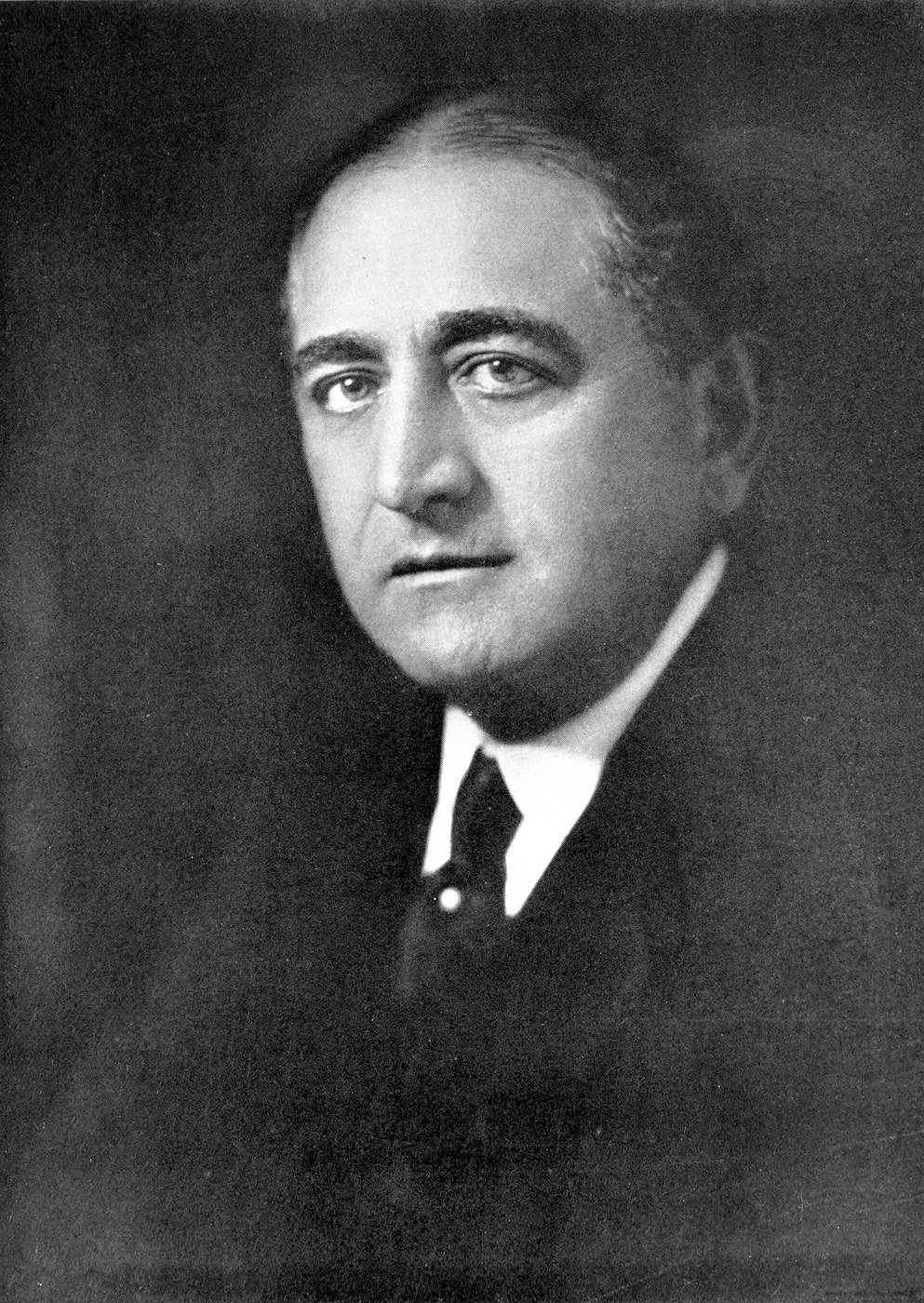
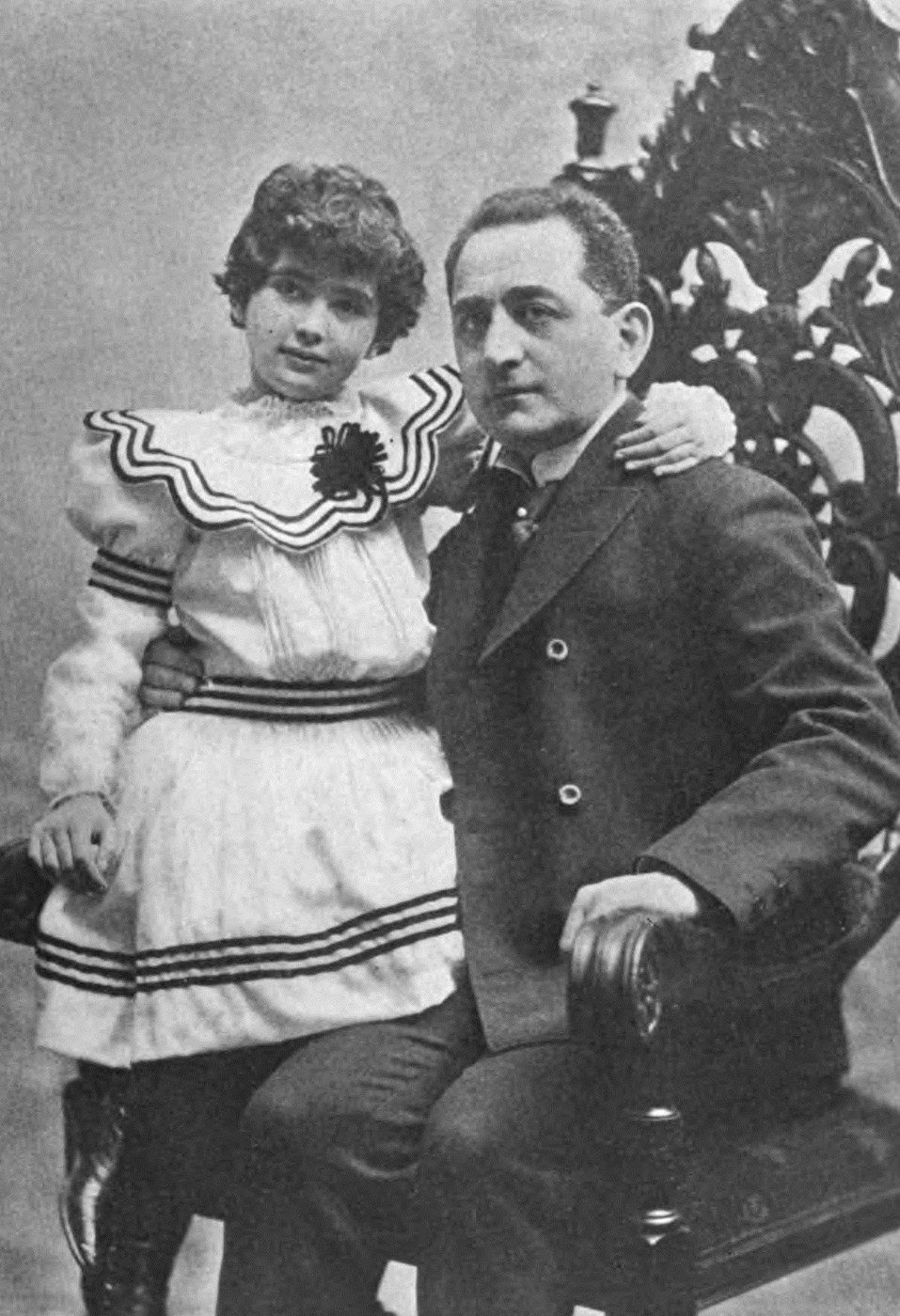
Adolph S. Ochs — the Gilded Age purchaser who rebuilt the Times brand that later covered Nazi Germany. Library of Congress / public domain (Commons)
This nest sits inside the New York Times drawer. It is not a museum tour of every front page from 1896 to 1945. It is a contested-coverage deep: how a rebuilt Gilded Age paper framed Nazi Germany, Jewish persecution, war, extermination reports, liberation, and court — with emphasis, wording, and page placement as load-bearing objects, not vibes.
‘Contested’ here does not mean denial that the Holocaust happened. The primary spine — Nazi laws, Kristallnacht, deportations, camps, liberation photography, Nuremberg evidence — is overwhelming. The dispute this guide holds open is about the Times as an institution: when stories rose or fell on the page, how euphemism and ‘reliability’ filters shaped copy, and what later critics and defenders each must account for in the contemporaneous record.
Read siblings in order when you can. Duranty/Holodomor is a different nest (1930s Ukraine famine coverage). Cold War, Vietnam–Watergate, Iraq WMD, and Digital eras continue the Times drawer after this one. This file stops at Gilded purchase through World War II’s court coda.
Primary hinges ahead: Ochs’s 1896 purchase and motto, Sulzberger’s 1935 publishership, Berlin book burnings and Nuremberg Laws as early-test coverage, Kristallnacht placement, war-entry frames after Poland and Pearl Harbor, 1942–44 extermination reports in the Allied press ecology, liberation (Ohrdruf and Eisenhower’s insistence on record), Nuremberg evidence, and the method for weighing page hierarchy against later memory.
Epistemology bar: prefer dated Times pages, wire copy, and government photography over memoir slogans. Label mainstream institutional self-defense as mainstream. Map rival critical paths — ‘deliberate downplay,’ ‘fog of war and verification norms,’ ‘antisemitism in the newsroom,’ ‘reader market and State Department pressure’ — to the same objects. Do not middle-layer a later documentary as if it were 1938 type.
If a later documentary or classroom slide collapses this era into a single villain headline, bring the visitor back to dated pages. The drawer is built for that discipline.
Chapter 2: 1896: Ochs buys a failing paper
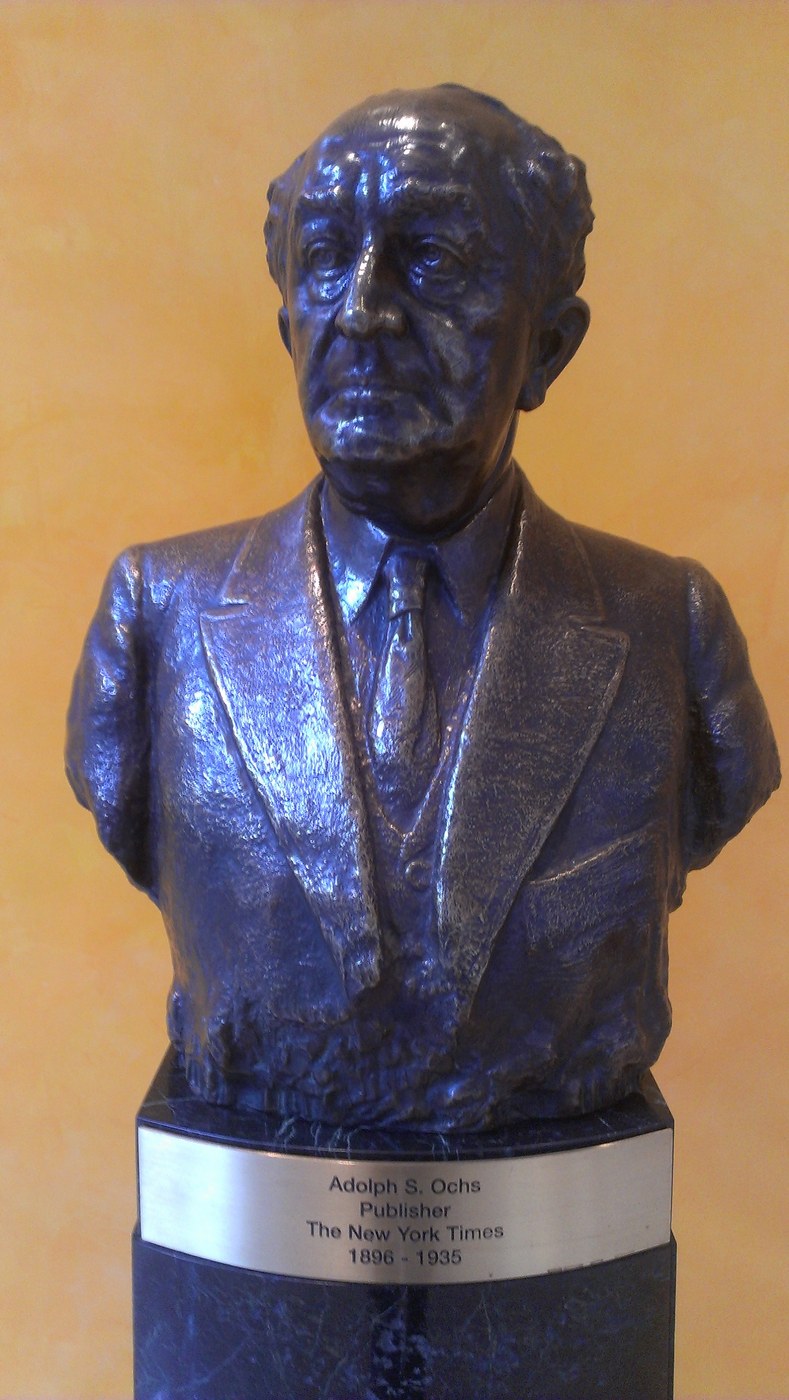
Ochs memorialized in the Times lobby — the purchase that reset the paper’s Gilded Age identity. Wikimedia Commons (see file page for license)
In 1896 Adolph S. Ochs purchased The New York Times when the paper was financially weak and editorially unsteady. The buy is the Gilded Age hinge of this nest: a Chattanooga publisher importing a business model of sober ‘quality’ journalism into New York’s yellow-press war between Pulitzer and Hearst.
Ochs’s famous motto — ‘All the News That’s Fit to Print’ — was brand and filter at once. Fitness meant excluding sensation and scandal that sold other sheets; it also meant a hierarchy of what counted as serious news. That hierarchy would later matter when European Jewish catastrophe competed for inches against diplomacy, battles, and domestic politics.
The purchase is not itself an accusation about the 1930s. It is the institutional DNA visitors need before judging later placement fights. A paper that sold itself as the anti-yellow standard would claim verification, restraint, and ‘reliability’ as virtues — and those same virtues could become excuses for underplaying atrocity reports that failed elite source tests.
Primary objects for this beat: the 1896 sale papers and contemporary trade coverage of the purchase; the motto’s early marketing; circulation and advertising recovery under Ochs; and the family’s later control structure that made the Times a dynasty as well as a newsroom. Hold those before leaping to Holocaust-era critiques as if the paper had no prior self-image.
Rival readings start here too. Defenders say Ochs professionalized American journalism. Critics of later coverage say the same ‘fitness’ culture trained editors to distrust refugee testimony and prefer State Department tones. Both paths must still explain the 1896 restart — they disagree on what that culture unlocked decades later.
Circulation recovery under Ochs is not trivia; it is why later presidents and diplomats treated the Times as a default briefing. Brand power is why placement fights matter.
Chapter 3: Brand, bureau, and ‘fitness’
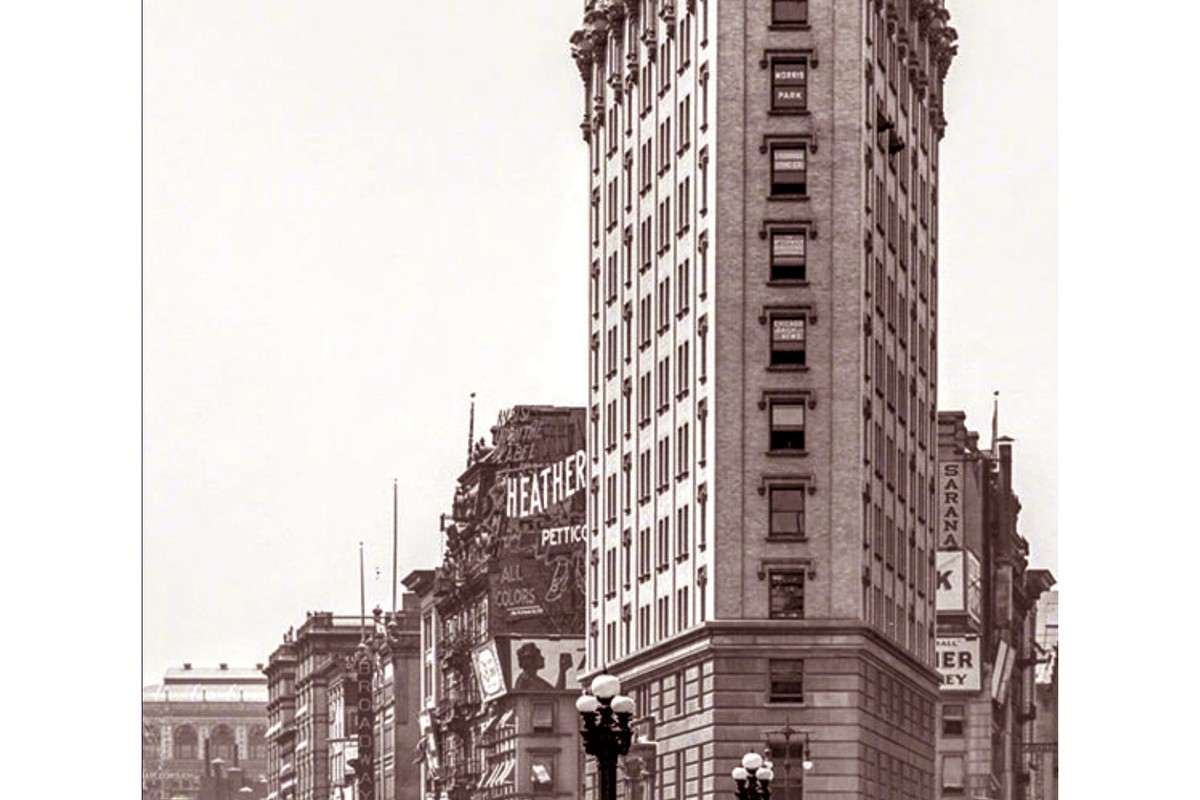
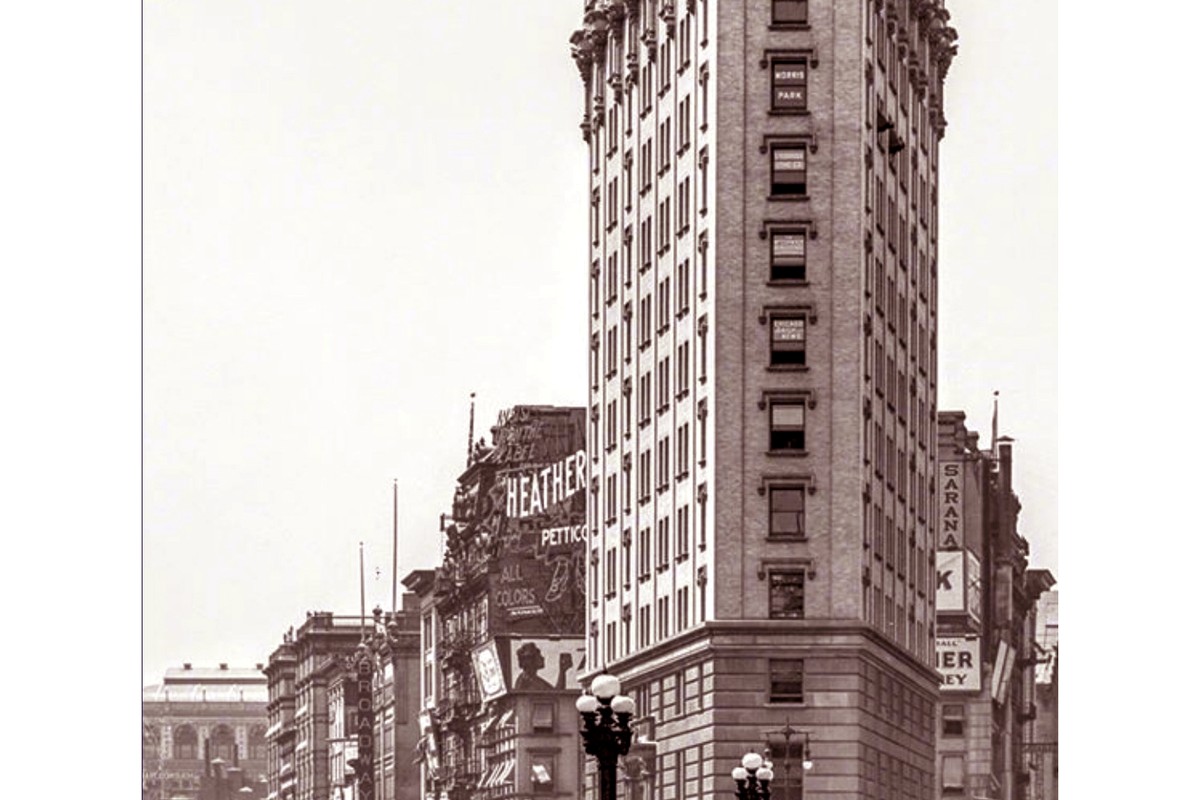
Manhattan’s early skyscraper publishing world — the physical stage for Times brand competition. Wikimedia Commons (see file page for license)
Between purchase and Hitler’s chancellorship, the Times built bureaus, correspondents, and a reputation as the paper of record for American elites. That reputation is a critical-path object: influence over what educated readers treated as ‘known’ about Europe was not evenly distributed across the U.S. press.
‘Fitness’ as practice meant careful sourcing, reluctance to lead with unverified horror, and a house style that prized understatement. In peacetime diplomacy coverage those habits can look like professionalism. In a genocide’s early phases the same habits can look like institutional failure — especially when competing smaller Jewish and exile papers printed sharper alarms.
This chapter refuses the false choice between ‘the Times was unique evil’ and ‘the Times did everything possible.’ The load-bearing question is comparative: given the paper’s resources and self-claimed standards, what did page one versus inside pages signal to readers about urgency from 1933 onward?
Primary spine for brand/bureau: bureau staffing lists, bylines from Berlin and Vienna, contemporary media criticism of the Times’s tone, and circulation among policymakers. Secondary scholarship (Laqueur, Leff, Lipstadt, and others in the bibliography ecology) is labeled secondary — useful for framing disputes, not a substitute for the pages themselves.
When later eras in this drawer accuse the Times of institutional capture or groupthink, they often reach back to this ‘paper of record’ self-image. Start here so Cold War, Vietnam, Iraq WMD, and Digital nests inherit a continuous brand story rather than a sudden villain reveal.
Bureau craft also included translators, stringers, and reliance on official communiqués when streets were policed. Access is a primary constraint — never a full alibi.
Chapter 4: 1935: Sulzberger takes the chair
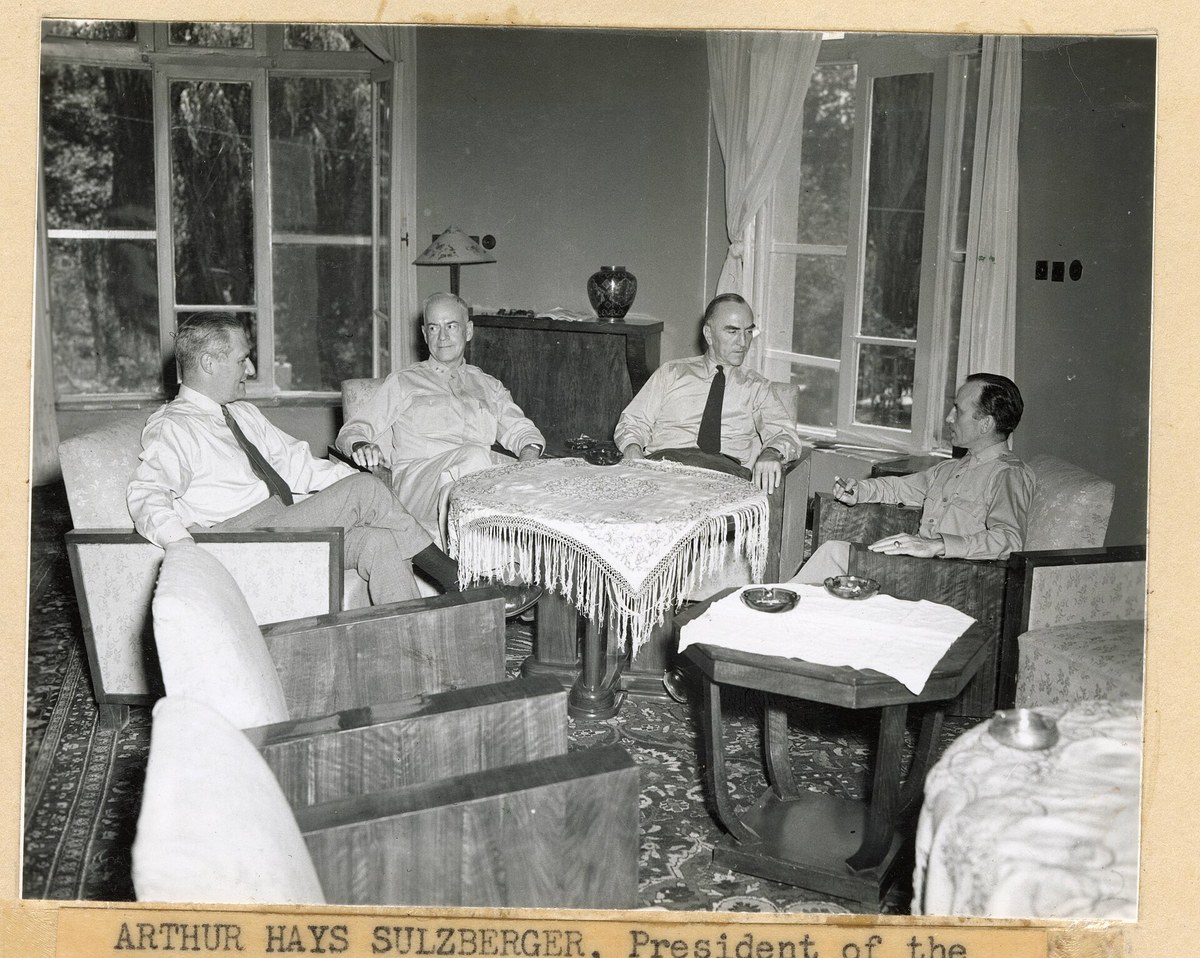
Arthur Hays Sulzberger — publisher from 1935 through the war and Nuremberg years. U.S. Army Corps of Engineers / public domain (Commons)
Arthur Hays Sulzberger became publisher in 1935, succeeding Ochs. The Hitler regime was already two years old. Nuremberg Laws would arrive the same year. The publisher’s chair is a person-act on the critical path: newsroom culture answers to ownership priorities even when day-to-day copy is written by correspondents.
Sulzberger’s Jewish identity and assimilationist instincts are part of the contested literature — not a cartoon of ‘self-hatred,’ and not a free pass. Primary and near-primary material (letters, memoirs, meeting notes preserved in archives) show concern about appearing to ‘special plead’ for Jews in a country with its own antisemitism and isolationist politics.
That concern, if over-weighted, can suppress play of persecution stories. If under-weighted, critics invent a simple ethnic betrayal narrative that ignores wire competition, censorship in Germany, and U.S. State Department messaging. This guide holds both failure modes visible.
Objects for this beat: Sulzberger’s accession coverage; contemporaneous notes on editorial policy toward Jewish refugee stories; relationship with Washington sources; and how the paper covered the 1935 Nuremberg Laws relative to other U.S. fronts. Measure placement and wording against those objects before accepting later morality plays.
Forward link: Sulzberger remains publisher through liberation and Nuremberg. Decisions in 1938–1944 are not anonymous ‘media’ weather. They sit under a named chair whose incentives and fears are documented enough to argue about — which is why this nest names him early.
Private letters and later authorized histories disagree on emphasis. Treat memoir as memoir; treat 1935–45 pages as the public act this nest measures.
Chapter 5: Early Nazi years: burnings, laws, emphasis
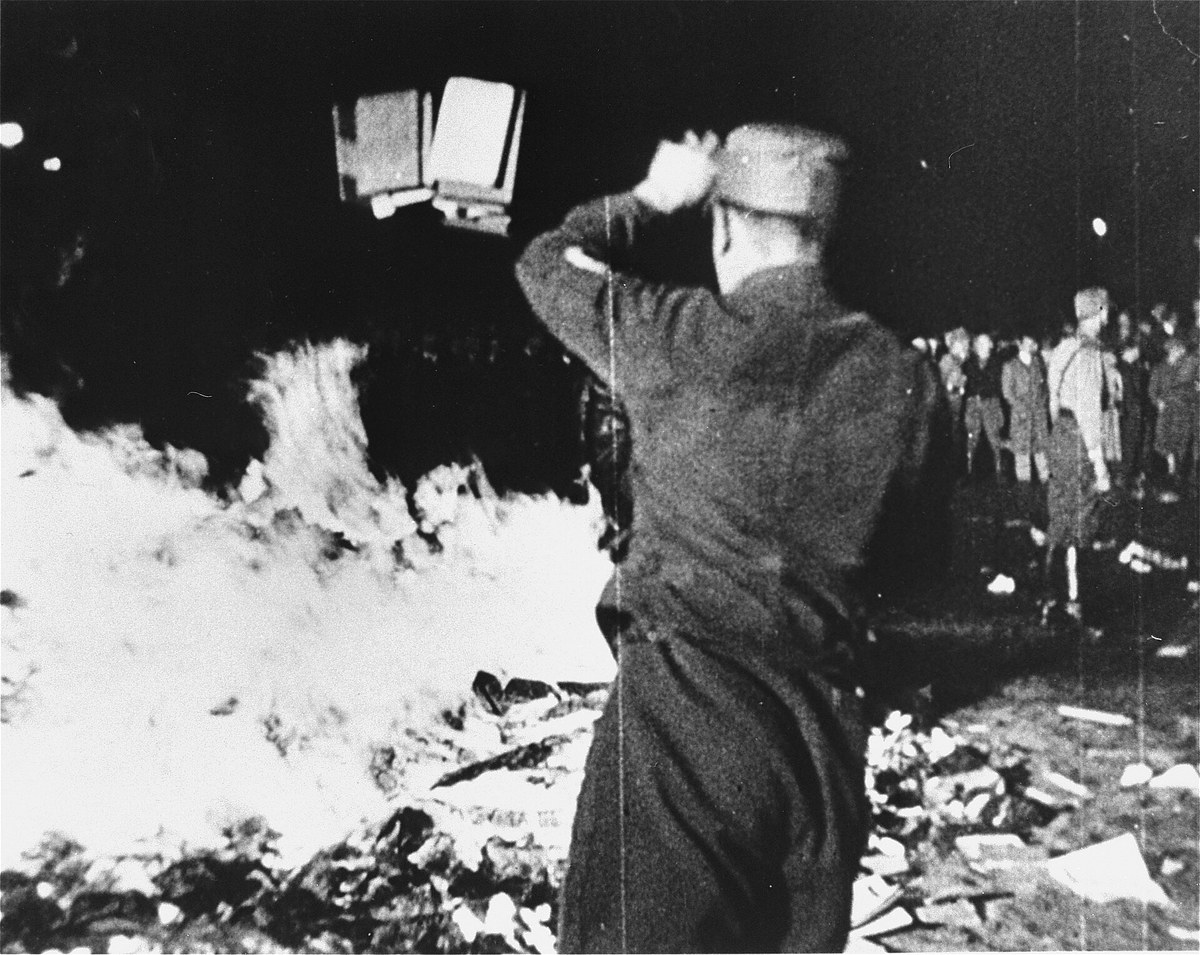
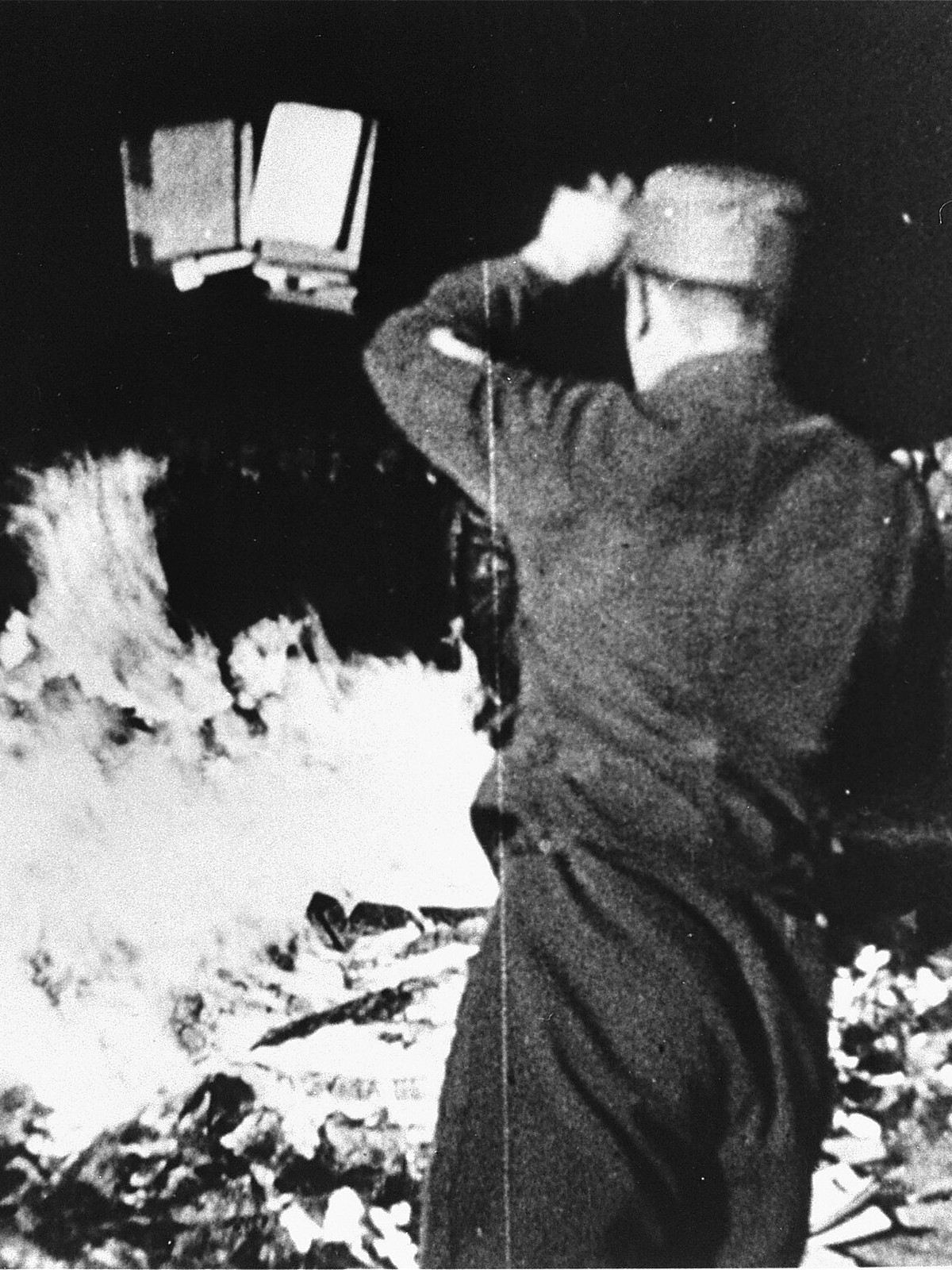
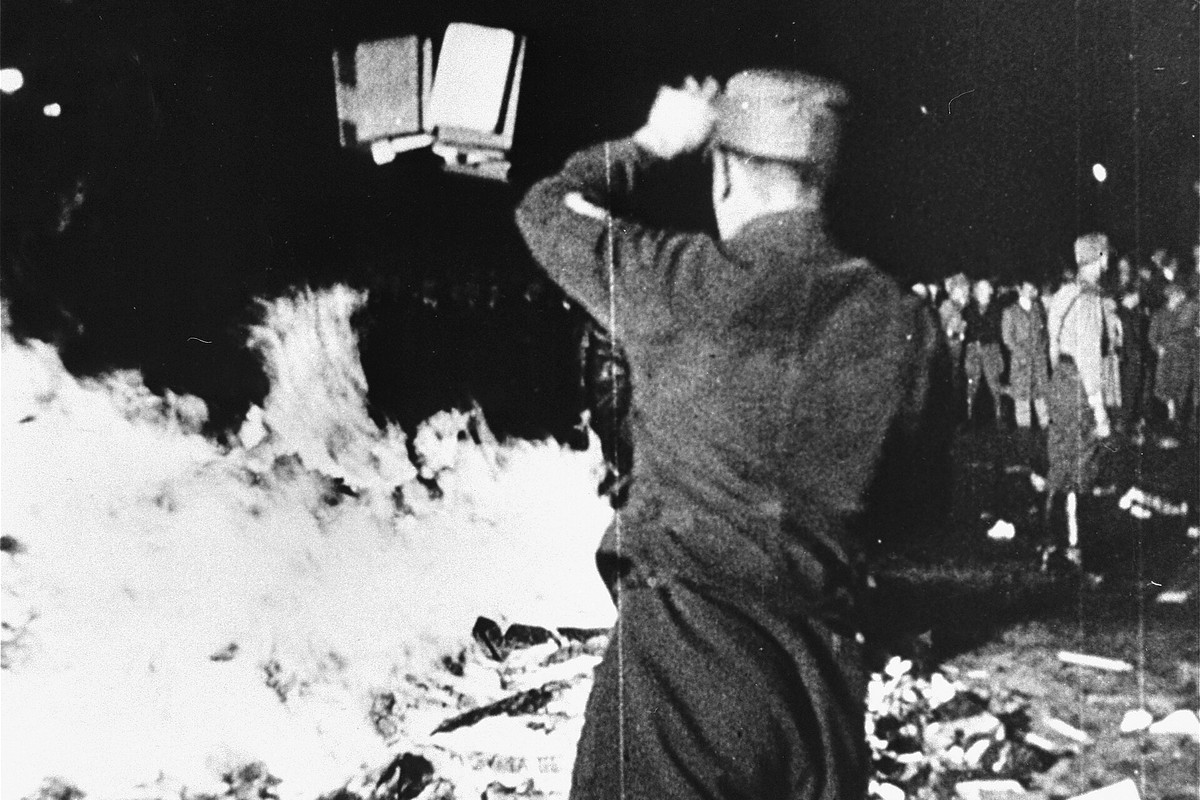
Berlin book burnings, 10 May 1933 — an early public signal the Times and peers had to place. German Federal Archive / Wikimedia Commons
From Hitler’s chancellorship (30 January 1933) through the mid-1930s, the regime staged unmistakable public cruelties: book burnings, enabling acts, boycotts, and the 1935 Nuremberg Laws stripping Jewish civil equality. The Times covered these events; the contest is emphasis, continuity, and whether readers were taught a rising genocidal trajectory or a series of separable diplomatic irritants.
Book burnings photographed well and fit a ‘barbarism vs civilization’ frame Americans already knew from World War I propaganda memory. Legal dispossession could be filed under ‘German domestic politics.’ That filing choice is itself a critical-path behavior: taxonomy in the newsroom shapes later surprise when extermination arrives.
Primary method for this chapter: pull dated Times pages on the May 1933 burnings, the Nuremberg Laws, Anschluss cues, and refugee admissions fights; compare headline size and section to Chicago Tribune, Washington Post, and English-language Jewish press where available. Do not outsource the comparison to a single secondary thesis.
Rival paths already diverge. One path says American papers broadly underplayed until war made Nazis enemies. Another says the Times’s unique authority made its underplay uniquely damaging among elites. A third stresses German censorship and liar’s dividends — true atrocity reports mixed with atrocity rumors, training editors toward skepticism. Each path must still cite the same 1933–35 objects.
This nest’s claim spine is not ‘did book burnings happen?’ They did. The asked claim is whether Times emphasis and framing in the early Nazi years prepared readers — especially influential ones — for the later extermination story or trained them to file Jewish suffering as secondary to great-power diplomacy.
When burnings and laws share a week with disarmament talks or domestic recovery news, watch which story owns the right-hand lead. Hierarchy is the tell.
Chapter 6: Kristallnacht on the page
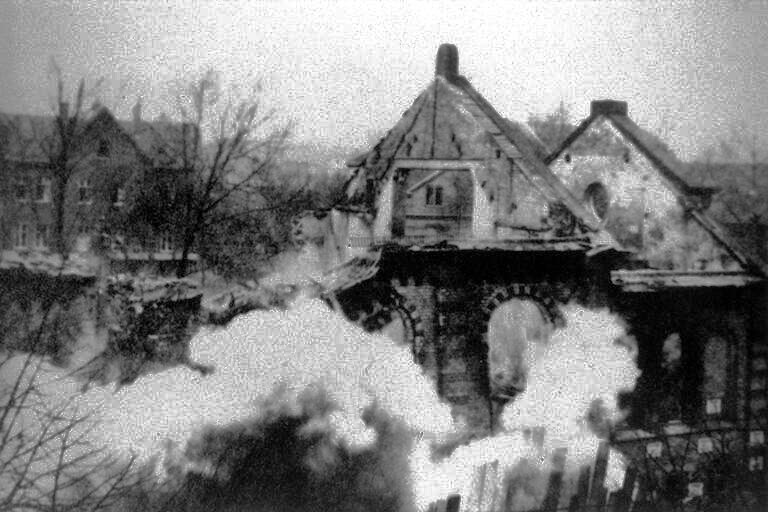
Synagogue burning, Eisenach, November 1938 — Kristallnacht as visible catastrophe. Wikimedia Commons (see file page for license)
On 9–10 November 1938, coordinated violence smashed Jewish shops, burned synagogues, killed, and funneled thousands into camps — Kristallnacht. International press coverage was substantial. For this Times nest, Kristallnacht is a placement and wording laboratory: how hard did the paper of record hit, for how many days, and with what causal language about regime responsibility?
Primary objects: Times front pages and jump pages for mid-November 1938; photo play; editorials versus news columns; comparison to British and American peers. Secondary historians disagree on whether the Times’s performance that week was relatively strong or still muted relative to the event’s scale — visitors should see the pages, not inherit a slogan.
Kristallnacht also tests the ‘verification’ defense. Synagogues burned in public. Diplomats reported. Photographs existed. If underplaying occurred here, ‘we could not confirm’ is a weaker excuse than for later secret killing centers. If play was strong here but later extermination news sank inside, the institutional story changes shape.
U.S. politics matters as context without becoming a dodge: refugee quotas, the Evian conference’s failure ecology, and American antisemitism constrained what editors thought audiences would bear. Context explains pressure; it does not automatically exonerate hierarchy choices on the page.
Hold Kristallnacht as a hinge between ‘early Nazi cruelty’ and ‘war/extermination.’ The next chapters ask whether the Times maintained urgency as killing industrialized — or whether November 1938 became a peak of attention that later faded inside war copy.
Synagogue flames were not a cryptic intelligence puzzle. If play still lagged peers, the explanation must be incentives and culture, not missing photographs alone.
Chapter 7: War frame: Poland to Pearl Harbor
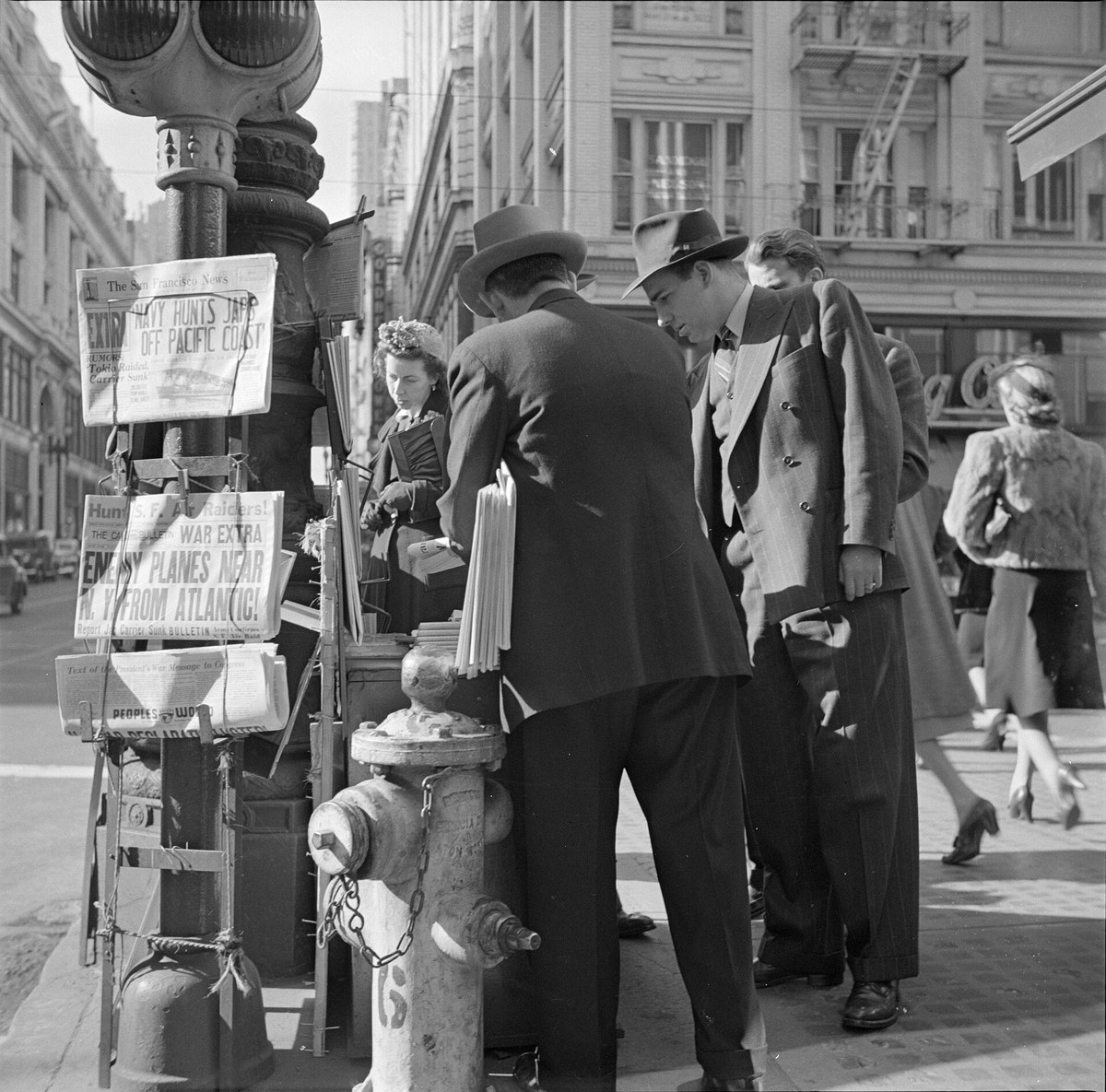
American front pages after Pearl Harbor — war entry reordered every newsroom’s hierarchy. U.S. government / public domain (Commons)
Germany’s invasion of Poland (1 September 1939) made European war the master frame. Pearl Harbor (7 December 1941) made it America’s war. Both dates reordered newsroom hierarchy: battles, production, alliances, and casualty lists competed with — and often buried — persecution and extermination threads.
This is the structural temptation every WWII press history must confront. A paper can print true camp stories on page sixteen while page one screams a naval engagement — and still claim it ‘covered’ the Holocaust. Coverage count without placement is a misleading metric. This nest tracks both.
Primary spine: Times lead stories on Poland’s invasion week; editorial stance on aid and intervention before Pearl Harbor; December 1941 reframe; and how Jewish refugee and atrocity briefs were slotted once U.S. combat dominated. Wire dependence and Office of War Information pressures belong in the account as labeled constraints.
Rival paths: ‘war necessarily dominated, no conspiracy required’ versus ‘war provided cover for continued soft-pedaling of Jewish specifically targeted destruction.’ Both can cite real battle urgency. They diverge on whether editors had unused discretion to keep extermination higher — and whether they used it.
Pearl Harbor imagery in this chapter is not a Pacific digression. It marks the moment the Times’s American readers became combatants’ families. That emotional economy is part of why inside-page Holocaust briefs could feel, to editors, like ‘special interest’ against national survival copy — a categorization this guide treats as historically real and morally contestable.
Isolationist-to-interventionist U.S. debate before Pearl Harbor also ate inches. Track whether persecution briefs rose when America edged toward war — or stayed flat.
Chapter 8: Extermination reports, 1942–1944
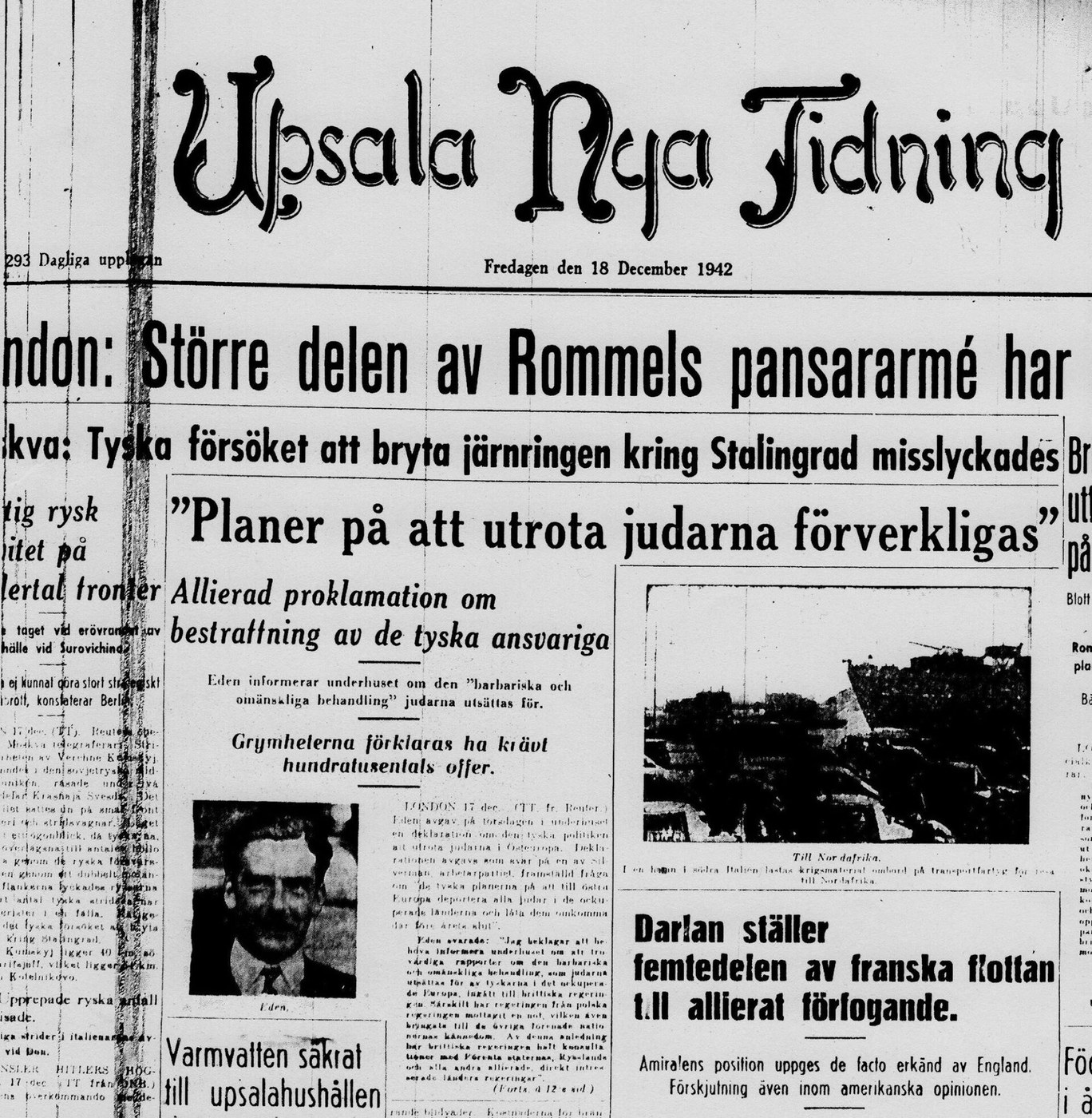
Wartime press ecology, December 1942 — extermination reports competed for inches amid total war. Public domain press (Commons)
By 1942, Allied and exile sources carried reports of systematic mass murder — including the Wannsee administrative turn (known more fully later), Polish underground reports, Riegner telegram pathways, and rabbinic protests in Washington. The Times printed some of this material. The contest intensifies on frequency, certainty language, and page position.
Primary method: dated items on deportations, ‘Polish Jews’ mass killing reports, Hungarian 1944 crisis coverage, and Auschwitz-related leaks as they entered English-language press. Pair Times play with Jewish Telegraphic Agency, PM, and London coverage where the comparison clarifies discretion versus ignorance.
Wannsee as villa photography in this guide is a memory object: the conference’s full documentary weight arrived for the public on a delay. Editors in 1942 did not have the postwar trial binders visitors have now. Fairness requires that timeline. Fairness does not require pretending no credible mass-murder reports reached New York until 1945.
Scholarly fights (including work associated with Laurel Leff and others) argue the Times systematically underplayed. Institutional defenders stress incomplete information, disbelief of industrial killing, and fear of atrocity-propaganda repetition from World War I. Map those arguments onto specific weeks’ pages — abstract media theory is not enough.
This chapter’s asked claim: in the years when killing peaked, did the paper of record’s emphasis match the scale of the crime as then knowable from Allied-accessible sources? Answer with pages and dates. Leave room for honest uncertainty about what a given desk believed on a Tuesday in 1943 — without using that uncertainty to erase the pattern critics document across months.
Hungarian deportations in 1944 are a late-war stress test: railways, eyewitness paths, and diplomatic cables converged while Normandy still owned the banner. Measure that collision.
Chapter 9: Liberation: Ohrdruf to the lens
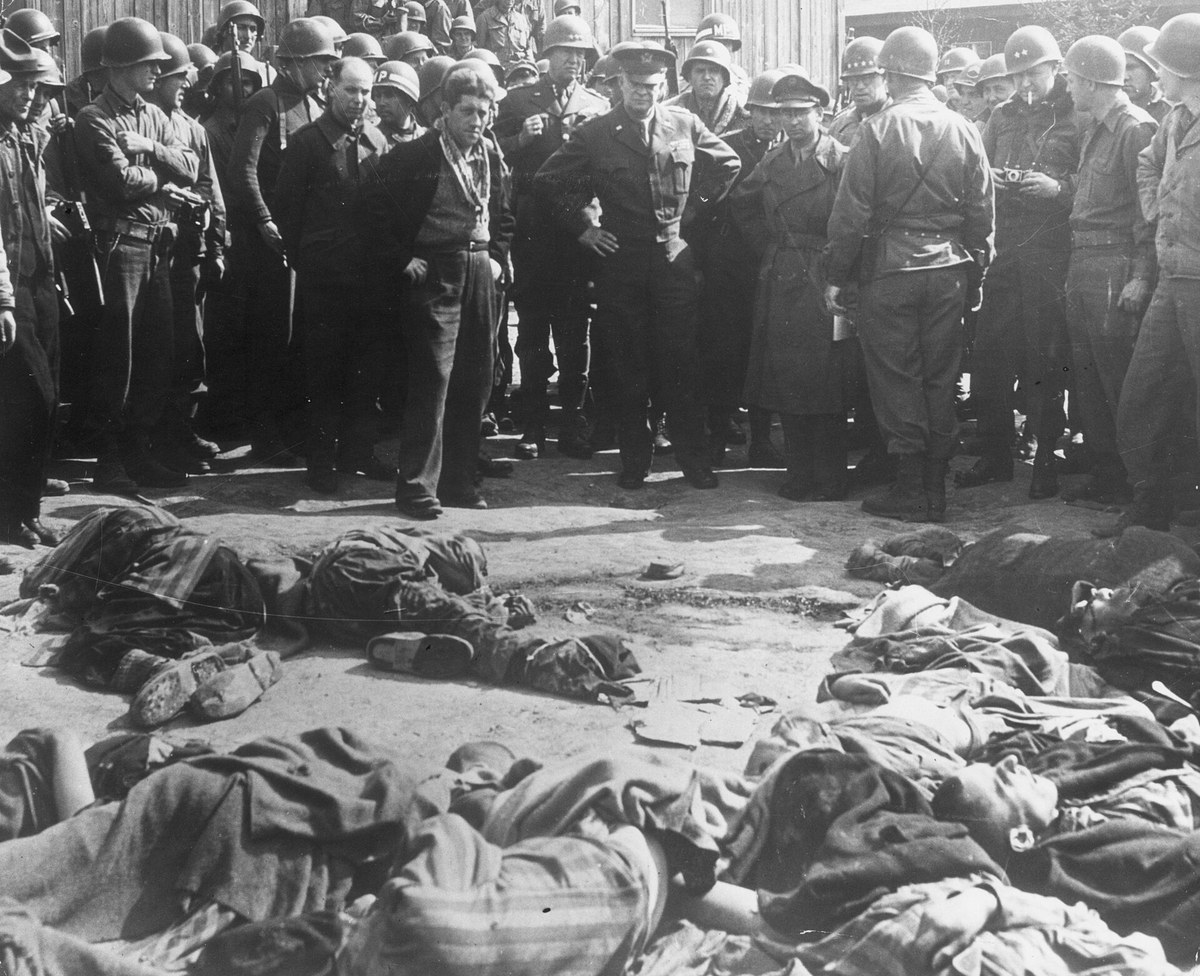
Eisenhower at a liberated camp — insisting the record be seen. U.S. Army / public domain (Commons)
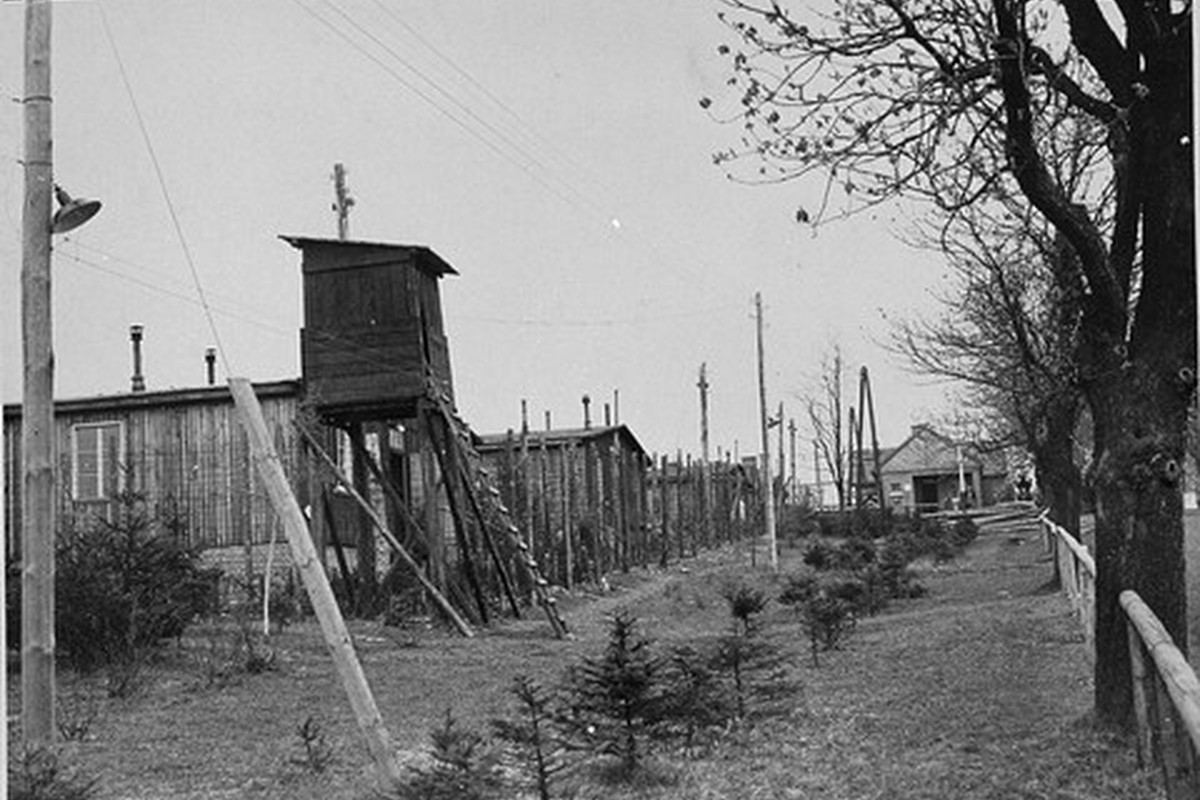
As U.S. and Allied forces overran camps in 1945 — Ohrdruf, Buchenwald, Dachau, and others — photography and officer testimony made denial of camp horror untenable in the American mainstream. Eisenhower famously urged documentation so that future ‘stories’ could not dismiss the scenes as propaganda.
For the Times nest, liberation is both a coverage peak and a memory trap. Peak: front pages finally carried undeniable images and numbers. Trap: readers can falsely infer that earlier silence was total, or that liberation coverage retroactively cures years of softer play. This guide separates those inferences.
Primary objects: Times pages around Ohrdruf and Buchenwald news; photo credits and captions; comparison of emotional intensity to 1942–44 briefs; and how editorial page language shifted once GIs were witnesses. Government photography (Signal Corps) is primary visual evidence — use it as such.
Liberation also feeds rival paths. Defenders say: when evidence cleared verification bars, the Times hit hard — proving good faith under uncertainty earlier. Critics say: the same institution that buried wire reports suddenly discovered urgency when American soldiers’ eyes made disbelief socially impossible — proving prior incentives, not prior ignorance alone.
Hold Eisenhower’s documentation order as a critical-path behavior outside the Times: the U.S. Army wanted a durable record. Press outlets that amplified that record performed a public good. Amplification in April–May 1945 does not settle the 1938–1944 placement dispute; it sharpens it.
Signal Corps frames and pool photography reduced editorial doubt. Note how quickly certainty language changed once American uniforms stood inside the wire.
Chapter 10: Nuremberg: court as coda
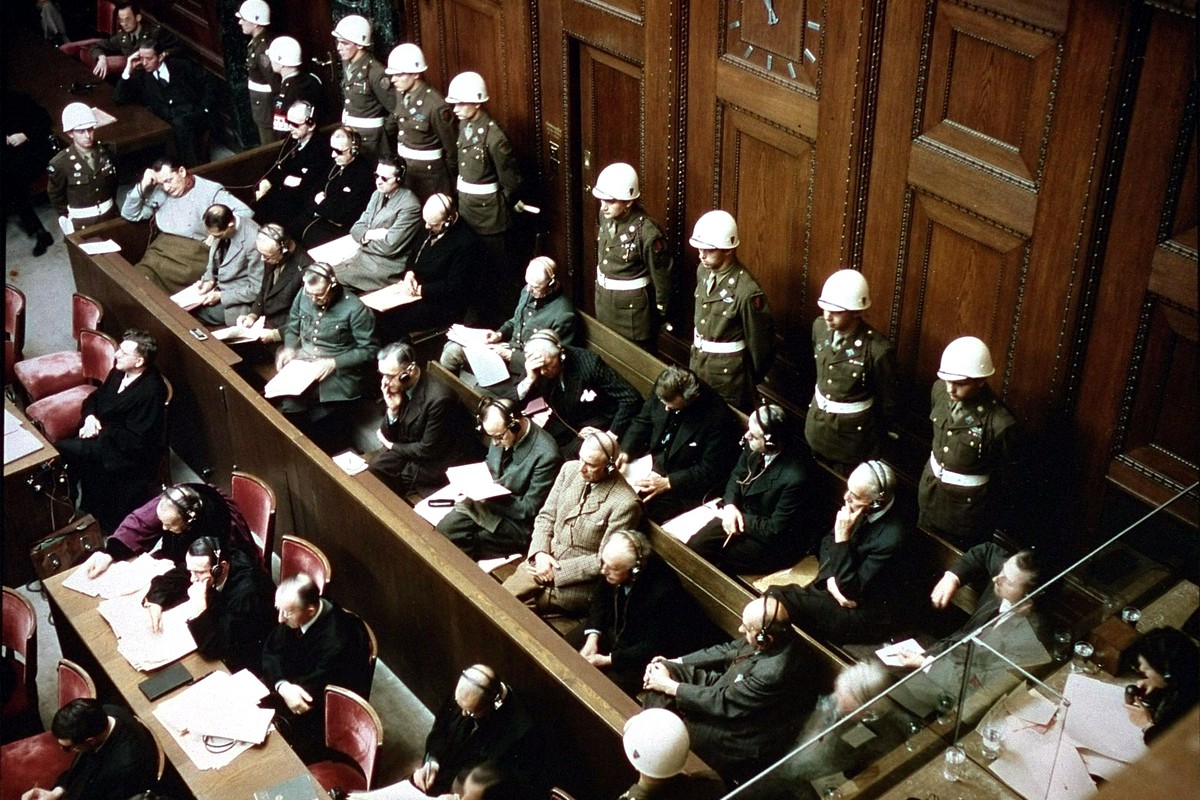
Nuremberg trial evidence — court record meeting press frame. U.S. government / public domain (Commons)
The International Military Tribunal at Nuremberg (1945–46) turned captured documents, films, and witness testimony into a judicial spine for Nazi crimes. Times coverage of the trial is the coda of this era nest: courtroom theater, exhibit films, and verdict language entered the paper of record’s archive as settled horror.
Court coverage can create a false sense that ‘the press always knew.’ Trials assemble evidence with subpoena power and years of hindsight. News desks in 1942 did not. Still, many trial exhibits were contemporaneous German documents — meaning the regime’s own paper trail, not only postwar invention. That distinction matters for fairness to wartime editors and for refusing denialist misuse of ‘fog of war.’
Primary spine: Times reporting on indictment, key exhibit days, verdicts, and editorial reaction; photo play of defendants and evidence rooms; and how the paper summarized the Holocaust’s systematic character once prosecutors narrated it.
Nuremberg also locks epistemology for later Times eras. When Cold War, Vietnam, or Iraq WMD nests argue about institutional trust, they inherit a paper that had already published the camp and court record. Betrayals of trust later are not the same crime as genocide — category discipline matters — but the brand’s claim to sober authority was partly earned on this WWII spine.
Close this beat by separating three claims visitors often mash together: (1) Nazis ran a genocide — documented; (2) the Times’s wartime emphasis was optimal — contested; (3) Nuremberg coverage was extensive — largely documented. Rate each on its own spine.
Verdict day coverage taught a generation the vocabulary of crimes against humanity. Keep that civic gain while still auditing the years before the dock.
Chapter 11: Method: contested, not erased
Wannsee villa — later-known administrative node; method chapter for how to weigh delayed public knowledge. Wikimedia Commons (see file page for license)
Method chapter: how this nest refuses both denial and unfalsifiable media demonology. Denial says the Holocaust is exaggerated — rejected by camps, documents, demographics, and trials. Demonology says every inside-page brief proves unique Times malice — rejected when peers show similar patterns and when German secrecy was real.
Operational rules used here: (1) quote or cite dated pages before summarizing ‘the media’; (2) separate knowability-at-time from moral urgency; (3) treat page position as evidence of institutional priority; (4) label Sulzberger-era incentives without ethnic cartooning; (5) keep Duranty/Holodomor in its own nest so Ukraine-famine disputes do not hijack Holocaust placement fights.
Critical-path habit for visitors: pick a week — say mid-November 1938, or a 1942 deportation-report week — and read the Times page hierarchy yourself. Then read one rival paper. Arguments that cannot survive that exercise are rhetoric.
Wannsee’s villa image belongs in method because it symbolizes delayed consolidation of public knowledge. The conference happened in January 1942; its meeting-minutes fame is partly postwar. Using Wannsee as if every American editor had the protocol on his desk in February 1942 is anachronism. Using secrecy to claim nothing credible was knowable until 1945 is the opposite error.
If you take one tool from this chapter into Cold War and later Times nests: demand the page, the date, and the competing outlet. Brand mythology and brand prosecution both fail without that triad.
Classroom rule of thumb: one primary page, one peer page, one secondary thesis — in that order. Skip the order and you are doing vibes with footnotes.
Chapter 12: Memory, rivals, and the next era
Adolph and Iphigene Ochs, 1902 — dynasty memory that still frames how the Times tells its own story. Wikimedia Commons (see file page for license)
Memory of Times WWII coverage hardened decades later through books, documentaries, journalism-school case studies, and family authorized histories. Some memory corrects earlier complacency; some overfits a single thesis onto every edition. This nest tracks both drifts.
Rival critical paths to keep visible: (A) deliberate or structural underplay driven by assimilationist caution and elite source capture; (B) tragic verification failure under unprecedented crime plus war noise; (C) industry-wide American press failure with the Times as largest symbolic target; (D) later instrumentalization of the debate to attack the paper on unrelated modern fights. Paths A–C can share primary pages; D is a present-politics misuse warning.
Forward: the Cold War nest asks how the same institution covered communism, McCarthy, and nuclear dread. Vietnam–Watergate asks about adversarial glory and its limits. Iraq WMD asks about source capture in the opposite direction. Digital asks about clicks, social virality, and institutional trust collapse. None of those erase this era’s objects.
Family dynasty imagery closes the file deliberately. Ochs–Sulzberger continuity means WWII choices were not anonymous market weather alone. Continuity also means later reforms and apologies, when they occur, are still inside a house that remembers its own myth of fitness.
Keep epistemology hard on this closing chapter: later scholarship (Lipstadt, Wyman, Leff) and TimesMachine page audits are primaries for what the paper printed; memoir and family authorized history are evidence to note, not auto-clearance of placement disputes. Rival path D — using WWII coverage fights as a weapon in unrelated modern culture wars — is labeled misuse, not a substitute primary. Forward pointers to Cold War, Vietnam–Watergate, Iraq WMD, and Digital nests are navigation, not a CNN-hedge that erases Gilded-to-WW2 objects on this spine. Ochs–Sulzberger continuity is institutional fact; continuity ≠ proof of a single motive for every 1930s–1940s edition choice. Contested placement and emphasis remain open where the page record shows them.
Brand 1896-1932
Frame
How to read
How to read this era file
Record · Documented
Nazi book burning, Berlin, 10 May 1933 Commons file page · Public domain as labeled
Lead with contemporaneous Times copy (TimesMachine), USHMM/NARA documentation, and labeled scholarship (Leff, Lipstadt, Wyman). Contested coverage of Nazi Germany and the Holocaust — not a hate page, not a referendum on today newsroom, not current-war content.
Lead with contemporaneous Times copy (TimesMachine), USHMM/NARA documentation, and labeled scholarship (Leff, Lipstadt, Wyman). Contested coverage of Nazi Germany and the Holocaust — not a hate page, not a referendum on today newsroom, not current-war content.
Rival paths: institutional caution vs moral failure vs structural censorship abroad.
Teaching note for “How to read this era file”: separate the documented primary (court docket, statute, contemporaneous state record, or archival leaflet) from later shorthand and cable-news slogans. Prefer the cited primary URL over a viral summary of the same event. Dates and institutional captions matter more than the street brand alone. [4]
Limits and humility: sealed dockets, destroyed street-camera footage, activist anonymity, and selection bias remain structural. Absence of a memo is not proof of absence; presence of a tactic family is not proof every named person used every tactic. Label contested funding and designation claims as contested. [4]
Cross-link sibling NYT Files nests when the same street episode, designation debate, or media frame appears; do not collapse Duranty dispatches, Pulitzer board materials, Holodomor scholarship, and later memory fights into one blob. YouTube clips belong on the audiovisual spine when they carry the same fact — always label primary footage vs commentary. Quality over speed; wait rather than ship thin. [4][4]
Epistemology for “How to read this era file”: map rival paths on the critical-path board. If a theory removes a node, state what would have to be wrong about the primary reading (mustBeWrong). Steel-man the opposing camp in one clause, then return to the primary. No fact-check-by-technicality shortcuts; no Grokipedia cites. [4]
Bottom line Documented
Lead with contemporaneous Times copy (TimesMachine), USHMM/NARA documentation, and labeled scholarship (Leff, Lipstadt, Wyman). Contested coverage of Nazi Germany and the Holocaust — not a hate page, not a referendum on today newsroom, not current-war content.
What the record can’t settle
See Theories for rival paths; contested claims stay labeled.
Park Row Times building Commons · Public domain as labeled
Times archive pages 1933–45; NARA liberation photography; USHMM encyclopedia; State Department volumes. Scholarship is secondary until it points to archives.
Times archive pages 1933–45; NARA liberation photography; USHMM encyclopedia; State Department volumes. Scholarship is secondary until it points to archives.
Teaching note for “Primary sources on the claim spine”: separate the documented primary (court docket, statute, contemporaneous state record, or archival leaflet) from later shorthand and cable-news slogans. Prefer the cited primary URL over a viral summary of the same event. Dates and institutional captions matter more than the street brand alone. [5]
Limits and humility: sealed dockets, destroyed street-camera footage, activist anonymity, and selection bias remain structural. Absence of a memo is not proof of absence; presence of a tactic family is not proof every named person used every tactic. Label contested funding and designation claims as contested. [5]
Cross-link sibling NYT Files nests when the same street episode, designation debate, or media frame appears; do not collapse Duranty dispatches, Pulitzer board materials, Holodomor scholarship, and later memory fights into one blob. YouTube clips belong on the audiovisual spine when they carry the same fact — always label primary footage vs commentary. Quality over speed; wait rather than ship thin. [5][5]
Epistemology for “Primary sources on the claim spine”: map rival paths on the critical-path board. If a theory removes a node, state what would have to be wrong about the primary reading (mustBeWrong). Steel-man the opposing camp in one clause, then return to the primary. No fact-check-by-technicality shortcuts; no Grokipedia cites. [5]
Bottom line Documented
Times archive pages 1933–45; NARA liberation photography; USHMM encyclopedia; State Department volumes. Scholarship is secondary until it points to archives.
What the record can’t settle
See Theories for rival paths; contested claims stay labeled.
Nazi book burning, Berlin, 10 May 1933 Commons file page · Public domain as labeled
Not a claim that no Times reader heard of Nazi crimes; not collective ethnic blame; not Grokipedia. Emphasis, wording, and page placement are the scandal nodes.
Not a claim that no Times reader heard of Nazi crimes; not collective ethnic blame; not Grokipedia. Emphasis, wording, and page placement are the scandal nodes.
Teaching note for “What this file is not”: separate the documented primary (court docket, statute, contemporaneous state record, or archival leaflet) from later shorthand and cable-news slogans. Prefer the cited primary URL over a viral summary of the same event. Dates and institutional captions matter more than the street brand alone. [1]
Limits and humility: sealed dockets, destroyed street-camera footage, activist anonymity, and selection bias remain structural. Absence of a memo is not proof of absence; presence of a tactic family is not proof every named person used every tactic. Label contested funding and designation claims as contested. [1]
Cross-link sibling NYT Files nests when the same street episode, designation debate, or media frame appears; do not collapse Duranty dispatches, Pulitzer board materials, Holodomor scholarship, and later memory fights into one blob. YouTube clips belong on the audiovisual spine when they carry the same fact — always label primary footage vs commentary. Quality over speed; wait rather than ship thin. [1][1]
Epistemology for “What this file is not”: map rival paths on the critical-path board. If a theory removes a node, state what would have to be wrong about the primary reading (mustBeWrong). Steel-man the opposing camp in one clause, then return to the primary. No fact-check-by-technicality shortcuts; no Grokipedia cites. [1]
Bottom line Documented
Not a claim that no Times reader heard of Nazi crimes; not collective ethnic blame; not Grokipedia. Emphasis, wording, and page placement are the scandal nodes.
What the record can’t settle
See Theories for rival paths; contested claims stay labeled.
Teaching note for “Epistemology labels”: separate the documented primary (court docket, statute, contemporaneous state record, or archival leaflet) from later shorthand and cable-news slogans. Prefer the cited primary URL over a viral summary of the same event. Dates and institutional captions matter more than the street brand alone. [1]
Limits and humility: sealed dockets, destroyed street-camera footage, activist anonymity, and selection bias remain structural. Absence of a memo is not proof of absence; presence of a tactic family is not proof every named person used every tactic. Label contested funding and designation claims as contested. [1]
Cross-link sibling NYT Files nests when the same street episode, designation debate, or media frame appears; do not collapse Duranty dispatches, Pulitzer board materials, Holodomor scholarship, and later memory fights into one blob. YouTube clips belong on the audiovisual spine when they carry the same fact — always label primary footage vs commentary. Quality over speed; wait rather than ship thin. [1][1]
Epistemology for “Epistemology labels”: map rival paths on the critical-path board. If a theory removes a node, state what would have to be wrong about the primary reading (mustBeWrong). Steel-man the opposing camp in one clause, then return to the primary. No fact-check-by-technicality shortcuts; no Grokipedia cites. [1]
USHMM talks; Leff lectures; NARA Nuremberg footage — label museum/educational vs raw Army film.
USHMM talks; Leff lectures; NARA Nuremberg footage — label museum/educational vs raw Army film.
Teaching note for “Video on the audiovisual spine”: separate the documented primary (court docket, statute, contemporaneous state record, or archival leaflet) from later shorthand and cable-news slogans. Prefer the cited primary URL over a viral summary of the same event. Dates and institutional captions matter more than the street brand alone. [4]
Limits and humility: sealed dockets, destroyed street-camera footage, activist anonymity, and selection bias remain structural. Absence of a memo is not proof of absence; presence of a tactic family is not proof every named person used every tactic. Label contested funding and designation claims as contested. [4]
Cross-link sibling NYT Files nests when the same street episode, designation debate, or media frame appears; do not collapse Duranty dispatches, Pulitzer board materials, Holodomor scholarship, and later memory fights into one blob. YouTube clips belong on the audiovisual spine when they carry the same fact — always label primary footage vs commentary. Quality over speed; wait rather than ship thin. [4][4]
Epistemology for “Video on the audiovisual spine”: map rival paths on the critical-path board. If a theory removes a node, state what would have to be wrong about the primary reading (mustBeWrong). Steel-man the opposing camp in one clause, then return to the primary. No fact-check-by-technicality shortcuts; no Grokipedia cites. [4]
Bottom line Documented
USHMM talks; Leff lectures; NARA Nuremberg footage — label museum/educational vs raw Army film.
What the record can’t settle
See Theories for rival paths; contested claims stay labeled.
Times Square, about 1908 Commons / Flickr path · CC0
Ochs-era Times sold itself as sober against Hearst/Pulitzer sensationalism — a brand inheritance that later critics say muted atrocity emphasis.
Ochs-era Times sold itself as sober against Hearst/Pulitzer sensationalism — a brand inheritance that later critics say muted atrocity emphasis.
Teaching note for “Times brand vs yellow press”: separate the documented primary (court docket, statute, contemporaneous state record, or archival leaflet) from later shorthand and cable-news slogans. Prefer the cited primary URL over a viral summary of the same event. Dates and institutional captions matter more than the street brand alone. [4]
Limits and humility: sealed dockets, destroyed street-camera footage, activist anonymity, and selection bias remain structural. Absence of a memo is not proof of absence; presence of a tactic family is not proof every named person used every tactic. Label contested funding and designation claims as contested. [4]
Cross-link sibling NYT Files nests when the same street episode, designation debate, or media frame appears; do not collapse Duranty dispatches, Pulitzer board materials, Holodomor scholarship, and later memory fights into one blob. YouTube clips belong on the audiovisual spine when they carry the same fact — always label primary footage vs commentary. Quality over speed; wait rather than ship thin. [4][4]
Epistemology for “Times brand vs yellow press”: map rival paths on the critical-path board. If a theory removes a node, state what would have to be wrong about the primary reading (mustBeWrong). Steel-man the opposing camp in one clause, then return to the primary. No fact-check-by-technicality shortcuts; no Grokipedia cites. [4]
Bottom line Documented
Ochs-era Times sold itself as sober against Hearst/Pulitzer sensationalism — a brand inheritance that later critics say muted atrocity emphasis.
What the record can’t settle
See Theories for rival paths; contested claims stay labeled.
Former New York Times Building, 41 Park Row Jim.henderson / Commons · Public domain as labeled
German-Jewish immigrant publisher built the modern paper; successors inherited both access and anxiety about appearing a special-interest paper.
German-Jewish immigrant publisher built the modern paper; successors inherited both access and anxiety about appearing a special-interest paper.
Teaching note for “Adolph Ochs institutional lineage”: separate the documented primary (court docket, statute, contemporaneous state record, or archival leaflet) from later shorthand and cable-news slogans. Prefer the cited primary URL over a viral summary of the same event. Dates and institutional captions matter more than the street brand alone. [3]
Limits and humility: sealed dockets, destroyed street-camera footage, activist anonymity, and selection bias remain structural. Absence of a memo is not proof of absence; presence of a tactic family is not proof every named person used every tactic. Label contested funding and designation claims as contested. [3]
Cross-link sibling NYT Files nests when the same street episode, designation debate, or media frame appears; do not collapse Duranty dispatches, Pulitzer board materials, Holodomor scholarship, and later memory fights into one blob. YouTube clips belong on the audiovisual spine when they carry the same fact — always label primary footage vs commentary. Quality over speed; wait rather than ship thin. [3][3]
Epistemology for “Adolph Ochs institutional lineage”: map rival paths on the critical-path board. If a theory removes a node, state what would have to be wrong about the primary reading (mustBeWrong). Steel-man the opposing camp in one clause, then return to the primary. No fact-check-by-technicality shortcuts; no Grokipedia cites. [3]
Bottom line Partly documented
German-Jewish immigrant publisher built the modern paper; successors inherited both access and anxiety about appearing a special-interest paper.
What the record can’t settle
See Theories for rival paths; contested claims stay labeled.
Times Square, about 1908 Commons / Flickr path · CC0
Brief context: Times self-image formed against yellow-press war fever — brand history, not this nest scandal spine.
Brief context: Times self-image formed against yellow-press war fever — brand history, not this nest scandal spine.
Teaching note for “Early sensational contrast (context only)”: separate the documented primary (court docket, statute, contemporaneous state record, or archival leaflet) from later shorthand and cable-news slogans. Prefer the cited primary URL over a viral summary of the same event. Dates and institutional captions matter more than the street brand alone. [3]
Limits and humility: sealed dockets, destroyed street-camera footage, activist anonymity, and selection bias remain structural. Absence of a memo is not proof of absence; presence of a tactic family is not proof every named person used every tactic. Label contested funding and designation claims as contested. [3]
Cross-link sibling NYT Files nests when the same street episode, designation debate, or media frame appears; do not collapse Duranty dispatches, Pulitzer board materials, Holodomor scholarship, and later memory fights into one blob. YouTube clips belong on the audiovisual spine when they carry the same fact — always label primary footage vs commentary. Quality over speed; wait rather than ship thin. [3][3]
Epistemology for “Early sensational contrast (context only)”: map rival paths on the critical-path board. If a theory removes a node, state what would have to be wrong about the primary reading (mustBeWrong). Steel-man the opposing camp in one clause, then return to the primary. No fact-check-by-technicality shortcuts; no Grokipedia cites. [3]
Bottom line Partly documented
Brief context: Times self-image formed against yellow-press war fever — brand history, not this nest scandal spine.
What the record can’t settle
See Theories for rival paths; contested claims stay labeled.
Nazi book burning, Berlin, 10 May 1933 Commons · Public domain as labeled
Hitler becomes chancellor; Times covers political upheaval. Scholarship asks whether early violence against Jews was framed as episodic politics.
Hitler becomes chancellor; Times covers political upheaval. Scholarship asks whether early violence against Jews was framed as episodic politics.
Teaching note for “1933 Nazi seizure and early cables”: separate the documented primary (court docket, statute, contemporaneous state record, or archival leaflet) from later shorthand and cable-news slogans. Prefer the cited primary URL over a viral summary of the same event. Dates and institutional captions matter more than the street brand alone. [4]
Limits and humility: sealed dockets, destroyed street-camera footage, activist anonymity, and selection bias remain structural. Absence of a memo is not proof of absence; presence of a tactic family is not proof every named person used every tactic. Label contested funding and designation claims as contested. [4]
Cross-link sibling NYT Files nests when the same street episode, designation debate, or media frame appears; do not collapse Duranty dispatches, Pulitzer board materials, Holodomor scholarship, and later memory fights into one blob. YouTube clips belong on the audiovisual spine when they carry the same fact — always label primary footage vs commentary. Quality over speed; wait rather than ship thin. [4][4]
Epistemology for “1933 Nazi seizure and early cables”: map rival paths on the critical-path board. If a theory removes a node, state what would have to be wrong about the primary reading (mustBeWrong). Steel-man the opposing camp in one clause, then return to the primary. No fact-check-by-technicality shortcuts; no Grokipedia cites. [4]
Bottom line Documented
Hitler becomes chancellor; Times covers political upheaval. Scholarship asks whether early violence against Jews was framed as episodic politics.
What the record can’t settle
See Theories for rival paths; contested claims stay labeled.
Nazi book burning, Berlin, 10 May 1933 Commons · Public domain as labeled
May 1933 burnings were photographable public events — a visual primary of repression available to Western media.
May 1933 burnings were photographable public events — a visual primary of repression available to Western media.
Teaching note for “Book burnings as visible cultural crime”: separate the documented primary (court docket, statute, contemporaneous state record, or archival leaflet) from later shorthand and cable-news slogans. Prefer the cited primary URL over a viral summary of the same event. Dates and institutional captions matter more than the street brand alone. [3]
Limits and humility: sealed dockets, destroyed street-camera footage, activist anonymity, and selection bias remain structural. Absence of a memo is not proof of absence; presence of a tactic family is not proof every named person used every tactic. Label contested funding and designation claims as contested. [3]
Cross-link sibling NYT Files nests when the same street episode, designation debate, or media frame appears; do not collapse Duranty dispatches, Pulitzer board materials, Holodomor scholarship, and later memory fights into one blob. YouTube clips belong on the audiovisual spine when they carry the same fact — always label primary footage vs commentary. Quality over speed; wait rather than ship thin. [3][3]
Epistemology for “Book burnings as visible cultural crime”: map rival paths on the critical-path board. If a theory removes a node, state what would have to be wrong about the primary reading (mustBeWrong). Steel-man the opposing camp in one clause, then return to the primary. No fact-check-by-technicality shortcuts; no Grokipedia cites. [3]
Bottom line Documented
May 1933 burnings were photographable public events — a visual primary of repression available to Western media.
What the record can’t settle
See Theories for rival paths; contested claims stay labeled.
Park Row Times building Commons · Public domain as labeled
Correspondents faced expulsion, censorship, and official briefings. Constraint is real; emphasis choices remain.
Correspondents faced expulsion, censorship, and official briefings. Constraint is real; emphasis choices remain.
Teaching note for “Berlin bureau under Nazi press controls”: separate the documented primary (court docket, statute, contemporaneous state record, or archival leaflet) from later shorthand and cable-news slogans. Prefer the cited primary URL over a viral summary of the same event. Dates and institutional captions matter more than the street brand alone. [3]
Limits and humility: sealed dockets, destroyed street-camera footage, activist anonymity, and selection bias remain structural. Absence of a memo is not proof of absence; presence of a tactic family is not proof every named person used every tactic. Label contested funding and designation claims as contested. [3]
Cross-link sibling NYT Files nests when the same street episode, designation debate, or media frame appears; do not collapse Duranty dispatches, Pulitzer board materials, Holodomor scholarship, and later memory fights into one blob. YouTube clips belong on the audiovisual spine when they carry the same fact — always label primary footage vs commentary. Quality over speed; wait rather than ship thin. [3][3]
Epistemology for “Berlin bureau under Nazi press controls”: map rival paths on the critical-path board. If a theory removes a node, state what would have to be wrong about the primary reading (mustBeWrong). Steel-man the opposing camp in one clause, then return to the primary. No fact-check-by-technicality shortcuts; no Grokipedia cites. [3]
Bottom line Documented
Correspondents faced expulsion, censorship, and official briefings. Constraint is real; emphasis choices remain.
What the record can’t settle
See Theories for rival paths; contested claims stay labeled.
Park Row Times building Commons · Public domain as labeled
Leff and others criticize some Berlin copy as overly official-source; steel-man: survival under Gestapo scrutiny.
Leff and others criticize some Berlin copy as overly official-source; steel-man: survival under Gestapo scrutiny.
Teaching note for “Guido Enderis controversy in scholarship”: separate the documented primary (court docket, statute, contemporaneous state record, or archival leaflet) from later shorthand and cable-news slogans. Prefer the cited primary URL over a viral summary of the same event. Dates and institutional captions matter more than the street brand alone. [3]
Limits and humility: sealed dockets, destroyed street-camera footage, activist anonymity, and selection bias remain structural. Absence of a memo is not proof of absence; presence of a tactic family is not proof every named person used every tactic. Label contested funding and designation claims as contested. [3]
Cross-link sibling NYT Files nests when the same street episode, designation debate, or media frame appears; do not collapse Duranty dispatches, Pulitzer board materials, Holodomor scholarship, and later memory fights into one blob. YouTube clips belong on the audiovisual spine when they carry the same fact — always label primary footage vs commentary. Quality over speed; wait rather than ship thin. [3][3]
Epistemology for “Guido Enderis controversy in scholarship”: map rival paths on the critical-path board. If a theory removes a node, state what would have to be wrong about the primary reading (mustBeWrong). Steel-man the opposing camp in one clause, then return to the primary. No fact-check-by-technicality shortcuts; no Grokipedia cites. [3]
Bottom line Contested
Leff and others criticize some Berlin copy as overly official-source; steel-man: survival under Gestapo scrutiny.
What the record can’t settle
See Theories for rival paths; contested claims stay labeled.
Pulitzer Hall, Columbia University Ajay Suresh / Commons · CC BY 4.0
Tolischus won recognition for Germany reporting; prize culture and atrocity framing can diverge.
Tolischus won recognition for Germany reporting; prize culture and atrocity framing can diverge.
Teaching note for “Otto Tolischus and prize-era Berlin reporting”: separate the documented primary (court docket, statute, contemporaneous state record, or archival leaflet) from later shorthand and cable-news slogans. Prefer the cited primary URL over a viral summary of the same event. Dates and institutional captions matter more than the street brand alone. [3]
Limits and humility: sealed dockets, destroyed street-camera footage, activist anonymity, and selection bias remain structural. Absence of a memo is not proof of absence; presence of a tactic family is not proof every named person used every tactic. Label contested funding and designation claims as contested. [3]
Cross-link sibling NYT Files nests when the same street episode, designation debate, or media frame appears; do not collapse Duranty dispatches, Pulitzer board materials, Holodomor scholarship, and later memory fights into one blob. YouTube clips belong on the audiovisual spine when they carry the same fact — always label primary footage vs commentary. Quality over speed; wait rather than ship thin. [3][3]
Epistemology for “Otto Tolischus and prize-era Berlin reporting”: map rival paths on the critical-path board. If a theory removes a node, state what would have to be wrong about the primary reading (mustBeWrong). Steel-man the opposing camp in one clause, then return to the primary. No fact-check-by-technicality shortcuts; no Grokipedia cites. [3]
Bottom line Documented
Tolischus won recognition for Germany reporting; prize culture and atrocity framing can diverge.
What the record can’t settle
See Theories for rival paths; contested claims stay labeled.
Nazi book burning, Berlin, 10 May 1933 Commons · Public domain as labeled
Legalized racial persecution was reportable statute news; emphasis still debated.
Legalized racial persecution was reportable statute news; emphasis still debated.
Teaching note for “Nuremberg Laws coverage (1935)”: separate the documented primary (court docket, statute, contemporaneous state record, or archival leaflet) from later shorthand and cable-news slogans. Prefer the cited primary URL over a viral summary of the same event. Dates and institutional captions matter more than the street brand alone. [3]
Limits and humility: sealed dockets, destroyed street-camera footage, activist anonymity, and selection bias remain structural. Absence of a memo is not proof of absence; presence of a tactic family is not proof every named person used every tactic. Label contested funding and designation claims as contested. [3]
Cross-link sibling NYT Files nests when the same street episode, designation debate, or media frame appears; do not collapse Duranty dispatches, Pulitzer board materials, Holodomor scholarship, and later memory fights into one blob. YouTube clips belong on the audiovisual spine when they carry the same fact — always label primary footage vs commentary. Quality over speed; wait rather than ship thin. [3][3]
Epistemology for “Nuremberg Laws coverage (1935)”: map rival paths on the critical-path board. If a theory removes a node, state what would have to be wrong about the primary reading (mustBeWrong). Steel-man the opposing camp in one clause, then return to the primary. No fact-check-by-technicality shortcuts; no Grokipedia cites. [3]
Bottom line Partly documented
Legalized racial persecution was reportable statute news; emphasis still debated.
What the record can’t settle
See Theories for rival paths; contested claims stay labeled.
Nazi book burning, Berlin, 10 May 1933 Commons · Public domain as labeled
Austria annexation and radicalization of anti-Jewish policy — test of whether inside-page habits changed.
Austria annexation and radicalization of anti-Jewish policy — test of whether inside-page habits changed.
Teaching note for “Anschluss and escalating persecution (1938)”: separate the documented primary (court docket, statute, contemporaneous state record, or archival leaflet) from later shorthand and cable-news slogans. Prefer the cited primary URL over a viral summary of the same event. Dates and institutional captions matter more than the street brand alone. [3]
Limits and humility: sealed dockets, destroyed street-camera footage, activist anonymity, and selection bias remain structural. Absence of a memo is not proof of absence; presence of a tactic family is not proof every named person used every tactic. Label contested funding and designation claims as contested. [3]
Cross-link sibling NYT Files nests when the same street episode, designation debate, or media frame appears; do not collapse Duranty dispatches, Pulitzer board materials, Holodomor scholarship, and later memory fights into one blob. YouTube clips belong on the audiovisual spine when they carry the same fact — always label primary footage vs commentary. Quality over speed; wait rather than ship thin. [3][3]
Epistemology for “Anschluss and escalating persecution (1938)”: map rival paths on the critical-path board. If a theory removes a node, state what would have to be wrong about the primary reading (mustBeWrong). Steel-man the opposing camp in one clause, then return to the primary. No fact-check-by-technicality shortcuts; no Grokipedia cites. [3]
Bottom line Documented
Austria annexation and radicalization of anti-Jewish policy — test of whether inside-page habits changed.
What the record can’t settle
See Theories for rival paths; contested claims stay labeled.
Nazi book burning, Berlin, 10 May 1933 Commons · Public domain as labeled
Nationwide pogrom. Contested: how front-page vs inside the Times treated it relative to other U.S. papers.
Nationwide pogrom. Contested: how front-page vs inside the Times treated it relative to other U.S. papers.
Teaching note for “Kristallnacht as a press event (Nov 1938)”: separate the documented primary (court docket, statute, contemporaneous state record, or archival leaflet) from later shorthand and cable-news slogans. Prefer the cited primary URL over a viral summary of the same event. Dates and institutional captions matter more than the street brand alone. [4]
Limits and humility: sealed dockets, destroyed street-camera footage, activist anonymity, and selection bias remain structural. Absence of a memo is not proof of absence; presence of a tactic family is not proof every named person used every tactic. Label contested funding and designation claims as contested. [4]
Cross-link sibling NYT Files nests when the same street episode, designation debate, or media frame appears; do not collapse Duranty dispatches, Pulitzer board materials, Holodomor scholarship, and later memory fights into one blob. YouTube clips belong on the audiovisual spine when they carry the same fact — always label primary footage vs commentary. Quality over speed; wait rather than ship thin. [4][4]
Epistemology for “Kristallnacht as a press event (Nov 1938)”: map rival paths on the critical-path board. If a theory removes a node, state what would have to be wrong about the primary reading (mustBeWrong). Steel-man the opposing camp in one clause, then return to the primary. No fact-check-by-technicality shortcuts; no Grokipedia cites. [4]
Bottom line Contested
Nationwide pogrom. Contested: how front-page vs inside the Times treated it relative to other U.S. papers.
What the record can’t settle
See Theories for rival paths; contested claims stay labeled.
Park Row Times building Commons · Public domain as labeled
Quota politics and refugee ships intersect coverage; Wyman thesis centers government failure with press as amplifier.
Quota politics and refugee ships intersect coverage; Wyman thesis centers government failure with press as amplifier.
Teaching note for “Refugee and immigration storylines”: separate the documented primary (court docket, statute, contemporaneous state record, or archival leaflet) from later shorthand and cable-news slogans. Prefer the cited primary URL over a viral summary of the same event. Dates and institutional captions matter more than the street brand alone. [3]
Limits and humility: sealed dockets, destroyed street-camera footage, activist anonymity, and selection bias remain structural. Absence of a memo is not proof of absence; presence of a tactic family is not proof every named person used every tactic. Label contested funding and designation claims as contested. [3]
Cross-link sibling NYT Files nests when the same street episode, designation debate, or media frame appears; do not collapse Duranty dispatches, Pulitzer board materials, Holodomor scholarship, and later memory fights into one blob. YouTube clips belong on the audiovisual spine when they carry the same fact — always label primary footage vs commentary. Quality over speed; wait rather than ship thin. [3][3]
Epistemology for “Refugee and immigration storylines”: map rival paths on the critical-path board. If a theory removes a node, state what would have to be wrong about the primary reading (mustBeWrong). Steel-man the opposing camp in one clause, then return to the primary. No fact-check-by-technicality shortcuts; no Grokipedia cites. [3]
Bottom line Partly documented
Quota politics and refugee ships intersect coverage; Wyman thesis centers government failure with press as amplifier.
What the record can’t settle
See Theories for rival paths; contested claims stay labeled.
UH-1D helicopters, Vietnam 1966 (war-frame visual) U.S. Army / Commons · Public domain
After 1939/1941, war news dominates. Critics: Jewish annihilation treated as secondary to battle maps.
After 1939/1941, war news dominates. Critics: Jewish annihilation treated as secondary to battle maps.
Teaching note for “War years: military frame vs genocide frame”: separate the documented primary (court docket, statute, contemporaneous state record, or archival leaflet) from later shorthand and cable-news slogans. Prefer the cited primary URL over a viral summary of the same event. Dates and institutional captions matter more than the street brand alone. [3]
Limits and humility: sealed dockets, destroyed street-camera footage, activist anonymity, and selection bias remain structural. Absence of a memo is not proof of absence; presence of a tactic family is not proof every named person used every tactic. Label contested funding and designation claims as contested. [3]
Cross-link sibling NYT Files nests when the same street episode, designation debate, or media frame appears; do not collapse Duranty dispatches, Pulitzer board materials, Holodomor scholarship, and later memory fights into one blob. YouTube clips belong on the audiovisual spine when they carry the same fact — always label primary footage vs commentary. Quality over speed; wait rather than ship thin. [3][3]
Epistemology for “War years: military frame vs genocide frame”: map rival paths on the critical-path board. If a theory removes a node, state what would have to be wrong about the primary reading (mustBeWrong). Steel-man the opposing camp in one clause, then return to the primary. No fact-check-by-technicality shortcuts; no Grokipedia cites. [3]
Bottom line Contested
After 1939/1941, war news dominates. Critics: Jewish annihilation treated as secondary to battle maps.
What the record can’t settle
See Theories for rival paths; contested claims stay labeled.
Park Row Times building Commons · Public domain as labeled
Allied and Jewish-source reports of extermination policy enter Western press. Dispute is confirmation, wording, and placement.
Allied and Jewish-source reports of extermination policy enter Western press. Dispute is confirmation, wording, and placement.
Teaching note for “1942 reports of mass murder plans”: separate the documented primary (court docket, statute, contemporaneous state record, or archival leaflet) from later shorthand and cable-news slogans. Prefer the cited primary URL over a viral summary of the same event. Dates and institutional captions matter more than the street brand alone. [4]
Limits and humility: sealed dockets, destroyed street-camera footage, activist anonymity, and selection bias remain structural. Absence of a memo is not proof of absence; presence of a tactic family is not proof every named person used every tactic. Label contested funding and designation claims as contested. [4]
Cross-link sibling NYT Files nests when the same street episode, designation debate, or media frame appears; do not collapse Duranty dispatches, Pulitzer board materials, Holodomor scholarship, and later memory fights into one blob. YouTube clips belong on the audiovisual spine when they carry the same fact — always label primary footage vs commentary. Quality over speed; wait rather than ship thin. [4][4]
Epistemology for “1942 reports of mass murder plans”: map rival paths on the critical-path board. If a theory removes a node, state what would have to be wrong about the primary reading (mustBeWrong). Steel-man the opposing camp in one clause, then return to the primary. No fact-check-by-technicality shortcuts; no Grokipedia cites. [4]
Bottom line Contested
Allied and Jewish-source reports of extermination policy enter Western press. Dispute is confirmation, wording, and placement.
What the record can’t settle
See Theories for rival paths; contested claims stay labeled.
Park Row Times building Commons · Public domain as labeled
October 1942 Washington march — scholarship uses Times placement as a case of muted emphasis.
October 1942 Washington march — scholarship uses Times placement as a case of muted emphasis.
Teaching note for “Rabbis march coverage”: separate the documented primary (court docket, statute, contemporaneous state record, or archival leaflet) from later shorthand and cable-news slogans. Prefer the cited primary URL over a viral summary of the same event. Dates and institutional captions matter more than the street brand alone. [4]
Limits and humility: sealed dockets, destroyed street-camera footage, activist anonymity, and selection bias remain structural. Absence of a memo is not proof of absence; presence of a tactic family is not proof every named person used every tactic. Label contested funding and designation claims as contested. [4]
Cross-link sibling NYT Files nests when the same street episode, designation debate, or media frame appears; do not collapse Duranty dispatches, Pulitzer board materials, Holodomor scholarship, and later memory fights into one blob. YouTube clips belong on the audiovisual spine when they carry the same fact — always label primary footage vs commentary. Quality over speed; wait rather than ship thin. [4][4]
Epistemology for “Rabbis march coverage”: map rival paths on the critical-path board. If a theory removes a node, state what would have to be wrong about the primary reading (mustBeWrong). Steel-man the opposing camp in one clause, then return to the primary. No fact-check-by-technicality shortcuts; no Grokipedia cites. [4]
Bottom line Contested
October 1942 Washington march — scholarship uses Times placement as a case of muted emphasis.
What the record can’t settle
See Theories for rival paths; contested claims stay labeled.
Arthur Hays Sulzberger (1938 crop) American Jewish Times / Commons · Public domain as labeled
Publisher-level anxiety about dual-loyalty charges and universalist framing appears in scholarship; evaluate via archives Leff cites.
Publisher-level anxiety about dual-loyalty charges and universalist framing appears in scholarship; evaluate via archives Leff cites.
Teaching note for “Arthur Hays Sulzberger decisions”: separate the documented primary (court docket, statute, contemporaneous state record, or archival leaflet) from later shorthand and cable-news slogans. Prefer the cited primary URL over a viral summary of the same event. Dates and institutional captions matter more than the street brand alone. [3]
Limits and humility: sealed dockets, destroyed street-camera footage, activist anonymity, and selection bias remain structural. Absence of a memo is not proof of absence; presence of a tactic family is not proof every named person used every tactic. Label contested funding and designation claims as contested. [3]
Cross-link sibling NYT Files nests when the same street episode, designation debate, or media frame appears; do not collapse Duranty dispatches, Pulitzer board materials, Holodomor scholarship, and later memory fights into one blob. YouTube clips belong on the audiovisual spine when they carry the same fact — always label primary footage vs commentary. Quality over speed; wait rather than ship thin. [3][3]
Epistemology for “Arthur Hays Sulzberger decisions”: map rival paths on the critical-path board. If a theory removes a node, state what would have to be wrong about the primary reading (mustBeWrong). Steel-man the opposing camp in one clause, then return to the primary. No fact-check-by-technicality shortcuts; no Grokipedia cites. [3]
Bottom line Mixed
Publisher-level anxiety about dual-loyalty charges and universalist framing appears in scholarship; evaluate via archives Leff cites.
What the record can’t settle
See Theories for rival paths; contested claims stay labeled.
New York Times newsroom (historic) Commons · Public domain / as labeled
Leff stresses that burying a story on page 7 can matter as much as soft verbs on page 1.
Leff stresses that burying a story on page 7 can matter as much as soft verbs on page 1.
Teaching note for “Makeup editors and page geography”: separate the documented primary (court docket, statute, contemporaneous state record, or archival leaflet) from later shorthand and cable-news slogans. Prefer the cited primary URL over a viral summary of the same event. Dates and institutional captions matter more than the street brand alone. [2]
Limits and humility: sealed dockets, destroyed street-camera footage, activist anonymity, and selection bias remain structural. Absence of a memo is not proof of absence; presence of a tactic family is not proof every named person used every tactic. Label contested funding and designation claims as contested. [2]
Cross-link sibling NYT Files nests when the same street episode, designation debate, or media frame appears; do not collapse Duranty dispatches, Pulitzer board materials, Holodomor scholarship, and later memory fights into one blob. YouTube clips belong on the audiovisual spine when they carry the same fact — always label primary footage vs commentary. Quality over speed; wait rather than ship thin. [2][2]
Epistemology for “Makeup editors and page geography”: map rival paths on the critical-path board. If a theory removes a node, state what would have to be wrong about the primary reading (mustBeWrong). Steel-man the opposing camp in one clause, then return to the primary. No fact-check-by-technicality shortcuts; no Grokipedia cites. [2]
Bottom line Partly documented
Leff stresses that burying a story on page 7 can matter as much as soft verbs on page 1.
What the record can’t settle
See Theories for rival paths; contested claims stay labeled.
Park Row Times building Commons · Public domain as labeled
Underground and escapee reports entered Western awareness unevenly.
Underground and escapee reports entered Western awareness unevenly.
Teaching note for “Warsaw Ghetto and underground reports”: separate the documented primary (court docket, statute, contemporaneous state record, or archival leaflet) from later shorthand and cable-news slogans. Prefer the cited primary URL over a viral summary of the same event. Dates and institutional captions matter more than the street brand alone. [3]
Limits and humility: sealed dockets, destroyed street-camera footage, activist anonymity, and selection bias remain structural. Absence of a memo is not proof of absence; presence of a tactic family is not proof every named person used every tactic. Label contested funding and designation claims as contested. [3]
Cross-link sibling NYT Files nests when the same street episode, designation debate, or media frame appears; do not collapse Duranty dispatches, Pulitzer board materials, Holodomor scholarship, and later memory fights into one blob. YouTube clips belong on the audiovisual spine when they carry the same fact — always label primary footage vs commentary. Quality over speed; wait rather than ship thin. [3][3]
Epistemology for “Warsaw Ghetto and underground reports”: map rival paths on the critical-path board. If a theory removes a node, state what would have to be wrong about the primary reading (mustBeWrong). Steel-man the opposing camp in one clause, then return to the primary. No fact-check-by-technicality shortcuts; no Grokipedia cites. [3]
Bottom line Partly documented
Underground and escapee reports entered Western awareness unevenly.
What the record can’t settle
See Theories for rival paths; contested claims stay labeled.
Defendants in the dock, Nuremberg trials U.S. government / Commons · Public domain
Reports reach the West. Contested timing and emphasis relative to what was knowable.
Reports reach the West. Contested timing and emphasis relative to what was knowable.
Teaching note for “1944 Auschwitz reports and Hungarian deportations”: separate the documented primary (court docket, statute, contemporaneous state record, or archival leaflet) from later shorthand and cable-news slogans. Prefer the cited primary URL over a viral summary of the same event. Dates and institutional captions matter more than the street brand alone. [4]
Limits and humility: sealed dockets, destroyed street-camera footage, activist anonymity, and selection bias remain structural. Absence of a memo is not proof of absence; presence of a tactic family is not proof every named person used every tactic. Label contested funding and designation claims as contested. [4]
Cross-link sibling NYT Files nests when the same street episode, designation debate, or media frame appears; do not collapse Duranty dispatches, Pulitzer board materials, Holodomor scholarship, and later memory fights into one blob. YouTube clips belong on the audiovisual spine when they carry the same fact — always label primary footage vs commentary. Quality over speed; wait rather than ship thin. [4][4]
Epistemology for “1944 Auschwitz reports and Hungarian deportations”: map rival paths on the critical-path board. If a theory removes a node, state what would have to be wrong about the primary reading (mustBeWrong). Steel-man the opposing camp in one clause, then return to the primary. No fact-check-by-technicality shortcuts; no Grokipedia cites. [4]
Bottom line Contested
Reports reach the West. Contested timing and emphasis relative to what was knowable.
What the record can’t settle
See Theories for rival paths; contested claims stay labeled.
Park Row Times building Commons · Public domain as labeled
Steel-man: unverified atrocity rumors were common in WWI propaganda memory. Counter: by 1944 corroboration was substantial.
Steel-man: unverified atrocity rumors were common in WWI propaganda memory. Counter: by 1944 corroboration was substantial.
Teaching note for “What knowable means”: separate the documented primary (court docket, statute, contemporaneous state record, or archival leaflet) from later shorthand and cable-news slogans. Prefer the cited primary URL over a viral summary of the same event. Dates and institutional captions matter more than the street brand alone. [4]
Limits and humility: sealed dockets, destroyed street-camera footage, activist anonymity, and selection bias remain structural. Absence of a memo is not proof of absence; presence of a tactic family is not proof every named person used every tactic. Label contested funding and designation claims as contested. [4]
Cross-link sibling NYT Files nests when the same street episode, designation debate, or media frame appears; do not collapse Duranty dispatches, Pulitzer board materials, Holodomor scholarship, and later memory fights into one blob. YouTube clips belong on the audiovisual spine when they carry the same fact — always label primary footage vs commentary. Quality over speed; wait rather than ship thin. [4][4]
Epistemology for “What knowable means”: map rival paths on the critical-path board. If a theory removes a node, state what would have to be wrong about the primary reading (mustBeWrong). Steel-man the opposing camp in one clause, then return to the primary. No fact-check-by-technicality shortcuts; no Grokipedia cites. [4]
Bottom line Contested
Steel-man: unverified atrocity rumors were common in WWI propaganda memory. Counter: by 1944 corroboration was substantial.
What the record can’t settle
See Theories for rival paths; contested claims stay labeled.
Park Row Times building Commons · Public domain as labeled
Critics: Times sometimes universalized victims, muting specifically Jewish targeting. Steel-man: universalism as anti-Nazi ethic.
Critics: Times sometimes universalized victims, muting specifically Jewish targeting. Steel-man: universalism as anti-Nazi ethic.
Teaching note for “Universal victims language”: separate the documented primary (court docket, statute, contemporaneous state record, or archival leaflet) from later shorthand and cable-news slogans. Prefer the cited primary URL over a viral summary of the same event. Dates and institutional captions matter more than the street brand alone. [2]
Limits and humility: sealed dockets, destroyed street-camera footage, activist anonymity, and selection bias remain structural. Absence of a memo is not proof of absence; presence of a tactic family is not proof every named person used every tactic. Label contested funding and designation claims as contested. [2]
Cross-link sibling NYT Files nests when the same street episode, designation debate, or media frame appears; do not collapse Duranty dispatches, Pulitzer board materials, Holodomor scholarship, and later memory fights into one blob. YouTube clips belong on the audiovisual spine when they carry the same fact — always label primary footage vs commentary. Quality over speed; wait rather than ship thin. [2][2]
Epistemology for “Universal victims language”: map rival paths on the critical-path board. If a theory removes a node, state what would have to be wrong about the primary reading (mustBeWrong). Steel-man the opposing camp in one clause, then return to the primary. No fact-check-by-technicality shortcuts; no Grokipedia cites. [2]
Bottom line Contested
Critics: Times sometimes universalized victims, muting specifically Jewish targeting. Steel-man: universalism as anti-Nazi ethic.
What the record can’t settle
See Theories for rival paths; contested claims stay labeled.
Ohrdruf camp overview after liberation U.S. Army / NARA path on Commons · Public domain
Eisenhower-ordered documentation of Ohrdruf and other camps created undeniable visual primaries.
Eisenhower-ordered documentation of Ohrdruf and other camps created undeniable visual primaries.
Teaching note for “Liberation photography as hard primary”: separate the documented primary (court docket, statute, contemporaneous state record, or archival leaflet) from later shorthand and cable-news slogans. Prefer the cited primary URL over a viral summary of the same event. Dates and institutional captions matter more than the street brand alone. [3]
Limits and humility: sealed dockets, destroyed street-camera footage, activist anonymity, and selection bias remain structural. Absence of a memo is not proof of absence; presence of a tactic family is not proof every named person used every tactic. Label contested funding and designation claims as contested. [3]
Cross-link sibling NYT Files nests when the same street episode, designation debate, or media frame appears; do not collapse Duranty dispatches, Pulitzer board materials, Holodomor scholarship, and later memory fights into one blob. YouTube clips belong on the audiovisual spine when they carry the same fact — always label primary footage vs commentary. Quality over speed; wait rather than ship thin. [3][3]
Epistemology for “Liberation photography as hard primary”: map rival paths on the critical-path board. If a theory removes a node, state what would have to be wrong about the primary reading (mustBeWrong). Steel-man the opposing camp in one clause, then return to the primary. No fact-check-by-technicality shortcuts; no Grokipedia cites. [3]
Bottom line Documented
Eisenhower-ordered documentation of Ohrdruf and other camps created undeniable visual primaries.
What the record can’t settle
See Theories for rival paths; contested claims stay labeled.
Defendants in the dock, Nuremberg trials U.S. government / Commons · Public domain
Postwar tribunal put Nazi crimes into courtroom transcript and newsreel.
Postwar tribunal put Nazi crimes into courtroom transcript and newsreel.
Teaching note for “Nuremberg trials as public record”: separate the documented primary (court docket, statute, contemporaneous state record, or archival leaflet) from later shorthand and cable-news slogans. Prefer the cited primary URL over a viral summary of the same event. Dates and institutional captions matter more than the street brand alone. [3]
Limits and humility: sealed dockets, destroyed street-camera footage, activist anonymity, and selection bias remain structural. Absence of a memo is not proof of absence; presence of a tactic family is not proof every named person used every tactic. Label contested funding and designation claims as contested. [3]
Cross-link sibling NYT Files nests when the same street episode, designation debate, or media frame appears; do not collapse Duranty dispatches, Pulitzer board materials, Holodomor scholarship, and later memory fights into one blob. YouTube clips belong on the audiovisual spine when they carry the same fact — always label primary footage vs commentary. Quality over speed; wait rather than ship thin. [3][3]
Epistemology for “Nuremberg trials as public record”: map rival paths on the critical-path board. If a theory removes a node, state what would have to be wrong about the primary reading (mustBeWrong). Steel-man the opposing camp in one clause, then return to the primary. No fact-check-by-technicality shortcuts; no Grokipedia cites. [3]
Bottom line Documented
Postwar tribunal put Nazi crimes into courtroom transcript and newsreel.
What the record can’t settle
See Theories for rival paths; contested claims stay labeled.
Defendants in the dock, Nuremberg trials U.S. government / Commons · Public domain
The gap between 1930s-44 muted framing and 1945–46 courtroom evidence is the educational core.
The gap between 1930s-44 muted framing and 1945–46 courtroom evidence is the educational core.
Teaching note for “From soft cable to courtroom proof”: separate the documented primary (court docket, statute, contemporaneous state record, or archival leaflet) from later shorthand and cable-news slogans. Prefer the cited primary URL over a viral summary of the same event. Dates and institutional captions matter more than the street brand alone. [3]
Limits and humility: sealed dockets, destroyed street-camera footage, activist anonymity, and selection bias remain structural. Absence of a memo is not proof of absence; presence of a tactic family is not proof every named person used every tactic. Label contested funding and designation claims as contested. [3]
Cross-link sibling NYT Files nests when the same street episode, designation debate, or media frame appears; do not collapse Duranty dispatches, Pulitzer board materials, Holodomor scholarship, and later memory fights into one blob. YouTube clips belong on the audiovisual spine when they carry the same fact — always label primary footage vs commentary. Quality over speed; wait rather than ship thin. [3][3]
Epistemology for “From soft cable to courtroom proof”: map rival paths on the critical-path board. If a theory removes a node, state what would have to be wrong about the primary reading (mustBeWrong). Steel-man the opposing camp in one clause, then return to the primary. No fact-check-by-technicality shortcuts; no Grokipedia cites. [3]
Bottom line Documented
The gap between 1930s-44 muted framing and 1945–46 courtroom evidence is the educational core.
What the record can’t settle
See Theories for rival paths; contested claims stay labeled.
Ohrdruf camp overview after liberation U.S. Army / NARA path on Commons · Public domain
Buchenwald, Dachau, Ohrdruf, Auschwitz become household through liberation and newsreel — after most killing.
Buchenwald, Dachau, Ohrdruf, Auschwitz become household through liberation and newsreel — after most killing.
Teaching note for “Camp names enter American vocabulary”: separate the documented primary (court docket, statute, contemporaneous state record, or archival leaflet) from later shorthand and cable-news slogans. Prefer the cited primary URL over a viral summary of the same event. Dates and institutional captions matter more than the street brand alone. [3]
Limits and humility: sealed dockets, destroyed street-camera footage, activist anonymity, and selection bias remain structural. Absence of a memo is not proof of absence; presence of a tactic family is not proof every named person used every tactic. Label contested funding and designation claims as contested. [3]
Cross-link sibling NYT Files nests when the same street episode, designation debate, or media frame appears; do not collapse Duranty dispatches, Pulitzer board materials, Holodomor scholarship, and later memory fights into one blob. YouTube clips belong on the audiovisual spine when they carry the same fact — always label primary footage vs commentary. Quality over speed; wait rather than ship thin. [3][3]
Epistemology for “Camp names enter American vocabulary”: map rival paths on the critical-path board. If a theory removes a node, state what would have to be wrong about the primary reading (mustBeWrong). Steel-man the opposing camp in one clause, then return to the primary. No fact-check-by-technicality shortcuts; no Grokipedia cites. [3]
Bottom line Documented
Buchenwald, Dachau, Ohrdruf, Auschwitz become household through liberation and newsreel — after most killing.
What the record can’t settle
See Theories for rival paths; contested claims stay labeled.
Nazi book burning, Berlin, 10 May 1933 Commons file page · Public domain as labeled
Leff: Times systematically underplayed Holocaust as Jewish story through placement and framing. Rival: paper covered Nazis extensively.
Leff: Times systematically underplayed Holocaust as Jewish story through placement and framing. Rival: paper covered Nazis extensively.
Teaching note for “Buried by The Times thesis”: separate the documented primary (court docket, statute, contemporaneous state record, or archival leaflet) from later shorthand and cable-news slogans. Prefer the cited primary URL over a viral summary of the same event. Dates and institutional captions matter more than the street brand alone. [3]
Limits and humility: sealed dockets, destroyed street-camera footage, activist anonymity, and selection bias remain structural. Absence of a memo is not proof of absence; presence of a tactic family is not proof every named person used every tactic. Label contested funding and designation claims as contested. [3]
Cross-link sibling NYT Files nests when the same street episode, designation debate, or media frame appears; do not collapse Duranty dispatches, Pulitzer board materials, Holodomor scholarship, and later memory fights into one blob. YouTube clips belong on the audiovisual spine when they carry the same fact — always label primary footage vs commentary. Quality over speed; wait rather than ship thin. [3][3]
Epistemology for “Buried by The Times thesis”: map rival paths on the critical-path board. If a theory removes a node, state what would have to be wrong about the primary reading (mustBeWrong). Steel-man the opposing camp in one clause, then return to the primary. No fact-check-by-technicality shortcuts; no Grokipedia cites. [3]
Bottom line Contested
Leff: Times systematically underplayed Holocaust as Jewish story through placement and framing. Rival: paper covered Nazis extensively.
What the record can’t settle
See Theories for rival paths; contested claims stay labeled.
Park Row Times building Commons · Public domain as labeled
American press skepticism and fragmentation delayed belief in genocide reports.
American press skepticism and fragmentation delayed belief in genocide reports.
Teaching note for “Beyond Belief thesis (Lipstadt)”: separate the documented primary (court docket, statute, contemporaneous state record, or archival leaflet) from later shorthand and cable-news slogans. Prefer the cited primary URL over a viral summary of the same event. Dates and institutional captions matter more than the street brand alone. [2]
Limits and humility: sealed dockets, destroyed street-camera footage, activist anonymity, and selection bias remain structural. Absence of a memo is not proof of absence; presence of a tactic family is not proof every named person used every tactic. Label contested funding and designation claims as contested. [2]
Cross-link sibling NYT Files nests when the same street episode, designation debate, or media frame appears; do not collapse Duranty dispatches, Pulitzer board materials, Holodomor scholarship, and later memory fights into one blob. YouTube clips belong on the audiovisual spine when they carry the same fact — always label primary footage vs commentary. Quality over speed; wait rather than ship thin. [2][2]
Epistemology for “Beyond Belief thesis (Lipstadt)”: map rival paths on the critical-path board. If a theory removes a node, state what would have to be wrong about the primary reading (mustBeWrong). Steel-man the opposing camp in one clause, then return to the primary. No fact-check-by-technicality shortcuts; no Grokipedia cites. [2]
Bottom line Partly documented
American press skepticism and fragmentation delayed belief in genocide reports.
What the record can’t settle
See Theories for rival paths; contested claims stay labeled.
Park Row Times building Commons · Public domain as labeled
U.S. government rescue failures with press as part of information environment — keep government vs newspaper agency distinct.
U.S. government rescue failures with press as part of information environment — keep government vs newspaper agency distinct.
Teaching note for “Abandonment thesis (Wyman)”: separate the documented primary (court docket, statute, contemporaneous state record, or archival leaflet) from later shorthand and cable-news slogans. Prefer the cited primary URL over a viral summary of the same event. Dates and institutional captions matter more than the street brand alone. [2]
Limits and humility: sealed dockets, destroyed street-camera footage, activist anonymity, and selection bias remain structural. Absence of a memo is not proof of absence; presence of a tactic family is not proof every named person used every tactic. Label contested funding and designation claims as contested. [2]
Cross-link sibling NYT Files nests when the same street episode, designation debate, or media frame appears; do not collapse Duranty dispatches, Pulitzer board materials, Holodomor scholarship, and later memory fights into one blob. YouTube clips belong on the audiovisual spine when they carry the same fact — always label primary footage vs commentary. Quality over speed; wait rather than ship thin. [2][2]
Epistemology for “Abandonment thesis (Wyman)”: map rival paths on the critical-path board. If a theory removes a node, state what would have to be wrong about the primary reading (mustBeWrong). Steel-man the opposing camp in one clause, then return to the primary. No fact-check-by-technicality shortcuts; no Grokipedia cites. [2]
Bottom line Partly documented
U.S. government rescue failures with press as part of information environment — keep government vs newspaper agency distinct.
What the record can’t settle
See Theories for rival paths; contested claims stay labeled.
Park Row Times building Commons · Public domain as labeled
Berlin bureau survival required relationships; stenography risk is Duranty-adjacent method lesson without collapsing nests.
Berlin bureau survival required relationships; stenography risk is Duranty-adjacent method lesson without collapsing nests.
Teaching note for “Access journalism under dictatorship”: separate the documented primary (court docket, statute, contemporaneous state record, or archival leaflet) from later shorthand and cable-news slogans. Prefer the cited primary URL over a viral summary of the same event. Dates and institutional captions matter more than the street brand alone. [4]
Limits and humility: sealed dockets, destroyed street-camera footage, activist anonymity, and selection bias remain structural. Absence of a memo is not proof of absence; presence of a tactic family is not proof every named person used every tactic. Label contested funding and designation claims as contested. [4]
Cross-link sibling NYT Files nests when the same street episode, designation debate, or media frame appears; do not collapse Duranty dispatches, Pulitzer board materials, Holodomor scholarship, and later memory fights into one blob. YouTube clips belong on the audiovisual spine when they carry the same fact — always label primary footage vs commentary. Quality over speed; wait rather than ship thin. [4][4]
Epistemology for “Access journalism under dictatorship”: map rival paths on the critical-path board. If a theory removes a node, state what would have to be wrong about the primary reading (mustBeWrong). Steel-man the opposing camp in one clause, then return to the primary. No fact-check-by-technicality shortcuts; no Grokipedia cites. [4]
Bottom line Documented
Berlin bureau survival required relationships; stenography risk is Duranty-adjacent method lesson without collapsing nests.
What the record can’t settle
See Theories for rival paths; contested claims stay labeled.
Nazi book burning, Berlin, 10 May 1933 Commons file page · Public domain as labeled
Critique of coverage is not a license for antisemitic conspiracy theories about the media. Stay on documents and named editors.
Critique of coverage is not a license for antisemitic conspiracy theories about the media. Stay on documents and named editors.
Teaching note for “Not a hate page — method rules”: separate the documented primary (court docket, statute, contemporaneous state record, or archival leaflet) from later shorthand and cable-news slogans. Prefer the cited primary URL over a viral summary of the same event. Dates and institutional captions matter more than the street brand alone. [1]
Limits and humility: sealed dockets, destroyed street-camera footage, activist anonymity, and selection bias remain structural. Absence of a memo is not proof of absence; presence of a tactic family is not proof every named person used every tactic. Label contested funding and designation claims as contested. [1]
Cross-link sibling NYT Files nests when the same street episode, designation debate, or media frame appears; do not collapse Duranty dispatches, Pulitzer board materials, Holodomor scholarship, and later memory fights into one blob. YouTube clips belong on the audiovisual spine when they carry the same fact — always label primary footage vs commentary. Quality over speed; wait rather than ship thin. [1][1]
Epistemology for “Not a hate page — method rules”: map rival paths on the critical-path board. If a theory removes a node, state what would have to be wrong about the primary reading (mustBeWrong). Steel-man the opposing camp in one clause, then return to the primary. No fact-check-by-technicality shortcuts; no Grokipedia cites. [1]
Bottom line Documented
Critique of coverage is not a license for antisemitic conspiracy theories about the media. Stay on documents and named editors.
What the record can’t settle
See Theories for rival paths; contested claims stay labeled.
Park Row Times building Commons · Public domain as labeled
Soviet famine cover-up (1932–33) is a sibling access-journalism failure — historical only, no current-war creep.
Soviet famine cover-up (1932–33) is a sibling access-journalism failure — historical only, no current-war creep.
Teaching note for “Cross-link Duranty nest carefully”: separate the documented primary (court docket, statute, contemporaneous state record, or archival leaflet) from later shorthand and cable-news slogans. Prefer the cited primary URL over a viral summary of the same event. Dates and institutional captions matter more than the street brand alone. [2]
Limits and humility: sealed dockets, destroyed street-camera footage, activist anonymity, and selection bias remain structural. Absence of a memo is not proof of absence; presence of a tactic family is not proof every named person used every tactic. Label contested funding and designation claims as contested. [2]
Cross-link sibling NYT Files nests when the same street episode, designation debate, or media frame appears; do not collapse Duranty dispatches, Pulitzer board materials, Holodomor scholarship, and later memory fights into one blob. YouTube clips belong on the audiovisual spine when they carry the same fact — always label primary footage vs commentary. Quality over speed; wait rather than ship thin. [2][2]
Epistemology for “Cross-link Duranty nest carefully”: map rival paths on the critical-path board. If a theory removes a node, state what would have to be wrong about the primary reading (mustBeWrong). Steel-man the opposing camp in one clause, then return to the primary. No fact-check-by-technicality shortcuts; no Grokipedia cites. [2]
Bottom line Documented
Soviet famine cover-up (1932–33) is a sibling access-journalism failure — historical only, no current-war creep.
What the record can’t settle
See Theories for rival paths; contested claims stay labeled.
Times Square, about 1908 Commons / Flickr path · CC0
Pull one Kristallnacht Times page and one April 1945 liberation page; compare verbs, headlines, and page numbers.
Pull one Kristallnacht Times page and one April 1945 liberation page; compare verbs, headlines, and page numbers.
Teaching note for “Classroom exercise”: separate the documented primary (court docket, statute, contemporaneous state record, or archival leaflet) from later shorthand and cable-news slogans. Prefer the cited primary URL over a viral summary of the same event. Dates and institutional captions matter more than the street brand alone. [4]
Limits and humility: sealed dockets, destroyed street-camera footage, activist anonymity, and selection bias remain structural. Absence of a memo is not proof of absence; presence of a tactic family is not proof every named person used every tactic. Label contested funding and designation claims as contested. [4]
Cross-link sibling NYT Files nests when the same street episode, designation debate, or media frame appears; do not collapse Duranty dispatches, Pulitzer board materials, Holodomor scholarship, and later memory fights into one blob. YouTube clips belong on the audiovisual spine when they carry the same fact — always label primary footage vs commentary. Quality over speed; wait rather than ship thin. [4][4]
Epistemology for “Classroom exercise”: map rival paths on the critical-path board. If a theory removes a node, state what would have to be wrong about the primary reading (mustBeWrong). Steel-man the opposing camp in one clause, then return to the primary. No fact-check-by-technicality shortcuts; no Grokipedia cites. [4]
Bottom line Documented
Pull one Kristallnacht Times page and one April 1945 liberation page; compare verbs, headlines, and page numbers.
What the record can’t settle
See Theories for rival paths; contested claims stay labeled.
Ohrdruf camp overview after liberation U.S. Army / NARA path on Commons · Public domain
Use overview/documentation images; avoid sensational corpse close-ups as decoration.
Use overview/documentation images; avoid sensational corpse close-ups as decoration.
Teaching note for “Dignity with liberation images”: separate the documented primary (court docket, statute, contemporaneous state record, or archival leaflet) from later shorthand and cable-news slogans. Prefer the cited primary URL over a viral summary of the same event. Dates and institutional captions matter more than the street brand alone. [3]
Limits and humility: sealed dockets, destroyed street-camera footage, activist anonymity, and selection bias remain structural. Absence of a memo is not proof of absence; presence of a tactic family is not proof every named person used every tactic. Label contested funding and designation claims as contested. [3]
Cross-link sibling NYT Files nests when the same street episode, designation debate, or media frame appears; do not collapse Duranty dispatches, Pulitzer board materials, Holodomor scholarship, and later memory fights into one blob. YouTube clips belong on the audiovisual spine when they carry the same fact — always label primary footage vs commentary. Quality over speed; wait rather than ship thin. [3][3]
Epistemology for “Dignity with liberation images”: map rival paths on the critical-path board. If a theory removes a node, state what would have to be wrong about the primary reading (mustBeWrong). Steel-man the opposing camp in one clause, then return to the primary. No fact-check-by-technicality shortcuts; no Grokipedia cites. [3]
Bottom line Documented
Use overview/documentation images; avoid sensational corpse close-ups as decoration.
What the record can’t settle
See Theories for rival paths; contested claims stay labeled.
Park Row Times building Commons · Public domain as labeled
Dated teaching checkpoint tying Berlin bureau constraints, placement disputes, and liberation primaries — not a new event claim.
Dated teaching checkpoint tying Berlin bureau constraints, placement disputes, and liberation primaries — not a new event claim.
Teaching note for “Reading checkpoint 47”: separate the documented primary (court docket, statute, contemporaneous state record, or archival leaflet) from later shorthand and cable-news slogans. Prefer the cited primary URL over a viral summary of the same event. Dates and institutional captions matter more than the street brand alone. [1]
Limits and humility: sealed dockets, destroyed street-camera footage, activist anonymity, and selection bias remain structural. Absence of a memo is not proof of absence; presence of a tactic family is not proof every named person used every tactic. Label contested funding and designation claims as contested. [1]
Cross-link sibling NYT Files nests when the same street episode, designation debate, or media frame appears; do not collapse Duranty dispatches, Pulitzer board materials, Holodomor scholarship, and later memory fights into one blob. YouTube clips belong on the audiovisual spine when they carry the same fact — always label primary footage vs commentary. Quality over speed; wait rather than ship thin. [1][1]
Epistemology for “Reading checkpoint 47”: map rival paths on the critical-path board. If a theory removes a node, state what would have to be wrong about the primary reading (mustBeWrong). Steel-man the opposing camp in one clause, then return to the primary. No fact-check-by-technicality shortcuts; no Grokipedia cites. [1]
Bottom line Documented
Dated teaching checkpoint tying Berlin bureau constraints, placement disputes, and liberation primaries — not a new event claim.
What the record can’t settle
See Theories for rival paths; contested claims stay labeled.
Park Row Times building Commons · Public domain as labeled
Dated teaching checkpoint tying Berlin bureau constraints, placement disputes, and liberation primaries — not a new event claim.
Dated teaching checkpoint tying Berlin bureau constraints, placement disputes, and liberation primaries — not a new event claim.
Teaching note for “Reading checkpoint 48”: separate the documented primary (court docket, statute, contemporaneous state record, or archival leaflet) from later shorthand and cable-news slogans. Prefer the cited primary URL over a viral summary of the same event. Dates and institutional captions matter more than the street brand alone. [1]
Limits and humility: sealed dockets, destroyed street-camera footage, activist anonymity, and selection bias remain structural. Absence of a memo is not proof of absence; presence of a tactic family is not proof every named person used every tactic. Label contested funding and designation claims as contested. [1]
Cross-link sibling NYT Files nests when the same street episode, designation debate, or media frame appears; do not collapse Duranty dispatches, Pulitzer board materials, Holodomor scholarship, and later memory fights into one blob. YouTube clips belong on the audiovisual spine when they carry the same fact — always label primary footage vs commentary. Quality over speed; wait rather than ship thin. [1][1]
Epistemology for “Reading checkpoint 48”: map rival paths on the critical-path board. If a theory removes a node, state what would have to be wrong about the primary reading (mustBeWrong). Steel-man the opposing camp in one clause, then return to the primary. No fact-check-by-technicality shortcuts; no Grokipedia cites. [1]
Bottom line Documented
Dated teaching checkpoint tying Berlin bureau constraints, placement disputes, and liberation primaries — not a new event claim.
What the record can’t settle
See Theories for rival paths; contested claims stay labeled.
Park Row Times building Commons · Public domain as labeled
Dated teaching checkpoint tying Berlin bureau constraints, placement disputes, and liberation primaries — not a new event claim.
Dated teaching checkpoint tying Berlin bureau constraints, placement disputes, and liberation primaries — not a new event claim.
Teaching note for “Reading checkpoint 49”: separate the documented primary (court docket, statute, contemporaneous state record, or archival leaflet) from later shorthand and cable-news slogans. Prefer the cited primary URL over a viral summary of the same event. Dates and institutional captions matter more than the street brand alone. [1]
Limits and humility: sealed dockets, destroyed street-camera footage, activist anonymity, and selection bias remain structural. Absence of a memo is not proof of absence; presence of a tactic family is not proof every named person used every tactic. Label contested funding and designation claims as contested. [1]
Cross-link sibling NYT Files nests when the same street episode, designation debate, or media frame appears; do not collapse Duranty dispatches, Pulitzer board materials, Holodomor scholarship, and later memory fights into one blob. YouTube clips belong on the audiovisual spine when they carry the same fact — always label primary footage vs commentary. Quality over speed; wait rather than ship thin. [1][1]
Epistemology for “Reading checkpoint 49”: map rival paths on the critical-path board. If a theory removes a node, state what would have to be wrong about the primary reading (mustBeWrong). Steel-man the opposing camp in one clause, then return to the primary. No fact-check-by-technicality shortcuts; no Grokipedia cites. [1]
Bottom line Documented
Dated teaching checkpoint tying Berlin bureau constraints, placement disputes, and liberation primaries — not a new event claim.
What the record can’t settle
See Theories for rival paths; contested claims stay labeled.
Park Row Times building Commons · Public domain as labeled
Dated teaching checkpoint tying Berlin bureau constraints, placement disputes, and liberation primaries — not a new event claim.
Dated teaching checkpoint tying Berlin bureau constraints, placement disputes, and liberation primaries — not a new event claim.
Teaching note for “Reading checkpoint 50”: separate the documented primary (court docket, statute, contemporaneous state record, or archival leaflet) from later shorthand and cable-news slogans. Prefer the cited primary URL over a viral summary of the same event. Dates and institutional captions matter more than the street brand alone. [1]
Limits and humility: sealed dockets, destroyed street-camera footage, activist anonymity, and selection bias remain structural. Absence of a memo is not proof of absence; presence of a tactic family is not proof every named person used every tactic. Label contested funding and designation claims as contested. [1]
Cross-link sibling NYT Files nests when the same street episode, designation debate, or media frame appears; do not collapse Duranty dispatches, Pulitzer board materials, Holodomor scholarship, and later memory fights into one blob. YouTube clips belong on the audiovisual spine when they carry the same fact — always label primary footage vs commentary. Quality over speed; wait rather than ship thin. [1][1]
Epistemology for “Reading checkpoint 50”: map rival paths on the critical-path board. If a theory removes a node, state what would have to be wrong about the primary reading (mustBeWrong). Steel-man the opposing camp in one clause, then return to the primary. No fact-check-by-technicality shortcuts; no Grokipedia cites. [1]
Bottom line Documented
Dated teaching checkpoint tying Berlin bureau constraints, placement disputes, and liberation primaries — not a new event claim.
What the record can’t settle
See Theories for rival paths; contested claims stay labeled.
Park Row Times building Commons · Public domain as labeled
Dated teaching checkpoint tying Berlin bureau constraints, placement disputes, and liberation primaries — not a new event claim.
Dated teaching checkpoint tying Berlin bureau constraints, placement disputes, and liberation primaries — not a new event claim.
Teaching note for “Reading checkpoint 51”: separate the documented primary (court docket, statute, contemporaneous state record, or archival leaflet) from later shorthand and cable-news slogans. Prefer the cited primary URL over a viral summary of the same event. Dates and institutional captions matter more than the street brand alone. [1]
Limits and humility: sealed dockets, destroyed street-camera footage, activist anonymity, and selection bias remain structural. Absence of a memo is not proof of absence; presence of a tactic family is not proof every named person used every tactic. Label contested funding and designation claims as contested. [1]
Cross-link sibling NYT Files nests when the same street episode, designation debate, or media frame appears; do not collapse Duranty dispatches, Pulitzer board materials, Holodomor scholarship, and later memory fights into one blob. YouTube clips belong on the audiovisual spine when they carry the same fact — always label primary footage vs commentary. Quality over speed; wait rather than ship thin. [1][1]
Epistemology for “Reading checkpoint 51”: map rival paths on the critical-path board. If a theory removes a node, state what would have to be wrong about the primary reading (mustBeWrong). Steel-man the opposing camp in one clause, then return to the primary. No fact-check-by-technicality shortcuts; no Grokipedia cites. [1]
Bottom line Documented
Dated teaching checkpoint tying Berlin bureau constraints, placement disputes, and liberation primaries — not a new event claim.
What the record can’t settle
See Theories for rival paths; contested claims stay labeled.
Park Row Times building Commons · Public domain as labeled
Dated teaching checkpoint tying Berlin bureau constraints, placement disputes, and liberation primaries — not a new event claim.
Dated teaching checkpoint tying Berlin bureau constraints, placement disputes, and liberation primaries — not a new event claim.
Teaching note for “Reading checkpoint 52”: separate the documented primary (court docket, statute, contemporaneous state record, or archival leaflet) from later shorthand and cable-news slogans. Prefer the cited primary URL over a viral summary of the same event. Dates and institutional captions matter more than the street brand alone. [1]
Limits and humility: sealed dockets, destroyed street-camera footage, activist anonymity, and selection bias remain structural. Absence of a memo is not proof of absence; presence of a tactic family is not proof every named person used every tactic. Label contested funding and designation claims as contested. [1]
Cross-link sibling NYT Files nests when the same street episode, designation debate, or media frame appears; do not collapse Duranty dispatches, Pulitzer board materials, Holodomor scholarship, and later memory fights into one blob. YouTube clips belong on the audiovisual spine when they carry the same fact — always label primary footage vs commentary. Quality over speed; wait rather than ship thin. [1][1]
Epistemology for “Reading checkpoint 52”: map rival paths on the critical-path board. If a theory removes a node, state what would have to be wrong about the primary reading (mustBeWrong). Steel-man the opposing camp in one clause, then return to the primary. No fact-check-by-technicality shortcuts; no Grokipedia cites. [1]
Bottom line Documented
Dated teaching checkpoint tying Berlin bureau constraints, placement disputes, and liberation primaries — not a new event claim.
What the record can’t settle
See Theories for rival paths; contested claims stay labeled.
Park Row Times building Commons · Public domain as labeled
Dated teaching checkpoint tying Berlin bureau constraints, placement disputes, and liberation primaries — not a new event claim.
Dated teaching checkpoint tying Berlin bureau constraints, placement disputes, and liberation primaries — not a new event claim.
Teaching note for “Reading checkpoint 53”: separate the documented primary (court docket, statute, contemporaneous state record, or archival leaflet) from later shorthand and cable-news slogans. Prefer the cited primary URL over a viral summary of the same event. Dates and institutional captions matter more than the street brand alone. [1]
Limits and humility: sealed dockets, destroyed street-camera footage, activist anonymity, and selection bias remain structural. Absence of a memo is not proof of absence; presence of a tactic family is not proof every named person used every tactic. Label contested funding and designation claims as contested. [1]
Cross-link sibling NYT Files nests when the same street episode, designation debate, or media frame appears; do not collapse Duranty dispatches, Pulitzer board materials, Holodomor scholarship, and later memory fights into one blob. YouTube clips belong on the audiovisual spine when they carry the same fact — always label primary footage vs commentary. Quality over speed; wait rather than ship thin. [1][1]
Epistemology for “Reading checkpoint 53”: map rival paths on the critical-path board. If a theory removes a node, state what would have to be wrong about the primary reading (mustBeWrong). Steel-man the opposing camp in one clause, then return to the primary. No fact-check-by-technicality shortcuts; no Grokipedia cites. [1]
Bottom line Documented
Dated teaching checkpoint tying Berlin bureau constraints, placement disputes, and liberation primaries — not a new event claim.
What the record can’t settle
See Theories for rival paths; contested claims stay labeled.
Park Row Times building Commons · Public domain as labeled
Dated teaching checkpoint tying Berlin bureau constraints, placement disputes, and liberation primaries — not a new event claim.
Dated teaching checkpoint tying Berlin bureau constraints, placement disputes, and liberation primaries — not a new event claim.
Teaching note for “Reading checkpoint 54”: separate the documented primary (court docket, statute, contemporaneous state record, or archival leaflet) from later shorthand and cable-news slogans. Prefer the cited primary URL over a viral summary of the same event. Dates and institutional captions matter more than the street brand alone. [1]
Limits and humility: sealed dockets, destroyed street-camera footage, activist anonymity, and selection bias remain structural. Absence of a memo is not proof of absence; presence of a tactic family is not proof every named person used every tactic. Label contested funding and designation claims as contested. [1]
Cross-link sibling NYT Files nests when the same street episode, designation debate, or media frame appears; do not collapse Duranty dispatches, Pulitzer board materials, Holodomor scholarship, and later memory fights into one blob. YouTube clips belong on the audiovisual spine when they carry the same fact — always label primary footage vs commentary. Quality over speed; wait rather than ship thin. [1][1]
Epistemology for “Reading checkpoint 54”: map rival paths on the critical-path board. If a theory removes a node, state what would have to be wrong about the primary reading (mustBeWrong). Steel-man the opposing camp in one clause, then return to the primary. No fact-check-by-technicality shortcuts; no Grokipedia cites. [1]
Bottom line Documented
Dated teaching checkpoint tying Berlin bureau constraints, placement disputes, and liberation primaries — not a new event claim.
What the record can’t settle
See Theories for rival paths; contested claims stay labeled.
Park Row Times building Commons · Public domain as labeled
Dated teaching checkpoint tying Berlin bureau constraints, placement disputes, and liberation primaries — not a new event claim.
Dated teaching checkpoint tying Berlin bureau constraints, placement disputes, and liberation primaries — not a new event claim.
Teaching note for “Reading checkpoint 55”: separate the documented primary (court docket, statute, contemporaneous state record, or archival leaflet) from later shorthand and cable-news slogans. Prefer the cited primary URL over a viral summary of the same event. Dates and institutional captions matter more than the street brand alone. [1]
Limits and humility: sealed dockets, destroyed street-camera footage, activist anonymity, and selection bias remain structural. Absence of a memo is not proof of absence; presence of a tactic family is not proof every named person used every tactic. Label contested funding and designation claims as contested. [1]
Cross-link sibling NYT Files nests when the same street episode, designation debate, or media frame appears; do not collapse Duranty dispatches, Pulitzer board materials, Holodomor scholarship, and later memory fights into one blob. YouTube clips belong on the audiovisual spine when they carry the same fact — always label primary footage vs commentary. Quality over speed; wait rather than ship thin. [1][1]
Epistemology for “Reading checkpoint 55”: map rival paths on the critical-path board. If a theory removes a node, state what would have to be wrong about the primary reading (mustBeWrong). Steel-man the opposing camp in one clause, then return to the primary. No fact-check-by-technicality shortcuts; no Grokipedia cites. [1]
Bottom line Documented
Dated teaching checkpoint tying Berlin bureau constraints, placement disputes, and liberation primaries — not a new event claim.
What the record can’t settle
See Theories for rival paths; contested claims stay labeled.
Park Row Times building Commons · Public domain as labeled
Dated teaching checkpoint tying Berlin bureau constraints, placement disputes, and liberation primaries — not a new event claim.
Dated teaching checkpoint tying Berlin bureau constraints, placement disputes, and liberation primaries — not a new event claim.
Teaching note for “Reading checkpoint 56”: separate the documented primary (court docket, statute, contemporaneous state record, or archival leaflet) from later shorthand and cable-news slogans. Prefer the cited primary URL over a viral summary of the same event. Dates and institutional captions matter more than the street brand alone. [1]
Limits and humility: sealed dockets, destroyed street-camera footage, activist anonymity, and selection bias remain structural. Absence of a memo is not proof of absence; presence of a tactic family is not proof every named person used every tactic. Label contested funding and designation claims as contested. [1]
Cross-link sibling NYT Files nests when the same street episode, designation debate, or media frame appears; do not collapse Duranty dispatches, Pulitzer board materials, Holodomor scholarship, and later memory fights into one blob. YouTube clips belong on the audiovisual spine when they carry the same fact — always label primary footage vs commentary. Quality over speed; wait rather than ship thin. [1][1]
Epistemology for “Reading checkpoint 56”: map rival paths on the critical-path board. If a theory removes a node, state what would have to be wrong about the primary reading (mustBeWrong). Steel-man the opposing camp in one clause, then return to the primary. No fact-check-by-technicality shortcuts; no Grokipedia cites. [1]
Bottom line Documented
Dated teaching checkpoint tying Berlin bureau constraints, placement disputes, and liberation primaries — not a new event claim.
What the record can’t settle
See Theories for rival paths; contested claims stay labeled.
Park Row Times building Commons · Public domain as labeled
Museum encyclopedia pages make press failure a standard educational topic.
Museum encyclopedia pages make press failure a standard educational topic.
Teaching note for “USHMM teaching the American press story”: separate the documented primary (court docket, statute, contemporaneous state record, or archival leaflet) from later shorthand and cable-news slogans. Prefer the cited primary URL over a viral summary of the same event. Dates and institutional captions matter more than the street brand alone. [3]
Limits and humility: sealed dockets, destroyed street-camera footage, activist anonymity, and selection bias remain structural. Absence of a memo is not proof of absence; presence of a tactic family is not proof every named person used every tactic. Label contested funding and designation claims as contested. [3]
Cross-link sibling NYT Files nests when the same street episode, designation debate, or media frame appears; do not collapse Duranty dispatches, Pulitzer board materials, Holodomor scholarship, and later memory fights into one blob. YouTube clips belong on the audiovisual spine when they carry the same fact — always label primary footage vs commentary. Quality over speed; wait rather than ship thin. [3][3]
Epistemology for “USHMM teaching the American press story”: map rival paths on the critical-path board. If a theory removes a node, state what would have to be wrong about the primary reading (mustBeWrong). Steel-man the opposing camp in one clause, then return to the primary. No fact-check-by-technicality shortcuts; no Grokipedia cites. [3]
Bottom line Documented
Museum encyclopedia pages make press failure a standard educational topic.
What the record can’t settle
See Theories for rival paths; contested claims stay labeled.
New York Times newsroom (historic) Commons · Public domain / as labeled
Frankel and later Times voices revisit mid-century culture; memoir is not a 1942 makeup log.
Frankel and later Times voices revisit mid-century culture; memoir is not a 1942 makeup log.
Teaching note for “Memoir and newsroom memory”: separate the documented primary (court docket, statute, contemporaneous state record, or archival leaflet) from later shorthand and cable-news slogans. Prefer the cited primary URL over a viral summary of the same event. Dates and institutional captions matter more than the street brand alone. [2]
Limits and humility: sealed dockets, destroyed street-camera footage, activist anonymity, and selection bias remain structural. Absence of a memo is not proof of absence; presence of a tactic family is not proof every named person used every tactic. Label contested funding and designation claims as contested. [2]
Cross-link sibling NYT Files nests when the same street episode, designation debate, or media frame appears; do not collapse Duranty dispatches, Pulitzer board materials, Holodomor scholarship, and later memory fights into one blob. YouTube clips belong on the audiovisual spine when they carry the same fact — always label primary footage vs commentary. Quality over speed; wait rather than ship thin. [2][2]
Epistemology for “Memoir and newsroom memory”: map rival paths on the critical-path board. If a theory removes a node, state what would have to be wrong about the primary reading (mustBeWrong). Steel-man the opposing camp in one clause, then return to the primary. No fact-check-by-technicality shortcuts; no Grokipedia cites. [2]
Bottom line Claim-layer
Frankel and later Times voices revisit mid-century culture; memoir is not a 1942 makeup log.
What the record can’t settle
See Theories for rival paths; contested claims stay labeled.
Defendants in the dock, Nuremberg trials U.S. government / Commons · Public domain
Later resolutions honor victims; they do not rewrite 1942 page one.
Later resolutions honor victims; they do not rewrite 1942 page one.
Teaching note for “Congressional remembrance vs 1940s copy”: separate the documented primary (court docket, statute, contemporaneous state record, or archival leaflet) from later shorthand and cable-news slogans. Prefer the cited primary URL over a viral summary of the same event. Dates and institutional captions matter more than the street brand alone. [2]
Limits and humility: sealed dockets, destroyed street-camera footage, activist anonymity, and selection bias remain structural. Absence of a memo is not proof of absence; presence of a tactic family is not proof every named person used every tactic. Label contested funding and designation claims as contested. [2]
Cross-link sibling NYT Files nests when the same street episode, designation debate, or media frame appears; do not collapse Duranty dispatches, Pulitzer board materials, Holodomor scholarship, and later memory fights into one blob. YouTube clips belong on the audiovisual spine when they carry the same fact — always label primary footage vs commentary. Quality over speed; wait rather than ship thin. [2][2]
Epistemology for “Congressional remembrance vs 1940s copy”: map rival paths on the critical-path board. If a theory removes a node, state what would have to be wrong about the primary reading (mustBeWrong). Steel-man the opposing camp in one clause, then return to the primary. No fact-check-by-technicality shortcuts; no Grokipedia cites. [2]
Bottom line Partly documented
Later resolutions honor victims; they do not rewrite 1942 page one.
What the record can’t settle
See Theories for rival paths; contested claims stay labeled.
What would have to be wrong for the soft-coverage thesis to fail
Open question · Contested
Times Square, about 1908 Commons / Flickr path · CC0
MustBeWrong: that front-page geography and wording routinely treated genocide as the lead moral fact when scholarship says otherwise.
MustBeWrong: that front-page geography and wording routinely treated genocide as the lead moral fact when scholarship says otherwise.
Teaching note for “What would have to be wrong for the soft-coverage thesis to fail”: separate the documented primary (court docket, statute, contemporaneous state record, or archival leaflet) from later shorthand and cable-news slogans. Prefer the cited primary URL over a viral summary of the same event. Dates and institutional captions matter more than the street brand alone. [3]
Limits and humility: sealed dockets, destroyed street-camera footage, activist anonymity, and selection bias remain structural. Absence of a memo is not proof of absence; presence of a tactic family is not proof every named person used every tactic. Label contested funding and designation claims as contested. [3]
Cross-link sibling NYT Files nests when the same street episode, designation debate, or media frame appears; do not collapse Duranty dispatches, Pulitzer board materials, Holodomor scholarship, and later memory fights into one blob. YouTube clips belong on the audiovisual spine when they carry the same fact — always label primary footage vs commentary. Quality over speed; wait rather than ship thin. [3][3]
Epistemology for “What would have to be wrong for the soft-coverage thesis to fail”: map rival paths on the critical-path board. If a theory removes a node, state what would have to be wrong about the primary reading (mustBeWrong). Steel-man the opposing camp in one clause, then return to the primary. No fact-check-by-technicality shortcuts; no Grokipedia cites. [3]
Bottom line Contested
MustBeWrong: that front-page geography and wording routinely treated genocide as the lead moral fact when scholarship says otherwise.
What the record can’t settle
See Theories for rival paths; contested claims stay labeled.
Park Row Times building Commons · Public domain as labeled
Fear of propaganda, incomplete proof, war secrecy, and universalist framing. Still ask what a reader needed on page one.
Fear of propaganda, incomplete proof, war secrecy, and universalist framing. Still ask what a reader needed on page one.
Teaching note for “Steel-man the editors”: separate the documented primary (court docket, statute, contemporaneous state record, or archival leaflet) from later shorthand and cable-news slogans. Prefer the cited primary URL over a viral summary of the same event. Dates and institutional captions matter more than the street brand alone. [3]
Limits and humility: sealed dockets, destroyed street-camera footage, activist anonymity, and selection bias remain structural. Absence of a memo is not proof of absence; presence of a tactic family is not proof every named person used every tactic. Label contested funding and designation claims as contested. [3]
Cross-link sibling NYT Files nests when the same street episode, designation debate, or media frame appears; do not collapse Duranty dispatches, Pulitzer board materials, Holodomor scholarship, and later memory fights into one blob. YouTube clips belong on the audiovisual spine when they carry the same fact — always label primary footage vs commentary. Quality over speed; wait rather than ship thin. [3][3]
Epistemology for “Steel-man the editors”: map rival paths on the critical-path board. If a theory removes a node, state what would have to be wrong about the primary reading (mustBeWrong). Steel-man the opposing camp in one clause, then return to the primary. No fact-check-by-technicality shortcuts; no Grokipedia cites. [3]
Bottom line Contested
Fear of propaganda, incomplete proof, war secrecy, and universalist framing. Still ask what a reader needed on page one.
What the record can’t settle
See Theories for rival paths; contested claims stay labeled.
Arthur Hays Sulzberger (1938 crop) American Jewish Times / Commons · Public domain as labeled
How much dual-loyalty anxiety drove placement remains archival-interpretive.
How much dual-loyalty anxiety drove placement remains archival-interpretive.
Teaching note for “Open: Sulzberger private calculus”: separate the documented primary (court docket, statute, contemporaneous state record, or archival leaflet) from later shorthand and cable-news slogans. Prefer the cited primary URL over a viral summary of the same event. Dates and institutional captions matter more than the street brand alone. [3]
Limits and humility: sealed dockets, destroyed street-camera footage, activist anonymity, and selection bias remain structural. Absence of a memo is not proof of absence; presence of a tactic family is not proof every named person used every tactic. Label contested funding and designation claims as contested. [3]
Cross-link sibling NYT Files nests when the same street episode, designation debate, or media frame appears; do not collapse Duranty dispatches, Pulitzer board materials, Holodomor scholarship, and later memory fights into one blob. YouTube clips belong on the audiovisual spine when they carry the same fact — always label primary footage vs commentary. Quality over speed; wait rather than ship thin. [3][3]
Epistemology for “Open: Sulzberger private calculus”: map rival paths on the critical-path board. If a theory removes a node, state what would have to be wrong about the primary reading (mustBeWrong). Steel-man the opposing camp in one clause, then return to the primary. No fact-check-by-technicality shortcuts; no Grokipedia cites. [3]
Bottom line Mixed
How much dual-loyalty anxiety drove placement remains archival-interpretive.
What the record can’t settle
See Theories for rival paths; contested claims stay labeled.
Park Row Times building Commons · Public domain as labeled
Was Times worse, typical, or better than peers? Comparative tables in scholarship; not settled by slogan.
Was Times worse, typical, or better than peers? Comparative tables in scholarship; not settled by slogan.
Teaching note for “Open: comparative U.S. press”: separate the documented primary (court docket, statute, contemporaneous state record, or archival leaflet) from later shorthand and cable-news slogans. Prefer the cited primary URL over a viral summary of the same event. Dates and institutional captions matter more than the street brand alone. [3]
Limits and humility: sealed dockets, destroyed street-camera footage, activist anonymity, and selection bias remain structural. Absence of a memo is not proof of absence; presence of a tactic family is not proof every named person used every tactic. Label contested funding and designation claims as contested. [3]
Cross-link sibling NYT Files nests when the same street episode, designation debate, or media frame appears; do not collapse Duranty dispatches, Pulitzer board materials, Holodomor scholarship, and later memory fights into one blob. YouTube clips belong on the audiovisual spine when they carry the same fact — always label primary footage vs commentary. Quality over speed; wait rather than ship thin. [3][3]
Epistemology for “Open: comparative U.S. press”: map rival paths on the critical-path board. If a theory removes a node, state what would have to be wrong about the primary reading (mustBeWrong). Steel-man the opposing camp in one clause, then return to the primary. No fact-check-by-technicality shortcuts; no Grokipedia cites. [3]
Bottom line Contested
Was Times worse, typical, or better than peers? Comparative tables in scholarship; not settled by slogan.
What the record can’t settle
See Theories for rival paths; contested claims stay labeled.
Nazi book burning, Berlin, 10 May 1933 Commons file page · Public domain as labeled
Era nest under The New York Times Files; full guide path /files/new-york-times-era-gilded-ww2/.
Era nest under The New York Times Files; full guide path /files/new-york-times-era-gilded-ww2/.
Teaching note for “Collection placement”: separate the documented primary (court docket, statute, contemporaneous state record, or archival leaflet) from later shorthand and cable-news slogans. Prefer the cited primary URL over a viral summary of the same event. Dates and institutional captions matter more than the street brand alone. [1]
Limits and humility: sealed dockets, destroyed street-camera footage, activist anonymity, and selection bias remain structural. Absence of a memo is not proof of absence; presence of a tactic family is not proof every named person used every tactic. Label contested funding and designation claims as contested. [1]
Cross-link sibling NYT Files nests when the same street episode, designation debate, or media frame appears; do not collapse Duranty dispatches, Pulitzer board materials, Holodomor scholarship, and later memory fights into one blob. YouTube clips belong on the audiovisual spine when they carry the same fact — always label primary footage vs commentary. Quality over speed; wait rather than ship thin. [1][1]
Epistemology for “Collection placement”: map rival paths on the critical-path board. If a theory removes a node, state what would have to be wrong about the primary reading (mustBeWrong). Steel-man the opposing camp in one clause, then return to the primary. No fact-check-by-technicality shortcuts; no Grokipedia cites. [1]
Bottom line Documented
Era nest under The New York Times Files; full guide path /files/new-york-times-era-gilded-ww2/.
What the record can’t settle
See Theories for rival paths; contested claims stay labeled.