The AI Files · Walter Duranty New York Times Soviet coverage, the 1932 Pulitzer, and contested reporting of the 1932-33 Holodomor famine · plain reading edition
Duranty / Holodomor famine cover-up: every entry
All 56 entries of the guide, grouped by period and case, each with its bottom line and its sources. This page needs no JavaScript. The interactive guide adds the story in 18 chapters, the people, the timeline, the theories, the 40 checked claims and the media.
Visual timeline
52 dated events
Access 1921-1931
Frame
How to read
How to read this file
Record · Documented
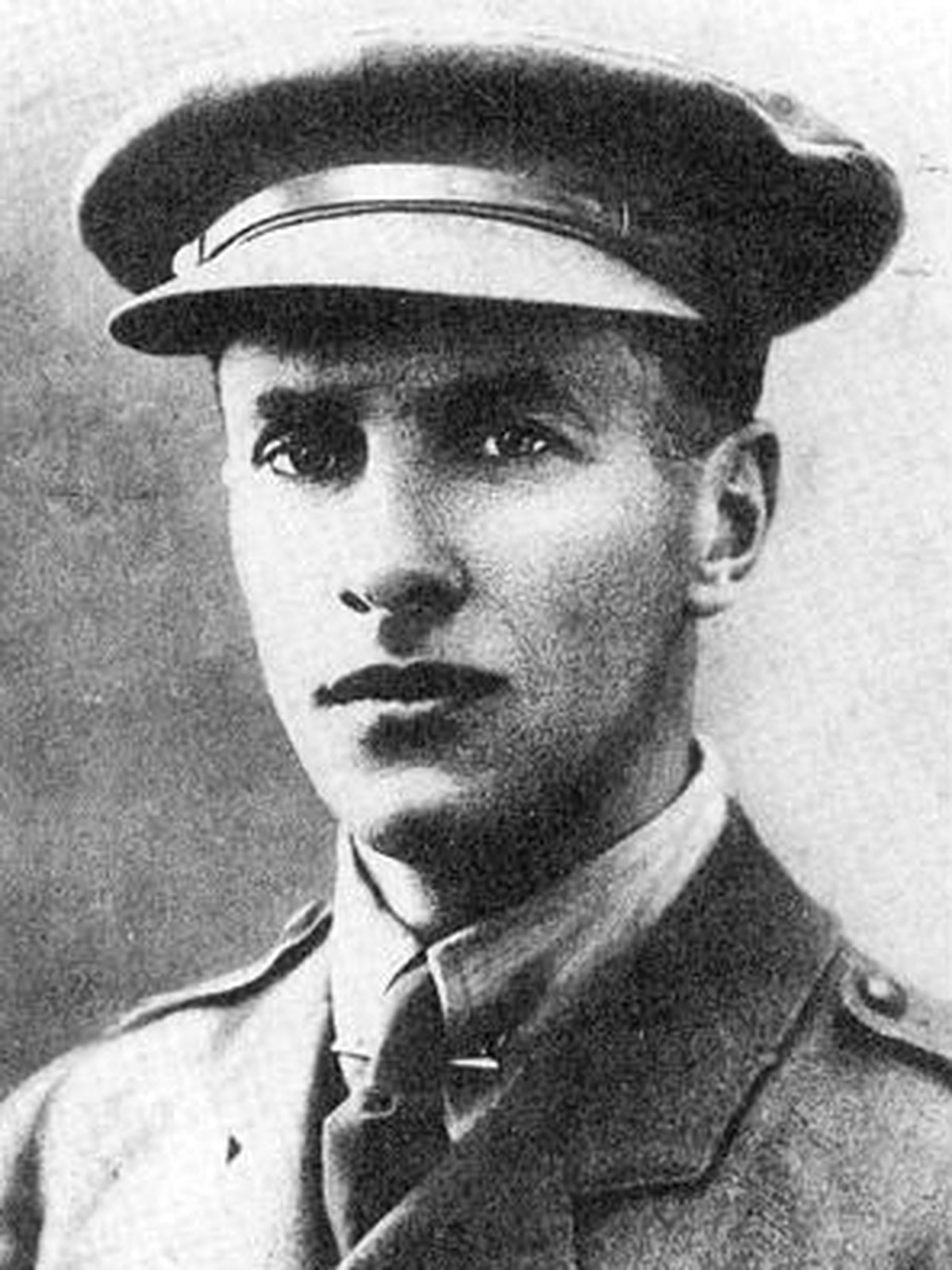
Walter Duranty, 1919 photograph Funk & Wagnalls / Literary Digest History of the War; no photographer credited · Public domain (published 1919)
Lead with Duranty published Times text, Pulitzer board 2003 statement (1931 prize package), later NYT reckonings, and Holodomor archival sets. Label mainstream scholarship. Historical famine only — not a current-war topic.
Lead with Duranty published Times text, Pulitzer board 2003 statement (1931 prize package), later NYT reckonings, and Holodomor archival sets. Label mainstream scholarship. Historical famine only — not a current-war topic.
Rival paths must say what would have to be wrong. Not a hate page and not a claims board.
Teaching note for “How to read this file”: separate the documented primary (court docket, statute, contemporaneous state record, or archival leaflet) from later shorthand and cable-news slogans. Prefer the cited primary URL over a viral summary of the same event. Dates and institutional captions matter more than the street brand alone. [4]
Limits and humility: sealed dockets, destroyed street-camera footage, activist anonymity, and selection bias remain structural. Absence of a memo is not proof of absence; presence of a tactic family is not proof every named person used every tactic. Label contested funding and designation claims as contested. [4]
Cross-link sibling NYT Files nests when the same street episode, designation debate, or media frame appears; do not collapse Duranty dispatches, Pulitzer board materials, Holodomor scholarship, and later memory fights into one blob. YouTube clips belong on the audiovisual spine when they carry the same fact — always label primary footage vs commentary. Quality over speed; wait rather than ship thin. [4][4]
Epistemology for “How to read this file”: map rival paths on the critical-path board. If a theory removes a node, state what would have to be wrong about the primary reading (mustBeWrong). Steel-man the opposing camp in one clause, then return to the primary. No fact-check-by-technicality shortcuts; no Grokipedia cites. [4]
Bottom line Documented
Lead with Duranty published Times text, Pulitzer board 2003 statement (1931 prize package), later NYT reckonings, and Holodomor archival sets. Label mainstream scholarship. Historical famine only — not a current-war topic.
What the record can’t settle
See Theories for rival paths; contested claims stay labeled.
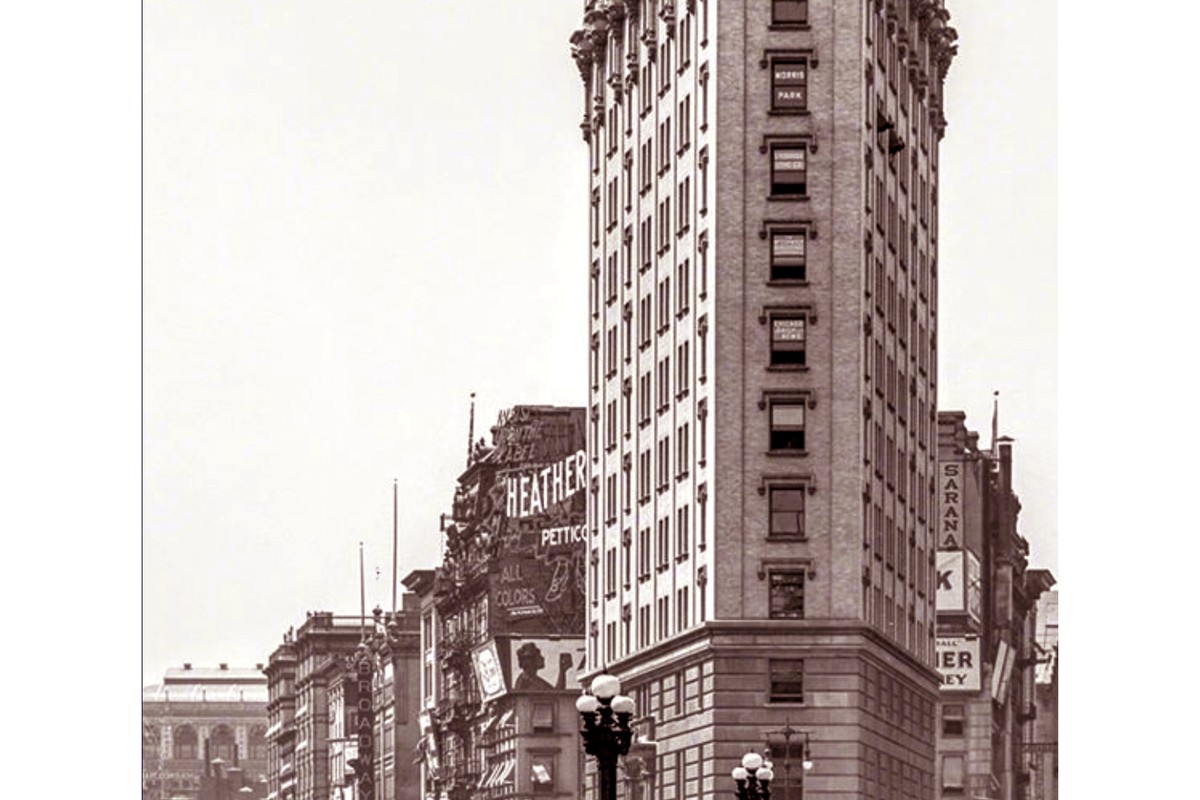
Former New York Times Building, 41 Park Row Wikimedia Commons · Public domain as labeled
Pulitzer board list of 13 prize articles (1931); NYT corporate statement; Kliefoth memo pointer; Pyrih translations; Jones archive; Wienerberger photographs.
Pulitzer board list of 13 prize articles (1931); NYT corporate statement; Kliefoth memo pointer; Pyrih translations; Jones archive; Wienerberger photographs.
Teaching note for “Primary sources on the claim spine”: separate the documented primary (court docket, statute, contemporaneous state record, or archival leaflet) from later shorthand and cable-news slogans. Prefer the cited primary URL over a viral summary of the same event. Dates and institutional captions matter more than the street brand alone. [7]
Limits and humility: sealed dockets, destroyed street-camera footage, activist anonymity, and selection bias remain structural. Absence of a memo is not proof of absence; presence of a tactic family is not proof every named person used every tactic. Label contested funding and designation claims as contested. [7]
Cross-link sibling NYT Files nests when the same street episode, designation debate, or media frame appears; do not collapse Duranty dispatches, Pulitzer board materials, Holodomor scholarship, and later memory fights into one blob. YouTube clips belong on the audiovisual spine when they carry the same fact — always label primary footage vs commentary. Quality over speed; wait rather than ship thin. [7][7]
Epistemology for “Primary sources on the claim spine”: map rival paths on the critical-path board. If a theory removes a node, state what would have to be wrong about the primary reading (mustBeWrong). Steel-man the opposing camp in one clause, then return to the primary. No fact-check-by-technicality shortcuts; no Grokipedia cites. [7]
Bottom line Documented
Pulitzer board list of 13 prize articles (1931); NYT corporate statement; Kliefoth memo pointer; Pyrih translations; Jones archive; Wienerberger photographs.
What the record can’t settle
See Theories for rival paths; contested claims stay labeled.
Walter Duranty, 1919 photograph Funk & Wagnalls / Literary Digest History of the War; no photographer credited · Public domain (published 1919)
Not a referendum on today Times newsroom, not a Ukraine-war brief, not Grokipedia, not a single-villain cartoon. Contested coverage history with labeled camps.
Not a referendum on today Times newsroom, not a Ukraine-war brief, not Grokipedia, not a single-villain cartoon. Contested coverage history with labeled camps.
Teaching note for “What this file is not”: separate the documented primary (court docket, statute, contemporaneous state record, or archival leaflet) from later shorthand and cable-news slogans. Prefer the cited primary URL over a viral summary of the same event. Dates and institutional captions matter more than the street brand alone. [1]
Limits and humility: sealed dockets, destroyed street-camera footage, activist anonymity, and selection bias remain structural. Absence of a memo is not proof of absence; presence of a tactic family is not proof every named person used every tactic. Label contested funding and designation claims as contested. [1]
Cross-link sibling NYT Files nests when the same street episode, designation debate, or media frame appears; do not collapse Duranty dispatches, Pulitzer board materials, Holodomor scholarship, and later memory fights into one blob. YouTube clips belong on the audiovisual spine when they carry the same fact — always label primary footage vs commentary. Quality over speed; wait rather than ship thin. [1][1]
Epistemology for “What this file is not”: map rival paths on the critical-path board. If a theory removes a node, state what would have to be wrong about the primary reading (mustBeWrong). Steel-man the opposing camp in one clause, then return to the primary. No fact-check-by-technicality shortcuts; no Grokipedia cites. [1]
Bottom line Documented
Not a referendum on today Times newsroom, not a Ukraine-war brief, not Grokipedia, not a single-villain cartoon. Contested coverage history with labeled camps.
What the record can’t settle
See Theories for rival paths; contested claims stay labeled.
Teaching note for “Epistemology labels used here”: separate the documented primary (court docket, statute, contemporaneous state record, or archival leaflet) from later shorthand and cable-news slogans. Prefer the cited primary URL over a viral summary of the same event. Dates and institutional captions matter more than the street brand alone. [1]
Limits and humility: sealed dockets, destroyed street-camera footage, activist anonymity, and selection bias remain structural. Absence of a memo is not proof of absence; presence of a tactic family is not proof every named person used every tactic. Label contested funding and designation claims as contested. [1]
Cross-link sibling NYT Files nests when the same street episode, designation debate, or media frame appears; do not collapse Duranty dispatches, Pulitzer board materials, Holodomor scholarship, and later memory fights into one blob. YouTube clips belong on the audiovisual spine when they carry the same fact — always label primary footage vs commentary. Quality over speed; wait rather than ship thin. [1][1]
Epistemology for “Epistemology labels used here”: map rival paths on the critical-path board. If a theory removes a node, state what would have to be wrong about the primary reading (mustBeWrong). Steel-man the opposing camp in one clause, then return to the primary. No fact-check-by-technicality shortcuts; no Grokipedia cites. [1]
Harvest of Despair; Atlantic Council Mr. Jones panel; short Jones summary — labeled documentary/commentary. Prefer archive texts and Pulitzer/NYT statements as text primaries.
Harvest of Despair; Atlantic Council Mr. Jones panel; short Jones summary — labeled documentary/commentary. Prefer archive texts and Pulitzer/NYT statements as text primaries.
Teaching note for “Video clips on the audiovisual spine”: separate the documented primary (court docket, statute, contemporaneous state record, or archival leaflet) from later shorthand and cable-news slogans. Prefer the cited primary URL over a viral summary of the same event. Dates and institutional captions matter more than the street brand alone. [5]
Limits and humility: sealed dockets, destroyed street-camera footage, activist anonymity, and selection bias remain structural. Absence of a memo is not proof of absence; presence of a tactic family is not proof every named person used every tactic. Label contested funding and designation claims as contested. [5]
Cross-link sibling NYT Files nests when the same street episode, designation debate, or media frame appears; do not collapse Duranty dispatches, Pulitzer board materials, Holodomor scholarship, and later memory fights into one blob. YouTube clips belong on the audiovisual spine when they carry the same fact — always label primary footage vs commentary. Quality over speed; wait rather than ship thin. [5][5]
Epistemology for “Video clips on the audiovisual spine”: map rival paths on the critical-path board. If a theory removes a node, state what would have to be wrong about the primary reading (mustBeWrong). Steel-man the opposing camp in one clause, then return to the primary. No fact-check-by-technicality shortcuts; no Grokipedia cites. [5]
Bottom line Documented
Harvest of Despair; Atlantic Council Mr. Jones panel; short Jones summary — labeled documentary/commentary. Prefer archive texts and Pulitzer/NYT statements as text primaries.
What the record can’t settle
See Theories for rival paths; contested claims stay labeled.
Walter Duranty, 1919 photograph Funk & Wagnalls / Literary Digest History of the War · Public domain
Duranty became the Times key Moscow voice under Soviet censorship and official sources — structural setup for later criticism.
Duranty became the Times key Moscow voice under Soviet censorship and official sources — structural setup for later criticism.
Teaching note for “Duranty Moscow appointment and access”: separate the documented primary (court docket, statute, contemporaneous state record, or archival leaflet) from later shorthand and cable-news slogans. Prefer the cited primary URL over a viral summary of the same event. Dates and institutional captions matter more than the street brand alone. [3]
Limits and humility: sealed dockets, destroyed street-camera footage, activist anonymity, and selection bias remain structural. Absence of a memo is not proof of absence; presence of a tactic family is not proof every named person used every tactic. Label contested funding and designation claims as contested. [3]
Cross-link sibling NYT Files nests when the same street episode, designation debate, or media frame appears; do not collapse Duranty dispatches, Pulitzer board materials, Holodomor scholarship, and later memory fights into one blob. YouTube clips belong on the audiovisual spine when they carry the same fact — always label primary footage vs commentary. Quality over speed; wait rather than ship thin. [3][3]
Epistemology for “Duranty Moscow appointment and access”: map rival paths on the critical-path board. If a theory removes a node, state what would have to be wrong about the primary reading (mustBeWrong). Steel-man the opposing camp in one clause, then return to the primary. No fact-check-by-technicality shortcuts; no Grokipedia cites. [3]
Bottom line Documented
Duranty became the Times key Moscow voice under Soviet censorship and official sources — structural setup for later criticism.
What the record can’t settle
See Theories for rival paths; contested claims stay labeled.
Walter Duranty, 1919 photograph Funk & Wagnalls / Literary Digest History of the War · Public domain
Times statement: cabled dispatches passed Soviet censorship; propaganda machine powerful. Constraint is real — and does not erase emphasis choices.
Times statement: cabled dispatches passed Soviet censorship; propaganda machine powerful. Constraint is real — and does not erase emphasis choices.
Teaching note for “Censorship and cable rules”: separate the documented primary (court docket, statute, contemporaneous state record, or archival leaflet) from later shorthand and cable-news slogans. Prefer the cited primary URL over a viral summary of the same event. Dates and institutional captions matter more than the street brand alone. [2]
Limits and humility: sealed dockets, destroyed street-camera footage, activist anonymity, and selection bias remain structural. Absence of a memo is not proof of absence; presence of a tactic family is not proof every named person used every tactic. Label contested funding and designation claims as contested. [2]
Cross-link sibling NYT Files nests when the same street episode, designation debate, or media frame appears; do not collapse Duranty dispatches, Pulitzer board materials, Holodomor scholarship, and later memory fights into one blob. YouTube clips belong on the audiovisual spine when they carry the same fact — always label primary footage vs commentary. Quality over speed; wait rather than ship thin. [2][2]
Epistemology for “Censorship and cable rules”: map rival paths on the critical-path board. If a theory removes a node, state what would have to be wrong about the primary reading (mustBeWrong). Steel-man the opposing camp in one clause, then return to the primary. No fact-check-by-technicality shortcuts; no Grokipedia cites. [2]
Bottom line Documented
Times statement: cabled dispatches passed Soviet censorship; propaganda machine powerful. Constraint is real — and does not erase emphasis choices.
What the record can’t settle
See Theories for rival paths; contested claims stay labeled.
Former New York Times Building, 41 Park Row Wikimedia Commons · Public domain as labeled
U.S. Embassy Berlin memo summarizing Duranty remarks; widely quoted claim despatches reflected official Soviet opinion. Read as embassy record — weight contested.
U.S. Embassy Berlin memo summarizing Duranty remarks; widely quoted claim despatches reflected official Soviet opinion. Read as embassy record — weight contested.
Teaching note for “Kliefoth memorandum (June 4, 1931)”: separate the documented primary (court docket, statute, contemporaneous state record, or archival leaflet) from later shorthand and cable-news slogans. Prefer the cited primary URL over a viral summary of the same event. Dates and institutional captions matter more than the street brand alone. [3]
Limits and humility: sealed dockets, destroyed street-camera footage, activist anonymity, and selection bias remain structural. Absence of a memo is not proof of absence; presence of a tactic family is not proof every named person used every tactic. Label contested funding and designation claims as contested. [3]
Cross-link sibling NYT Files nests when the same street episode, designation debate, or media frame appears; do not collapse Duranty dispatches, Pulitzer board materials, Holodomor scholarship, and later memory fights into one blob. YouTube clips belong on the audiovisual spine when they carry the same fact — always label primary footage vs commentary. Quality over speed; wait rather than ship thin. [3][3]
Epistemology for “Kliefoth memorandum (June 4, 1931)”: map rival paths on the critical-path board. If a theory removes a node, state what would have to be wrong about the primary reading (mustBeWrong). Steel-man the opposing camp in one clause, then return to the primary. No fact-check-by-technicality shortcuts; no Grokipedia cites. [3]
Bottom line Mixed
U.S. Embassy Berlin memo summarizing Duranty remarks; widely quoted claim despatches reflected official Soviet opinion. Read as embassy record — weight contested.
What the record can’t settle
See Theories for rival paths; contested claims stay labeled.
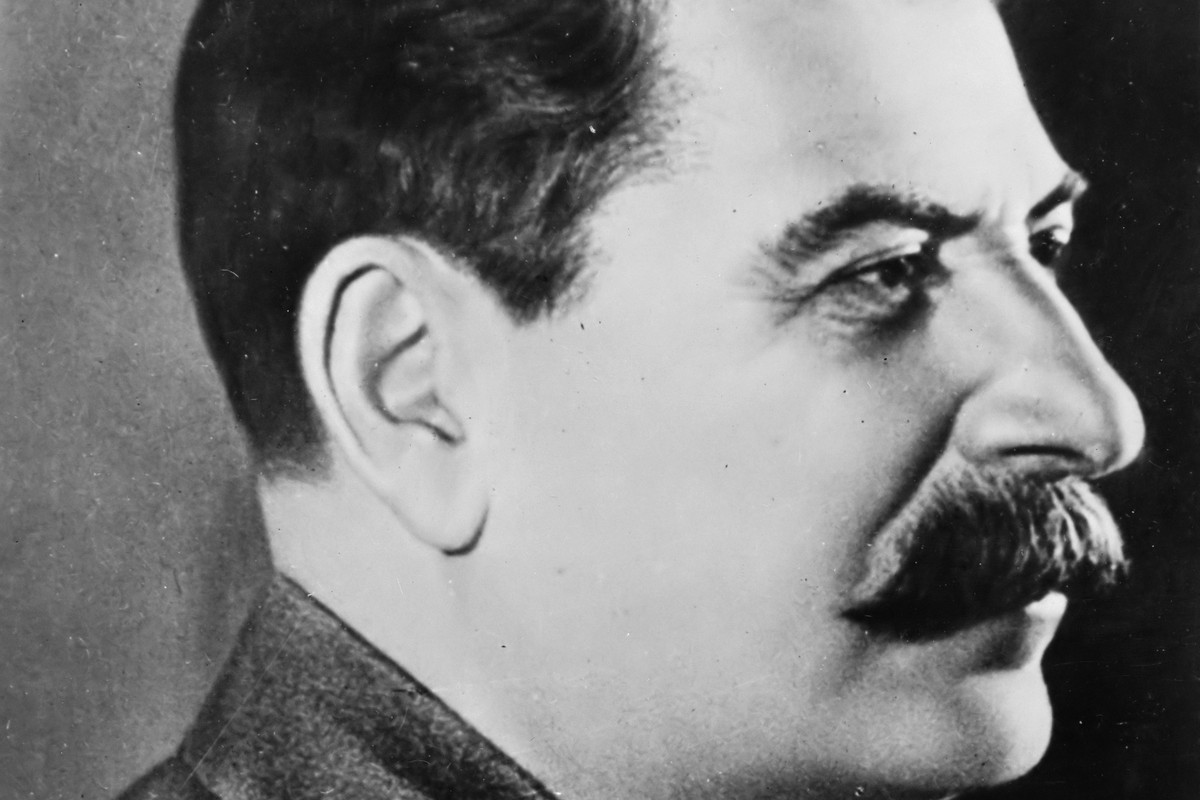
Joseph Stalin, 1942 U.S. government / Commons · Public domain
NYT reckoning: prize-winning analyses relied on official sources; quoted Stalin not ordinary Russians.
NYT reckoning: prize-winning analyses relied on official sources; quoted Stalin not ordinary Russians.
Teaching note for “Official sources vs ordinary Russians”: separate the documented primary (court docket, statute, contemporaneous state record, or archival leaflet) from later shorthand and cable-news slogans. Prefer the cited primary URL over a viral summary of the same event. Dates and institutional captions matter more than the street brand alone. [2]
Limits and humility: sealed dockets, destroyed street-camera footage, activist anonymity, and selection bias remain structural. Absence of a memo is not proof of absence; presence of a tactic family is not proof every named person used every tactic. Label contested funding and designation claims as contested. [2]
Cross-link sibling NYT Files nests when the same street episode, designation debate, or media frame appears; do not collapse Duranty dispatches, Pulitzer board materials, Holodomor scholarship, and later memory fights into one blob. YouTube clips belong on the audiovisual spine when they carry the same fact — always label primary footage vs commentary. Quality over speed; wait rather than ship thin. [2][2]
Epistemology for “Official sources vs ordinary Russians”: map rival paths on the critical-path board. If a theory removes a node, state what would have to be wrong about the primary reading (mustBeWrong). Steel-man the opposing camp in one clause, then return to the primary. No fact-check-by-technicality shortcuts; no Grokipedia cites. [2]
Bottom line Documented
NYT reckoning: prize-winning analyses relied on official sources; quoted Stalin not ordinary Russians.
What the record can’t settle
See Theories for rival paths; contested claims stay labeled.
Walter Duranty, 1919 photograph Funk & Wagnalls / Literary Digest History of the War · Public domain
Eleven-part June 1931 series plus two Magazine pieces — the specific package the Pulitzer board reviewed in 2003.
Eleven-part June 1931 series plus two Magazine pieces — the specific package the Pulitzer board reviewed in 2003.
Teaching note for “The 1931 Stalinism series (prize package)”: separate the documented primary (court docket, statute, contemporaneous state record, or archival leaflet) from later shorthand and cable-news slogans. Prefer the cited primary URL over a viral summary of the same event. Dates and institutional captions matter more than the street brand alone. [2]
Limits and humility: sealed dockets, destroyed street-camera footage, activist anonymity, and selection bias remain structural. Absence of a memo is not proof of absence; presence of a tactic family is not proof every named person used every tactic. Label contested funding and designation claims as contested. [2]
Cross-link sibling NYT Files nests when the same street episode, designation debate, or media frame appears; do not collapse Duranty dispatches, Pulitzer board materials, Holodomor scholarship, and later memory fights into one blob. YouTube clips belong on the audiovisual spine when they carry the same fact — always label primary footage vs commentary. Quality over speed; wait rather than ship thin. [2][2]
Epistemology for “The 1931 Stalinism series (prize package)”: map rival paths on the critical-path board. If a theory removes a node, state what would have to be wrong about the primary reading (mustBeWrong). Steel-man the opposing camp in one clause, then return to the primary. No fact-check-by-technicality shortcuts; no Grokipedia cites. [2]
Bottom line Documented
Eleven-part June 1931 series plus two Magazine pieces — the specific package the Pulitzer board reviewed in 2003.
What the record can’t settle
See Theories for rival paths; contested claims stay labeled.
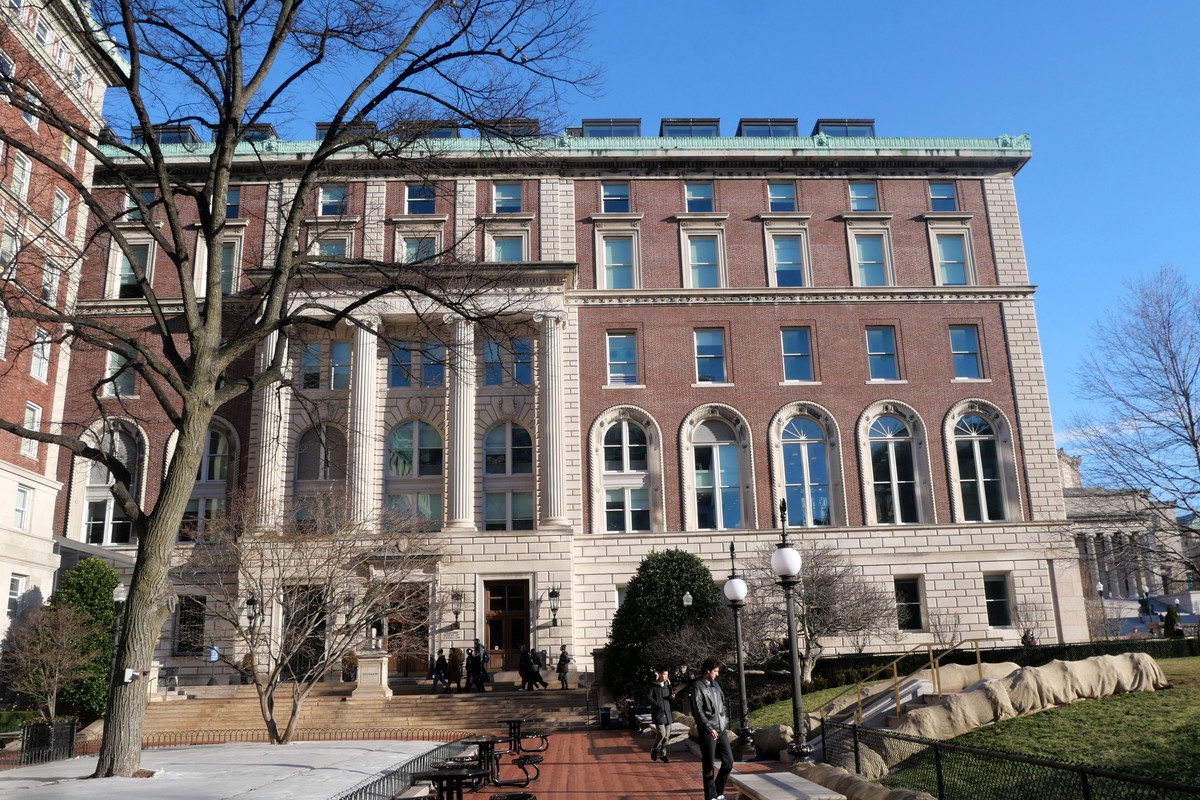
Pulitzer Hall, Columbia University Ajay Suresh / Wikimedia Commons · CC BY 4.0
Board published 13 headlines/dates. Treat that list as the prize object.
Board published 13 headlines/dates. Treat that list as the prize object.
Teaching note for “Headlines the board listed”: separate the documented primary (court docket, statute, contemporaneous state record, or archival leaflet) from later shorthand and cable-news slogans. Prefer the cited primary URL over a viral summary of the same event. Dates and institutional captions matter more than the street brand alone. [2]
Limits and humility: sealed dockets, destroyed street-camera footage, activist anonymity, and selection bias remain structural. Absence of a memo is not proof of absence; presence of a tactic family is not proof every named person used every tactic. Label contested funding and designation claims as contested. [2]
Cross-link sibling NYT Files nests when the same street episode, designation debate, or media frame appears; do not collapse Duranty dispatches, Pulitzer board materials, Holodomor scholarship, and later memory fights into one blob. YouTube clips belong on the audiovisual spine when they carry the same fact — always label primary footage vs commentary. Quality over speed; wait rather than ship thin. [2][2]
Epistemology for “Headlines the board listed”: map rival paths on the critical-path board. If a theory removes a node, state what would have to be wrong about the primary reading (mustBeWrong). Steel-man the opposing camp in one clause, then return to the primary. No fact-check-by-technicality shortcuts; no Grokipedia cites. [2]
Bottom line Documented
Board published 13 headlines/dates. Treat that list as the prize object.
What the record can’t settle
See Theories for rival paths; contested claims stay labeled.
Pulitzer Hall, Columbia University Ajay Suresh / Wikimedia Commons · CC BY 4.0
Prize awarded in 1932 for 1931 work. Later famine reporting was not the prize package — board distinction in 2003.
Prize awarded in 1932 for 1931 work. Later famine reporting was not the prize package — board distinction in 2003.
Teaching note for “1932 Pulitzer for correspondence”: separate the documented primary (court docket, statute, contemporaneous state record, or archival leaflet) from later shorthand and cable-news slogans. Prefer the cited primary URL over a viral summary of the same event. Dates and institutional captions matter more than the street brand alone. [3]
Limits and humility: sealed dockets, destroyed street-camera footage, activist anonymity, and selection bias remain structural. Absence of a memo is not proof of absence; presence of a tactic family is not proof every named person used every tactic. Label contested funding and designation claims as contested. [3]
Cross-link sibling NYT Files nests when the same street episode, designation debate, or media frame appears; do not collapse Duranty dispatches, Pulitzer board materials, Holodomor scholarship, and later memory fights into one blob. YouTube clips belong on the audiovisual spine when they carry the same fact — always label primary footage vs commentary. Quality over speed; wait rather than ship thin. [3][3]
Epistemology for “1932 Pulitzer for correspondence”: map rival paths on the critical-path board. If a theory removes a node, state what would have to be wrong about the primary reading (mustBeWrong). Steel-man the opposing camp in one clause, then return to the primary. No fact-check-by-technicality shortcuts; no Grokipedia cites. [3]
Bottom line Documented
Prize awarded in 1932 for 1931 work. Later famine reporting was not the prize package — board distinction in 2003.
What the record can’t settle
See Theories for rival paths; contested claims stay labeled.
Joseph Stalin, 1942 U.S. government / Commons · Public domain
Times statement highlights 1931 language taking Soviet liquidation rhetoric at face value — later read as underestimating brutality.
Times statement highlights 1931 language taking Soviet liquidation rhetoric at face value — later read as underestimating brutality.
Teaching note for “Liquidate the kulaks language”: separate the documented primary (court docket, statute, contemporaneous state record, or archival leaflet) from later shorthand and cable-news slogans. Prefer the cited primary URL over a viral summary of the same event. Dates and institutional captions matter more than the street brand alone. [3]
Limits and humility: sealed dockets, destroyed street-camera footage, activist anonymity, and selection bias remain structural. Absence of a memo is not proof of absence; presence of a tactic family is not proof every named person used every tactic. Label contested funding and designation claims as contested. [3]
Cross-link sibling NYT Files nests when the same street episode, designation debate, or media frame appears; do not collapse Duranty dispatches, Pulitzer board materials, Holodomor scholarship, and later memory fights into one blob. YouTube clips belong on the audiovisual spine when they carry the same fact — always label primary footage vs commentary. Quality over speed; wait rather than ship thin. [3][3]
Epistemology for “Liquidate the kulaks language”: map rival paths on the critical-path board. If a theory removes a node, state what would have to be wrong about the primary reading (mustBeWrong). Steel-man the opposing camp in one clause, then return to the primary. No fact-check-by-technicality shortcuts; no Grokipedia cites. [3]
Bottom line Documented
Times statement highlights 1931 language taking Soviet liquidation rhetoric at face value — later read as underestimating brutality.
What the record can’t settle
See Theories for rival paths; contested claims stay labeled.
Pulitzer Hall, Columbia University Ajay Suresh / Wikimedia Commons · CC BY 4.0
2003 board: 1931 work falls seriously short by today foreign-reporting standards — yet no clear and convincing deliberate deception in prize articles.
2003 board: 1931 work falls seriously short by today foreign-reporting standards — yet no clear and convincing deliberate deception in prize articles.
Teaching note for “Board view: short by today standards”: separate the documented primary (court docket, statute, contemporaneous state record, or archival leaflet) from later shorthand and cable-news slogans. Prefer the cited primary URL over a viral summary of the same event. Dates and institutional captions matter more than the street brand alone. [2]
Limits and humility: sealed dockets, destroyed street-camera footage, activist anonymity, and selection bias remain structural. Absence of a memo is not proof of absence; presence of a tactic family is not proof every named person used every tactic. Label contested funding and designation claims as contested. [2]
Cross-link sibling NYT Files nests when the same street episode, designation debate, or media frame appears; do not collapse Duranty dispatches, Pulitzer board materials, Holodomor scholarship, and later memory fights into one blob. YouTube clips belong on the audiovisual spine when they carry the same fact — always label primary footage vs commentary. Quality over speed; wait rather than ship thin. [2][2]
Epistemology for “Board view: short by today standards”: map rival paths on the critical-path board. If a theory removes a node, state what would have to be wrong about the primary reading (mustBeWrong). Steel-man the opposing camp in one clause, then return to the primary. No fact-check-by-technicality shortcuts; no Grokipedia cites. [2]
Bottom line Documented
2003 board: 1931 work falls seriously short by today foreign-reporting standards — yet no clear and convincing deliberate deception in prize articles.
What the record can’t settle
See Theories for rival paths; contested claims stay labeled.
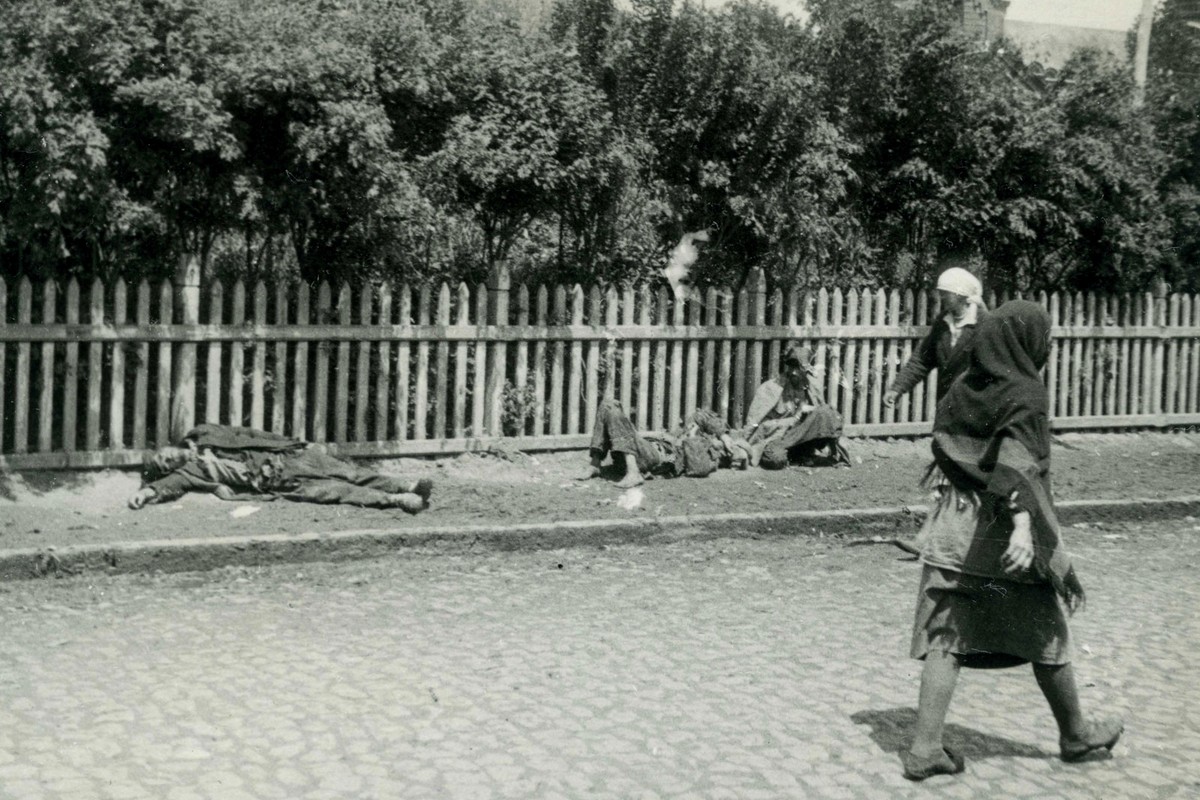
Starved peasants on a street in Kharkiv, 1933 Alexander Wienerberger; Diocesan Archive of Vienna / Innitzer · Public domain (Austria simple photographic picture)
Mainstream Holodomor scholarship: forced collectivization and related policies main cause of mass starvation in Ukraine 1932-33. Totals are ranges.
Mainstream Holodomor scholarship: forced collectivization and related policies main cause of mass starvation in Ukraine 1932-33. Totals are ranges.
Teaching note for “Collectivization as famine cause”: separate the documented primary (court docket, statute, contemporaneous state record, or archival leaflet) from later shorthand and cable-news slogans. Prefer the cited primary URL over a viral summary of the same event. Dates and institutional captions matter more than the street brand alone. [4]
Limits and humility: sealed dockets, destroyed street-camera footage, activist anonymity, and selection bias remain structural. Absence of a memo is not proof of absence; presence of a tactic family is not proof every named person used every tactic. Label contested funding and designation claims as contested. [4]
Cross-link sibling NYT Files nests when the same street episode, designation debate, or media frame appears; do not collapse Duranty dispatches, Pulitzer board materials, Holodomor scholarship, and later memory fights into one blob. YouTube clips belong on the audiovisual spine when they carry the same fact — always label primary footage vs commentary. Quality over speed; wait rather than ship thin. [4][4]
Epistemology for “Collectivization as famine cause”: map rival paths on the critical-path board. If a theory removes a node, state what would have to be wrong about the primary reading (mustBeWrong). Steel-man the opposing camp in one clause, then return to the primary. No fact-check-by-technicality shortcuts; no Grokipedia cites. [4]
Bottom line Documented
Mainstream Holodomor scholarship: forced collectivization and related policies main cause of mass starvation in Ukraine 1932-33. Totals are ranges.
What the record can’t settle
See Theories for rival paths; contested claims stay labeled.
Jones, Muggeridge, Lyons, Chamberlin filed or later described famine; Duranty public minimization is this nest scandal node.
Jones, Muggeridge, Lyons, Chamberlin filed or later described famine; Duranty public minimization is this nest scandal node.
Teaching note for “What Western reporters could see”: separate the documented primary (court docket, statute, contemporaneous state record, or archival leaflet) from later shorthand and cable-news slogans. Prefer the cited primary URL over a viral summary of the same event. Dates and institutional captions matter more than the street brand alone. [4]
Limits and humility: sealed dockets, destroyed street-camera footage, activist anonymity, and selection bias remain structural. Absence of a memo is not proof of absence; presence of a tactic family is not proof every named person used every tactic. Label contested funding and designation claims as contested. [4]
Cross-link sibling NYT Files nests when the same street episode, designation debate, or media frame appears; do not collapse Duranty dispatches, Pulitzer board materials, Holodomor scholarship, and later memory fights into one blob. YouTube clips belong on the audiovisual spine when they carry the same fact — always label primary footage vs commentary. Quality over speed; wait rather than ship thin. [4][4]
Epistemology for “What Western reporters could see”: map rival paths on the critical-path board. If a theory removes a node, state what would have to be wrong about the primary reading (mustBeWrong). Steel-man the opposing camp in one clause, then return to the primary. No fact-check-by-technicality shortcuts; no Grokipedia cites. [4]
Bottom line Documented
Jones, Muggeridge, Lyons, Chamberlin filed or later described famine; Duranty public minimization is this nest scandal node.
What the record can’t settle
See Theories for rival paths; contested claims stay labeled.
Walter Duranty, 1919 photograph Funk & Wagnalls / Literary Digest History of the War · Public domain
Times statement quotes Duranty March 1933 Moscow dispatch minimizing famine and omelet without breaking eggs line.
Times statement quotes Duranty March 1933 Moscow dispatch minimizing famine and omelet without breaking eggs line.
Teaching note for “Conditions are bad, but there is no famine”: separate the documented primary (court docket, statute, contemporaneous state record, or archival leaflet) from later shorthand and cable-news slogans. Prefer the cited primary URL over a viral summary of the same event. Dates and institutional captions matter more than the street brand alone. [2]
Limits and humility: sealed dockets, destroyed street-camera footage, activist anonymity, and selection bias remain structural. Absence of a memo is not proof of absence; presence of a tactic family is not proof every named person used every tactic. Label contested funding and designation claims as contested. [2]
Cross-link sibling NYT Files nests when the same street episode, designation debate, or media frame appears; do not collapse Duranty dispatches, Pulitzer board materials, Holodomor scholarship, and later memory fights into one blob. YouTube clips belong on the audiovisual spine when they carry the same fact — always label primary footage vs commentary. Quality over speed; wait rather than ship thin. [2][2]
Epistemology for “Conditions are bad, but there is no famine”: map rival paths on the critical-path board. If a theory removes a node, state what would have to be wrong about the primary reading (mustBeWrong). Steel-man the opposing camp in one clause, then return to the primary. No fact-check-by-technicality shortcuts; no Grokipedia cites. [2]
Bottom line Documented
Times statement quotes Duranty March 1933 Moscow dispatch minimizing famine and omelet without breaking eggs line.
What the record can’t settle
See Theories for rival paths; contested claims stay labeled.
Walter Duranty, 1919 photograph Funk & Wagnalls / Literary Digest History of the War · Public domain
Omelette line functions as justification frame; critics read apologetics. Steel-man: harsh metaphors existed elsewhere — pairing with no famine is the issue.
Omelette line functions as justification frame; critics read apologetics. Steel-man: harsh metaphors existed elsewhere — pairing with no famine is the issue.
Teaching note for “Omelette metaphor as moral rhetoric”: separate the documented primary (court docket, statute, contemporaneous state record, or archival leaflet) from later shorthand and cable-news slogans. Prefer the cited primary URL over a viral summary of the same event. Dates and institutional captions matter more than the street brand alone. [2]
Limits and humility: sealed dockets, destroyed street-camera footage, activist anonymity, and selection bias remain structural. Absence of a memo is not proof of absence; presence of a tactic family is not proof every named person used every tactic. Label contested funding and designation claims as contested. [2]
Cross-link sibling NYT Files nests when the same street episode, designation debate, or media frame appears; do not collapse Duranty dispatches, Pulitzer board materials, Holodomor scholarship, and later memory fights into one blob. YouTube clips belong on the audiovisual spine when they carry the same fact — always label primary footage vs commentary. Quality over speed; wait rather than ship thin. [2][2]
Epistemology for “Omelette metaphor as moral rhetoric”: map rival paths on the critical-path board. If a theory removes a node, state what would have to be wrong about the primary reading (mustBeWrong). Steel-man the opposing camp in one clause, then return to the primary. No fact-check-by-technicality shortcuts; no Grokipedia cites. [2]
Bottom line Contested
Omelette line functions as justification frame; critics read apologetics. Steel-man: harsh metaphors existed elsewhere — pairing with no famine is the issue.
What the record can’t settle
See Theories for rival paths; contested claims stay labeled.
Starved peasants on a street in Kharkiv, 1933 Alexander Wienerberger; Diocesan Archive of Vienna / Innitzer · Public domain (Austria simple photographic picture)
Rare verified photographs of famine conditions in Kharkiv 1933; visual primary for conditions cables minimized.
Rare verified photographs of famine conditions in Kharkiv 1933; visual primary for conditions cables minimized.
Teaching note for “Wienerberger Kharkiv photographs”: separate the documented primary (court docket, statute, contemporaneous state record, or archival leaflet) from later shorthand and cable-news slogans. Prefer the cited primary URL over a viral summary of the same event. Dates and institutional captions matter more than the street brand alone. [3]
Limits and humility: sealed dockets, destroyed street-camera footage, activist anonymity, and selection bias remain structural. Absence of a memo is not proof of absence; presence of a tactic family is not proof every named person used every tactic. Label contested funding and designation claims as contested. [3]
Cross-link sibling NYT Files nests when the same street episode, designation debate, or media frame appears; do not collapse Duranty dispatches, Pulitzer board materials, Holodomor scholarship, and later memory fights into one blob. YouTube clips belong on the audiovisual spine when they carry the same fact — always label primary footage vs commentary. Quality over speed; wait rather than ship thin. [3][3]
Epistemology for “Wienerberger Kharkiv photographs”: map rival paths on the critical-path board. If a theory removes a node, state what would have to be wrong about the primary reading (mustBeWrong). Steel-man the opposing camp in one clause, then return to the primary. No fact-check-by-technicality shortcuts; no Grokipedia cites. [3]
Bottom line Documented
Rare verified photographs of famine conditions in Kharkiv 1933; visual primary for conditions cables minimized.
What the record can’t settle
See Theories for rival paths; contested claims stay labeled.
Former New York Times Building, 41 Park Row Wikimedia Commons · Public domain as labeled
English translations of key Party/security archival documents — primary spine for policy mechanisms beyond any single Western cable.
English translations of key Party/security archival documents — primary spine for policy mechanisms beyond any single Western cable.
Teaching note for “Pyrih document set”: separate the documented primary (court docket, statute, contemporaneous state record, or archival leaflet) from later shorthand and cable-news slogans. Prefer the cited primary URL over a viral summary of the same event. Dates and institutional captions matter more than the street brand alone. [3]
Limits and humility: sealed dockets, destroyed street-camera footage, activist anonymity, and selection bias remain structural. Absence of a memo is not proof of absence; presence of a tactic family is not proof every named person used every tactic. Label contested funding and designation claims as contested. [3]
Cross-link sibling NYT Files nests when the same street episode, designation debate, or media frame appears; do not collapse Duranty dispatches, Pulitzer board materials, Holodomor scholarship, and later memory fights into one blob. YouTube clips belong on the audiovisual spine when they carry the same fact — always label primary footage vs commentary. Quality over speed; wait rather than ship thin. [3][3]
Epistemology for “Pyrih document set”: map rival paths on the critical-path board. If a theory removes a node, state what would have to be wrong about the primary reading (mustBeWrong). Steel-man the opposing camp in one clause, then return to the primary. No fact-check-by-technicality shortcuts; no Grokipedia cites. [3]
Bottom line Documented
English translations of key Party/security archival documents — primary spine for policy mechanisms beyond any single Western cable.
What the record can’t settle
See Theories for rival paths; contested claims stay labeled.
Mass graves and street dead as photographic record
Record · Documented
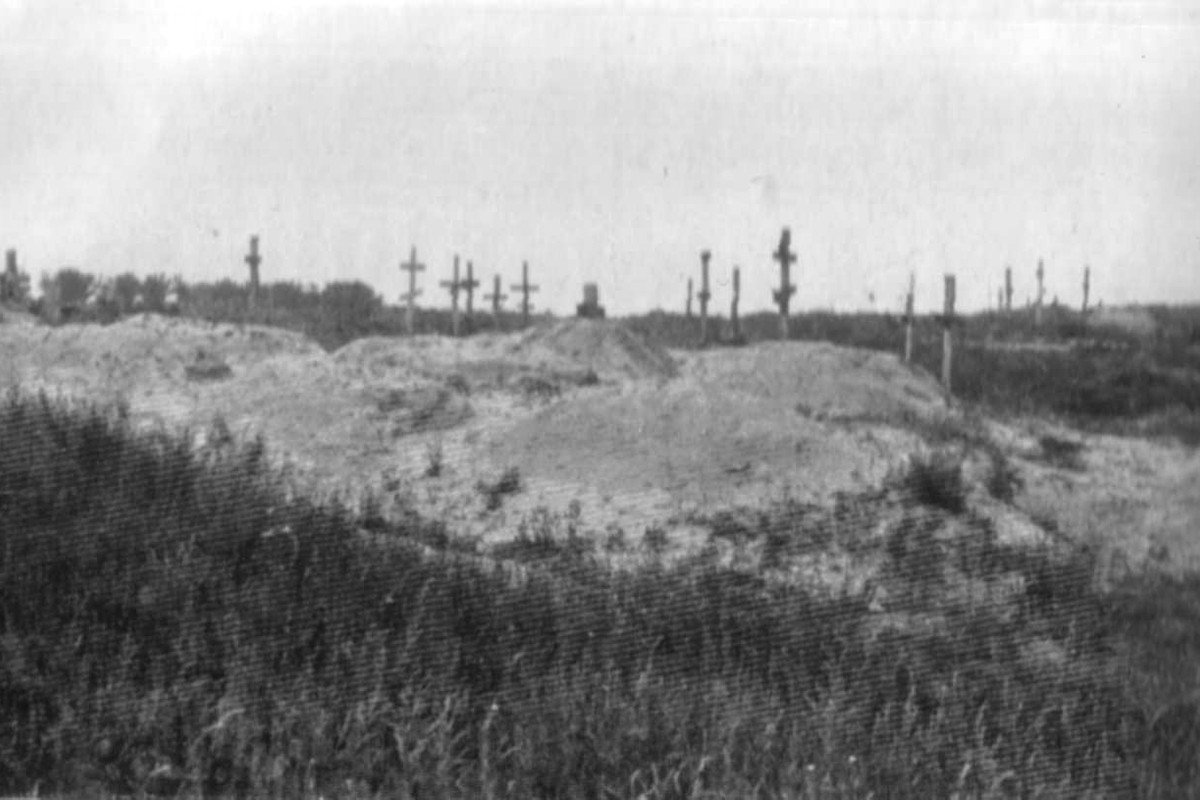
Bodies of famine victims buried in mass graves (published 1935) Alexander Wienerberger · Public domain (Austria)
Wienerberger corpus includes street victims and burial scenes; contradicts no famine as description of conditions. Handle with dignity.
Wienerberger corpus includes street victims and burial scenes; contradicts no famine as description of conditions. Handle with dignity.
Teaching note for “Mass graves and street dead as photographic record”: separate the documented primary (court docket, statute, contemporaneous state record, or archival leaflet) from later shorthand and cable-news slogans. Prefer the cited primary URL over a viral summary of the same event. Dates and institutional captions matter more than the street brand alone. [2]
Limits and humility: sealed dockets, destroyed street-camera footage, activist anonymity, and selection bias remain structural. Absence of a memo is not proof of absence; presence of a tactic family is not proof every named person used every tactic. Label contested funding and designation claims as contested. [2]
Cross-link sibling NYT Files nests when the same street episode, designation debate, or media frame appears; do not collapse Duranty dispatches, Pulitzer board materials, Holodomor scholarship, and later memory fights into one blob. YouTube clips belong on the audiovisual spine when they carry the same fact — always label primary footage vs commentary. Quality over speed; wait rather than ship thin. [2][2]
Epistemology for “Mass graves and street dead as photographic record”: map rival paths on the critical-path board. If a theory removes a node, state what would have to be wrong about the primary reading (mustBeWrong). Steel-man the opposing camp in one clause, then return to the primary. No fact-check-by-technicality shortcuts; no Grokipedia cites. [2]
Bottom line Documented
Wienerberger corpus includes street victims and burial scenes; contradicts no famine as description of conditions. Handle with dignity.
What the record can’t settle
See Theories for rival paths; contested claims stay labeled.
Jones publicly described widespread famine under his own name; rival primary path.
Jones publicly described widespread famine under his own name; rival primary path.
Teaching note for “Gareth Jones Berlin statement (March 29, 1933)”: separate the documented primary (court docket, statute, contemporaneous state record, or archival leaflet) from later shorthand and cable-news slogans. Prefer the cited primary URL over a viral summary of the same event. Dates and institutional captions matter more than the street brand alone. [3]
Limits and humility: sealed dockets, destroyed street-camera footage, activist anonymity, and selection bias remain structural. Absence of a memo is not proof of absence; presence of a tactic family is not proof every named person used every tactic. Label contested funding and designation claims as contested. [3]
Cross-link sibling NYT Files nests when the same street episode, designation debate, or media frame appears; do not collapse Duranty dispatches, Pulitzer board materials, Holodomor scholarship, and later memory fights into one blob. YouTube clips belong on the audiovisual spine when they carry the same fact — always label primary footage vs commentary. Quality over speed; wait rather than ship thin. [3][3]
Epistemology for “Gareth Jones Berlin statement (March 29, 1933)”: map rival paths on the critical-path board. If a theory removes a node, state what would have to be wrong about the primary reading (mustBeWrong). Steel-man the opposing camp in one clause, then return to the primary. No fact-check-by-technicality shortcuts; no Grokipedia cites. [3]
Bottom line Documented
Jones publicly described widespread famine under his own name; rival primary path.
What the record can’t settle
See Theories for rival paths; contested claims stay labeled.
Jones reported anonymously in The Times (London) in 1931 on starvation; 1933 is named rupture. Keep London Times != New York Times labels clean.
Jones reported anonymously in The Times (London) in 1931 on starvation; 1933 is named rupture. Keep London Times != New York Times labels clean.
Teaching note for “Jones earlier anonymous Times pieces”: separate the documented primary (court docket, statute, contemporaneous state record, or archival leaflet) from later shorthand and cable-news slogans. Prefer the cited primary URL over a viral summary of the same event. Dates and institutional captions matter more than the street brand alone. [3]
Limits and humility: sealed dockets, destroyed street-camera footage, activist anonymity, and selection bias remain structural. Absence of a memo is not proof of absence; presence of a tactic family is not proof every named person used every tactic. Label contested funding and designation claims as contested. [3]
Cross-link sibling NYT Files nests when the same street episode, designation debate, or media frame appears; do not collapse Duranty dispatches, Pulitzer board materials, Holodomor scholarship, and later memory fights into one blob. YouTube clips belong on the audiovisual spine when they carry the same fact — always label primary footage vs commentary. Quality over speed; wait rather than ship thin. [3][3]
Epistemology for “Jones earlier anonymous Times pieces”: map rival paths on the critical-path board. If a theory removes a node, state what would have to be wrong about the primary reading (mustBeWrong). Steel-man the opposing camp in one clause, then return to the primary. No fact-check-by-technicality shortcuts; no Grokipedia cites. [3]
Bottom line Documented
Jones reported anonymously in The Times (London) in 1931 on starvation; 1933 is named rupture. Keep London Times != New York Times labels clean.
What the record can’t settle
See Theories for rival paths; contested claims stay labeled.
Malcolm Muggeridge Commons · Public domain or as labeled on file page
March 1933 anonymous Manchester Guardian articles specified famine.
March 1933 anonymous Manchester Guardian articles specified famine.
Teaching note for “Malcolm Muggeridge anonymous Guardian reports”: separate the documented primary (court docket, statute, contemporaneous state record, or archival leaflet) from later shorthand and cable-news slogans. Prefer the cited primary URL over a viral summary of the same event. Dates and institutional captions matter more than the street brand alone. [2]
Limits and humility: sealed dockets, destroyed street-camera footage, activist anonymity, and selection bias remain structural. Absence of a memo is not proof of absence; presence of a tactic family is not proof every named person used every tactic. Label contested funding and designation claims as contested. [2]
Cross-link sibling NYT Files nests when the same street episode, designation debate, or media frame appears; do not collapse Duranty dispatches, Pulitzer board materials, Holodomor scholarship, and later memory fights into one blob. YouTube clips belong on the audiovisual spine when they carry the same fact — always label primary footage vs commentary. Quality over speed; wait rather than ship thin. [2][2]
Epistemology for “Malcolm Muggeridge anonymous Guardian reports”: map rival paths on the critical-path board. If a theory removes a node, state what would have to be wrong about the primary reading (mustBeWrong). Steel-man the opposing camp in one clause, then return to the primary. No fact-check-by-technicality shortcuts; no Grokipedia cites. [2]
Bottom line Documented
March 1933 anonymous Manchester Guardian articles specified famine.
What the record can’t settle
See Theories for rival paths; contested claims stay labeled.
Former New York Times Building, 41 Park Row Wikimedia Commons · Public domain as labeled
Assignment in Utopia attacks access journalism and famine silence; steel-man career incentives and censorship.
Assignment in Utopia attacks access journalism and famine silence; steel-man career incentives and censorship.
Teaching note for “Eugene Lyons and the Moscow press corps”: separate the documented primary (court docket, statute, contemporaneous state record, or archival leaflet) from later shorthand and cable-news slogans. Prefer the cited primary URL over a viral summary of the same event. Dates and institutional captions matter more than the street brand alone. [2]
Limits and humility: sealed dockets, destroyed street-camera footage, activist anonymity, and selection bias remain structural. Absence of a memo is not proof of absence; presence of a tactic family is not proof every named person used every tactic. Label contested funding and designation claims as contested. [2]
Cross-link sibling NYT Files nests when the same street episode, designation debate, or media frame appears; do not collapse Duranty dispatches, Pulitzer board materials, Holodomor scholarship, and later memory fights into one blob. YouTube clips belong on the audiovisual spine when they carry the same fact — always label primary footage vs commentary. Quality over speed; wait rather than ship thin. [2][2]
Epistemology for “Eugene Lyons and the Moscow press corps”: map rival paths on the critical-path board. If a theory removes a node, state what would have to be wrong about the primary reading (mustBeWrong). Steel-man the opposing camp in one clause, then return to the primary. No fact-check-by-technicality shortcuts; no Grokipedia cites. [2]
Bottom line Partly documented
Assignment in Utopia attacks access journalism and famine silence; steel-man career incentives and censorship.
What the record can’t settle
See Theories for rival paths; contested claims stay labeled.
Former New York Times Building, 41 Park Row Wikimedia Commons · Public domain as labeled
Chamberlin reporting/memoir often cited as less access-captured contrast; still under censorship.
Chamberlin reporting/memoir often cited as less access-captured contrast; still under censorship.
Teaching note for “Chamberlin contrast”: separate the documented primary (court docket, statute, contemporaneous state record, or archival leaflet) from later shorthand and cable-news slogans. Prefer the cited primary URL over a viral summary of the same event. Dates and institutional captions matter more than the street brand alone. [2]
Limits and humility: sealed dockets, destroyed street-camera footage, activist anonymity, and selection bias remain structural. Absence of a memo is not proof of absence; presence of a tactic family is not proof every named person used every tactic. Label contested funding and designation claims as contested. [2]
Cross-link sibling NYT Files nests when the same street episode, designation debate, or media frame appears; do not collapse Duranty dispatches, Pulitzer board materials, Holodomor scholarship, and later memory fights into one blob. YouTube clips belong on the audiovisual spine when they carry the same fact — always label primary footage vs commentary. Quality over speed; wait rather than ship thin. [2][2]
Epistemology for “Chamberlin contrast”: map rival paths on the critical-path board. If a theory removes a node, state what would have to be wrong about the primary reading (mustBeWrong). Steel-man the opposing camp in one clause, then return to the primary. No fact-check-by-technicality shortcuts; no Grokipedia cites. [2]
Bottom line Partly documented
Chamberlin reporting/memoir often cited as less access-captured contrast; still under censorship.
What the record can’t settle
See Theories for rival paths; contested claims stay labeled.
Former New York Times Building, 41 Park Row Wikimedia Commons · Public domain as labeled
Snyder and others argue many diplomats and some journalists understood mass hunger even when copy stayed soft. Contested: knowledge vs publishable proof vs career risk.
Snyder and others argue many diplomats and some journalists understood mass hunger even when copy stayed soft. Contested: knowledge vs publishable proof vs career risk.
Teaching note for “Did the press know”: separate the documented primary (court docket, statute, contemporaneous state record, or archival leaflet) from later shorthand and cable-news slogans. Prefer the cited primary URL over a viral summary of the same event. Dates and institutional captions matter more than the street brand alone. [3]
Limits and humility: sealed dockets, destroyed street-camera footage, activist anonymity, and selection bias remain structural. Absence of a memo is not proof of absence; presence of a tactic family is not proof every named person used every tactic. Label contested funding and designation claims as contested. [3]
Cross-link sibling NYT Files nests when the same street episode, designation debate, or media frame appears; do not collapse Duranty dispatches, Pulitzer board materials, Holodomor scholarship, and later memory fights into one blob. YouTube clips belong on the audiovisual spine when they carry the same fact — always label primary footage vs commentary. Quality over speed; wait rather than ship thin. [3][3]
Epistemology for “Did the press know”: map rival paths on the critical-path board. If a theory removes a node, state what would have to be wrong about the primary reading (mustBeWrong). Steel-man the opposing camp in one clause, then return to the primary. No fact-check-by-technicality shortcuts; no Grokipedia cites. [3]
Bottom line Contested
Snyder and others argue many diplomats and some journalists understood mass hunger even when copy stayed soft. Contested: knowledge vs publishable proof vs career risk.
What the record can’t settle
See Theories for rival paths; contested claims stay labeled.
Former New York Times Building, 41 Park Row Jim.henderson / Wikimedia Commons · Public domain as labeled
Times statement: some editors criticized reporting as tendentious — yet correspondent remained until 1941.
Times statement: some editors criticized reporting as tendentious — yet correspondent remained until 1941.
Teaching note for “Times editors private doubts”: separate the documented primary (court docket, statute, contemporaneous state record, or archival leaflet) from later shorthand and cable-news slogans. Prefer the cited primary URL over a viral summary of the same event. Dates and institutional captions matter more than the street brand alone. [2]
Limits and humility: sealed dockets, destroyed street-camera footage, activist anonymity, and selection bias remain structural. Absence of a memo is not proof of absence; presence of a tactic family is not proof every named person used every tactic. Label contested funding and designation claims as contested. [2]
Cross-link sibling NYT Files nests when the same street episode, designation debate, or media frame appears; do not collapse Duranty dispatches, Pulitzer board materials, Holodomor scholarship, and later memory fights into one blob. YouTube clips belong on the audiovisual spine when they carry the same fact — always label primary footage vs commentary. Quality over speed; wait rather than ship thin. [2][2]
Epistemology for “Times editors private doubts”: map rival paths on the critical-path board. If a theory removes a node, state what would have to be wrong about the primary reading (mustBeWrong). Steel-man the opposing camp in one clause, then return to the primary. No fact-check-by-technicality shortcuts; no Grokipedia cites. [2]
Bottom line Documented
Times statement: some editors criticized reporting as tendentious — yet correspondent remained until 1941.
What the record can’t settle
See Theories for rival paths; contested claims stay labeled.
Walter Duranty, 1919 photograph Funk & Wagnalls / Literary Digest History of the War · Public domain
Keeping Duranty on masthead after 1933 is a decision node separate from the 1932 prize.
Keeping Duranty on masthead after 1933 is a decision node separate from the 1932 prize.
Teaching note for “Retention until 1941”: separate the documented primary (court docket, statute, contemporaneous state record, or archival leaflet) from later shorthand and cable-news slogans. Prefer the cited primary URL over a viral summary of the same event. Dates and institutional captions matter more than the street brand alone. [2]
Limits and humility: sealed dockets, destroyed street-camera footage, activist anonymity, and selection bias remain structural. Absence of a memo is not proof of absence; presence of a tactic family is not proof every named person used every tactic. Label contested funding and designation claims as contested. [2]
Cross-link sibling NYT Files nests when the same street episode, designation debate, or media frame appears; do not collapse Duranty dispatches, Pulitzer board materials, Holodomor scholarship, and later memory fights into one blob. YouTube clips belong on the audiovisual spine when they carry the same fact — always label primary footage vs commentary. Quality over speed; wait rather than ship thin. [2][2]
Epistemology for “Retention until 1941”: map rival paths on the critical-path board. If a theory removes a node, state what would have to be wrong about the primary reading (mustBeWrong). Steel-man the opposing camp in one clause, then return to the primary. No fact-check-by-technicality shortcuts; no Grokipedia cites. [2]
Bottom line Documented
Keeping Duranty on masthead after 1933 is a decision node separate from the 1932 prize.
What the record can’t settle
See Theories for rival paths; contested claims stay labeled.
Walter Duranty, 1919 photograph Funk & Wagnalls / Literary Digest History of the War; no photographer credited · Public domain (published 1919)
Critique of coverage failures and prize stewardship is not a license for ethnic hatred or collective blame. Stay on documents.
Critique of coverage failures and prize stewardship is not a license for ethnic hatred or collective blame. Stay on documents.
Teaching note for “Not a hate page — institutional critique”: separate the documented primary (court docket, statute, contemporaneous state record, or archival leaflet) from later shorthand and cable-news slogans. Prefer the cited primary URL over a viral summary of the same event. Dates and institutional captions matter more than the street brand alone. [1]
Limits and humility: sealed dockets, destroyed street-camera footage, activist anonymity, and selection bias remain structural. Absence of a memo is not proof of absence; presence of a tactic family is not proof every named person used every tactic. Label contested funding and designation claims as contested. [1]
Cross-link sibling NYT Files nests when the same street episode, designation debate, or media frame appears; do not collapse Duranty dispatches, Pulitzer board materials, Holodomor scholarship, and later memory fights into one blob. YouTube clips belong on the audiovisual spine when they carry the same fact — always label primary footage vs commentary. Quality over speed; wait rather than ship thin. [1][1]
Epistemology for “Not a hate page — institutional critique”: map rival paths on the critical-path board. If a theory removes a node, state what would have to be wrong about the primary reading (mustBeWrong). Steel-man the opposing camp in one clause, then return to the primary. No fact-check-by-technicality shortcuts; no Grokipedia cites. [1]
Bottom line Documented
Critique of coverage failures and prize stewardship is not a license for ethnic hatred or collective blame. Stay on documents.
What the record can’t settle
See Theories for rival paths; contested claims stay labeled.
Walter Duranty, 1919 photograph Funk & Wagnalls / Literary Digest History of the War · Public domain
Later career and death (1957) matter less than the 1931-33 record for this nest.
Later career and death (1957) matter less than the 1931-33 record for this nest.
Teaching note for “Duranty after Moscow”: separate the documented primary (court docket, statute, contemporaneous state record, or archival leaflet) from later shorthand and cable-news slogans. Prefer the cited primary URL over a viral summary of the same event. Dates and institutional captions matter more than the street brand alone. [2]
Limits and humility: sealed dockets, destroyed street-camera footage, activist anonymity, and selection bias remain structural. Absence of a memo is not proof of absence; presence of a tactic family is not proof every named person used every tactic. Label contested funding and designation claims as contested. [2]
Cross-link sibling NYT Files nests when the same street episode, designation debate, or media frame appears; do not collapse Duranty dispatches, Pulitzer board materials, Holodomor scholarship, and later memory fights into one blob. YouTube clips belong on the audiovisual spine when they carry the same fact — always label primary footage vs commentary. Quality over speed; wait rather than ship thin. [2][2]
Epistemology for “Duranty after Moscow”: map rival paths on the critical-path board. If a theory removes a node, state what would have to be wrong about the primary reading (mustBeWrong). Steel-man the opposing camp in one clause, then return to the primary. No fact-check-by-technicality shortcuts; no Grokipedia cites. [2]
Bottom line Partly documented
Later career and death (1957) matter less than the 1931-33 record for this nest.
What the record can’t settle
See Theories for rival paths; contested claims stay labeled.
Pulitzer Hall, Columbia University Ajay Suresh / Wikimedia Commons · CC BY 4.0
As of board last full public deliberation (2003), the prize stands. This guide records 2003 reasoning, not prophecy.
As of board last full public deliberation (2003), the prize stands. This guide records 2003 reasoning, not prophecy.
Teaching note for “Why the prize still stands”: separate the documented primary (court docket, statute, contemporaneous state record, or archival leaflet) from later shorthand and cable-news slogans. Prefer the cited primary URL over a viral summary of the same event. Dates and institutional captions matter more than the street brand alone. [2]
Limits and humility: sealed dockets, destroyed street-camera footage, activist anonymity, and selection bias remain structural. Absence of a memo is not proof of absence; presence of a tactic family is not proof every named person used every tactic. Label contested funding and designation claims as contested. [2]
Cross-link sibling NYT Files nests when the same street episode, designation debate, or media frame appears; do not collapse Duranty dispatches, Pulitzer board materials, Holodomor scholarship, and later memory fights into one blob. YouTube clips belong on the audiovisual spine when they carry the same fact — always label primary footage vs commentary. Quality over speed; wait rather than ship thin. [2][2]
Epistemology for “Why the prize still stands”: map rival paths on the critical-path board. If a theory removes a node, state what would have to be wrong about the primary reading (mustBeWrong). Steel-man the opposing camp in one clause, then return to the primary. No fact-check-by-technicality shortcuts; no Grokipedia cites. [2]
Bottom line Documented
As of board last full public deliberation (2003), the prize stands. This guide records 2003 reasoning, not prophecy.
What the record can’t settle
See Theories for rival paths; contested claims stay labeled.
Pulitzer Hall, Columbia University Ajay Suresh / Wikimedia Commons · CC BY 4.0
Revocation is symbolic stewardship; it does not resurrect victims. Still: prizes teach standards. Map both views.
Revocation is symbolic stewardship; it does not resurrect victims. Still: prizes teach standards. Map both views.
Teaching note for “What revocation would and would not fix”: separate the documented primary (court docket, statute, contemporaneous state record, or archival leaflet) from later shorthand and cable-news slogans. Prefer the cited primary URL over a viral summary of the same event. Dates and institutional captions matter more than the street brand alone. [3]
Limits and humility: sealed dockets, destroyed street-camera footage, activist anonymity, and selection bias remain structural. Absence of a memo is not proof of absence; presence of a tactic family is not proof every named person used every tactic. Label contested funding and designation claims as contested. [3]
Cross-link sibling NYT Files nests when the same street episode, designation debate, or media frame appears; do not collapse Duranty dispatches, Pulitzer board materials, Holodomor scholarship, and later memory fights into one blob. YouTube clips belong on the audiovisual spine when they carry the same fact — always label primary footage vs commentary. Quality over speed; wait rather than ship thin. [3][3]
Epistemology for “What revocation would and would not fix”: map rival paths on the critical-path board. If a theory removes a node, state what would have to be wrong about the primary reading (mustBeWrong). Steel-man the opposing camp in one clause, then return to the primary. No fact-check-by-technicality shortcuts; no Grokipedia cites. [3]
Bottom line Contested
Revocation is symbolic stewardship; it does not resurrect victims. Still: prizes teach standards. Map both views.
What the record can’t settle
See Theories for rival paths; contested claims stay labeled.
Walter Duranty, 1919 photograph Funk & Wagnalls / Literary Digest History of the War · Public domain
Did Duranty privately accept mass death while publishing minimization? Keep status unknown/partial.
Did Duranty privately accept mass death while publishing minimization? Keep status unknown/partial.
Teaching note for “Open question: private belief vs published copy”: separate the documented primary (court docket, statute, contemporaneous state record, or archival leaflet) from later shorthand and cable-news slogans. Prefer the cited primary URL over a viral summary of the same event. Dates and institutional captions matter more than the street brand alone. [3]
Limits and humility: sealed dockets, destroyed street-camera footage, activist anonymity, and selection bias remain structural. Absence of a memo is not proof of absence; presence of a tactic family is not proof every named person used every tactic. Label contested funding and designation claims as contested. [3]
Cross-link sibling NYT Files nests when the same street episode, designation debate, or media frame appears; do not collapse Duranty dispatches, Pulitzer board materials, Holodomor scholarship, and later memory fights into one blob. YouTube clips belong on the audiovisual spine when they carry the same fact — always label primary footage vs commentary. Quality over speed; wait rather than ship thin. [3][3]
Epistemology for “Open question: private belief vs published copy”: map rival paths on the critical-path board. If a theory removes a node, state what would have to be wrong about the primary reading (mustBeWrong). Steel-man the opposing camp in one clause, then return to the primary. No fact-check-by-technicality shortcuts; no Grokipedia cites. [3]
Bottom line Contested
Did Duranty privately accept mass death while publishing minimization? Keep status unknown/partial.
What the record can’t settle
See Theories for rival paths; contested claims stay labeled.
Former New York Times Building, 41 Park Row Jim.henderson / Wikimedia Commons · Public domain as labeled
How much did top editors know in real time about famine scale? Partial contemporaneous criticism exists.
How much did top editors know in real time about famine scale? Partial contemporaneous criticism exists.
Teaching note for “Open question: Times knowledge at the top”: separate the documented primary (court docket, statute, contemporaneous state record, or archival leaflet) from later shorthand and cable-news slogans. Prefer the cited primary URL over a viral summary of the same event. Dates and institutional captions matter more than the street brand alone. [2]
Limits and humility: sealed dockets, destroyed street-camera footage, activist anonymity, and selection bias remain structural. Absence of a memo is not proof of absence; presence of a tactic family is not proof every named person used every tactic. Label contested funding and designation claims as contested. [2]
Cross-link sibling NYT Files nests when the same street episode, designation debate, or media frame appears; do not collapse Duranty dispatches, Pulitzer board materials, Holodomor scholarship, and later memory fights into one blob. YouTube clips belong on the audiovisual spine when they carry the same fact — always label primary footage vs commentary. Quality over speed; wait rather than ship thin. [2][2]
Epistemology for “Open question: Times knowledge at the top”: map rival paths on the critical-path board. If a theory removes a node, state what would have to be wrong about the primary reading (mustBeWrong). Steel-man the opposing camp in one clause, then return to the primary. No fact-check-by-technicality shortcuts; no Grokipedia cites. [2]
Bottom line Partly documented
How much did top editors know in real time about famine scale? Partial contemporaneous criticism exists.
What the record can’t settle
See Theories for rival paths; contested claims stay labeled.
Pulitzer Hall, Columbia University Ajay Suresh / Wikimedia Commons · CC BY 4.0
Revoking decades later without living principals risks presentism; requiring deliberate deception protects process. Critics: standard shields cowardice.
Revoking decades later without living principals risks presentism; requiring deliberate deception protects process. Critics: standard shields cowardice.
Teaching note for “Steel-man the board”: separate the documented primary (court docket, statute, contemporaneous state record, or archival leaflet) from later shorthand and cable-news slogans. Prefer the cited primary URL over a viral summary of the same event. Dates and institutional captions matter more than the street brand alone. [2]
Limits and humility: sealed dockets, destroyed street-camera footage, activist anonymity, and selection bias remain structural. Absence of a memo is not proof of absence; presence of a tactic family is not proof every named person used every tactic. Label contested funding and designation claims as contested. [2]
Cross-link sibling NYT Files nests when the same street episode, designation debate, or media frame appears; do not collapse Duranty dispatches, Pulitzer board materials, Holodomor scholarship, and later memory fights into one blob. YouTube clips belong on the audiovisual spine when they carry the same fact — always label primary footage vs commentary. Quality over speed; wait rather than ship thin. [2][2]
Epistemology for “Steel-man the board”: map rival paths on the critical-path board. If a theory removes a node, state what would have to be wrong about the primary reading (mustBeWrong). Steel-man the opposing camp in one clause, then return to the primary. No fact-check-by-technicality shortcuts; no Grokipedia cites. [2]
Bottom line Contested
Revoking decades later without living principals risks presentism; requiring deliberate deception protects process. Critics: standard shields cowardice.
What the record can’t settle
See Theories for rival paths; contested claims stay labeled.
Walter Duranty, 1919 photograph Funk & Wagnalls / Literary Digest History of the War · Public domain
Naming famine risked expulsion and loss of access; minimization may have been survival strategy. Counter: Jones named it; readers deserved truth.
Naming famine risked expulsion and loss of access; minimization may have been survival strategy. Counter: Jones named it; readers deserved truth.
Teaching note for “Steel-man Duranty under censorship”: separate the documented primary (court docket, statute, contemporaneous state record, or archival leaflet) from later shorthand and cable-news slogans. Prefer the cited primary URL over a viral summary of the same event. Dates and institutional captions matter more than the street brand alone. [3]
Limits and humility: sealed dockets, destroyed street-camera footage, activist anonymity, and selection bias remain structural. Absence of a memo is not proof of absence; presence of a tactic family is not proof every named person used every tactic. Label contested funding and designation claims as contested. [3]
Cross-link sibling NYT Files nests when the same street episode, designation debate, or media frame appears; do not collapse Duranty dispatches, Pulitzer board materials, Holodomor scholarship, and later memory fights into one blob. YouTube clips belong on the audiovisual spine when they carry the same fact — always label primary footage vs commentary. Quality over speed; wait rather than ship thin. [3][3]
Epistemology for “Steel-man Duranty under censorship”: map rival paths on the critical-path board. If a theory removes a node, state what would have to be wrong about the primary reading (mustBeWrong). Steel-man the opposing camp in one clause, then return to the primary. No fact-check-by-technicality shortcuts; no Grokipedia cites. [3]
Bottom line Contested
Naming famine risked expulsion and loss of access; minimization may have been survival strategy. Counter: Jones named it; readers deserved truth.
What the record can’t settle
See Theories for rival paths; contested claims stay labeled.
Walter Duranty, 1919 photograph Funk & Wagnalls / Literary Digest History of the War; no photographer credited · Public domain (published 1919)
Flagship scandal nest under The New York Times Files (drawer 051). Era nests are separate gateways.
Flagship scandal nest under The New York Times Files (drawer 051). Era nests are separate gateways.
Teaching note for “Collection placement”: separate the documented primary (court docket, statute, contemporaneous state record, or archival leaflet) from later shorthand and cable-news slogans. Prefer the cited primary URL over a viral summary of the same event. Dates and institutional captions matter more than the street brand alone. [1]
Limits and humility: sealed dockets, destroyed street-camera footage, activist anonymity, and selection bias remain structural. Absence of a memo is not proof of absence; presence of a tactic family is not proof every named person used every tactic. Label contested funding and designation claims as contested. [1]
Cross-link sibling NYT Files nests when the same street episode, designation debate, or media frame appears; do not collapse Duranty dispatches, Pulitzer board materials, Holodomor scholarship, and later memory fights into one blob. YouTube clips belong on the audiovisual spine when they carry the same fact — always label primary footage vs commentary. Quality over speed; wait rather than ship thin. [1][1]
Epistemology for “Collection placement”: map rival paths on the critical-path board. If a theory removes a node, state what would have to be wrong about the primary reading (mustBeWrong). Steel-man the opposing camp in one clause, then return to the primary. No fact-check-by-technicality shortcuts; no Grokipedia cites. [1]
Bottom line Documented
Flagship scandal nest under The New York Times Files (drawer 051). Era nests are separate gateways.
What the record can’t settle
See Theories for rival paths; contested claims stay labeled.
Former New York Times Building, 41 Park Row Jim.henderson / Wikimedia Commons · Public domain as labeled
Times statement: since the 1980s the paper has publicly acknowledged Duranty failures.
Times statement: since the 1980s the paper has publicly acknowledged Duranty failures.
Teaching note for “1980s public acknowledgments”: separate the documented primary (court docket, statute, contemporaneous state record, or archival leaflet) from later shorthand and cable-news slogans. Prefer the cited primary URL over a viral summary of the same event. Dates and institutional captions matter more than the street brand alone. [2]
Limits and humility: sealed dockets, destroyed street-camera footage, activist anonymity, and selection bias remain structural. Absence of a memo is not proof of absence; presence of a tactic family is not proof every named person used every tactic. Label contested funding and designation claims as contested. [2]
Cross-link sibling NYT Files nests when the same street episode, designation debate, or media frame appears; do not collapse Duranty dispatches, Pulitzer board materials, Holodomor scholarship, and later memory fights into one blob. YouTube clips belong on the audiovisual spine when they carry the same fact — always label primary footage vs commentary. Quality over speed; wait rather than ship thin. [2][2]
Epistemology for “1980s public acknowledgments”: map rival paths on the critical-path board. If a theory removes a node, state what would have to be wrong about the primary reading (mustBeWrong). Steel-man the opposing camp in one clause, then return to the primary. No fact-check-by-technicality shortcuts; no Grokipedia cites. [2]
Bottom line Documented
Times statement: since the 1980s the paper has publicly acknowledged Duranty failures.
What the record can’t settle
See Theories for rival paths; contested claims stay labeled.
Pulitzer Hall, Columbia University Ajay Suresh / Wikimedia Commons · CC BY 4.0
Organizations pressed board and Times to cancel/return prize mainly over later famine failure.
Organizations pressed board and Times to cancel/return prize mainly over later famine failure.
Teaching note for “Ukrainian-American campaign to revoke the prize”: separate the documented primary (court docket, statute, contemporaneous state record, or archival leaflet) from later shorthand and cable-news slogans. Prefer the cited primary URL over a viral summary of the same event. Dates and institutional captions matter more than the street brand alone. [3]
Limits and humility: sealed dockets, destroyed street-camera footage, activist anonymity, and selection bias remain structural. Absence of a memo is not proof of absence; presence of a tactic family is not proof every named person used every tactic. Label contested funding and designation claims as contested. [3]
Cross-link sibling NYT Files nests when the same street episode, designation debate, or media frame appears; do not collapse Duranty dispatches, Pulitzer board materials, Holodomor scholarship, and later memory fights into one blob. YouTube clips belong on the audiovisual spine when they carry the same fact — always label primary footage vs commentary. Quality over speed; wait rather than ship thin. [3][3]
Epistemology for “Ukrainian-American campaign to revoke the prize”: map rival paths on the critical-path board. If a theory removes a node, state what would have to be wrong about the primary reading (mustBeWrong). Steel-man the opposing camp in one clause, then return to the primary. No fact-check-by-technicality shortcuts; no Grokipedia cites. [3]
Bottom line Documented
Organizations pressed board and Times to cancel/return prize mainly over later famine failure.
What the record can’t settle
See Theories for rival paths; contested claims stay labeled.
Pulitzer Hall, Columbia University Ajay Suresh / Wikimedia Commons · CC BY 4.0
Times hired von Hagen; NYT news report: he said prize should be rescinded for lack of balance.
Times hired von Hagen; NYT news report: he said prize should be rescinded for lack of balance.
Teaching note for “Mark von Hagen assessment (2003)”: separate the documented primary (court docket, statute, contemporaneous state record, or archival leaflet) from later shorthand and cable-news slogans. Prefer the cited primary URL over a viral summary of the same event. Dates and institutional captions matter more than the street brand alone. [2]
Limits and humility: sealed dockets, destroyed street-camera footage, activist anonymity, and selection bias remain structural. Absence of a memo is not proof of absence; presence of a tactic family is not proof every named person used every tactic. Label contested funding and designation claims as contested. [2]
Cross-link sibling NYT Files nests when the same street episode, designation debate, or media frame appears; do not collapse Duranty dispatches, Pulitzer board materials, Holodomor scholarship, and later memory fights into one blob. YouTube clips belong on the audiovisual spine when they carry the same fact — always label primary footage vs commentary. Quality over speed; wait rather than ship thin. [2][2]
Epistemology for “Mark von Hagen assessment (2003)”: map rival paths on the critical-path board. If a theory removes a node, state what would have to be wrong about the primary reading (mustBeWrong). Steel-man the opposing camp in one clause, then return to the primary. No fact-check-by-technicality shortcuts; no Grokipedia cites. [2]
Bottom line Documented
Times hired von Hagen; NYT news report: he said prize should be rescinded for lack of balance.
What the record can’t settle
See Theories for rival paths; contested claims stay labeled.
Pulitzer Hall, Columbia University Ajay Suresh / Wikimedia Commons · CC BY 4.0
Board declined revocation: focused on 1931 articles; no clear and convincing deliberate deception; sympathy for Holodomor victims.
Board declined revocation: focused on 1931 articles; no clear and convincing deliberate deception; sympathy for Holodomor victims.
Teaching note for “Pulitzer board decision (November 21, 2003)”: separate the documented primary (court docket, statute, contemporaneous state record, or archival leaflet) from later shorthand and cable-news slogans. Prefer the cited primary URL over a viral summary of the same event. Dates and institutional captions matter more than the street brand alone. [2]
Limits and humility: sealed dockets, destroyed street-camera footage, activist anonymity, and selection bias remain structural. Absence of a memo is not proof of absence; presence of a tactic family is not proof every named person used every tactic. Label contested funding and designation claims as contested. [2]
Cross-link sibling NYT Files nests when the same street episode, designation debate, or media frame appears; do not collapse Duranty dispatches, Pulitzer board materials, Holodomor scholarship, and later memory fights into one blob. YouTube clips belong on the audiovisual spine when they carry the same fact — always label primary footage vs commentary. Quality over speed; wait rather than ship thin. [2][2]
Epistemology for “Pulitzer board decision (November 21, 2003)”: map rival paths on the critical-path board. If a theory removes a node, state what would have to be wrong about the primary reading (mustBeWrong). Steel-man the opposing camp in one clause, then return to the primary. No fact-check-by-technicality shortcuts; no Grokipedia cites. [2]
Bottom line Documented
Board declined revocation: focused on 1931 articles; no clear and convincing deliberate deception; sympathy for Holodomor victims.
What the record can’t settle
See Theories for rival paths; contested claims stay labeled.
Pulitzer Hall, Columbia University Ajay Suresh / Wikimedia Commons · CC BY 4.0
Board called 1931 work seriously short by modern standards and refused revocation under deception standard. Both clauses matter.
Board called 1931 work seriously short by modern standards and refused revocation under deception standard. Both clauses matter.
Teaching note for “Board dual message”: separate the documented primary (court docket, statute, contemporaneous state record, or archival leaflet) from later shorthand and cable-news slogans. Prefer the cited primary URL over a viral summary of the same event. Dates and institutional captions matter more than the street brand alone. [2]
Limits and humility: sealed dockets, destroyed street-camera footage, activist anonymity, and selection bias remain structural. Absence of a memo is not proof of absence; presence of a tactic family is not proof every named person used every tactic. Label contested funding and designation claims as contested. [2]
Cross-link sibling NYT Files nests when the same street episode, designation debate, or media frame appears; do not collapse Duranty dispatches, Pulitzer board materials, Holodomor scholarship, and later memory fights into one blob. YouTube clips belong on the audiovisual spine when they carry the same fact — always label primary footage vs commentary. Quality over speed; wait rather than ship thin. [2][2]
Epistemology for “Board dual message”: map rival paths on the critical-path board. If a theory removes a node, state what would have to be wrong about the primary reading (mustBeWrong). Steel-man the opposing camp in one clause, then return to the primary. No fact-check-by-technicality shortcuts; no Grokipedia cites. [2]
Bottom line Documented
Board called 1931 work seriously short by modern standards and refused revocation under deception standard. Both clauses matter.
What the record can’t settle
See Theories for rival paths; contested claims stay labeled.
Former New York Times Building, 41 Park Row Jim.henderson / Wikimedia Commons · Public domain as labeled
Corporate statement: Times does not have the award — practical limit on return the prize demands.
Corporate statement: Times does not have the award — practical limit on return the prize demands.
Teaching note for “Times does not possess the award”: separate the documented primary (court docket, statute, contemporaneous state record, or archival leaflet) from later shorthand and cable-news slogans. Prefer the cited primary URL over a viral summary of the same event. Dates and institutional captions matter more than the street brand alone. [2]
Limits and humility: sealed dockets, destroyed street-camera footage, activist anonymity, and selection bias remain structural. Absence of a memo is not proof of absence; presence of a tactic family is not proof every named person used every tactic. Label contested funding and designation claims as contested. [2]
Cross-link sibling NYT Files nests when the same street episode, designation debate, or media frame appears; do not collapse Duranty dispatches, Pulitzer board materials, Holodomor scholarship, and later memory fights into one blob. YouTube clips belong on the audiovisual spine when they carry the same fact — always label primary footage vs commentary. Quality over speed; wait rather than ship thin. [2][2]
Epistemology for “Times does not possess the award”: map rival paths on the critical-path board. If a theory removes a node, state what would have to be wrong about the primary reading (mustBeWrong). Steel-man the opposing camp in one clause, then return to the primary. No fact-check-by-technicality shortcuts; no Grokipedia cites. [2]
Bottom line Documented
Corporate statement: Times does not have the award — practical limit on return the prize demands.
What the record can’t settle
See Theories for rival paths; contested claims stay labeled.
Former New York Times Building, 41 Park Row Wikimedia Commons · Public domain as labeled
Conquest, Applebaum, Snyder and Pyrih shifted English-language consensus toward recognizing Holodomor as man-made mass death.
Conquest, Applebaum, Snyder and Pyrih shifted English-language consensus toward recognizing Holodomor as man-made mass death.
Teaching note for “Scholarship after archives”: separate the documented primary (court docket, statute, contemporaneous state record, or archival leaflet) from later shorthand and cable-news slogans. Prefer the cited primary URL over a viral summary of the same event. Dates and institutional captions matter more than the street brand alone. [5]
Limits and humility: sealed dockets, destroyed street-camera footage, activist anonymity, and selection bias remain structural. Absence of a memo is not proof of absence; presence of a tactic family is not proof every named person used every tactic. Label contested funding and designation claims as contested. [5]
Cross-link sibling NYT Files nests when the same street episode, designation debate, or media frame appears; do not collapse Duranty dispatches, Pulitzer board materials, Holodomor scholarship, and later memory fights into one blob. YouTube clips belong on the audiovisual spine when they carry the same fact — always label primary footage vs commentary. Quality over speed; wait rather than ship thin. [5][5]
Epistemology for “Scholarship after archives”: map rival paths on the critical-path board. If a theory removes a node, state what would have to be wrong about the primary reading (mustBeWrong). Steel-man the opposing camp in one clause, then return to the primary. No fact-check-by-technicality shortcuts; no Grokipedia cites. [5]
Bottom line Documented
Conquest, Applebaum, Snyder and Pyrih shifted English-language consensus toward recognizing Holodomor as man-made mass death.
What the record can’t settle
See Theories for rival paths; contested claims stay labeled.
Audiovisual secondary that carried famine memory; label documentary reconstruction vs contemporaneous newsreel.
Audiovisual secondary that carried famine memory; label documentary reconstruction vs contemporaneous newsreel.
Teaching note for “Harvest of Despair documentary”: separate the documented primary (court docket, statute, contemporaneous state record, or archival leaflet) from later shorthand and cable-news slogans. Prefer the cited primary URL over a viral summary of the same event. Dates and institutional captions matter more than the street brand alone. [3]
Limits and humility: sealed dockets, destroyed street-camera footage, activist anonymity, and selection bias remain structural. Absence of a memo is not proof of absence; presence of a tactic family is not proof every named person used every tactic. Label contested funding and designation claims as contested. [3]
Cross-link sibling NYT Files nests when the same street episode, designation debate, or media frame appears; do not collapse Duranty dispatches, Pulitzer board materials, Holodomor scholarship, and later memory fights into one blob. YouTube clips belong on the audiovisual spine when they carry the same fact — always label primary footage vs commentary. Quality over speed; wait rather than ship thin. [3][3]
Epistemology for “Harvest of Despair documentary”: map rival paths on the critical-path board. If a theory removes a node, state what would have to be wrong about the primary reading (mustBeWrong). Steel-man the opposing camp in one clause, then return to the primary. No fact-check-by-technicality shortcuts; no Grokipedia cites. [3]
Bottom line Partly documented
Audiovisual secondary that carried famine memory; label documentary reconstruction vs contemporaneous newsreel.
What the record can’t settle
See Theories for rival paths; contested claims stay labeled.
Dramatized film about Jones vs Moscow press; Atlantic Council panel is commentary.
Dramatized film about Jones vs Moscow press; Atlantic Council panel is commentary.
Teaching note for “Mr. Jones film and panel discussion”: separate the documented primary (court docket, statute, contemporaneous state record, or archival leaflet) from later shorthand and cable-news slogans. Prefer the cited primary URL over a viral summary of the same event. Dates and institutional captions matter more than the street brand alone. [2]
Limits and humility: sealed dockets, destroyed street-camera footage, activist anonymity, and selection bias remain structural. Absence of a memo is not proof of absence; presence of a tactic family is not proof every named person used every tactic. Label contested funding and designation claims as contested. [2]
Cross-link sibling NYT Files nests when the same street episode, designation debate, or media frame appears; do not collapse Duranty dispatches, Pulitzer board materials, Holodomor scholarship, and later memory fights into one blob. YouTube clips belong on the audiovisual spine when they carry the same fact — always label primary footage vs commentary. Quality over speed; wait rather than ship thin. [2][2]
Epistemology for “Mr. Jones film and panel discussion”: map rival paths on the critical-path board. If a theory removes a node, state what would have to be wrong about the primary reading (mustBeWrong). Steel-man the opposing camp in one clause, then return to the primary. No fact-check-by-technicality shortcuts; no Grokipedia cites. [2]
Bottom line Claim-layer
Dramatized film about Jones vs Moscow press; Atlantic Council panel is commentary.
What the record can’t settle
See Theories for rival paths; contested claims stay labeled.
Later Ukrainian state honors are memory politics, not 1933 proof.
Later Ukrainian state honors are memory politics, not 1933 proof.
Teaching note for “Posthumous honors for Jones and Muggeridge”: separate the documented primary (court docket, statute, contemporaneous state record, or archival leaflet) from later shorthand and cable-news slogans. Prefer the cited primary URL over a viral summary of the same event. Dates and institutional captions matter more than the street brand alone. [2]
Limits and humility: sealed dockets, destroyed street-camera footage, activist anonymity, and selection bias remain structural. Absence of a memo is not proof of absence; presence of a tactic family is not proof every named person used every tactic. Label contested funding and designation claims as contested. [2]
Cross-link sibling NYT Files nests when the same street episode, designation debate, or media frame appears; do not collapse Duranty dispatches, Pulitzer board materials, Holodomor scholarship, and later memory fights into one blob. YouTube clips belong on the audiovisual spine when they carry the same fact — always label primary footage vs commentary. Quality over speed; wait rather than ship thin. [2][2]
Epistemology for “Posthumous honors for Jones and Muggeridge”: map rival paths on the critical-path board. If a theory removes a node, state what would have to be wrong about the primary reading (mustBeWrong). Steel-man the opposing camp in one clause, then return to the primary. No fact-check-by-technicality shortcuts; no Grokipedia cites. [2]
Bottom line Documented
Later Ukrainian state honors are memory politics, not 1933 proof.
What the record can’t settle
See Theories for rival paths; contested claims stay labeled.
Starved peasants on a street in Kharkiv, 1933 Alexander Wienerberger; Diocesan Archive of Vienna / Innitzer · Public domain (Austria simple photographic picture)
Harvard and other exhibitions recirculated Wienerberger photos; visual memory infrastructure.
Harvard and other exhibitions recirculated Wienerberger photos; visual memory infrastructure.
Teaching note for “Wienerberger images in exhibitions”: separate the documented primary (court docket, statute, contemporaneous state record, or archival leaflet) from later shorthand and cable-news slogans. Prefer the cited primary URL over a viral summary of the same event. Dates and institutional captions matter more than the street brand alone. [3]
Limits and humility: sealed dockets, destroyed street-camera footage, activist anonymity, and selection bias remain structural. Absence of a memo is not proof of absence; presence of a tactic family is not proof every named person used every tactic. Label contested funding and designation claims as contested. [3]
Cross-link sibling NYT Files nests when the same street episode, designation debate, or media frame appears; do not collapse Duranty dispatches, Pulitzer board materials, Holodomor scholarship, and later memory fights into one blob. YouTube clips belong on the audiovisual spine when they carry the same fact — always label primary footage vs commentary. Quality over speed; wait rather than ship thin. [3][3]
Epistemology for “Wienerberger images in exhibitions”: map rival paths on the critical-path board. If a theory removes a node, state what would have to be wrong about the primary reading (mustBeWrong). Steel-man the opposing camp in one clause, then return to the primary. No fact-check-by-technicality shortcuts; no Grokipedia cites. [3]
Bottom line Documented
Harvard and other exhibitions recirculated Wienerberger photos; visual memory infrastructure.
What the record can’t settle
See Theories for rival paths; contested claims stay labeled.
Pulitzer Hall, Columbia University Ajay Suresh / Wikimedia Commons · CC BY 4.0
Board: reporting prize is for entered pieces. Critics: character/body-of-work should matter when later work is famine denial.
Board: reporting prize is for entered pieces. Critics: character/body-of-work should matter when later work is famine denial.
Teaching note for “Prize package vs later body of work”: separate the documented primary (court docket, statute, contemporaneous state record, or archival leaflet) from later shorthand and cable-news slogans. Prefer the cited primary URL over a viral summary of the same event. Dates and institutional captions matter more than the street brand alone. [3]
Limits and humility: sealed dockets, destroyed street-camera footage, activist anonymity, and selection bias remain structural. Absence of a memo is not proof of absence; presence of a tactic family is not proof every named person used every tactic. Label contested funding and designation claims as contested. [3]
Cross-link sibling NYT Files nests when the same street episode, designation debate, or media frame appears; do not collapse Duranty dispatches, Pulitzer board materials, Holodomor scholarship, and later memory fights into one blob. YouTube clips belong on the audiovisual spine when they carry the same fact — always label primary footage vs commentary. Quality over speed; wait rather than ship thin. [3][3]
Epistemology for “Prize package vs later body of work”: map rival paths on the critical-path board. If a theory removes a node, state what would have to be wrong about the primary reading (mustBeWrong). Steel-man the opposing camp in one clause, then return to the primary. No fact-check-by-technicality shortcuts; no Grokipedia cites. [3]
Bottom line Contested
Board: reporting prize is for entered pieces. Critics: character/body-of-work should matter when later work is famine denial.
What the record can’t settle
See Theories for rival paths; contested claims stay labeled.
Pulitzer Hall, Columbia University Ajay Suresh / Wikimedia Commons · CC BY 4.0
Board revocation threshold: clear and convincing deliberate deception in prize articles. Failure or later denial may not meet that bar.
Board revocation threshold: clear and convincing deliberate deception in prize articles. Failure or later denial may not meet that bar.
Teaching note for “Deliberate deception standard”: separate the documented primary (court docket, statute, contemporaneous state record, or archival leaflet) from later shorthand and cable-news slogans. Prefer the cited primary URL over a viral summary of the same event. Dates and institutional captions matter more than the street brand alone. [2]
Limits and humility: sealed dockets, destroyed street-camera footage, activist anonymity, and selection bias remain structural. Absence of a memo is not proof of absence; presence of a tactic family is not proof every named person used every tactic. Label contested funding and designation claims as contested. [2]
Cross-link sibling NYT Files nests when the same street episode, designation debate, or media frame appears; do not collapse Duranty dispatches, Pulitzer board materials, Holodomor scholarship, and later memory fights into one blob. YouTube clips belong on the audiovisual spine when they carry the same fact — always label primary footage vs commentary. Quality over speed; wait rather than ship thin. [2][2]
Epistemology for “Deliberate deception standard”: map rival paths on the critical-path board. If a theory removes a node, state what would have to be wrong about the primary reading (mustBeWrong). Steel-man the opposing camp in one clause, then return to the primary. No fact-check-by-technicality shortcuts; no Grokipedia cites. [2]
Bottom line Documented
Board revocation threshold: clear and convincing deliberate deception in prize articles. Failure or later denial may not meet that bar.
What the record can’t settle
See Theories for rival paths; contested claims stay labeled.
Walter Duranty, 1919 photograph Funk & Wagnalls / Literary Digest History of the War · Public domain
Steel-man: exclusive access can reveal real debates; critique: access without ordinary sources becomes stenography. Canonical case study.
Steel-man: exclusive access can reveal real debates; critique: access without ordinary sources becomes stenography. Canonical case study.
Teaching note for “Access journalism failure mode”: separate the documented primary (court docket, statute, contemporaneous state record, or archival leaflet) from later shorthand and cable-news slogans. Prefer the cited primary URL over a viral summary of the same event. Dates and institutional captions matter more than the street brand alone. [4]
Limits and humility: sealed dockets, destroyed street-camera footage, activist anonymity, and selection bias remain structural. Absence of a memo is not proof of absence; presence of a tactic family is not proof every named person used every tactic. Label contested funding and designation claims as contested. [4]
Cross-link sibling NYT Files nests when the same street episode, designation debate, or media frame appears; do not collapse Duranty dispatches, Pulitzer board materials, Holodomor scholarship, and later memory fights into one blob. YouTube clips belong on the audiovisual spine when they carry the same fact — always label primary footage vs commentary. Quality over speed; wait rather than ship thin. [4][4]
Epistemology for “Access journalism failure mode”: map rival paths on the critical-path board. If a theory removes a node, state what would have to be wrong about the primary reading (mustBeWrong). Steel-man the opposing camp in one clause, then return to the primary. No fact-check-by-technicality shortcuts; no Grokipedia cites. [4]
Bottom line Documented
Steel-man: exclusive access can reveal real debates; critique: access without ordinary sources becomes stenography. Canonical case study.
What the record can’t settle
See Theories for rival paths; contested claims stay labeled.
Walter Duranty, 1919 photograph Funk & Wagnalls / Literary Digest History of the War · Public domain
Classroom: quote line in full context; pair with Jones/Muggeridge and a Wienerberger image; ask what a correspondent owes readers under censorship.
Classroom: quote line in full context; pair with Jones/Muggeridge and a Wienerberger image; ask what a correspondent owes readers under censorship.
Teaching note for “How to teach the omelette line”: separate the documented primary (court docket, statute, contemporaneous state record, or archival leaflet) from later shorthand and cable-news slogans. Prefer the cited primary URL over a viral summary of the same event. Dates and institutional captions matter more than the street brand alone. [4]
Limits and humility: sealed dockets, destroyed street-camera footage, activist anonymity, and selection bias remain structural. Absence of a memo is not proof of absence; presence of a tactic family is not proof every named person used every tactic. Label contested funding and designation claims as contested. [4]
Cross-link sibling NYT Files nests when the same street episode, designation debate, or media frame appears; do not collapse Duranty dispatches, Pulitzer board materials, Holodomor scholarship, and later memory fights into one blob. YouTube clips belong on the audiovisual spine when they carry the same fact — always label primary footage vs commentary. Quality over speed; wait rather than ship thin. [4][4]
Epistemology for “How to teach the omelette line”: map rival paths on the critical-path board. If a theory removes a node, state what would have to be wrong about the primary reading (mustBeWrong). Steel-man the opposing camp in one clause, then return to the primary. No fact-check-by-technicality shortcuts; no Grokipedia cites. [4]
Bottom line Documented
Classroom: quote line in full context; pair with Jones/Muggeridge and a Wienerberger image; ask what a correspondent owes readers under censorship.
What the record can’t settle
See Theories for rival paths; contested claims stay labeled.
Former New York Times Building, 41 Park Row Wikimedia Commons · Public domain as labeled
Scholarly estimates vary; this guide does not freeze a single death number as a Times cable fact.
Scholarly estimates vary; this guide does not freeze a single death number as a Times cable fact.
Teaching note for “Death-toll humility”: separate the documented primary (court docket, statute, contemporaneous state record, or archival leaflet) from later shorthand and cable-news slogans. Prefer the cited primary URL over a viral summary of the same event. Dates and institutional captions matter more than the street brand alone. [3]
Limits and humility: sealed dockets, destroyed street-camera footage, activist anonymity, and selection bias remain structural. Absence of a memo is not proof of absence; presence of a tactic family is not proof every named person used every tactic. Label contested funding and designation claims as contested. [3]
Cross-link sibling NYT Files nests when the same street episode, designation debate, or media frame appears; do not collapse Duranty dispatches, Pulitzer board materials, Holodomor scholarship, and later memory fights into one blob. YouTube clips belong on the audiovisual spine when they carry the same fact — always label primary footage vs commentary. Quality over speed; wait rather than ship thin. [3][3]
Epistemology for “Death-toll humility”: map rival paths on the critical-path board. If a theory removes a node, state what would have to be wrong about the primary reading (mustBeWrong). Steel-man the opposing camp in one clause, then return to the primary. No fact-check-by-technicality shortcuts; no Grokipedia cites. [3]
Bottom line Partly documented
Scholarly estimates vary; this guide does not freeze a single death number as a Times cable fact.
What the record can’t settle
See Theories for rival paths; contested claims stay labeled.
Walter Duranty, 1919 photograph Funk & Wagnalls / Literary Digest History of the War; no photographer credited · Public domain (published 1919)
Historical Holodomor coverage is in scope. Do not drag this nest into 2022-2026 war content.
Historical Holodomor coverage is in scope. Do not drag this nest into 2022-2026 war content.
Teaching note for “No current-war topic creep”: separate the documented primary (court docket, statute, contemporaneous state record, or archival leaflet) from later shorthand and cable-news slogans. Prefer the cited primary URL over a viral summary of the same event. Dates and institutional captions matter more than the street brand alone. [1]
Limits and humility: sealed dockets, destroyed street-camera footage, activist anonymity, and selection bias remain structural. Absence of a memo is not proof of absence; presence of a tactic family is not proof every named person used every tactic. Label contested funding and designation claims as contested. [1]
Cross-link sibling NYT Files nests when the same street episode, designation debate, or media frame appears; do not collapse Duranty dispatches, Pulitzer board materials, Holodomor scholarship, and later memory fights into one blob. YouTube clips belong on the audiovisual spine when they carry the same fact — always label primary footage vs commentary. Quality over speed; wait rather than ship thin. [1][1]
Epistemology for “No current-war topic creep”: map rival paths on the critical-path board. If a theory removes a node, state what would have to be wrong about the primary reading (mustBeWrong). Steel-man the opposing camp in one clause, then return to the primary. No fact-check-by-technicality shortcuts; no Grokipedia cites. [1]
Bottom line Documented
Historical Holodomor coverage is in scope. Do not drag this nest into 2022-2026 war content.
What the record can’t settle
See Theories for rival paths; contested claims stay labeled.
Use Media Files for general press-capture method; this nest stays on Duranty/Holodomor and Times/Pulitzer stewardship.
Use Media Files for general press-capture method; this nest stays on Duranty/Holodomor and Times/Pulitzer stewardship.
Teaching note for “Cross-link Media Files”: separate the documented primary (court docket, statute, contemporaneous state record, or archival leaflet) from later shorthand and cable-news slogans. Prefer the cited primary URL over a viral summary of the same event. Dates and institutional captions matter more than the street brand alone. [2]
Limits and humility: sealed dockets, destroyed street-camera footage, activist anonymity, and selection bias remain structural. Absence of a memo is not proof of absence; presence of a tactic family is not proof every named person used every tactic. Label contested funding and designation claims as contested. [2]
Cross-link sibling NYT Files nests when the same street episode, designation debate, or media frame appears; do not collapse Duranty dispatches, Pulitzer board materials, Holodomor scholarship, and later memory fights into one blob. YouTube clips belong on the audiovisual spine when they carry the same fact — always label primary footage vs commentary. Quality over speed; wait rather than ship thin. [2][2]
Epistemology for “Cross-link Media Files”: map rival paths on the critical-path board. If a theory removes a node, state what would have to be wrong about the primary reading (mustBeWrong). Steel-man the opposing camp in one clause, then return to the primary. No fact-check-by-technicality shortcuts; no Grokipedia cites. [2]
Bottom line Documented
Use Media Files for general press-capture method; this nest stays on Duranty/Holodomor and Times/Pulitzer stewardship.
What the record can’t settle
See Theories for rival paths; contested claims stay labeled.