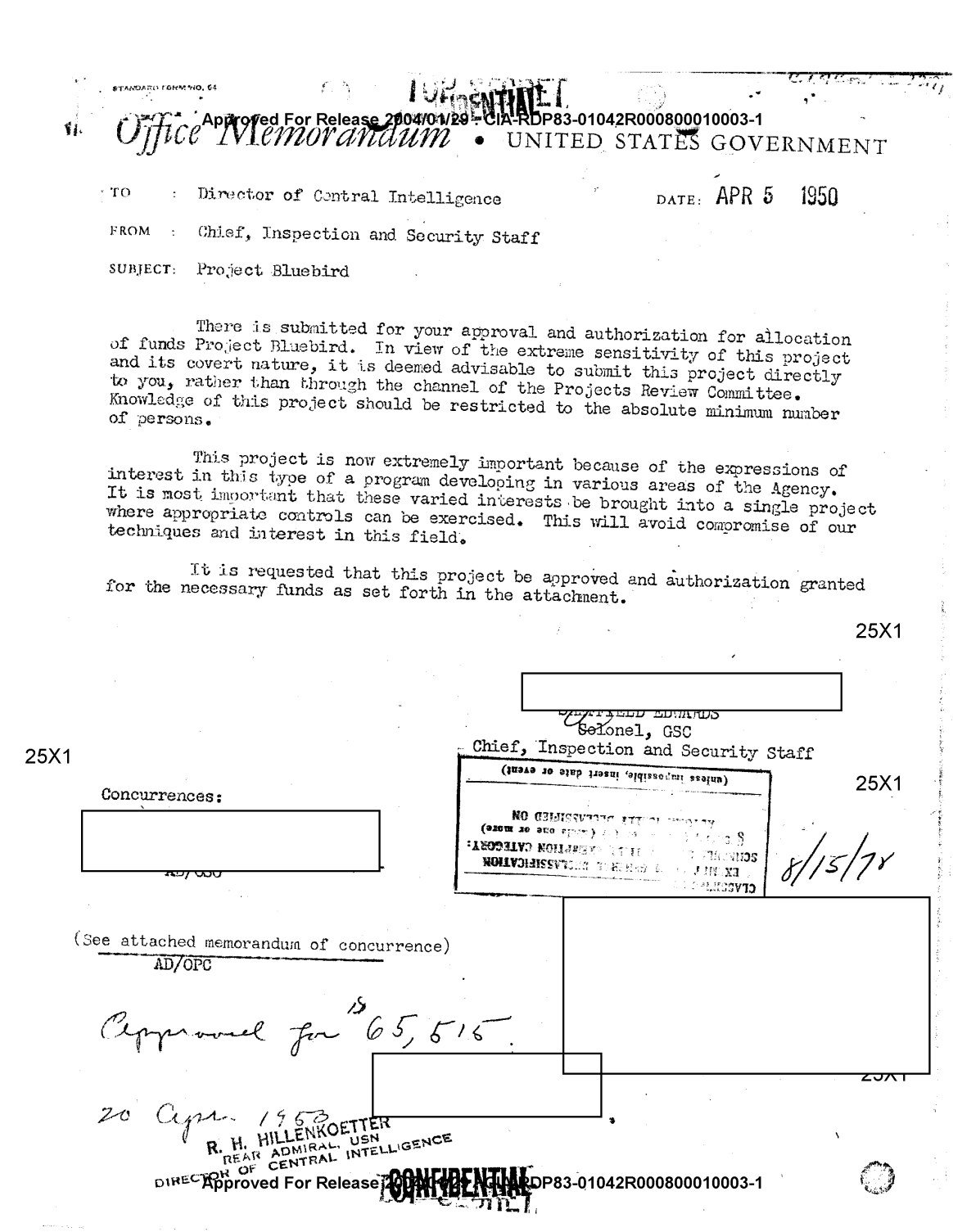
MKULTRA grew in a Cold War atmosphere in which officials feared that communist governments could extract confessions, reshape beliefs or disable captured Americans. The CIA’s 1950 BLUEBIRD proposal described a research and interrogation effort involving drugs and hypnotism. It included protecting agency personnel, but also developing means of obtaining information from others. Those aims should be read together rather than reducing the project to either defensive medicine or an entirely invented threat. [1]
A 1952 ARTICHOKE memorandum reported using chemical and hypnotic techniques on people suspected of being double agents. Its authors described the operations as successful. That is direct evidence that officials attempted and valued these methods. It is not an independently controlled demonstration that their conclusions about memory, truthfulness or lasting control were scientifically sound. An interrogator can obtain a response without knowing whether it is accurate or freely given. [2]
The Supreme Court later described MKULTRA’s rationale as countering perceived Soviet and Chinese advances. The word perceived matters: a government’s belief about an adversary can explain an institution’s decisions without validating all the underlying assumptions. The Cold War supplied urgency, money and secrecy. The central historical question is how those conditions helped officials treat people’s minds and bodies as intelligence resources without their informed permission. [3]