The AI Files · Michael Jackson · plain reading edition
The Man in the Mirror: every entry
All 56 entries of the guide, grouped by period and case, each with its bottom line and its sources. This page needs no JavaScript. The interactive guide adds the story in 20 chapters, the people, the timeline, the theories, the 99 checked claims and the media.
Gary to Motown 1958 – 1979
From Gary to the world
A child star, a hard father and a family business.
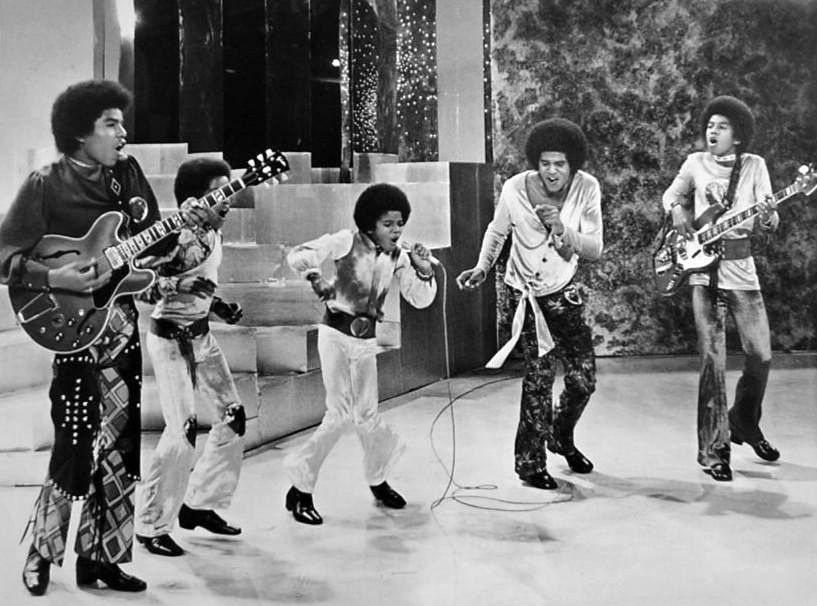
The Jackson 5 in their first television special, 1971. ABC Television · Public domain
He was a professional before he was a teenager.
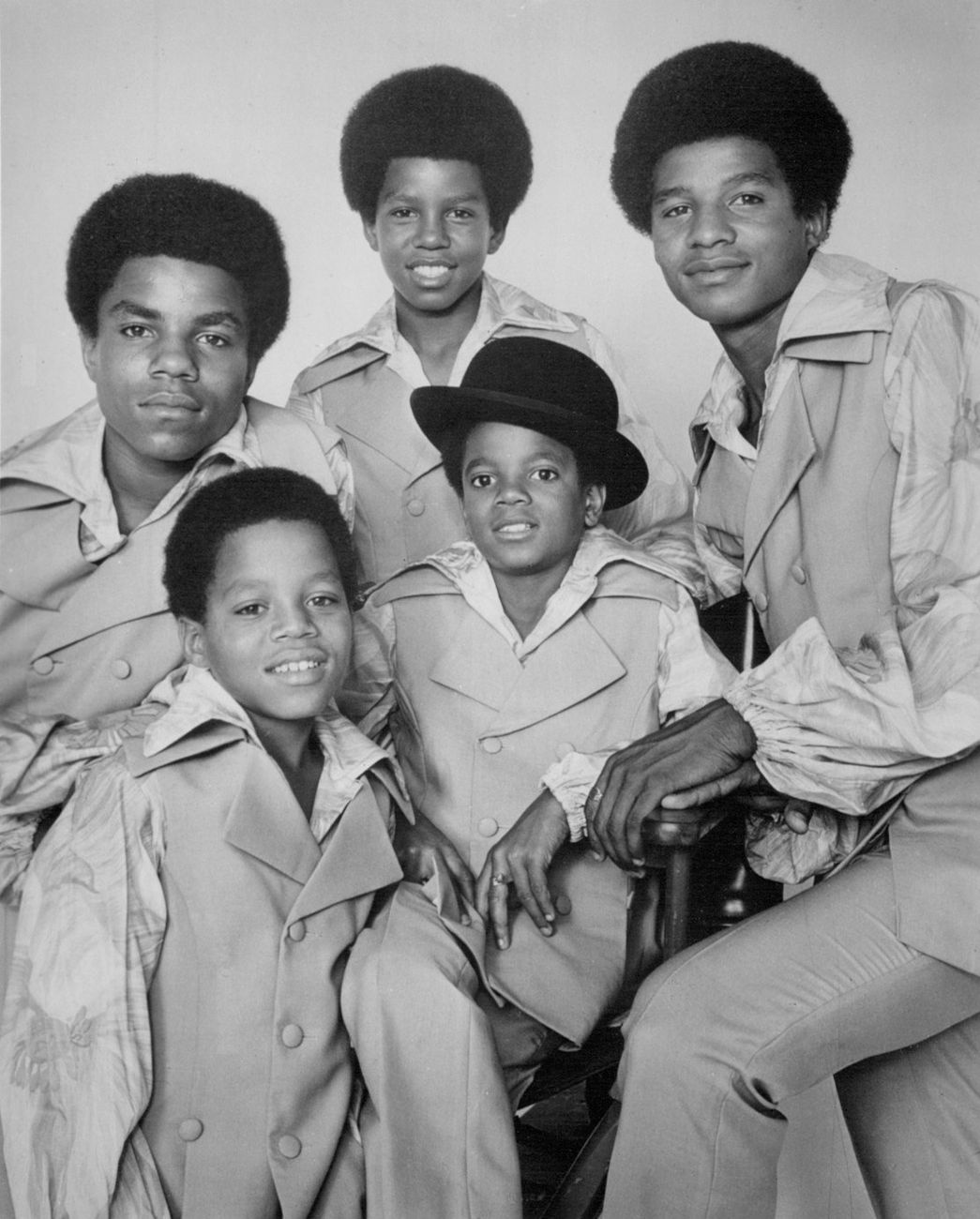
The Jackson 5 were a working act long before they were famous. Joe Jackson, a steelworker who had played guitar in a band of his own, drilled his sons into a group that played talent shows and clubs across the Midwest. Motown signed them in 1968, and their first four Motown singles, starting with “I Want You Back”, all reached number one. [1]
Michael was the lead singer at about ten. The GRAMMY Museum’s display traces how quickly he became the focus of the act and how early he was writing and shaping his own performances. [2]
Jackson later said the price was a lost childhood. In his 1993 interview with Oprah Winfrey he described rehearsals, clubs and loneliness, and said he envied the children he saw playing outside the studio. That is his own account. It is consistent with the schedule the group kept, and it is the explanation he gave for much of what came later, including Neverland. [3]
Bottom line Documented
documented. The career dates are on the record; the feelings are his own description of them.
What the record can’t settle
Motown chronologies and museum material record the career. Jackson’s statements about his inner life are testimony, not something an archive can confirm.
Sources
Classic Motown — Michael Jackson chronology Record-label retrospective, with a promotional perspective. It dates the first solo single to October 1971 and the first album to January 1972. Its robot-invention and worldwide-sales claims are not adopted here.
GRAMMY Museum — Michael Jackson display Museum overview; not an independent investigation. Its 1972 solo-career shorthand should not erase the 1971 solo single.
The Jackson 5 in a December 1969 publicity photograph. Bernie Ilson, Inc. publicity · Public domain in the United States
The father built the act. Several of his children say he also beat them.
Joe Jackson is the reason the Jackson 5 existed. He is also, in his children’s accounts, the reason several of them grew up afraid. Michael told Oprah Winfrey in 1993 that his father beat him and that he sometimes felt sick when his father came into the room. [2]
Other siblings gave similar accounts over the years. Joe Jackson defended his methods as discipline common in his generation and denied that it was abuse; he said the discipline kept his sons off the streets and made them stars. After his death in 2018, writers described a legacy that his family itself has never settled. [1]
The strongest version of the case against him is the children’s consistency over decades. The strongest version of his defense is that he was a hard father in a hard place, and that the family business he built gave them everything else. Both can be true. The record supports harsh physical discipline; how to judge it is a moral question rather than a factual one.
Bottom line Documented
documented that his children described beatings; his denial that it was abuse is also on the record.
What the record can’t settle
No court ever ruled on these accounts. They rest on family testimony, given in interviews and books.
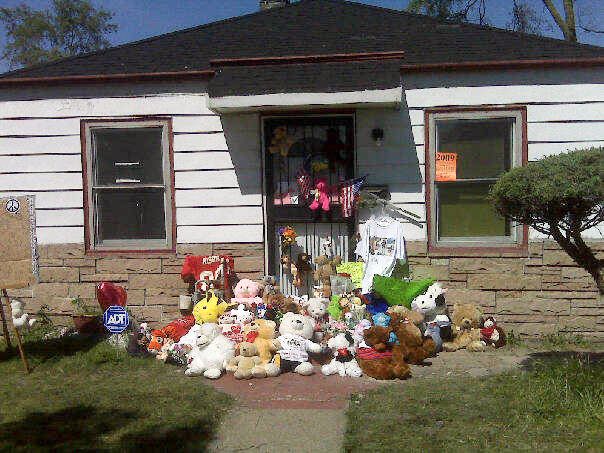
2300 Jackson Street, Gary, Indiana: the two-bedroom house where the Jackson children grew up. moniquewingard · CC BY 2.0
Lost childhood, Peter Pan and the stories built on them.
The strongest version of the popular theory is that a child worked too hard, too early, and spent his adult life trying to get his childhood back. Jackson said almost exactly that. He told Oprah Winfrey he had no childhood and that Neverland, with its rides and animals, was his way of having one. [1]
Critics say the same story became a shield: “I never had a childhood” was the explanation he offered for spending time with children, and it should not be accepted as the end of the question. That criticism is fair. A plausible reason for an adult’s behavior is not proof of what the behavior was.
What the record supports is narrower. His childhood was spent working, his father was severe, and he said both shaped him. [2][3] Whether those facts explain, excuse or have nothing to do with the allegations covered elsewhere in this collection is something readers will weigh differently. See the 1993 allegations and the 2005 trial.
Bottom line Documented
documented as his own account. It explains how he saw himself; it does not settle any allegation.
What the record can’t settle
Based on his own statements and biographical sources. Psychological explanations offered by commentators are opinion.
GRAMMY Museum — Michael Jackson display Museum overview; not an independent investigation. Its 1972 solo-career shorthand should not erase the 1971 solo single.
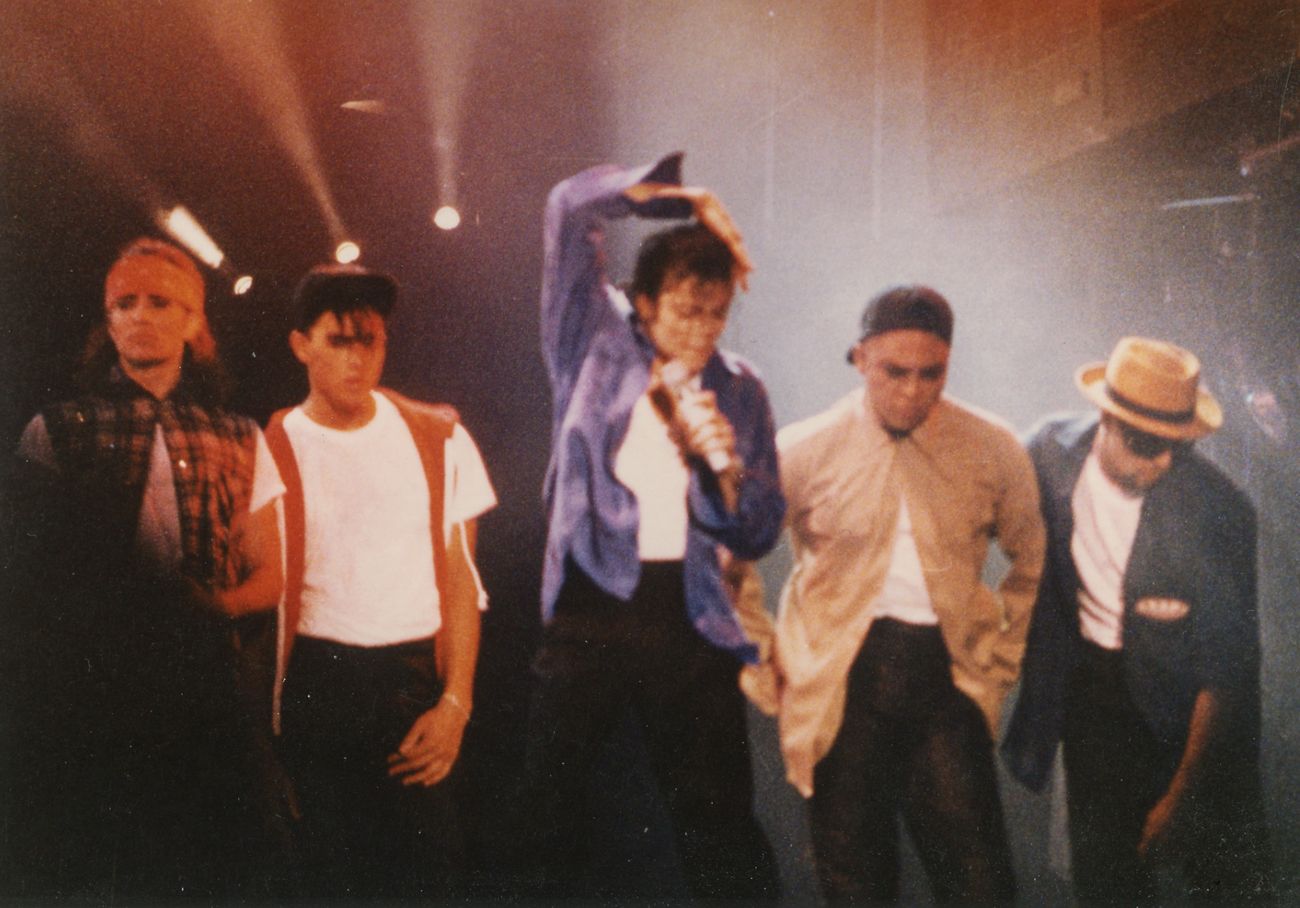
Jackson on the Dangerous tour in Monza, Italy, 6 July 1992. Daniele Dalledonne from Trento, Italy · CC BY-SA 2.0
The album, the videos and the color line on MTV.
Thriller was released on 30 November 1982 and is still the best-selling album in history. The Rock & Roll Hall of Fame, which inducted him twice, describes how Off the Wall and Thriller turned a former child star into the biggest entertainer in the world. [1]
The Library of Congress essay on the recording explains why it mattered beyond sales: Jackson and Quincy Jones made a pop record that drew from funk, rock, disco and ballads at once, and seven of its nine tracks became top-ten singles. [2]
The videos were as important as the songs. “Billie Jean” and “Beat It” were among the first videos by a Black artist to get heavy rotation on MTV, and the fourteen-minute “Thriller” film was added to the National Film Registry in 2009. [3]
None of this answers the allegations covered elsewhere, and none of those allegations changes the sales figures. Readers who come for one question often find the other unavoidable; this collection keeps them separate.
Bottom line Documented
documented. The sales, awards and influence are on the record.
What the record can’t settle
Sales figures differ between sources because of how albums are counted. The ranking at the top is not seriously disputed.
Michael Jackson performs in Vienna on June 2, 1988, during the Bad tour. Zoran Veselinovic · CC BY-SA 2.0
Michael (2026) is a film made with the estate.
Michael, directed by Antoine Fuqua and starring Jaafar Jackson, Michael’s nephew, opened in the United States on 24 April 2026. The Associated Press review noted what audiences would notice: the film celebrates the music and stops before the allegations become the story. [1]
That choice was not only artistic. Variety reported that the original third act dealt with the 1993 allegations and was cut after lawyers found that the 1994 settlement barred any depiction of Jordan Chandler. The estate, which has a stake in the film, paid for reshoots. [2][4]
The film was a large commercial success, passing $1 billion worldwide. [3] A biopic made with an estate’s participation can be accurate about what it shows and still be a selection. It is not a source for what happened in 1993 or 2005. See the biopic file.
Bottom line Documented
documented that the film exists and omits the allegations; it is not a historical record of them.
What the record can’t settle
Production details come from trade reporting with anonymous sources. The estate and the studio have not published the settlement clause.
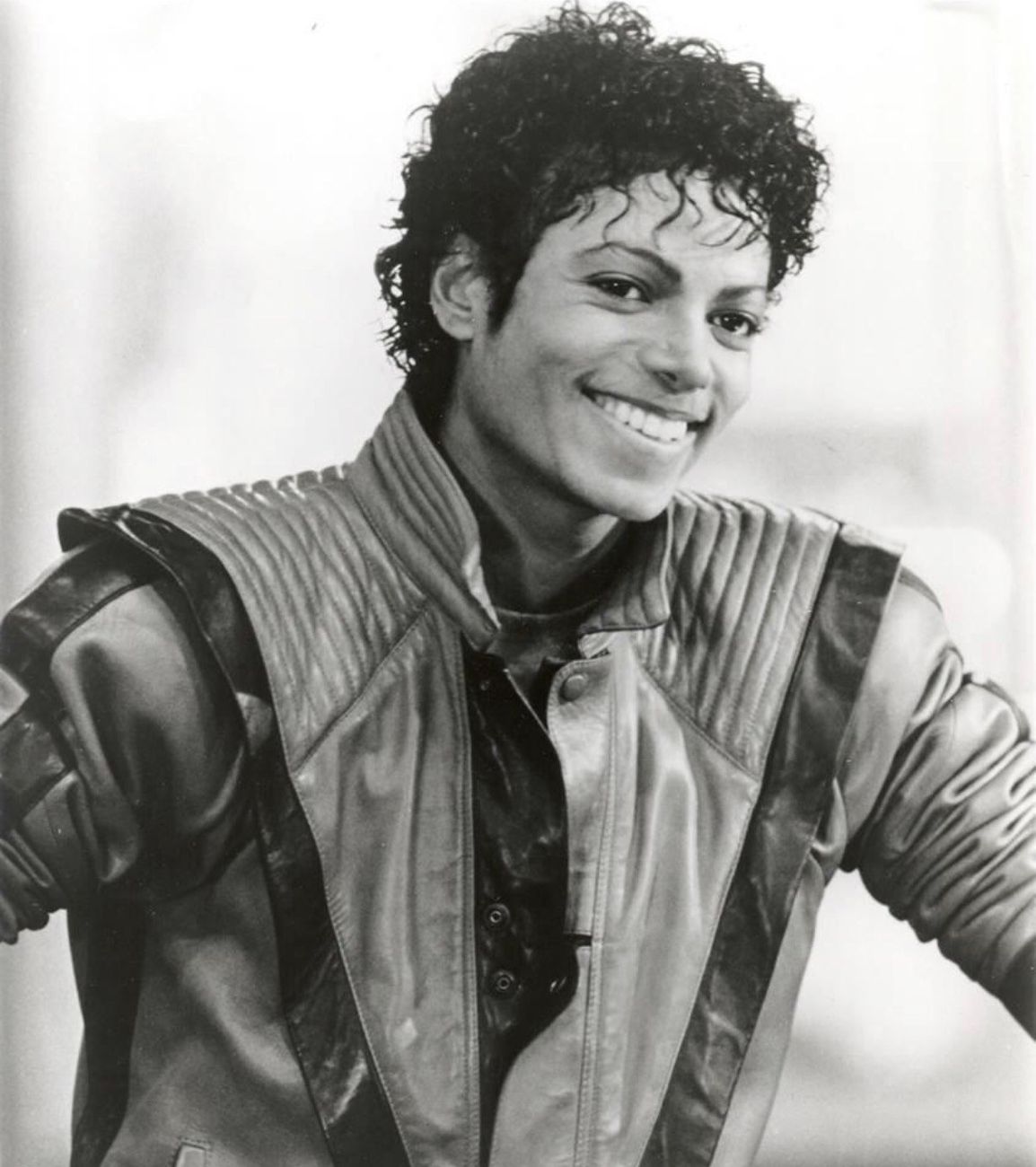
Michael Jackson in an Epic Records publicity photograph issued in 1984; photograph likely taken in 1983. Epic Records; photographer unidentified · Public domain in the United States
The deal Paul McCartney did not make.
The Tax Court’s 2021 opinion, written to value his estate, is the most careful public account of Jackson’s business life. It records that his lawyer John Branca told him the ATV Music catalog was for sale, that its prize was a large share of the Lennon–McCartney songs, and that Jackson bought it for $47.5 million. [1][2]
In November 1995 Jackson merged ATV with Sony’s music publishing business, forming Sony/ATV, owned half by each. Sony paid him $115 million to balance the deal and promised more over five years. By the end of 1998 his half was pledged against bank loans, and the debt kept growing. [1][2]
Sony/ATV bought EMI Music Publishing in 2011 and became the largest music publisher in the world. In 2016 the estate sold Jackson’s half to Sony for $750 million. [1] In 2024 the estate agreed to sell Sony half of Jackson’s own songs and recordings, a separate catalog, in a deal reported to value them at more than $1.2 billion; a California appeals court approved it over his mother’s objections. [3][4]
The Tax Court valued his Sony/ATV stake at zero on the day he died, because of the debt and restrictions attached to it. That fact matters for the theories in the Sony file: his share of the Beatles catalog was not a free asset that someone could take by killing him.
Bottom line Documented
documented. The purchase, the merger, the debts and the sales are set out in court records.
What the record can’t settle
The opinion values assets at the date of death; later deal values are reported by the press and approved in probate court.
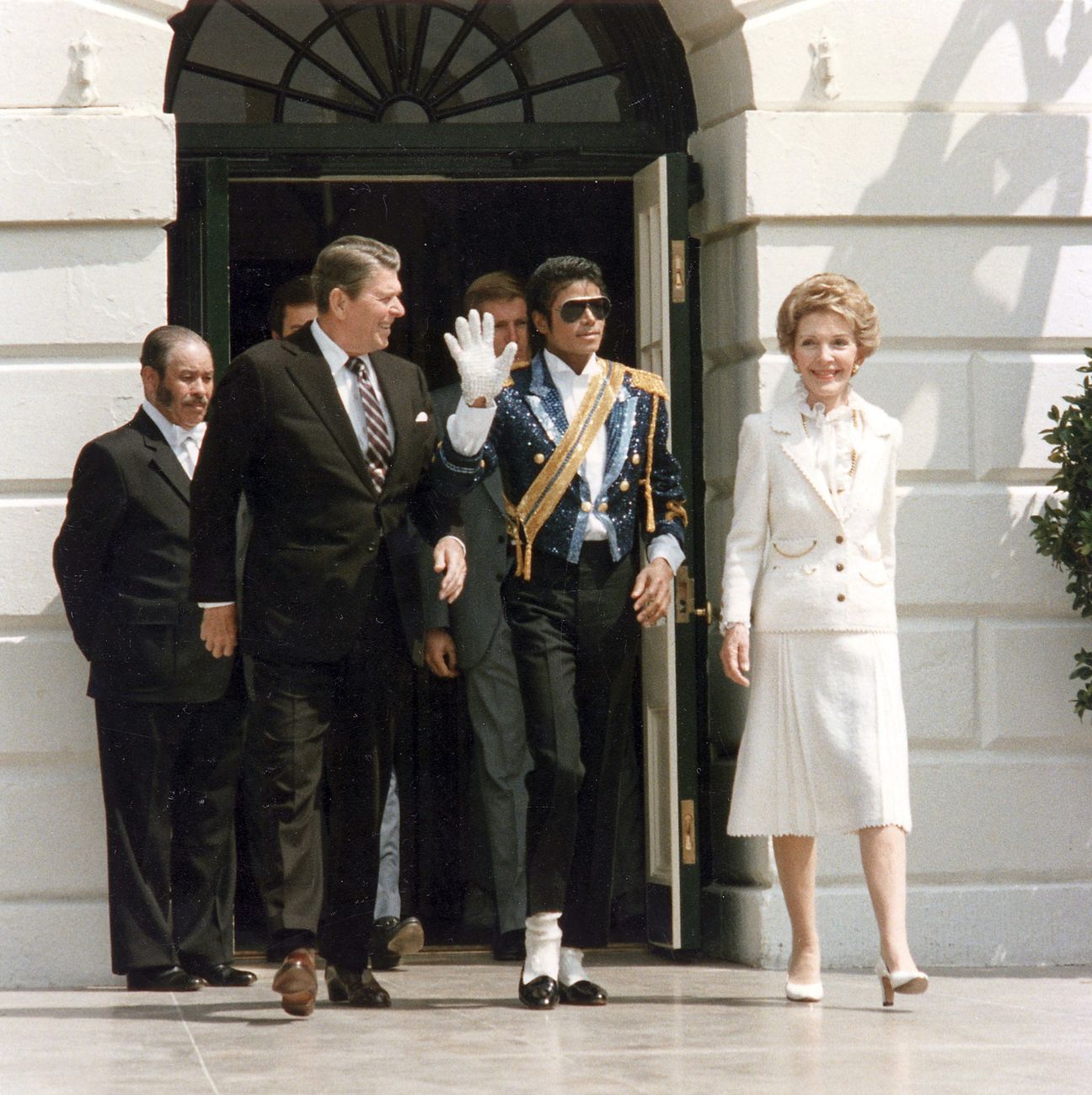
Michael Jackson with Ronald and Nancy Reagan at a May 14, 1984 White House ceremony. White House Photo Office / National Archives · Public domain — US federal work
Yes. The autopsy confirmed it.
The autopsy report released in February 2010 recorded vitiligo, a condition in which the immune system destroys the cells that give skin its color. It also recorded that he was nearly bald and wore a wig. [1][3]
Vitiligo is a real and fairly common disease. The National Institutes of Health describes patches of lost color that can spread over much of the body; there is no cure, and treatments aim to restore color or, in extensive cases, to even it out. [2]
Jackson first spoke about it publicly to Oprah Winfrey in 1993, saying he was not trying to be white and was not bleaching his skin. Dermatologists interviewed by CNN in 2009 said that a person with very widespread vitiligo can choose to remove the remaining pigment so the skin is even. [4] Whether Jackson did that is not established by any public medical record.
The strongest version of the skeptics’ case is that his features also changed, and he plainly chose those changes. That is true and is covered in the plastic surgery file. It does not make the skin disease imaginary.
Bottom line Documented
documented. He had vitiligo. The claim that he bleached healthy skin to become white is false as stated.
What the record can’t settle
The autopsy confirms the disease. It does not record every treatment he had, and his medical records are not public.
Michael Jackson in an Epic Records publicity photograph issued in 1984; photograph likely taken in 1983. Epic Records; photographer unidentified · Public domain in the United States
The motive claim, and why it does not hold up.
The strongest version of this theory is that Jackson’s lighter skin, narrower nose and straightened hair together look like a deliberate move away from his Black features, and that “vitiligo” was a convenient story. Many people believed it in the 1990s, and comedians made it a running joke.
The disease part of that theory is wrong: the autopsy confirmed vitiligo. [2] Jackson himself rejected the motive in 1993, saying he was proud to be a Black American. [1][3] His public statements, his 2002 attack on the record industry’s treatment of Black artists and his work with Black musicians all cut against the idea that he wanted to stop being Black.
The cosmetic changes to his face were real and were his choice. Whether they reflected self-image, the pressures of fame or something else is a question about his mind that the record cannot answer. The fair conclusion is that the skin change had a medical cause, while the facial surgery did not.
Bottom line Documented
false that the color change was a choice to become white; the surgery was a choice, and its motive is unknown.
What the record can’t settle
Motive cannot be documented. This file relies on the autopsy and his own statements.
Michael Jackson in an Epic Records publicity photograph issued in 1984; photograph likely taken in 1983. Epic Records; photographer unidentified · Public domain in the United States
Two nose jobs and a chin cleft, by his own account.
In his 1988 memoir Moonwalk, Jackson wrote that he had had his nose altered twice and a cleft put in his chin, and he denied other procedures such as cheek or eye work. [1] He told Oprah Winfrey in 1993 that he had had “very, very little”. [3]
The autopsy report, released in 2010, noted scars near the nostrils and behind the ears that are consistent with cosmetic surgery. [2] It did not catalogue a history of operations, and it is not a surgical record.
The strongest version of the skeptics’ case is simple: his face changed far more than two nose jobs would explain. That is a fair observation, and the scars behind the ears suggest more than he described. But the tabloid counts of 30, 50 or more operations come from anonymous sources and have never been backed by medical records. The honest answer is “more than he admitted, but no one has shown how many”.
Bottom line Partly true
partly true. He had cosmetic surgery, probably more than he admitted; the large numbers are not documented.
What the record can’t settle
Jackson’s surgical records are not public. The autopsy describes scars, not procedures.
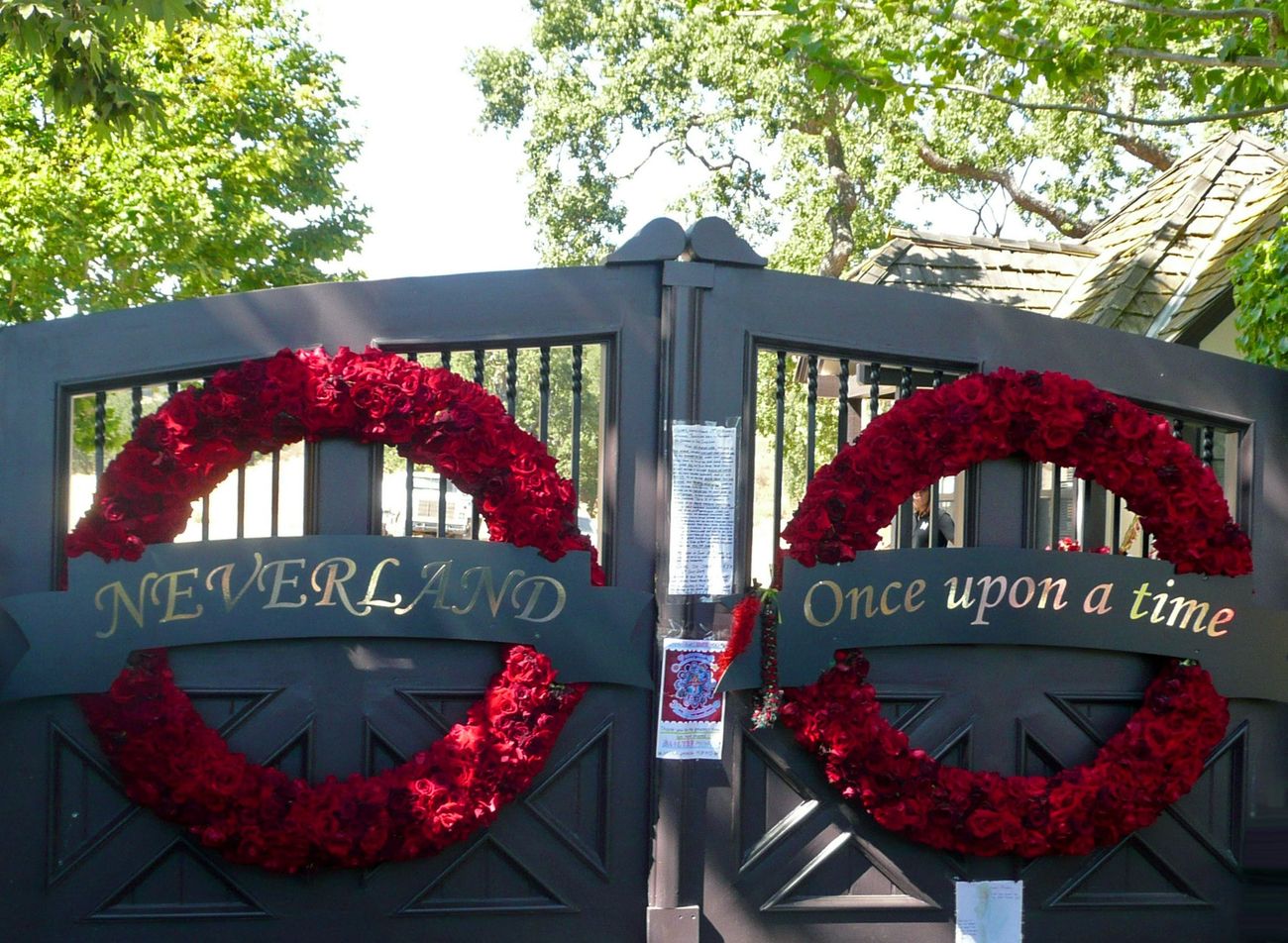
Neverland Ranch gates on July 9, 2009. Shazari · CC BY 2.0
An allegation, a lawsuit and a criminal inquiry, running side by side.
In the summer of 1993 the family of Jordan Chandler, then thirteen, accused Jackson of sexually abusing him. A criminal investigation opened in Los Angeles and Santa Barbara, and in September the family sued. The Tax Court opinion, which recounts this history for its own purposes, records the lawsuit, Jackson’s denial and that he was never charged. [1][4]
Jackson denied it from the start. His camp said the boy’s father, Evan Chandler, was trying to extort money, and pointed to a taped phone call in which the father talked about what would happen to Jackson. The family said the money demand came only after the abuse was disclosed. Both accounts were made under pressure and both were partly about money.
On 21 September 1994 the district attorneys of Los Angeles and Santa Barbara said they would not file charges because the boy would not testify. They did not say the allegation was false. The Los Angeles prosecutor said she found him credible, and the prosecutors said the case could reopen. [2] Jackson’s side treated the decision as vindication. [3]
The precise record is an allegation, a civil suit, a settlement and an investigation that ended without charges. It is wrong to call that a conviction. It is also wrong to say a court found the boy was lying. No criminal court ever heard the case.
Bottom line Disputed
documented sequence; the allegation itself is unproven in court and disputed.
What the record can’t settle
The prosecutors’ belief in the boy’s credibility is their assessment, not a finding. The defense’s extortion theory is also an argument, not a finding.
UPI: prosecutors explain why no charges were filed, September 21, 1994 Contemporary wire report quoting prosecutors Gil Garcetti, Tom Sneddon and Lauren Weis. Their credibility assessments are attributed positions, not verdicts. The original UPI page can restrict automated access.
Neverland’s train station, photographed from the air in August 2008. John Wiley (Jw4nvc) · CC BY 3.0
Neither. It ended a lawsuit.
Jackson settled the Chandler lawsuit in January 1994 without admitting wrongdoing. The terms were confidential and early reports guessed at the amount. [1] Documents reported by the Los Angeles Times in 2004 showed $15.3 million set aside for the boy, which was not the whole package; The New Yorker later reported a total of about $23 million. [2][5]
The settlement did not stop the criminal case. Prosecutors kept working for months afterwards [3], and at the end they said an agreement could not lawfully bar a witness from cooperating with them. [4] The boy chose not to testify. That is what ended the criminal case.
The strongest version of the “guilty” reading is that innocent people do not pay that much. The strongest version of the “innocent” reading is that Jackson’s insurers and advisers wanted to end a ruinous public trial, and that the family preferred money to a criminal case. Both have been argued for thirty years. The payment is evidence of how the dispute ended, not of what happened.
The settlement still matters today. Variety reported that the 2026 biopic had to cut its original third act because the settlement bars any portrayal of Jordan Chandler. [6][7]
Bottom line Disputed
documented that he paid; false that the payment legally bought off the criminal case; false that it proves guilt.
What the record can’t settle
The full settlement agreement is not public. Figures come from documents reported in 2004 and later press accounts.
UPI: prosecutors explain why no charges were filed, September 21, 1994 Contemporary wire report quoting prosecutors Gil Garcetti, Tom Sneddon and Lauren Weis. Their credibility assessments are attributed positions, not verdicts. The original UPI page can restrict automated access.
Neverland Ranch gates on July 9, 2009. Shazari · CC BY 2.0
The FBI helped local police. It did not clear him or charge him.
The FBI released 333 pages on Jackson in December 2009, six months after his death. The Bureau’s own summary says the files cover threats against him and the help it gave California investigators in 1993 and 2003–2005, including leads, computer forensics and behavioral analysis. [1]
In 1993–1994 the U.S. Attorney declined a federal case, including a possible charge for taking a child across state lines. In 2005 the files record the state trial and the acquittal. [1] The redacted pages are online in the FBI Vault. [2]
Two opposite claims circulate. One says the FBI “investigated for ten years and found nothing”. The files do not show a ten-year federal investigation, and declining a federal case is not the same as clearing someone. The other says the files prove guilt. They do not: they contain leads and assistance, not findings. The Bureau notes that nothing in them was proved in court.
Bottom line Disputed
false that the FBI cleared him; false that the files prove guilt. They show assistance to local police.
What the record can’t settle
Some pages are redacted or withheld. The released files are what the FBI chose to release in 2009.
FBI Vault: Michael Jackson records Original federal FOIA release with redactions. Files record leads, referrals and investigative activity, which must not all be treated as established facts.
Neverland’s train station, photographed from the air in August 2008. John Wiley (Jw4nvc) · CC BY 3.0
The most specific evidence from 1993, and why it was never tested.
In December 1993 investigators photographed Jackson’s body under a warrant, to compare it with a description the boy had given of distinctive markings. Jackson called the search “horrifying” in a statement broadcast on 22 December. [1]
The strongest version of the prosecution case is that the boy described a mark that the photographs showed, which a child could not have known without seeing him undressed. Prosecutors later said in a 2005 court filing that the photographs corroborated his description. The strongest version of the defense is that parts of the description did not match, and that the vitiligo patches, which Jackson had discussed publicly, could have been learned in other ways.
Neither claim was tested. No charges were filed in 1994 [2], and in 2005 the photographs were not shown to the jury. The pictures remain sealed. This is the single piece of evidence that partisans on both sides most often describe with confidence, and the one the public record least allows anyone to judge. [3]
Bottom line Disputed
disputed. Both sides’ descriptions of the match circulate; no court ever ruled on it.
What the record can’t settle
This edition did not find a court-hosted copy of the 2005 filing; it is known mainly through partisan websites on both sides, so its wording is not quoted here.
UPI: prosecutors explain why no charges were filed, September 21, 1994 Contemporary wire report quoting prosecutors Gil Garcetti, Tom Sneddon and Lauren Weis. Their credibility assessments are attributed positions, not verdicts. The original UPI page can restrict automated access.
Neverland’s train station, photographed from the air in August 2008. John Wiley (Jw4nvc) · CC BY 3.0
What he said on camera, and what he did not say.
In Living with Michael Jackson, broadcast in February 2003, Jackson defended letting children stay in his bedroom and said there was nothing sexual about it. The footage that drew most attention showed him holding hands with Gavin Arvizo, then thirteen, who later became the accuser in the 2005 case. Jackson’s lawyer said that on that occasion the children used the bed and Jackson slept on the floor. [1][5]
Jackson said the program was unfair. His camp released footage it had filmed during the interviews and brought a complaint against Granada Television. [2][3] Bashir denied distorting anything. [4]
Two common summaries are both wrong. “He never admitted bed-sharing” ignores what he said on camera. “He confessed on television” invents a confession he did not make. What he admitted was a practice he insisted was innocent. Many viewers found it alarming, and the documentary led directly to the 2003 investigation. A troubling statement about boundaries is still not proof of a specific crime.
Bottom line Documented
documented that he defended sharing his bedroom with children; false that he confessed to abuse.
What the record can’t settle
The full raw footage is not public. Editing disputes cannot be resolved from the broadcast alone.
BBC News: Jackson trial: Week two (12 March 2005) Day-by-day account. Gavin Arvizo, 15, the boy accusing Jackson, testified on 9 and 10 March 2005; he said Jackson told him what to say in Martin Bashir’s documentary (“Tell them you call me Daddy”), and described the alleged molestation and the “Jesus Juice”. His brother Star testified on 7–9 March and was cross-examined by Thomas Mesereau.
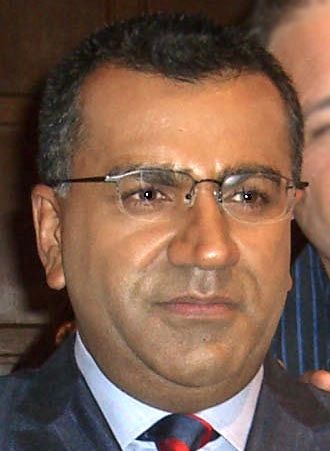
The journalist Martin Bashir in New York, May 2007. Nightscream · CC BY 3.0
A dangerous moment, and an apology.
On 19 November 2002, in Berlin, Jackson held his infant son over the railing of a fourth-floor hotel balcony while fans watched below. He later called it a “terrible mistake” and said he got caught up in the excitement. [1]
It was dangerous and he admitted it. It has nothing to do with the abuse allegations, though montages often run the two together. A 2005 New Zealand broadcasting decision about a different documentary that reused this footage is a useful reminder that context can be lost in reuse. [2]
Bottom line Documented
documented. A serious lapse; not evidence on the abuse allegations.
What the record can’t settle
The footage and apology are public. No inquiry followed.
Fans outside the Santa Maria courthouse on May 2, 2005, during Jackson’s trial. MartinJackson · CC BY-SA 4.0
Ten counts, two stories and a family’s credibility.
The final indictment had ten counts: four of lewd acts on a child under 14, one of attempting it, four of giving him alcohol to help commit a felony, and one of conspiracy to commit child abduction, false imprisonment and extortion. [1]
The prosecution said Jackson groomed Gavin Arvizo, a cancer survivor he had befriended, and abused him after the Bashir documentary aired. The defense said the family had a history of seeking money from celebrities and had invented the story. [2][6]
The judge allowed testimony about earlier allegations involving other boys, to show a pattern. That evidence was heard; it was not proved by being heard. [3] The jury also saw a video in which the family praised Jackson. The prosecution said it was scripted under pressure; the defense said it showed the family had nothing to complain about. [4]
The question for the jury was whether each charge was proved beyond a reasonable doubt. [5] Its answer was no on all ten.
Bottom line Documented
documented. The charges, the competing theories and the verdict are on the record.
What the record can’t settle
This edition relies on contemporary trial coverage rather than full transcripts, which are not freely online in complete form.
BBC News: Jackson trial: Week two (12 March 2005) Day-by-day account. Gavin Arvizo, 15, the boy accusing Jackson, testified on 9 and 10 March 2005; he said Jackson told him what to say in Martin Bashir’s documentary (“Tell them you call me Daddy”), and described the alleged molestation and the “Jesus Juice”. His brother Star testified on 7–9 March and was cross-examined by Thomas Mesereau.
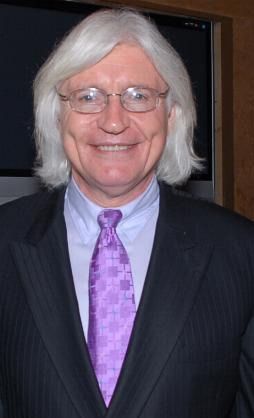
Thomas Mesereau, Jackson’s lead defence lawyer at the 2005 trial. Credit to lukeford.net (permission statement at en:User:Tabercil/Luke Ford permission) · CC BY-SA 2.5
Culkin’s denial, the family’s credibility and a defendant who never testified.
Macaulay Culkin testified that Jackson never touched him inappropriately and that he never saw Jackson behave improperly with anyone. [1] His testimony counted because the prosecution had suggested he was one of the earlier boys. A witness’s account of his own experience is strong evidence about himself; it cannot settle what happened to anyone else.
The defense spent much of its case on the accuser’s mother, Janet Arvizo, and jurors later said her testimony hurt the prosecution. The defense rested without calling Jackson. [2][4]
A defendant does not have to prove anything. The burden was on the state, and a single serious doubt about the main witness can be enough. [3]
Bottom line Documented
documented. The defense’s witnesses and strategy are on the record.
What the record can’t settle
Witness credibility is the jury’s judgment. This summary relies on contemporary reports.
BBC News: Jackson’s jury explains decision (14 June 2005) Jurors said the evidence was “not enough”; they found Janet Arvizo, the mother of the accuser Gavin Arvizo, “intimidating” on the stand and were troubled by her testimony that she let her son share Jackson’s bed.
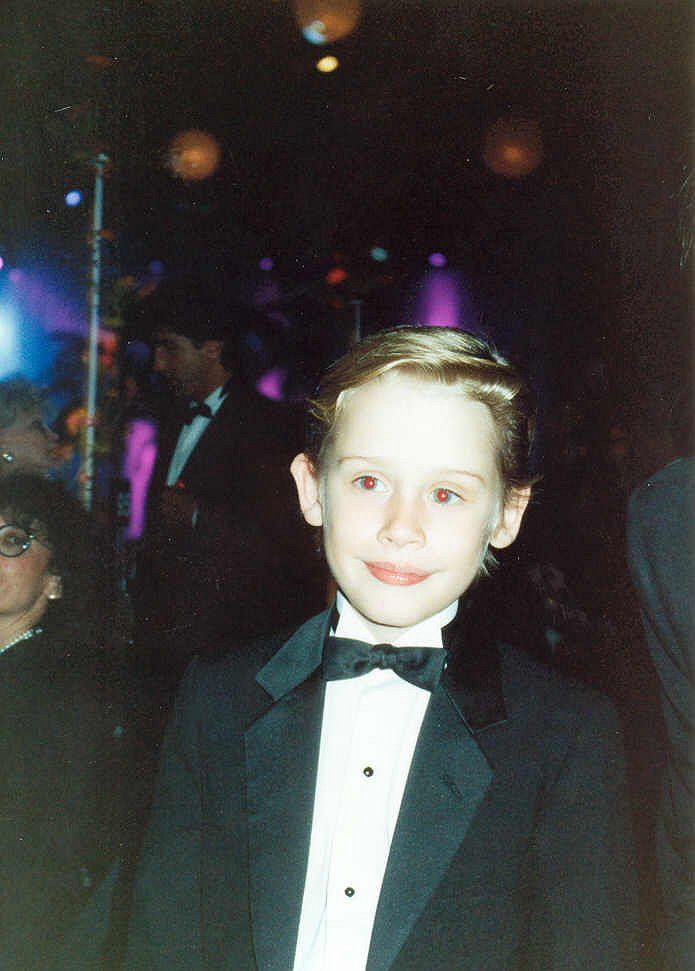
Macaulay Culkin in August 1991. In 2005 he testified for the defence that Jackson never touched him inappropriately. Alan Light · CC BY 2.0
It settled the case. It did not settle every question.
On 13 June 2005 the jury found Jackson not guilty on all ten counts. [1] He was never retried and never charged again. That is the final legal answer: he was not legally guilty of any of those crimes, and he died legally innocent of all of them.
Jurors explained their verdict in interviews afterward, and several said they did not believe Janet Arvizo, the accuser’s mother. [2][4]
An acquittal means the prosecution failed to prove guilt beyond a reasonable doubt. [3] It does not mean a court found that nothing happened, and it does not decide the separate allegations by other men, which are covered in Leaving Neverland and the civil cases. People who say “he was found guilty” are wrong. People who say “the trial proved every accuser was lying” are also claiming more than a verdict can say.
Bottom line Documented
documented. Legally, he was acquitted of every charge he ever faced.
What the record can’t settle
An acquittal is a legal result, not a factual finding. Jurors’ later comments are their own.
BBC News: Jackson’s jury explains decision (14 June 2005) Jurors said the evidence was “not enough”; they found Janet Arvizo, the mother of the accuser Gavin Arvizo, “intimidating” on the stand and were troubled by her testimony that she let her son share Jackson’s bed.
Neverland Ranch gates on July 9, 2009. Shazari · CC BY 2.0
How the case began in November 2003.
The Bashir documentary aired in February 2003. Social workers and police looked at the family that year, and by the autumn Gavin Arvizo had made an allegation. On 18 November 2003 about seventy officers searched Neverland. [1][4][5]
The next day Santa Barbara district attorney Tom Sneddon and Sheriff Jim Anderson held a press conference announcing a warrant for Jackson’s arrest and urging him to surrender. [2] Sneddon’s light-hearted remarks at that press conference were later cited by the defense as a sign of a personal vendetta, since he had also led the 1993 investigation.
Jackson surrendered, was released on bail and was formally charged on 18 December 2003 with seven counts of lewd acts with a child and two of administering an intoxicant. [3] The charges were later rewritten in a grand jury indictment that added the conspiracy count.
Bottom line Documented
documented.
What the record can’t settle
The press-conference transcript and contemporary reports are the sources. Investigators’ files are not public.
BBC News: Jackson trial: Week two (12 March 2005) Day-by-day account. Gavin Arvizo, 15, the boy accusing Jackson, testified on 9 and 10 March 2005; he said Jackson told him what to say in Martin Bashir’s documentary (“Tell them you call me Daddy”), and described the alleged molestation and the “Jesus Juice”. His brother Star testified on 7–9 March and was cross-examined by Thomas Mesereau.
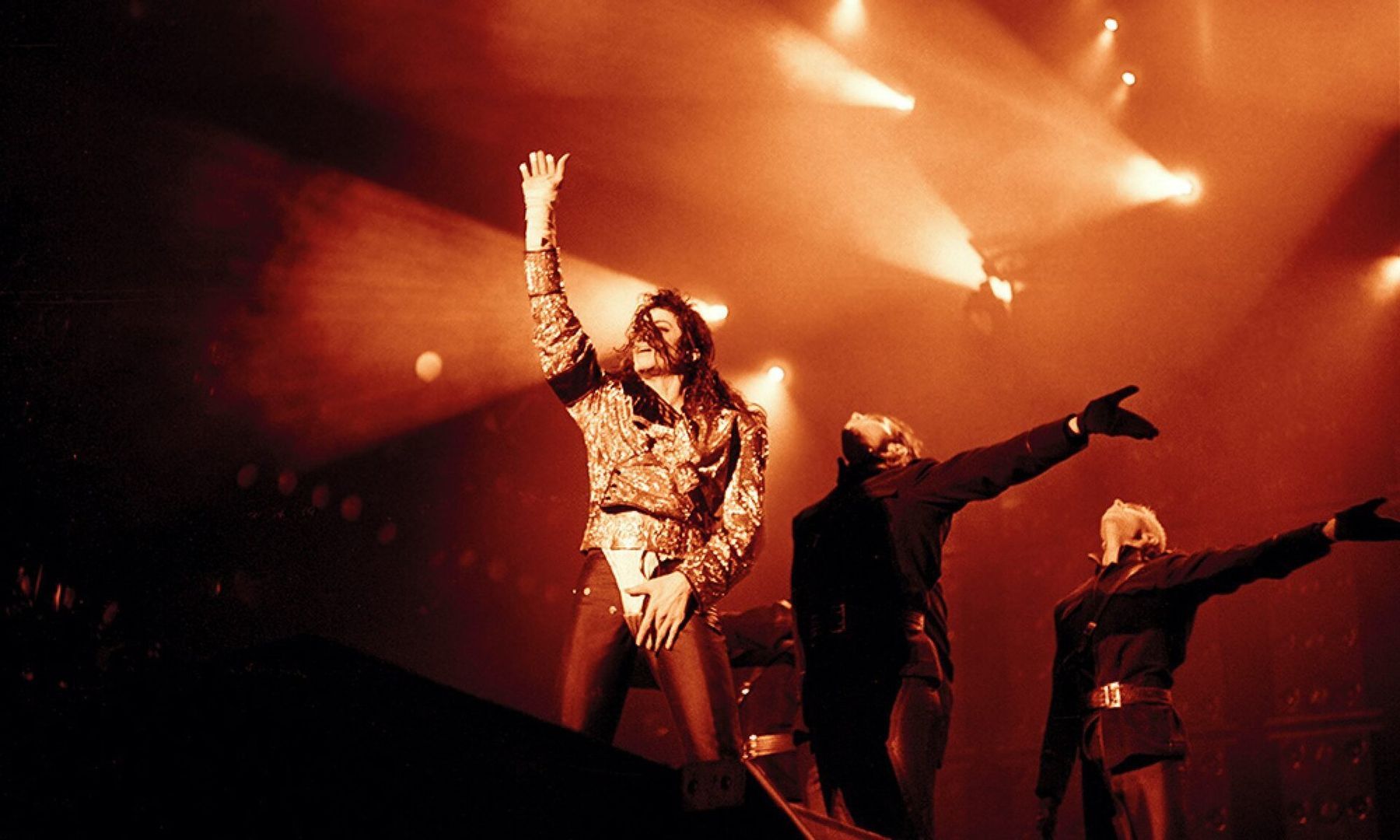
Jackson on stage in Bucharest on 1 October 1992, during the Dangerous tour. The concert was filmed for HBO. Salabasev · CC BY-SA 4.0
What Jackson said about Tommy Mottola, and why.
In July 2002 Jackson stood with Al Sharpton in Harlem and accused the record industry of exploiting Black artists. He named Tommy Mottola, the chairman of Sony Music, calling him “racist” and “very, very, very devilish”. [1]
The dispute had a business core. Jackson believed Sony had failed to promote Invincible, his 2001 album, and the contract that would return his master recordings to him was coming due. Sony said it had spent heavily on the album and rejected the accusations. [1]
Sharpton, who hosted the event, said within days that he did not share the charge of racism against Mottola. [2] No court or inquiry ever examined Jackson’s accusation. It is a documented accusation, not a documented fact.
The strongest version of Jackson’s side is that a major label lost interest in an aging star with a costly record and wanted his share of Sony/ATV, in which Sony held an option. [3] The strongest version of Sony’s side is that Invincible sold millions and that a business dispute became a public attack. Both can be true without either party being racist or criminal.
Bottom line Disputed
documented that he said it; the racism charge is his accusation and was never tested.
What the record can’t settle
Contemporary reporting records both sides. No document settles what Sony’s executives intended.
Michael Jackson in an Epic Records publicity photograph issued in 1984; photograph likely taken in 1983. Epic Records; photographer unidentified · Public domain in the United States
The theory, the motive and the missing link.
The strongest version of this theory goes like this: Jackson was deep in debt, his half of Sony/ATV was pledged, Sony wanted all of it, and within seven years of his death Sony owned it. His sister La Toya said in 2009 that he was murdered for his music publishing, and that he had told her people wanted to kill him for it. [1][2]
The motive part has a basis. Sony did end up owning the whole of Sony/ATV, paying the estate $750 million in 2016. [3] But the deal was a negotiated purchase from his estate, seven years later. Sony did not acquire the stake through his death; it paid for it.
The theory also needs a link between Sony and the man who gave him the propofol. Conrad Murray was hired for the This Is It tour, was convicted of involuntary manslaughter, and lost his appeal. [4][5] No investigation, trial or lawsuit produced evidence that Sony directed him. In the AEG wrongful-death trial, which went through the tour’s finances in detail, Sony was not a defendant and no such evidence emerged.
Jackson’s fears were real to him and La Toya’s claim is sincerely made. A motive without any evidence of an act does not make a murder case.
Bottom line Disputed
unproven. Sony had a business interest in the stake, but no evidence links it to his death.
What the record can’t settle
Proving a negative is impossible. This rating reflects the absence of evidence in the criminal and civil records, not a finding that no one at Sony ever wished him ill.
Fans outside the Santa Maria courthouse on May 2, 2005, during Jackson’s trial. MartinJackson · CC BY-SA 4.0
Real influence for a time; how much is disputed.
In December 2003, weeks after the charges, CNN and others reported that members of the Nation of Islam were providing security for Jackson and that Leonard Muhammad, the Nation’s chief of staff and Louis Farrakhan’s son-in-law, was helping run his affairs. [1]
The reporting relied on unnamed sources, and Jackson’s representatives gave different accounts of Muhammad’s role. The New York Times described an internal fight over his influence and questions about his background. [2]
The strongest version of the claim is that a religious organization took control of a vulnerable, indicted man. The strongest version of the defense is that Jackson, distrustful of his old advisers, chose people who offered loyalty and protection. The record shows that the Nation was close to him in late 2003 and early 2004, and that its role diminished before the trial. It does not show that he joined it.
Bottom line Partly true
partly true. The Nation was close to him for a period; claims of total control are not established.
What the record can’t settle
Contemporary reporting with anonymous sources. No internal documents are public.
Jackson was the legal father of all three children, and his will named them as his heirs. After his death Katherine Jackson became their guardian under an agreement with Debbie Rowe, the mother of the older two. [1]
The strongest version of the paternity claim is that the children look nothing like him and that he had reasons to use a donor. The actor Mark Lester, an old friend, said he believed he was Paris’s biological father and offered a test. [2] People reported denials from people around the family. [3] The dermatologist Arnold Klein, whom some rumors named, said he was not the father “to the best of my knowledge”. [4]
No DNA result has been published. The children, who are adults now, have said publicly that they consider him their father. The fair answer is that the biological question is unproven either way and is the children’s own business; the legal one was never in doubt.
Bottom line Unproven
unproven. The claims are rumor and one man’s belief; no test has been published.
What the record can’t settle
Medical and fertility records are private. This file does not speculate beyond what named people have said publicly.
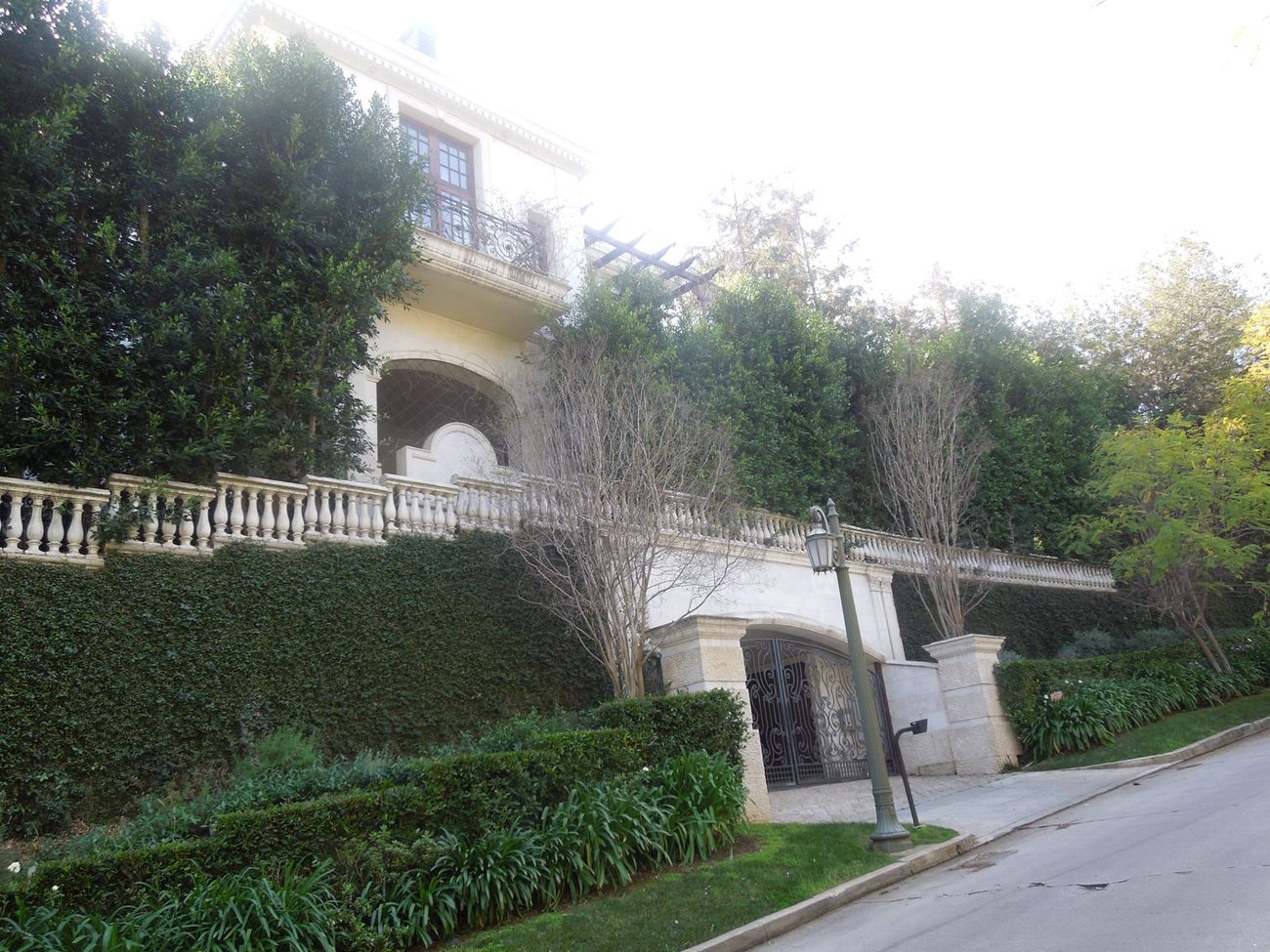
Jackson’s former Los Angeles residence, photographed in February 2012; a later view. Simeon87 · CC BY-SA 3.0
Fifty shows, and a schedule that worried even its makers.
At the O2 arena on 5 March 2009 Jackson announced a residency of concerts, saying “this is it”. Demand was so high that the run was expanded to fifty shows, starting in July. [1] Sony later made the rehearsals into a film, released in October 2009. [2][4]
The promoter was AEG Live. Katherine Jackson’s later lawsuit said AEG pushed an exhausted man into a schedule he could not keep and hired the doctor who killed him; AEG said Jackson chose and controlled his own doctor. [3] See the AEG trial.
Bottom line Documented
documented.
What the record can’t settle
Ticket and schedule figures come from contemporary reporting and court filings.
The O2 Arena in London, where the fifty This Is It concerts were to be held. Christine Matthews · CC BY-SA 2.0
Yes. Both are on the record.
The rehearsal footage in This Is It shows Jackson singing and dancing well in the last days. [1] It was edited from many hours and shows his best moments.
On 20 June 2009, five days before he died, the show’s director Kenny Ortega emailed AEG that Jackson was cold, trembling and showing signs of paranoia and anxiety, and said he needed help. Ortega testified about the email at the AEG trial. [2] The lawsuit relied on such warnings. [3]
The autopsy found that he was thin but that his heart and other organs were in reasonable condition for a man of fifty, which is one reason the death was so shocking. [4] Both pictures are true: he could perform, and he was not well.
Bottom line Documented
documented.
What the record can’t settle
The film is edited footage. Ortega’s email is his contemporary assessment.
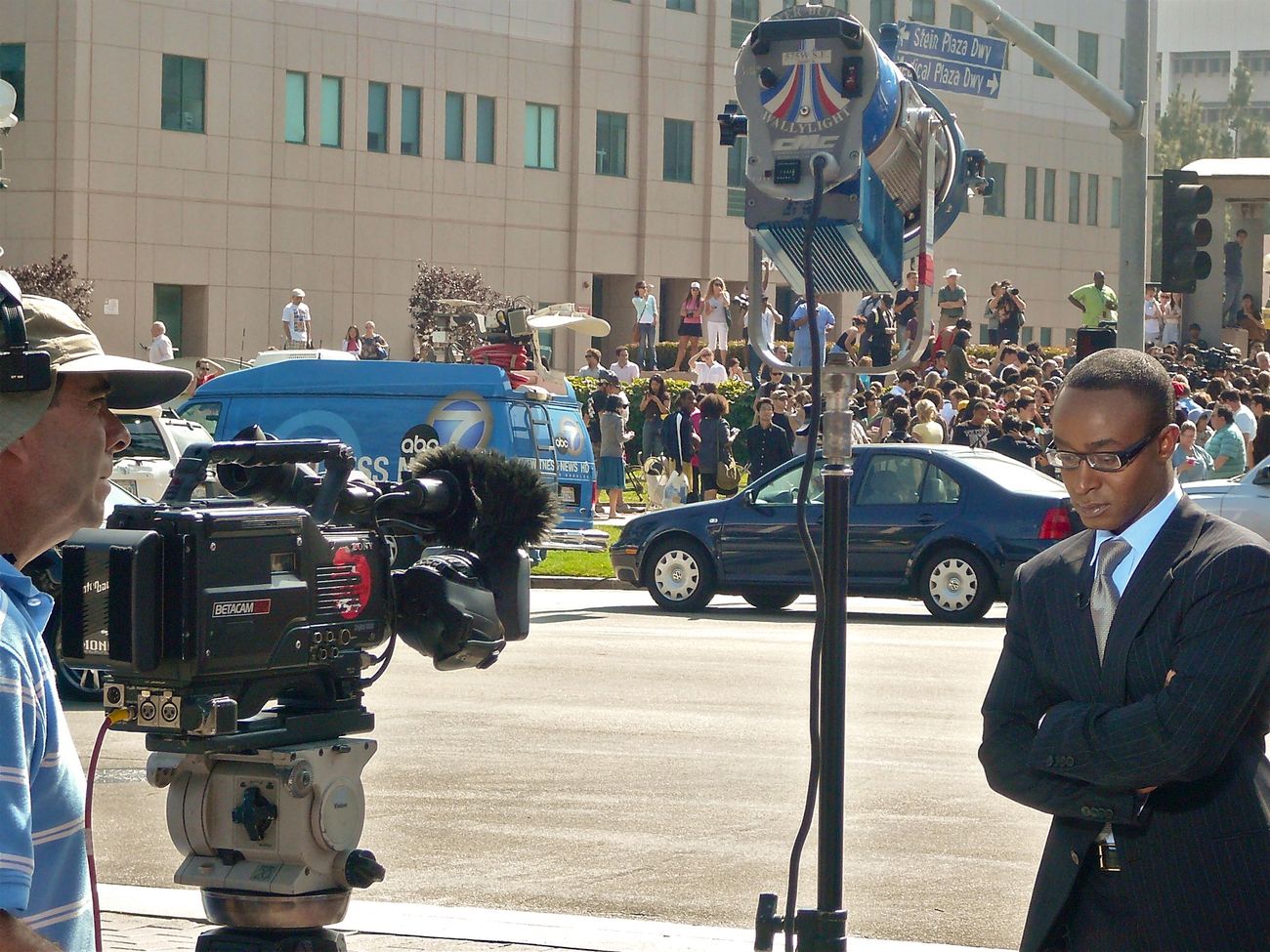
A reporter and crowd outside UCLA on June 25, 2009. a j, Los Angeles · CC BY 2.0
Propofol, given at home, with no proper monitoring.
The Los Angeles County coroner found that Jackson died of acute propofol intoxication, with the sedatives lorazepam and midazolam contributing. [1]
Propofol is an anesthetic meant for hospitals and surgery centers. Its label requires continuous monitoring by trained staff and resuscitation equipment at hand, because it can stop breathing. [2] Jackson had been getting it at night as a sleep aid.
The full report describes the drugs found, his medical conditions and the scene. [3] It is the foundation for every other question in this part of the collection.
Bottom line Documented
documented.
What the record can’t settle
The report is the coroner’s finding. The defense at Murray’s trial disputed how the last dose got into him, not what it was.
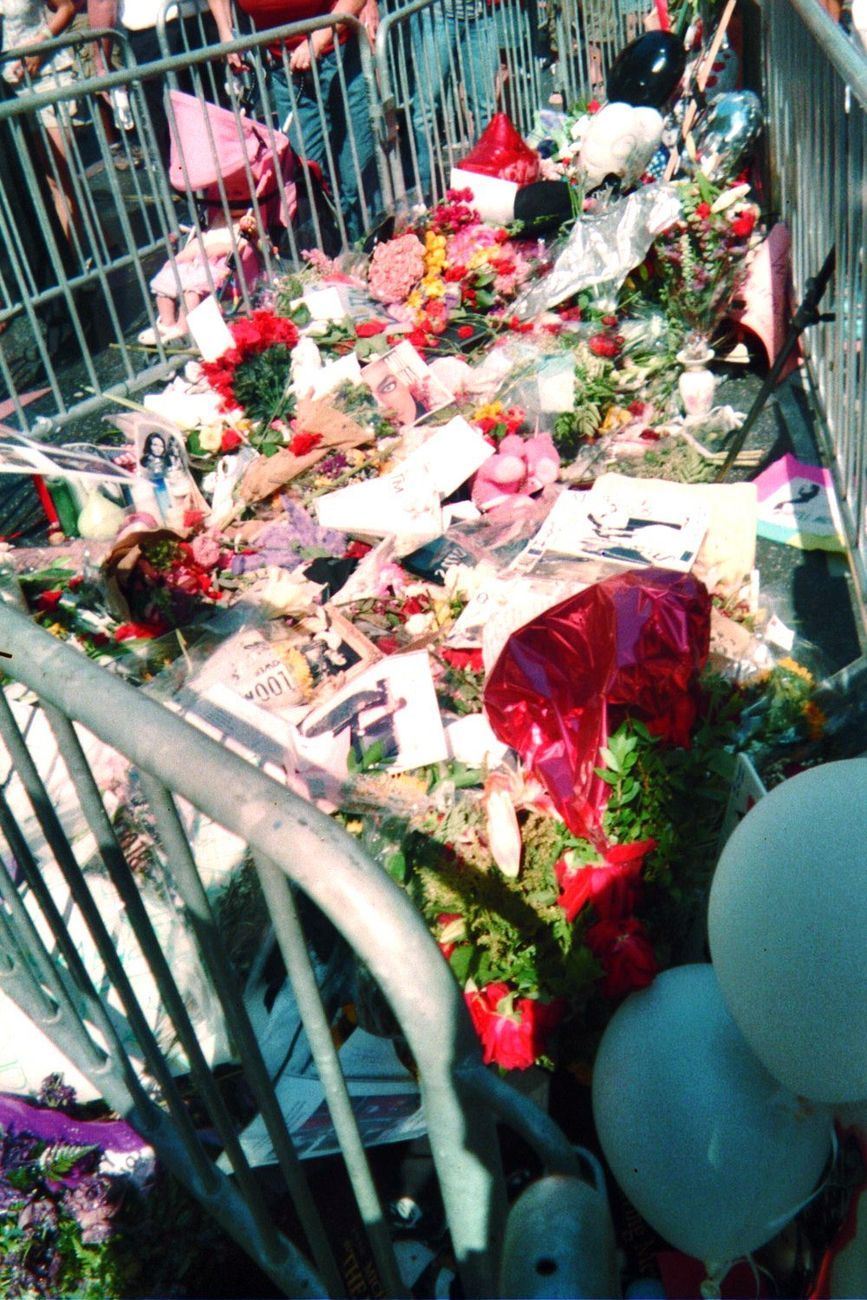
Flowers at Jackson’s Hollywood Walk of Fame star on June 27, 2009. Joyradost · CC BY-SA 3.0
No. It means another person caused the death.
In death certificates, “homicide” means death caused by another person. It does not mean intent. [1] The coroner used it because the propofol and sedatives were given by someone else. [2]
The criminal charge reflected that. Murray was charged with involuntary manslaughter, an unintended killing through gross negligence, not murder. The jury convicted him [3] and the appeals court upheld it. [4]
People who say “even the coroner said homicide, so it was murder” are misreading the word. See the murder claims.
Bottom line Documented
false that “homicide” on the certificate means deliberate murder.
What the record can’t settle
Definitions come from forensic standards; the verdict is a court record.
Jackson’s former Los Angeles residence, photographed in February 2012; a later view. Simeon87 · CC BY-SA 3.0
Because of California sentencing rules.
Murray was sentenced to four years, the maximum. Under California’s rules at the time he served in county jail and received credit for good behavior, and he was released on 28 October 2013, after about two years. [1]
His appeal was rejected in January 2014 [2], and the state attorney general recorded the conviction as affirmed. [3] Release did not mean the conviction was overturned.
The basic facts of the day are also on the record: the UCLA announcement of his death [4] and the police account of the investigation. [5]
Bottom line Documented
documented.
What the record can’t settle
Release dates and credits come from contemporary reports.
A reporter and crowd outside UCLA on June 25, 2009. a j, Los Angeles · CC BY 2.0
Negligence, not intent.
The prosecution’s case was that Murray gave Jackson propofol in a bedroom without proper monitoring equipment, left him alone, and delayed calling for help. [1][3] The defense argued that Jackson, desperate for sleep, gave himself an extra dose while Murray was out of the room.
The jury convicted Murray on 7 November 2011. The appeals court rejected his challenges and found the evidence of gross negligence sufficient. [2]
At sentencing Judge Michael Pastor gave him the maximum of four years and criticized a “money for medicine madness”, noting the $150,000 a month Murray was to be paid. [4]
Bottom line Documented
documented.
What the record can’t settle
The trial transcript is long and not fully online; this summary relies on the verdict, the appellate opinion and courtroom reporting.
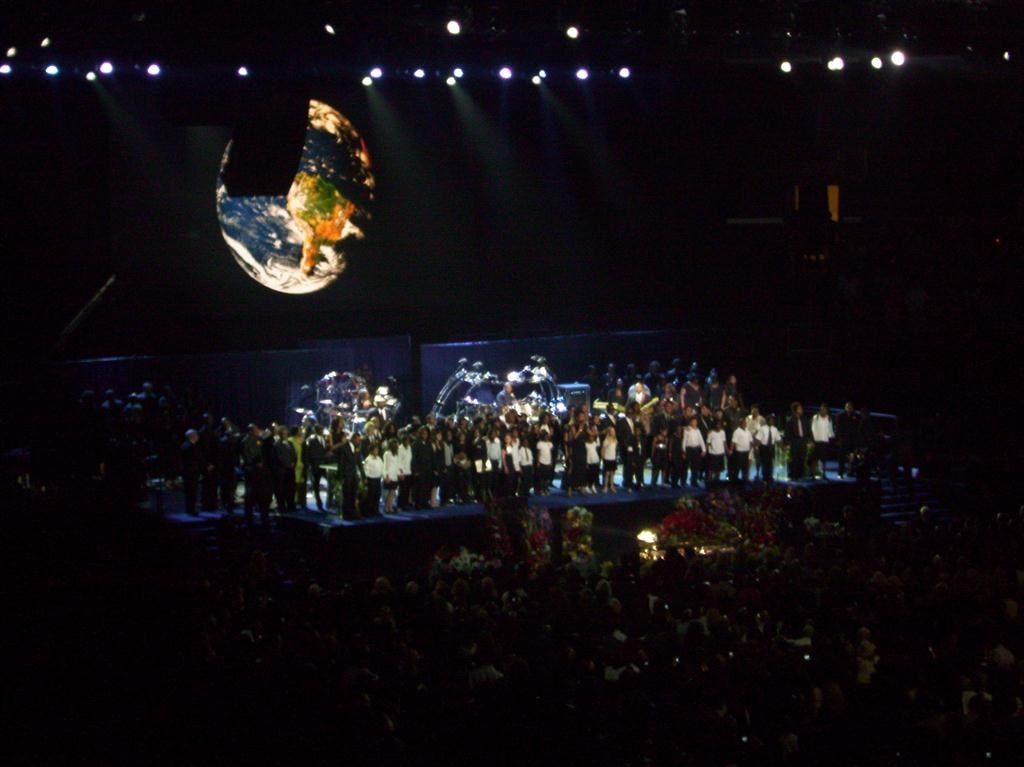
Speakers and performers at the July 7, 2009 public memorial. Alejandro Marino · CC BY-SA 2.0
The defense theory, at its strongest.
The strongest version of Murray’s defense is that Jackson was a long-time user of sedatives who could have swallowed lorazepam or given himself propofol while the doctor stepped away, and that no one can prove which hand pushed the final dose. [1][2]
The prosecution’s answer, which the jury accepted and the appeals court left standing, was that a doctor who sets up propofol in a home without proper monitoring and then leaves his patient is responsible for the danger he creates, whoever pushed the last dose. [3] On the law, the self-dosing theory was a defense to murder, not to manslaughter, and Murray was charged with manslaughter.
Bottom line Documented
disputed as to who gave the final dose; false that it clears Murray, whose conviction stands.
What the record can’t settle
Expert testimony on dosing conflicted at trial. The conviction is final.
Speakers and performers at the July 7, 2009 public memorial. Alejandro Marino · CC BY-SA 2.0
The jury was asked a different question.
Katherine Jackson’s lawsuit said AEG hired Murray, controlled him through its contract and ignored warnings about Jackson’s health. [1] The jury’s special verdict form asked first whether AEG hired Murray, and the jurors said yes. The second question was whether Murray was unfit or incompetent to perform the work he was hired for, and they said no. [2] That ended the case. [3]
The foreman later explained that they saw the question narrowly: Murray was a licensed cardiologist when he was hired, even if he behaved unethically afterwards. [3] The verdict did not say Murray was a good doctor, and it did not contradict his conviction. A criminal jury had found that his care on the day was grossly negligent; the civil jury found that AEG was not liable for hiring him. [4]
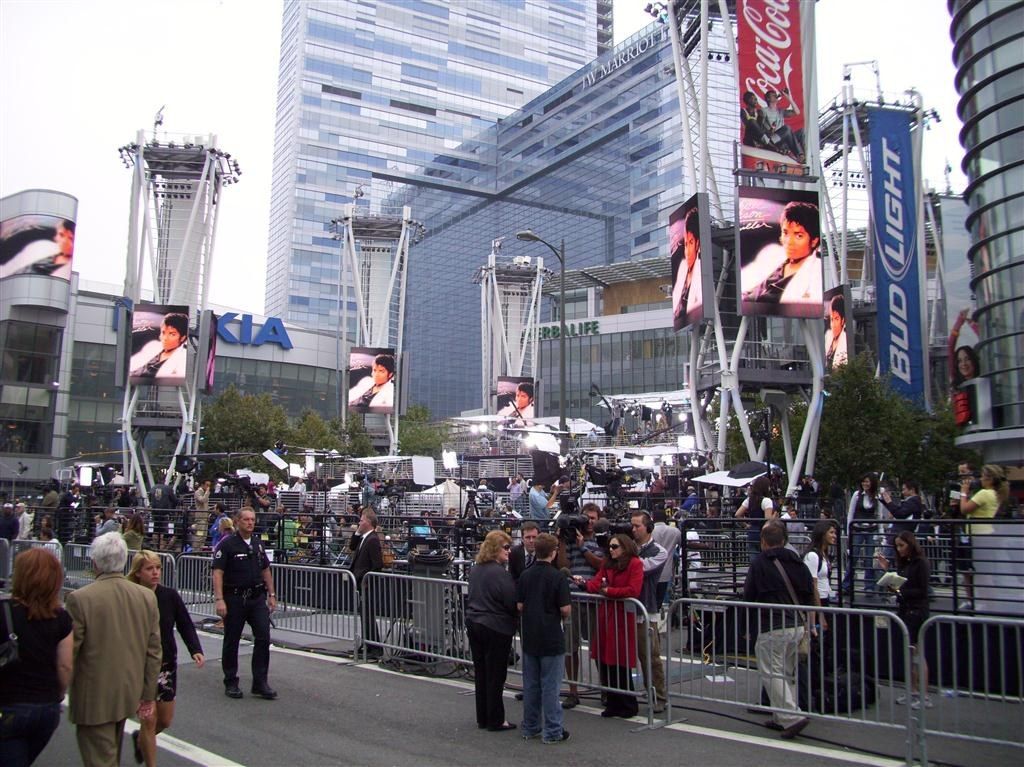
News cameras at the July 7, 2009 memorial. Alejandro Marino · CC BY-SA 2.0
The verdict stands.
In January 2015 the Court of Appeal affirmed the verdict for AEG, rejecting the family’s challenges to the verdict form and the judge’s rulings. [1][2]
The trial still left a record of a tour that pushed hard and of warnings that were not acted on. Whether that was morally acceptable is a fair question. Legally, AEG is not liable. [3]
Bottom line Documented
documented.
What the record can’t settle
Appellate rulings address legal error, not whether the jury should have weighed the evidence differently.
News cameras at the July 7, 2009 memorial. Alejandro Marino · CC BY-SA 2.0
Two first-person accounts, with their families.
Leaving Neverland is built on long interviews with Wade Robson and James Safechuck, who met Jackson as children in the late 1980s, and with their mothers, wives and siblings. Both men describe years of sexual abuse beginning when they were seven and ten. [1]
Dan Reed has said he chose to tell the story only from their side and their families’, and did not interview Jackson’s defenders, because he wanted to understand the experience of abuse rather than present a debate. [2] That is a stated choice, and it is the film’s main limit.
What the film documents well is access: the trips, the phone calls, the faxes and the photographs of two boys in Jackson’s company. What it asks viewers to believe is the private conduct, which rests on the men’s testimony. Testimony is evidence, and detailed testimony from two people can be powerful. It is not independent corroboration of each act. [3]
The estate calls the film a one-sided “tabloid character assassination” and says both men are motivated by money, pointing to their lawsuits. [4] See the defenders’ case.
Bottom line Disputed
disputed. The access is documented; the abuse rests on the men’s accounts, which are unproven in court.
What the record can’t settle
The documentary is a work of journalism with a declared point of view. It is not a legal finding.
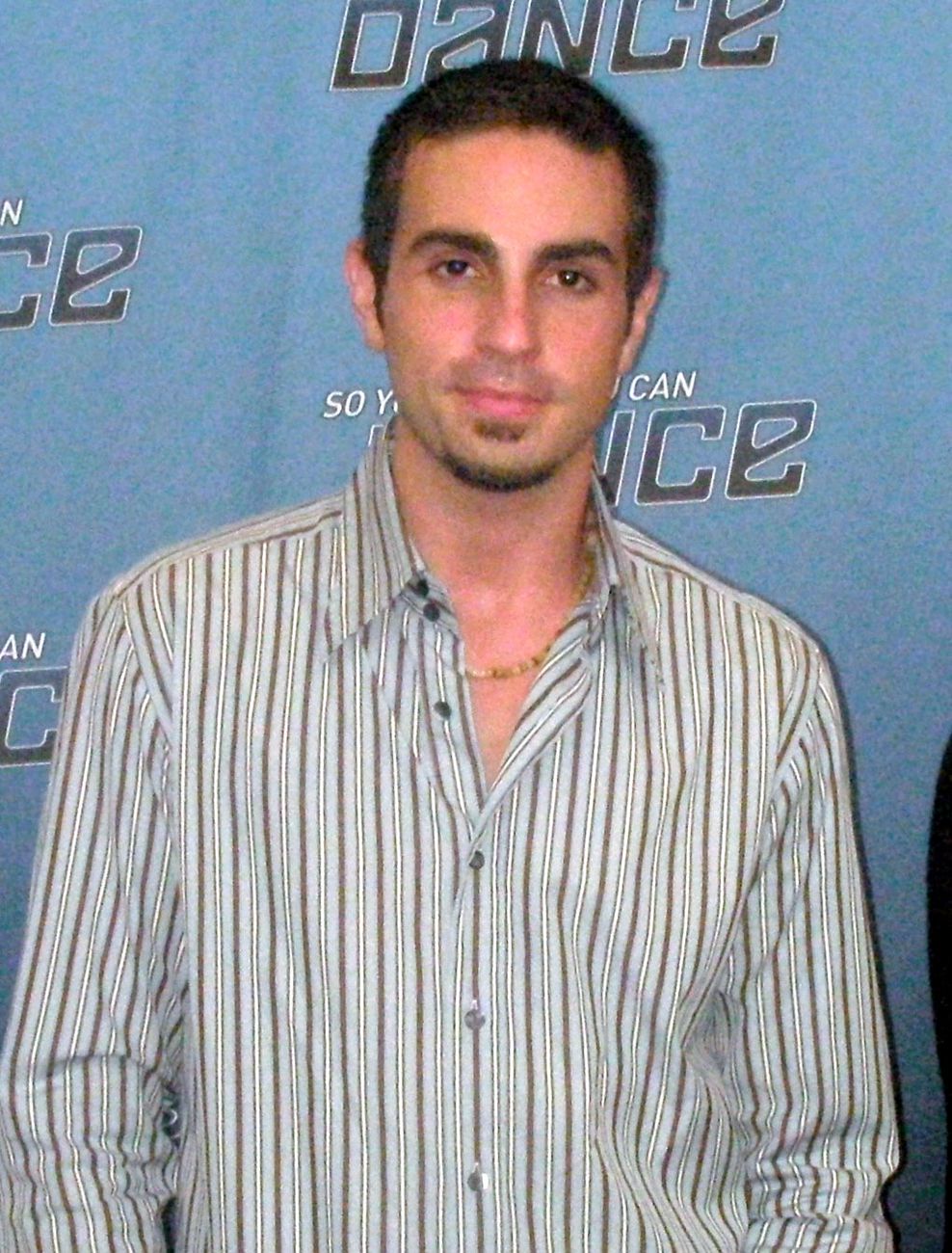
Wade Robson, the choreographer, backstage at So You Think You Can Dance in 2008. watchwithkristin · CC BY-SA 2.0
The strongest points against the film, and the responses.
Robson testified for Jackson’s defense in 2005, under oath, that nothing had happened. [1] He says he believed then that what happened was love and not abuse, and that he only understood it after a breakdown years later. [2] The estate says the reversal is simply a lie told for money. [3] Delayed disclosure is common in abuse cases; so is false accusation in money disputes. The reversal is a real credibility problem, and it is also explainable.
Safechuck said in the film that he was abused in a room above the Neverland train station and that the abuse ended when he was fourteen, in 1992. Building records and photographs reported in the press point to the station being finished in 1994. Reed acknowledged the problem and said the dates of the end of the abuse may be wrong rather than the location. [4]
Defenders call the station error proof of invention. A fair reading is that it is a real error about one place and time, and it should lower confidence in the precision of his account. It does not by itself prove that nothing happened at other places and times.
Bottom line Disputed
documented that Robson once testified the opposite and that Safechuck’s station date is wrong; what that means for the rest is disputed.
What the record can’t settle
Construction dates come from permits and photographs cited in press reports. The men’s explanations are their own.
Dan Reed, the British director of Leaving Neverland, in 2014. Spencer Fornaciari · CC BY 3.0
The arbitration fight was about a contract.
The estate’s case against HBO relied on a 1992 contract for a concert special that barred HBO from disparaging Jackson. In December 2020 the Ninth Circuit agreed that the dispute must go to arbitration. [1] It did not rule on the documentary’s truth.
A 2025 legal-industry analysis reports that the dispute was settled and that the film was taken off HBO’s streaming service. [2] Some fans describe that as HBO admitting the film was false. No such admission has been published; a confidential settlement is not a verdict.
The sequel, Leaving Neverland 2: Surviving Michael Jackson, premiered on Channel 4 on 18 March 2025, following the men’s long fight to bring their lawsuits to trial. [3] That trial is now set for February 2028. [4]
Bottom line Disputed
false that the HBO case proved the film was a lie. The appeal decided only who hears the contract dispute.
Wade Robson, the choreographer, backstage at So You Think You Can Dance in 2008. watchwithkristin · CC BY-SA 2.0
Deadlines and duties, not verdicts.
Robson filed in 2013 and Safechuck in 2014. The claims against the estate itself were dismissed, and the remaining claims are against MJJ Productions and MJJ Ventures, the companies that employed the boys or arranged their visits. The first dismissals turned on deadlines. In January 2020 the Court of Appeal applied a new California law extending them and sent Safechuck’s case back. It said it was not deciding whether the allegations were true. [1]
The trial court then dismissed both cases again, ruling that companies owned entirely by Jackson could not have controlled him and so owed the boys no duty. In August 2023 the Court of Appeal reversed that, holding that a company can owe a duty to protect children it brings into contact with an employee even if he owns it. [2][3]
Two shortcuts are wrong. “Dismissed, so false” misreads rulings about deadlines and duties. “Revived, so true” does the same in reverse.
Bottom line Documented
documented. The revivals are legal rulings and say nothing about whether the abuse happened.
What the record can’t settle
The appellate opinions are primary sources; their reasoning is limited to the questions on appeal.
Neverland Ranch gates on July 9, 2009. Shazari · CC BY 2.0
Where the cases stand in October 2026.
On 12 June 2026 Judge Michael Whitaker set the consolidated cases for trial on 14 February 2028, after both sides agreed to waive an earlier date. [1] Trial dates in long civil cases often move.
Discovery has been contested. In 2024 the judge refused to hand over the whole of the old criminal investigation files and found defects in privacy notices to people whose records were sought. [2] The 2023 appeal, while reviving the cases, upheld sanctions and protective orders in the companies’ favor on discovery matters. [3]
In September 2026 TMZ reported from court papers that James Safechuck was scheduled for a deposition on 14 September and his mother on 15 and 20 October. [4] Depositions are not public testimony, and nothing from them had been published when this edition was checked.
Bottom line Documented
documented. The cases are pending; no merits ruling exists.
What the record can’t settle
Checked through 22 October 2026. Court calendars change.
Neverland Ranch gates on July 9, 2009. Shazari · CC BY 2.0
Four siblings, a docket and a denial.
The federal docket names Edward Joseph Cascio, Dominic Savini Cascio, Marie Nicole Porte and Aldo Cascio as plaintiffs, suing Jackson-related companies, the estate’s co-executors and a private investigator. [1][4] Their older brother Frank, who wrote a memoir defending Jackson, is not a plaintiff in this case.
The siblings allege childhood sexual abuse and trafficking across state and national lines. They say they defended him for years because of grooming and dependence on him, and that Leaving Neverland changed how they understood their experience. [2]
The estate denies the allegations, calls the suit an attempt to extract money, and points to the family’s decades of public support for Jackson. [3] One report named Frank among the plaintiffs; the docket does not, and this collection follows the docket. [1][3]
Bottom line Disputed
disputed. The allegations are recent, specific and denied; none has been tested.
What the record can’t settle
Based on the complaint as docketed and press interviews. A complaint states one side’s allegations.
Neverland’s train station, photographed from the air in August 2008. John Wiley (Jw4nvc) · CC BY 3.0
The case went to arbitration.
On 12 August 2026 Judge Hernán Vera granted the defendants’ motion to compel arbitration under a 2019 settlement between the family and the estate, and stayed the federal case. [1][4] Headlines saying the case was “tossed” describe where it will be heard, not who won.
The siblings argued that the 2022 federal law ending forced arbitration of sexual assault claims should let them go to court. The judge disagreed in this case; the law applies to agreements and claims under its own timing rules, and the 2019 agreement was a settlement, not an employment contract signed in advance. [2][3]
Arbitration is private. Unless the parties disclose it, the public may never learn the outcome. No arbitral result had been reported by 22 October 2026.
Bottom line Disputed
false that the case was thrown out on the merits; it was sent to arbitration.
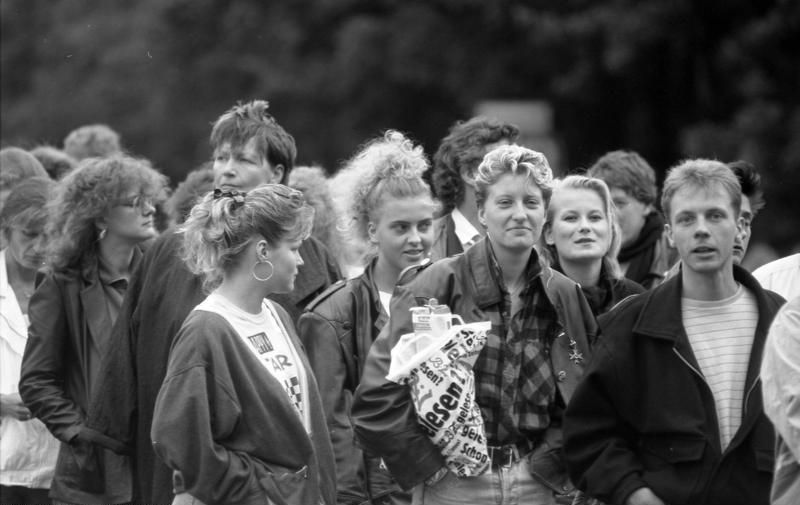
Fans queue for a Jackson concert in West Berlin in June 1988. Unknown authorUnknown author · CC BY-SA 3.0 de
The extortion argument, at its strongest.
Square One, a 2019 documentary by Danny Wu, argues that the 1993 allegation began as a money dispute. It relies on the recorded phone call in which Evan Chandler talked about destroying Jackson, on the demand for a film deal that preceded the allegation, and on reports that the boy was given a sedative during a dental procedure shortly before he first made the allegation. [1][5]
Those facts are real and are part of the defense case. The prosecutors who closed the case in 1994 did not accept the extortion theory and said they found the boy credible. [2] Jackson said he was innocent and the victim of a shakedown. [3][4]
The film is an argument, made by a supporter, and it presents the defense side the way Leaving Neverland presents the accusers’. Both are worth watching; neither replaces the other.
Bottom line Disputed
documented that the money dispute and the taped call existed; that the allegation was a fabrication is disputed.
What the record can’t settle
Square One is an advocacy documentary. Parts of the 1993 record are sealed.
UPI: prosecutors explain why no charges were filed, September 21, 1994 Contemporary wire report quoting prosecutors Gil Garcetti, Tom Sneddon and Lauren Weis. Their credibility assessments are attributed positions, not verdicts. The original UPI page can restrict automated access.
Thomas Mesereau, Jackson’s lead defence lawyer at the 2005 trial. Credit to lukeford.net (permission statement at en:User:Tabercil/Luke Ford permission) · CC BY-SA 2.5
Money, motive and the dead man who cannot answer.
The estate’s position has been the same since 2019: every accuser is lying, every one wants money, and Jackson can no longer defend himself. It calls Leaving Neverland a one-sided film and points out that both men filed lawsuits seeking large sums before they made the documentary. [1]
The defenders’ strongest documented points are Robson’s 2005 testimony that nothing happened [2], the station timeline in Safechuck’s account [3], the jury’s acquittal in 2005 [4], and the many people who spent time with Jackson as children and say nothing happened to them. In the Cascio case the estate also accuses the family of trying to extort it. [5]
The weakest part of the defense is its claim to certainty. That accusers wanted money does not prove they were lying; people who were abused also sue. A changed account can be a lie or a delayed disclosure. The estate’s case is a strong argument that the allegations are unproven. It is not proof that they are false.
Bottom line Disputed
disputed. The defense’s facts are mostly documented; its conclusion that every allegation is invented is not established.
What the record can’t settle
The estate is a party to the litigation and its statements are advocacy.
Fans outside the Santa Maria courthouse on May 2, 2005, during Jackson’s trial. MartinJackson · CC BY-SA 4.0
No. He was acquitted on every count.
Michael Jackson was never convicted of any crime. In 1994 prosecutors declined to charge him. [3] In 2005 a jury acquitted him on all ten counts. [1] The FBI never brought a federal case. [4] The civil suits have not reached trial. [5]
An acquittal is a complete legal answer: a person acquitted is legally not guilty. [2] Anyone who says he was “found guilty” or “a convicted pedophile” is wrong as a matter of record.
An acquittal is not a declaration of innocence in a factual sense, and the law does not claim that it is. It means the state did not prove its case to a jury’s satisfaction.
Bottom line Disputed
false that he was legally found guilty. He was acquitted.
What the record can’t settle
Legal status is fully documented. The factual question is covered next.
UPI: prosecutors explain why no charges were filed, September 21, 1994 Contemporary wire report quoting prosecutors Gil Garcetti, Tom Sneddon and Lauren Weis. Their credibility assessments are attributed positions, not verdicts. The original UPI page can restrict automated access.
Neverland’s train station, photographed from the air in August 2008. John Wiley (Jw4nvc) · CC BY 3.0
The case for, the case against and what would change it.
The strongest case that the allegations are credible is their number and their pattern. Accusers from different families and decades describe similar grooming: gifts, attention, separation from parents, nights in his room. The 1993 prosecutors said they found the boy credible. [1] Robson and Safechuck give detailed accounts. [2] The 2005 judge let the jury hear earlier allegations as possible evidence of a pattern. [5] Jackson himself defended sharing his bed with children.
The strongest case against is just as concrete. The only jury acquitted him. [8] The main accusers have sued for money, Robson testified under oath in 2005 that nothing happened [3], and at least one account has a provable error of time and place. [4] The Cascio siblings defended him for decades before suing. [6] Many people who spent time with him as children, such as Macaulay Culkin, deny anything happened. [7]
Reasonable people reach different conclusions from this record, and this collection does not pretend otherwise. What can be said is that the allegations are serious, specific and unproven; that “credible” and “proven” are different words; and that a civil trial in 2028, if it happens, would be the first time any of these accounts is tested in court since 2005.
Bottom line Disputed
disputed. The allegations are serious and specific; they have not been proved, and the defense raises real problems.
What the record can’t settle
This rating weighs public evidence only. Sealed records, depositions and the 1993 photographs are not available.
Sources
UPI: prosecutors explain why no charges were filed, September 21, 1994 Contemporary wire report quoting prosecutors Gil Garcetti, Tom Sneddon and Lauren Weis. Their credibility assessments are attributed positions, not verdicts. The original UPI page can restrict automated access.
Fans outside the Santa Maria courthouse on May 2, 2005, during Jackson’s trial. MartinJackson · CC BY-SA 4.0
No court has said that.
Defenders often say the allegations have been “proven false” or “debunked”. The acquittal means guilt was not proved; it does not prove an allegation false. [1] The dismissals of the civil suits were about deadlines and legal duties, and the appeals court said so. [2] The HBO ruling was about a contract. [3] The 1994 prosecutors said they did not charge because the boy would not testify, not because they found him lying. [4]
Some specific details have been shown wrong, such as the Neverland station date. That disproves the detail, not the whole account.
Bottom line Disputed
false that courts proved the allegations false. They were not proved true either.
What the record can’t settle
This entry is about what the legal record says. It does not rate any individual accuser’s honesty.
UPI: prosecutors explain why no charges were filed, September 21, 1994 Contemporary wire report quoting prosecutors Gil Garcetti, Tom Sneddon and Lauren Weis. Their credibility assessments are attributed positions, not verdicts. The original UPI page can restrict automated access.
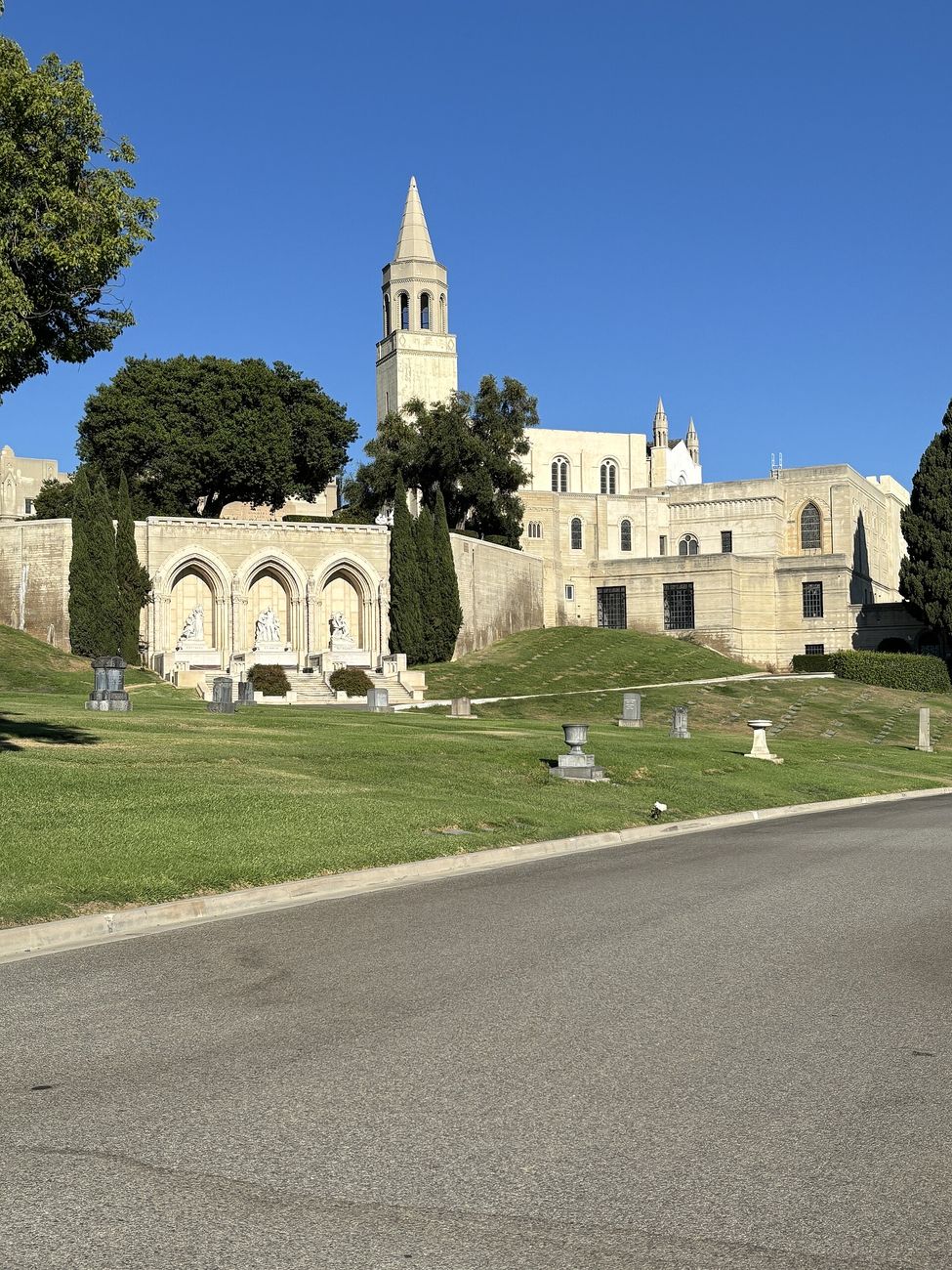
The Great Mausoleum at Forest Lawn Memorial Park in Glendale, California, where Jackson is entombed. Alexis Doine · CC0
The court’s answer: more than the estate said, far less than the IRS.
Estate tax is charged on what a person’s property was worth on the day they died. The estate’s return valued Jackson’s image and likeness at $2,105, his half of Sony/ATV at zero because of the debts against it, and the trust holding his Mijac catalog at about $2.2 million. The IRS valued the same three assets at about $161 million, $206 million and $114 million, and claimed nearly $200 million in penalties. [1][2]
Judge Mark Holmes valued the image and likeness at about $4.15 million, the Sony/ATV stake at zero and the Mijac interest at about $107 million. He found the IRS’s only valuation expert unreliable and said he had been untruthful on the stand about his past work. He rejected all the penalties, finding the estate had relied on reputable appraisers in good faith. [1][2][3]
The opinion is useful well beyond tax. It is the most careful public summary of Jackson’s finances, and it explains why his name was worth so little in 2009: the allegations had badly damaged it. The court was explicit that it made no judgment about whether the allegations were true, only about their effect on value. [4]
Bottom line Documented
documented.
What the record can’t settle
Values are as of 25 June 2009. Later earnings, which have been large, were not foreseeable in law on that date.
Paris Jackson, his daughter, has challenged the executors’ spending in probate court since 2024. In an order dated 29 April 2026, Judge Mitchell Beckloff ruled that $625,000 in bonuses paid in 2018 to outside law firms must be returned. He also praised the executors’ “exceptional services” and set new rules for reviewing future fees. [1][2]
In September 2026 she asked the estate to pay about $1.17 million of her own legal costs, saying her objections had benefited it. The executor opposed the request. [3] An accounting filed for 2024 showed more than $20 million spent on Jackson’s children and his mother that year. [4]
Katherine Jackson lost her challenge to the 2024 Sony sale. [5] The fair reading is that the courts have found fault with specific payments but have backed the executors’ overall management.
Bottom line Documented
documented.
What the record can’t settle
Figures come from court orders and filings as reported. The fee dispute was pending on 22 October 2026.
Jackson sings “We Are the World” with a choir at the World Music Awards in London, 15 November 2006, one of his last public performances. Threatened1 · CC BY-SA 2.0
Unresolved, and probably now unresolvable in court.
The posthumous album Michael, released in December 2010, included three songs recorded with Eddie Cascio and James Porte at a basement studio in New Jersey. Sony said the voice was Jackson’s. The California Supreme Court’s opinion records that his mother, three of his brothers, two of his children, nephews and producers who had worked with him all expressed doubts. [1]
Vera Serova sued in 2014 under consumer protection law, saying buyers were misled. Sony argued that its statements about the album were protected speech about an artistic controversy. The California Supreme Court ruled in August 2022 that the cover and promotional video were commercial speech, which allowed the claims to go forward. It did not decide who sang. [1]
The three songs were removed from streaming services in June 2022, and the case settled that summer. [2] The strongest version of the “fake” case is the number of people close to him who doubted it, including his own family. The strongest version of the other side is that Sony and the estate hired forensic experts and maintained the songs were his. Without a trial, both remain claims.
Bottom line Disputed
disputed. No court decided who sang; the tracks were withdrawn without an admission.
What the record can’t settle
Settlement terms are confidential. Forensic reports on both sides were not made public in full.
Jaafar Jackson, Michael’s nephew, who plays him in Michael, at Cannes in 2026. Nicoleon · CC0
The settlement clause and the reshoots.
Michael was directed by Antoine Fuqua and stars Jaafar Jackson, Jermaine’s son, as his uncle. Its release moved from April 2025 to October 2025 and then to April 2026. [1][3]
Variety reported that the original cut ended with the 1993 allegations, and that estate lawyers then found a clause in the 1994 Chandler settlement barring any depiction of Jordan Chandler in a film. The act was cut and replaced in 22 days of reshoots in June 2025 that cost $10 to 15 million, paid by the estate, which has a stake in the film. [1][5][6]
In comments about the accusers reported by Variety from his New Yorker interview, Fuqua said “sometimes people do some nasty things for some money”. [2] John Branca, one of the executors, appears in the film as a character, played by Miles Teller. Critics noted that it ends before the allegations become the story. [4]
The film earned more than $1 billion worldwide. [3] It is a celebration of the music made by people with a financial interest in the legacy, and it should be watched as that.
Bottom line Documented
documented. The omission is real and was in part legally required.
What the record can’t settle
Production details come from anonymous sources reported by Variety; the estate has not published the settlement clause.
Jaafar Jackson, Michael’s nephew, who plays him in Michael, at Cannes in 2026. Nicoleon · CC0
Lawsuits, rulings and a film.
The biggest new development was the Cascio lawsuit, filed on 27 February 2026 by four siblings who had defended Jackson for decades. [1] On 12 August a federal judge sent it to arbitration under a 2019 settlement. [2]
The Robson and Safechuck cases against Jackson’s companies were set for trial on 14 February 2028 [3], and depositions were scheduled for the autumn. [4]
In probate court, Paris Jackson won an order requiring lawyers’ bonuses to be returned and then sought her own fees. [5][6] The estate reported large spending on the family. [8] The biopic Michael earned more than $1 billion. [7]
Neverland Ranch gates on July 9, 2009. Shazari · CC BY 2.0
Claims that ran ahead of the record.
No arbitrator has ruled on the Cascio claims, despite headlines that the case was “thrown out”. [1] No civil jury has heard the Robson or Safechuck cases. [2] No new criminal investigation has been announced, and Jackson, who died in 2009, cannot be prosecuted. His only criminal verdict remains the 2005 acquittal. [3]
Bottom line Documented
documented as of 22 October 2026.
What the record can’t settle
Absence of a ruling was checked against the dockets and reporting cited.
A reporter and crowd outside UCLA on June 25, 2009. a j, Los Angeles · CC BY 2.0
La Toya Jackson, the entourage and the money.
The strongest version of this theory starts with real facts. Jackson was worth far more as a catalog than as a debtor; people around him were paid well to keep him working; he was given a dangerous drug by a doctor who was badly in debt and paid by the tour. His sister La Toya said in July 2009 that he had told her people would kill him for his music catalog, and that a “shadowy entourage” was responsible. [1][2]
The coroner did rule the death a homicide. [3] But the investigation that followed, including a criminal trial with a full presentation of the evidence, found that the death came from Murray’s gross negligence. Prosecutors charged manslaughter because they had no evidence of intent. [4][5]
There is no evidence in the trial record, the AEG civil trial or the coroner’s report of a plan to kill him. The theory survives because the fears were his own and because the money is real. Neither is evidence of a murder.
Bottom line Unproven
unproven. A homicide in the legal sense; no evidence of intent or a plot.
What the record can’t settle
The family’s statements are sincere claims. This rating reflects the absence of evidence of intent in two trials.
Flowers at Jackson’s Hollywood Walk of Fame star on June 27, 2009. Joyradost · CC BY-SA 3.0
A metaphor, a grievance and a literal claim.
In one sense this is an argument that people make openly: that the pressure to tour, the money riding on him and the people willing to give him drugs to keep him working killed him. Katherine Jackson’s lawsuit against AEG made a version of that case in court. [1] Kenny Ortega’s warning five days before his death is part of the record. [2] So is Jackson’s own 2002 accusation that the labels exploited Black artists. [3]
In that sense the claim is a fair moral argument, and some of it is documented. In the literal sense, that executives planned his death, there is no evidence. The jury in the AEG trial, which heard months of testimony about the tour, found the promoter not liable. [4]
Bottom line Unproven
partly true as a description of pressure; unproven as a literal claim of a plot.
What the record can’t settle
The moral judgment is the reader’s; this file separates it from the factual claim.
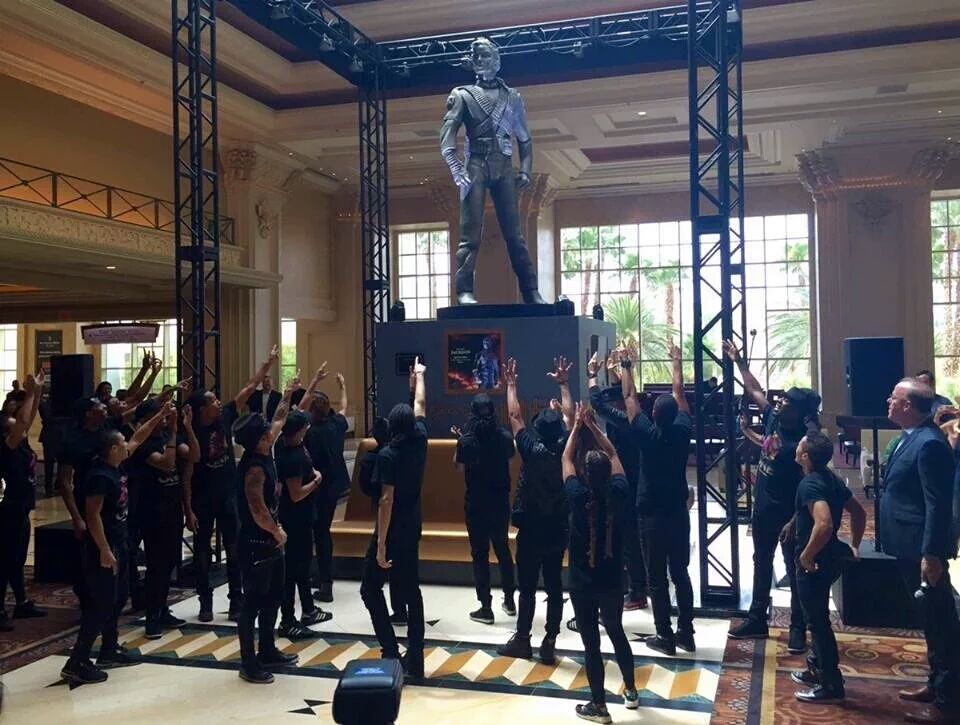
A HIStory statue of Jackson unveiled at Mandalay Bay in Las Vegas. Akhiljaxxn · CC BY-SA 4.0
What is real, and what is added.
The strongest version of this theory says Jackson knew how the music industry worked from the inside, said in 2002 that the labels conspired against Black artists, owned a catalog the powerful wanted, and was destroyed by accusations and then killed. [1][2]
The real parts are the speech, which is on the record, and the catalog, which is covered in the catalog file. Al Sharpton, who hosted the speech, distanced himself from it within days. [3] The death is explained by the coroner’s findings and Murray’s conviction. [4][5]
The theory adds a secret society, a coordinated framing of several unrelated families over decades, and a murder. No document, witness or investigation supports any of those. Notes and “final messages” that circulate online have not been traced to him.
Bottom line Unproven
unproven. His public attack on the industry is documented; the Illuminati plot is not.
What the record can’t settle
Cited tabloid coverage is a record of the claim, not support for it.
Flowers at Jackson’s Hollywood Walk of Fame star on June 27, 2009. Joyradost · CC BY-SA 3.0
A chain of independent records.
Paramedics found him not breathing at his rented home and took him to UCLA, where doctors pronounced him dead. [3] The coroner performed an autopsy and published a detailed report. [1][4] Two trials, one criminal and one civil, heard evidence about how he died, from doctors, investigators and family. The Court of Appeal affirmed the conviction. [2]
The strongest version of the “alive” theory says all of this could be staged. That would require paramedics, hospital staff, the coroner, police, prosecutors, defense lawyers, two juries and his family to lie for years, including in a wrongful-death suit his own mother brought and lost. No one has offered evidence of that.
The Great Mausoleum at Forest Lawn Memorial Park in Glendale, California, where Jackson is entombed. Alexis Doine · CC0
Made by a TV channel to make a point.
The most famous “proof” that he was alive was a clip of a figure climbing out of the back of a coroner’s van. In August 2009 the German channel RTL said it had made the video for a program about how easily fake footage spreads online. [1][2]
Flowers at Jackson’s Hollywood Walk of Fame star on June 27, 2009. Joyradost · CC BY-SA 3.0
A real man with his own life.
Some videos claim that Dave Dave, a friend of Jackson who was badly burned as a child, was Jackson in disguise after 2009. Dave Dave appeared on Larry King Live with Miko Brando in September 2009. [1] He had his own life history, documented long before Jackson’s death, and died in 2018. [2] He was not Jackson.
Bottom line False
false.
What the record can’t settle
Based on contemporary interviews and his obituary.
Comment, dispute or support a claim, submit a source or rate this page through a short Google Form. It asks you to sign in with Google so we know you are a real person; your email is never shown. Nothing appears here until it has been reviewed. Conversation on X tagged #AIFiles #AIFilesMJ shows up below after the daily refresh.
Approved reader comments and ratings are shown on the interactive edition. This plain reading edition does not load them.
On X
This plain reading edition does not load posts. You can read this subject’s threads on the forum: Forum: #AIFilesMJ.
Reader comments are shown only after review, and rows removed from the form’s sheet disappear at the next refresh. X posts are a read-only daily snapshot; posts deleted or made private there are removed at the next refresh. Inclusion is not endorsement. A submitted source stays pending review until a page update says otherwise.





Approved reader comments and ratings are shown on the interactive edition. This plain reading edition does not load them.