The AI Files · WW1 Black Hand and the Sarajevo Assassination · plain reading edition
All 50 entries of the guide, grouped by period and case, each with its bottom line and its sources. This page needs no JavaScript. The interactive guide adds the story in 20 chapters, the people, the timeline, the theories, the 15 checked claims and the media.
Origins of the crisis Coup, annexation, wars.
The May Coup and the officer state Record · History
Belgrade Petar Milošević · CC BY-SA 4.0 In 1903 Serbian officers including Dragutin Dimitrijević killed King Alexander Obrenović and Queen Draga, installing the Karađorđević dynasty and entrenching officer power.
In Belgrade on the night of 28–29 May 1903 (O.S.), conspiratorial officers stormed the royal palace and murdered King Alexander and Queen Draga. [1] [2]
Among the conspirators was Dragutin Dimitrijević, later nicknamed Apis. The coup made the army a permanent veto player in Serbian politics. [2] [3]
Bottom line History
Officer conspiracy culture predates the Black Hand and shapes Apis's later authority.
What the record can’t settle
The coup does not by itself prove Apis ordered Sarajevo eleven years later.
Sources May Coup (1903) — Britannica/Wikipedia index Obrenović murder; Apis among conspirators; officer politics. Dragutin Dimitrijević (Wikipedia index) Apis bio: 1903 coup, Black Hand, Salonika execution 1917. Black Hand (Britannica) Ujedinjenje ili Smrt overview; Apis; relation to Sarajevo plot. Back to contents · Open in the interactive guide
Austria annexes Bosnia, 1908 Record · History
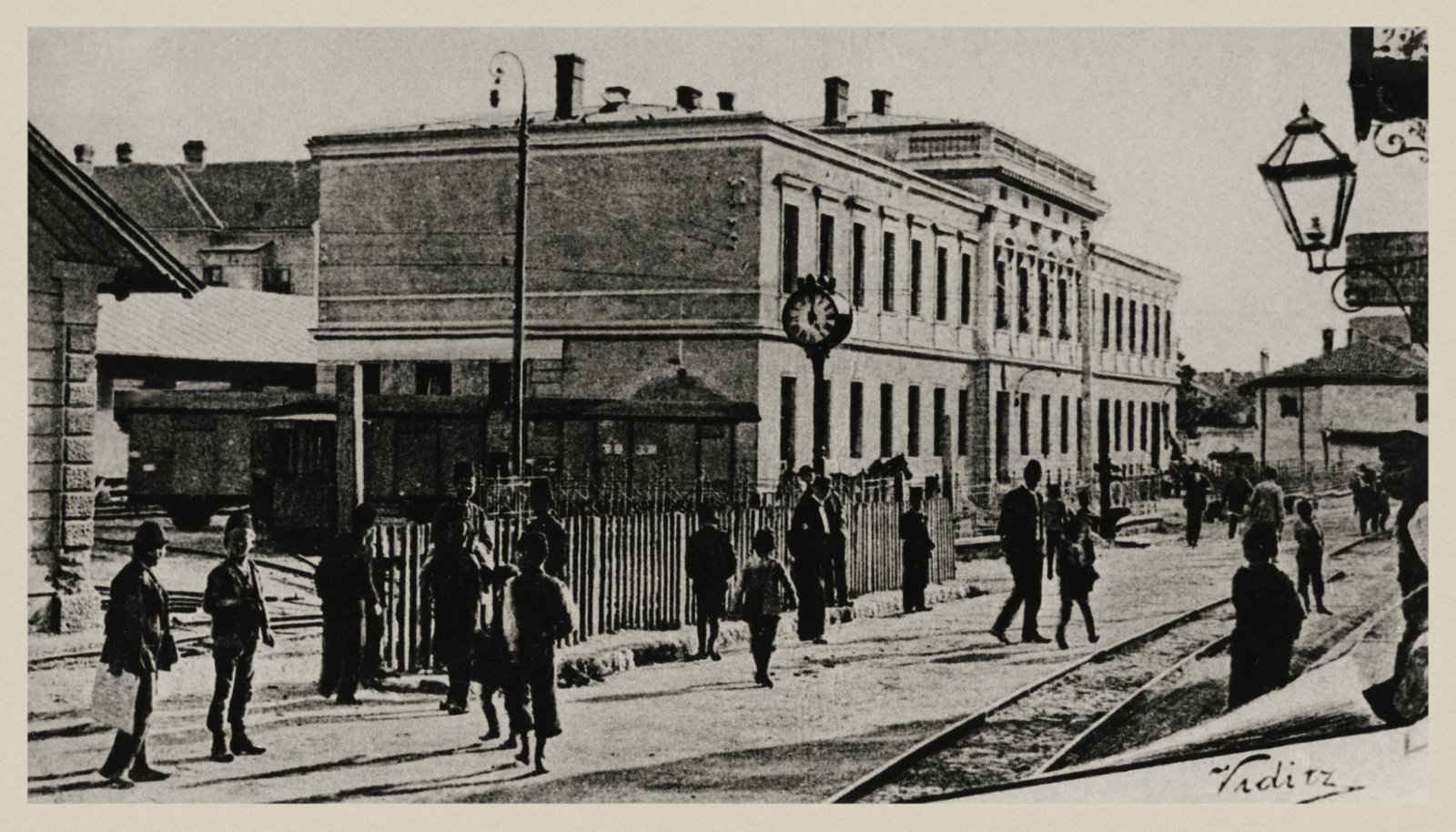
Sarajevo August Viditz (photographer) · Public domain Austria-Hungary formally annexed Bosnia-Herzegovina in 1908, outraging Serbia and radicalizing South Slav youth who would form Young Bosnia.
Occupied since 1878, Bosnia-Herzegovina was annexed by Vienna in 1908 during the Bosnian Crisis. [1] [3]
Serbia was forced to accept the fait accompli — a humiliation that fed the next generation of conspirators. [1] [2]
Bottom line History
Annexation is the political soil of Young Bosnia.
What the record can’t settle
Not every Bosnian Serb became a bomber; the leap from grievance to assassination still needs agents.
Sources Bosnian Crisis 1908 (Britannica) Annexation of Bosnia-Herzegovina; Serbian outrage; Young Bosnia milieu. Young Bosnia (Wikipedia index) Mlada Bosna membership and ideology overview. Franz Ferdinand, archduke of Austria-Este (Britannica) Biography of the heir; assassination summary; dynastic context. Back to contents · Open in the interactive guide
Balkan Wars enlarge Serbia Record · History
Serbia map Pink Flojd · CC0 Victories in 1912–13 nearly doubled Serbia's territory and made Vienna see Belgrade as an existential South Slav threat.
The Balkan Wars of 1912–13 shattered Ottoman Europe and enlarged Serbia dramatically. [1] [2]
Habsburg officials feared a Piedmont of the South Slavs; Serbian nationalists tasted success. [1] [3]
Bottom line History
Serbia entered 1914 stronger and more alarming to Vienna.
What the record can’t settle
Enlargement explains motive climate, not the specific plot mechanics.
Sources Balkan Wars (Britannica) 1912–13 wars; Serbia enlarged; Habsburg alarm. Luigi Albertini, The Origins of the War of 1914 (overview) Classic multi-volume diplomatic history still used as reference. World War I — Outbreak (Britannica) July Crisis cascade from Sarajevo to general war. Back to contents · Open in the interactive guide
The Dual Monarchy under strain Record · History
Vienna The original uploader was Esojourn at Chinese Wikipedia. · CC BY-SA 3.0 Austria-Hungary's dualist structure and South Slav question framed why Vienna treated Serbian nationalism as regime-threatening.
The 1867 Compromise created Austria-Hungary; South Slavs sat awkwardly across both halves and annexed Bosnia. [1] [2]
Franz Ferdinand's rumored reform instincts are debated; the monarchy's fear of Belgrade is not. [1] [3]
Bottom line History
Structural fear explains Austrian overreach after Sarajevo.
What the record can’t settle
Structure is not a suicide note for the heir.
Sources Franz Ferdinand, archduke of Austria-Este (Britannica) Biography of the heir; assassination summary; dynastic context. Bosnian Crisis 1908 (Britannica) Annexation of Bosnia-Herzegovina; Serbian outrage; Young Bosnia milieu. Luigi Albertini, The Origins of the War of 1914 (overview) Classic multi-volume diplomatic history still used as reference. Back to contents · Open in the interactive guide
Pašić's Serbia in 1914 Record · History
Nikola Pašić Wikimedia Commons · Public domain Constitutional politicians coexisted uneasily with officer societies after the Balkan Wars — the civil-military split behind the knowledge debate.
Nikola Pašić led civilian government; Apis embodied intelligence/officer power. [1] [2]
That split is why 'Serbia' in ultimatum language can mean different machines. [3] [4]
Bottom line History
Two Serbias in one capital — civilian and conspiratorial-military.
What the record can’t settle
Split complicates collective guilt slogans.
Sources Nikola Pašić (Wikipedia index) Serbian PM during July Crisis. Dragutin Dimitrijević (Wikipedia index) Apis bio: 1903 coup, Black Hand, Salonika execution 1917. Historiography of the Sarajevo Assassination (Macksey Journal) Maps Young Bosnia-origin vs Serbian-direction camps; Clark vs Zametica. Austro-Hungarian Ultimatum to Serbia, 23 July 1914 (Avalon Project) Full English text of the July 23 note and demands. Back to contents · Open in the interactive guide
The Black Hand Ujedinjenje ili Smrt.
Ujedinjenje ili Smrt — the Black Hand Record · History
Black Hand Unknown photographer, 1910s · CC0 Founded in 1911 by officers around Apis, Unification or Death was an oath-bound secret society aiming at South Slav unification, overlapping with but distinct from Narodna Odbrana.
In 1911 Serbian officers created Ujedinjenje ili Smrt — Unification or Death — known as the Black Hand. [1] [2]
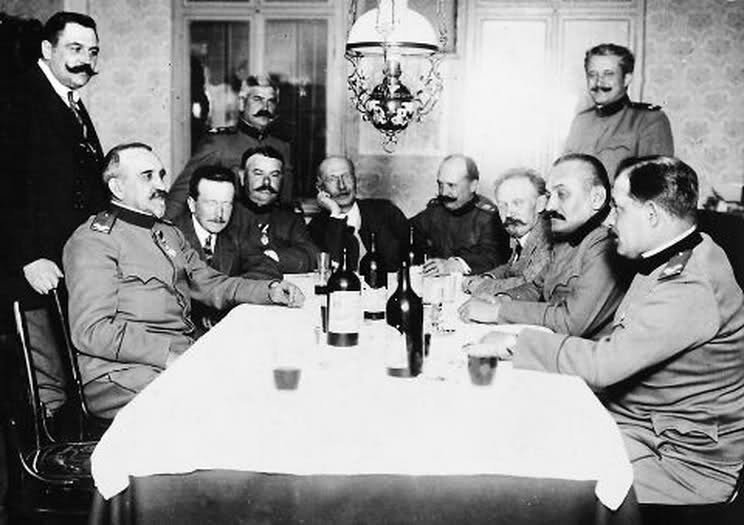
Members swore secrecy under threat of death; Apis, by 1914 head of military intelligence, was its dominant figure. [1] [3]
Austria's ultimatum named Narodna Odbrana more than the secret Black Hand — a distinction historians keep stressing. [4] [5]
Bottom line History
A real secret officer network existed; its exact command of Sarajevo is the contested question.
What the record can’t settle
Founding documents and later memoirs do not equal a signed 1914 kill order in the Austrian dossier.
Sources Black Hand (Britannica) Ujedinjenje ili Smrt overview; Apis; relation to Sarajevo plot. Black Hand (Serbia) (Wikipedia index) Organization founding, Apis, Salonika trial; secondary. Dragutin Dimitrijević (Wikipedia index) Apis bio: 1903 coup, Black Hand, Salonika execution 1917. Austro-Hungarian Ultimatum to Serbia, 23 July 1914 (Avalon Project) Full English text of the July 23 note and demands. Narodna Odbrana (Wikipedia index) Public patriotic society named in Austrian ultimatum; distinct from Black Hand. Back to contents · Open in the interactive guide
Narodna Odbrana, the public face Austria named Record · History
Belgrade Petar Milošević · CC BY-SA 4.0 National Defense was a legal patriotic society Austria treated as the hub of anti-Habsburg agitation — not identical to the Black Hand.
Narodna Odbrana organized cultural and guerrilla-tinged activism after 1908. [1] [2]
Vienna's July note demanded its suppression. Historians distinguish it from Apis's secret society even when memberships overlapped. [2] [3]
Bottom line History
Ultimatum language tracks Narodna Odbrana; Black Hand is the deeper intelligence story.
What the record can’t settle
Overlap of people does not dissolve the organizational difference.
Sources Narodna Odbrana (Wikipedia index) Public patriotic society named in Austrian ultimatum; distinct from Black Hand. Austro-Hungarian Ultimatum to Serbia, 23 July 1914 (Avalon Project) Full English text of the July 23 note and demands. Historiography of the Sarajevo Assassination (Macksey Journal) Maps Young Bosnia-origin vs Serbian-direction camps; Clark vs Zametica. Back to contents · Open in the interactive guide
Apis at military intelligence Record · History
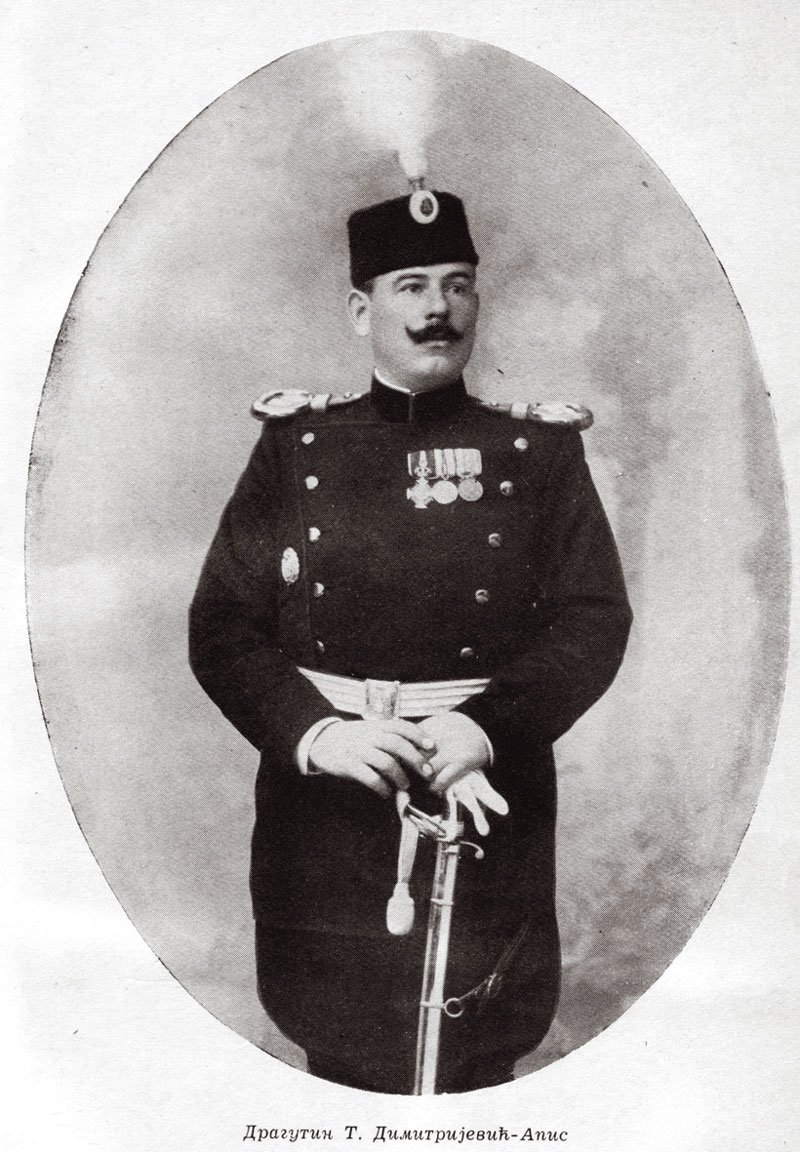
Dragutin Dimitrijević Apis Unknown authorUnknown author · Public domain By 1914 Col. Dragutin Dimitrijević Apis headed Serbian military intelligence and sat at the junction of officer politics and irregular networks.
Apis's career ran from the 1903 coup through Black Hand founding to the General Staff intelligence desk. [1] [2]
That desk controlled agents, money, and border contacts — machinery later tied to arming the Sarajevo cell. [3] [4]
Bottom line History
Position and means are documented; a clean 1914 order paper is not.
What the record can’t settle
Later Salonika confession (1917) is not contemporaneous proof.
Sources Dragutin Dimitrijević (Wikipedia index) Apis bio: 1903 coup, Black Hand, Salonika execution 1917. Black Hand (Britannica) Ujedinjenje ili Smrt overview; Apis; relation to Sarajevo plot. Historiography of the Sarajevo Assassination (Macksey Journal) Maps Young Bosnia-origin vs Serbian-direction camps; Clark vs Zametica. Salonika Trial / Apis execution context (secondary indexes) 1917 trial; Apis shot; confession letter later published — contested reliability. Back to contents · Open in the interactive guide
Apis's 1917 Salonika confession Open question · Debated
Dragutin Dimitrijević Apis Unknown authorUnknown author · Public domain Facing a firing squad, Apis wrote that he ordered Rade Malobabić to organize the Sarajevo assassination — a claim published later and still disputed.
At the 1917 Salonika trial Apis was condemned and shot (24 June 1917). In prison letters he claimed he ordered the Sarajevo operation via Malobabić. [1] [2] [3]
Historians note the letter's coercive context and political usefulness; some Western accounts treated it as decisive. [3] [4]
Bottom line Debated
A major source — and a compromised one.
What the record can’t settle
No second contemporaneous order document corroborates the full claim.
Sources Salonika Trial / Apis execution context (secondary indexes) 1917 trial; Apis shot; confession letter later published — contested reliability. Dragutin Dimitrijević (Wikipedia index) Apis bio: 1903 coup, Black Hand, Salonika execution 1917. Historiography of the Sarajevo Assassination (Macksey Journal) Maps Young Bosnia-origin vs Serbian-direction camps; Clark vs Zametica. The Great Assassination — A.J.P. Taylor on Dedijer (NYRB 1966) Review locating Dedijer amid contested historiography; lists fringe accusations. Back to contents · Open in the interactive guide
Rade Malobabić in Apis's account Open question · Debated
Dragutin Dimitrijević Apis Unknown authorUnknown author · Public domain Apis's confession names agent Rade Malobabić as organizer of the Sarajevo hit — a link that depends heavily on that late letter.
Apis wrote that he engaged Malobabić to organize the assassination when Franz Ferdinand's visit was announced. [1] [2]
How far Malobabić's role can be corroborated outside Salonika materials remains debated. [2]
Bottom line Debated
Named in the most dramatic confession; thin outside it.
What the record can’t settle
Do not treat Malobabić as independently proven master operator without caveats.
Sources Salonika Trial / Apis execution context (secondary indexes) 1917 trial; Apis shot; confession letter later published — contested reliability. Historiography of the Sarajevo Assassination (Macksey Journal) Maps Young Bosnia-origin vs Serbian-direction camps; Clark vs Zametica. Back to contents · Open in the interactive guide
Russian attaché Artamonov — claimed assurance Open question · Debated
Dragutin Dimitrijević Apis Unknown authorUnknown author · Public domain Apis claimed Russian military attaché Viktor Artamonov assured him Russia would protect Serbia if Austria attacked — while denying he told Artamonov of the murder plan.
The Salonika letter ties Russian money/assurance to Apis's intelligence work and timing. [1] [2]
Russian responsibility theses amplify this; careful historians treat it as Apis's claim under duress. [3] [4]
Bottom line Debated
A contested hinge for 'Russia green-lit Sarajevo' theories.
What the record can’t settle
No equivalent Russian archival smoking gun is the mainstream consensus.
Sources Salonika Trial / Apis execution context (secondary indexes) 1917 trial; Apis shot; confession letter later published — contested reliability. Historiography of the Sarajevo Assassination (Macksey Journal) Maps Young Bosnia-origin vs Serbian-direction camps; Clark vs Zametica. Sean McMeekin, July 1914: Countdown to War July Crisis narrative emphasizing Russian/French choices among others. The Great Assassination — A.J.P. Taylor on Dedijer (NYRB 1966) Review locating Dedijer amid contested historiography; lists fringe accusations. Back to contents · Open in the interactive guide
Young Bosnia Mlada Bosna.
Young Bosnia — youth against the Dual Monarchy Record · History
Sarajevo August Viditz (photographer) · Public domain Mlada Bosna was a loose radical youth current in annexed Bosnia reading nationalism, anarchism, and tyrannicide — not a formal Black Hand chapter.
Young Bosnia gathered students and artisans who wanted Habsburg rule broken and South Slavs united. [1] [2]
The Sarajevo seven were of this world. Dedijer and others place the initiative among these Bosnians, with Belgrade as arsenal. [2] [4]
Bottom line History
The shooters were Young Bosnia products first.
What the record can’t settle
Ideology does not invent Browning pistols; logistics still matter.
Sources Young Bosnia (Wikipedia index) Mlada Bosna membership and ideology overview. Sarajevo Fifty Years After (Vladimir Dedijer, Foreign Affairs 1964) Dedijer's framing of Princip and Young Bosnia context. Gavrilo Princip (Britannica) Princip bio; Young Bosnia; 28 June shooting; trial and death. Historiography of the Sarajevo Assassination (Macksey Journal) Maps Young Bosnia-origin vs Serbian-direction camps; Clark vs Zametica. Back to contents · Open in the interactive guide
Vidovdan — the chosen date Record · History
Sarajevo August Viditz (photographer) · Public domain 28 June is St. Vitus' Day, tied in Serb memory to the 1389 Battle of Kosovo — a loaded anniversary for a Habsburg heir to visit Sarajevo.
Vidovdan commemorates Kosovo Polje and Serb martyrdom/resistance myths. [1] [2]
Scheduling the visit on that date looked, to conspirators, like imperial tone-deafness. Motive fuel, not a smoking gun. [1] [3]
Bottom line History
Date symbolism intensified the plot's meaning for participants.
What the record can’t settle
Symbolic dates do not prove state sponsorship.
Sources Vidovdan — St. Vitus' Day (Britannica/Wikipedia) 28 June / Kosovo myth date; symbolic for Serb nationalists. The Assassination That Started World War I (Smithsonian) Narrative with Princip context and aftermath. Sunday, 28 June 1914: Ferdinand, Sophie shot (OUP / Gordon Martel) Minute-by-minute motorcade, Čabrinović bomb, wrong turn, Princip shots. Back to contents · Open in the interactive guide
Dedijer: Bosnian initiative, Belgrade arsenal Strongest case · Debated
Gavrilo Princip Unknown photographer · Public domain Vladimir Dedijer's Road to Sarajevo argues Young Bosnia drove the plot; Black Hand contacts supplied means more than invention.
Dedijer's mid-1960s work, praised by A.J.P. Taylor as impartial, centers Princip's world and Bosnian agency. [1] [2]
That thesis remains one of two live camps opposite heavier Serbian-direction accounts. [3]
Bottom line Debated
Strongest scholarly case for Young Bosnia primacy.
What the record can’t settle
Still must account for Tankosić/Ciganović and border help.
Sources Sarajevo Fifty Years After (Vladimir Dedijer, Foreign Affairs 1964) Dedijer's framing of Princip and Young Bosnia context. The Great Assassination — A.J.P. Taylor on Dedijer (NYRB 1966) Review locating Dedijer amid contested historiography; lists fringe accusations. Historiography of the Sarajevo Assassination (Macksey Journal) Maps Young Bosnia-origin vs Serbian-direction camps; Clark vs Zametica. Back to contents · Open in the interactive guide
The cell Arms, border, seven.
Tankosić, Ciganović, and the Belgrade arsenal Record · History
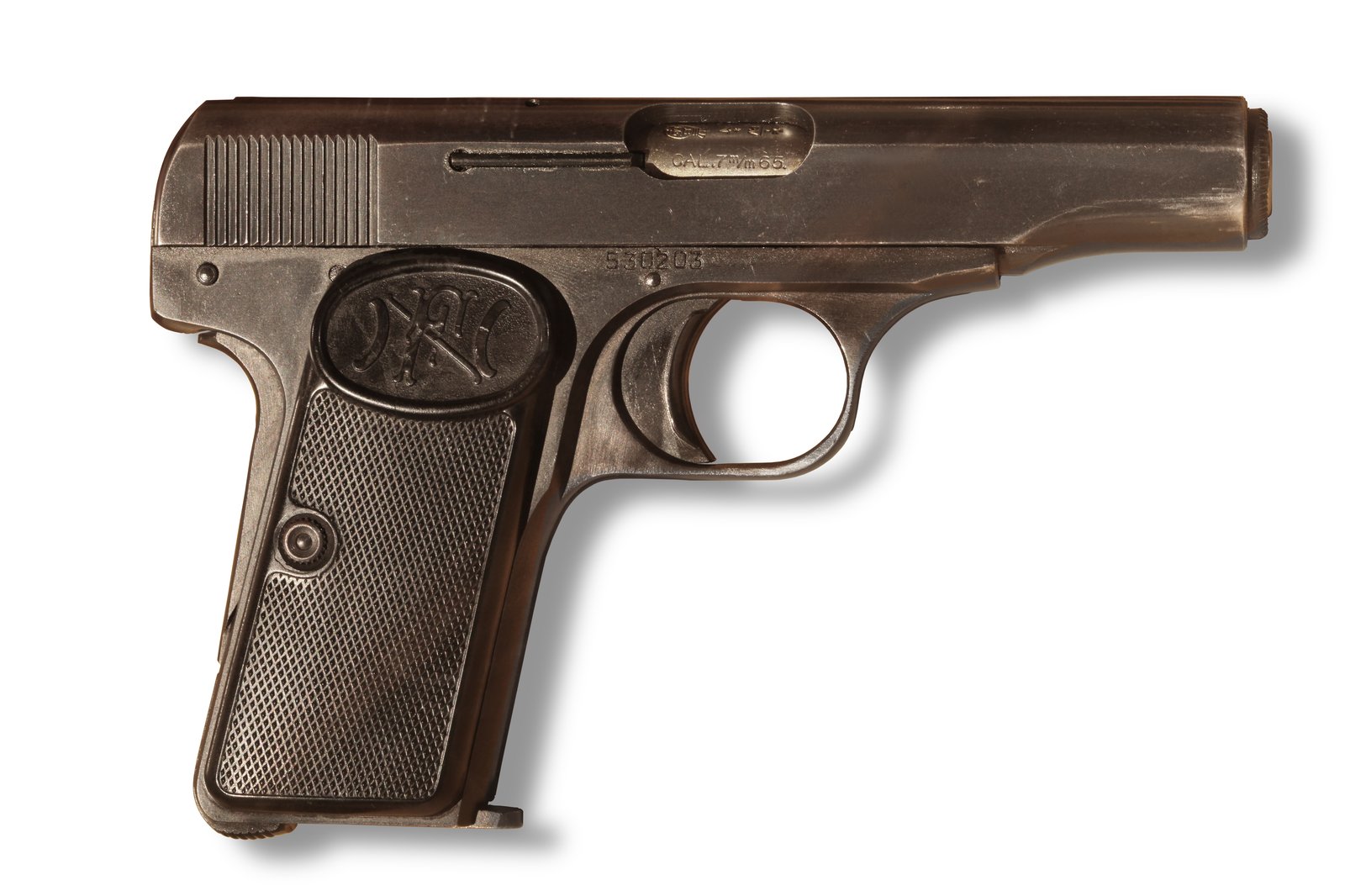
FN Browning 1910 Rama · CC BY-SA 2.0 fr Major Vojislav Tankosić and Milan Ciganović are repeatedly named as the Belgrade officers/associates who trained the youths and supplied bombs, Brownings, and cyanide.
Austrian inquiry and later historiography converge on Tankosić and Ciganović as the weapons and training link in Belgrade. [1] [2]
Wiesner's July telegram treated that Belgrade facilitation as hardly contestable from the accused's statements. [1] [3]
Bottom line History
Belgrade arms and coaching for the cell are on the critical path.
What the record can’t settle
Naming facilitators is not yet proving cabinet authorization.
Sources Wiesner telegram to Vienna, 13 July 1914 (WWI Document Archive) No proof of Serbian government direction; Belgrade arms/smuggling findings. Assassination of Archduke Franz Ferdinand (Wikipedia, cited index) Secondary index with citations to trial records and monographs; prefer primary/Britannica below for contested points. Sunday, 28 June 1914: Ferdinand, Sophie shot (OUP / Gordon Martel) Minute-by-minute motorcade, Čabrinović bomb, wrong turn, Princip shots. Back to contents · Open in the interactive guide
Smuggled across the Drina Record · History
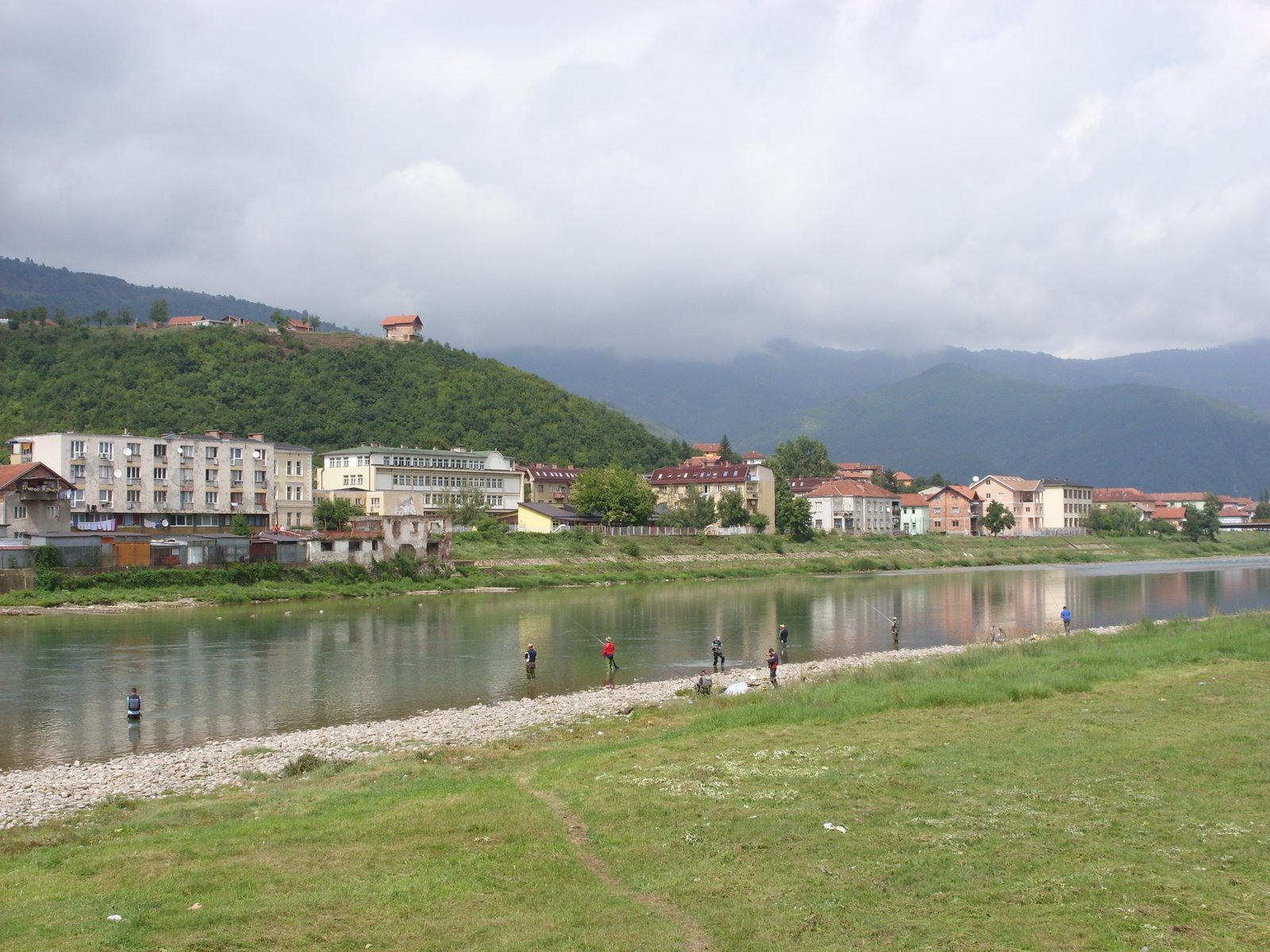
Drina river Julian Nyča · CC BY-SA 4.0 Serbian frontier authorities and irregular channels helped move men and weapons into Bosnia — a finding Austria pressed hard.
Wiesner's telegram and the Austrian note state that Serbian frontier organs arranged dispatch of the criminals and weapons into Bosnia. [1] [2]
That border help is why Vienna could call the plot 'conceived at Belgrade' even while Wiesner denied proof of government direction. [1] [3]
Bottom line History
Cross-border facilitation is documented at inquiry level.
What the record can’t settle
Which exact officials knew what remains unevenly sourced.
Sources Wiesner telegram to Vienna, 13 July 1914 (WWI Document Archive) No proof of Serbian government direction; Belgrade arms/smuggling findings. Austro-Hungarian Ultimatum to Serbia, 23 July 1914 (Avalon Project) Full English text of the July 23 note and demands. Historiography of the Sarajevo Assassination (Macksey Journal) Maps Young Bosnia-origin vs Serbian-direction camps; Clark vs Zametica. Back to contents · Open in the interactive guide
Danilo Ilić organizes in Sarajevo Record · History
Sarajevo August Viditz (photographer) · Public domain Teacher Danilo Ilić recruited and placed the local shooters along the Appel Quay route.
Ilić was the Sarajevo organizer who positioned conspirators along the motorcade. [1] [2]
He bridges Young Bosnia and the imported arms. [3] [4]
Bottom line History
Local organization is as necessary as Belgrade logistics.
What the record can’t settle
Ilić's exact upstream orders are part of the Apis debate.
Sources Sunday, 28 June 1914: Ferdinand, Sophie shot (OUP / Gordon Martel) Minute-by-minute motorcade, Čabrinović bomb, wrong turn, Princip shots. Assassination of Archduke Franz Ferdinand (Wikipedia, cited index) Secondary index with citations to trial records and monographs; prefer primary/Britannica below for contested points. Gavrilo Princip (Britannica) Princip bio; Young Bosnia; 28 June shooting; trial and death. Sarajevo 1914 (Cambridge University Library spotlight) Institutional summary of day and consequences in German collections. Back to contents · Open in the interactive guide
The seven on the quay Record · History
Latin Bridge (stand-in for appel-quay) sundeviljeff · CC BY 2.0 Princip, Čabrinović, Grabež, Čubrilović, Popović, Mehmedbašić, and Ilić formed the distributed ambush — most failed to act when the cars passed.
Seven conspirators waited along Appel Quay. Čabrinović threw; others froze or missed chances before Princip's second opportunity. [1] [2]
Muhamed Mehmedbašić, a Bosniak, shows the cell was not ethnically monolithic. [3] [4]
Bottom line History
A distributed youth ambush, not a single sniper from day one.
What the record can’t settle
Popular memory collapses seven into Princip alone.
Sources Sunday, 28 June 1914: Ferdinand, Sophie shot (OUP / Gordon Martel) Minute-by-minute motorcade, Čabrinović bomb, wrong turn, Princip shots. Sarajevo 1914 (Cambridge University Library spotlight) Institutional summary of day and consequences in German collections. Assassination of Archduke Franz Ferdinand (Wikipedia, cited index) Secondary index with citations to trial records and monographs; prefer primary/Britannica below for contested points. Young Bosnia (Wikipedia index) Mlada Bosna membership and ideology overview. Back to contents · Open in the interactive guide
Cyanide capsules and Browning pistols Record · History
FN Browning 1910 Rama · CC BY-SA 2.0 fr The cell carried bombs, FN Browning pistols, and cyanide for suicide after the act — hallmarks of the Belgrade supply package.
Wiesner and standard narratives list bombs, Brownings, ammunition, and cyanide among items supplied. [1] [2]
Čabrinović's cyanide failed; Princip was taken alive. [3] [4]
Bottom line History
Kit composition supports Belgrade facilitation.
What the record can’t settle
Weapon type alone does not name the ordering mind.
Sources Wiesner telegram to Vienna, 13 July 1914 (WWI Document Archive) No proof of Serbian government direction; Belgrade arms/smuggling findings. FN Model 1910 — Princip's pistol type (secondary) Browning design; .380 ACP commonly identified with the Sarajevo weapon. Sunday, 28 June 1914: Ferdinand, Sophie shot (OUP / Gordon Martel) Minute-by-minute motorcade, Čabrinović bomb, wrong turn, Princip shots. Gavrilo Princip (Britannica) Princip bio; Young Bosnia; 28 June shooting; trial and death. Back to contents · Open in the interactive guide
Grabež, Čubrilović, Popović — the other guns Record · History
Latin Bridge (stand-in for appel-quay) sundeviljeff · CC BY 2.0 Trifko Grabež trained with Princip in Belgrade; Vaso Čubrilović and Cvjetko Popović held positions on the quay and did not fire.
Grabež crossed with Princip and Čabrinović after Belgrade training. [1] [2]
Čubrilović and Popović were placed by Ilić; neither delivered a successful attack as the cars passed. [2] [3]
Bottom line History
The ambush was plural; failure was plural too.
What the record can’t settle
Non-shooting is not proof of a staged plot.
Sources Assassination of Archduke Franz Ferdinand (Wikipedia, cited index) Secondary index with citations to trial records and monographs; prefer primary/Britannica below for contested points. Sunday, 28 June 1914: Ferdinand, Sophie shot (OUP / Gordon Martel) Minute-by-minute motorcade, Čabrinović bomb, wrong turn, Princip shots. Sarajevo 1914 (Cambridge University Library spotlight) Institutional summary of day and consequences in German collections. Back to contents · Open in the interactive guide
Mehmedbašić escapes the roundup Record · History
Latin Bridge (stand-in for appel-quay) sundeviljeff · CC BY 2.0 Muhamed Mehmedbašić, the Bosniak conspirator, fled after the failed first attempts and was the only one of the quay team to evade immediate capture.
Mehmedbašić was stationed early on the route and did not stop the car. [1] [2]
He escaped the initial arrests — a detail that later fed embellished escape legends. [1] [3]
Bottom line History
One conspirator got away; the crime still stood.
What the record can’t settle
Escape stories invite folklore; stick to trial-era basics.
Sources Assassination of Archduke Franz Ferdinand (Wikipedia, cited index) Secondary index with citations to trial records and monographs; prefer primary/Britannica below for contested points. Sunday, 28 June 1914: Ferdinand, Sophie shot (OUP / Gordon Martel) Minute-by-minute motorcade, Čabrinović bomb, wrong turn, Princip shots. Young Bosnia (Wikipedia index) Mlada Bosna membership and ideology overview. Back to contents · Open in the interactive guide
28 June 1914 Appel Quay to Latin Bridge.
The heir and the morganatic marriage Record · History
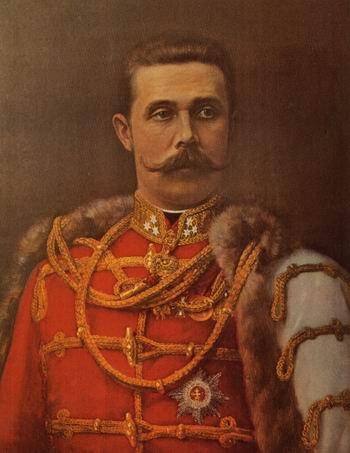
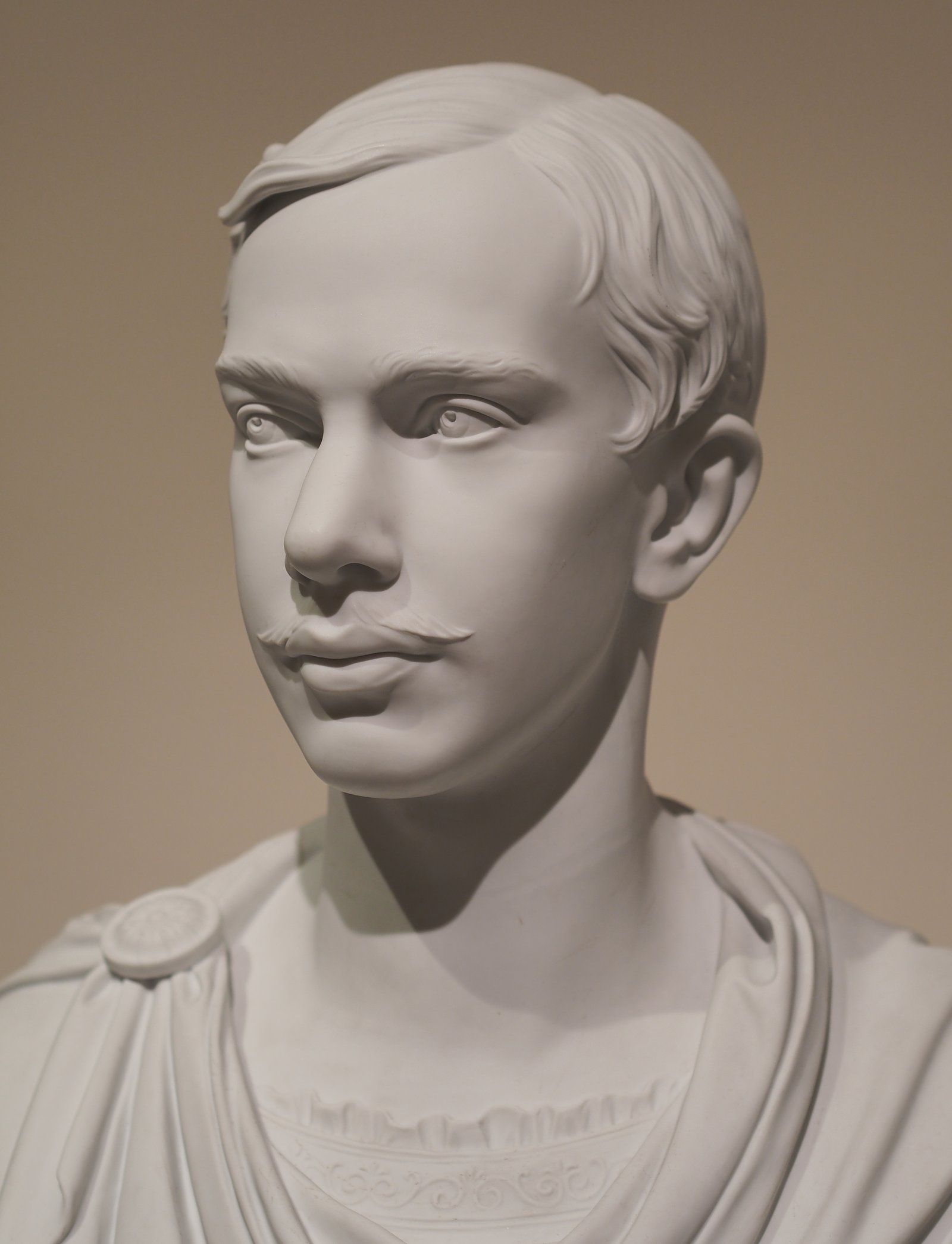
Archduke Franz Ferdinand Unknown painterUnknown painter · Public domain Franz Ferdinand was heir presumptive; Sophie Chotek's morganatic status limited her court rank but she rode beside him in Sarajevo.
Franz Ferdinand of Austria-Este stood next in line after Emperor Franz Joseph. [1] [2]
His marriage to Sophie Chotek was morganatic — yet in Sarajevo she shared the open car and the bullets. [1] [3]
Bottom line History
Personal dynasty story sits inside the imperial crisis.
What the record can’t settle
Reform rumors about federalizing the empire are debated and not required for the assassination facts.
Sources Franz Ferdinand, archduke of Austria-Este (Britannica) Biography of the heir; assassination summary; dynastic context. Archduke Franz Ferdinand assassinated (History.com) This-day summary; verify details against Britannica/OUP. Sunday, 28 June 1914: Ferdinand, Sophie shot (OUP / Gordon Martel) Minute-by-minute motorcade, Čabrinović bomb, wrong turn, Princip shots. Back to contents · Open in the interactive guide
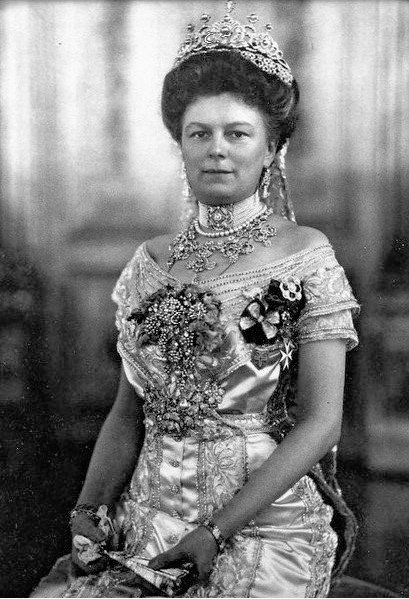
Sophie, Duchess of Hohenberg Record · History
Sophie Chotek Unknown authorUnknown author · Public domain Sophie Chotek died beside the heir; her morganatic status had shaped court life but not the assassin's aim in the car.
Sophie married Franz Ferdinand in 1900 under morganatic terms. [1]
In Sarajevo she was a target of the same close-range shots. [2] [3]
Bottom line History
Second victim, equal fact.
What the record can’t settle
Not a separate conspiracy thread.
Sources Franz Ferdinand, archduke of Austria-Este (Britannica) Biography of the heir; assassination summary; dynastic context. Sunday, 28 June 1914: Ferdinand, Sophie shot (OUP / Gordon Martel) Minute-by-minute motorcade, Čabrinović bomb, wrong turn, Princip shots. Archduke Franz Ferdinand assassinated (History.com) This-day summary; verify details against Britannica/OUP. Back to contents · Open in the interactive guide
Thin security despite warnings Record · Mixed
Latin Bridge (stand-in for appel-quay) sundeviljeff · CC BY 2.0 Police chief Gerde had warned of danger; the motorcade still used an open car and a published route with few special detectives.
Martel's reconstruction notes that only one of four special detectives took his place. [1] [2]
Chief of police Edmund Gerde had advised against the visit's atmosphere. The cars proceeded anyway. [1] [3]
Bottom line Mixed
Security failure is real; 'deliberate sacrifice' theories need more than thin staffing.
What the record can’t settle
Negligence is not proof of a Habsburg suicide plot.
Sources Sunday, 28 June 1914: Ferdinand, Sophie shot (OUP / Gordon Martel) Minute-by-minute motorcade, Čabrinović bomb, wrong turn, Princip shots. Sarajevo 1914 (Cambridge University Library spotlight) Institutional summary of day and consequences in German collections. The Assassination That Started World War I (Smithsonian) Narrative with Princip context and aftermath. Back to contents · Open in the interactive guide
Čabrinović's bomb on Appel Quay Record · History
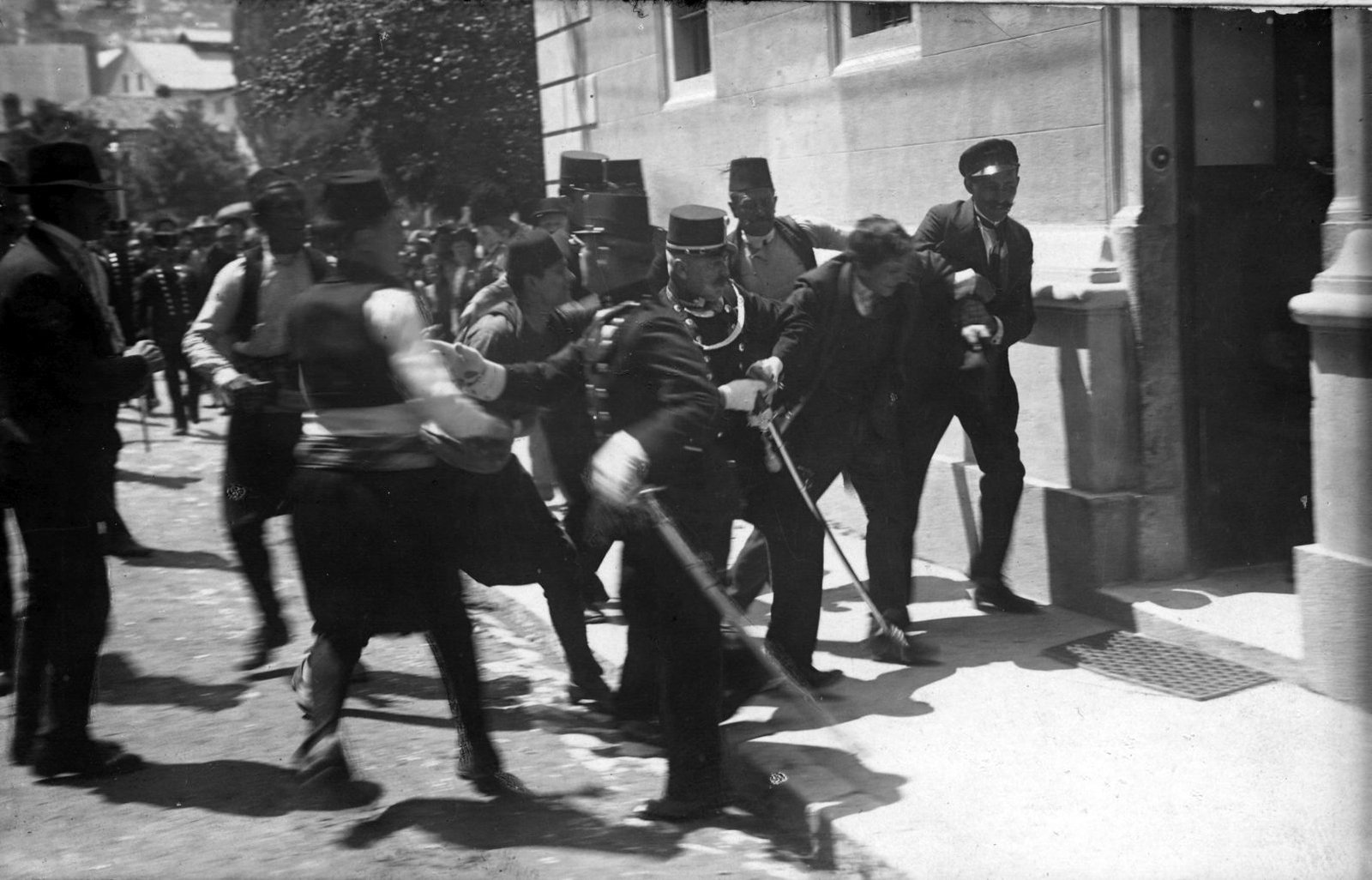
Latin Bridge (stand-in for appel-quay) sundeviljeff · CC BY 2.0 Nedeljko Čabrinović threw a bomb that bounced off the archduke's car and wounded riders in the following vehicle; he failed cyanide and was seized.
Near the Čumurja bridge Čabrinović hurled a bomb. It glanced off Franz Ferdinand's car and exploded under the next. [1] [2]
He bit cyanide that failed, jumped toward the river, and was beaten and arrested. [1] [3]
Bottom line History
First strike failed; the day was already a crime scene before Princip fired.
What the record can’t settle
Bomb failure was contingency, not theater proven as such.
Sources Sunday, 28 June 1914: Ferdinand, Sophie shot (OUP / Gordon Martel) Minute-by-minute motorcade, Čabrinović bomb, wrong turn, Princip shots. Gavrilo Princip (Britannica) Princip bio; Young Bosnia; 28 June shooting; trial and death. How a wrong turn started World War I (BBC) Popular account of the wrong turn / Latin Bridge moment. Back to contents · Open in the interactive guide
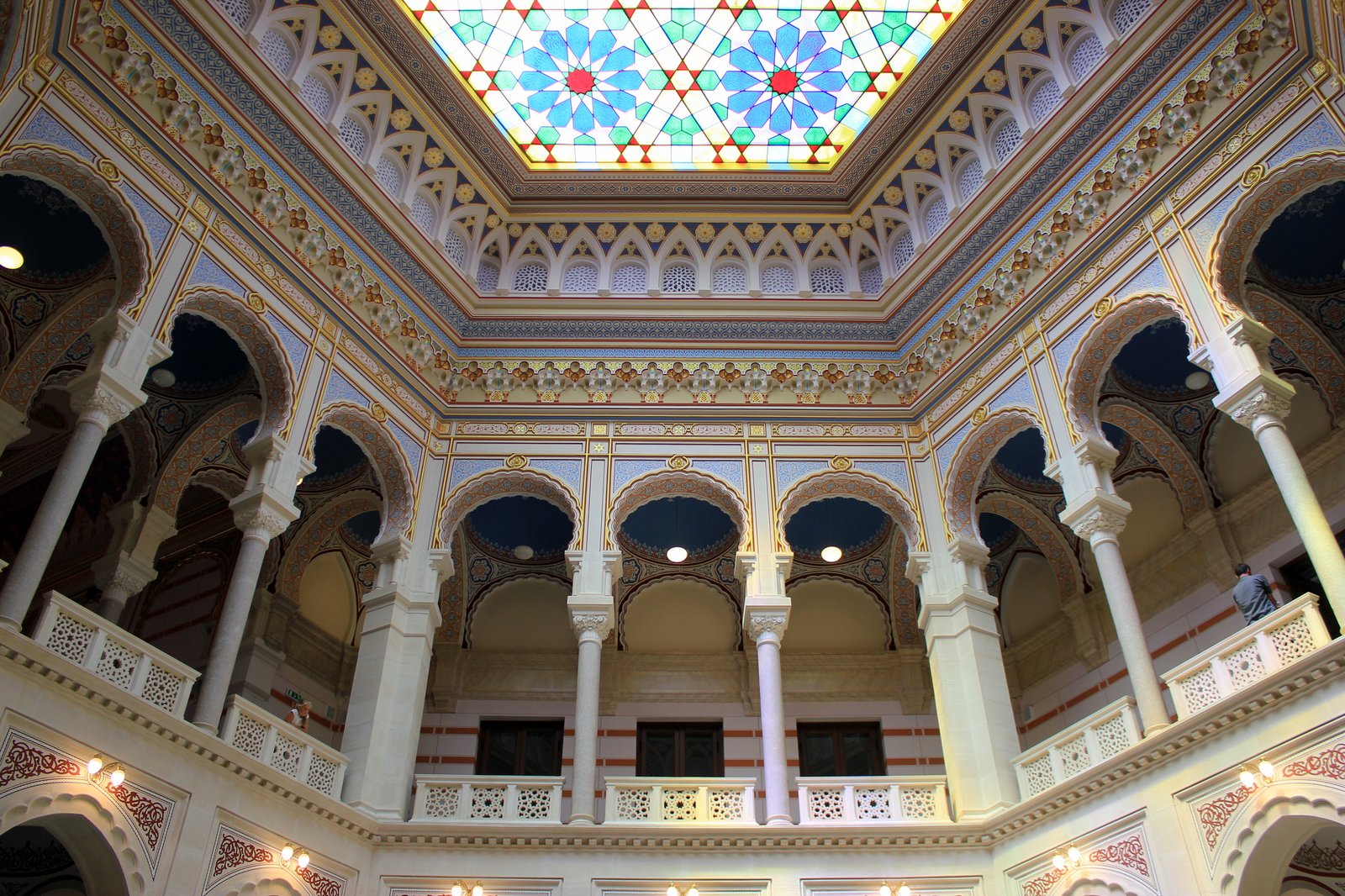
City Hall — anger, then the hospital turn Record · History
Sarajevo City Hall Julian Nyča · CC BY-SA 4.0 At City Hall Franz Ferdinand rebuked the mayor for bombs and welcome speeches; then the couple set out to visit the wounded — retracing Appel Quay.
Inside City Hall the archduke protested being welcomed with bombs. [1] [2]
They decided to visit the bomb-wounded at hospital — forcing the cars back along Appel Quay into Princip's second chance. [1] [3]
Bottom line History
The hospital decision is the hinge between failed bomb and fatal shots.
What the record can’t settle
Hinge is contingency; conspiracy retellings often erase it.
Sources Sunday, 28 June 1914: Ferdinand, Sophie shot (OUP / Gordon Martel) Minute-by-minute motorcade, Čabrinović bomb, wrong turn, Princip shots. The Assassination That Started World War I (Smithsonian) Narrative with Princip context and aftermath. How a wrong turn started World War I (BBC) Popular account of the wrong turn / Latin Bridge moment. Back to contents · Open in the interactive guide
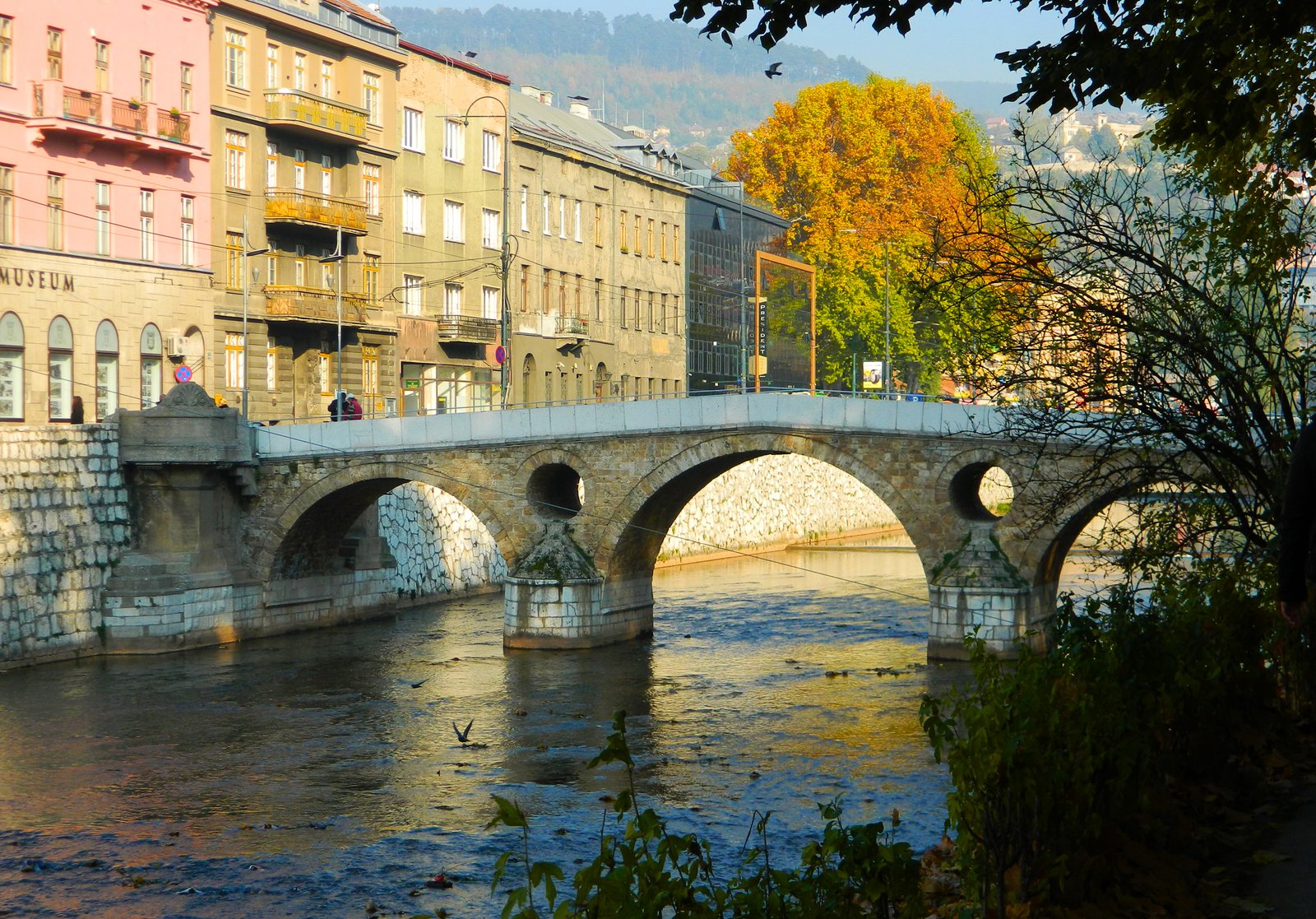
Wrong turn at the Latin Bridge Record · History
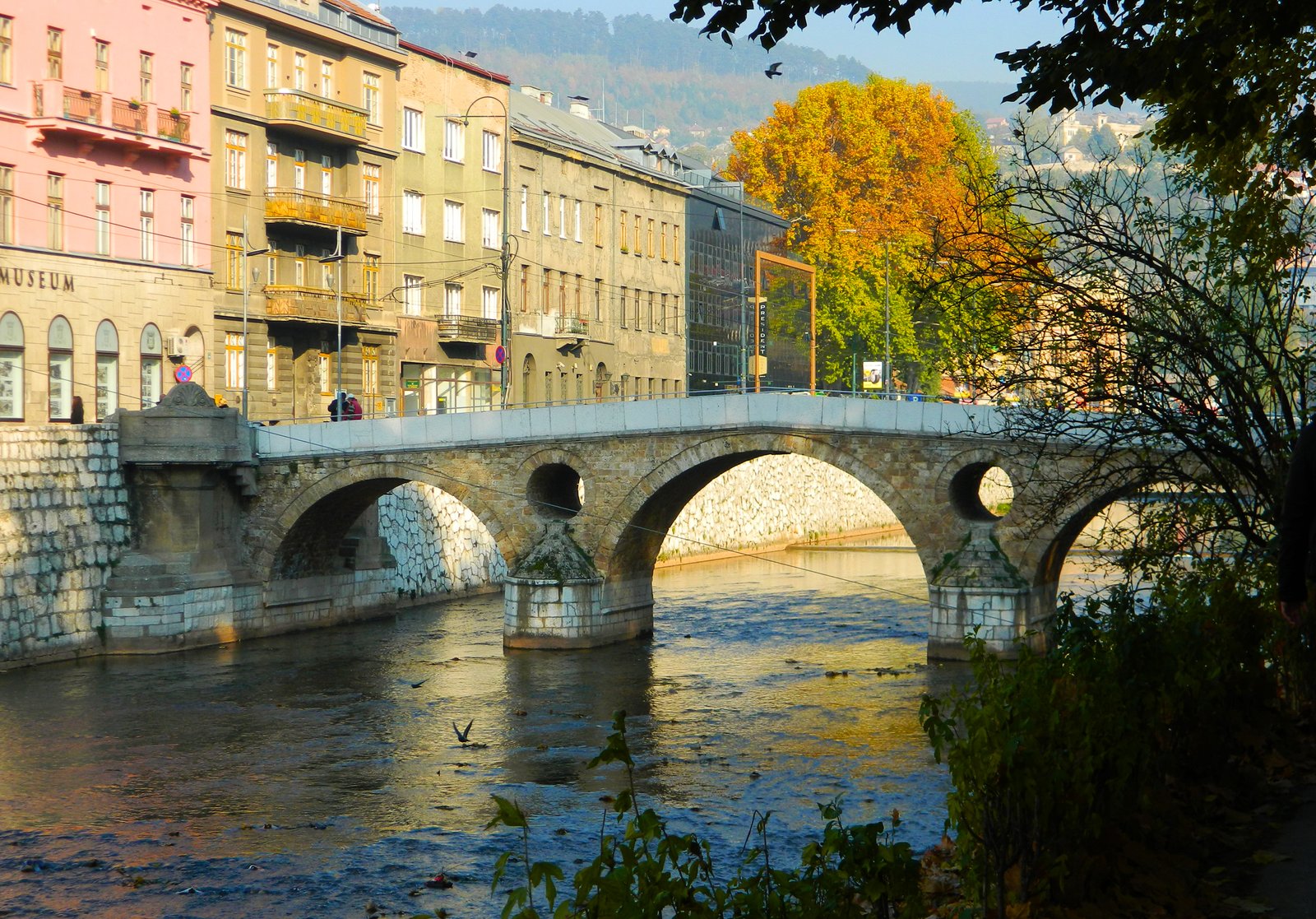
Latin Bridge sundeviljeff · CC BY 2.0 Drivers followed the old museum route onto Franz Joseph Street; Potiorek ordered a stop and reverse in front of Schiller's delicatessen — where Princip stood.
The lead car turned right off Appel Quay as if still going to the museum; the archduke's car followed. [1] [2]
Potiorek shouted the mistake; the car stopped and began reversing. Princip stepped forward with a Browning FN 1910. [1] [4] [5]
Bottom line History
The wrong turn is the most famous contingency in twentieth-century chronology.
What the record can’t settle
A wrong turn does not invent the armed cell waiting on the route.
Sources Sunday, 28 June 1914: Ferdinand, Sophie shot (OUP / Gordon Martel) Minute-by-minute motorcade, Čabrinović bomb, wrong turn, Princip shots. How a wrong turn started World War I (BBC) Popular account of the wrong turn / Latin Bridge moment. Sarajevo 1914 (Cambridge University Library spotlight) Institutional summary of day and consequences in German collections. FN Model 1910 — Princip's pistol type (secondary) Browning design; .380 ACP commonly identified with the Sarajevo weapon. Gavrilo Princip (Britannica) Princip bio; Young Bosnia; 28 June shooting; trial and death. Back to contents · Open in the interactive guide
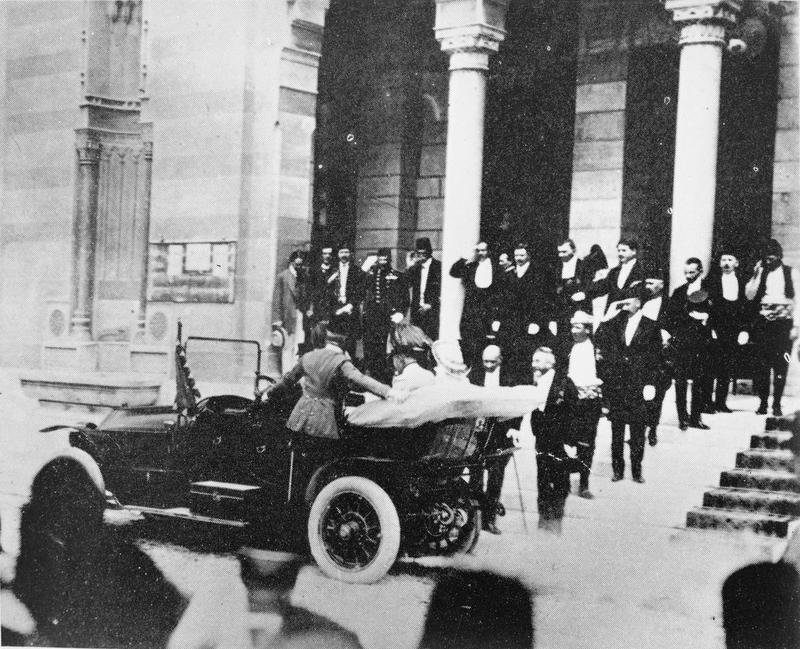
Princip kills Franz Ferdinand and Sophie Record · History
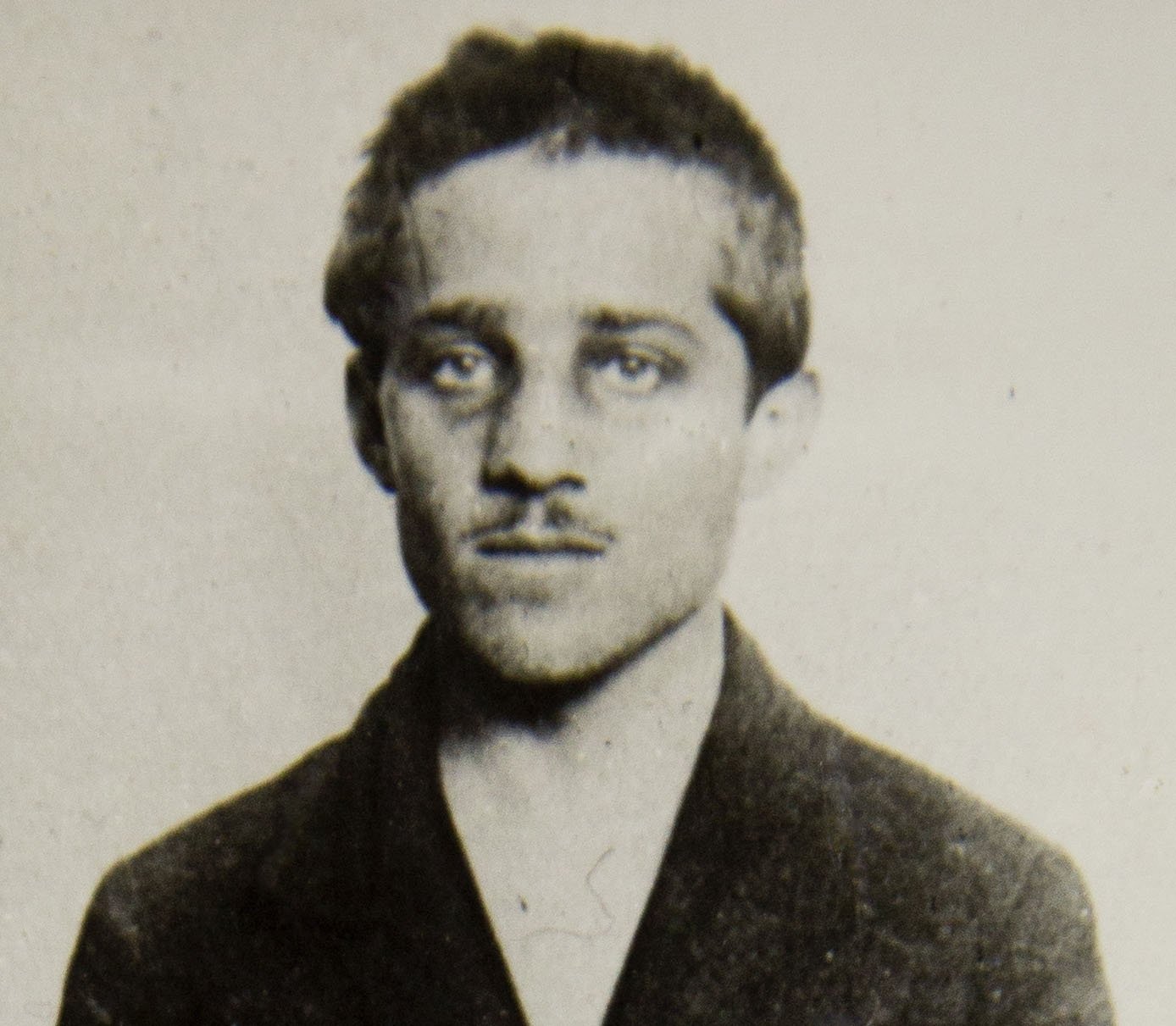
Gavrilo Princip Unknown photographer · Public domain Two shots at close range: the archduke near the jugular, the duchess in the abdomen. Both died shortly afterward.
Princip's first bullet struck Franz Ferdinand; the second struck Sophie. [1] [2]
Both were dead within minutes. Princip was seized; he died of tuberculosis in Theresienstadt fortress in April 1918. [4] [1]
Bottom line History
The killings are not disputed.
What the record can’t settle
Meaning and sponsorship remain the fight.
Sources Gavrilo Princip (Britannica) Princip bio; Young Bosnia; 28 June shooting; trial and death. Sunday, 28 June 1914: Ferdinand, Sophie shot (OUP / Gordon Martel) Minute-by-minute motorcade, Čabrinović bomb, wrong turn, Princip shots. Archduke Franz Ferdinand assassinated (History.com) This-day summary; verify details against Britannica/OUP. Princip imprisonment — Terezín fortress (secondary) Sentence (too young for death); died of tuberculosis April 1918. Back to contents · Open in the interactive guide
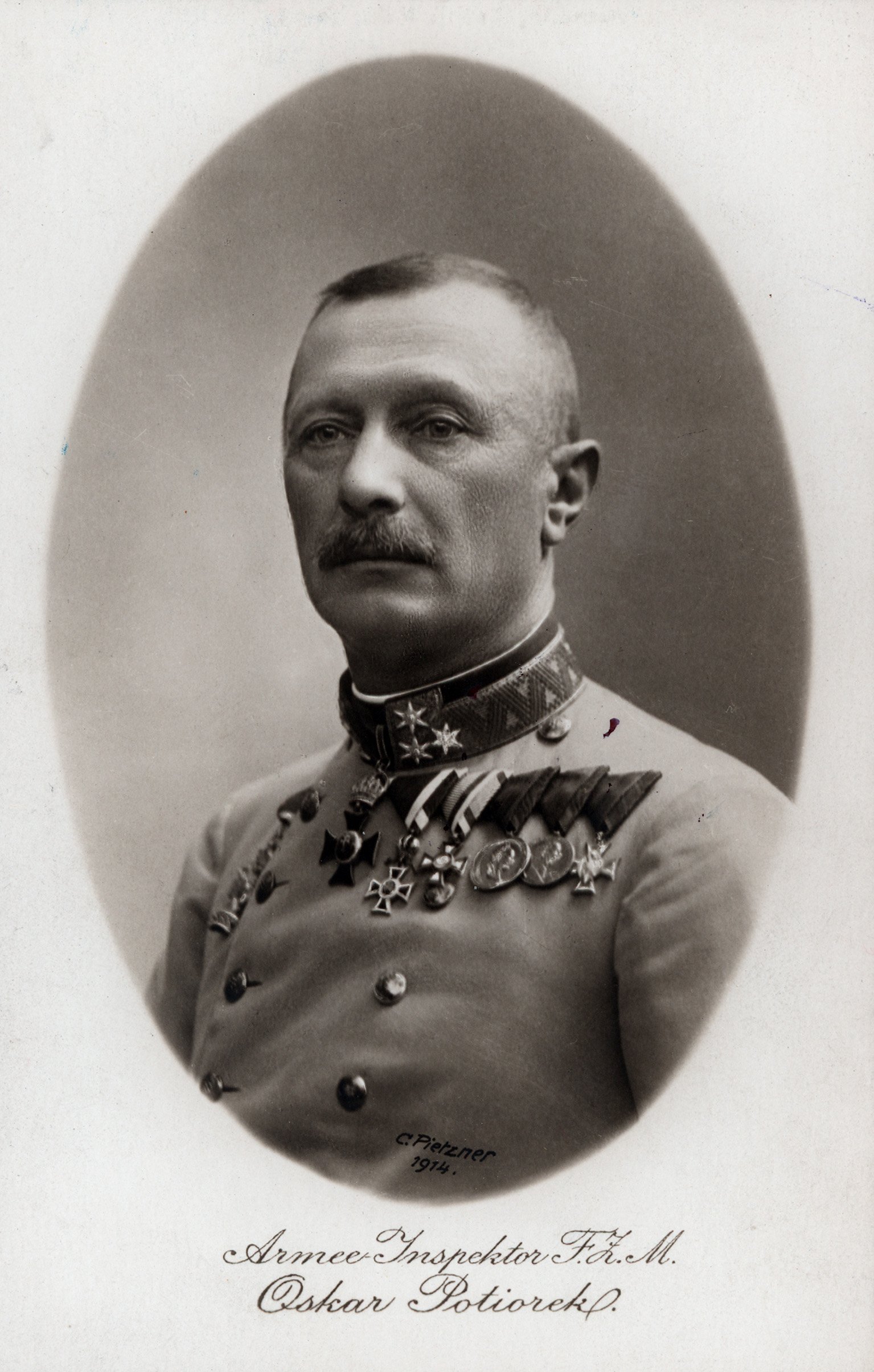
Governor Potiorek in the car Record · History
Oskar Potiorek Carl Pietzner · Public domain Oskar Potiorek, military governor of Bosnia, sat with the couple, ordered the reverse after the wrong turn, and survived.
Potiorek was in the archduke's car and recognized the route error. [1] [2]
He later commanded the failed Serbian campaign. [2] [3]
Bottom line History
Key eyewitness-commander of the minute that mattered.
What the record can’t settle
Survival invited cruel counterfactuals, not evidence he arranged the hit.
Sources Sunday, 28 June 1914: Ferdinand, Sophie shot (OUP / Gordon Martel) Minute-by-minute motorcade, Čabrinović bomb, wrong turn, Princip shots. Oskar Potiorek (Wikipedia index) Bosnia governor in the car; later failed Serbian campaign. World War I — Outbreak (Britannica) July Crisis cascade from Sarajevo to general war. Back to contents · Open in the interactive guide
Count Harrach on the running board Record · History
Motorcade
Unknown authorUnknown author · Public domain Franz von Harrach owned the car and stood on the footboard to shield the archduke after the bomb — on the side opposite Princip when the shots came.
After the bomb, Harrach stood on the running board as shield. [1] [2]
When the car reversed at the Latin Bridge corner, he was on the opposite side from Princip. [1] [3]
Bottom line History
Eyewitness geometry explains why the shield failed.
What the record can’t settle
Harrach's later memoirs are colored by trauma and loyalty.
Sources Sunday, 28 June 1914: Ferdinand, Sophie shot (OUP / Gordon Martel) Minute-by-minute motorcade, Čabrinović bomb, wrong turn, Princip shots. Franz von Harrach account (secondary via OUP/Martel) Car owner standing on running board; eyewitness phrases. How a wrong turn started World War I (BBC) Popular account of the wrong turn / Latin Bridge moment. Back to contents · Open in the interactive guide
Investigation Wiesner to the dossier.
Wiesner's 13 July telegram Record · History
Vienna The original uploader was Esojourn at Chinese Wikipedia. · CC BY-SA 3.0 Friedrich von Wiesner told Vienna there was no proof the Serbian government directed the assassination, while Belgrade arms and border smuggling looked solid from confessions.
On 13 July 1914 Wiesner wired that complicity of the Serbian government in directing the attack was not proven or even to be presumed. [1] [2]
The same telegram treated Belgrade conception among the accused, Tankosić/Ciganović weapons, and frontier smuggling as established from statements. [1] [3]
Bottom line History
Wiesner is the inquiry's careful sentence — often ignored in slogans.
What the record can’t settle
Absence of proof of cabinet direction is not proof of cabinet innocence of all negligence.
Sources Wiesner telegram to Vienna, 13 July 1914 (WWI Document Archive) No proof of Serbian government direction; Belgrade arms/smuggling findings. Historiography of the Sarajevo Assassination (Macksey Journal) Maps Young Bosnia-origin vs Serbian-direction camps; Clark vs Zametica. July Crisis (Wikipedia index) Diplomatic chronology with footnotes; use Avalon/BYU for texts. Austro-Hungarian Ultimatum to Serbia, 23 July 1914 (Avalon Project) Full English text of the July 23 note and demands. Back to contents · Open in the interactive guide
Vienna's case for Belgrade responsibility Record · History
Vienna The original uploader was Esojourn at Chinese Wikipedia. · CC BY-SA 3.0 Austria argued the murder was conceived in Belgrade, armed by Narodna Odbrana-linked officers, and smuggled by Serbian frontier authorities.
The July 23 note states the assassins' confessions showed Belgrade conception, Serbian officers supplying bombs and Brownings, and frontier conduct of the dispatch. [1] [2]
That framing justified abandoning 'patient tolerance' for a coercive program. [1] [3]
Bottom line History
Austria had a partial investigative case and a maximal political use for it.
What the record can’t settle
Partial case ≠ judicial proof of Pašić ordering the hit.
Sources Austro-Hungarian Ultimatum to Serbia, 23 July 1914 (Avalon Project) Full English text of the July 23 note and demands. Primary Documents — Austrian Ultimatum (firstworldwar.com) Alternate hosting of ultimatum English text. Luigi Albertini, The Origins of the War of 1914 (overview) Classic multi-volume diplomatic history still used as reference. Back to contents · Open in the interactive guide
Did Pašić's government know? Open question · Debated
Nikola Pašić Wikimedia Commons · Public domain Historians dispute whether Prime Minister Nikola Pašić had actionable foreknowledge and whether weak warnings to Vienna count as due diligence or cover.
Wiesner found no proof of government direction. [1] [2] [3]
Absence of a cabinet minute ordering murder is not the end of the negligence argument — nor proof of a state assassination program. [2] [4]
Bottom line Debated
Foreknowledge and negligence are open; cabinet-ordered hit is unproven.
What the record can’t settle
Popular slogans ('Serbia ordered it') overshoot Wiesner.
Sources Wiesner telegram to Vienna, 13 July 1914 (WWI Document Archive) No proof of Serbian government direction; Belgrade arms/smuggling findings. Historiography of the Sarajevo Assassination (Macksey Journal) Maps Young Bosnia-origin vs Serbian-direction camps; Clark vs Zametica. The Great Assassination — A.J.P. Taylor on Dedijer (NYRB 1966) Review locating Dedijer amid contested historiography; lists fringe accusations. Christopher Clark, The Sleepwalkers (2012) — publisher/overview Contingency/shared-responsibility thesis for July 1914; widely cited. Back to contents · Open in the interactive guide
The Sarajevo trial Record · History
Trial stand-in None · Public domain Princip and co-defendants were tried in Austria-Hungary; underage Princip escaped execution and died in prison in 1918.
Habsburg courts tried the captured conspirators; Princip's age barred the death penalty. [1] [2]
Testimony fed Vienna's Belgrade narrative even as Wiesner cabined government direction. [3] [4]
Bottom line History
Judicial record is a primary seam for historians.
What the record can’t settle
Trial under wartime political pressure is not a neutral truth commission.
Sources Gavrilo Princip (Britannica) Princip bio; Young Bosnia; 28 June shooting; trial and death. Princip imprisonment — Terezín fortress (secondary) Sentence (too young for death); died of tuberculosis April 1918. Wiesner telegram to Vienna, 13 July 1914 (WWI Document Archive) No proof of Serbian government direction; Belgrade arms/smuggling findings. Assassination of Archduke Franz Ferdinand (Wikipedia, cited index) Secondary index with citations to trial records and monographs; prefer primary/Britannica below for contested points. Back to contents · Open in the interactive guide
Fringe plots — Freemasons, Jesuits, British intelligence Record · Discredited
Sarajevo 1914 Unknown authorUnknown author · Public domain Early and mid-century pamphlets blamed Freemasons, Jesuits, British intelligence, even American anarchists; serious archives do not sustain them.
A.J.P. Taylor noted the carnival of accusations — including parties with no plausible link. [1]
This guide records the folklore and rates it discredited against the critical path. [1] [2]
Bottom line Discredited
Noise around a real conspiracy of Young Bosnia + Belgrade logistics.
What the record can’t settle
Absence of evidence after a century of digging is the rating basis.
Sources The Great Assassination — A.J.P. Taylor on Dedijer (NYRB 1966) Review locating Dedijer amid contested historiography; lists fringe accusations. Historiography of the Sarajevo Assassination (Macksey Journal) Maps Young Bosnia-origin vs Serbian-direction camps; Clark vs Zametica. Back to contents · Open in the interactive guide
July Crisis Blank check to reply.
Germany's blank check, 5–6 July Record · History
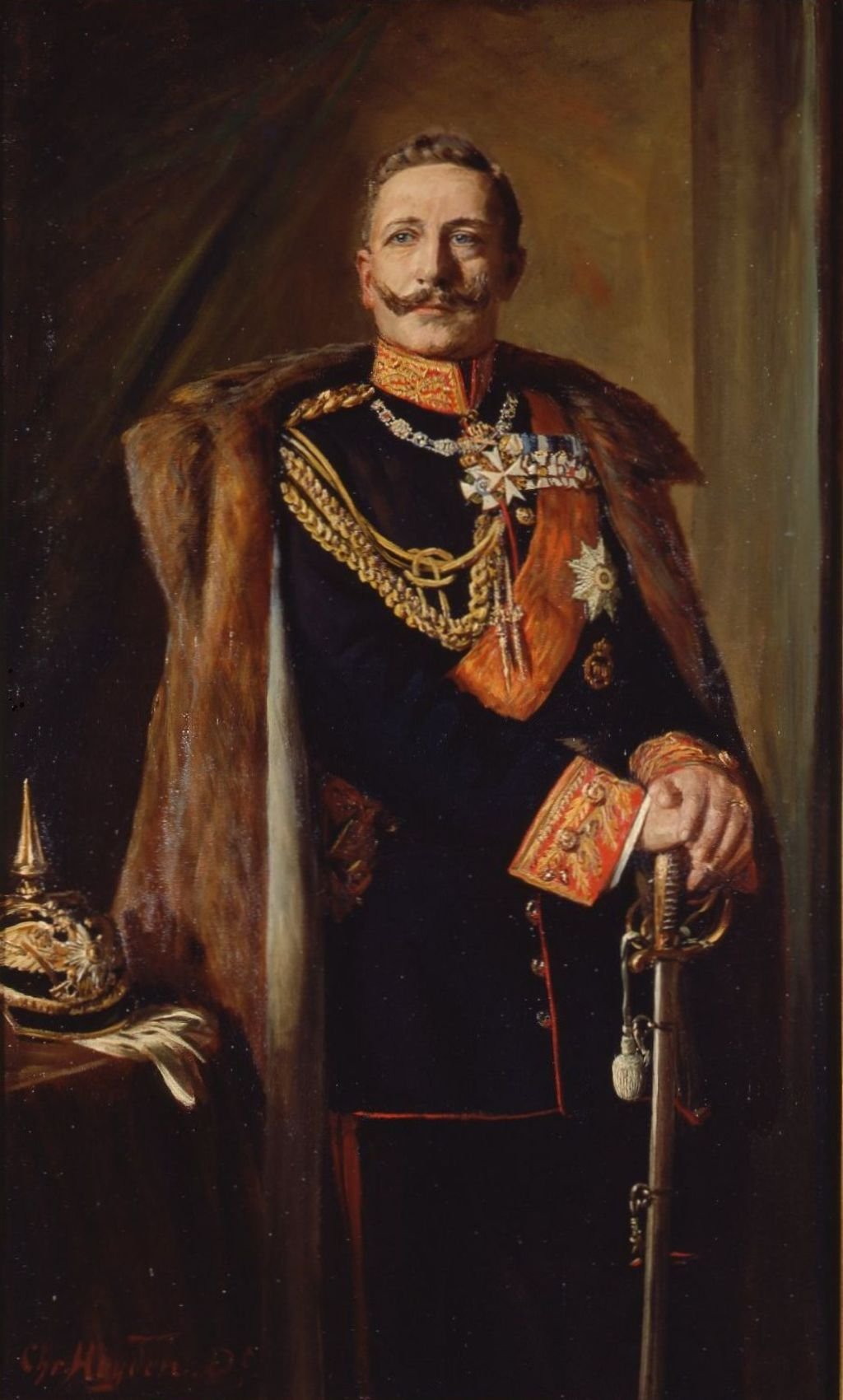
Kaiser Wilhelm II Christian Heyden · Public domain Kaiser Wilhelm II and Chancellor Bethmann Hollweg assured Austria of German support for action against Serbia before the ultimatum was finalized.
In early July Austrian envoys secured German backing — the famous blank check. [1] [2]
Fischer-school readings treat this as decisive German war guilt; contingency historians treat it as one enabling decision among many. [3] [4]
Bottom line History
German political support precedes the ultimatum — on the critical path as enabler.
What the record can’t settle
Enabler is not the same as ordering Sarajevo.
Sources German entry into World War I — blank cheque (Wikipedia index) 5–6 July assurances to Austria; secondary with citations. World War I — Outbreak (Britannica) July Crisis cascade from Sarajevo to general war. Fritz Fischer controversy — German war aims (Britannica / overview) Fischer thesis on German responsibility; broader than Sarajevo but shapes blank-check readings. Christopher Clark, The Sleepwalkers (2012) — publisher/overview Contingency/shared-responsibility thesis for July 1914; widely cited. How the world went to war in 1914 (Imperial War Museums) Museum narrative of July cascade. Luigi Albertini, The Origins of the War of 1914 (overview) Classic multi-volume diplomatic history still used as reference. Back to contents · Open in the interactive guide
The July 23 ultimatum Record · History
Vienna (stand-in for ultimatum) The original uploader was Esojourn at Chinese Wikipedia. · CC BY-SA 3.0 Austria gave Serbia 48 hours to suppress anti-Habsburg agitation and accept Austrian participation in the inquiry — demands designed to be hard to swallow whole.
Delivered 23 July, the note demanded condemnation of propaganda, dissolution of hostile societies, dismissals, and Austrian cooperation in judicial proceedings on Serbian soil. [1] [2]
Point 6 — Austrian organs in a Serbian inquiry — was the sovereignty poison pill. [1] [3]
Bottom line History
The ultimatum is a primary text, not a rumor.
What the record can’t settle
Whether every clause was sincere diplomacy or a pretext for war is interpretive.
Sources Austro-Hungarian Ultimatum to Serbia, 23 July 1914 (Avalon Project) Full English text of the July 23 note and demands. Primary Documents — Austrian Ultimatum (firstworldwar.com) Alternate hosting of ultimatum English text. July Crisis (Wikipedia index) Diplomatic chronology with footnotes; use Avalon/BYU for texts. Back to contents · Open in the interactive guide
Serbia's 25 July reply Record · History
Belgrade Petar Milošević · CC BY-SA 4.0 Belgrade accepted most demands with reservations, especially on Austrian participation in the investigation; Vienna treated the reply as unsatisfactory.
The Serbian reply of 25 July accepted the bulk of the note while fencing on sovereignty-sensitive points. [1] [2]
Austria severed relations and moved toward war. Russia began steps toward supporting Serbia. [3] [4]
Bottom line History
Partial acceptance was not enough for Vienna's chosen path.
What the record can’t settle
Debate continues whether a different Serbian tone could have delayed war given Austrian intent.
Sources Serbian Reply to the Austro-Hungarian Ultimatum, 25 July 1914 (Avalon) Belgrade's reply accepting most points with sovereignty reservations. Primary Documents — Serbian Reply (firstworldwar.com) Alternate hosting of Serbian reply. World War I — Outbreak (Britannica) July Crisis cascade from Sarajevo to general war. July Crisis (Wikipedia index) Diplomatic chronology with footnotes; use Avalon/BYU for texts. Back to contents · Open in the interactive guide
Emperor Franz Joseph and the road to the note Record · History
Emperor Franz Joseph Petar Milošević · CC BY-SA 4.0 Aged Emperor Franz Joseph's government, led in foreign policy by Berchtold, chose a punitive course after the heir's murder.
Franz Joseph had ruled since 1848; the murder of his heir was personal and political. [1] [2]
Foreign Minister Leopold Berchtold midwifed the ultimatum strategy with German cover. [2] [3]
Bottom line History
Imperial decision structure matters as much as street conspirators.
What the record can’t settle
Personal grief narratives do not replace diplomatic documents.
Sources Franz Ferdinand, archduke of Austria-Este (Britannica) Biography of the heir; assassination summary; dynastic context. Leopold Berchtold (Wikipedia index) Austro-Hungarian foreign minister; ultimatum author. Austro-Hungarian Ultimatum to Serbia, 23 July 1914 (Avalon Project) Full English text of the July 23 note and demands. Back to contents · Open in the interactive guide
Clark's sleepwalkers — shared contingency Strongest case · Debated
Mobilization 1914 (stand-in for europe-map) Unknown authorUnknown author · Public domain Christopher Clark's Sleepwalkers popularized a multi-capital contingency reading: Europe stumbled into war through interacting decisions, not a single villain.
Clark's 2012 synthesis stresses how each power's choices narrowed options in July. [1] [2]
It does not erase Sarajevo or Austrian aggression toward Serbia; it resists monocausal guilt slogans. [1] [3]
Bottom line Debated
Mainstream academic counterweight to single-guilt stories.
What the record can’t settle
Critics say shared blame can blur Austrian ultimatum design and German cover.
Sources Christopher Clark, The Sleepwalkers (2012) — publisher/overview Contingency/shared-responsibility thesis for July 1914; widely cited. Historiography of the Sarajevo Assassination (Macksey Journal) Maps Young Bosnia-origin vs Serbian-direction camps; Clark vs Zametica. How the world went to war in 1914 (Imperial War Museums) Museum narrative of July cascade. Back to contents · Open in the interactive guide
Fischer-school weight on the blank check Strongest case · Debated
Kaiser Wilhelm II Christian Heyden · Public domain Fritz Fischer's broader German-responsibility thesis makes the early-July blank check a decisive green light for Austrian risk.
Fischer argued Germany pursued aggressive war aims; the July assurances fit that frame for many readers. [1] [2]
Even critics of full Fischer accept that German support enabled Vienna's hard line. [3] [4]
Bottom line Debated
Blank check as decisive enabler is a live theory against the critical path.
What the record can’t settle
Sarajevo remains a Serbian/Bosnian crime; Fischer does not relocate the shooters to Berlin.
Sources Fritz Fischer controversy — German war aims (Britannica / overview) Fischer thesis on German responsibility; broader than Sarajevo but shapes blank-check readings. German entry into World War I — blank cheque (Wikipedia index) 5–6 July assurances to Austria; secondary with citations. Luigi Albertini, The Origins of the War of 1914 (overview) Classic multi-volume diplomatic history still used as reference. World War I — Outbreak (Britannica) July Crisis cascade from Sarajevo to general war. Back to contents · Open in the interactive guide
War Declarations and cascade.
Austria-Hungary declares war on Serbia, 28 July Record · History
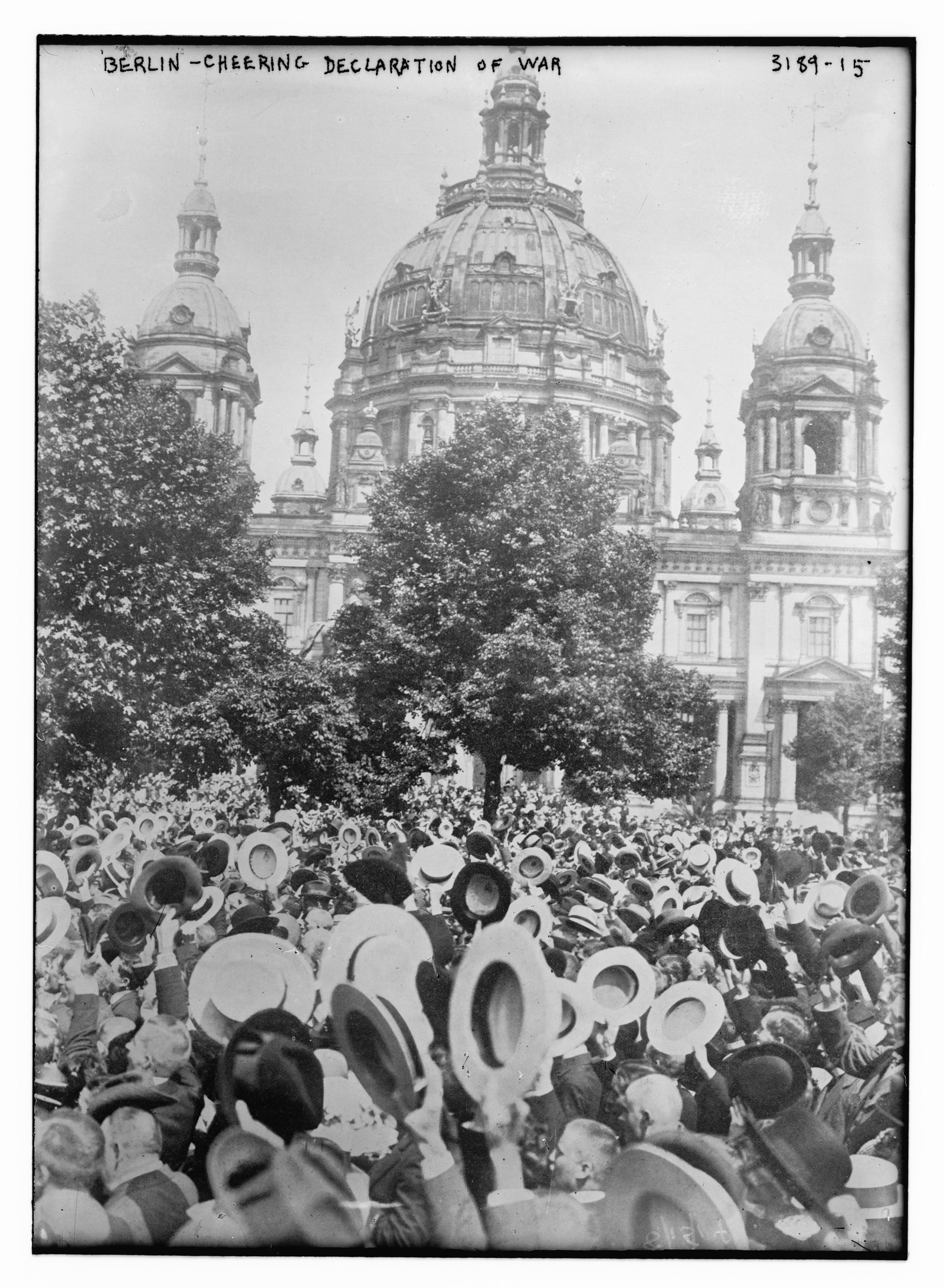
War declaration Bain News Service, publisher · Public domain One month after Sarajevo, Vienna declared war — the first formal war of the catastrophe.
On 28 July 1914 Austria-Hungary declared war on Serbia. [1] [2]
Shelling and invasion followed; the Balkan war Austria wanted became the fuse for general war. [3] [4]
Bottom line History
Declaration date is solid.
What the record can’t settle
Local war plans assumed localization that failed.
Sources Declarations of war, 1914 chronology (Britannica WWI) Austria-Serbia 28 Jul; Germany-Russia/France; Britain 4 Aug. World War I — Outbreak (Britannica) July Crisis cascade from Sarajevo to general war. How the world went to war in 1914 (Imperial War Museums) Museum narrative of July cascade. Luigi Albertini, The Origins of the War of 1914 (overview) Classic multi-volume diplomatic history still used as reference. Back to contents · Open in the interactive guide
Alliance cascade to general war Record · History
Mobilization 1914 Unknown authorUnknown author · Public domain Russian mobilization, German declarations on Russia and France, the invasion of Belgium, and Britain's entry turned a Balkan war into World War I by early August.
Russia mobilized in defense of Serbia; Germany declared war on Russia and France; German armies entered Belgium; Britain declared war on Germany on 4 August. [1] [2]
IWM and Britannica narratives stress how interlocking commitments and timetables outran diplomacy. [3] [4]
Bottom line History
The cascade is the established path from Sarajevo to world war.
What the record can’t settle
Which capital bears 'most' guilt remains historiography, not a single archive stamp.
Sources World War I — Outbreak (Britannica) July Crisis cascade from Sarajevo to general war. Declarations of war, 1914 chronology (Britannica WWI) Austria-Serbia 28 Jul; Germany-Russia/France; Britain 4 Aug. How the world went to war in 1914 (Imperial War Museums) Museum narrative of July cascade. Christopher Clark, The Sleepwalkers (2012) — publisher/overview Contingency/shared-responsibility thesis for July 1914; widely cited. Back to contents · Open in the interactive guide
Britain enters, 4 August 1914 Record · History
Mobilization 1914 Unknown authorUnknown author · Public domain German violation of Belgian neutrality brought Britain into the war, completing the West European belligerent set.
Britain declared war on Germany on 4 August after the Belgian invasion. [1] [2]
From Sarajevo to London's entry took five weeks. [3] [4]
Bottom line History
End link of the outbreak chain for Western fronts.
What the record can’t settle
Belgian treaty obligations are their own legal story.
Sources Declarations of war, 1914 chronology (Britannica WWI) Austria-Serbia 28 Jul; Germany-Russia/France; Britain 4 Aug. World War I — Outbreak (Britannica) July Crisis cascade from Sarajevo to general war. How the world went to war in 1914 (Imperial War Museums) Museum narrative of July cascade. Sunday, 28 June 1914: Ferdinand, Sophie shot (OUP / Gordon Martel) Minute-by-minute motorcade, Čabrinović bomb, wrong turn, Princip shots. Back to contents · Open in the interactive guide
Railway timetables and the war plan trap Record · History
Mobilization 1914 Unknown authorUnknown author · Public domain Once great-power mobilizations started, railway war plans made pause diplomatically costly — a structural pressure in the last days of July.
Historians from Albertini to Clark discuss how mobilization timetables compressed choice. [1] [2]
That pressure sits after Sarajevo and the ultimatum — it does not shoot the archduke. [3] [4]
Bottom line History
Timetables amplify July decisions.
What the record can’t settle
Do not confuse railway schedules with the Browning on Franz Joseph Street.
Sources Luigi Albertini, The Origins of the War of 1914 (overview) Classic multi-volume diplomatic history still used as reference. Christopher Clark, The Sleepwalkers (2012) — publisher/overview Contingency/shared-responsibility thesis for July 1914; widely cited. World War I — Outbreak (Britannica) July Crisis cascade from Sarajevo to general war. How the world went to war in 1914 (Imperial War Museums) Museum narrative of July cascade. Back to contents · Open in the interactive guide
Structural inevitability — alliances and timetables Strongest case · Debated
Mobilization 1914 Unknown authorUnknown author · Public domain Some accounts treat 1914 as overdetermined by alliance blocs, railway mobilization plans, and arms races — Sarajevo as spark on dry timber.
Alliance systems and war plans constrained leaders once mobilizations began. [1] [2]
Contingency historians reply that leaders still chose ultimata, refusals, and declarations day by day. [3] [4]
Bottom line Debated
Structure explains vulnerability; it does not fire Princip's Browning.
What the record can’t settle
Inevitability can become excuse-making if it erases July agency.
Sources World War I — Outbreak (Britannica) July Crisis cascade from Sarajevo to general war. How the world went to war in 1914 (Imperial War Museums) Museum narrative of July cascade. Christopher Clark, The Sleepwalkers (2012) — publisher/overview Contingency/shared-responsibility thesis for July 1914; widely cited. Sean McMeekin, July 1914: Countdown to War July Crisis narrative emphasizing Russian/French choices among others. Back to contents · Open in the interactive guide
From two deaths to a world war Record · History
Mobilization 1914 Unknown authorUnknown author · Public domain Roughly 16–20 million dead followed the war the July Crisis opened — the scale that makes Sarajevo uniquely consequential among assassinations.
Britannica and IWM place Sarajevo at the start of the mobilization cascade that produced World War I. [1] [2]
Taylor called it an assassination unrivaled in consequences. [3]
Bottom line History
Consequence is historical; causation remains multi-link.
What the record can’t settle
Death totals are war-wide estimates, not Sarajevo forensics.
Sources World War I — Outbreak (Britannica) July Crisis cascade from Sarajevo to general war. How the world went to war in 1914 (Imperial War Museums) Museum narrative of July cascade. The Great Assassination — A.J.P. Taylor on Dedijer (NYRB 1966) Review locating Dedijer amid contested historiography; lists fringe accusations. Back to contents · Open in the interactive guide
Memory & scholarship Hero, terrorist, archives.
Princip as hero, terrorist, or tragic youth Record · Mixed
Latin Bridge sundeviljeff · CC BY 2.0 Yugoslav memory often cast Princip as national hero; Austrian/Western memory as terrorist; post-Yugoslav readings split again.
Dedijer described Princip's elevation in South Slav memory. [1] [2]
Footprints in cement, museum fights, and Latin Bridge plaques show the memory war continuing. [3] [4]
Bottom line Mixed
Memory is plural; the bullets are not.
What the record can’t settle
Hero/terrorist labels are politics after the fact.
Sources Sarajevo Fifty Years After (Vladimir Dedijer, Foreign Affairs 1964) Dedijer's framing of Princip and Young Bosnia context. The Assassination That Started World War I (Smithsonian) Narrative with Princip context and aftermath. Sarajevo 1914 (Cambridge University Library spotlight) Institutional summary of day and consequences in German collections. How a wrong turn started World War I (BBC) Popular account of the wrong turn / Latin Bridge moment. Back to contents · Open in the interactive guide
Latin Bridge — the place memory stuck Record · History
Latin Bridge sundeviljeff · CC BY 2.0 The corner by the Latin Bridge / former Franz Joseph Street became the geographic shorthand for the crime and its plaques.
Martel and BBC locate Princip at the Lateiner / Latin Bridge corner by Schiller's delicatessen. [1] [2]
Site museums and footprints are memory devices layered on asphalt. [3]
Bottom line History
Geography is fixed; plaques argue.
What the record can’t settle
Tourist cement is not evidence.
Sources Sunday, 28 June 1914: Ferdinand, Sophie shot (OUP / Gordon Martel) Minute-by-minute motorcade, Čabrinović bomb, wrong turn, Princip shots. How a wrong turn started World War I (BBC) Popular account of the wrong turn / Latin Bridge moment. Sarajevo 1914 (Cambridge University Library spotlight) Institutional summary of day and consequences in German collections. Back to contents · Open in the interactive guide
Archives, centenaries, and still-open quarrels Record · History
Archives Jalal Volker · Public domain A century of document editions clarified diplomacy more than it ended the Apis/Pašić fight.
LOC, NARA, IWM, and university libraries host outbreak collections. [1] [2] [3]
The Macksey historiography survey shows Clark and Zametica still disagree on plot origin in the 2010s. [4]
Bottom line History
More paper, same forks.
What the record can’t settle
Open quarrels are labeled as such in Theories.
Sources World War I — Library of Congress research guide Portal to maps, newspapers, official docs. World War I — U.S. National Archives topic page U.S. archival holdings; outbreak context. How the world went to war in 1914 (Imperial War Museums) Museum narrative of July cascade. Historiography of the Sarajevo Assassination (Macksey Journal) Maps Young Bosnia-origin vs Serbian-direction camps; Clark vs Zametica. Back to contents · Open in the interactive guide