How a Vietnam leak led to the Plumbers
The unit created to stop leaks ended up committing burglary.
The Pentagon Papers were a secret Defense Department history of the Vietnam War. Almost all of it covered decisions made before Nixon took office. When the New York Times began publishing it on 13 June 1971, the administration went to court to stop publication and lost. That fight was over the papers, not over Watergate. [1][2]
Nixon was furious about leaks, and the tapes show how far he was willing to go. Four days after publication began, he told aides he wanted a Vietnam file at the Brookings Institution taken “on a thievery basis”: “Blow the safe and get it.” That break-in never took place, but the order shows the climate the Plumbers grew out of. [5]
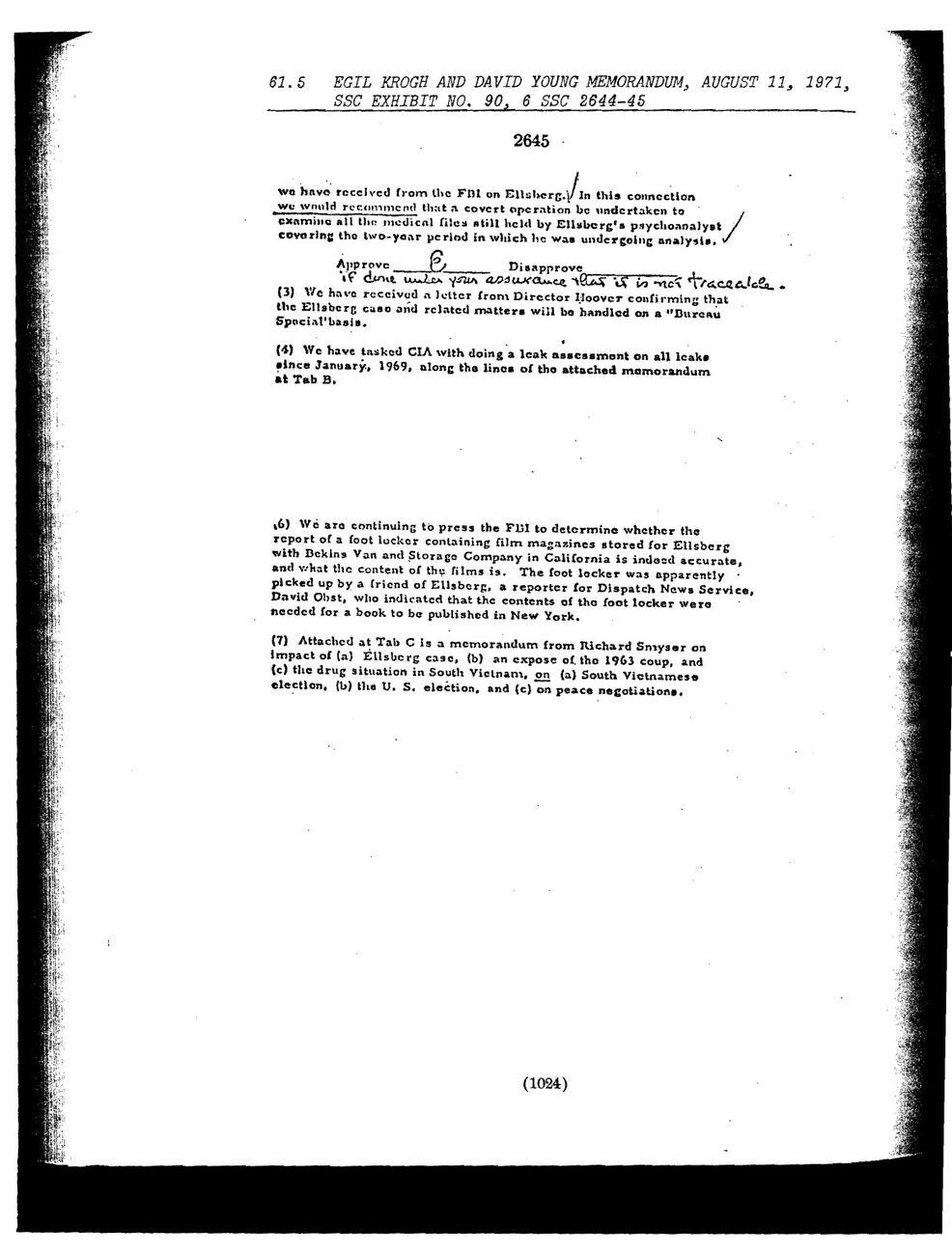
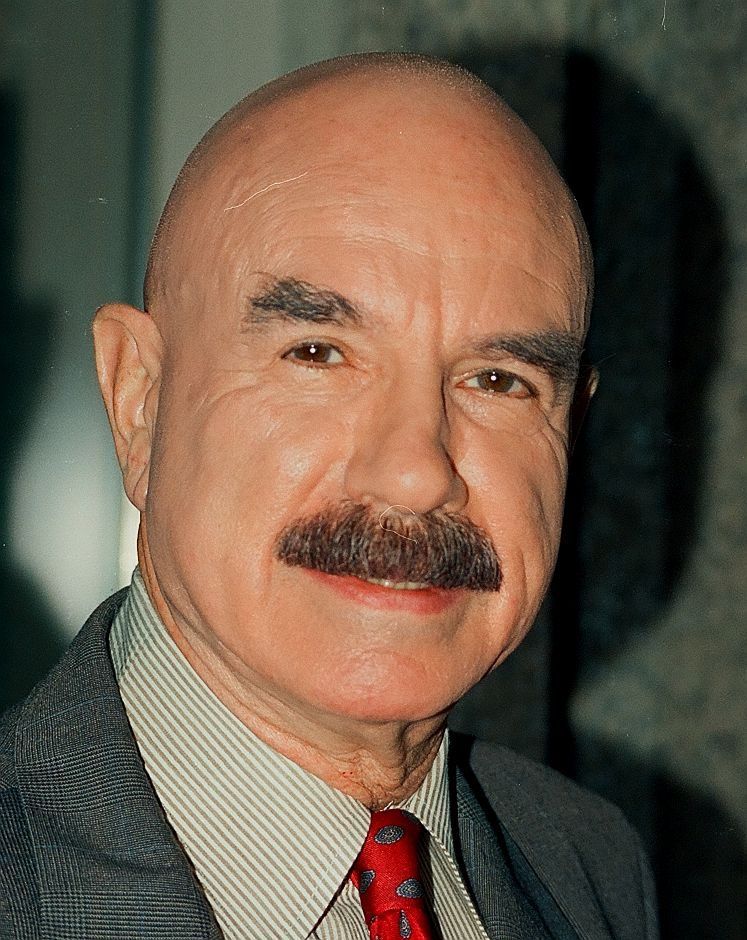
The White House set up a Special Investigations Unit, nicknamed the Plumbers, to find and stop leaks. E. Howard Hunt and G. Gordon Liddy worked for it. A memo of 11 August 1971 from Egil Krogh and David Young recommended a covert operation to get Ellsberg’s files from his psychiatrist, Dr. Lewis Fielding. [3]
On 3 September 1971 a team led by Hunt and Liddy broke into Fielding’s office. They found nothing useful. When the burglary came to light in 1973, the judge in Ellsberg’s espionage trial dismissed the case because of government misconduct. That dismissal was about how the government behaved, not a ruling that leaking classified papers was legal. [2]
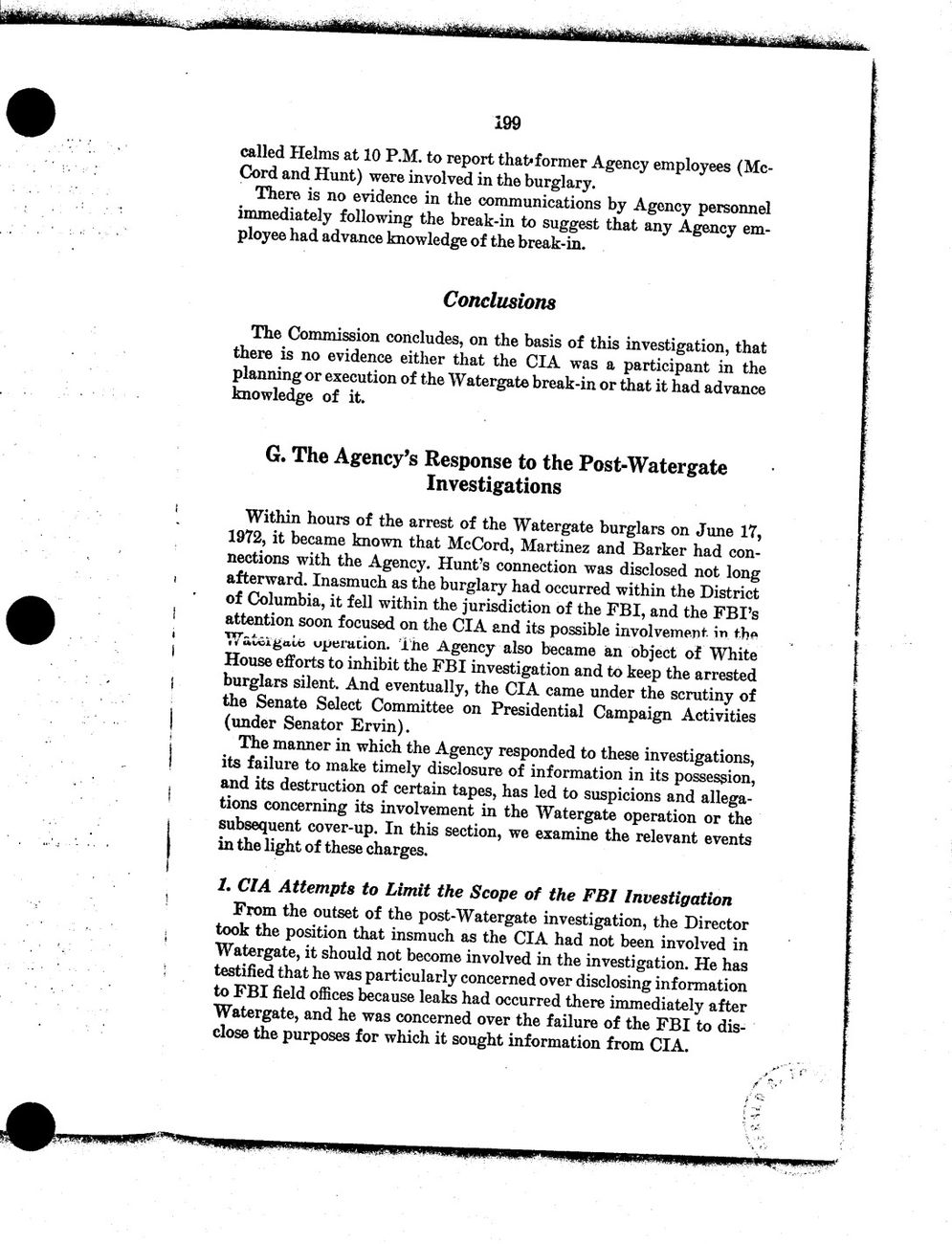
The CIA helped. At White House request it gave Hunt a disguise, false papers and a camera, developed his photographs of Fielding’s office and wrote psychological profiles of Ellsberg. The Rockefeller Commission documented this in 1975. It shows the CIA assisting the White House, not the CIA directing it. [4]
Bottom line Documented
documented. An earlier burglary, run from the White House, used the same men who were later arrested at the Watergate.
What the record can’t settle
The memo, the court history and the commission report establish the sequence. They do not record every private conversation about who approved the Fielding entry.
Sources
- National Archives — Pentagon Papers: complete declassified study Archival introduction to the complete 1945–1967 study, released in 2011. Establishes what the Papers were; does not itself prove the subsequent burglary.
- Federal Judicial Center — The Pentagon Papers in the Federal Courts (2019) Federal judicial history with reproduced contemporary documents. Separates the newspapers’ prior-restraint case from the Ellsberg–Russo prosecution and its dismissal.
- Krogh–Young memorandum to Ehrlichman, August 11, 1971 (congressional exhibit) Scanned contemporary memorandum reproduced for the House inquiry; the covert medical-file proposal appears on the final page. Read handwriting from the scan, not unreliable OCR.
- Rockefeller Commission report — CIA assistance to Hunt and Ellsberg profiling 1975 executive commission findings, chapter 14 in this PDF, concerning CIA assistance to Hunt and the Ellsberg profiles. CIA assistance is not identical to CIA direction of the DNC burglary.
- Miller Center / PRDE: Nixon, Haldeman, Kissinger and Ehrlichman, 17 June 1971, Oval Office conversation 525-001 Nixon orders that the bombing-halt file at the Brookings Institution be taken: “Blow the safe and get it.” The Brookings break-in never happened.


Approved reader comments and ratings are shown on the interactive edition. This plain reading edition does not load them.