The AI Files · Donald Trump · plain reading edition
Lafayette Square and the Bible photo: every entry
All 50 entries of the guide, grouped by period and case, each with its bottom line and its sources. This page needs no JavaScript. The interactive guide adds the story in 20 chapters, the people, the timeline, the theories, the 15 checked claims and the media.
Visual timeline
31 dated events
Floyd week and the park May 25–31, 2020
George Floyd week
Context only
Floyd week reaches the park
Context · Context
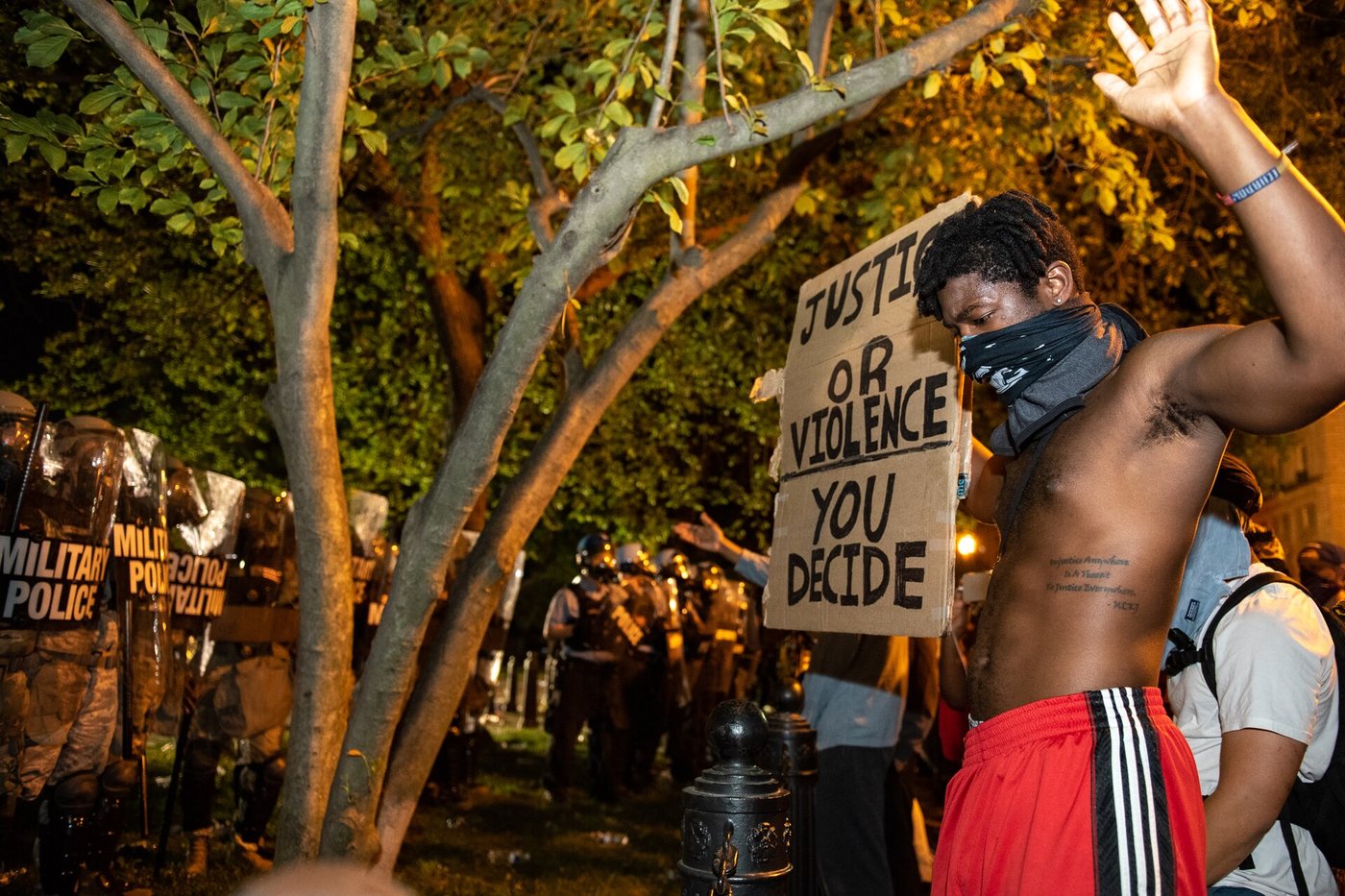
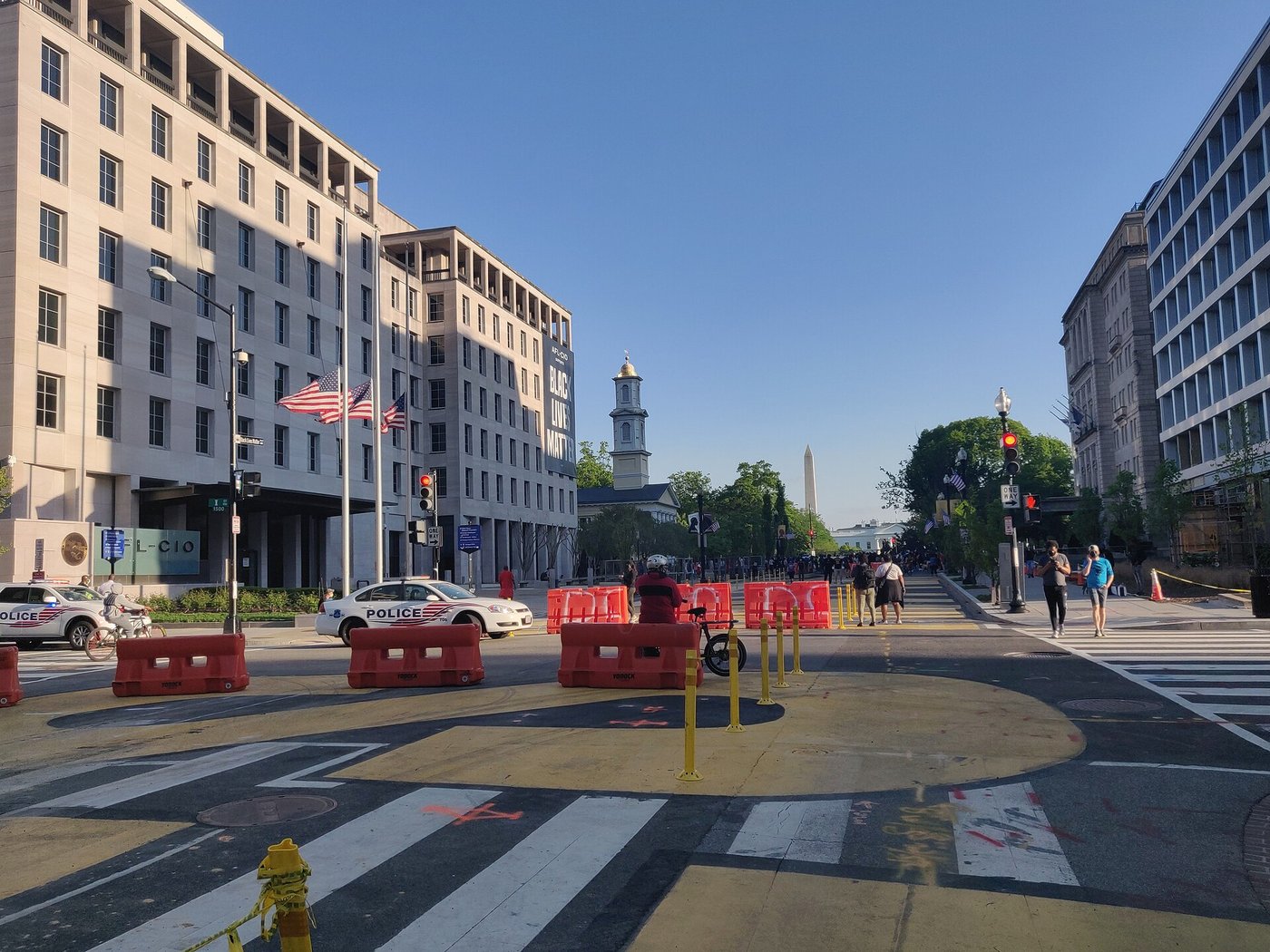
George Floyd protests at Lafayette Square, 2020. Rosa Pineda; Wikimedia Commons — CC BY-SA 4.0 · CC BY-SA 4.0
May 25 death; protests at Lafayette by May 29.
George Floyd died in Minneapolis police custody on May 25, 2020. Protests under the Black Lives Matter banner reached Lafayette Park by May 29. [1][2]
DOI OIG treats that week as the operational backdrop for USPP and Secret Service decisions — not as a separate criminal finding. [2]
Bottom line Context
Context for the crowd — not a rebuilt murder investigation.
What the record can’t settle
This page does not adjudicate the Minneapolis case.
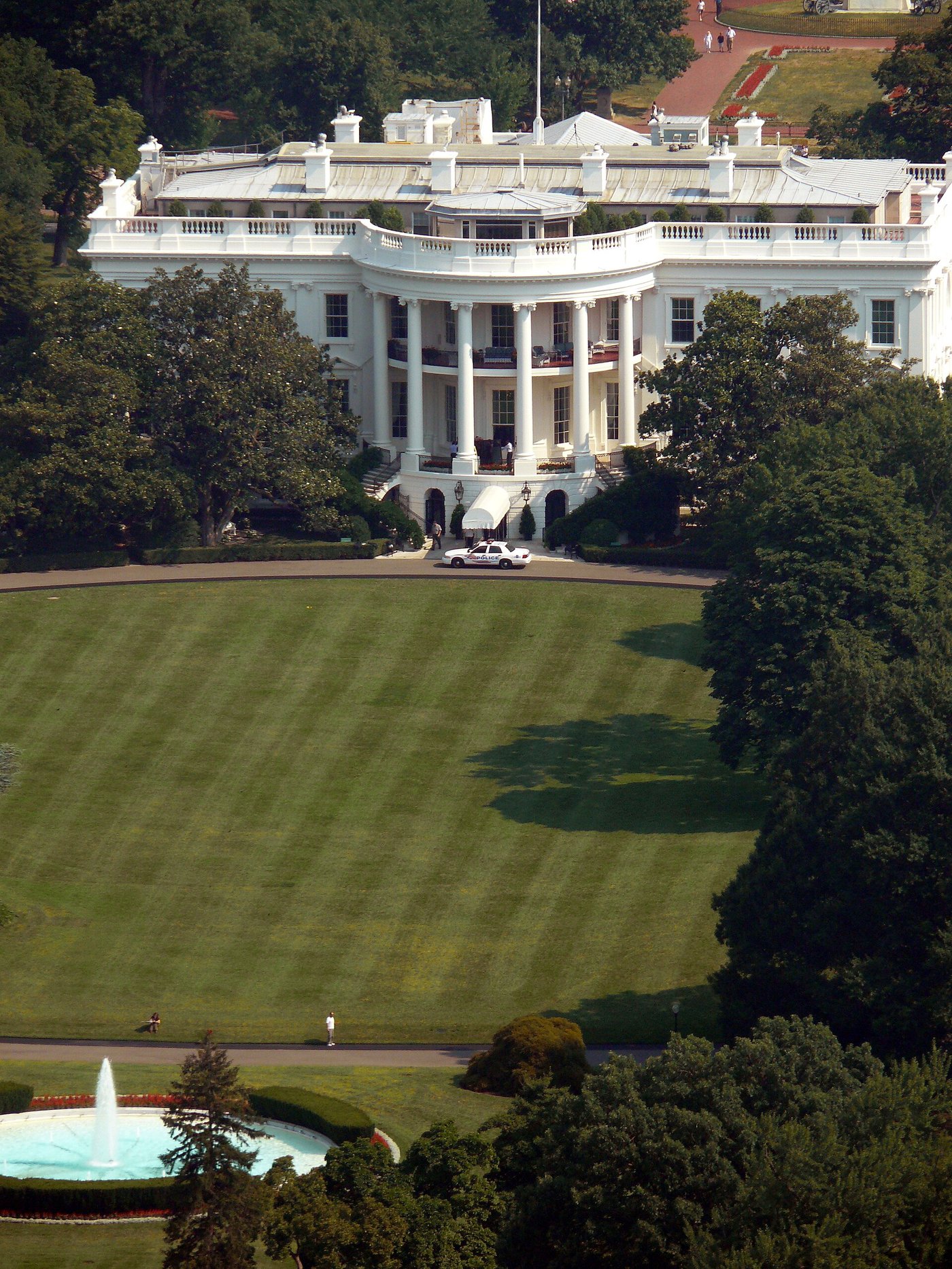
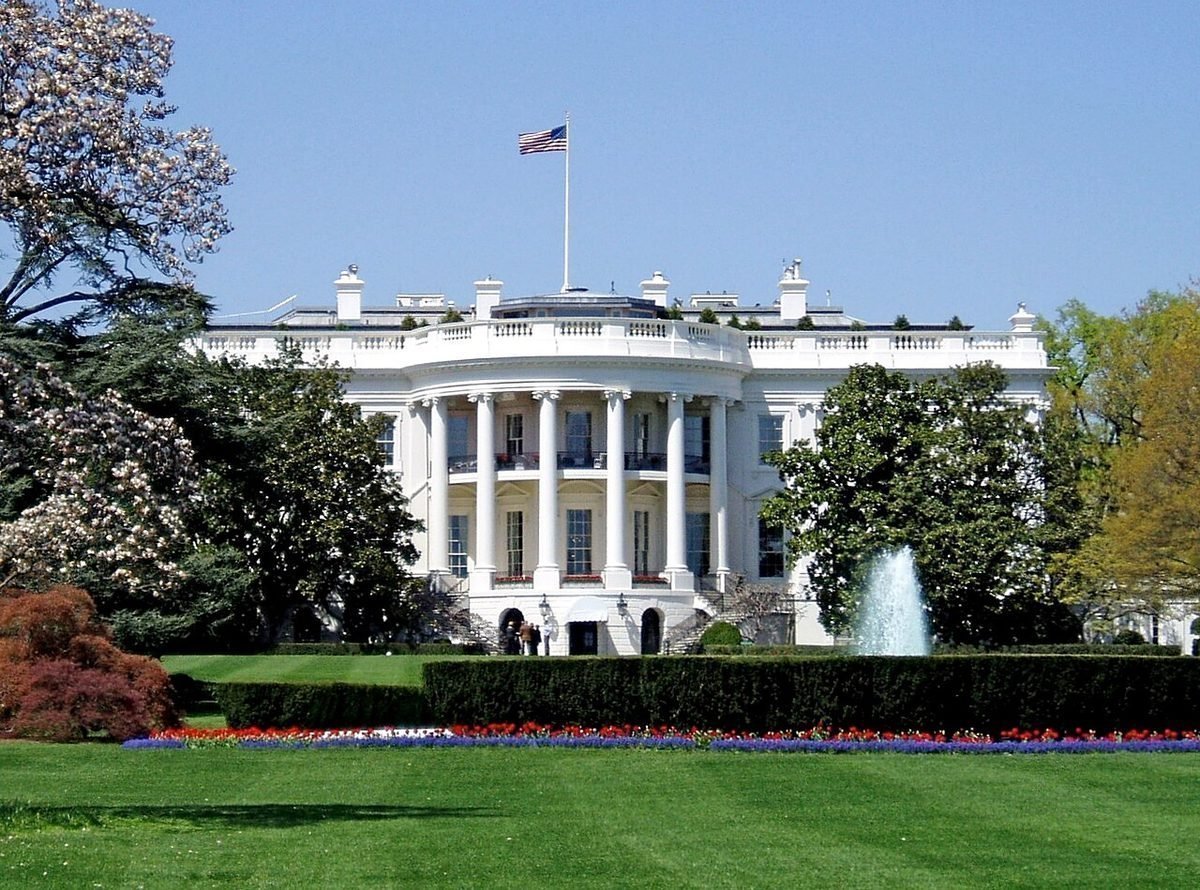
South façade of the White House. Ad Meskens; Wikimedia Commons — CC BY-SA 3.0 · CC BY-SA 3.0
Seven federal acres north of the White House.
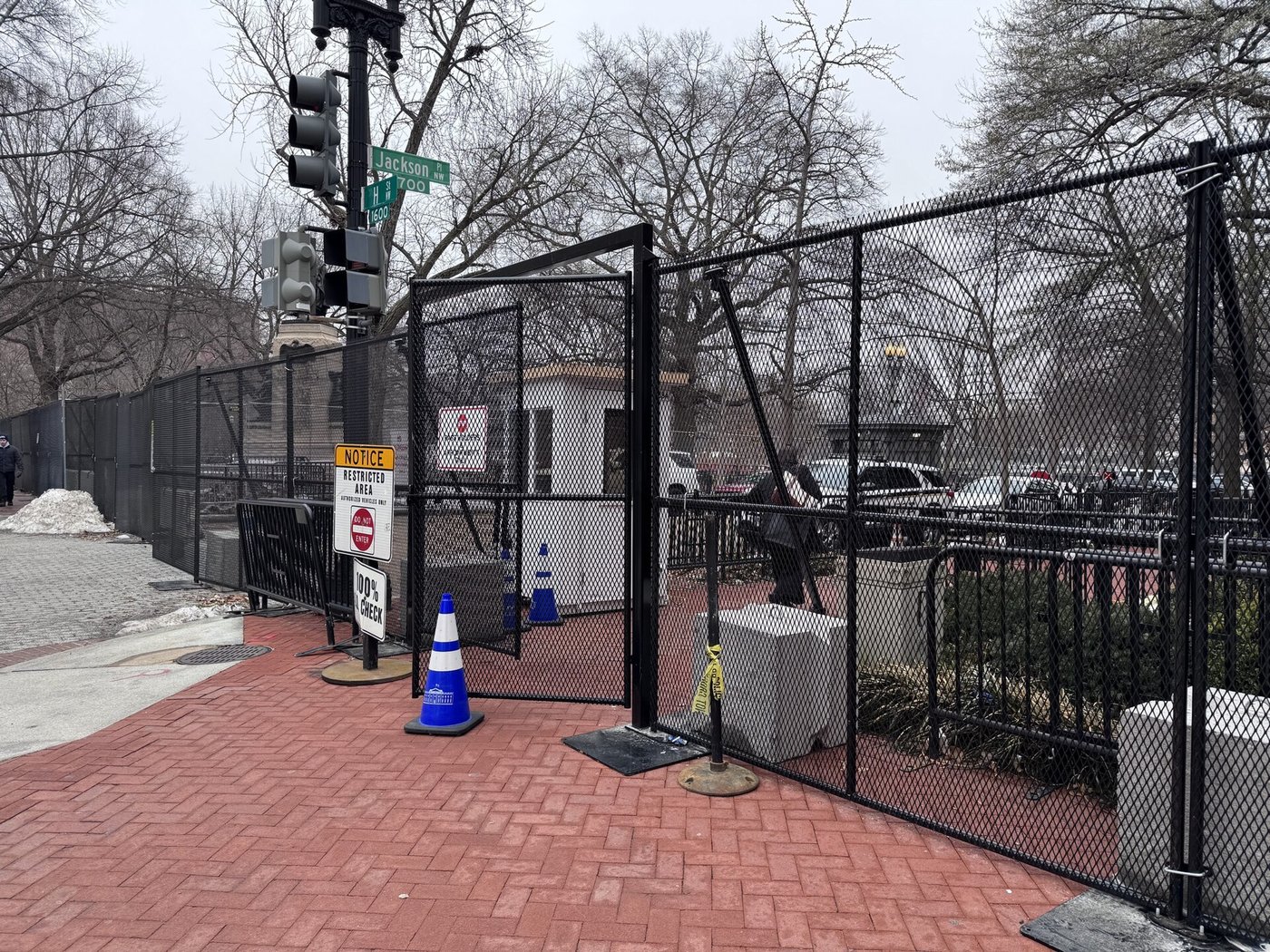
Lafayette Park is a federally owned ~7-acre NPS property bounded by H Street, Jackson Place, Madison Place, and Pennsylvania Avenue — directly north of the White House north lawn. [2][1]
That geography made it both a historic First Amendment site and the front lawn security problem of late May 2020. [2]
Bottom line History
NPS manages; USPP patrols; H Street is the north edge.
George Floyd protests at Lafayette Square, 2020. Rosa Pineda; Wikimedia Commons — CC BY-SA 4.0 · CC BY-SA 4.0
Projectiles, vandalism, early injuries.
DOI OIG recounts violence the evening of May 29 into May 30: Treasury Annex vandalized; officers hit with bottles and bricks; a brick strike to a USPP officer’s head. [1]
Acting Chief Monahan and the incident commander described those events to the IG as confirmed by other evidence. [1]
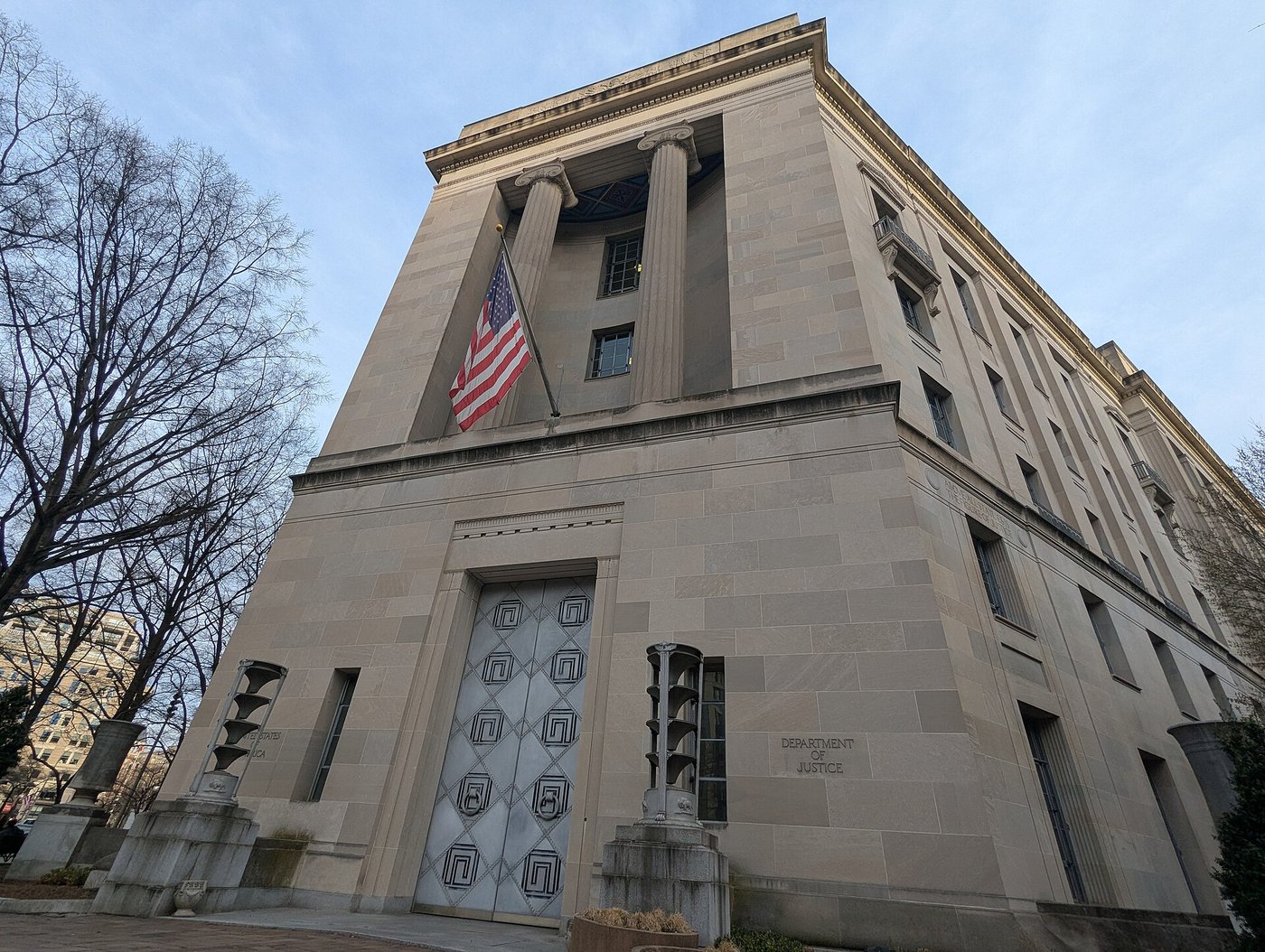
Department of Justice building — multi-agency deployments. Sdkb; Wikimedia Commons — CC BY-SA 4.0 · CC BY-SA 4.0
USPP and Secret Service establish joint command.
On May 30 the USPP and U.S. Secret Service established a unified command to coordinate the law-enforcement response at the park. [1]
DOJ OIG later stresses that ATF, BOP, and USMS personnel on June 1 assisted under that USPP–USSS command — not under Barr as their operational boss. [2]
Bottom line Documented
The June 1 clear sits inside that structure.
What the record can’t settle
Unified command ≠ Attorney General chain of command.
George Floyd protests at Lafayette Square, 2020. Rosa Pineda; Wikimedia Commons — CC BY-SA 4.0 · CC BY-SA 4.0
May 30–31 injury count in the DOI OIG brief.
DOI OIG’s results brief: from May 30 to 31, at least 49 USPP officers were injured while policing the protests, and federal and private property was vandalized. [1]
Appendix timing separates ~20 injured May 30 and 16 injured May 31 in the detailed chronology. [1]
Bottom line Official
The fencing justification cites officer safety and property damage.
What the record can’t settle
Injury totals do not decide whether warnings were adequate.
On the morning of June 1 the Secret Service procured antiscale fencing to establish a more secure perimeter around Lafayette Park, to be delivered and installed that day. [1]
Contractor interviews and emails via USSS, summarized by DOI OIG, place the proceed order around noon and materials arriving mid-afternoon. [2][1]
Bottom line Official
The physical fence is the DOI OIG’s stated purpose for the clear.
What the record can’t settle
Procurement emails are filtered through the IG’s summary.
Documents / record imagery (pooled). Pooled from AI Files sibling guides; re-encoded, EXIF stripped · re-encoded JPEG; EXIF stripped
IC briefs MPD and Secret Service on securing H Street.
DOI OIG Appendix 1: at 11:50 a.m. the USPP incident commander briefed MPD and Secret Service on a plan to secure H Street and surrounding areas so the contractor could install the antiscale fence. [1]
The IG’s analysis: USPP cleared the park to allow the contractor to install fencing safely after May 30–31 destruction and injuries — not to enable the President’s walk. [1]
Bottom line Official
Plan clock starts hours before any presidential walk.
What the record can’t settle
A briefing is not the same as a White House order.
Documents / record imagery (pooled). Pooled from AI Files sibling guides; re-encoded, EXIF stripped · re-encoded JPEG; EXIF stripped
Federal fencing mission, not Mayor’s curfew.
The incident commander told DOI OIG he did not consider waiting until the citywide 7 p.m. curfew: “We were not enforcing the Mayor’s curfew. We’re a Federal entity.” [1]
Bowser announced the 7 p.m. curfew around 11:30 a.m. June 1. [2][1]
Bottom line Official
Rival “cleared for curfew” path has to beat this record.
What the record can’t settle
Does not prove every partner shared that rationale.
South façade of the White House. Ad Meskens; Wikimedia Commons — CC BY-SA 3.0 · CC BY-SA 3.0
Mid- to late afternoon — after the plan is live.
DOI OIG: evidence showed USPP did not know about the President’s potential movement until mid- to late afternoon June 1 — hours after developing the operational plan and after the fencing contractor had arrived. [1]
DOJ OIG similarly places USSS/USPP learning of a possible visit between roughly 3 and 5 p.m., with no set time. [2]
Bottom line Official
Timing is the hinge of the photo-op-motive fight.
What the record can’t settle
“Possible visit” ≠ detailed photo-op plan known to USPP.
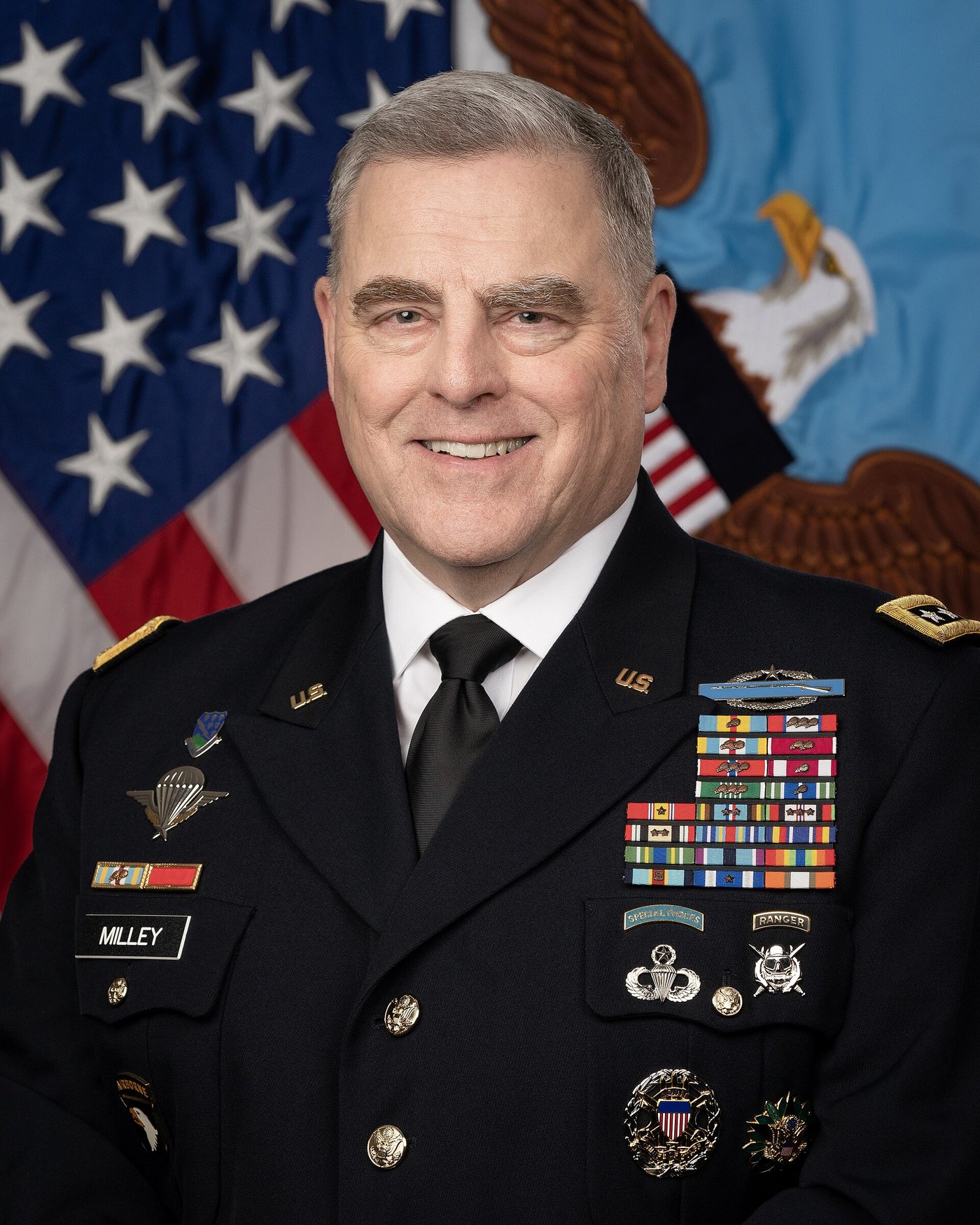
Gen. Mark A. Milley, official portrait. Chief Petty Officer Carlos M. Vazquez II and Benjamin Applebaum, U.S. Department of Defense; Wikimedia Commons — Public domain · Public domain
After Armory staging.
Appendix 1: DCNG arrives in Lafayette Park at 5:10 p.m. after reporting to the Armory at 4 p.m. [1][2]
A DCNG major serving as liaison was interviewed by DOI OIG and had testified before Congress. [1]
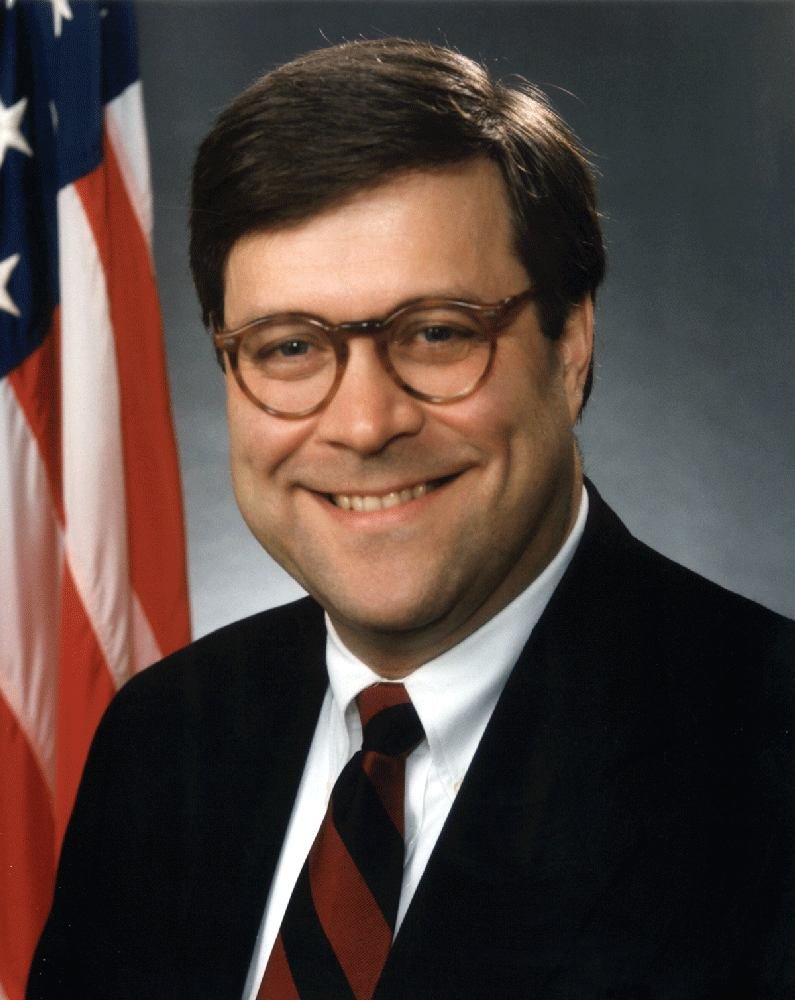
William P. Barr, official Attorney General portrait. DOJ; Wikimedia Commons — Public domain · Public domain
MPD Assistant Chief’s recollection of a USPP IC phone call.
An MPD Assistant Chief told DOJ OIG that shortly before the clear the USPP incident commander said on a call, “the Attorney General is here, we got to go now.” [1]
DOJ OIG found that statement alone insufficient against radio logs, written communications, and testimony showing prep before Barr arrived. [1][2]
Bottom line Mixed
DOJ OIG weighed it and still found Barr did not time the clear.
What the record can’t settle
One recalled sentence vs time-stamped prep evidence.
Units push onto H Street before the third warning ends
Record · Documented
Black Lives Matter Plaza, near the White House. Kurt Kaiser; Wikimedia Commons — CC0 · CC0
ACPD/USPP CDU timing glitch.
Appendix 1: at 6:28 p.m. USPP and ACPD civil disturbance units deployed onto H Street before the third dispersal warning was complete; Secret Service had already moved onto H Street at 6:16. [1][2]
DOI OIG ties such glitches to missing shared radio channels and oral-only briefings. [1]
Black Lives Matter Plaza, near the White House. Kurt Kaiser; Wikimedia Commons — CC0 · CC0
The violent clear is not in dispute.
DOI OIG: operation began 6:23 and was completed by 6:50 p.m. [1]
Contemporaneous press and video show chemical irritants and mounted units; BLM D.C. sued over the clear. Individual uses of force were carved out of the DOI OIG project. [2][3][1]
Bottom line Documented
Documented tactics; individual force cases were outside DOI OIG.
George Floyd protests at Lafayette Square, 2020. Rosa Pineda; Wikimedia Commons — CC BY-SA 4.0 · CC BY-SA 4.0
Complaint filed June 4, 2020.
Black Lives Matter D.C. v. Trump, No. 20-cv-01469 (D.D.C.), was filed days after the clear; DOI OIG reviewed the complaint while excluding individual force adjudication. [1][2]
Litigation tracks rights claims; the IG tracks operational purpose and warnings. [2]
Bottom line Alleged
Civil claims about force and speech; parallel to IG ops review.
Gen. Mark A. Milley, official portrait. Chief Petty Officer Carlos M. Vazquez II and Benjamin Applebaum, U.S. Department of Defense; Wikimedia Commons — Public domain · Public domain
Chairman in fatigues on the walk.
General Mark Milley accompanied the walk in uniform and later said he should not have been there — a public second thought about politicizing the military. [1]
That regret lives in memory alongside the IG motive findings; it does not replace them. [2]
Gen. Mark A. Milley, official portrait. Chief Petty Officer Carlos M. Vazquez II and Benjamin Applebaum, U.S. Department of Defense; Wikimedia Commons — Public domain · Public domain
Secretary of Defense in June 1 meetings; later broke on Insurrection Act talk.
DOJ OIG places Esper and Army leadership in June 1 coordination meetings with Barr and others. [1]
Barr’s testimony describes counseling against broader military options while pushing a strong federal law-enforcement posture. [2]
DOI OIG: evidence does not support photo-op motive for USPP
Record · Official
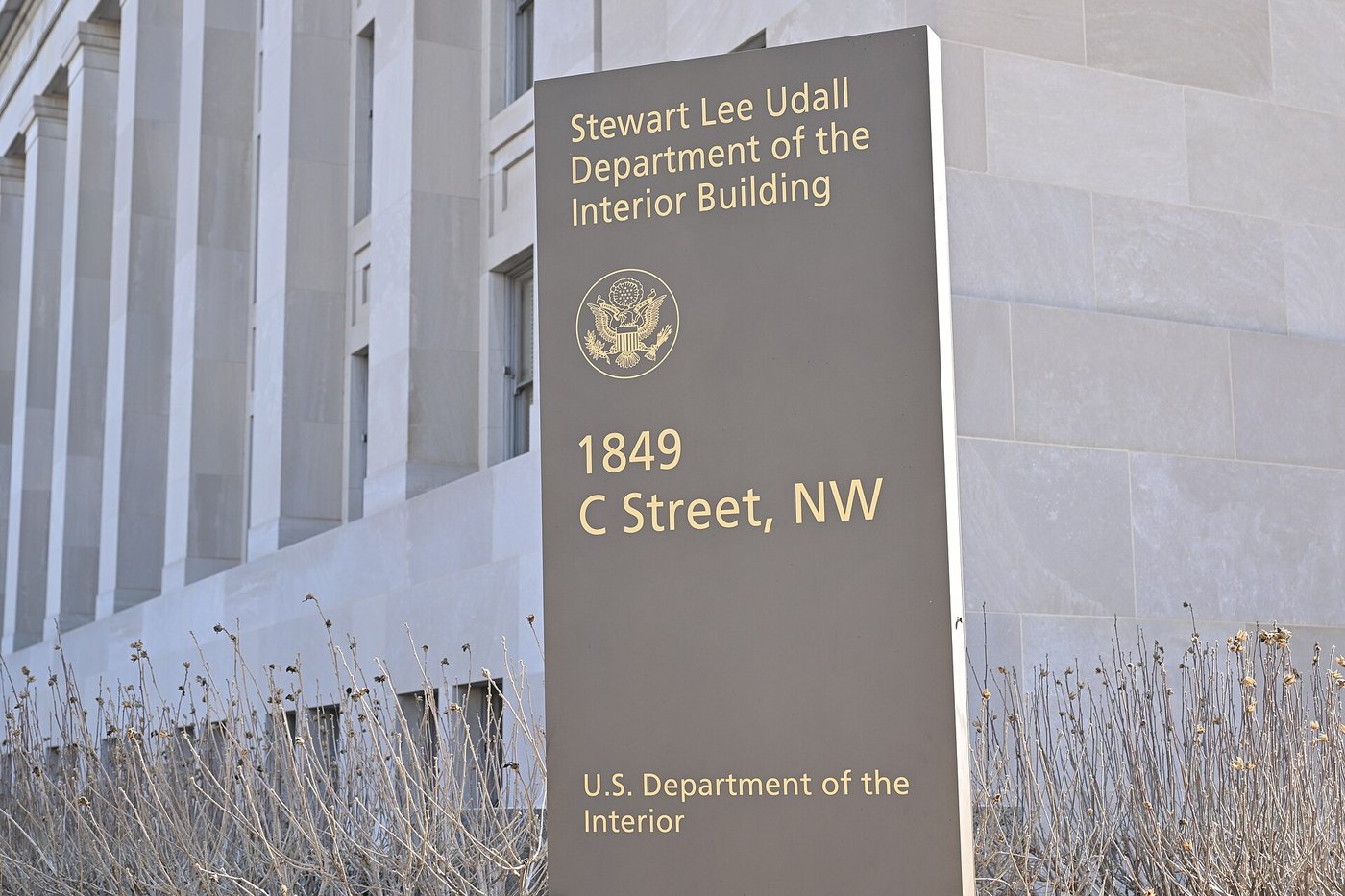
U.S. Department of the Interior (Udall) Building. G. Edward Johnson; Wikimedia Commons — CC BY 4.0 · CC BY 4.0
June 8, 2021 special review.
“The evidence we obtained did not support a finding that the USPP cleared the park to allow the President to survey the damage and walk to St. John’s Church.” [1]
Instead, the IG found the clear was to let the contractor safely install antiscale fencing after May 30–31 injuries and damage. [1][2]
U.S. Department of the Interior (Udall) Building. G. Edward Johnson; Wikimedia Commons — CC BY 4.0 · CC BY 4.0
Inaudible warnings; no shared USPP–USSS channel.
DOI OIG found three LRAD warnings were not audible to everyone and that USPP lacked a detailed dispersal-warning policy for this kind of operation. [1]
It also found USPP and Secret Service did not share a radio channel, briefings were largely oral, and an assisting entity arrived late — weaknesses that may have produced inconsistent tactics. [1]
Bottom line Official
Operational criticism inside a fencing-purpose finding.
U.S. Department of the Interior (Udall) Building. G. Edward Johnson; Wikimedia Commons — CC BY 4.0 · CC BY 4.0
Strongest statement of the IG yardstick.
Steel-man: USPP and USSS planned a clear to install antiscale fencing after two days of injuries; they executed when materials and bodies arrived; Barr showed up after prep; Trump then used the emptied corridor for a church photo. [1][2]
On that reading, “cleared for the Bible” confuses sequence and political use with the Park Police’s operational purpose. [1]
Bottom line Documented
Plan + contractor + late notice of visit + install after walk.
What the record can’t settle
Still leaves WH political use of the empty square open as a separate moral question.
Documents / record imagery (pooled). Pooled from AI Files sibling guides; re-encoded, EXIF stripped · re-encoded JPEG; EXIF stripped
No individual force review; limited non-DOI motives.
DOI OIG did not review individual uses of force (separate inquiries/lawsuits) and did not interview Barr, White House personnel, BOP, or Secret Service about independent decisions outside USPP’s activities. [1]
Post-report press (labeled press) listed lingering questions about other agencies’ motives. [2]
Bottom line Official
Gaps are real — and labeled.
What the record can’t settle
Scope limits are not secret exonerations of the White House.
William P. Barr, official Attorney General portrait. DOJ; Wikimedia Commons — Public domain · Public domain
Prep before arrival; witnesses deny a go-order.
DOJ OIG determined the unified command had already decided to initiate the clear and begun preparations before Barr arrived, based on time-stamped MPD radio, contemporaneous writings, and testimony. [1][3]
It concluded Barr’s presence did not impact timing. [2]
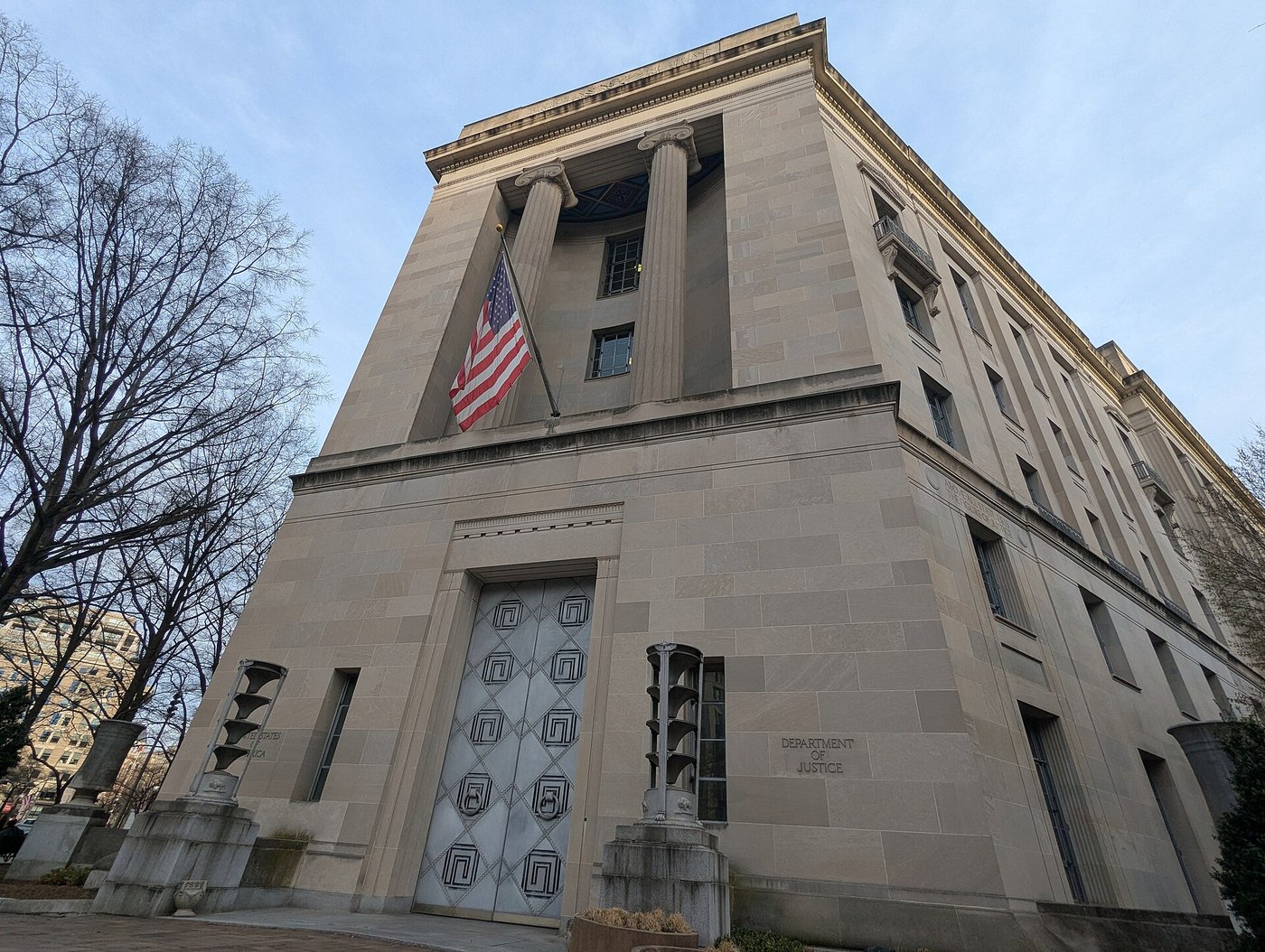
Robert F. Kennedy Department of Justice Building. Sdkb; Wikimedia Commons — CC BY-SA 4.0 · CC BY-SA 4.0
Kupec’s June 2 attribution fails DOJ OIG review.
DOJ OIG found no evidence supporting Kupec’s statement that Barr told officials to “Get it done,” and concluded the line inaccurately suggested Barr had personally ordered the operation. [1][2]
Because Barr and Kupec declined interviews, the IG could not determine whether Barr approved the statement. [1]
Department of Justice building — multi-agency deployments. Sdkb; Wikimedia Commons — CC BY-SA 4.0 · CC BY-SA 4.0
Levi email; officers arrive without full guidance.
At 5:00 p.m. Barr’s chief of staff emailed a BOP official to send personnel to the White House “ASAP,” with no mission or rules-of-engagement guidance. [1]
About 50 BOP SORT arrived ~5:40 p.m. without clearly identifying markings — a DOJ OIG criticism distinct from the motive of the USPP clear. [1]
Bottom line Official
Chaos in DOJ deployment ≠ Barr timed the USPP clear.
Department of Justice building — multi-agency deployments. Sdkb; Wikimedia Commons — CC BY-SA 4.0 · CC BY-SA 4.0
Max-strength improvisation; untrained missions.
DOJ OIG found DOJ command and control “at times chaotic and disorganized,” with personnel deployed to situations for which they were not trained or equipped. [1][2]
FBI-coordinated June 3 perimeter work around St. John’s at Barr’s direction is analyzed as a later, separate deployment problem. [1]
Bottom line Official
Criticizes leadership process without rewriting USPP motive.
What the record can’t settle
June 3 St. John’s perimeter is not June 1’s clear.
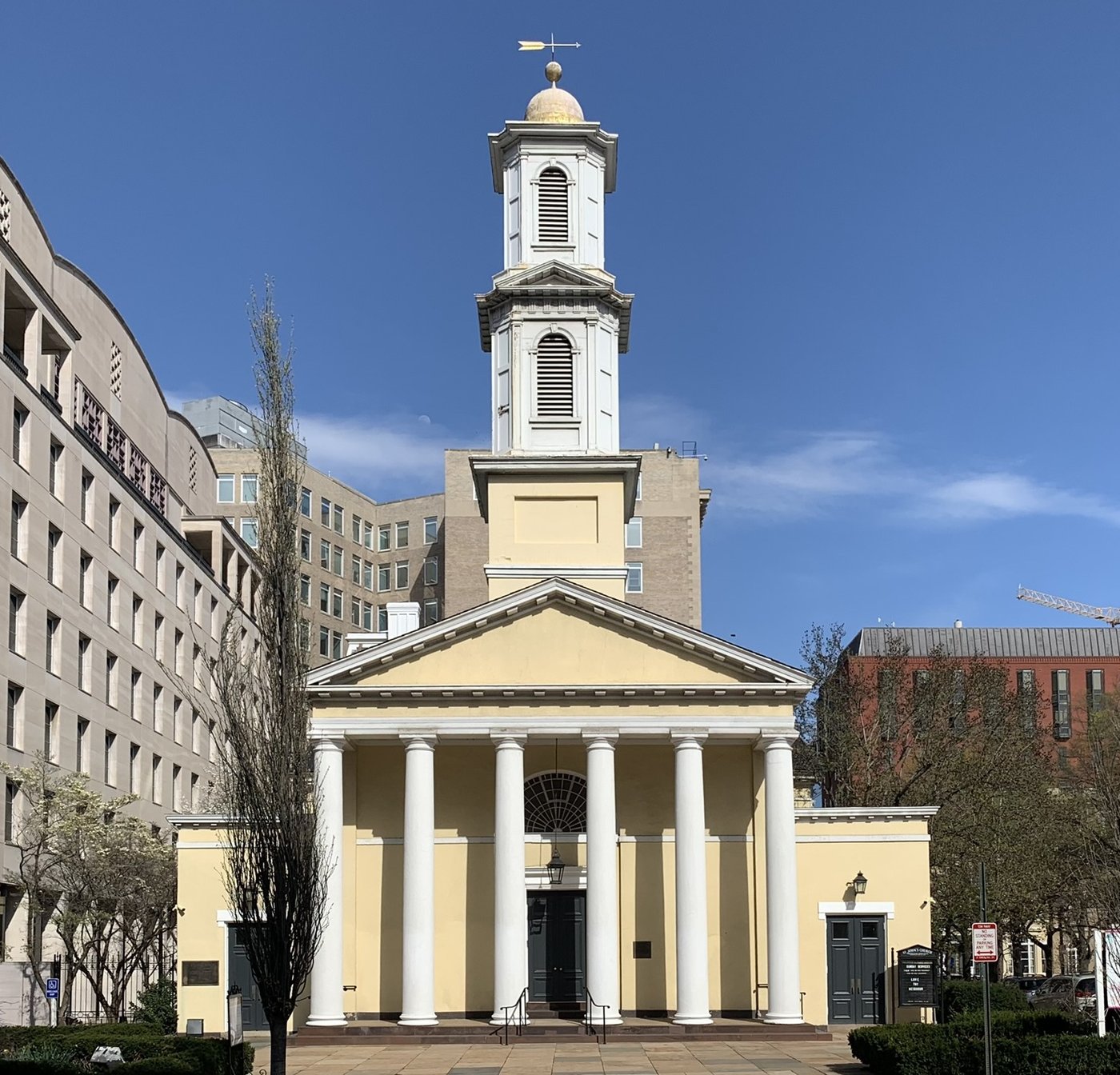
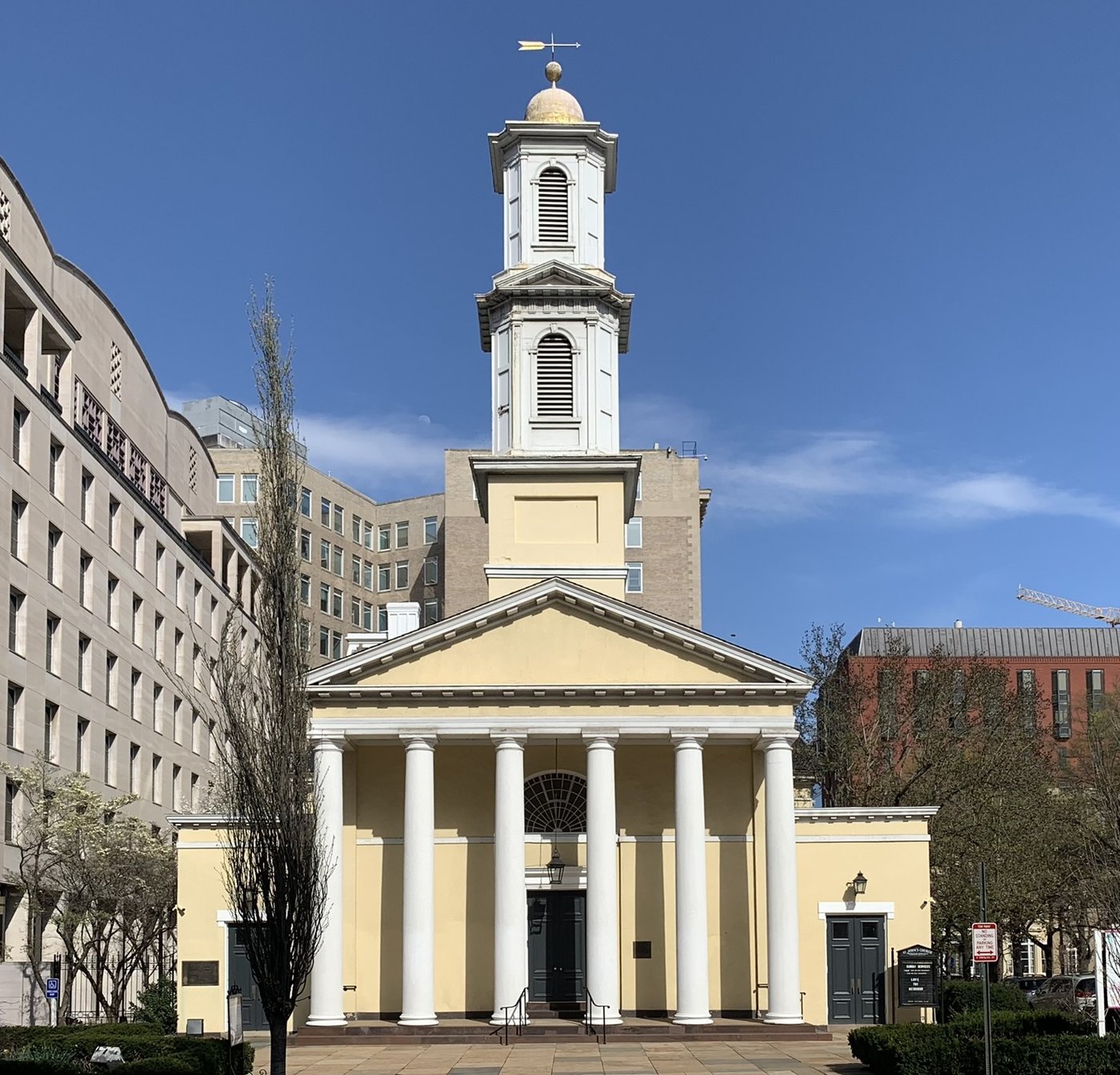
St. John's Episcopal Church façade — site of the June 1, 2020 photo-op. APK; Wikimedia Commons — CC BY-SA 4.0 · CC BY-SA 4.0
Strongest rival path.
Steel-man critique: even if USPP had a fencing plan, the President’s team needed a cleared path for a law-and-order spectacle the same evening — and got one minutes before the walk. [1][2]
That view must treat DOI OIG’s USPP-motive finding as incomplete on White House and Secret Service political aims, which the IG said it did not fully examine. [3][2]
Bottom line Disputed
Requires WH/SS political timing the DOI lane did not fully test.
What the record can’t settle
Must explain contractor paperwork and afternoon learn-of-visit findings.
St. John's Episcopal Church façade — site of the June 1, 2020 photo-op. APK; Wikimedia Commons — CC BY-SA 4.0 · CC BY-SA 4.0
From photo-op-first headline to fencing-first asterisk.
June 2020 memory crystallized around the Bible photo and a cleared path. [5][6]
June 2021 DOI OIG and July 2024 DOJ OIG forced a more precise public sentence: clearance documented; Park Police photo-op motive not supported; Barr timing not supported — with scope asterisks. [1][4][2]