In Pan American Petroleum & Transport Co. v. United States, the Supreme Court upheld cancellation of the California contracts and lease. The opinion treated Fall’s conflict and the Doheny payment as central to a corrupt transaction. It also held that officials lacked authority for the arrangements under the statutes they invoked. A claimed public benefit from fuel storage did not make an unauthorized and corrupt bargain lawful.[1]
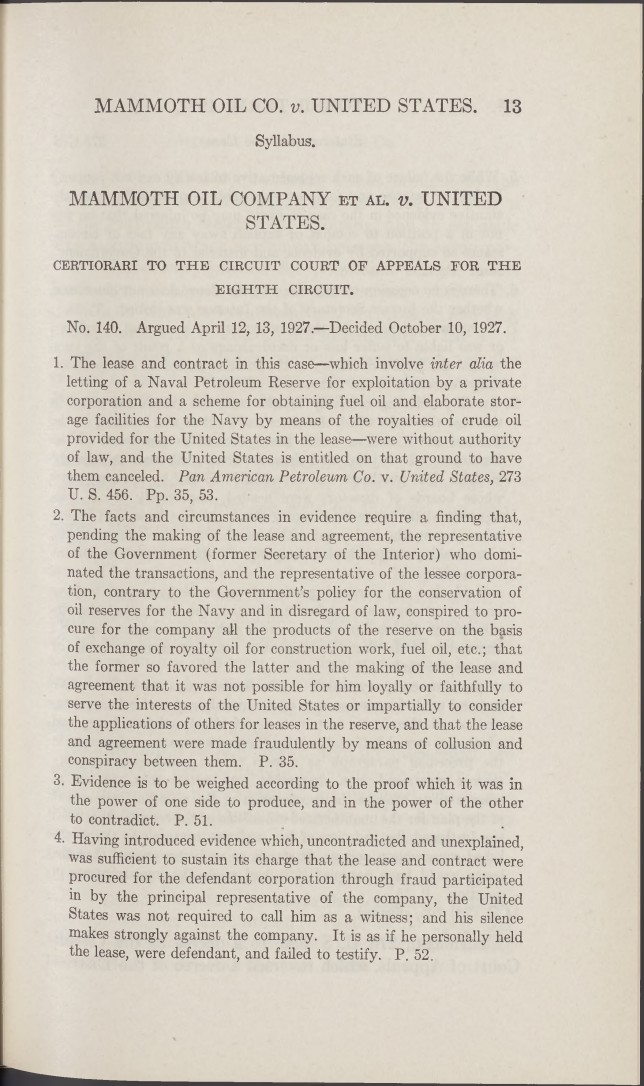
Mammoth Oil concerned the Wyoming Teapot Dome arrangements. The Court found fraudulent collusion between Fall and Sinclair’s side and held the lease and associated agreement unauthorized. This was a substantive judicial finding, not simply a Senate accusation. But the Court expressly left open whether Fall had been bribed: deciding that additional question was unnecessary to the civil relief.[2]
Read together, the cases explain why “nobody proved anything because the oilmen were acquitted” goes too far. They also explain why “the Supreme Court convicted Sinclair of bribery” goes too far. The Court was deciding the government’s right to undo transactions and recover property in these civil cases. That remedy and the criminal prosecution of an individual are distinct tools, with different questions and consequences.[1][2]