Interpretation 01
A coordinated Spokane cell
Best supported account of the prosecuted events
The strongest version
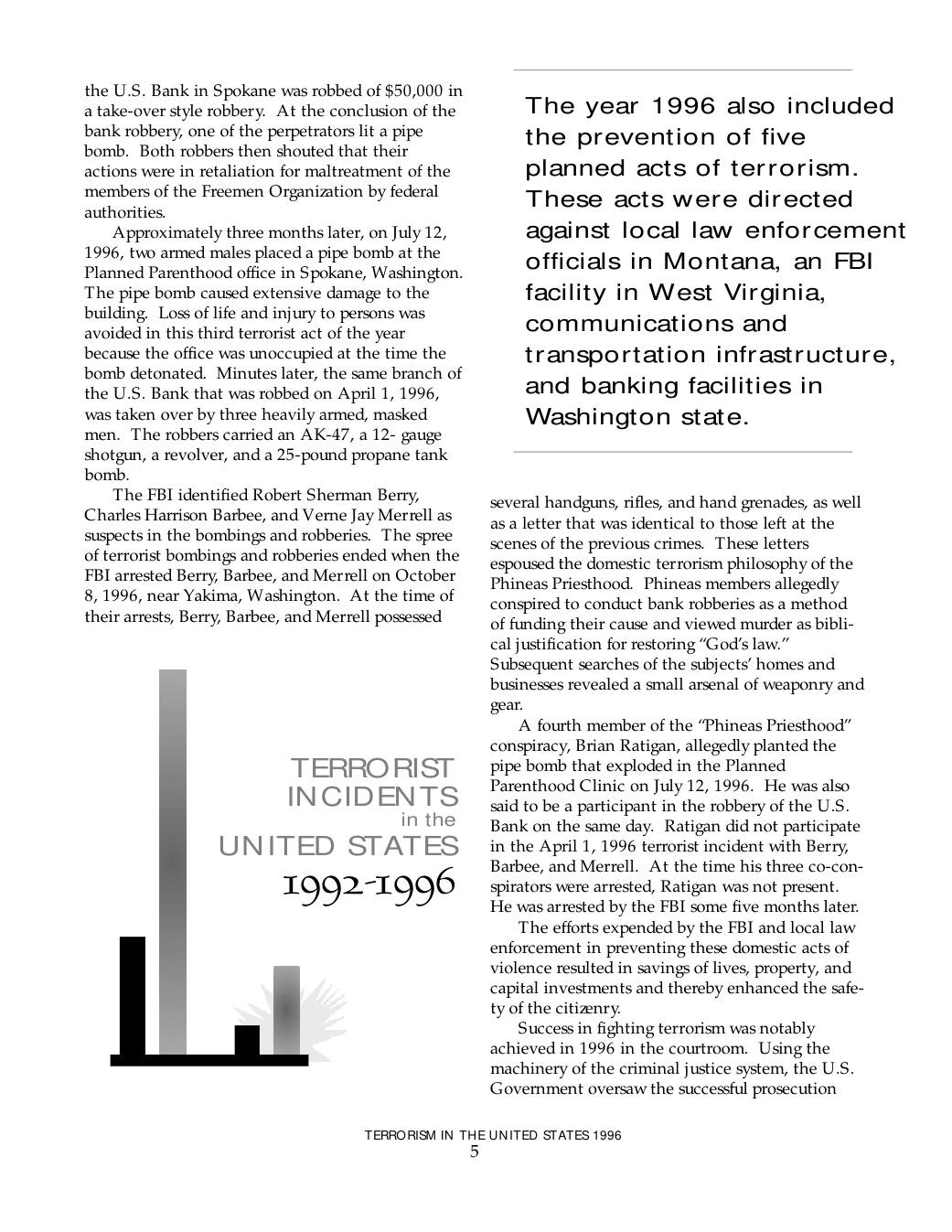
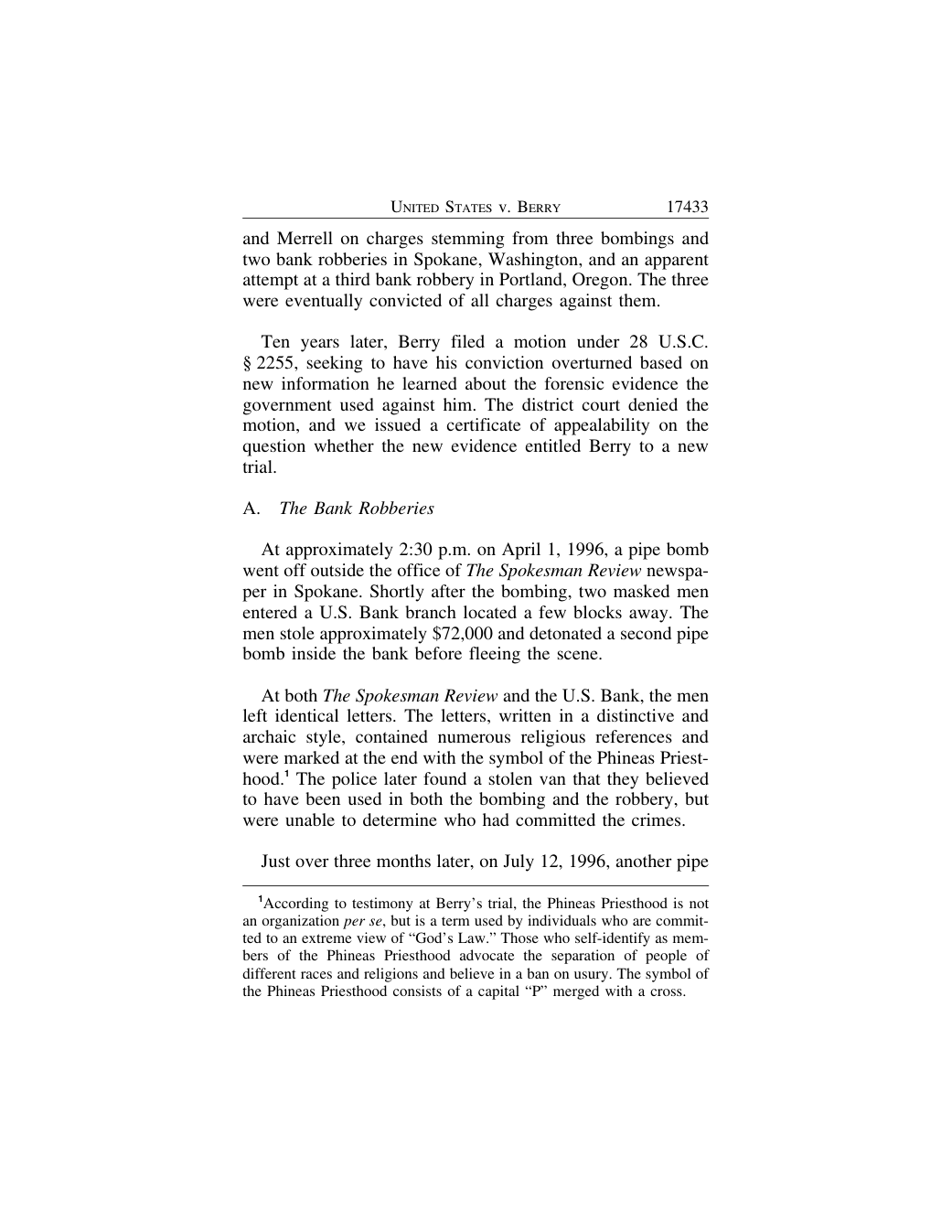
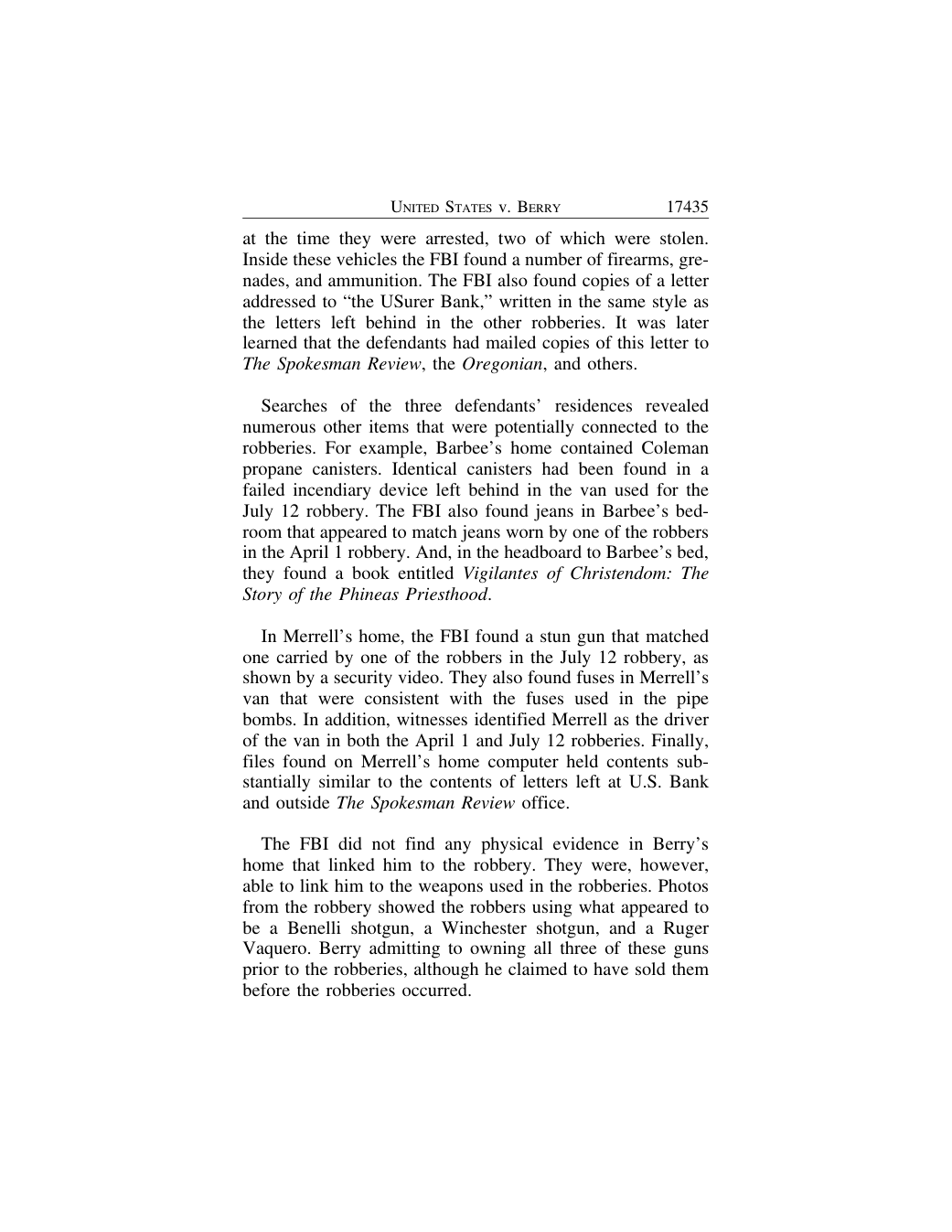
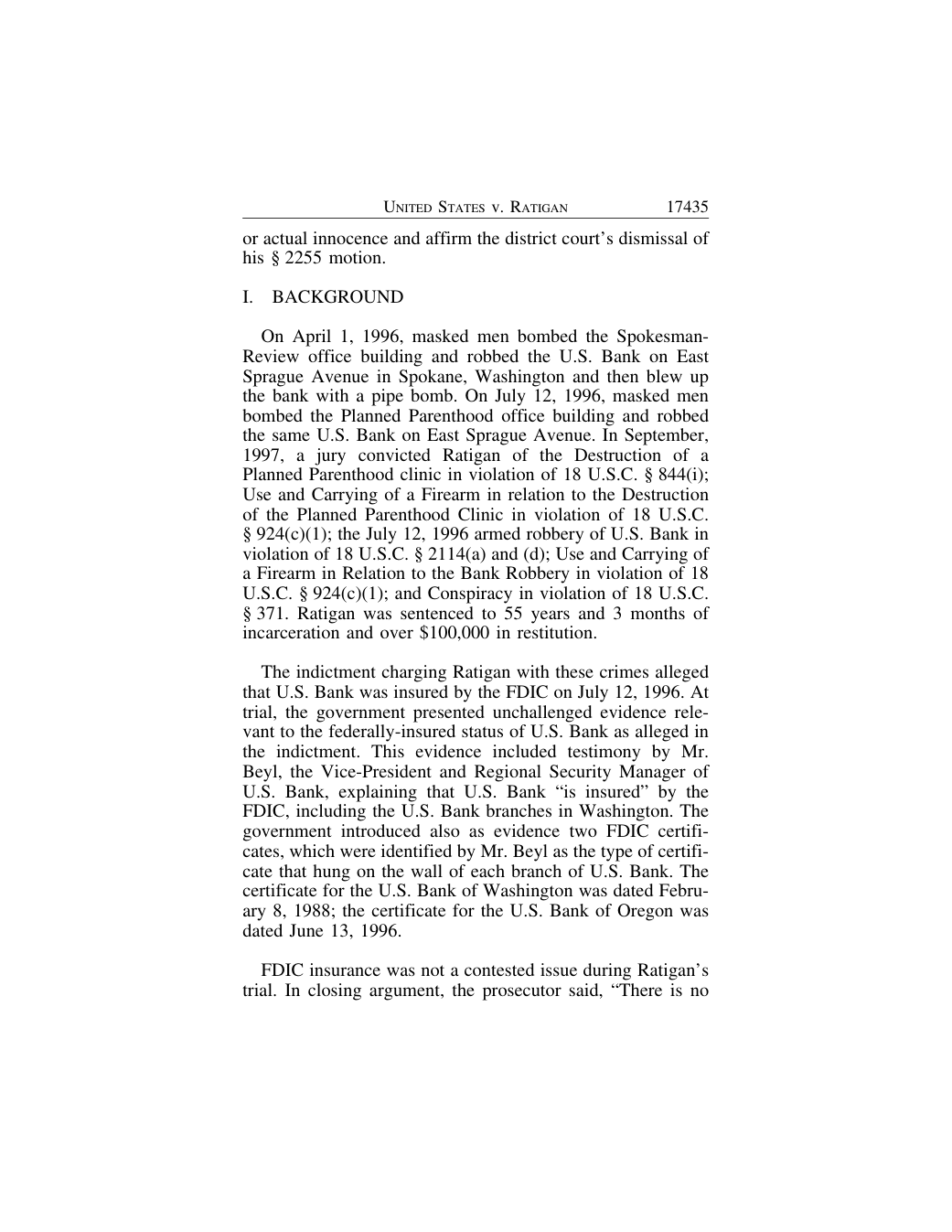
A small group combined shared commitments with practical cooperation. Scene communications, recovered records, identification evidence and physical comparisons corroborated a coordinated campaign, rather than simply identifying unpopular beliefs.
Accepts
The attacks and adopted symbolism in P1/P2; the corroboration chain in P3 and defendant-specific verdicts in P4.
Must still explain
The evidence cannot be pooled indiscriminately across defendants. The account must explain the initial jury disagreement, witness incentives, identification objections and the later forensic limits in P5.
Assessment
The convictions and appellate records strongly support this account within the case. Authenticated exhibit errors, credible corroborated recantations, planted evidence or a merits reversal could change particular findings. The appellate narration is not an independent re-examination of every trial exhibit.
Accept these path nodes
Remove or revise this inference
- Remove pooled guilt across defendants or an assumption that every evidentiary strand has equal strength.
Add this evidence
- Actual defendant-specific exhibits and corroboration; explanations for both jury disagreement and the later verdicts.
What would change this assessment
Authenticated exhibit errors, independently corroborated recantations, proof of planted evidence or a merits reversal could change particular attributions; mere ideological association cannot fill a missing evidentiary link.
Sources: S01 · S03 · S04 · S06 · S16 · S17
Interpretation 02
The defendants’ frame-up and media-stunt account
A documented defense; not established as the explanation
The strongest version
The informant had a substantial reward incentive, investigators may have interpreted ambiguous objects through an early theory, and the Portland trip could have been a religious publicity action rather than preparation for another robbery.
Accepts
The attacks occurred; the three men participated in the Portland trip and possessed the recovered material. It disputes the authorship and criminal interpretation of that material and the link to earlier events.
Must still explain
It must account for the computer/letter comparisons, witnesses and video, recovered vehicles and objects, and case-specific forensic/manufacturer evidence. Barbee’s later renunciation of wrongful conduct adds a dated development concerning him, without deciding every other defendant’s position.
Assessment
Contemporary defense reporting preserves specific objections; the 2010 court rejected the new-trial challenge. Corroborated evidence of planting, authenticated communications identifying another perpetrator or reliable records undermining the independent links would strengthen this account. A reward or a denial alone does not establish it.
Accept these path nodes
Remove or revise this inference
- Remove the inference from possession and surveillance to criminal purpose wherever an alternative is independently supported.
Add this evidence
- Authenticated evidence of planting, misidentification or a different author, tied to a particular item and event.
What would change this assessment
Verified records showing planting or misattribution, credible corroborated testimony placing another actor at a particular crime, or original identification evidence undermining an independent strand would strengthen this account.
Sources: S01 · S06 · S09 · S10 · S18
Interpretation 03
The forensic association was given too much weight
A serious, bounded criticism
The strongest version
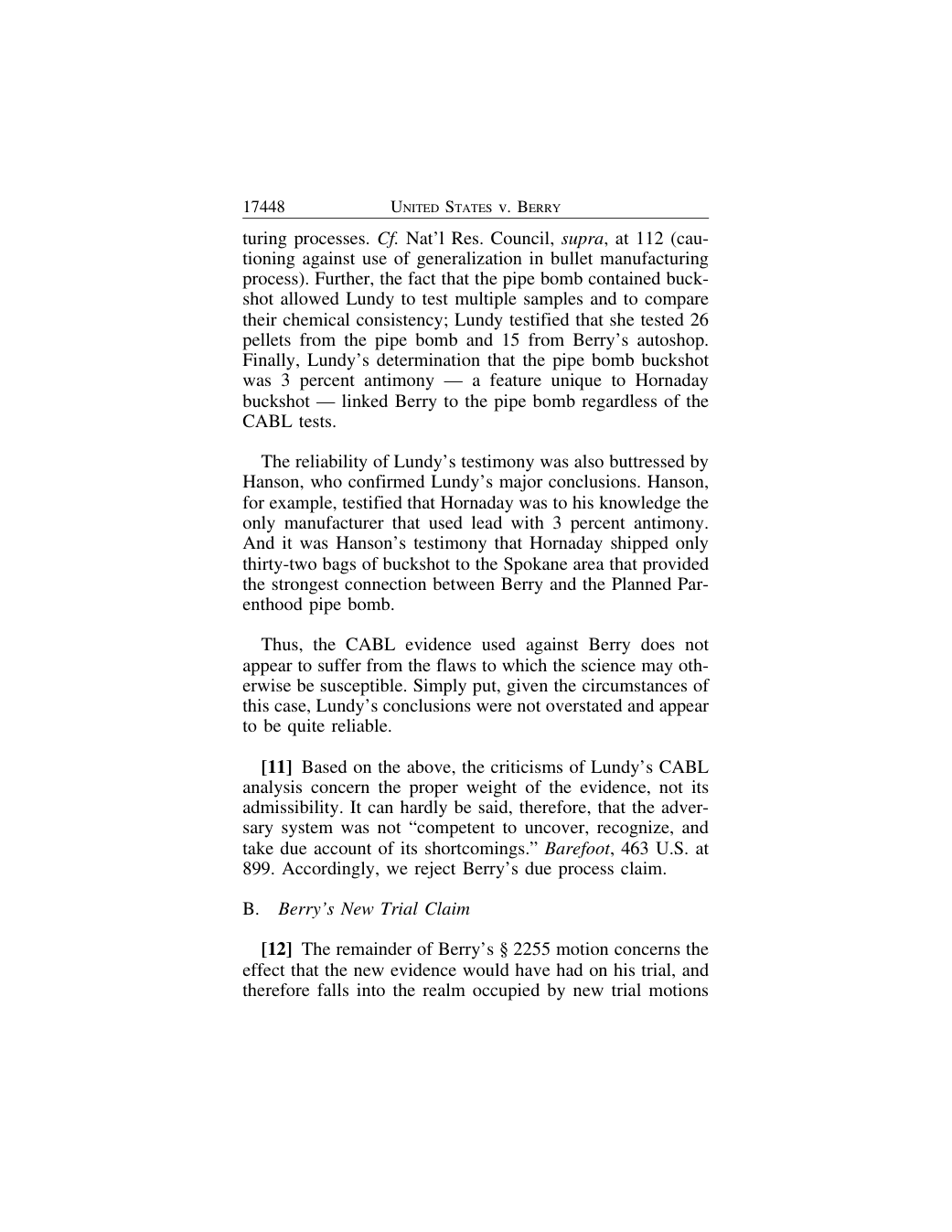
Chemical consistency can sound more identifying than it is. Later scientific criticism and a witness’s misconduct in another case gave Berry a concrete basis to question the apparent strength of a forensic link.
Accepts
P1’s events and the existence of the laboratory tests; disputes the strength of the ownership inference in P5 rather than requiring every measurement to have been fabricated.
Must still explain
It must address manufacturer and shipment testimony and the independent evidence, while distinguishing Lundy’s separate false statement from what she actually said in this trial. The 2010 decision treated the particular evidence favorably.
Assessment
The scientific reassessment supports caution about source specificity. Authenticated manufacturer records contradicting the stated batch or distribution, independent reanalysis, or proof of an error affecting the actual samples would materially alter the case-specific assessment. Neither blanket acceptance nor blanket dismissal follows from discontinuation alone.
Accept these path nodes
Remove or revise this inference
- Remove unique personal identification from chemical consistency alone.
Add this evidence
- Reliable actual manufacturing/distribution records, sample reanalysis and exact testimony identifying the disputed inference.
What would change this assessment
Authenticated manufacturer/shipment records contradicting the stated batch/distribution, independent reanalysis of actual samples, or case-specific proof of false testimony would alter the inference. General discontinuation alone is insufficient.
Sources: S01 · S11 · S12
Interpretation 04
A nationwide organization directed the attacks
Not established by this case record
The strongest version
Shared symbols, texts and contacts across the racist right can suggest more than isolated adoption. A covert hierarchy could conceal formal membership while directing or encouraging separate cells.
Accepts
P1’s messages and P2’s ideological circulation; it treats the local cooperation in P3 as potentially part of a larger structure.
Must still explain
The national command itself needs proof. The testimony summarized in Berry describes an adopted identity, and the local verdicts do not establish who directed unrelated actors elsewhere.
Assessment
Authenticated tasking, financial transfers, internal communications or corroborated participants linking a wider leadership to these specific actions could support a narrower or broader command claim. Similar beliefs or the same label are starting points for inquiry, not that missing chain. A portable identity remains compatible with a locally coordinated criminal cell.
Accept these path nodes
Remove or revise this inference
- Remove the assumption that repeated symbols prove a nationwide command hierarchy.
Add this evidence
- Documented orders, financing and participant communication connecting wider leadership to these crimes.
What would change this assessment
Authenticated tasking, financing, internal communications or corroborated participants tying a wider leadership to these particular acts would support national direction; a shared label does not.
Sources: S01 · S08 · S14
Interpretation 05
Boggs’s statutory reading would deny the First Step Act benefit
Actual judicial dissent; majority remand controlled
The strongest version
The statute asks whether a sentence had been imposed by21 December 2018. Boggs read that as a historical fact not erased by a later vacatur, and emphasized Congress’s choice about retroactivity.
Accepts
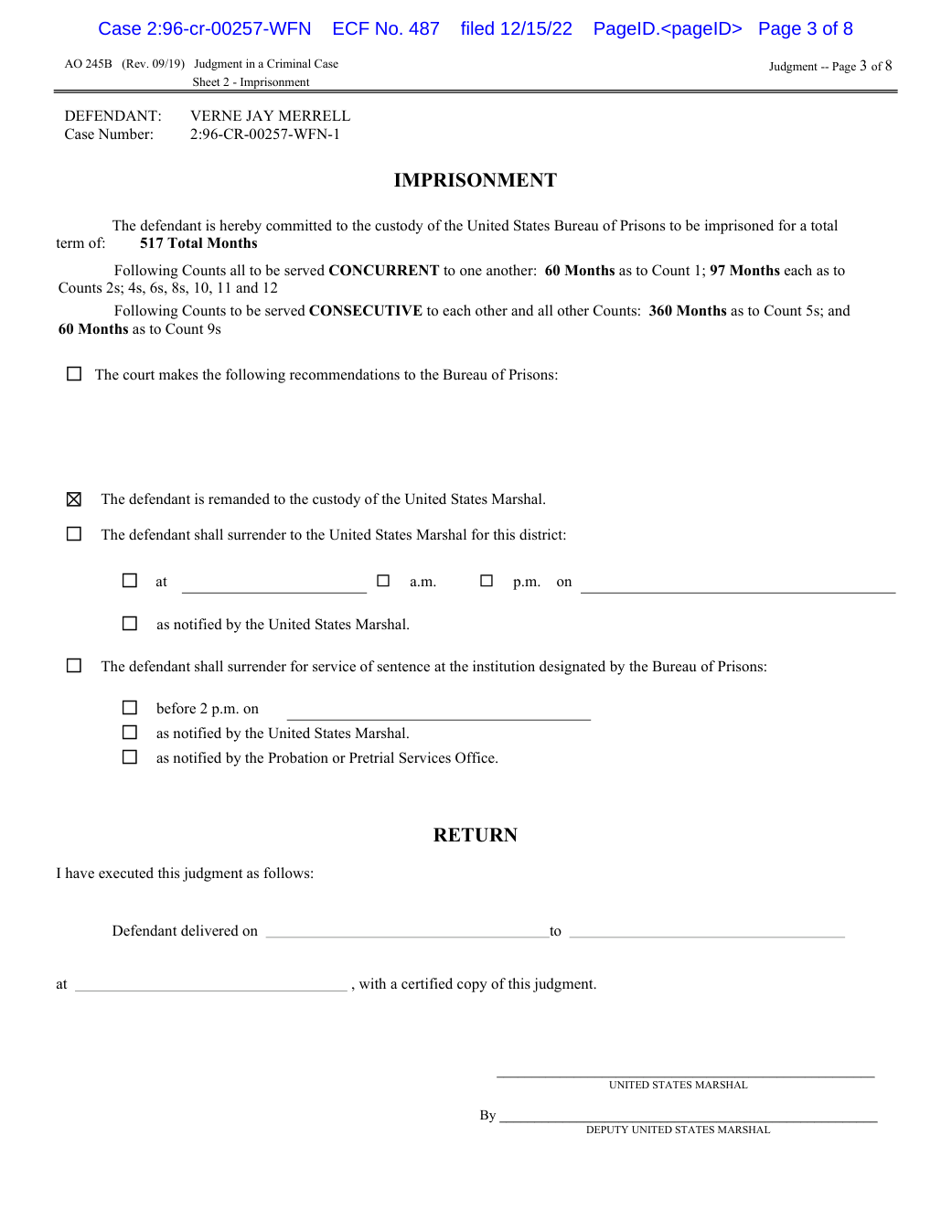
The original sentences, later vacatur and the statutory amendment at P6; the underlying convictions are not the object of this disagreement.
Must still explain
The majority treats a vacated sentence as legally null and applies the changed rule to the new sentencing. The actual judgment vacated and remanded; the dissent did not become the outcome.
Assessment
A documented dispute over statutory meaning and sentence finality, not a factual-innocence account. The 2022 judgments implement the majority’s rule.
Accept these path nodes
Remove or revise this inference
- Remove the inference that later vacatur erases the historical fact of a pre-enactment sentence, under the dissent’s reading.
Add this evidence
- A controlling legal basis for applying the amended rule despite the earlier imposition; the majority supplies its contrary analysis.
What would change this assessment
A controlling later judicial disposition or authenticated record changing the relevant sentencing/vacatur sequence would alter the legal history. An evaluation of today’s full body of sentencing law would require a separately current legal review.
Sources: S02 · S15 · S16 · S17