Biography, public service, controversies, and evidence. The complete offline reading edition, generated from the same source as the interactive files.
This is a selected history, not an exhaustive biography or a live legal-status database. The Record contains sourced statements and identified reasoning; AI assessment is labeled interpretation. Source notes explain the limits. See the editorial method for scope.
Origins / 1982–1997 · Documented history
From Mogadishu to Minneapolis
A childhood interrupted by war, a camp in Kenya, and a new home in Minnesota.
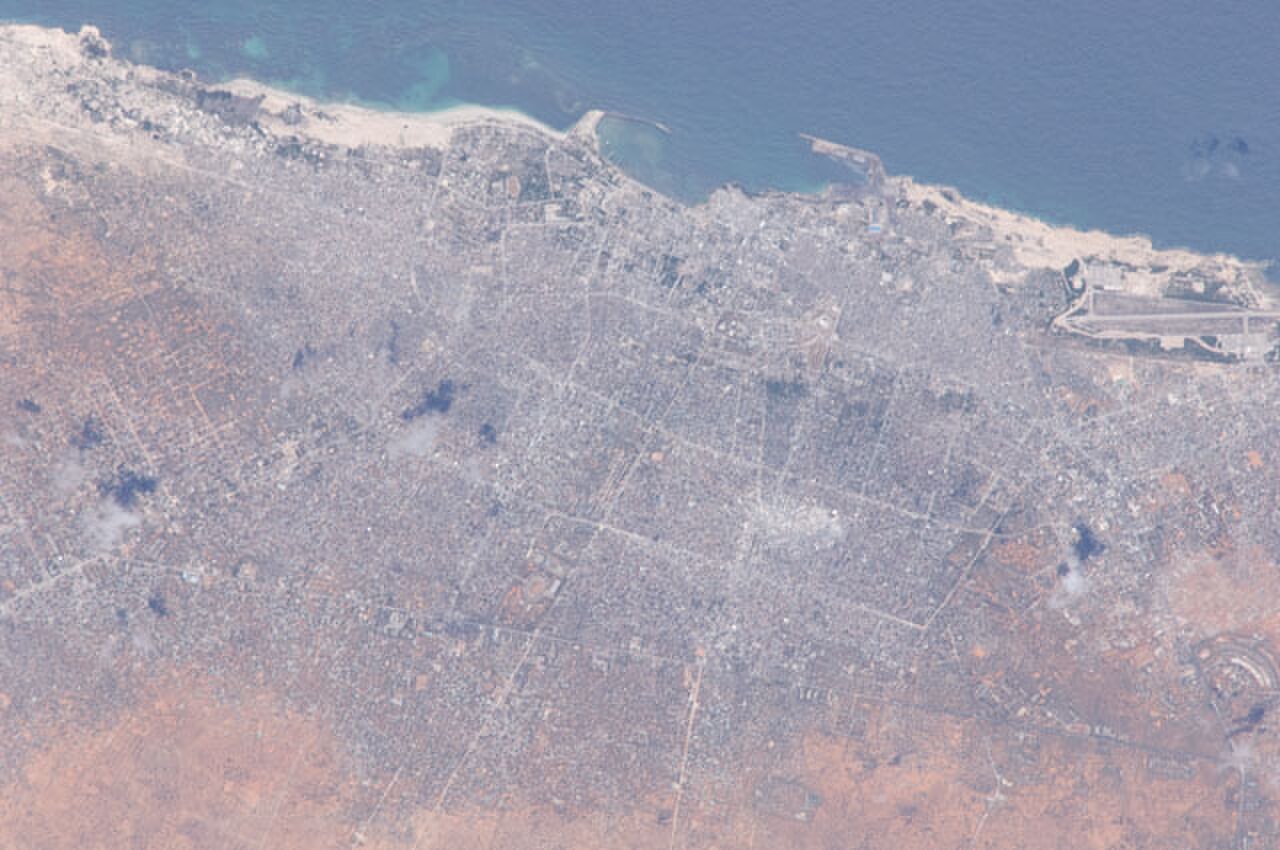
Mogadishu, Somalia, photographed from the International Space Station on April 2, 2011. This view postdates Omar’s departure. NASA Astronauts · Public domain · Commons Resized thumbnail; display may crop. Documentary context, not an image of Omar at this place.
The record
Ilhan Omar’s congressional biography describes a childhood interrupted by Somalia’s civil war: flight at eight, four years in a Kenyan refugee camp, then resettlement in the United States. Her office dates the family’s move to Minneapolis to 1997. [1]
The 2020 Sahan Journal obituary of her father places the family in Utange camp in Kenya, arriving in the United States in 1995 and first living in Arlington, Virginia. This is a reported family history, rather than publication of the complete immigration file. [2]
Congressional historians record her birth in Mogadishu on October 4, 1982, and her graduation from Minneapolis’s Edison High School in 2001. The refugee biography and questions about particular legal documents should be examined separately: uncertainty about a document is not proof that the entire life story was invented. [3]
At the time
Her family’s displacement preceded her public career.
What the record shows
The office biography and contemporaneous family reporting broadly align; the underlying immigration file is not reproduced here.
Her congressional office’s account of her life and agenda. An official personal biography is not independent verification of contested immigration documents.
Original obituary reporting, including an interview with a former fellow officer. Supports the colonel rank and military career; does not establish personal involvement in an atrocity.
Congressional historians’ biographical record, including the published birth date, schooling and periods in office. It is not the underlying birth certificate or immigration file.
A Minnesota organizer enters the state legislature, then Congress.
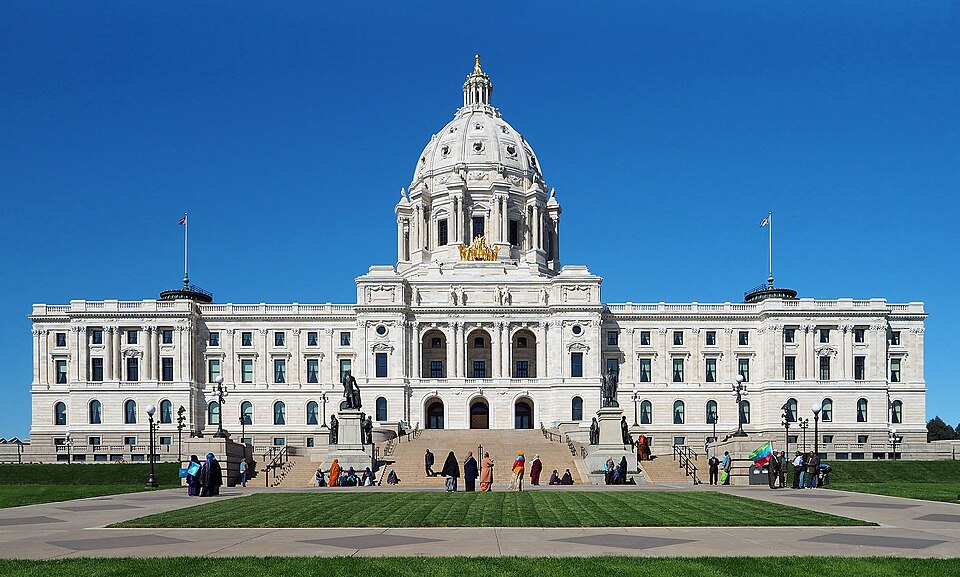
Minnesota State Capitol, photographed in 2017. Institutional context for Omar’s 2017–2018 state legislative service. McGhiever · CC BY-SA 4.0 · Commons Resized to960pixels; presentation may crop.
The record
Omar graduated from North Dakota State University in 2011. Her early work included education, organizing and policy jobs; she later served as a Minneapolis City Council aide. [1][2]
She entered the Minnesota House in 2017 and served until 2019. The state’s legislative record lists her as an assistant minority leader and identifies the Democratic-Farmer-Labor Party as her affiliation. [3]
Elected to Congress in 2018, she began representing Minnesota’s Fifth District in January 2019. Her official biography identifies her as the first African refugee in Congress, Minnesota’s first woman of color in Congress, and one of the first two Muslim American women elected to Congress. Her stated priorities include education, wages, immigration and climate policy. [2]
At the time
She first built a local political career in Minnesota.
What the record shows
State and congressional records establish her periods of service. Policy proposals require separate checks for enactment and implementation.
Congressional historians’ biographical record, including the published birth date, schooling and periods in office. It is not the underlying birth certificate or immigration file.
Her congressional office’s account of her life and agenda. An official personal biography is not independent verification of contested immigration documents.
The state legislative library explicitly records its correction from 1981 to 1982. A reference-entry correction and an alteration of immigration paperwork are different propositions.
Origins / 1970s–1991; reported 2020 · Documented history
Her father really was a Somali army colonel
The colonel’s rank and service are in published reporting. An individual atrocity finding is not.
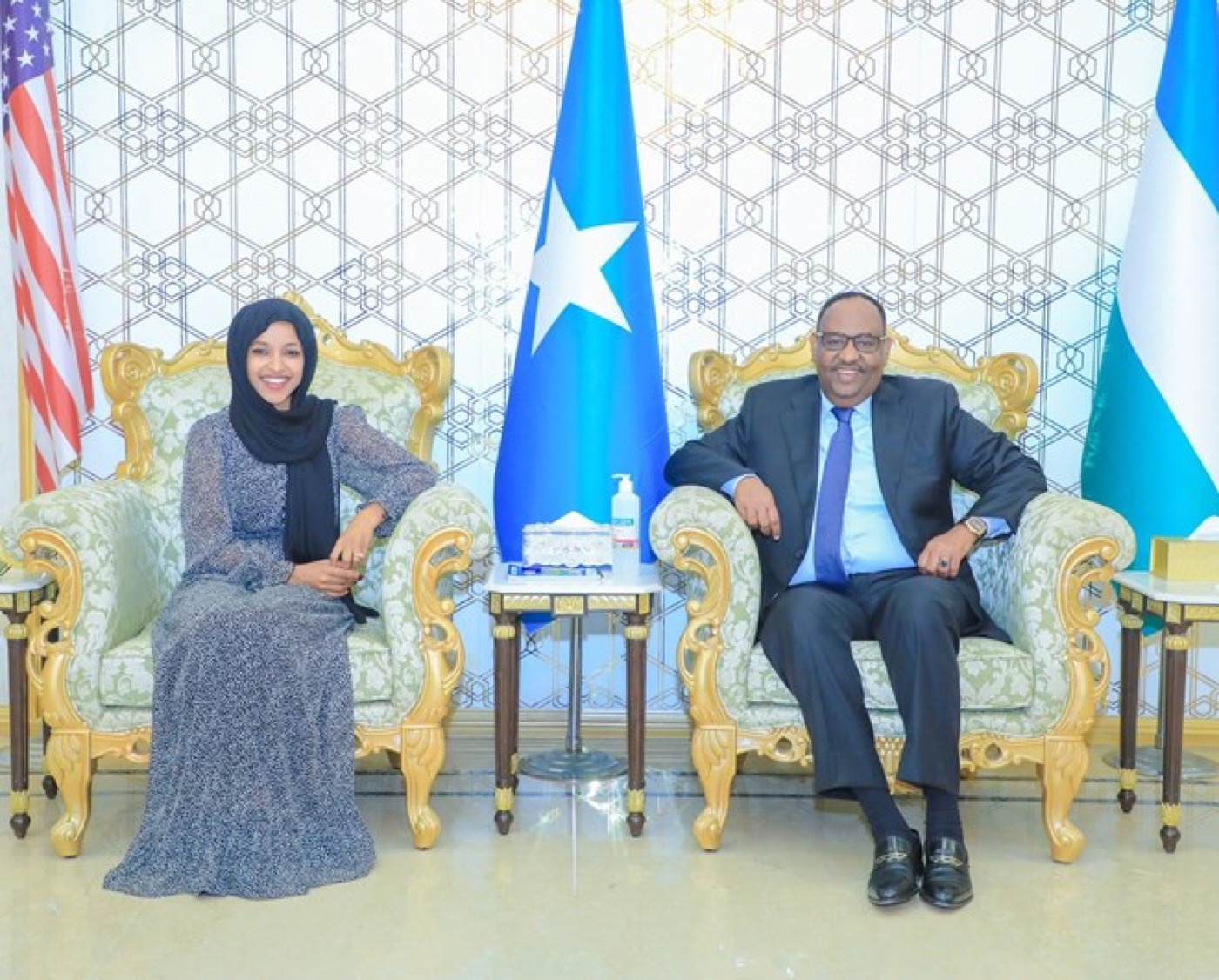
Ilhan Omar (left) meets Puntland President Said Deni in Garowe, Somalia, 22 December 2022. This later public meeting does not depict her father or establish anything about an alleged atrocity. Puntland State House · Public domain · Commons Resized to at most1400px; display may crop. Source image license retained.
The record
Describing Nur Omar Mohamed solely as an educator leaves out a substantial part of his reported career. Sahan Journal’s 2020 obituary identifies him as a Somali National Army colonel. It quotes former fellow officer Yusuf Ismail Faraton describing Soviet military education and command of a regiment in the 1977–78 war with Ethiopia. [1]
The obituary dates the end of his military career to 1991 and describes later involvement in Puntland security. It does not supply a complete service dossier [1].
Those details establish a serious connection to the state’s armed forces. They do not identify his orders, postings or conduct during every later year. The obituary supplies no evidence that he personally ordered or carried out a particular atrocity. Claims about his individual criminal responsibility require evidence beyond his rank. [1]
Documented checkpoints & limits
1988–89
The abuses are documented
Human Rights Watch reported state atrocities. Source ↗
2020
The service is publicly described
Sahan Journal’s obituary identifies a colonel and regiment commander. Source ↗
The missing step
Individual conduct
This edition has not established a specific atrocity finding against him. Source ↗
At the time
His career belonged to the army of a dictatorship later displaced by civil war.
What the record shows
A 2020 obituary documented his service. This edition has not established his personal participation in a specific atrocity.
Original obituary reporting, including an interview with a former fellow officer. Supports the colonel rank and military career; does not establish personal involvement in an atrocity.
Origins / 1969–1991; atrocities documented 1988–89 · Documented history
The brutality of the regime is not in doubt
The dictatorship’s abuses are well documented. That history cannot simply be transferred to a child.
The record
Siad Barre’s government was a military dictatorship. Human Rights Watch’s contemporaneous reporting describes political imprisonment, torture, executions and discrimination against particular communities. During 1988–89 its forces attacked Isaaq civilians, including through indiscriminate bombing and the destruction of food supplies and wells. [1]
The same report records a less frequently discussed complication: the United States supported Barre for strategic reasons, while congressional pressure and evidence of atrocities eventually helped restrict American assistance. The regime’s crimes need no embellishment to be grave. [1]
Connecting an officer to that army is historically relevant. Establishing that officer’s personal participation requires further evidence; assigning his alleged acts to his child is another unsupported step. Omar was a child when the regime collapsed. A defensible account can acknowledge the dictatorship’s victims without inventing a verdict against this particular family. [2][1]
At the time
The regime committed serious abuses documented by human-rights monitors.
What the record shows
The historical record establishes abuses by the regime; it does not automatically adjudicate every officer’s conduct or a family’s refugee case.
Congressional historians’ biographical record, including the published birth date, schooling and periods in office. It is not the underlying birth certificate or immigration file.
Origins / 1982 / May 2019 / October2026 · Correction or missing context
What is her age—and what did the records change?
Published official records say 1982: age 44 today. The 2019 website correction is real; its implications are disputed.
The Main Reading Room of the Library of Congress. Documentary research context, not evidence for any disputed claim. Carol M. Highsmith · Public domain · Commons Reused licensed local asset; resized; display may crop.
The record
The current congressional biography and Minnesota Legislative Reference Library both list October 4, 1982. On that published date, Omar is 44 as of October 21, 2026. The library explicitly says 1981 appeared incorrectly elsewhere and notes a correction effort in May 2019. [1][2]
New York Post reporting reproduces the library’s account of a May 17, 2019 request from Omar’s staff to change 1981 to 1982. It also quotes the library saying its original 1981 entry had been copied from other reference sources without documentation. That detail matters: two competing website entries are not two authenticated birth records. [3]
The correction is real. It does not, by itself, establish that she changed an immigration application, that 1981 was the true year, or that she knowingly misrepresented her age. Those are separate allegations now attracting federal scrutiny. The underlying documents and any eventual court findings matter more than a screenshot of a reference biography. [2][3][4]
Documented checkpoints & limits
May 2019
A library date is corrected
The library explicitly records its correction. Source ↗
October 2026
The correction becomes an investigative story
The reporting also quotes the library’s lack of documentation for the old date. Source ↗
21 October 2026
Use a dated answer
On the published official date, she is 44. Source ↗
At the time
Some reference biographies listed 1981 before the library’s documented correction.
What the record shows
Current House and state reference records list 4 October 1982. Whether particular immigration papers were false remains a separate question.
Congressional historians’ biographical record, including the published birth date, schooling and periods in office. It is not the underlying birth certificate or immigration file.
The state legislative library explicitly records its correction from 1981 to 1982. A reference-entry correction and an alteration of immigration paperwork are different propositions.
The New York Post’s reporting on the library’s emails, read in AOL syndication. Includes the library’s explanation that its earlier date lacked documentation.
Reuters reporting, read in The News syndication. Its account of investigative theories relies on people familiar with the inquiry, not a public trial finding.
Religious unions, civil marriages, separations and tax filings do not form a simple timeline.
The record
The marriage controversy includes genuine complications. PolitiFact’s 2019 review describes a religious union with Ahmed Hirsi in 2002, a religious separation in 2008, a legal marriage to Ahmed Nur Said Elmi in 2009, and a religious separation from Elmi in 2011. Omar and Hirsi reunited in 2012; she legally divorced Elmi in 2017 and legally married Hirsi in 2018. [1]
The distinction between religious and civil marriage helps explain why public descriptions of a husband did not always match the legal paperwork. It does not make every legal or tax question disappear. The same review documented joint tax returns with Hirsi while she remained legally married to Elmi. [1]
But the further claim that Elmi was her brother was not established by that investigation. The Star Tribune editor interviewed by PolitiFact described circumstantial social-media material and an inability to determine the family relationship. Omar denied the accusation. Neither uncertainty nor refusal to provide more records supplies the missing proof. [1][2]
At the time
Public descriptions of relationships and legal marital status sometimes differed.
What the record shows
The marriage chronology can be documented without establishing that Elmi was her brother.
PolitiFact’s review of the Star Tribune investigation and marriage chronology. Its inability to establish kinship in 2019 does not resolve a new 2026 forensic claim.
Claims / 2016–2019; revived 2026 · Not established
How a marriage rumor became a family-identity theory
A 2016 marriage allegation expands into a claim that a family borrowed someone else’s identity.
The record
In August 2016, Power Line’s Scott Johnson pointed to a now-deleted SomaliSpot post alleging that Omar’s legal husband was her brother. Local FOX 9 reported the controversy that month but said it could not independently confirm the allegation; Omar’s campaign denied it. [1][2]
By July 2019, a David Steinberg article on Power Line had expanded the narrative: it alleged that part of the family entered the United States using an unrelated family’s identity. It assembled anonymous-source accounts, names, address records, marriage documents and social-media relationships into that theory. Those materials were presented as an argument, not a court finding. [3]
That evolution matters. A legal marriage certificate can establish a marriage; it cannot alone establish biological kinship. A general example of refugee fraud elsewhere cannot establish this family’s fraud. The marriage, the claimed family relationship and the alleged 1995 identity substitution each need their own evidence. [3]
Documented checkpoints & limits
2016
The allegation circulates
Power Line points to a now-deleted SomaliSpot post; FOX 9 reports her denial. Source 1 ↗ · Source 2 ↗
2019
The theory expands
A borrowed-family-identity theory joins the marriage claim. Source ↗
19 October 2026
A new attributed report
The Post reports claimed DNA evidence; this edition has not inspected a lab result. Source ↗
At the time
A local online allegation drew campaign and press attention in 2016.
What the record shows
By 2019, it had expanded into an immigration-identity theory; the sources showing that expansion do not prove it.
A contemporaneous partisan blog artifact showing circulation of the SomaliSpot allegation in August 2016. Evidence of transmission, not proof of the allegation.
A partisan argument showing the theory’s expansion into alleged borrowed identities. Its claims and anonymous accounts are not adopted as established facts.
Claims / 12–21 October 2026 · Attributed reporting / unresolved
October 2026: a real investigation, unresolved allegations
A federal search and subpoenas are reported. The underlying allegations remain disputed.
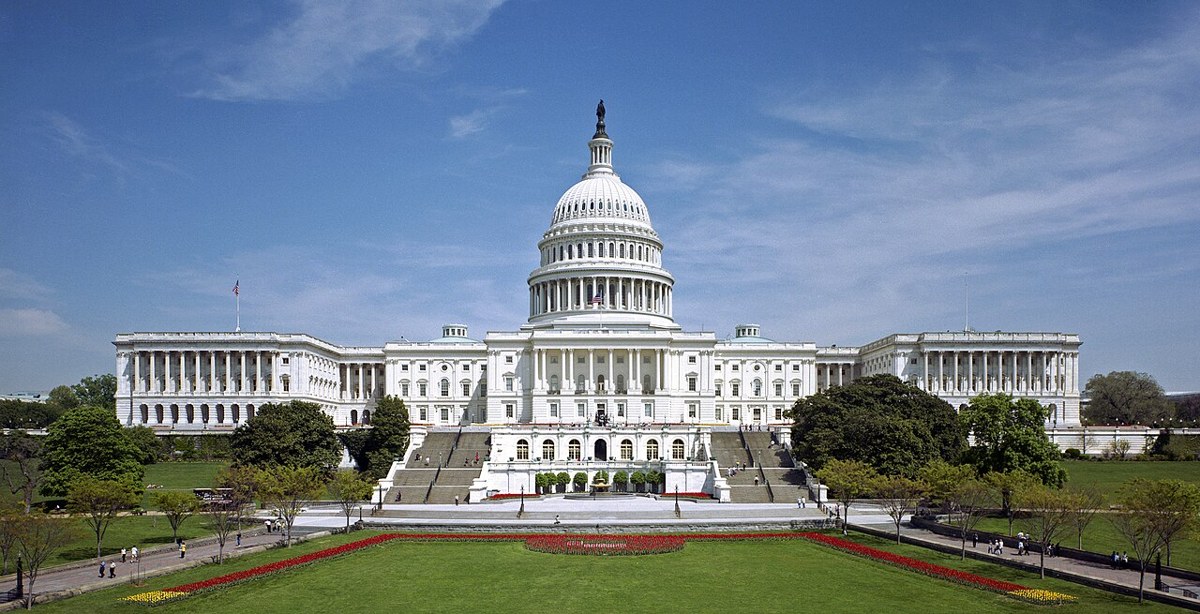
The west front of the U.S. Capitol. Institutional context for Omar’s House service. Architect of the Capitol; derivative edit by O.J. · Public domain · Commons Resized and re-encoded as JPEG; embedded metadata removed. Presentation may crop the image.
The record
The latest development is more than a recycled social-media accusation. Reuters reported that federal agents searched Omar’s home on October 12 in an immigration-paperwork investigation. People familiar with the matter described a sealed warrant concerning potential conspiracy, false statements and immigration fraud. Reported investigative theories are not findings of guilt. [1]
AP subsequently reported that her attorneys demanded the return of seized property and challenged the search’s legality. The Justice Department disputed their account and said it had followed the court’s orders. Neither side’s statement resolves that dispute. [2]
Omar’s office denies wrongdoing and describes the raid as political intimidation. Reuters reported possible efforts toward loss of citizenship and deportation; that reporting should not be rewritten as an accomplished removal or a conviction. As of this review, the sources examined here do not provide a public trial finding settling the underlying age or identity allegations. [3][1]
At the time
Longstanding allegations circulated before the October search.
What the record shows
The inquiry has escalated. This edition has not reviewed a public trial finding establishing the age, identity or sibling allegations.
Reuters reporting, read in The News syndication. Its account of investigative theories relies on people familiar with the inquiry, not a public trial finding.
Associated Press reporting, read in Maui News syndication. Records the defense’s challenge and DOJ’s response, neither of which is a ruling on the merits.
A regulator ordered reimbursement and a civil penalty for specific campaign expenditures.
The record
Minnesota’s Campaign Finance and Public Disclosure Board ordered Omar to personally reimburse her state campaign $3,469.23 for impermissible uses of campaign money in 2016 and 2017. It also assessed a $500 personal civil penalty. This is an established regulatory finding, rather than a rumor. [1]
The questioned spending included accounting work connected to joint tax returns and travel. The board required reporting corrections as well. Its analysis distinguished expenses that benefited the campaign from expenses that Omar should bear herself. [1]
The order is evidence of specific campaign-finance violations. It is not a criminal conviction for tax fraud, immigration fraud, or stealing federal nutrition-program money. Those are separate claims requiring separate evidence. [1]
At the time
Campaign money had paid expenses later reviewed by the state board.
What the record shows
The 2019 order requires reimbursement, a penalty and reporting corrections.
Minnesota’s regulatory findings and order, archived by the legislative library. Establishes reimbursement, a civil penalty and reporting corrections; it is not a criminal tax judgment.
Joint tax returns: what the record actually confirms
The joint-filing issue is documented; it does not establish the separate sibling allegation.
The record
The state campaign order confirms joint returns with Ahmed Hirsi for 2014 and 2015 and disallows $1,500 of campaign-funded accounting work. It does not decide criminal tax liability or biological kinship. [1]
At the time
Omar and Hirsi filed jointly while her civil marriage to Elmi had not ended.
What the record shows
The campaign order documents accounting work and reimbursement; it does not resolve criminal tax liability.
Minnesota’s regulatory findings and order, archived by the legislative library. Establishes reimbursement, a civil penalty and reporting corrections; it is not a criminal tax judgment.
A spouse’s firm received campaign payments. The FEC did not substantiate the personal-use allegation.
The record
Omar’s campaign paid roughly $3 million to E Street Group in the 2020 election cycle, a consultancy co-owned by Tim Mynett, whom she married in March 2020. Critics raised an understandable conflict-of-interest question about campaign funds flowing to a spouse’s business. [2]
Payment to the firm is not the same as a personal gift of the entire amount to Mynett. Campaign consultants also purchase advertising and provide services; gross vendor receipts and individual profit are different figures. [1]
In MUR 7639, the FEC found no reason to believe that Omar, her campaign, E Street Group or Mynett converted campaign funds to personal use. It also found no reason to believe the challenged payee information violated the rules. A separate allegation about expense-purpose descriptions was dismissed, with the campaign directed to correct descriptions where needed. [1]
That outcome belongs alongside the original accusation. Readers can still debate the wisdom of employing a spouse’s business, while recognizing the regulator did not substantiate the alleged personal-use violation in this case. [1]
At the time
The campaign’s consulting relationship prompted a personal-use complaint.
What the record shows
The FEC found no reason to believe the personal-use violation occurred and separately addressed reporting descriptions.
The FEC’s decision and legal analysis in MUR 7639. Read the different dispositions for personal use, payee information and expense-purpose reporting separately.
The winery: promised returns, unpaid bills and a civil lawsuit
A real wine business, a disputed investor contract, a reported settlement and a 2026 cancellation.
Sown Estate vineyard in Napa, California, August 27, 2025. Illustrative wine-industry context only: this is not established as a property of ESTCRU, TimMynett, or IlhanOmar. Acgreenhalgh · CC0 1.0 · Commons Resized to1280pixels; presentation may crop.
The record
Investor Naeem Mohd put $300,000 into eStCru, a winery owned by Mynett and Will Hailer. According to a contract reviewed by the Minnesota Reformer, the promised repayment was $900,000 after 18 months, with steep interest for delay. Mohd said his principal came back late but the promised profit did not; his 2023 lawsuit sought at least $780,000. [1]
Mynett and Hailer denied defrauding him and described a difficult wine business during the pandemic. Winemaker Erica Stancliff said she stopped getting paid in early 2023. Hailer acknowledged that contractor invoices might be outstanding. These are serious, specific disputes with identifiable records and responses. [1]
Calling it a wholly imaginary winery goes beyond this reporting: eStCru produced named wines and employed a professional winemaker. A business can be real while investors still allege fraud or breach of contract. Omar’s relationship to Mynett does not establish that she directed the business or participated in wrongdoing. [1]
The later outcome matters: the Free Beacon reported that Mohd’s attorney confirmed a cash settlement in November 2024. A California certificate records eStCru’s cancellation on April 4, 2026, signed by Hailer. Neither a civil settlement nor closing an LLC is a criminal fraud conviction. [2][3]
At the time
An investor alleged a lucrative promised return was not paid. The owners denied fraud.
What the record shows
A settlement was later reported and the LLC was cancelled in April 2026. Neither constitutes a criminal fraud finding against Omar.
Original reporting on the winery contract, investor complaint, business operations and responses. The guide attributes these civil allegations and denials to the reporting.
The cannabis litigation involved a different transaction and a different set of defendants.
The record
Will Hailer and associated companies faced a separate dispute with South Dakota cannabis businesses and investors over promised financing. In August 2024, the Minnesota Reformer reported a final $1.2 million payment that made the investors whole after earlier repayments. Their attorney described the dispute as amicably resolved. [1]
Mynett helped found eSt Ventures but was not a named defendant in that cannabis suit. He said he left before the deal with the South Dakota businesses. The winery lawsuit naming him and this cannabis litigation should not be collapsed into one supposed criminal conviction. [1]
A settlement establishes that a dispute was resolved on agreed terms; it does not by itself establish every allegation in the complaint. The reported uncertainty about the source of settlement funds is a question, not evidence that Omar stole or supplied public money. [1]
At the time
Cannabis businesses disputed financing promises and payments.
What the record shows
A settlement payment was reported; Mynett was not a named defendant in that suit.
The $30 million story: read the columns and the correction
The original and amended forms tell different stories—and value is not income.
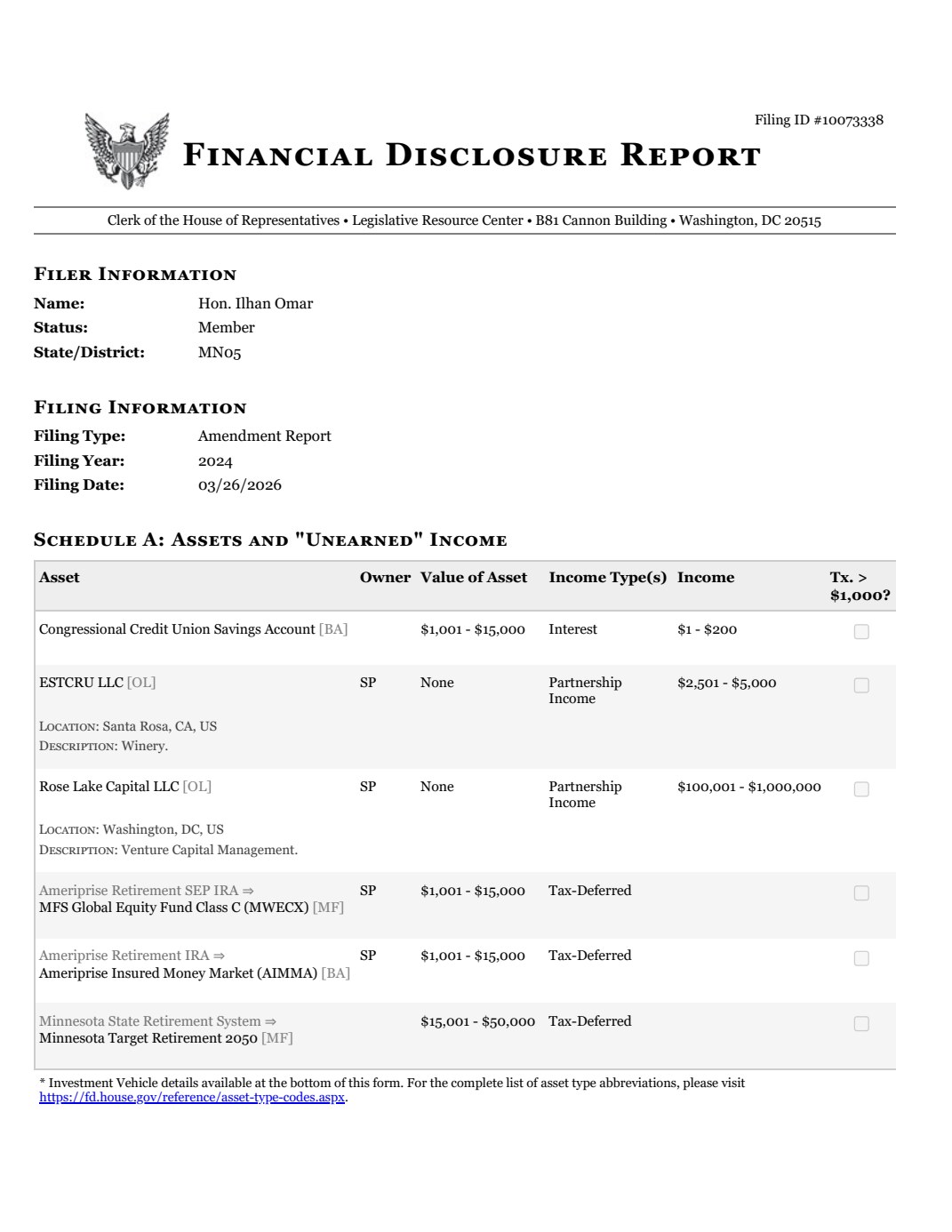
Page 1 of Omar’s amended 2024 financial disclosure, filed 26 March 2026. This is the actual public filing; its values are self-reported, not an independent appraisal. U.S. House of Representatives / Office of the Clerk · Public domain · Commons First page rendered from the original public PDF. Presentation may crop; the source link opens the complete document.
The record
Omar’s original report for calendar year 2024, filed in May 2025, listed Mynett’s eStCru asset in the $1,000,001–$5 million band and Rose Lake Capital in the $5,000,001–$25 million band. The income column was different: $5,001–$15,000 for eStCru and none for Rose Lake. Those entries generated the widely repeated $6 million–$30 million story. [1]
On March 26, 2026, she amended the report. Both business asset values became “None.” The corrected income bands were $2,501–$5,000 for eStCru and $100,001–$1 million for Rose Lake. A correction this large warrants an explanation; it also means the superseded values should not be presented as current verified wealth. [2]
The annual report for 2025, filed May 13, 2026, again lists no asset value for either business. It reports $201–$1,000 in eStCru partnership income and no Rose Lake income. These are disclosure bands for particular assets and a particular year. They are not a complete household tax return. [3]
An asset is a stock of value; income is a flow over time. Neither a business’s bank balance nor its gross revenue automatically equals the owner’s personal net worth. The forms establish what was reported and amended, rather than independently proving a valuation or explaining every underlying transaction. [1][2][3]
Documented checkpoints & limits
May 2025
The original bands
Two business asset values generated the wealth headline. Source ↗
March 2026
The filing is amended
Value and income entries change separately. Source ↗
April 2026
A business outcome
The LLC cancellation is an actual filing, not a fraud verdict. Source ↗
At the time
The original 2024 disclosure reported high business-asset bands.
What the record shows
The March 2026 amendment changed both values and income; the next annual report concerns a different calendar year.
Original 2024 disclosure, filed May 2025; later superseded by an amendment. These are reported asset and income bands, not independently verified wealth.
Transcribed from the three public filings. “None” reproduces the form’s entry; it is not an independent appraisal. These are particular business entries, not complete household income or net worth. The amended 2024 report and the 2025 report cover different calendar years.
2026 scrutiny: a dismissal recommendation and a separate investigation
A congressional dismissal recommendation and a separate federal inquiry are different procedural events.
The record
In February, Oversight Chairman James Comer requested records from Mynett concerning the apparent rise in the two businesses’ disclosed values. His committee’s questions are part of the public record; a records request is not a finding that a crime occurred. [1]
The Office of Congressional Conduct voted 5–1 to recommend dismissal of the financial-disclosure allegations, the Star Tribune reported September 9. [2]
The advocacy group that brought the complaint, NLPC, objected and demanded further records. Its objection is the complainant’s position, not a reversal of the watchdog recommendation. [4]
On October 13, Axios reported that U.S. Attorney Jeanine Pirro said her office was investigating the financial disclosures. That development should not be omitted merely because a congressional review had recommended dismissal. Equally, an investigation is not proof of false reporting or enrichment; the two processes have different roles. [3]
At the time
Oversight requests and an ethics complaint focused on business valuations.
What the record shows
A September dismissal recommendation was reported, followed by Pirro’s October statement about a financial investigation.
Reporting on Pirro’s public statement about a financial investigation. It does not establish a charge, conviction, or reversal of the congressional recommendation.
Feeding Our Future: real connections and the missing leap
The underlying fraud and donor connections are real. Participation by Omar requires separate proof.
The record
The Feeding Our Future fraud was real. Prosecutors obtained guilty pleas from Safari Restaurant co-owner Abdulkadir Nur Salah and former Minneapolis mayoral aide Abdi Nur Salah in January 2025. DOJ described Safari as receiving more than $16 million in fraudulent meal-program funds. [4]
Omar’s campaign also received donations from people later charged. A September 2022 KARE report counted $7,400 from three defendants and quoted the campaign saying it redirected those contributions to food-assistance charities in February. Earlier Sahan Journal reporting documented the campaign’s response as the investigation emerged. Those are concrete political connections worth disclosing. [2][3]
In February 2022, Omar publicly called for answers from USDA and condemned misuse of funding intended to feed children. That statement documents her public response; it is not an independent audit of her conduct. [1]
A donor’s criminal conduct does not establish the recipient’s knowledge or participation. Also, Abdi Salah’s DOJ-listed position was senior policy aide to the Minneapolis mayor. The reviewed primary record does not support casually relabeling him “Omar’s staffer.” Specific evidence must bridge any allegation that Omar herself enabled, profited from, or joined the fraud. [4]
Documented checkpoints & limits
2020
The policy connection
The committee report records emergency-meal legislation. Source ↗
2022
Donations and a response
Reporting identifies contributions and the announced charitable redirection. Source ↗
2024–25
Audit and prosecutions
Oversight failures and specific defendants’ guilty pleas have their own records. Source 1 ↗ · Source 2 ↗
At the time
Campaign donations and local relationships connected the political story to a growing fraud investigation.
What the record shows
Prosecutors obtained guilty pleas from named defendants; this guide has not established Omar’s participation in their scheme.
Isra Hirsi, Cuba and the DSA: whose actions are whose?
Hirsi joined a Cuba convoy; DSA participated. Wider claims need their own evidence.
Havana’s Hotel Nacional. Place context for the Cuba discussion; this does not show Isra Hirsi’s visit. Jongleur100 · Public domain · Commons Reused licensed local asset; resized; display may crop.
The record
Omar’s adult daughter Isra Hirsi joined the March 2026 Nuestra América convoy to Cuba. Organizers framed it as humanitarian aid and opposition to U.S. restrictions. DSA also participated and described relief fundraising in its own account. Shared participation does not establish that every participant belongs to the same organization, or that Omar herself attended or directed the trip. [1][2]
A particularly dramatic claim said the visitors’ concert caused a hospital blackout and seven ventilator deaths. PolitiFact found no credible evidence for that account, and the hospital denied the deaths. It also corrected the claim that U.S. rules forced visitors into five-star hotels: the restrictions concern ownership, while other permitted lodging exists. These corrections do not settle the broader Cuba debate. [1]
When the State Department later criticized Cuba-solidarity networks, Metro DC DSA rejected the report as an attempt to brand political opponents foreign agents. This is the organization’s response, rather than an independent determination about every allegation. [3]
Documented checkpoints & limits
March 2026
A real convoy
The fact-check examines participation and specific claims. Source ↗
April 2026
DSA describes its role
An organization’s own account establishes its participation. Source ↗
July 2026
A government report becomes disputed
Metro DC DSA responds to the State Department criticism. Source ↗
At the time
Participants described the March convoy as humanitarian aid and opposition to U.S. restrictions.
What the record shows
The trip and DSA participation are documented. That does not establish that Omar directed the convoy or that every participant was a DSA member.
Reporting concerns a roommate’s alleged conduct. It does not establish an offense by Omar or her son.
The record
An August 2026 story linked a Minneapolis apartment search to Omar’s adult son Adnan Hirsi. The underlying account, circulated by Alpha News and repeated by other outlets, concerned a weapons investigation into his reported roommate. It did not establish that Hirsi or Omar committed a crime. [1]
The available source chain relies on secondary reporting and purported police information; this file has not independently inspected the warrant or criminal case. It should therefore be labeled as limited reporting. A family relationship, shared address, or refusal to answer a reporter cannot supply missing proof of criminal participation. [1]
Online retellings can shift a headline from a roommate’s alleged conduct to “Omar’s son” and then to an accusation against the congresswoman. That is precisely where the evidence must be checked. No private residential address or unnecessary personal details are reproduced here.
Secondary partisan reporting tracing back to Alpha News. The underlying warrant was not independently inspected; the reported suspect was a roommate, not the son.
The policy question: emergency meal waivers and fraud prevention
Emergency meal legislation and later oversight failures are a legitimate policy question.
The record
Omar sponsored the MEALS Act during the COVID-19 emergency. A House committee report records its incorporation into the Families First Coronavirus Response Act. The purpose was to maintain access to meals while schools were closed. This is a concrete legislative connection to the system later exploited, rather than a reason to pretend she had no relevant policy role. [2]
A policy can serve a legitimate emergency need while also creating opportunities for abuse. The nonpartisan Minnesota legislative auditor found inadequate state Education Department oversight, including ignored warning signs from before the pandemic, failures to hold Feeding Our Future accountable and an agency ill-prepared for the problems it encountered. [1]
That record supports serious questions about safeguards, implementation and political judgment. It does not establish that writing emergency legislation made its sponsor a participant in a later fraud. A strong account distinguishes policy responsibility and oversight failures from knowingly joining a criminal scheme. [1][2]
At the time
Emergency waivers sought to keep children fed during school closures.
What the record shows
The auditor found major state oversight failures, including warning signs predating the pandemic.
A House committee activities report documenting incorporation of the MEALS Act into enacted legislation. Evidence of a policy role, not participation in later fraud.
A real tweet drew criticism for a familiar manipulation trope; the later response belongs in the record.
The record
In November 2012, Omar wrote that Israel had “hypnotized the world.” In January 2019 she initially defended the comment before acknowledging its offensive implications and apologizing [1][2].
Critics identified an antisemitic tradition of portraying Jewish power as hidden and manipulative. The fact that her tweet named Israel rather than all Jews does not remove the reason for that criticism. It does mean that changing the subject in a quotation would misrepresent the actual text [1][2].
The chronology includes both the original language and her subsequent reconsideration. An apology is a relevant response; it does not make the earlier words disappear or require a reader to accept that the matter is settled.
At the time
The 2012 tweet became newly prominent as Omar entered Congress.
What the record shows
Her January 2019 response moved from defense to acknowledgment and apology.
Read the specific episode in its dated context. Reporting identifies the statement, criticism and response; institutional statements are evidence of that institution’s position.
Read the specific episode in its dated context. Reporting identifies the statement, criticism and response; institutional statements are evidence of that institution’s position.
Democratic leaders joined the criticism of her language; she apologized while defending scrutiny of lobbying.
Central Synagogue in Manhattan. Community context; no connection to a specific Omar controversy or investigation is asserted. Jim.henderson · CC0 · Commons Reused licensed local asset; resized; display may crop.
The record
On 10 February 2019, Omar used “It’s all about the Benjamins baby” in an exchange about political support for Israel and then identified AIPAC. Democratic leaders and others condemned the implication as an antisemitic money trope [1][2].
The following day she apologized unequivocally and thanked Jewish colleagues for explaining the history. She also continued to argue that lobbying power should be scrutinized. These were two parts of her response, not mutually exclusive versions of it [1][2][3].
The substantive distinction is between demonstrating a particular organization’s political influence and implying that support for Israel is purchased by Jewish money. An assertion about every supporter cannot be established simply by pointing out that lobbying exists.
Documented checkpoints & limits
2012–19
The manipulation trope
The original tweet and later apology are separately documented. Source 1 ↗ · Source 2 ↗
February 2019
The money trope
The tweet prompts condemnation and an apology. Source ↗
April 2019
A different claim is doctored
A fabricated allegiance quotation should not be used as evidence. Source ↗
At the time
The tweet prompted condemnation from within Omar’s own party.
What the record shows
Her apology and the criticism remain part of the same documented episode.
Read the specific episode in its dated context. Reporting identifies the statement, criticism and response; institutional statements are evidence of that institution’s position.
Read the specific episode in its dated context. Reporting identifies the statement, criticism and response; institutional statements are evidence of that institution’s position.
Read the specific episode in its dated context. Reporting identifies the statement, criticism and response; institutional statements are evidence of that institution’s position.
Speech / February–April 2019 · Correction or missing context
Dual loyalty—and a quote she did not say
An authentic allegiance controversy was followed by a doctored quotation about America.
The record
At a February 2019 town hall, Omar criticized political pressure to show allegiance to a foreign country. Critics heard a dual-loyalty accusation; her office said she was addressing lobbying pressure and foreign-policy conformity [1][2].
A later meme turned her argument into an alleged refusal of allegiance to any country, including America. FactCheck.org found that quotation was doctored. Her actual statement distinguished serving her own country and constituents from being expected to support another government [1].
The House subsequently adopted a broad resolution condemning antisemitism, anti-Muslim discrimination and other bigotry. Its text did not name Omar or expel her. A reader can criticize the actual town-hall formulation without relying on the invented version [3].
At the time
The allegiance language generated a genuine political dispute.
What the record shows
A separate viral quotation about America was altered; the adopted resolution was broader than a personal punishment.
Read the specific episode in its dated context. Reporting identifies the statement, criticism and response; institutional statements are evidence of that institution’s position.
Read the specific episode in its dated context. Reporting identifies the statement, criticism and response; institutional statements are evidence of that institution’s position.
Read the specific episode in its dated context. Reporting identifies the statement, criticism and response; institutional statements are evidence of that institution’s position.
Speech / March–September 2019 · Correction or missing context
The 9/11 phrase: context, criticism, and a factual error
The quoted phrase was real. The surrounding argument and the mistaken CAIR founding date matter too.
The record
At a March 2019 CAIR event, Omar argued against treating Muslim Americans collectively as responsible for the 9/11 attackers. Her phrase “some people did something” drew criticism as callous minimization of mass murder [1][2].
That context does not require approval of the phrasing. It does distinguish the civil-liberties argument from endorsing the attackers. A later version changing “some” to “my” was fabricated; a separate claim that she praised al-Qaida also distorted her remarks [3][4].
She made a different, testable factual error in the speech: saying CAIR was founded after 9/11. It was founded in 1994, and her spokesman acknowledged the mistake. That correction should be made plainly rather than lost inside the argument over tone [1].
At the time
A short excerpt became a national controversy, amplified by presidential video.
What the record shows
The phrase was authentic; the altered version was not, and the CAIR founding date was wrong.
Read the specific episode in its dated context. Reporting identifies the statement, criticism and response; institutional statements are evidence of that institution’s position.
Read the specific episode in its dated context. Reporting identifies the statement, criticism and response; institutional statements are evidence of that institution’s position.
Read the specific episode in its dated context. Reporting identifies the statement, criticism and response; institutional statements are evidence of that institution’s position.
Read the specific episode in its dated context. Reporting identifies the statement, criticism and response; institutional statements are evidence of that institution’s position.
Accountability, atrocities and the moral-equivalence dispute
A dispute over comparing states and armed groups followed a question about accountability.
The record
In June 2021, Omar’s comments about atrocities involving the United States, Israel, Hamas, Afghanistan and the Taliban prompted objections from twelve Jewish House Democrats. They criticized the comparison as offensive and as giving cover to terrorist groups [1].
The exchange followed questioning of Secretary Antony Blinken about accountability and International Criminal Court investigations. Omar clarified that she meant specific incidents and routes to accountability, not a moral equivalence between democratic states and terrorist organizations [1][2].
Democratic leadership welcomed the clarification. The real disagreement concerned how she framed responsibility; it should not be silently rewritten as a declaration of support for Hamas [1].
At the time
The grouping of states and armed groups drew criticism from colleagues.
What the record shows
The subsequent clarification narrowed her stated meaning; it did not erase the political disagreement.
Read the specific episode in its dated context. Reporting identifies the statement, criticism and response; institutional statements are evidence of that institution’s position.
Read the specific episode in its dated context. Reporting identifies the statement, criticism and response; institutional statements are evidence of that institution’s position.
Speech / 2 February 2023 · Official finding or record
Removed from Foreign Affairs—not expelled from Congress
The roll call and adopted resolution define the actual consequence.
The Harry S.Truman Building, U.S. State Department headquarters. Institutional context for foreign-policy debate. Paco8191 · CC BY 3.0 · Commons Reused licensed local asset; resized; display may crop.
The record
The House voted 218–211, with one member voting present, to remove Omar from the Foreign Affairs Committee on 2 February 2023. The clerk’s record identifies the vote; the adopted resolution specifies the committee removal [1][2].
Republicans cited remarks they characterized as antisemitic and inappropriate for the committee. Democrats described the action as retaliation after the preceding Congress had removed Republican members from committees. Some Jewish organizations also opposed removing her [2][3].
The measure did not expel Omar from the House or constitute a criminal conviction. It is evidence of a specific political sanction, including its partisan context, not a substitute for evaluating every underlying statement.
At the time
Republicans sought a consequence for a series of statements.
What the record shows
The adopted measure removed one committee assignment, leaving her elected House seat intact.
Read the specific episode in its dated context. Reporting identifies the statement, criticism and response; institutional statements are evidence of that institution’s position.
Read the specific episode in its dated context. Reporting identifies the statement, criticism and response; institutional statements are evidence of that institution’s position.
Read the specific episode in its dated context. Reporting identifies the statement, criticism and response; institutional statements are evidence of that institution’s position.
Jewish students, safety and the “pro-genocide” framing
Her appeal for safety and her inflammatory classification appeared in the same remarks.
The record
During an April 2024 Columbia visit, Omar said Jewish students should be safe, while classifying them as pro-genocide or anti-genocide. ADL chief Jonathan Greenblatt condemned that framing, arguing that it falsely characterized Jewish students as supporting genocide [1][2][3].
Leaving out the safety statement would distort her remarks. Leaving out the classification would remove what critics found objectionable. The issue was not merely whether students should be protected, but how she assigned a highly charged description to them [1][2].
Her opposition to Israel’s Gaza campaign is a political position. It does not justify treating Jewish students collectively as responsible for a government’s conduct. This file examines her rhetoric; it does not adjudicate the separate international legal proceedings about the war.
At the time
The campus protests sharpened disputes over safety, speech and the Gaza war.
What the record shows
The video and criticism allow a specific assessment of the wording, rather than a conclusion about every student or her private beliefs.
Read the specific episode in its dated context. Reporting identifies the statement, criticism and response; institutional statements are evidence of that institution’s position.
Read the specific episode in its dated context. Reporting identifies the statement, criticism and response; institutional statements are evidence of that institution’s position.
Read the specific episode in its dated context. Reporting identifies the statement, criticism and response; institutional statements are evidence of that institution’s position.
School meals, housing, district funding and immigration policy are part of the public record.
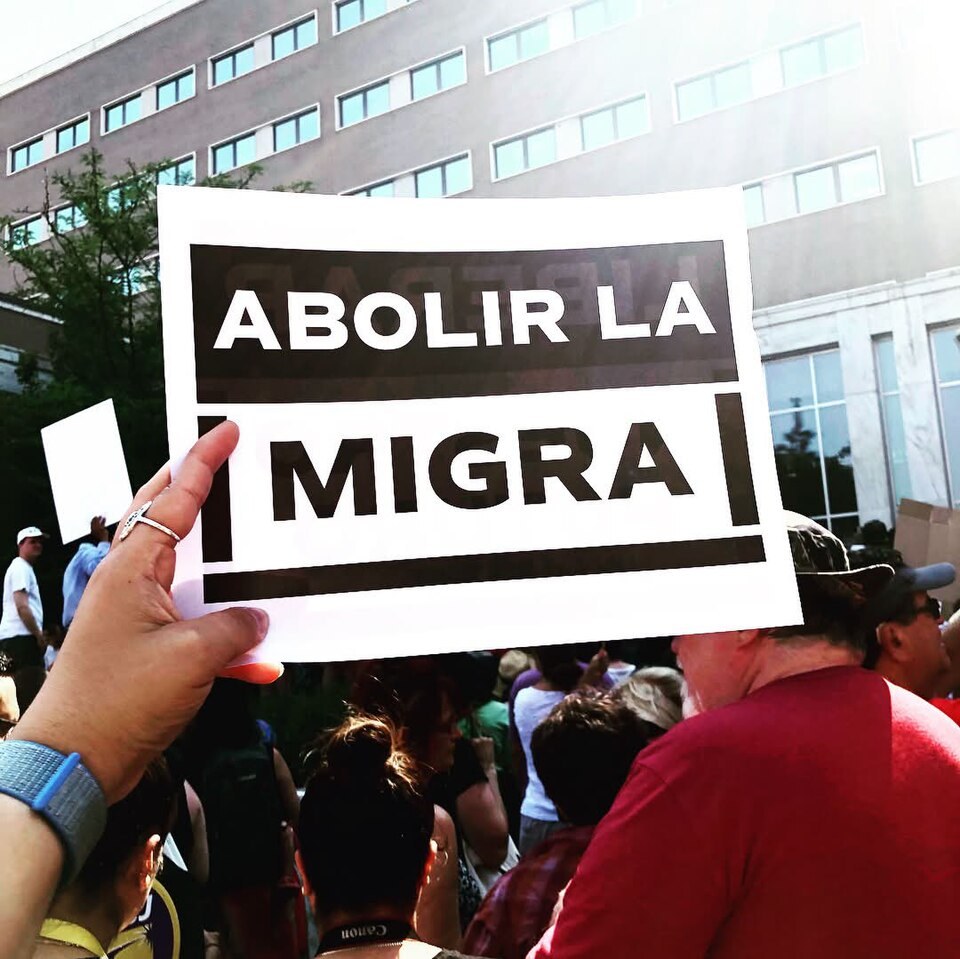
Anti-ICE protest in Hartford,Connecticut,February 26, 2026. Broader immigration-policy context; not an Omar event. Comecoquito · CC0 · Commons Resized and re-encoded as JPEG; embedded metadata removed. Presentation may crop the image.
The record
In May 2026, Omar and Senator Bernie Sanders announced another Universal School Meals Program Act. The proposal sought universal free meals and relief from school-meal debt. Introducing a bill is a concrete political act; it is not the same as enacting it [1].
Her office reported more than $54.5 million for forty district community projects in March 2024, including housing and clinics. That total is attributed to her office and concerns a collaborative appropriations process; it should not be presented as money she personally provided [2].
Other priorities include restricting certain arms sales and redirecting ICE and CBP funding. These are contestable policy choices with questions about costs, public safety, diplomacy and implementation. Her office’s statements establish the agenda, not independent proof that each proposal would work [3][4][5].
At the time
The public agenda includes redistributive domestic policy and limits on coercive state power.
What the record shows
Some measures are proposals; particular emergency-meal provisions were enacted. Each requires its own outcome check.
Read the specific episode in its dated context. Reporting identifies the statement, criticism and response; institutional statements are evidence of that institution’s position.
Read the specific episode in its dated context. Reporting identifies the statement, criticism and response; institutional statements are evidence of that institution’s position.
Read the specific episode in its dated context. Reporting identifies the statement, criticism and response; institutional statements are evidence of that institution’s position.
Read the specific episode in its dated context. Reporting identifies the statement, criticism and response; institutional statements are evidence of that institution’s position.
Read the specific episode in its dated context. Reporting identifies the statement, criticism and response; institutional statements are evidence of that institution’s position.
Political violence / 2026 · Official finding or record
The town-hall assault: a real conviction, against her attacker
The January attack led to a guilty plea and prison sentence. The identity of the defendant matters.
The record
Federal prosecutors announced that Anthony James Kazmierczak received a 14-month prison sentence after pleading guilty to assaulting Omar at her Minneapolis town hall on 27 January 2026. He was sentenced on 17 September; the announcement followed the next day [1].
The Justice Department says he sprayed liquid from a syringe onto her. Laboratory analysis identified a mixture of water and apple-cider vinegar. Omar continued the meeting. The agency describes evidence that he planned the assault in advance [1].
That is a different kind of record from the unresolved investigations elsewhere in this guide: a named defendant, a plea, a sentencing date, and a specified offense. Here the convicted person was her attacker.
Political criticism and scrutiny of a member of Congress remain legitimate. Neither requires denying a documented assault, treating the victim as the offender, or using an attack as evidence for an unrelated allegation.
At the time
The town-hall confrontation generated attention and conflicting online descriptions.
What the record shows
The September prosecution statement records a guilty plea and sentence. Its factual finding should not be confused with the separate investigation of Omar [1].
Primary prosecution account of a guilty plea and September sentencing. It identifies the liquid as water and apple-cider vinegar. This is a case against the attacker, not against Omar.
Developing claim / October 2026 · Attributed reporting / unresolved
The DNA headline: a reported investigative claim, not a published result
A new anonymously sourced report revives the marriage allegation. The underlying forensic evidence is not available to this edition.
The record
On 19 October, the New York Post reported, citing unnamed sources, that prosecutors had obtained DNA evidence they hoped to use in an immigration-fraud case. Its AOL syndication connects the report to the allegation that Ahmed Nur Said Elmi, whom Omar married in 2009, was her brother [1].
The story does not present a laboratory report or a publicly tested kinship finding. It also records disagreement about how samples might have been obtained. The article attributes expectations about possible charges to sources; those expectations are not filed charges or a court's finding [1].
There are separate questions: Were samples collected? Were their identities and chain of custody established? What test was performed? What biological relationship, if any, did it support? What does that establish about a particular immigration application? The headline alone cannot answer the sequence.
This edition has not inspected the underlying DNA material. The appropriate description is an attributed report about an investigation. A later public filing could materially change the assessment. Until then, repeating the same report across multiple sites does not create multiple independent forensic confirmations.
At the time
The older marriage allegation circulated without a publicly established kinship finding.
What the record shows
The October article introduces a claimed DNA-evidence development. This guide has not examined a laboratory result or an adjudicated finding [1].
An anonymously sourced New York Post report, read in its AOL syndication. It reports claimed DNA evidence and officials' expectations; it does not publish a laboratory report, sample provenance, a tested kinship conclusion, or a judgment. Subsequent outlets repeating it are not independent confirmation.