Interpretation 01
A coercive alternative legal system
Strongly supported for adjudicated conduct
The strongest version
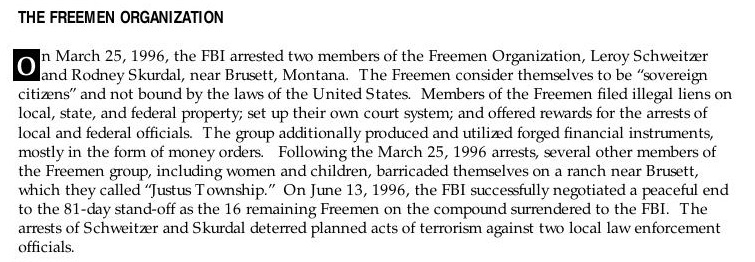
At P1–P3, invented jurisdiction supplied a language for fraud and threats that reached creditors, businesses, journalists and officials.
Accept
P1 · P2 · P3
The financial figures and named convictions in P2/P5; different roles and verdicts remain different.
Remove or revise
Remove the group’s claimed jurisdiction as an actual power over unwilling officials or businesses. Also remove a presumption that every resident shared every threat or transaction.
Add to the path
Add actor-specific instruments, communications, knowledge and actual loss evidence for any wider responsibility claim.
What must be wrong or incomplete
A coercion account becomes too broad if the group label replaces individual proof or if face value is treated as successful theft.
Must still explain
It must demonstrate individual conduct and intent rather than turn all residents into interchangeable members of an enterprise.
Assessment
McGuire supplies particular transactions, threats and outcomes. Authenticated transaction or trial records showing mistaken attribution or missing funds would change those findings; a grievance alone would not.
What would change this assessment
Authenticated records of particular transactions, admissions or exculpatory communications could change an individual finding. A later merits ruling could change a legal outcome.
Sources: S04 · S05 · S09
Interpretation 02
Sincere followers trusted a false financial promise
A material defense and social explanation; not a general acquittal
The strongest version
At P1–P2, threatened property loss and trust in Schweitzer could make followers believe that the instruments were valid. Contemporary defense lawyers argued lack of fraudulent intent.
Accept
P1 · P2
The instruments lacked the funds claimed; the July 1998 deliberations and later P5 convictions must be explained.
Remove or revise
Revise the inference of fraudulent intent for a particular follower, not the factual absence of funds or every other person’s conduct.
Add to the path
Add contemporaneous advice received, representations believed, warnings and the person’s own transactions, rather than retrospective general sympathy.
What must be wrong or incomplete
The belief account must explain what each defendant knew and did. It cannot make an interim absence of conviction the final result after a later retrial.
Must still explain
It must connect reliance and knowledge to a particular defendant and transaction. The earlier hung jury and later conviction cannot be collapsed into one verdict.
Assessment
The trial reporting preserves the defense; the appellate opinion records later outcomes. Authenticated teaching materials, private correspondence, warnings and testimony could change an assessment of knowledge or leadership exploitation.
What would change this assessment
Authenticated contemporary correspondence or trial evidence bearing on specific knowledge could strengthen or weaken sincere reliance. The actual later judgments remain part of the record.
Sources: S05 · S09 · S10
Interpretation 03
Patient enforcement prevented another deadly ending
Established peaceful outcome; incomplete causal proof
The strongest version
At P3–P4, coordinated containment and dialogue brought armed suspects into legal process without a fatal final assault. Intermediaries offered communication where official authority was rejected.
Accept
P3 · P4
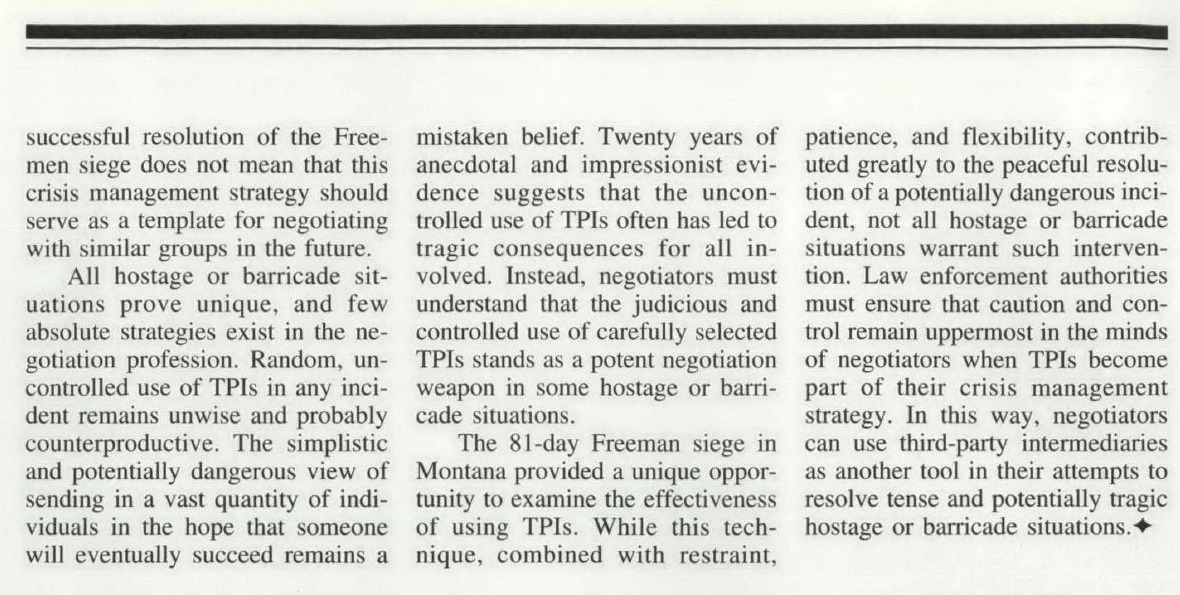
The eighty-one-day duration and approximately $7.5 million FBI estimate, with GAO’s qualifications; criminal cases continued at P5.
Remove or revise
Remove an inevitable-final-assault account and a claim that peaceful surrender means the group was harmless.
Add to the path
Add full decision logs, negotiation recordings and resident accounts before assigning indispensable causal credit to one intermediary or official.
What must be wrong or incomplete
An enforcement-success reading overreaches when it treats one peaceful outcome as a universal method or a proven counterfactual casualty count.
Must still explain
It must account for costs, failed intermediaries and alternatives, rather than credit every operational choice merely because the ending was peaceful.
Assessment
Romano is a practitioner’s analysis, not a controlled comparison. Authenticated decision logs and recordings showing which concessions or threats changed behavior could revise the causal account.
What would change this assessment
Authenticated logs or records identifying a different decisive condition could redistribute causal credit while leaving the actual surrender unchanged.
Sources: S02 · S03 · S09
Interpretation 04
A peaceful result still permits scrutiny of state power
Legitimate question; the reviewed appeal was rejected
The strongest version
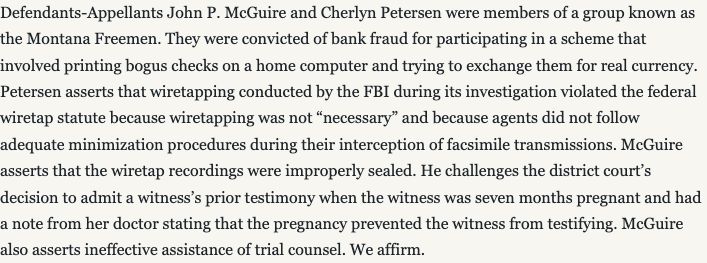
At P3–P5, surveillance and a prolonged armed enclosure require legal scrutiny even where financial crimes are real. Defendants raised specific wiretap and evidence objections rather than only a general claim of sovereignty.
Accept
P3 · P4 · P5
The judicial opinion affirmed McGuire and Cherlyn Petersen after addressing the objections. It did not erase the financial record or endorse every conceivable tactic.
Remove or revise
Remove an automatic endorsement of every government choice based on the peaceful ending or appellate affirmance. Preserve the adverse holdings actually reached.
Add to the path
Add original surveillance applications, hearing transcripts and later rulings for a specific procedural violation, rather than treating hostility to government as proof of illegality.
What must be wrong or incomplete
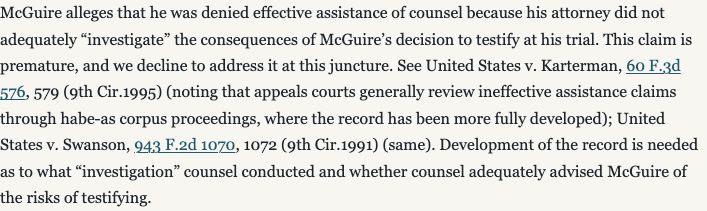
The criticism must distinguish an arguable rights concern, a merits rejection and the counsel claim the court left unresolved. It cannot turn a general denial into an acquittal.
Must still explain
The critique must identify a particular violated safeguard and its consequences; state action being coercive does not by itself make the convictions wrongful.
Assessment
The opinion explains necessity, fax minimization, sealing and witness availability. A later reversal or authenticated record undermining a material affidavit, evidence chain or finding would change the relevant assessment.
What would change this assessment
An authenticated omitted order, a later merits decision or reliable evidence contradicting the court’s factual basis could change a specific assessment. The cost estimate’s acknowledged limits already constrain claims about efficiency.
Sources: S02 · S09