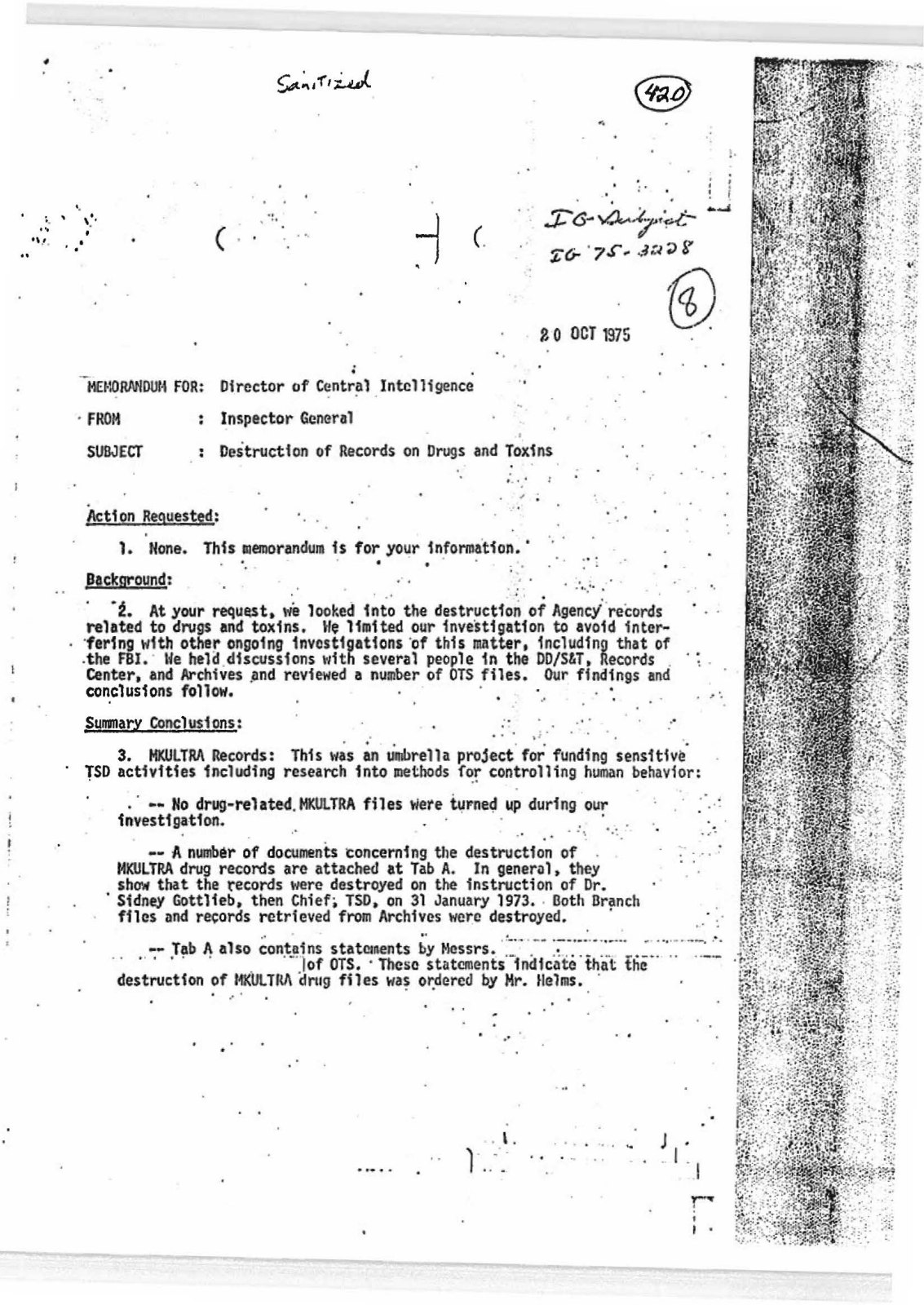
The October 20, 1975 CIA Inspector General memorandum on drug and toxin records describes the destruction of MKULTRA files in January 1973. It traces instructions involving Richard Helms and Sidney Gottlieb and records a protest by the agency’s records center. These are official internal findings about the recordkeeping failure, not a theory inferred only from missing documents. The memorandum also describes other gaps and surviving traces, sometimes without a satisfactory explanation. [1]
The consequences were severe. Investigators could not simply read a complete operational history, identify every subject and compare procedures with outcomes. Earlier minimal-documentation practices had already weakened the record. Destruction then compounded that problem. A reliable history therefore combines surviving memoranda, financial files, testimony, court material and outside institutional archives, while acknowledging that those fragments do not restore every lost detail. [1][2]
In 1977, additional financial records surfaced in seven boxes. They revealed institutions, researchers and subprojects that earlier inquiries could not fully reconstruct. Their survival is a reason to keep looking rather than assume all possible evidence vanished. But financial records are not the same as complete patient files or scientific results. This guide distinguishes evidence that funding existed from evidence of a procedure, an injury or a successful operational technique. The destruction justifies skepticism about the completeness of official assurances; it does not make every suggested content of the lost archive equally likely. [3]