The AI Files · Charles Healey / Healey Homes (~$22.7M alleged IHS) · plain reading edition
Individualized Home Supports (IHS): every entry
Story chapters
Encyclopedia narrative for Individualized Home Supports (IHS) / Healey Homes — same twelve chapters as the interactive guide.
All 9 entries of the guide, grouped by period and case, each with its bottom line and its sources. This page needs no JavaScript. The interactive guide adds the story in 6 chapters, the people, the timeline, the theories, the 3 checked claims and the media.
Visual timeline
4 dated events
Before the wave pre-2020
Frame & method
How to read this file
What Individualized Home Supports (IHS) is on this guide
Record · Documented
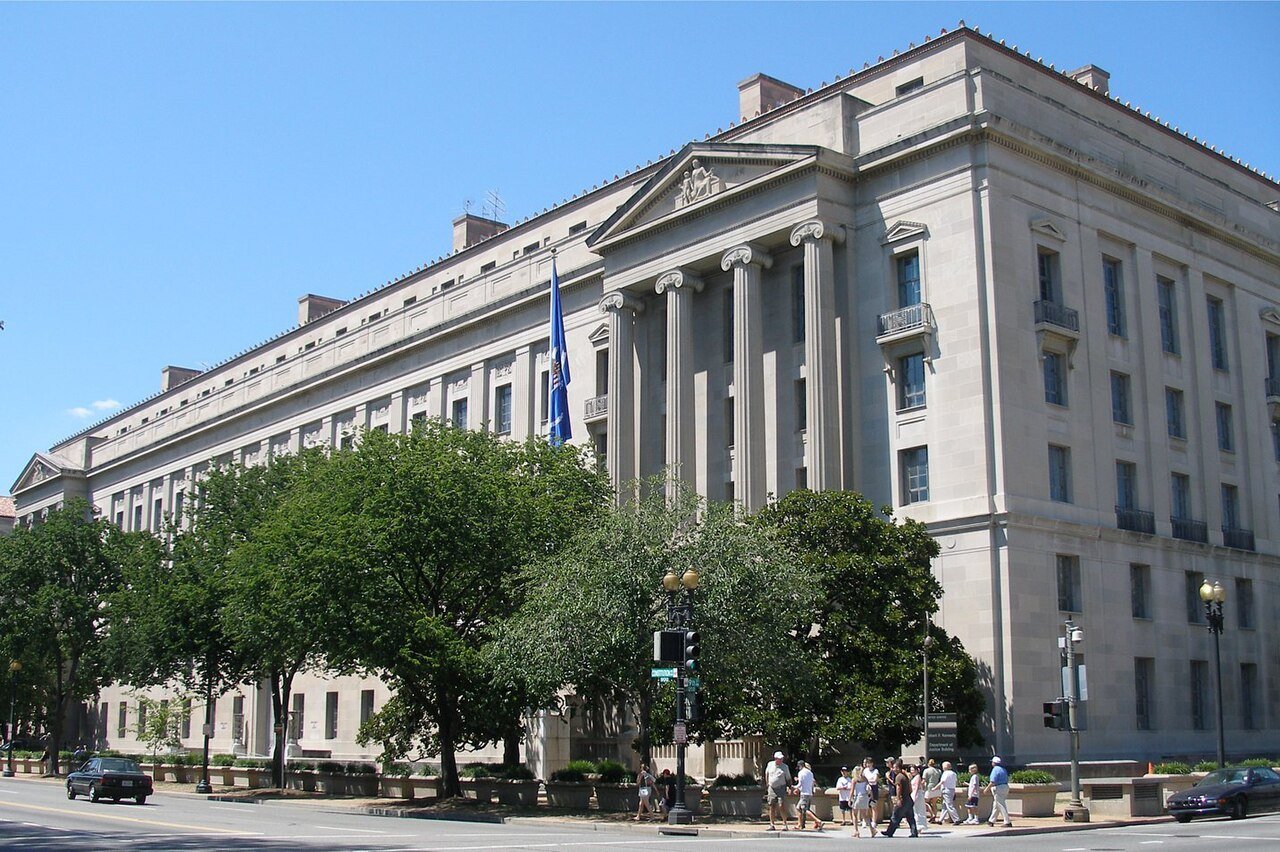
Charles Healey — Blue Earth County Courthouse cover McGhiever · CC BY-SA 4.0 · Wikimedia Commons
Healey Homes · ~$22.7M alleged · provider-owned housing ban
IHS was built so adults with disabilities could live in their own homes. Prosecutors say Healey Homes flipped that rule — owning the houses, then billing Medicaid as if the setting were independent. Indictment ≠ guilt. [1]
Indictment is not guilt. Association is not knowledge. Declared cash is not a proven terror pipeline. [1]
Bottom line Documented
Individualized Home Supports (IHS) is a scheme topic under Minnesota Fraud Files — not collapsed into any politician biography.
Blue Earth County Courthouse — geography of the Healey Homes charging spine, not a verdict. McGhiever · CC BY-SA 4.0 · Wikimedia Commons
Charles Wayne Healey — often Chuck Healey in local press — is the named operator of Healey Homes in Blue Earth, Minnesota, and one of two defendants in the first criminal prosecution DOJ announced for fraud in Minnesota’s Individualized Home Supports (IHS) program. The Health Care Fraud Unit case summary for United States v. Charles Healey and Larsen-Guthmiller identifies him as sixty-one, of Blue Earth, charged by indictment with conspiracy to commit health care fraud and money laundering. From 2021 until Minnesota’s Department of Human Services closed Healey Homes in 2025, prosecutors say Healey and co-defendant Katherin Suzan Larsen-Guthmiller received about $22.7 million in Medicaid reimbursements for supposedly providing IHS services to vulnerable adults.
This page is the Minnesota Fraud Files person deep for Healey. The scheme spine — IHS program design, the provider-owned housing ban, statewide cost growth, and the May 2026 Health Care Fraud takedown framing — lives in full on the sibling guide Individualized Home Supports (IHS). Read that page for program-wide hinges. Read this page for the named person, the provider vehicle, the alleged residence-and-rent mechanism, the 2025 administrative closure and Healey’s claim-layer account of that closure, the May 20–21, 2026 charging wave, luxury-proceeds allegations, political adjacency without invented Omar edges, and an open-docket checklist. Indictment is not guilt. Charged is not resolved.
Local reporting places Healey Homes’ operating identities as Charles W. Healey Foster Care and Charles Healey Foster Home, with Larsen-Guthmiller listed as executive director and a controlling individual on the company’s home-and-community-based-services license. The Minnesota Attorney General’s May 21, 2026 release, which spells the surname Healy in places, describes Charles Healy as owner and operator of Charles Healy Foster Home, LLC, and says MFCU investigators participated through interviews and data analysis. The federal docket caption reported in public case indexes is USA v. Healey et al., District of Minnesota, case 0:26-cr-00100, filed May 20, 2026.
Healey’s own post-closure interviews — Faribault County Register in late 2025, later Star Tribune coverage after indictment — are claim-layer evidence to note under the Spec uniform evidence bar. They do not auto-clear federal counts. They do not convert every DHS correction-order finding into every criminal allegation. They do matter as contemporaneous defense of a twenty-five-year business narrative that prosecutors later framed as a housing-control and false-billing scheme. Keep those boxes separate as you scroll.
Chapter 2: How to read charges, denials, and “knew”
Method plate — labels before verdicts on an open person docket. Free-licensed documentary pool · as credited
Every claim on this guide carries an epistemology label. Documented means a primary court, DOJ, DHS, or official record supports the stated fact. Partly documented means some primary support exists while key pieces remain unpublished or incomplete. Contested means named sources pull hard in different directions. Claim-layer means someone’s allegation or interview claim — useful as evidence to note, never the deciding proof that an accused person is guilty or cleared. Unsupported means a popular claim without a primary on this page. False as stated means the particular wording fails against the cited record even if a nearby claim remains open.
Indictment is not guilt. An indictment can correctly describe a scheme narrative while named defendants remain presumed innocent until plea or verdict. Association is not knowledge. A campaign donor, a public meeting, a state licensing contact, or a Twin Cities fraud climate story can be a real association or climate fact without proving that a named politician authored, directed, or knowingly protected Healey Homes billing. Met is not knew is not charged. A DHS closure, payment withhold, or correction order is an administrative fact of record for the provider; it is not a federal conviction of the owners, and it is not a finding that every client who lived in a Healey Homes residence participated in fraud.
Dollar figures move between boxes that must stay separate. Box one is statewide IHS program cost growth — DOJ’s Office of Public Affairs put the program at more than $100 million paid in 2018 and more than $700 million in 2025. Box two is the scheme tally in charging papers — about $22.7 million in Medicaid reimbursements received by Healey Homes as alleged, with local reporting rounding near $23 million. Box three is property-level reimbursement sub-tallies in indictment coverage — Star Tribune reporting on the indictment described nearly $16.4 million reimbursed for services at identified residences between April 2021 and June 2025. Box four is what a plea agreement or jury later finds for a named defendant. Moving a statewide program total into a personal guilt sentence invents monsters. Moving an indictment tally into a past-tense conviction before disposition invents a finished trial.
Denials are evidence to note, not auto-clearance. After DHS actions in 2025, Healey told the Faribault County Register that an August 17 letter cut funding, that correction-order items were minor clerical infractions, that there had never been a whiff of fraud, and that homes were bought by Briar Cliff Homes rather than Healey Homes. After indictment, Star Tribune coverage again recorded his defense of the business model and luxury purchases. Note those statements. Do not treat them as the ledger’s deciding proof. Do not erase them either — Path A still has to survive cross-examination of what the papers actually charge.
Chapter 3: Provider biography spine — Amboy to Blue Earth
Southern Minnesota provider geography in local coverage — not a verdict on a county. Free-licensed pool · as credited
Healey’s claim-layer biography, as told to the Faribault County Register after the 2025 closure, places Healey Homes as a roughly twenty-five-year business that began in Amboy and later moved to Blue Earth. He described serving about twenty clients with special needs and employing about one hundred people at the time funding stopped. Earlier Register coverage from December 2022 — before the federal caption — described a model of purchasing one home per client rather than a traditional group home, with eleven such houses in Blue Earth then, clients working at local jobs, and a subsidiary called K&C Moving and Chores that hired clients for moving and cleaning work.
Those contemporaneous local features matter for two different reasons. First, they show that the one-home-per-client structure — later central to the government’s provider-owned housing theory — was not a secret invented in 2026; it was publicly described as the company’s differentiator years earlier. Second, they record a community-facing narrative of vacations, sporting competitions, and job placement that Healey later invoked when he called DHS actions devastating to clients and staff. Prosecutors’ later theory does not automatically falsify every positive local anecdote. Local anecdotes do not automatically falsify charging papers about Medicaid eligibility rules and concealment.
Age and residence in charging summaries are load-bearing identifiers, not color. The HCF Unit summary’s “61, of Blue Earth” and Larsen-Guthmiller’s “66, of Blue Earth” pin the people prosecutors put in the caption. Star Tribune post-indictment coverage likewise identified Healey as sixty-one and described luxury vehicles and watches as alleged proceeds. Keep identity facts in the documented-from-charging box. Keep lifestyle lists in the alleged-proceeds box until forfeiture or verdict converts them.
This chapter is not a full private biography. It does not invent childhood, religion, party registration, or Omar-world social edges. Healey is on the Minnesota Fraud person roster because he is a principal on the IHS nest spine — the named defendant in the first IHS criminal prosecution announced in the May 2026 takedown — not because a spider map required a filler card. If later dockets, pleas, or civil actions expand the public record, the maintained record can deepen. Until then, prefer charging primaries and dated local coverage over rumor.
Chapter 4: IHS design and the provider-owned housing ban
Minnesota IHS design — independence rules before the person caption. Free-licensed pool · as credited
Individualized Home Supports exists so adults with disabilities can receive services while living in homes they control — not so providers can own the housing stock and bill Medicaid as if the setting were independent. DOJ’s May 21, 2026 takedown release states the design hinge in plain language: IHS was designed to help adults with disabilities such as brain injury live independently in their own homes, and Medicaid prohibits program providers from having a direct or indirect financial interest in the beneficiaries’ housing. The Health Care Fraud Unit case summary for the Healey indictment repeats the same rule: IHS services are intended to support recipients living in their own homes and are explicitly disallowed in provider-controlled settings.
Program design is not Healey’s personal crime. Design does create the bright-line control that makes the government’s theory intelligible. When a provider both owns or controls the residence and bills IHS for the person living there, prosecutors say the control point that makes the benefit coherent has already broken. A rival theory that treats every disability-services prosecution as racist or political targeting still has to explain why the program forbids provider financial interest in housing and why charging papers allege ownership concealment and below-market rent. A rival theory that treats every dollar of statewide IHS growth as theft still has to leave room for legitimate independent-living supports delivered under the rules.
DOJ’s OPA release put the statewide cost curve in public view: after paying out over $100 million in 2018, the IHS program grew to cost more than $700 million in 2025. That curve is program context and an oversight climate fact. It is not, by itself, a verdict that Charles Healey stole $700 million. Keep statewide totals in the program box on the IHS scheme guide. Keep the $22.7 million figure in the Healey Homes charging box on this person page. Confusing those boxes is how commentary either exaggerates one indictment into a statewide ethnic conspiracy or erases a load-bearing design rule because the statewide number feels political.
Cross-link the sibling IHS scheme guide for the full program critical path. This person page assumes that yardstick and then asks what Healey and Larsen-Guthmiller are alleged to have done inside it. Flattening person and program into one cartoon is a method failure. Keeping them cross-linked is how a maintained record stays navigable.
Chapter 5: Healey Homes as the charged provider vehicle
Housing-control context for the charged HCBS / IHS provider vehicle. Free-licensed pool · as credited
Prosecutors place Healey Homes — operated through entities including Charles W. Healey Foster Care and Charles Healey Foster Home — at the center of this person spine. The Health Care Fraud Unit summary identifies Charles Wayne Healey and Katherin Suzan Larsen-Guthmiller as operators charged by indictment with conspiracy to commit health care fraud and money laundering. Local reporting and the Minnesota Attorney General’s May 21, 2026 release describe Larsen-Guthmiller as executive director and a controlling individual on the company’s HCBS license, and place the provider’s service geography in the Mankato / Blue Earth area.
From 2021 until DHS closed Healey Homes in 2025, the case summary says the defendants received $22.7 million in Medicaid reimbursements for supposedly providing IHS services to vulnerable adults. That date range is a load-bearing hinge: it brackets the alleged billing years, the later administrative closure, and the federal indictment that followed. Licensing identity matters because Path A (fraud as charged) needs a provider vehicle with a named license and named controlling individuals. Path B (oversight failure or protection) needs to know which state instruments — license, disclosure, background checks, care plans — were supposed to catch the alleged structure.
Healey’s December 2025 Register interview insisted homes were purchased by Briar Cliff Homes, described as done by his friend Kathy Larson, and that the structure was open to local human services, guardians, and case managers who “loved it.” That is claim-layer about corporate form and community knowledge. Charging narratives still allege that Healey and Larsen-Guthmiller owned and controlled residences where beneficiaries lived while Healey Homes billed IHS, and that ownership interests were concealed from Medicaid. Corporate-name gymnastics do not, by themselves, answer a bright-line provider financial-interest ban. Neither does a claim that locals knew about the model prove Medicaid was told what the rules required.
Prosecutors named on the federal line in the case summary include Trial Attorneys Sara Woodward and Sara Porter of the Midwest and Gulf Coast Strike Forces and Assistant United States Attorneys Rebecca Kline and Matt Evans of the District of Minnesota. Public docket indexes also list defense counsel for Healey. Those names matter for readers who want to follow dockets. They do not convert any named lawyer or prosecutor into a character in a conspiracy novel.
Co-defendant geography — separate person page, shared charging caption. McGhiever · CC BY-SA 4.0 · Wikimedia Commons
Katherin Suzan Larsen-Guthmiller, sixty-six, of Blue Earth, is Healey’s co-defendant in the same indictment. The HCF Unit summary charges both with conspiracy to commit health care fraud and money laundering as operators of Healey Homes. Local coverage places her as executive director and a controlling individual on the HCBS license. The Minnesota AG release names her alongside Healey in the Mankato-area HCBS thread. She has her own nest gateway and SMALLER topic shell under Minnesota Fraud Files; this chapter does not replace that page.
Person pages must not merge co-defendants into one guilt blob. Shared charging language can correctly describe a joint alleged scheme while each defendant’s knowledge, acts, and eventual disposition remain separate questions. A plea by one does not automatically dispose of the other. A denial by one does not automatically clear the other. When local features show staff photos that include Chuck Healey, Kathy Larsen, and others, treat those as contemporaneous business imagery — not as a jury exhibit invented by this guide.
Healey’s claim-layer interviews sometimes describe Larsen / Larson naming variants and Briar Cliff Homes ownership. Spelling and entity-name variance is common across AG releases, local press, and federal summaries. Do not invent a second person from a spelling difference. Do not erase a charging identity because a local feature used a nickname. Prefer the HCF Unit’s “Katherin Suzan Larsen-Guthmiller” as the federal caption name, note AG/local spelling variants, and keep entity disputes in the claim-layer / to-be-litigated box.
Cross-link her person page and the IHS scheme guide rather than duplicating every residence address list here. The critical path on this Healey page still needs her as a named co-operator hinge, because Path A’s provider vehicle is a two-person charging story in the DOJ materials cited on this spine.
Chapter 7: Provider-controlled residences as charged
Residence-control hinge — alleged provider interest in beneficiary housing. Free-licensed pool · as credited
DOJ’s OPA release said two defendants were charged in an over-$22-million IHS scheme in which they acquired over twenty separate residences and concealed their ownership interest from Medicaid. The HCF Unit summary states that despite knowing IHS is disallowed in provider-controlled settings, Healey and Larsen-Guthmiller owned and controlled the residences where they were purportedly providing services. Mankato Free Press indictment coverage likewise reported at least twenty residences in Blue Earth and Mankato. Star Tribune reporting on the indictment identified eight Healey Homes properties in Blue Earth and two in Mankato as part of the alleged enterprise, purchased between November 2016 and January 2023.
Residence lists are objects on the critical path. If the residences were not provider-controlled as charged, the bright-line IHS ban theory collapses for those properties. If ownership is asserted without caption hygiene, every landlord serving disabled adults becomes a suspect class. The government’s theory needs both control and concealment/knowledge elements as charged — not merely the existence of rental housing near an HCBS provider.
Healey’s claim that Briar Cliff Homes bought the houses, and that the one-client-per-home model was locally admired, is evidence to note. It may become a litigated distinction about which entity held title and whether Medicaid was told. It does not, standing alone, erase DOJ language about defendants owning and controlling residences and concealing ownership interest. Readers should watch how title, beneficial ownership, and disclosure pleadings develop on the open docket rather than past-tensing a verdict from a press release.
Beneficiaries who lived in those residences are not automatic co-conspirators. Charging papers about provider conduct do not convert every disabled adult tenant into a defendant. Keep dignity and presumption of innocence for residents while still stating the housing-control hinge prosecutors put at the center of the IHS theory.
Chapter 8: Below-market rent and beneficiary capture — as alleged
Alleged rent-for-billing reinforcement beside ownership control. Free-licensed pool · as credited
The HCF Unit case summary alleges that Healey and Larsen-Guthmiller charged recipients below-market rent in exchange for agreeing to be used to bill Minnesota Medicaid. Mankato Free Press coverage of the indictment similarly reported that by offering below-market rent, the arrangement required beneficiaries to use Healey Homes as their Medicaid service provider. DOJ’s OPA framing said defendants offered housing they owned to vulnerable Medicaid beneficiaries in order to obtain beneficiary information used to bill for services not provided as represented.
Rent-capture is a reinforcement theory beside ownership. If rent-capture falls, ownership alone may still matter under the provider financial-interest ban — but the government’s story about how beneficiaries were locked to the provider weakens. If ownership falls but rent-capture remains, the case shape changes again. Rival theories must say which hinge they remove and what primary lets them remove it.
Cheap rent for a disabled adult is not, by itself, a crime. The alleged wrong is the combination of provider-controlled housing, concealment from Medicaid, and using rent terms to secure billing rights for ineligible or misrepresented IHS services. Keep that combination labeled as alleged. Do not moralize ordinary kindness into fraud. Do not sanitize a charged capture mechanism into a charity brochure.
This chapter’s sources are charging summaries and indictment coverage, not a finished jury finding about any particular lease. When the docket produces exhibits — leases, ledgers, disclosure forms — the maintained record should cite those primary pages. Until then, prefer DOJ, HCF Unit, and local indictment language over influencer reconstructions that never open the caption.
Chapter 9: The ~$22.7M billing window (2021–2025)
Dollar thread on Path A — scheme tally, not statewide program total. Free-licensed pool · as credited
The HCF Unit summary’s $22.7 million figure is the load-bearing scheme tally for this person page: Medicaid reimbursements received for supposedly providing IHS services from 2021 until the 2025 DHS closure. DOJ OPA used “over $22 million” language in the takedown’s IHS section. Local reporting rounds near $23 million. Star Tribune coverage described nearly $23 million reimbursed over four years and, separately, nearly $16.4 million tied to services at identified residences between April 2021 and June 2025. Those numbers can all be true in different boxes — total reimbursements versus property-subset tallies — without any of them being a past-tense conviction amount.
Indictment coverage also alleges medically unnecessary services, billing for services not provided as represented, employees who failed required background checks, and care plans with more hours than beneficiaries required. Those are additional operational allegations beside the housing-ban theory. Path A can emphasize housing control; Path A can also emphasize false hours. A defense can attack one without automatically defeating the other. Spec bar: rate the asked claim. Do not CNN-hedge a housing-ban question into a harder “did every hour exist?” question, or the reverse.
Statewide IHS growth to more than $700 million in 2025 is not Healey’s personal ledger. Sibling schemes in the same takedown — EIDBI, ICS, HSS, child-care — have their own defendants and tallies. Importing another caption’s dollars onto Healey invents a mega-defendant. Erasing Healey’s tally because Twin Cities autism cases dominate headlines erases the first IHS prosecution DOJ said it was announcing.
Until plea or verdict, write reimbursements “as alleged” or “as charged.” After a disposition, update the box. The open-docket chapter at the end of this guide repeats that discipline so visitors leaving through the claims checklist do not carry a chyron conviction with them.
Chapter 10: Money laundering and luxury proceeds as charged
Proceeds counts — vehicles and jewelry as alleged, not as trophies of guilt. Free-licensed pool · as credited
Charging narratives allege transfers of Medicaid reimbursement payments into personal and business accounts and purchases of luxury automobiles and jewelry. DOJ’s OPA IHS section said defendants used proceeds to acquire more real estate and further the fraud, as well as purchasing luxury automobiles and expensive jewelry. Mankato Free Press indictment coverage named an Aston Martin, multiple Porsche and Tesla vehicles, and Rolex watches, and noted forfeiture allegations. Star Tribune coverage likewise framed Porsches and Rolexes inside the government’s enrichment story and recorded Healey defending the business and a Porsche after charges.
Proceeds counts can stand or fall separately from housing-ban counts. A jury could accept residence-control and reject a particular laundering pathway, or the reverse, depending on instructions and proof. Treating a watch list as a verdict is how open defendants get falsely past-tensed. Treating luxury purchases as automatically innocent because a defendant still likes the town is how claim-layer swallows a charging primary.
Forfeiture allegations seek recovery of assets and proceeds connected to the alleged scheme. Alleged forfeiture targets are not completed seizures in every case, and they are not proof beyond a reasonable doubt. Watch the docket for what is actually restrained, forfeited, or returned. This guide does not publish a trophy inventory as entertainment.
Healey’s post-indictment defense comments about vehicles belong in the claim-layer box beside the government’s list. Note both. Decide nothing from vibes about whether a rural provider “looks like” a fraudster or a martyr. The Spec asks for primaries on the asked claim, not physiognomy or town-pride substitutes for a docket.
Administrative instruments before the federal caption — closure ≠ conviction. Free-licensed pool · as credited
Local and state-adjacent coverage places a May 19, 2025 DHS licensing review of Healey Homes, a July 1, 2025 correction order listing nineteen violations with thirty-day corrective deadlines, and later payment-discontinuation / closure events that ended operations. Faribault County Register reporting in September 2025 described employees being let go and funding discontinued. The December 28, 2025 Register interview quotes Healey on an August 17 letter cutting funding, refusing prior-month payment, and obligating continued operations through November 5 while clients were placed elsewhere. Star Tribune post-indictment reporting said DHS cut off payments in September based on “credible allegations of fraud,” and that a May 2025 inspector visit found violations including that most service recipients were living in housing owned by Healey and Larsen-Guthmiller.
These administrative facts are load-bearing on the critical path because they end the alleged reimbursement window before the May 2026 indictment. If closure is denied as a historical event, later indictment chapters lose the end of the billing window. If closure is treated as a criminal conviction, the guide lies about the docket. Closure, payment withhold, and correction orders are state instruments. Federal guilt is a different instrument.
Healey’s claim-layer account called the nineteen items minor clerical infractions, said none mentioned fraud or abuse, and said he paid staff and payroll taxes while funding was cut, draining accounts. He said the business model — clients in their own homes, jobs, trips, athletic teams — was known and loved by local human services and guardians. That narrative is evidence to note. DHS’s “credible allegations of fraud” language in later Star Tribune attribution is also evidence to note. Neither statement is a federal jury verdict.
Client and staff displacement is a human fact of closure even while fraud allegations remain open. About one hundred employees and about twenty clients appear repeatedly in Healey’s account. Prosecutors’ theory does not require readers to celebrate job loss. Defense talking points do not require readers to erase Medicaid rules. Hold both without collapsing into a team jersey.
Post-closure and post-charge interviews — Spec evidence to note. Free-licensed documentary pool · as credited
Under the Spec’s uniform evidence rule, accused denials and innocence talking points are evidence to note, never the deciding proof that clears smoke or rates a claim false. Healey’s Faribault County Register interview after closure is the densest claim-layer package on this spine: shock at the August 17 funding letter; insistence that correction-order items were minor; assertion of no double billing and no billing for services not done; Briar Cliff Homes title story; K&C Moving described as non-profit for clients; fear that Twin Cities fraud climate spilled onto a rural provider; retention of Twin Cities counsel; intention to stay in Blue Earth.
Star Tribune coverage after indictment again recorded his defense of the business and luxury purchases, and described financial hits including selling a Florida home while trying to keep services going during placement. Those details humanize a defendant without disposing of counts. They also create cross-examination material — title entities, what Medicaid was told, what “minor” means beside a housing-interest finding — that belongs in court, not in a chyron.
Path A (fraud as charged) must still account for why DOJ and USAO-MN describe knowledge of the provider-controlled ban, concealment, below-market rent capture, false or ineligible billing, and laundering. Path B-defense (overzealous shutdown / climate spillover) must still account for the same charging primaries rather than stopping at sympathy. Path B-politics (officials knew or protected) is a different rival and needs its own primaries; Healey’s interviews do not automatically prove Walz or Ellison authorship.
This chapter intentionally does not “both-sides” into mush. It keeps denials visible and keeps them from becoming the ledger. Visitors who only want a dunk or only want a martyrdom story will be disappointed. The maintained record’s job is caption hygiene.
Chapter 13: May 2026: Indictment and docket 0:26-cr-00100
Federal charging wave — first IHS prosecution thread in the HCF takedown. U.S. Department of Justice context · public record
On May 20, 2026, a federal grand jury indictment in the District of Minnesota charged Charles Wayne Healey and Katherin Suzan Larsen-Guthmiller. Public case indexes list USA v. Healey et al., case 0:26-cr-00100. The HCF Unit summary states charges of conspiracy to commit health care fraud and money laundering. Mankato Free Press reported conspiracy to commit health care fraud and three counts of money laundering. DOJ’s Criminal Division court-documents page lists an unsealed indictment for U.S. v. Charles Healey and Larsen-Guthmiller among the District of Minnesota filings in the 2026 Minnesota HCF set.
On May 21, 2026, DOJ’s Office of Public Affairs announced the Minnesota Health Care Fraud Takedown — charges against fifteen defendants for over $90 million in intended loss — and described the IHS thread as the first criminal prosecution involving fraud in Minnesota’s Individualized Home Supports program. The same day, Attorney General Keith Ellison’s office issued a partnership release covering HSS, EIDBI, and HCBS providers, naming the Healey / Larsen-Guthmiller HCBS thread and stating that an indictment is merely an allegation and defendants are presumed innocent.
If this charging wave is denied as a historical event, later podium and open-docket chapters have no instrument. If the indictment is treated as a conviction, the guide lies. First-of-kind framing is an institutional claim about charging history in a program — it is not a finding that Healey is guilty, and it is not a finding that every IHS provider is next.
Defense counsel appearance on public indexes and Healey’s earlier statement that he hired Twin Cities counsel are process facts. They are not evidence of guilt or innocence. Watch PACER and reputable local court reporting for motions, detention decisions, and any superseding instruments. This guide will not invent hearing outcomes.
Chapter 14: Takedown podium and institutional surge
OPA / AAG framing — press-event primary, not a verdict machine. U.S. Department of Justice context · public record
The May 21, 2026 OPA release and related AAG Colin M. McDonald remarks place IHS inside a larger Fraud Division surge: fifteen new Trial Attorney positions aimed at Medicaid fraud, expansion of the Midwest Strike Force to include the District of Minnesota, and repeated “tip of the iceberg” language from senior officials. A live DOJ fraud announcement video from the same news cycle is wired on this guide as a press-event primary — labeled video, not a substitute for the indictment PDF.
Podium language can correctly describe charging priorities while still being advocacy. “Scammers,” “con artists,” and enrichment rhetoric in press materials are not jury instructions. Spec discipline: cite the podium for what DOJ said it was doing; do not paste podium adjectives as adjudicated findings about Healey. Conversely, dismissing the entire takedown as theater does not erase the unsealed indictment caption or the HCF Unit case summary.
CMS, HHS-OIG, FBI, IRS-CI, and state partners appear in the institutional chorus. Partnership is not proof that every partner independently verified every Healey Homes lease. It is proof that DOJ wanted the takedown read as whole-of-government. Keep that distinction when Path B tries to turn every logo into a political conspiracy or Path A tries to turn every logo into a rubber stamp of guilt.
YouTube and hearing clips that actually carry this spine — the DOJ announcement and closely related official video — belong in sources. Reaction compilations that never show Healey Homes documents do not. Verify URLs before ship; drop dead links.
Chapter 15: Political adjacency without invented edges
MFCU partnership and oversight climate — met ≠ knew ≠ charged. Free-licensed pool · as credited
Keith Ellison’s May 21, 2026 release says MFCU partnered with federal partners on investigations including the Healey HCBS thread, participated through interviews and data analysis, and reminds readers that charges are allegations. That is documented adjacency of a state enforcement partner to a federal case. It is not a finding that Ellison ran Healey Homes, protected Healey Homes, or is a co-conspirator. Tim Walz appears on oversight-climate maps because DHS sits in a gubernatorial administration; cited IHS charging papers do not name him as a Healey Homes defendant. Ilhan Omar appears on Minnesota Fraud / Omar associations navigation maps; cited IHS DOJ materials do not charge her as a Healey Homes co-conspirator.
Path B (political protection / oversight failure) remains a fair question if it brings primaries — what DHS knew after the May 2025 visit, how payment withholds were timed, whether similar housing-interest cases were treated differently. Path B breaks when climate becomes “knew” becomes “agreement” without a document. Path A breaks when it pretends oversight questions are illegitimate because an indictment exists.
Healey’s own Register speculation that Twin Cities fraud climate spilled onto Blue Earth is claim-layer about motive for administrative action. It is not a primary that Omar or Walz ordered his closure. Do not invent Omar edges to make a rural IHS case feel like Feeding Our Future. Do not erase Omar associations as a separate maintained map because this caption does not name her.
Cross-links: Minnesota Fraud Files hub, IHS scheme guide, Larsen-Guthmiller person page, Ellison, Walz, Omar associations. Navigation is not an edge list for a conspiracy board.
Chapter 16: Rival paths, open docket, maintained record
Caption hygiene for visitors who arrived with a team already picked. Free-licensed documentary pool · as credited
Three rival readings dominate this spine. Path A — fraud as charged — holds as a charging and announced record: provider-owned or controlled housing, below-market rent capture, roughly $22.7 million in alleged IHS reimbursements, money-laundering and luxury-proceeds counts, first IHS prosecution framing. Open indictment defendants stay alleged until plea or verdict. Path B-politics — officials knew or protected — is contested: fair as oversight inquiry, unsupported as a named-politician-ran-the-scheme claim on cited papers. Path B-defense / climate-spillover — overzealous shutdown of a twenty-five-year local provider — must still account for DOJ’s housing-ban and concealment language rather than stopping at sympathy. Path terror — IHS funds as a proven terror pipeline — is unsupported on this guide’s primaries; charging narratives emphasize real estate, vehicles, and jewelry.
Use a five-line checklist before sharing a claim. (1) Which box is the dollar in — statewide program, scheme tally, property subset, or disposition? (2) Is the verb charged, alleged, closed by DHS, or convicted? (3) Does the claim need a residence-control hinge, a false-hours hinge, or both? (4) Is a politician named in a charging paper or only on an adjacency map? (5) Is there a diversion-to-violence primary, or only a proceeds list?
This person page upgrades a prior SMALLER stub into a Spec v7 deep under Minnesota Fraud Files. The nest gateway at /files/minnesota-fraud/charles-healey/ remains a maintained-record pointer to this full guide. Sister pages carry program design (IHS), co-defendant detail (Larsen-Guthmiller), and hub rollup.
Stop conditions for this tip: encyclopedia chapter bar cleared; critical-path cards teach why-critical and must-account; imagery on image1 under this slug with a free-licensed documentary cover; READING edition synced; staging then production under locks; grades and Form marked done. There will always be more docket. Wait rather than ship thin — and do not pretend the docket finished because a press release was loud.