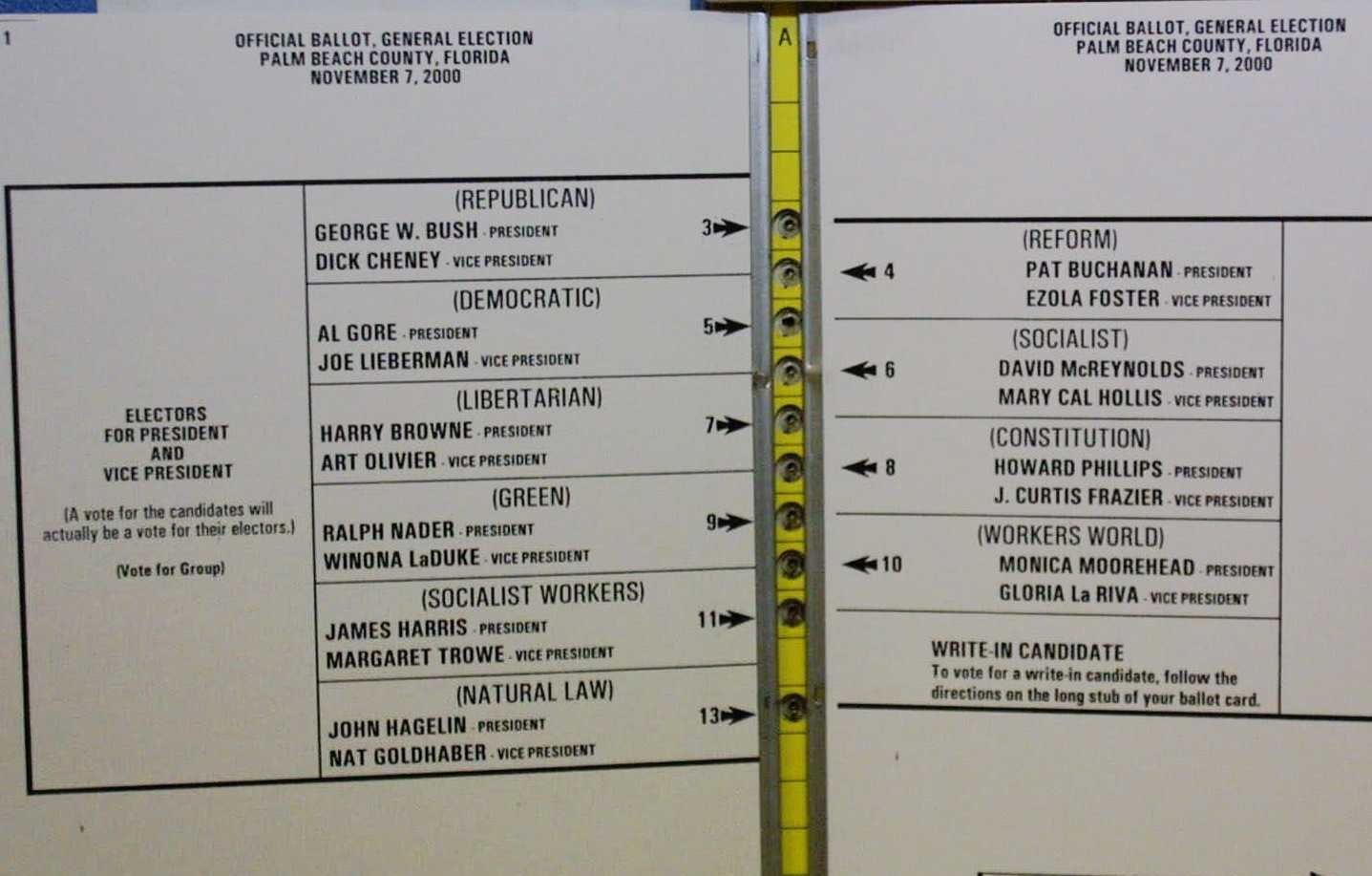
After the election, eight news organizations commissioned NORC at the University of Chicago to examine Florida’s rejected presidential ballots. NORC’s own report says its purpose was research into ballot reliability, rather than naming a president. That distinction matters: “NORC declared the winner” misidentifies what the organization did. [1]
The final examined total was 175,010 ballots: 61,190 undervotes and 113,820 overvotes, according to legal scholarship citing the project’s contemporary documentation. An undervote registered no presidential selection; an overvote registered too many. About 65 percent of this reviewed set were overvotes. These were not 175,010 additional lawful votes waiting to be assigned to somebody. [2]
County workers displayed ballots while three observers independently described visible features: detached corners, indentations, holes and marks. Their job was to record observations without negotiating a shared interpretation. The data let analysts ask how different definitions of a countable mark would affect totals. A research coding team was not a legally empowered county canvassing board. [3]
The surviving archive includes raw and aligned data, repeated codings, comments and separate Orange County material. It is possible to inspect the research design rather than relying on a partisan summary. This edition links the archive but has not performed a fresh ballot-level reanalysis. Historical specificity is more useful here than claiming a new definitive recount. [4]