The outbreak, scientific evidence, public decisions, research oversight and the history of COVID-19 controversies. The complete offline reading edition, generated from the same source as the interactive files.
This is a selected history, a historical and investigative guide, not personal medical advice or a live public-health service. The evidence section contains sourced statements and identified physical reasoning; AI assessment is labeled interpretation. Source notes explain the limits. See the editorial method for scope.
Outbreak & origins / Late 2019–January 2020 · Documented record
Wuhan: what the earliest record actually shows
The first recognized outbreak is firmly documented. The identity of the first infected person is not.
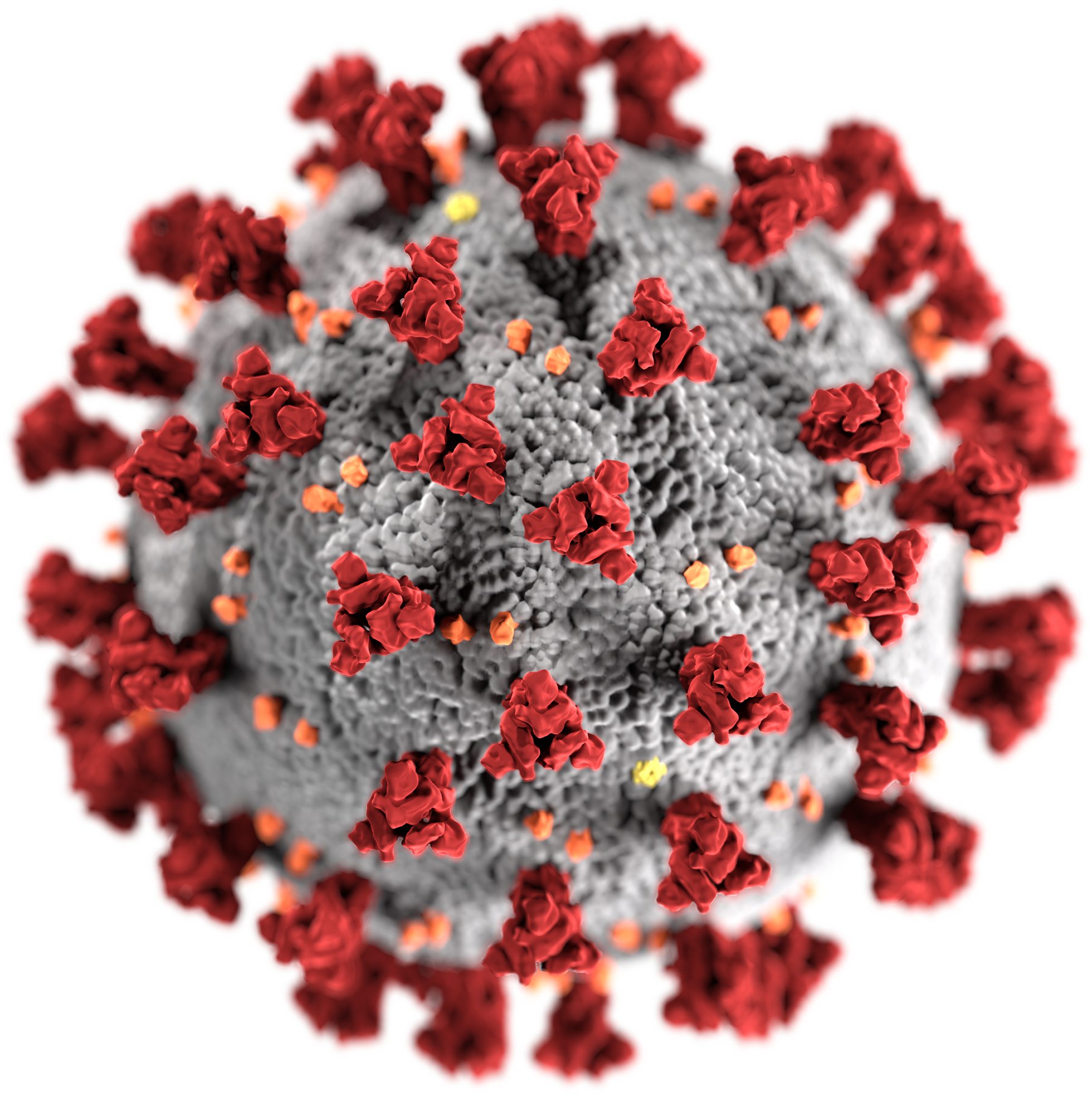
CDC illustration of SARS-CoV-2. This is a scientific illustration, not a microscope photograph. CDC / Alissa Eckert and Dan Higgins · Public domain, CDC illustration. · Source Original source file; any source crop is identified on its archive page.
The record
The earliest securely documented outbreak of the disease later named COVID-19 was in Wuhan in late 2019. Chinese clinicians recognized unusual pneumonia, and laboratory teams identified a previously undescribed coronavirus. The January 2020 patient investigations and virus-isolation work are primary evidence of an actual emerging disease, rather than a retrospective story created after lockdowns. They do not identify the first human infection. [1][2]
The first 425 confirmed cases studied by Li and colleagues showed that infections were not confined to market workers. Their reconstruction found human-to-human transmission among close contacts from the middle of December 2019. That finding was published January 29: its retrospective evidence should not be confused with a warning the public received on the original patients’ illness dates. Early surveillance preferentially detected pneumonia severe enough to bring people to medical attention. [1]
WHO’s chronology records its China country office picking up Wuhan’s public pneumonia notice on December 31, requests for verification, and the subsequent international alerts. January’s genome release enabled laboratories elsewhere to develop diagnostic tools. Date claims need labels: a sample collection, symptom onset, sequence completion, public posting and official announcement are different events. [3]
An earliest case in a published series is not automatically “patient zero.” Mild infections, incomplete records and retrospective changes in case histories prevent that leap. The useful starting point is the converging clinical, epidemiological and genomic record, followed by explicit uncertainty about the upstream chain. A suggested date in an anonymous account should not quietly replace a documented date in this chronology.
At the time
The first recognized outbreak is firmly documented. The identity of the first infected person is not.
What the record shows
A real outbreak in Wuhan is established; its first human case and exact spillover date remain unresolved.
Outbreak & origins / December 2019–March 2020 · Claim check
Warnings, suppression and the month the world lost
China’s handling of early warnings deserves scrutiny, as does the international failure to act on the emergency declaration.
Hospital ship USNS Comfort enters New York Harbor on March 30, 2020, during the first U.S. wave. U.S. Navy / Mass Communication Specialist 2nd Class Sara Eshleman · Public domain, U.S. government photograph; no endorsement implied. · Source Source-provided web rendition; no scene details added.
The record
On December 30, ophthalmologist Li Wenliang warned fellow doctors about a SARS-like illness. Police subsequently reprimanded him for spreading rumors. He later became infected and died. The US Senate’s March 2020 resolution records the coercion and censorship; contemporary medical reporting describes the human cost. Li was warning about dangerous illness, not announcing a proven laboratory origin. [1][2]
WHO’s January 14 messaging is often shown as a single tweet relaying Chinese authorities’ report of no clear evidence of human-to-human transmission. Its same-day technical briefing also discussed possible limited transmission and a wider outbreak risk. That context corrects the claim that WHO had never contemplated person-to-person spread; it does not make reassuring public language adequate in the face of a fast-moving threat. [3]
WHO declared a Public Health Emergency of International Concern on January 30, before describing the outbreak as a pandemic on March 11. The Independent Panel’s 2021 review criticized slow warning procedures and described February as a period when many governments failed to mount a sufficient response. It did not locate every failure in one country or in one official. [4]
The scandal is not imaginary: punishing warnings and withholding usable information damage outbreak control. The further inference that such conduct establishes how the virus originated needs separate evidence. An authority can suppress news of a natural outbreak, a laboratory accident or an event it does not yet understand. For prevention, the right questions include who knew what, when it could be verified, and what action the warning should have triggered.
The market evidence: more than a coincidence, less than a recovered infected animal
Case geography and environmental sequencing support a wildlife-market origin, while leaving an important missing link.
The record
Worobey and colleagues mapped early December 2019 cases and analyzed sampling at the Huanan market. Their Science paper found the outbreak centered around the market, including people without a known market connection, and positive environmental samples associated with areas where susceptible live mammals had been sold. This is a geographic and ecological argument, not simply the observation that a market existed in Wuhan. [1]
The 2024 Cell analysis examined genetic material in market environmental samples and traced susceptible wildlife, including raccoon dogs, alongside SARS-CoV-2-positive material. Genetic diversity and the locations of positive samples strengthened the authors’ market-emergence interpretation. The dataset also established why a “seafood market” label can mislead: the relevant hypothesis concerns live mammalian wildlife, not a claim that fish carried the virus into humans. [2]
The critical limitation is worth stating plainly. A swab containing wildlife genetic material and viral RNA is not a diagnostic swab from an infected animal. It can contain mixtures left by animals, people and their environment. Sampling followed the market’s closure, and a definitively infected market animal from the start of the outbreak has not been recovered in the cited record. [2][3]
These findings are therefore substantial support for a zoonotic explanation, rather than a completed animal-to-human chain of custody. A market can amplify a virus introduced elsewhere; proponents of that alternative still need to explain the concentration of early cases and wildlife-associated environmental findings. Neither “they found the infected raccoon dog” nor “there is no evidence for the market” fairly represents the record.
Documented checkpoints & limits
2022–2024
Read the dated record
Worobey and colleagues mapped early December 2019 cases and analyzed sampling at the Huanan market. Their Science paper found the outbreak centered around the market, including people without a known market connection, and positive environmental samples associated with areas where susceptible live mammals had been sold. This is a geographic and ecological argument, not simply the observation that a market existed in Wuhan. Source ↗
Scope and uncertainty
Keep the conclusion proportionate
Environmental mixtures cannot identify the source of every RNA molecule. Case mapping depends on the completeness and selection of early case records. Source ↗
At the time
Case geography and environmental sequencing support a wildlife-market origin, while leaving an important missing link.
What the record shows
The market evidence is positive evidence for zoonosis; it is not a specimen proving which animal infected which person.
The furin cleavage site and bat-virus similarities are important biology, not a self-interpreting laboratory label.
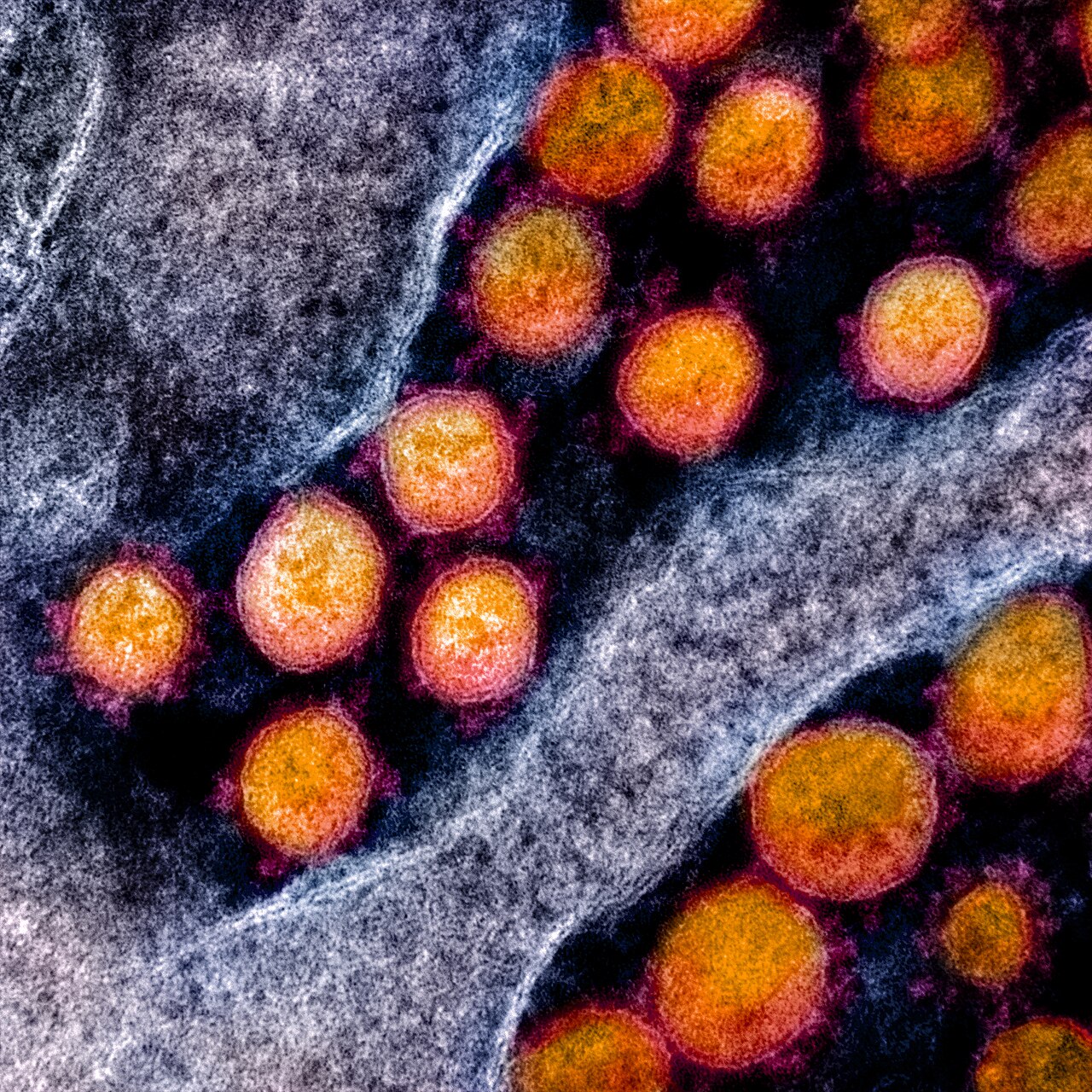
Transmission electron micrograph of SARS-CoV-2 particles isolated from a patient. Source color enhancement retained; the colors are not natural optical colors. NIAID Integrated Research Facility, Fort Detrick · CC BY 2.0 · Source Archive-provided 1280px rendition; original source color enhancement retained.
The record
The new virus belongs to a coronavirus lineage with close relatives in bats. Zhou and colleagues reported approximately 96% genome-wide identity to RaTG13. That may sound almost identical in ordinary language, but a four-percent difference across a roughly 30,000-base genome is substantial. RaTG13 is a relative, not an identified immediate parent that investigators can simply turn into SARS-CoV-2 by pointing to one unusual feature. [1][2]
The spike protein’s furin cleavage site matters because cleavage helps the virus enter cells. Its unusual appearance among the closest sampled relatives is a legitimate subject for investigation. It is not, by itself, a manufacturer’s signature. The March 2020 Proximal Origin paper argued against purposeful design from the genetic features then available; its much broader dismissal of laboratory scenarios deserves a separate discussion. [3]
A study of evolutionary history found that related bat-virus lineages had been evolving over decades. This helps explain why the failure to find an almost identical parent is not surprising in a sparsely sampled wildlife reservoir. It also does not provide a complete reconstruction of the final step into humans. A genome can be strongly informative about evolutionary ancestry without specifying every location where a virus traveled. [2]
A laboratory-associated accident involving a naturally collected virus is conceptually different from engineering, and engineering is different again from deliberate release. Arguments that use those three claims interchangeably ask the evidence to establish more than it does. Twenty-three SAGO members reiterated the limits of the available record in their February 2026 commentary. [4]
At the time
The furin cleavage site and bat-virus similarities are important biology, not a self-interpreting laboratory label.
What the record shows
No publicly established genetic signature proves SARS-CoV-2 was engineered. That does not by itself exclude every laboratory-associated accident.
An accident is plausible enough to investigate. Plausibility is not an incident report.
The record
Wuhan contained laboratories studying coronaviruses, including WIV, with a large specimen collection and research involving altered viruses. That makes a research-related accident a serious hypothesis to examine. The strongest test would connect a relevant precursor virus, a documented exposure or handling event, and the earliest infections. Simply locating a laboratory in the same city does not supply that chain. [1]
The 2023 declassified ODNI report describes biosafety concerns and researchers who were ill in autumn 2019. It also says the illnesses’ symptoms were not diagnostic of COVID-19 and that available information did not establish a specific accident. Its account did not identify SARS-CoV-2 or a sufficiently close progenitor in WIV’s pre-pandemic possession. These are the limits of that report, not a certification that investigators examined everything. [1]
The original WHO-China mission’s laboratory assessment was criticized from inside WHO itself: on March 30, 2021, the director-general said it had not been extensive enough. This matters when an old headline is used to suggest that WHO permanently ruled out a laboratory event. The later SAGO review also did not close the laboratory hypothesis. [2][3]
A rigorous inquiry would seek contemporaneous sample inventories, sequence databases, experiments, staff health records and incident logs, with independent verification and privacy protections. Missing access is a reason to press for records. It should not be treated as either proof that an accident occurred or proof that the missing material is unimportant. The responsible position leaves an unresolved question open while asking which additional finding could actually discriminate between explanations.
Documented checkpoints & limits
2020–2026
Read the dated record
Wuhan contained laboratories studying coronaviruses, including WIV, with a large specimen collection and research involving altered viruses. That makes a research-related accident a serious hypothesis to examine. The strongest test would connect a relevant precursor virus, a documented exposure or handling event, and the earliest infections. Simply locating a laboratory in the same city does not supply that chain. Source ↗
Scope and uncertainty
Keep the conclusion proportionate
Public intelligence reporting is incomplete and partly redacted. The cited 2023 assessment must be read alongside the separate 2026 leadership allegations. Source ↗
At the time
An accident is plausible enough to investigate. Plausibility is not an incident report.
What the record shows
A laboratory-associated origin remains unresolved. Investigation should target an exposure chain, rather than promote geographic proximity into proof.
The source, date and confidence of an assessment matter as much as its headline.
The record
The US intelligence community’s 2021 assessment did not reach consensus. Different agencies favored natural exposure, a laboratory-associated incident or no conclusion, generally with limited confidence. It also distinguished a research accident from a biological weapon. “The government says” is too imprecise when the public record explicitly describes disagreement. [1]
The June 2023 report recorded the FBI favoring a laboratory-associated incident with moderate confidence and the Department of Energy doing so with low confidence, while other elements favored natural exposure or remained undecided. The January 2025 CIA statement then favored a research-related origin with low confidence and retained both major scenarios as plausible. Low confidence concerns the quality and completeness of the evidence; it is not a numerical probability or an admission that the hypothesis is impossible. [2][3]
WHO’s June 2025 SAGO report gave the strongest support in the available scientific record to zoonotic spillover, while saying requested early genetic, animal-trade and laboratory information had not been shared. Its members’ February 2026 Nature commentary maintained that distinction between a best-supported scientific explanation and a definitive reconstruction. [4][5]
In June 2026 ODNI leadership made much stronger accusations about Fauci and laboratory origins. That release belongs in the chronology, but a leadership press statement is not automatically a newly coordinated assessment giving all agencies’ evidence and confidence levels. Sources should be compared by what they expose for scrutiny, how they handle missing information and what would change their conclusion. The site does not manufacture a consensus where there is none. [6]
At the time
The source, date and confidence of an assessment matter as much as its headline.
What the record shows
The public scientific record and intelligence judgments differ; neither a certainty headline nor a simple agency vote settles the origin.
Fauci & research oversight / 2014–2023 · Claim check
NIH, EcoHealth and Wuhan: follow the actual grant
US support for coronavirus research in Wuhan is real. The grant, subaward and experiment should not be collapsed into one assertion.
The record
NIAID, part of NIH, funded EcoHealth Alliance’s project Understanding the Risk of Bat Coronavirus Emergence. EcoHealth made a subaward to WIV. Fauci led NIAID, so asking about his agency’s choices and oversight is appropriate. Describing this as no US funding in Wuhan would be false. Describing every dollar of EcoHealth’s wider work as money personally sent by Fauci to create SARS-CoV-2 would also be false. [1][2]
The HHS inspector general’s January 2023 audit covered three NIH awards totaling about $8 million, including about $1.8 million in subawards to eight recipients. Those totals are not a figure for WIV alone. It found ineffective monitoring, a late report that NIH failed to follow up promptly, inaccessible WIV documentation, and $89,171 in unallowable costs. It also found NIH’s termination of a grant procedurally improper. Those findings should be reported together. [1]
The grant progress reports describe sampling, risk surveys and laboratory experiments. GAO’s 2023 review examined how NIH managed foreign-subrecipient risk, including disagreements over enhanced viral growth and the reporting trigger. These are practical control questions: what was authorized, what result should have triggered notification, who had access to raw data, and who verified compliance? [2][3]
Funding a risky research program, supervising it poorly, causing an accident and knowingly creating a pandemic are different propositions. The audit establishes serious oversight deficiencies; it is not a forensic determination of the pandemic’s origin. Holding that boundary does not excuse the deficiencies. It makes the criticism precise enough to evaluate and, if necessary, remedy.
At the time
US support for coronavirus research in Wuhan is real. The grant, subaward and experiment should not be collapsed into one assertion.
What the record shows
US-supported research and deficient oversight are documented; the audited money is not itself proof of a pandemic-causing experiment.
Fauci & research oversight / 2014–2025 · Contested interpretation
Gain of function: a real risk debate obscured by shifting definitions
Broad biological language and narrow regulatory categories are not the same thing.
The record
In ordinary laboratory usage, gain of function describes a change that gives an organism or biological component a new or enhanced ability. Some experiments are routine; others can create serious biosafety or misuse risks. The National Academies’ workshops distinguished this broad category from the smaller set of pathogen-enhancing work selected for special oversight. Neither a reassuring acronym nor an alarming phrase tells readers which experiment was done. [1][2]
The public Fauci–Rand Paul dispute frequently crossed those definitions. Fauci defended his testimony using the narrower federal framework for enhanced potential pandemic pathogens. Critics argued that the funded work increased relevant biological properties and that his broad-sounding denials misled the public. The June 2024 hearing contains both the challenges and his defense; a clip of only one exchange cannot resolve the protocol-level question. [3]
GAO records disagreements over the EcoHealth/WIV experiment and its reporting threshold, including how enhanced growth was measured and whether notification was timely. That is more informative than treating a label as an admission that SARS-CoV-2 was manufactured. A gain in a laboratory measurement is not automatically enhanced human transmissibility, and a research-review exemption is not a guarantee that an experiment is safe. [4]
Policy also changed. NIH’s May 2025 implementation notice paused work meeting the executive order’s definition of dangerous gain-of-function research while revised oversight was developed. A later definition should not silently be substituted for the rule governing an earlier grant. Accountability requires the contemporaneous rule, the complete proposal, actual results, and a clear account of which judgments or reports failed. [5]
Documented checkpoints & limits
2014–2025
Read the dated record
In ordinary laboratory usage, gain of function describes a change that gives an organism or biological component a new or enhanced ability. Some experiments are routine; others can create serious biosafety or misuse risks. The National Academies’ workshops distinguished this broad category from the smaller set of pathogen-enhancing work selected for special oversight. Neither a reassuring acronym nor an alarming phrase tells readers which experiment was done. Source ↗
Scope and uncertainty
Keep the conclusion proportionate
This article separates biological descriptions from regulatory review. Assessing perjury requires evidence of a knowingly false material statement, not merely a disagreement over terminology. Source ↗
At the time
Broad biological language and narrow regulatory categories are not the same thing.
What the record shows
The risk questions are real. A disputed definition cannot establish the virus’s origin or, by itself, prove a knowingly false statement.
Fauci & research oversight / 2015–2018; public controversy after 2020 · Claim check
DEFUSE and the 2015 engineered-virus paper
These were real research records. Neither is a public laboratory notebook documenting creation of SARS-CoV-2.
The record
The 2015 Menachery and colleagues paper describes a chimeric coronavirus: researchers combined an SHC014 spike with a mouse-adapted SARS-CoV backbone and studied biological properties. The author list includes US researchers and WIV scientists. This was real virus manipulation, and the benefit–risk debate did not begin with COVID-19. The paper does not report making the pandemic virus years before its discovery. [1]
DEFUSE was a 2018 EcoHealth-led proposal to DARPA involving coronavirus research and proposed cleavage-site experiments. DARPA rejected the application. The May 2024 Daszak hearing addresses both the planned work and disputes over where particular experiments would have been done. Daszak denied knowing that the proposed furin-site work had subsequently been performed. His denial is testimony to assess, not independent proof that all related work was absent. [2]
The proposal matters because it shows that some kinds of experiments later debated in origins discussions had actually been contemplated. “Nobody would ever propose this” is therefore a weak response. But the next steps cannot be assumed: a submitted proposal is not an awarded grant, an unfunded project is not a completed experiment, and a completed experiment with one virus would still need to be connected to the virus that began the outbreak.
The 2026 SAGO-member commentary evaluated claims about research proposals against the scientific origin record. Readers can take research risk seriously without replacing missing execution records with a certainty claim. The evidentiary target remains a relevant precursor, the work actually carried out and a route into people—not merely a title, a future-looking proposal or an author’s institutional address. [3]
At the time
These were real research records. Neither is a public laboratory notebook documenting creation of SARS-CoV-2.
What the record shows
DEFUSE is a significant research-risk lead; its rejection and the missing execution chain must remain visible.
Fauci & research oversight / January–March 2020; hearings in 2023 · Contested interpretation
Proximal Origin: private doubts, public certainty and competing accounts
The emails show genuine early uncertainty. Whether officials improperly narrowed the public narrative must be examined separately from the genome.
The record
On January 31, 2020, Kristian Andersen raised concerns with Fauci about unusual genomic features. A February 1 expert call followed, with Fauci and Francis Collins among the participants. Authors subsequently developed the paper published March 17 as The Proximal Origin of SARS-CoV-2. Its published conclusion dismissed laboratory scenarios more categorically than much of the uncertainty visible in the contemporaneous communications. [1][2]
Released messages show the authors considering engineering and laboratory possibilities while debating how to interpret the evidence and communicate their conclusions. That is important context: a reader should not be told that every scientist regarded a laboratory event as ridiculous from the start. The Republican majority’s July 2023 report argues that the process was shaped toward rejecting a laboratory explanation. [2]
The authors disputed coercion in testimony. The Democratic minority’s report emphasizes statements that Fauci and Collins did not dictate the conclusions and that the authors’ views changed with scientific analysis. Both staff reports are partisan interpretations of an underlying record, not neutral substitutes for that record. The hearing transcript lets readers compare the questioning and answers. [3][4]
A change of mind can reflect new evidence; it can also be communicated with unjustified certainty or shaped by institutional pressure. To distinguish these, the chronology should identify what new analysis appeared between messages, who requested changes and what claims went beyond the data. The later market studies stand or fall on their own datasets. An unsatisfactory explanation of one 2020 paper would not erase later evidence, and later evidence would not retroactively make every early communication defensible.
The emails show genuine early uncertainty. Whether officials improperly narrowed the public narrative must be examined separately from the genome.
What the record shows
The early doubts and competing institutional interests are documented; forced fabrication is an allegation requiring more than a before-and-after quote.
EcoHealth and Daszak: debarment is a documented sanction
Grant-management findings led to exclusion from federal funding; that is not a conviction for causing COVID.
The record
HHS moved from suspension and proposed debarment in 2024 to final five-year debarments of EcoHealth Alliance and Peter Daszak in January 2025. The signed agency memoranda, rather than a politician’s celebratory headline, are the important records. The action concerns eligibility for federal procurement and nonprocurement programs. It is a substantial administrative sanction. [1][2]
The records examine the organization’s responsibility, reporting and oversight, including its relationship with WIV and failures to supply required scientific material. Earlier HHS inspector-general findings had already established deficiencies in how both NIH and EcoHealth managed awards. This is why “there was no scandal, only partisan criticism” is not a defensible description of the complete record. [1][2][3]
Equally, debarment is not a criminal trial proving that the organization created SARS-CoV-2 or that a particular experiment caused the pandemic. Agencies can bar a recipient because it cannot demonstrate reliable grant compliance even when the origin of an outbreak remains unknown. Administrative responsibility, scientific causation and criminal intent use different evidence and procedures.
The last final notices verified for this guide impose five-year exclusions; no reinstatement or reversal was identified in the sources checked through October 21, 2026. That is a dated account of the public record, rather than a promise that litigation or administrative status cannot change. Readers following the controversy should look for actual amended notices or judgments, not assume either vindication or guilt from a new opinion piece.
At the time
Grant-management findings led to exclusion from federal funding; that is not a conviction for causing COVID.
What the record shows
The funding exclusion is real and serious. Its stated findings should not be inflated into an origin verdict.
David Morens: the records scandal reached a guilty plea
This is no longer only an allegation about embarrassing emails.
The record
David Morens, a senior adviser in NIAID’s director’s office, was charged in 2026 over efforts to conceal federal records. On August 18 he pleaded guilty to conspiracy to commit offenses and defraud the United States. The procedural update matters: a guide that describes the case solely as disputed congressional accusations is now outdated. [1]
According to DOJ’s account of the plea, Morens and others agreed to use his personal Gmail to keep coronavirus-grant discussions from public disclosure. The communications included nonpublic NIH information, efforts to restore funding, letter drafting and back-channel contacts. The plea also admitted a conspiracy involving illegal gratuities, including wine linked to his assistance. These are concrete failures of public accountability, not an inference drawn merely because scientists privately criticized an opponent. [1]
The case concerns records and official conduct around research funding; the admitted concealment does not establish the first infection or a laboratory release. Morens’s title and association with Fauci do not transfer his criminal responsibility to Fauci. AP’s plea report explicitly notes that Fauci was not charged in the Morens case. [2]
As of this guide’s October 21 cutoff, sentencing was scheduled for November 12. A statutory maximum is not an imposed sentence. The right public expectation is access to the plea’s admissions, preserved records and the eventual court outcome, with the same care that distinguishes an actual admission from another person’s accusation. Proven misconduct deserves direct language; its implications should remain tied to what was proved. [2]
Documented checkpoints & limits
2024–August 2026
Read the dated record
David Morens, a senior adviser in NIAID’s director’s office, was charged in 2026 over efforts to conceal federal records. On August 18 he pleaded guilty to conspiracy to commit offenses and defraud the United States. The procedural update matters: a guide that describes the case solely as disputed congressional accusations is now outdated. Source ↗
Scope and uncertainty
Keep the conclusion proportionate
DOJ summarizes the plea and admissions; the linked AP report supplies the future sentencing date and explicitly distinguishes Fauci’s status. No November sentence is treated as having occurred. Source ↗
At the time
This is no longer only an allegation about embarrassing emails.
What the record shows
Morens admitted a records-concealment conspiracy. That serious finding does not, on its own, prove an origin theory or Fauci’s guilt.
The 2026 records / June 18, 2026 · Contested interpretation
The June 2026 Fauci files: what the documents add
ODNI leadership’s accusations are strong. The underlying material deserves a more exact reading than its headline.
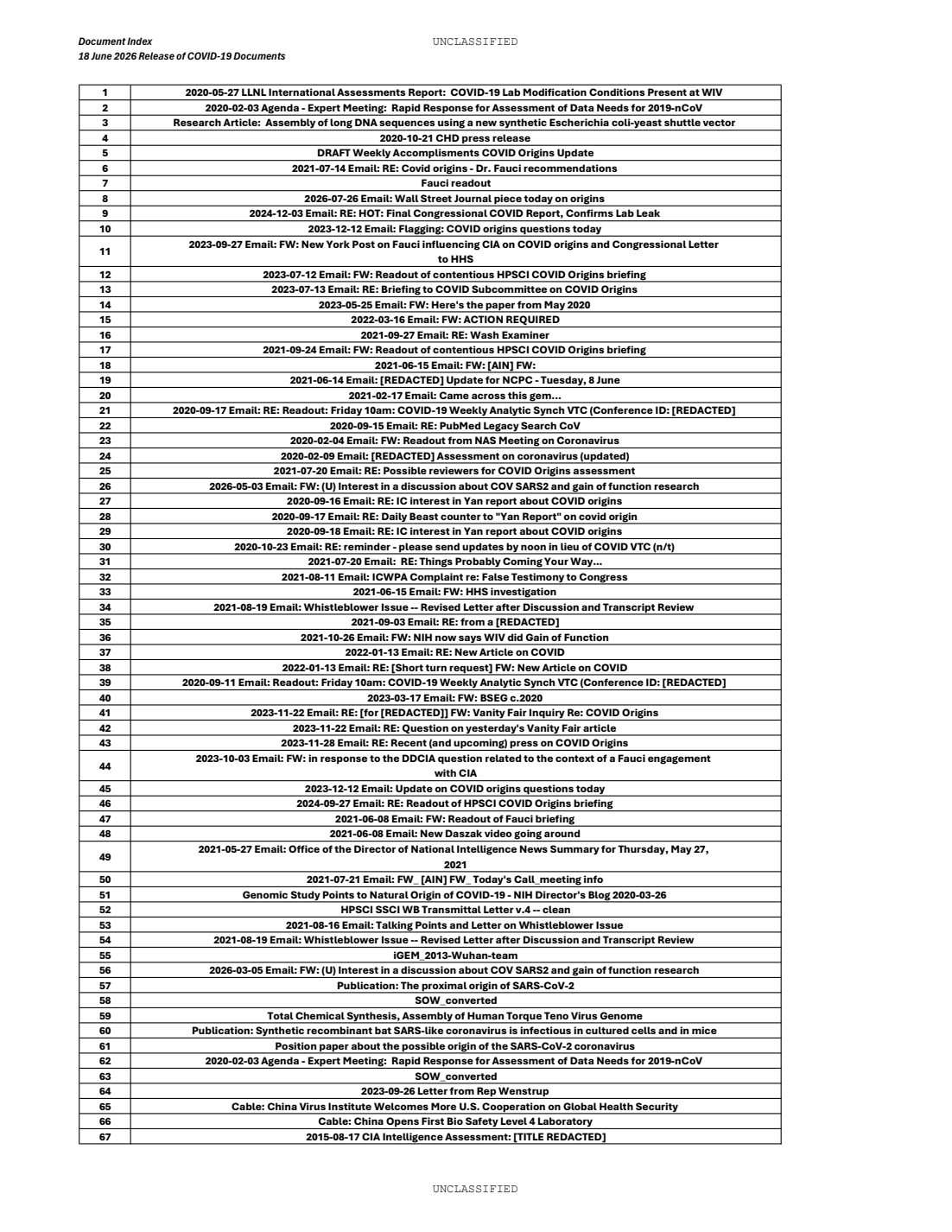
Index to ODNI’s June 18, 2026 COVID-19 document release. This is the publication’s index, not an independent verdict on its allegations. Office of the Director of National Intelligence · Public domain, U.S. government document · Source Faithful rendering of the index PDF, first page. No text altered.
The record
On June 18, 2026, ODNI leadership released documents and accused Fauci of influencing origins assessments, suppressing dissent and giving false congressional testimony. The release explicitly connects those allegations to US-funded research and argues for a laboratory origin. These are official accusations, not a peer-reviewed origin finding or a criminal judgment. They should be reported and tested, rather than omitted because of their political setting. [1]
Part 1 includes a readout of a June 4, 2021 briefing with Fauci and July correspondence about experts he recommended. The readout records his preference for natural-origin arguments, but also questions about sick researchers’ medical records and blood testing. July emails debate whether it was appropriate to follow a policymaker’s recommendations for expert contacts. This establishes interaction and a live concern about influence; it does not by itself show that he dictated the final assessment. [2]
Part 2 also contains July 2021 discussion of possible outside reviewers. One participant objects to Fauci as a potential reviewer because of a perceived conflict of interest. That detail matters: the released internal record includes resistance and competing views, not only uniform acceptance. It is appropriate to ask whether such safeguards were effective and which recommendations were ultimately used. [3]
The false-testimony allegation requires the complete exchange. In the June 2024 transcript, Fauci’s initial answer that he did not know of COVID-related contact is immediately followed by his clarification that intelligence agencies had briefed him about laboratory activities. Later, when the chairman characterizes him as denying communication, Fauci corrects that characterization and says he was briefed multiple times. Those qualifications materially complicate the clipped denial. They do not automatically resolve whether he accurately described the broader advisory contacts documented in 2021. The question is what he was asked, what he understood and whether any material statement was knowingly false—not whether a press-release title sounds conclusive. [4]
Documented checkpoints & limits
June 18, 2026
Read the dated record
On June 18, 2026, ODNI leadership released documents and accused Fauci of influencing origins assessments, suppressing dissent and giving false congressional testimony. The release explicitly connects those allegations to US-funded research and argues for a laboratory origin. These are official accusations, not a peer-reviewed origin finding or a criminal judgment. They should be reported and tested, rather than omitted because of their political setting. Source ↗
Scope and uncertainty
Keep the conclusion proportionate
Selected document sections were examined: Part 1 pages 21–23 and 37–38, and Part 2 pages 1–2. The release contains redactions and other material; this article does not claim an exhaustive forensic audit. Source ↗
Watch this question
DNI Gabbard: June 18, 2026 COVID documents release ↗ Office of the Director of National Intelligence — Official presentation of ODNI leadership’s allegations, not an independent scientific explanation or court finding. Read the underlying documents alongside it.
At the time
ODNI leadership’s accusations are strong. The underlying material deserves a more exact reading than its headline.
What the record shows
The 2026 files document contacts and internal influence concerns; the leadership’s stronger accusations remain separately attributable claims.
Full transcript, including Fauci’s immediate clarification about intelligence briefings and his later correction of the chairman’s characterization. Read the complete question and answer.
Fauci & research oversight / January 2025–October 2026 · Contested interpretation
Fauci’s pardon and the 2026 contempt fight
A pardon, Fifth Amendment invocation, committee referral and conviction are four different legal events.
The record
The clemency warrant for Fauci is dated January 19, 2025; Biden publicly announced protective pardons the next day. It covers federal offenses within specified public-service roles from January 1, 2014 through the pardon’s date. It does not authorize future offenses. Biden said the grants should not be understood as admissions of wrongdoing. A pardon also is not a judicial finding of innocence. [1][2]
In July 2026 Fauci appeared under subpoena and invoked the Fifth Amendment. On August 6 the Senate Homeland Security committee approved Chairman Rand Paul’s contempt resolution 8–5 along party lines. Paul argued the pardon undermined the privilege claim; Democratic members disputed the legal basis and the committee’s approach. Their official statements document a live constitutional dispute, not an adjudicated origin finding. [3][4] In his opening statement, Fauci said he believed Paul’s purpose was to elicit something that would expose him to legal jeopardy; that is his explanation for declining to answer, rather than an admission about origins. [6]
AP reported that DOJ received the committee’s referral and was reviewing it. That is more specific than saying nothing happened, and much narrower than saying Fauci was convicted of contempt. Invoking constitutional protection does not establish that the witness caused a pandemic. A referral asks prosecutors to evaluate an alleged offense; a conviction would require a separate legal process. [5] An August 27 Wall Street Journal briefing subsequently reported that the prosecution push had encountered procedural obstacles; that report was not a dismissal order. [7]
The pardon’s breadth reasonably attracts questions about accountability and why the covered period begins in 2014. Its date range alone cannot tell readers which alleged conduct happened, whether it was criminal or whether it caused COVID-19. This guide found no final contempt conviction in the cited public record through October 21, 2026. The dated procedural status is the claim being made here, not a forecast of what prosecutors or courts will do next.
Documented checkpoints & limits
January 2025–October 2026
Read the dated record
The clemency warrant for Fauci is dated January 19, 2025; Biden publicly announced protective pardons the next day. It covers federal offenses within specified public-service roles from January 1, 2014 through the pardon’s date. It does not authorize future offenses. Biden said the grants should not be understood as admissions of wrongdoing. A pardon also is not a judicial finding of innocence. Source ↗
Scope and uncertainty
Keep the conclusion proportionate
The 2026 committee vote and DOJ referral are distinguished from full-Senate action and a court judgment. This is a description of public records, not legal advice. Source ↗
At the time
A pardon, Fifth Amendment invocation, committee referral and conviction are four different legal events.
What the record shows
The pardon and contempt referral are real; neither substitutes for evidence of the pandemic’s origin or a criminal verdict.
Official transcript preserves Fauci’s opening statement, committee questions and repeated privilege invocations. Questions and assertions by senators are not established facts merely because printed in the transcript.
Fauci & research oversight / 2023–2026 · Claim check
Royalties: institutional income is not Fauci’s personal bank account
Licensing revenue and financial conflicts deserve disclosure. Viral totals often combine different recipients.
The record
NIH licenses inventions developed with public resources to companies. Licensing revenue can return to the institution, and some is distributed to individual inventors under federal rules. The agency’s FY2023 report records $639 million in total royalty income. That is an institutional total, not a payment to Fauci personally and not a list of bribes. The relevant accounting categories have to be separated before a claim about enrichment can be tested. [1]
NIH’s published inventor rules set a formula and an annual personal cap of $150,000. The cap does not tell us what Fauci, or any other named scientist, actually received. Equally, agency-wide receipts cannot establish that one official personally collected hundreds of millions. A proper individual claim needs a named recipient, licensing agreement, payment period and amount, rather than an institution’s headline revenue figure. [2]
Transparency was genuinely disputed. In September 2025 a federal judge rejected NIH’s reliance on the personal-privacy FOIA exemption for individual royalty amounts, while leaving disputes over other exemptions for further proceedings. The linked court opinion supports scrutiny of withholding; it does not establish that every withheld payment was corrupt. Its file was republished in a later bundle, so the decision’s date should not be confused with the upload date. [3]
NIH describes a royalty-conflict review process for investigators studying intellectual property from which they may benefit. That mechanism is relevant, but its existence cannot certify flawless implementation. The strongest accountability questions concern disclosure, recusal, research decisions and identified financial interests. This guide has not verified a complete personal royalty ledger for Fauci and does not invent one to fill that gap. [4]
Documented checkpoints & limits
2023–2026
The dated record
Licensing revenue and financial conflicts deserve disclosure. Viral totals often combine different recipients. Source ↗
Scope and uncertainty
Keep separate questions separate
The NIH figures and payment rules describe different accounting categories. The September 2025 court opinion is not presented as the final outcome of later litigation or as a personal Fauci payment ledger. Source ↗
At the time
Licensing revenue and financial conflicts deserve disclosure. Viral totals often combine different recipients.
What the record shows
Real licensing money and disclosure disputes warrant examination; agency-wide income cannot be relabeled as one official’s personal profit.
NIH’s published distribution rules distinguish personal inventor payments from institutional receipts. The cap is not a statement of any individual’s actual income.
Primary court opinion of September 30, 2025, hosted by an advocacy organization. The linked bundle also contains a later scheduling notice; neither is treated as the final outcome of later proceedings.
The 2026 records / June–October 2026; checked October 21 · Documented record
The 2026 records desk: dumps, diaries and what their dates mean
The archive includes September and October releases. Distinguish document dates, release dates and an investigator’s interpretation.
The record
The June 18 ODNI release includes documents written years earlier, including 2021 briefings and correspondence. The date stamped on a declassification release is not the date of the underlying conversation. A 2026 release can materially improve public knowledge without constituting a new biological discovery. This distinction also prevents a misleading timeline in which every old email suddenly becomes an event in 2026. [1]
Senator Rand Paul’s Reading Room lists July diary batches, July 28 investigation records and August 29 hearing exhibits. His summaries allege contradictions, concealed communications and institutional conflicts. The archive is an official investigative source, but its descriptions are also a participant’s interpretation—not an independent verdict. Compare each claim with the actual document and the public statement it is said to contradict. [2]
The releases continued: September 28 brought Ebola-research records; October 7, diaries covering 2015–2019; and October 14, additional pages covering December 2021–May 2022. The index describes the latest batch as containing private concern about possible DEFUSE oversight requirements, criticism of CDC and discussion of the 15-minute close-contact rule. Those are the archive’s attributed descriptions. This entry has not independently inspected that complete PDF batch, and does not treat its index as proof that a proposed experiment was conducted or caused COVID. [2]
One recurrent example is a January 2020 diary account describing an early patient without a market link. That entry should be read as an account of information available then. Early-case histories were later reexamined, and absence of a known market visit does not identify where a virus first entered humans. Claiming that the entry permanently disproves the market evidence ignores the chronology of later research. It is equally unhelpful to pretend the early uncertainty never existed. [2][3][4]
The July 29 Senate transcript includes Fauci’s own opening explanation and the subsequent questions he declined to answer. It is the appropriate source for comparing what senators alleged with what he actually said. This guide has examined selected released records and linked the larger collections; it does not claim that an AI has authenticated or independently audited every page. Any claim that a dump establishes a crime, an experiment or an origin should name the specific document and the inference connecting them. [4]
The October 14 diary package is linked directly for inspection. Automated retrieval of that PDF was restricted during this review, so its detailed contents are not presented here as independently verified admissions. The archive’s description is attributed as such. Its filename includes October 7; the index dates public release October 14. That difference illustrates why a filename, an entry date and a disclosure date should not be silently treated as the same date. [5]
At the time
The archive includes September and October releases. Distinguish document dates, release dates and an investigator’s interpretation.
What the record shows
Treat the 2026 releases as evidence to inspect, with original dates and procedural status visible—not as a single verdict labeled “the files.”
Official investigative archive of Senator Rand Paul. Indexed text identifies batches through October 14, 2026; descriptions of what records reveal are the investigator’s interpretations. Direct fetching was restricted; the index is not a substitute for examining the underlying pages.
Peer-reviewed retrospective analysis revising aspects of the earliest-case chronology; earliest recognized illness remains different from first human infection.
Official transcript preserves Fauci’s opening statement, committee questions and repeated privilege invocations. Questions and assertions by senators are not established facts merely because printed in the transcript.
Direct primary archive link. Automated retrieval returned HTTP 403, so this guide does not claim to have examined the entire PDF. The archive dates its release October 14; the filename contains October 7.
Pfizer’s pivotal randomized trial reported eight symptomatic COVID-19 cases among 17,411 vaccine recipients and 162 among 17,511 placebo recipients in its principal analysis, beginning seven days after dose two. The approximately 95% figure described the relative reduction in that measured risk over the observed period. It did not mean that 95% of vaccinated people acquired permanent, complete immunity. [1]
The same counts imply observed risks of roughly 0.046% and 0.925%, an absolute difference of about 0.88 percentage points in that trial window. This calculation is useful alongside the relative result. It is not a correction showing that efficacy was secretly below 1%: absolute benefit changes with exposure, follow-up, background immunity and the outcome being counted. Both descriptions require their denominators. [1]
The FDA’s December 2020 review explicitly identified unanswered questions about transmission, duration and uncommon adverse events. Severe disease was a separate endpoint with few early events; deaths were too sparse to establish a precise mortality effect from that initial trial alone. Later surveillance and studies supplied different kinds of evidence. Emergency authorization was a decision under uncertainty, rather than completion of every possible safety question. [2]
Follow-up through six months still found substantial protection against COVID-19, with waning over time. Participants being offered vaccine after authorization also reduced the duration of a fully blinded placebo comparison. A defensible account credits the randomized result while recognizing that rare injuries, changing variants and longer-term durability required further investigation. Reading the original protocol is more informative than either the launch slogan or the claim that no trial occurred. [3]
At the time
A strong result against symptomatic disease became a slogan that often lost its endpoint, timescale and uncertainty.
What the record shows
The original efficacy result was real and specific. Turning it into a promise of lifelong protection or zero transmission went beyond it.
Did vaccination stop transmission—or was that never tested?
Neither “no effect on spread” nor “vaccinated people cannot spread it” accurately describes the historical evidence.
The record
The original Pfizer efficacy analysis was designed primarily around symptomatic disease, not a direct randomized test of every transmission event. FDA’s review said that further work was needed on viral shedding and transmission. A later acknowledgment that transmission was not the pivotal trial endpoint therefore confirmed a limitation visible in the original public record; it did not expose a hidden absence of all testing. [1]
Post-authorization research did examine spread. An English contact-tracing study found vaccination associated with lower onward transmission for Alpha and Delta, but the reduction was smaller for Delta and diminished with time since vaccination. These were observational estimates, with adjustment rather than random assignment of every contact. Their limits matter, but so does the positive evidence they supplied. [2]
Omicron changed the picture again. English data showed that protection against symptomatic Omicron infection after a two-dose course was substantially lower and waned; boosters restored some protection that also declined. Protection against infection, infectiousness after a breakthrough case and protection against hospitalization are distinct outcomes. A person could be protected against severe illness yet still become infected and transmit. [3]
Public statements that treated vaccination as an assured barrier to infection were too categorical. That is a fair criticism of communication, particularly when linked to mandates or moral judgments. The opposite conclusion—that any breakthrough case proves the vaccine never helped—is also too categorical. Claims should carry the product, variant, dose, population, outcome and date that make them testable.
Documented checkpoints & limits
2020–2022
Read the dated record
The original Pfizer efficacy analysis was designed primarily around symptomatic disease, not a direct randomized test of every transmission event. FDA’s review said that further work was needed on viral shedding and transmission. A later acknowledgment that transmission was not the pivotal trial endpoint therefore confirmed a limitation visible in the original public record; it did not expose a hidden absence of all testing. Source ↗
Scope and uncertainty
Keep the conclusion proportionate
Historical effectiveness estimates cannot be transferred unchanged to later variants, updated vaccines or populations with different immunity. Source ↗
At the time
Neither “no effect on spread” nor “vaccinated people cannot spread it” accurately describes the historical evidence.
What the record shows
Vaccination reduced some transmission in earlier conditions; it did not produce durable sterilizing immunity. Policy and messaging should have reflected that distinction.
The heart-inflammation signal was genuine. Age, sex, product, dose and the comparison period all change its interpretation.
The record
Myocarditis and pericarditis after mRNA COVID-19 vaccination are recognized adverse effects, not simply unverified social-media reports. Warnings have been present since 2021. In June 2025 FDA expanded them with estimates for 2023–2024 formulations: approximately eight observed cases per million doses among ages six months through 64, and 27 per million among males 12–24, during days one through seven. Those are unadjusted incidence estimates, not lifetime attributable risks. [1]
The update also described persistent cardiac MRI abnormalities in some people followed after vaccine-associated myocarditis. Their long-term significance remained unknown. A careful account should neither imply that every case fully resolved within days nor equate every abnormal scan with inevitable heart failure. Rare at population scale can still mean a serious injury for the person affected. [1]
An English study comparing admissions or deaths from myocarditis found important differences by product, dose, age and sex. In men under 40, the estimated excess after a second Moderna dose exceeded that after a positive SARS-CoV-2 test in that analysis. The overall pattern across the population favored a higher infection-associated risk, but that average must not erase the subgroup exception. [2]
This comparison also does not settle every benefit–risk question: it concerns one outcome, historical doses and a particular infection ascertainment system. COVID-19 hospitalization, prior immunity and the likelihood of future exposure are separate considerations. Honest reporting can acknowledge a causal vaccine injury and meaningful vaccine benefits at the same time, without assigning the same balance to every age group.
Documented checkpoints & limits
2021–2026
Read the dated record
Myocarditis and pericarditis after mRNA COVID-19 vaccination are recognized adverse effects, not simply unverified social-media reports. Warnings have been present since 2021. In June 2025 FDA expanded them with estimates for 2023–2024 formulations: approximately eight observed cases per million doses among ages six months through 64, and 27 per million among males 12–24, during days one through seven. Those are unadjusted incidence estimates, not lifetime attributable risks. Source ↗
Scope and uncertainty
Keep the conclusion proportionate
The 2025 warning is the dated safety communication verified here; the FDA product history also lists 2026 approvals. This article does not invent a new 2026 incidence estimate. Source ↗
At the time
The heart-inflammation signal was genuine. Age, sex, product, dose and the comparison period all change its interpretation.
What the record shows
Myocarditis deserves explicit acknowledgment and product-specific, age-specific context. Neither blanket reassurance nor an unqualified infection comparison is adequate.
Dated 2025 communication; unadjusted seven-day incidence for 2023–2024 formulations, plus follow-up uncertainty. It is not an estimate for all formulations combined.
The blood-clot scandal: AstraZeneca and Johnson & Johnson
A rare, sometimes fatal clotting syndrome led to pauses, warnings and changes in vaccine preference.
The record
Thrombosis with thrombocytopenia syndrome, or TTS, combines unusual clotting with low platelets. It became a recognized risk after the adenoviral-vector vaccines made by AstraZeneca and Janssen/Johnson & Johnson. This was a specific clinical syndrome, not a finding that every kind of blood clot after any COVID-19 vaccine was vaccine-caused. EMA’s April 2021 communication described the link and the emerging evidence. [1]
U.S. investigators confirmed 54 TTS cases, including eight deaths, following Janssen doses administered from March through August 2021. The overall reporting rate was about 3.8 cases per million doses, with higher rates in some groups. These were reviewed cases, rather than a simple count of everything submitted to VAERS. In December 2021 ACIP preferred mRNA products over Janssen for adults. [2]
The later withdrawals require their own dates and explanations. FDA revoked Janssen’s emergency authorization in June 2023 after the company requested withdrawal, citing expired remaining lots, lack of demand and no plan to update the strain composition. EMA records AstraZeneca’s March 2024 EU withdrawal as requested by the manufacturer for commercial reasons. Those explanations do not undo the earlier injury finding. [3][4]
Conversely, describing the 2024 withdrawal as the first admission of clotting risk moves a public 2021 finding forward by three years. The real accountability questions concern how quickly signals were recognized, which alternatives were available, whether recipients understood the risk and how injured people were supported. A timeline is more revealing than treating a product’s entire regulatory history as one event.
At the time
A rare, sometimes fatal clotting syndrome led to pauses, warnings and changes in vaccine preference.
What the record shows
A serious vaccine-caused clotting syndrome was established. Product withdrawal dates and commercial explanations should not be substituted for the earlier safety history.
Safety reporting systems can reveal real harms without making every reported illness a confirmed vaccine injury.
The record
VAERS accepts adverse events after vaccination whether or not the reporter believes vaccination caused them. That openness is useful: an unexpected pattern can trigger investigation before causation is clear. It also means that a spreadsheet of reported deaths is not a spreadsheet of deaths proven to have been caused by vaccines. Reports vary in completeness, and reporting changes with publicity and requirements. [1]
Underreporting is a real limitation, especially for common minor events. It does not supply a universal multiplier that can convert all reports into a precise national death toll. Different illnesses have different reporting probabilities; some reports are coincidental and others causally related. Establishing rates requires denominators, suitable comparison periods and, when possible, medical-record review or linked health-system data. [1]
V-safe was a different tool: enrolled participants received prompts about symptoms and effects on daily life. Its early findings documented that short-term reactions could interrupt work and normal activities. Because enrollment was voluntary, and reported inability to do normal activities is not the same endpoint as a medically diagnosed life-threatening injury, those percentages cannot simply be relabeled as a population rate of permanent disability. [2]
A further data trap appeared in May 2025, when public VAERS access expanded to include secondary reports associated with already reported events. The agency’s guide says those are not additional adverse-event cases. Graphs crossing that change need to distinguish reports, follow-ups and unique events. Taking reports seriously includes interpreting their structure accurately, then investigating the strongest signals. [3]
Documented checkpoints & limits
2020–2026
Read the dated record
VAERS accepts adverse events after vaccination whether or not the reporter believes vaccination caused them. That openness is useful: an unexpected pattern can trigger investigation before causation is clear. It also means that a spreadsheet of reported deaths is not a spreadsheet of deaths proven to have been caused by vaccines. Reports vary in completeness, and reporting changes with publicity and requirements. Source ↗
Scope and uncertainty
Keep the conclusion proportionate
VAERS cannot establish causation or population incidence by itself. V-safe enrollment and health-impact questions differ from clinical diagnosis. Source ↗
At the time
Safety reporting systems can reveal real harms without making every reported illness a confirmed vaccine injury.
What the record shows
A report is a reason to examine an event; confirmation requires additional evidence. Recognized injuries such as TTS show why reporting must remain open.
The vaccine platform has a real molecular mechanism. Claims about genome rewriting require evidence that mechanism alone does not provide.
CDC illustration of SARS-CoV-2. This is a scientific illustration, not a microscope photograph. CDC / Alissa Eckert and Dan Higgins · Public domain, CDC illustration. · Source Original source file; any source crop is identified on its archive page.
The record
Messenger RNA supplies instructions that cells can read to produce a protein and stimulate an immune response. It is not a complete infectious SARS-CoV-2 virus. The vaccine does not contain a programmed system for cutting and inserting new sequences into a person’s chromosomes. NHGRI’s explanation distinguishes the temporary RNA message from the DNA genome stored in the nucleus. Calling something “genetic” does not establish that it rewrites inherited genes. [1]
A separate controversy concerns residual manufacturing DNA. DNA templates are used to make mRNA; purification includes steps intended to break down and remove that template. FDA’s December 2023 response acknowledged residual fragments and described its testing standard. It also distinguished an SV40-related regulatory sequence from the complete SV40 virus or DNA encoding its proteins. Finding one sequence does not establish infection with that virus. [2]
These are testable manufacturing and toxicology questions. A claim of human genome integration or a cancer epidemic needs validated methods, relevant exposure measurements and evidence of the proposed clinical effect. Measuring fragments in a vial, or observing a reaction in an artificial cell system, would not by itself show that chain of events in vaccinated people. Nor does saying so eliminate the need for independent quality control.
The published ingredient list includes RNA, lipids and formulation ingredients; it does not contain tracking electronics. A vaccine record, digital certificate or phone-based health pass can raise genuine privacy questions without implying that a syringe implanted a functioning microchip. The evidence needed for the latter would be physical identification and reproducible testing, rather than a photograph of a certificate or a magnet sticking to skin. [3]
Watch this question
COVID-19 and mRNA technologies — Science in 5 ↗ World Health Organization / 2 September 2022 — A dated institutional explanation of mRNA technology. Read later safety findings and recommendations alongside it; it is not a current personal recommendation.
At the time
The vaccine platform has a real molecular mechanism. Claims about genome rewriting require evidence that mechanism alone does not provide.
What the record shows
Questions about manufacturing deserve actual measurements. DNA alteration, SV40 infection and tracking-chip claims are different assertions and have not been established by the cited evidence.
Fertility fears—and menstrual changes that were real
Evidence against a broad infertility claim does not justify dismissing reports of changed periods.
The record
A prospective U.S.–Canadian cohort followed couples trying to conceive without fertility treatment. Vaccination of either partner was not associated with a reduction in the chance of conception per menstrual cycle. The study included more than 2,000 women and adjusted for several measured differences between participants. It provides direct evidence about a specific fertility outcome, rather than relying only on assurances about how a vaccine should work. [1][2]
The same research found a temporary reduction associated with recent infection in male partners, but it was observational. It does not establish that every fertility problem after infection has that cause, or that a study of couples trying naturally answers every question about every pregnancy or fertility treatment. Its most relevant finding here is that the predicted broad suppression of conception after vaccination was not observed. [1]
Menstrual changes were a different question. NIH-supported studies found a small average increase in cycle length around vaccination, generally temporary. An international study confirmed an average change of less than one day; averages do not mean that no individual experienced a larger change. These findings are compatible with patients noticing real effects while not demonstrating permanent infertility. [3]
The useful correction therefore goes in both directions. A changed period should not automatically be labeled imaginary, stress alone or irrelevant to research. It should also not automatically be transformed into evidence that a generation has been sterilized. Menstruation, ovarian reserve, conception, miscarriage and live birth are different outcomes that need their own studies. Respect for people reporting symptoms is compatible with disciplined causal claims.
At the time
Evidence against a broad infertility claim does not justify dismissing reports of changed periods.
What the record shows
A broad infertility claim is not supported by the cited conception evidence. Temporary menstrual changes were measurable and should have been discussed openly.
Previous infection mattered, and policies that ignored it oversimplified the evidence.
The record
An infection can leave immune memory. An Israeli study during the Delta period found substantial protection after previous infection, with protection waning over time. In its adjusted analysis, recovered people retained more protection against reinfection than previously uninfected people at comparable times after a second Pfizer dose. A vaccine dose after infection reinforced protection. The relevant conclusion is not that infection-acquired immunity never existed. [1]
Omicron illustrated why no immunity category could be treated as permanent. A Qatar study examined previous infection, vaccination and combinations of the two against symptomatic Omicron. Results depended on time since vaccination and whether a booster had been received. Earlier infection and hybrid histories were meaningfully protective, but neither guaranteed that a person would not become infected again. [2]
These were observational studies, so undocumented infections, differences in testing and behavior, and selection of who survived an earlier infection complicate comparisons. Immunity after recovery also cannot be evaluated as though acquiring the infection had no initial cost. Protection measured among survivors is a different question from whether deliberately becoming infected is a sound strategy.
For the historical policy debate, the distinction matters. Treating an individual with documented prior infection as immunologically identical to someone with no exposure could misdescribe the evidence. Treating all recovered people as equally protected indefinitely could do the same. Rules are partly administrative choices; a simple certificate category does not reproduce the full biology of immune history, age or future variant changes.
At the time
Previous infection mattered, and policies that ignored it oversimplified the evidence.
What the record shows
Infection-acquired and hybrid immunity were substantial, variable and time-dependent. Their existence deserved acknowledgment without turning infection into a risk-free intervention.
Long COVID, contested symptoms and unfinished science
Persistent illness after infection is documented. Its mechanisms, frequency and treatment cannot be reduced to one slogan.
The record
Long COVID describes an infection-associated chronic condition with a wide range of symptoms and courses. The National Academies’ 2024 definition emphasizes that it can affect multiple organ systems and vary over time. There is no single routine test that settles every case. That diagnostic difficulty is not evidence that the illness is invented; it makes careful definitions, comparison groups and recognition of other possible illnesses more important. [1]
A Veterans Affairs study found that postacute risk differed across variant eras and vaccination groups. It associated vaccination with lower risk, while documenting residual risk after breakthrough infection. Its predominantly older, male health-system population and observational design limit generalization. A percentage from that study should not be presented as the exact risk for a healthy teenager, or as proof that vaccinated people could never develop persistent symptoms. [2]
By September 2026, NIH reported that a randomized RECOVER-VITAL trial of an extended nirmatrelvir/ritonavir regimen did not improve established Long COVID symptoms compared with placebo. A negative treatment result does not mean the disease was unreal; it narrows one proposed approach for the studied group. It also differs from evidence about treating acute infection. This historical guide is not a treatment plan. [3]
Patients reporting persistent problems after vaccination also deserve investigation. NIH’s October 19, 2026 announcement described a new Vaccinology and Immunology Center study of serious symptoms after vaccination or infection, with a protocol still being finalized. That is a commitment to study causation and alternative explanations—not a completed finding that every post-vaccination syndrome is vaccine-caused, nor a reason to dismiss the people seeking answers. [4]
Watch this question
RECOVER: identifying different Long COVID pathways in adults ↗ NIH RECOVER / 15 May 2026 — Researchers and a community representative discuss patterns in a defined Long COVID study. Different trajectories do not establish one cause or a universal treatment.
At the time
Persistent illness after infection is documented. Its mechanisms, frequency and treatment cannot be reduced to one slogan.
What the record shows
Persistent illness deserves serious investigation. Acknowledging uncertainty about mechanisms or an individual cause is compatible with acknowledging disabling symptoms.
Liability protection and a difficult compensation route are real features of the U.S. response.
The record
The PREP Act provided liability protections for covered pandemic countermeasures, alongside the Countermeasures Injury Compensation Program, or CICP. These protections are not a finding that injuries cannot occur. Nor is the system identical to the better-known National Vaccine Injury Compensation Program. HRSA’s comparison describes an administrative process, a generally one-year filing deadline, no payment of attorneys’ fees and more limited review options than VICP. [1][2]
As of October 1, 2026, HRSA reported 14,250 COVID-19 countermeasure claims: 5,881 pending or in review, 120 found eligible, and 66 compensated. The total includes non-vaccine countermeasures: 11,198 claims alleged vaccine injuries or deaths. These categories must not be collapsed into “all claimants received payment” or “all claims were proven vaccine injuries.” [3]
The denial breakdown also matters. Many were administrative, including missing medical records or the filing deadline; others failed the evidentiary standard or did not establish a covered injury. A denial cannot automatically be used as medical proof that a patient was healthy or that an event never occurred. Conversely, filing a claim is not a scientific confirmation of causation. Compensation statistics describe a program with particular legal rules. [3]
There is room for a serious policy criticism here: a campaign can ask the public to accept a small risk while offering injured people a route they find slow or restrictive. That question stands on its own, without proving deliberate harm or invalidating every vaccine benefit. Program design, causal research and individual clinical care address connected but different responsibilities.
At the time
Liability protection and a difficult compensation route are real features of the U.S. response.
What the record shows
Liability protections and compensation barriers warrant scrutiny. Administrative claim counts must not be mistaken for a census of causal injuries.
The “75 years” dispute: what the FDA actually sought
There was a real disclosure fight. It was not a court order making all vaccine evidence secret for 75 years.
The record
Public Health and Medical Professionals for Transparency sued FDA for records underlying the Pfizer vaccine’s licensing. FDA proposed a minimum processing rate of 500 pages per month after initial productions, citing staffing, other requests and review for exempt information. Against hundreds of thousands of pages, that pace implied many decades. Criticism that such a schedule defeated timely scrutiny was substantive; a technical processing explanation did not make the delay unimportant. [1]
On January 6, 2022, Judge Mark Pittman rejected that pace and ordered 55,000 pages every 30 days, after an initial January production. The order emphasized the public importance of timely access while recognizing production burdens. It was a disclosure ruling, not a medical determination that the vaccine was safe or unsafe. The requester’s website publishes court documents and released materials. [2][3]
The slogan often changes the parties and the event: “Pfizer sealed the trial for 75 years” is not the same description as FDA defending a slow FOIA review rate. The dispute involved releasable underlying records, redactions and production schedules; published trial results and FDA review summaries already existed. Neither publication of a summary nor protection of participant privacy excuses unnecessary obstruction of independent scrutiny. [1][4]
Released documents also need context. An adverse event of special interest can be a term selected for monitoring, not an injury that occurred in every participant. A postmarketing report requires its denominator, observation period and causality assessment. Finding a troubling line should lead to checking the full document and corroborating evidence. Winning access to data creates the opportunity to investigate; it does not predetermine the result.
Documented checkpoints & limits
2021–2026
Read the dated record
Public Health and Medical Professionals for Transparency sued FDA for records underlying the Pfizer vaccine’s licensing. FDA proposed a minimum processing rate of 500 pages per month after initial productions, citing staffing, other requests and review for exempt information. Against hundreds of thousands of pages, that pace implied many decades. Criticism that such a schedule defeated timely scrutiny was substantive; a technical processing explanation did not make the delay unimportant. Source ↗
Scope and uncertainty
Keep the conclusion proportionate
The 2022 order is the initial major production ruling, not a claim that every later production dispute was resolved. PHMPT hosts copies as the requesting party. Source ↗
At the time
There was a real disclosure fight. It was not a court order making all vaccine evidence secret for 75 years.
What the record shows
The slow disclosure proposal was real and successfully challenged. That does not establish that all evidence was sealed or that the disclosure order proved fraud.
Hydroxychloroquine is a real medicine; ivermectin is a real human antiparasitic medicine as well as a veterinary product. Their established uses did not establish COVID-19 effectiveness. Conversely, dismissing all interest in repurposed medicines as inherently foolish ignored why inexpensive existing drugs were investigated during an emergency. The relevant test was whether a particular regimen improved outcomes in a defined group.
A major failure did occur: The Lancet retracted a 2020 hydroxychloroquine registry study based on Surgisphere data that could not be independently audited. The journal later discussed changes to its review process. That episode justified scrutiny of publication standards. It did not make the study’s opposite conclusion true, or erase results from unrelated randomized trials. [1]
RECOVERY found no mortality benefit from hydroxychloroquine in hospitalized COVID-19 patients. For early outpatient ivermectin, TOGETHER found no significant benefit on its composite outcome of hospitalization or prolonged emergency observation. COVID-OUT also found no significant ivermectin benefit on its primary composite outcome. These studies had different populations and endpoints; they should not be represented as one experiment proving something about every dose and every disease stage. [2][3][4]
Funding and conflicts deserve disclosure on all sides, including companies selling new treatments and clinicians or businesses promoting repurposed drugs. A conflict creates a reason to inspect design and data; it does not independently establish a positive or negative effect. The account here concerns the historical evidence and scandal, not instructions to start, stop or substitute any medicine.
At the time
Real publication failures occurred. Independent randomized trials still matter more than whether a drug became a political symbol.
What the record shows
A retracted study was a genuine failure. The stronger independent trials did not establish the promoted COVID-19 benefits of these regimens.
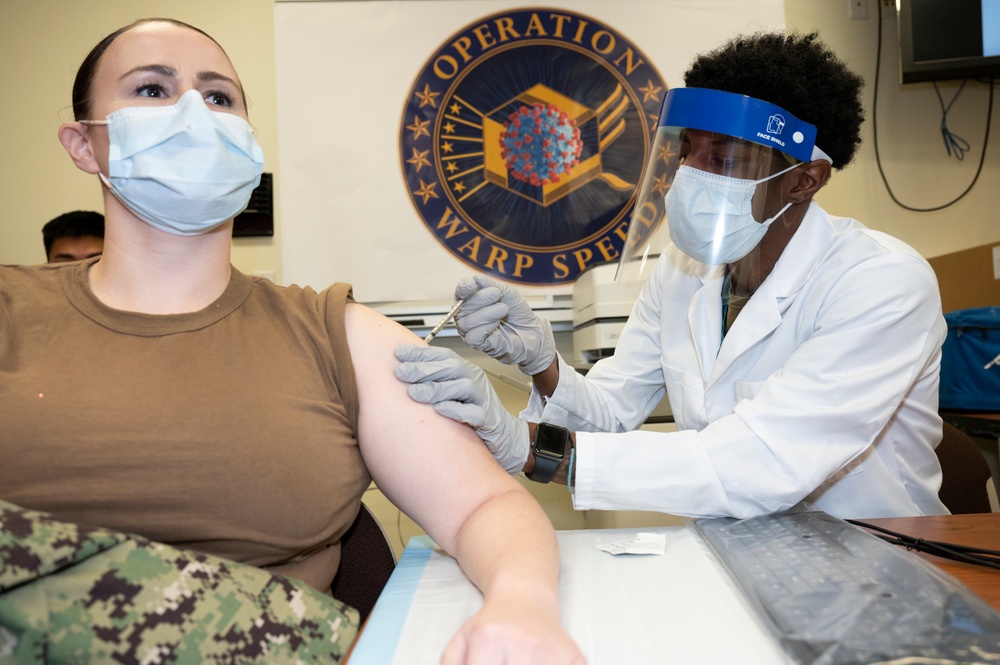
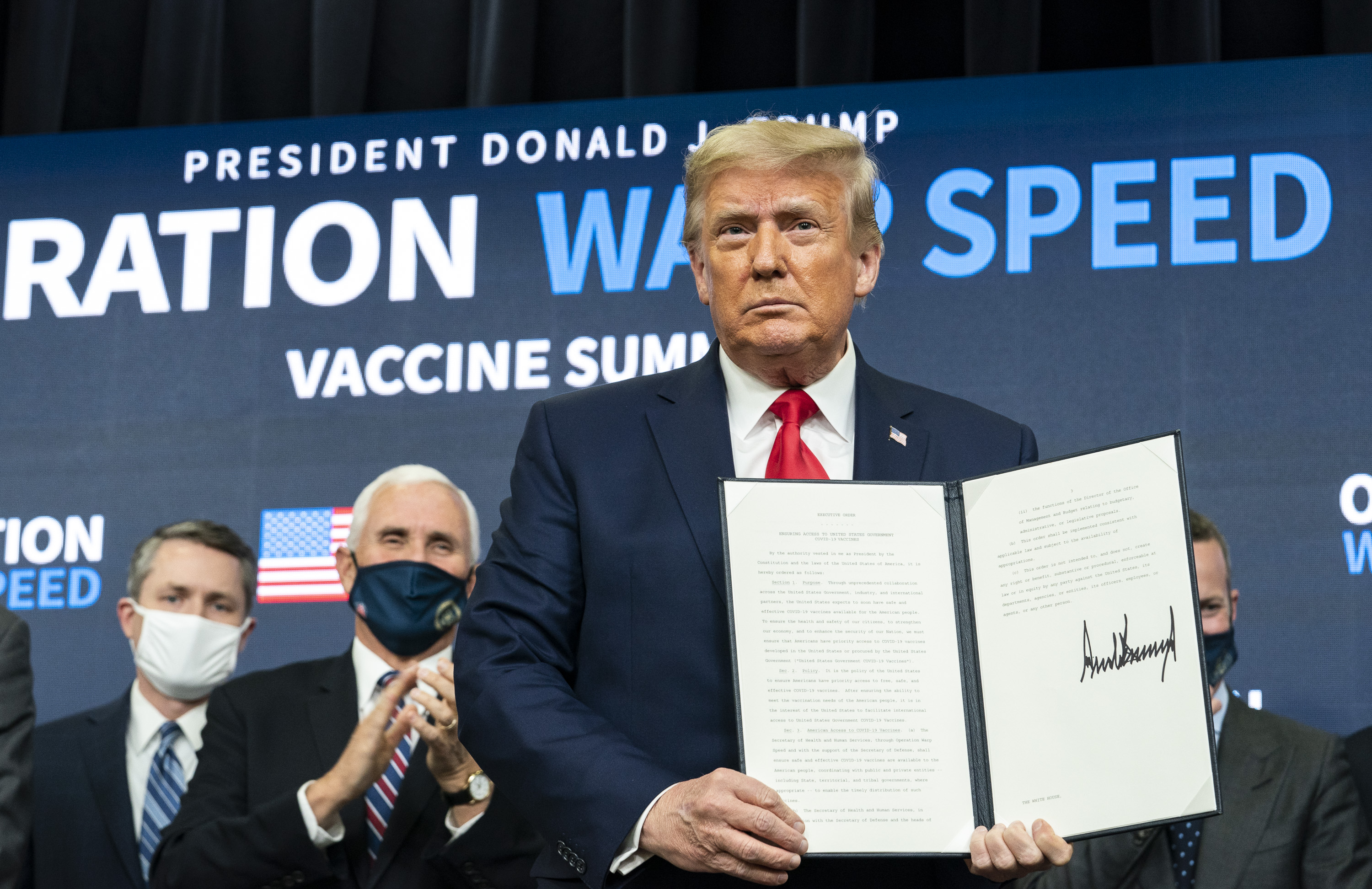
Operation Warp Speed accelerated development through overlapping trial phases, manufacturing before approval and federal support for multiple platforms. GAO described adaptation of traditional development practices, not the omission of all clinical trials. Manufacturing at financial risk allowed doses to be available sooner if trials succeeded; it also involved public money and procurement decisions that deserved oversight. [1]
GAO reported approximately $13 billion obligated to six vaccine companies by December 31, 2020, across contracts with differing mixes of development, manufacturing and dose purchases. Pfizer’s U.S. support initially centered on advance purchasing rather than the same development-funding arrangement used for Moderna. Treating every company’s contract as identical obscures what the government funded and what financial risk it reduced. [2]
The revenues were enormous. Pfizer reported $37.806 billion in 2022 Comirnaty revenue, while Moderna reported $18.4 billion in commercial COVID-19 vaccine revenue. Revenue is not net profit, and a global product total is not the amount paid by a single government. The SEC filings nonetheless establish a large commercial incentive without requiring speculation about secret bank accounts. [3][4]
A fair analysis can question pricing, procurement transparency, public return on research and unequal access while also evaluating clinical benefits on their own evidence. The fact that a company profited does not prove that it fabricated the pandemic or that its product had no effect. The fact that a product helped people does not settle whether the financing and distribution arrangements were fair. Those are separate, answerable questions.
At the time
The vaccines were scientific products, government purchases and enormous businesses at the same time.
What the record shows
Public support and very large revenues are documented. They warrant an accountability discussion without substituting motive for proof of manufactured disease or trial fraud.
FDA licensing, CDC recommendations, advisory votes and court orders are different records—and the current guidance differs from 2025 headlines.
The record
FDA approval concerns a particular product, indication and supporting evidence. CDC recommendations address public-health use; an ACIP advisory vote ordinarily requires adoption before becoming an official recommendation. They are not interchangeable, and a recommendation can describe use outside the FDA-approved indication. FDA’s current Comirnaty page lists approval for people 65 and older, or ages 5–64 with an underlying condition raising severe-outcome risk. It also lists an August 27, 2026 approval letter. [1][2]
CDC’s 2025–2026 interim document used individual-based decision-making for people six months and older, emphasizing that benefit–risk was most favorable in people at increased risk. But the September 23, 2026 guidance is different: it recommends a 2026–2027 vaccine for all adults 18 and older, and for children six months–17 with moderate or severe immunocompromise; other children are addressed through shared clinical decision-making. The page explicitly identifies off-label uses. A 2025 screenshot cannot establish the current 2026 recommendation. [3][4]
The process itself became a controversy. In June 2025 HHS removed all 17 sitting ACIP members, presenting replacement as a response to conflicts and declining trust. That was the administration’s rationale, not a judicial finding that every former member was corrupt. In August 2026 HHS sought public input on universal, risk-based and shared-decision categories. A request for information invites evidence and argument; it does not itself change a vaccine’s label or complete a new clinical trial. [5][6]
On March 16, 2026, the District of Massachusetts granted preliminary relief staying the January 2026 childhood-schedule memo, appointments of 13 ACIP members and votes of that reconstituted committee. The court found likely legal defects; this was interim administrative-law relief, not a final verdict resolving every medical question. Importantly, the order did not grant the requested relief against the May 2025 directive itself, whose finality and mootness were unresolved. [7]
The First Circuit’s official index confirms argument in the appointments appeal, No. 26-1503, on October 6, 2026. Argument alone is not an appellate ruling. The lesson is to date the record and identify the decision-maker: a changed recommendation can reflect new evidence, different policy judgments or litigation. It does not retrospectively prove that every 2020 claim was false—or that every later criticism is justified. This article describes policy history, not personal vaccination advice. [8]
Documented checkpoints & limits
2025–October 2026
The dated record
FDA licensing, CDC recommendations, advisory votes and court orders are different records—and the current guidance differs from 2025 headlines. Source ↗
Scope and uncertainty
Keep separate questions separate
Checked through October 21, 2026. The appeal’s October 6 argument is verified; no later appellate disposition is established here. CDC guidance and FDA labels are living documents. This guide is not a clinical eligibility tool. Source ↗
At the time
FDA licensing, CDC recommendations, advisory votes and court orders are different records—and the current guidance differs from 2025 headlines.
What the record shows
The latest primary records show a real policy and legal upheaval. Current FDA approval and current CDC recommendations must be reported separately, with dates and off-label distinctions.
Dated September 23, 2026. Distinguishes current recommendations from FDA-approved indications and marks off-label uses; differs from the 2025–2026 document.
Official June 2025 announcement states HHS’s rationale for dismissing the committee. Its accusations are attributed claims, not findings of individual wrongdoing.
Primary March 16, 2026 preliminary order. Final page states the relief actually granted; discussion of the May 2025 directive does not grant relief against that directive.
The airborne delay: a consequential failure of framing
The changing record supports criticism of delayed aerosol recognition. It does not support the idea that respiratory transmission was imaginary.
The record
Early arguments about whether COVID was “airborne” were partly arguments about categories. The July 2020 WHO brief emphasized contact and droplets, used a small-particle definition for aerosols, and treated airborne spread outside aerosol-generating medical procedures cautiously. It acknowledged poorly ventilated indoor outbreaks while saying that further research was needed. Read as a historical document, it shows the limited framing that critics were challenging—not a policy that had already treated shared indoor air as central. [1]
By May 2021, CDC’s science brief explicitly described inhalation of fine particles and documented transmission beyond six feet in certain indoor circumstances. Shared air, exposure duration, crowding and ventilation belonged in the explanation; a distance line alone could not describe the hazard. Proximity still mattered because exposure can be greater near an infectious person. “Airborne” did not mean that every outdoor encounter was equally risky. [2]
WHO’s April 2024 consultation sought common language across disciplines, describing infectious respiratory particles and transmission through the air without the older rigid size split. WHO acknowledged that competing terminology during the pandemic had contributed to confusion. Agreement about vocabulary did not instantly settle every practical question about relative transmission routes or protective equipment. [3]
The reasonable criticism is specific: an institutional framework can lag the evidence and delay attention to a useful control, such as ventilation. That is different from proving that officials knew the complete answer in January 2020 and secretly coordinated to hide it. Scientific uncertainty and avoidable institutional delay can coexist. The dated documents allow readers to assess both. [1][2][3]
At the time
The changing record supports criticism of delayed aerosol recognition. It does not support the idea that respiratory transmission was imaginary.
What the record shows
Aerosol recognition changed the practical model of risk. Scrutinize the delay without converting it into evidence for an unrelated plot.
Public decisions / 2020–2024 · Contested interpretation
Masks: three questions often collapsed into one
Filtering particles, preventing infection under real conditions, and justifying a mandate require different kinds of evidence.
Cloth-mask production by the 366th Operations Support Squadron during the April 2020 response. This is not a respirator performance test. U.S. Air Force / Staff Sgt. Tyrell Hall · Public domain, U.S. government photograph; no endorsement implied. · Source Source-provided web rendition; no scene details added.
The record
Can a material filter particles? Does a person wearing a particular mask avoid infection? Does a public rule improve population outcomes enough to justify its costs? Those are related questions, but none can substitute completely for the others. Laboratory filtration research helps explain mechanisms and material differences. It does not by itself measure the benefit of a particular school mandate or prove that every cloth covering performs like a fitted respirator. [1]
The January 2023 Cochrane review of randomized trials did not find a clear reduction in respiratory viral infection from the pooled medical/surgical mask interventions. It emphasized weaknesses including variable adherence and trial design. Many included studies concerned influenza rather than COVID. A null or imprecise pooled estimate deserves to be reported plainly; it should not be rewritten as definitive proof of a large benefit. [2]
Cochrane’s editor-in-chief also rejected the claim that the review proved that masks do not work. The organization said trials of interventions promoting mask use could not resolve every question about wearing a mask itself. A June 2024 update said it was no longer seeking changes to that version’s abstract and plain-language summary. The review was not retracted, and the editorial disagreement should not be hidden. [3]
The Bangladesh cluster trial tested a package of free masks and promotion across villages and found a reduction in symptomatic seroprevalence, with important differences by mask type and age subgroup. Its outcome and setting should remain attached to the claim; it was not a universal trial of every mandate. Overall, evidence for filtration, specific infection outcomes and coercive policy should be evaluated at their respective levels. Honest uncertainty is compatible with real physical filtration. [4]
Documented checkpoints & limits
2020–2024
Read the dated record
Can a material filter particles? Does a person wearing a particular mask avoid infection? Does a public rule improve population outcomes enough to justify its costs? Those are related questions, but none can substitute completely for the others. Laboratory filtration research helps explain mechanisms and material differences. It does not by itself measure the benefit of a particular school mandate or prove that every cloth covering performs like a fitted respirator. Source ↗
Scope and uncertainty
Keep the conclusion proportionate
The Cochrane review pools different viruses, settings and interventions. The Bangladesh trial used a behavioral intervention package and a specific outcome. Laboratory results cannot directly determine a mandate’s net social benefit. Source ↗
At the time
Filtering particles, preventing infection under real conditions, and justifying a mandate require different kinds of evidence.
What the record shows
“All masks are useless” and “every mask rule was proven necessary” both outrun the evidence described here.
The precise distance had a weaker evidentiary foundation than many public messages suggested. That is not a finding that distance never matters.
The record
In his January 2024 congressional interview, Anthony Fauci said the six-foot recommendation “sort of just appeared” and that he did not recall the discussion determining the exact distance. The exchange was about the origin and evidentiary basis of a numerical rule. It is legitimate to ask why an operational standard with large effects on classrooms and businesses was presented so firmly. [1]
At the June 2024 public hearing, Fauci explained that he meant there had not been a controlled trial establishing six feet as the appropriate cutoff; he attributed the guideline to CDC and the earlier droplet framework. The transcript contains both the challenge and his response. A committee member’s allegation is not automatically the witness’s admission, so reading the complete exchange matters. [2]
Respiratory risk does not end at an invisible six-foot wall. CDC’s May 2021 brief described situations in which people became infected beyond that distance. Conversely, that does not show that being close to an infectious person was harmless. A threshold can be a rough administrative simplification of a continuous risk and still be too crude for decisions about poorly ventilated rooms. [3]
The strongest retrospective question is whether the rule was proportionate, updated promptly, and combined with attention to air quality and exposure duration. Criticizing an insufficiently supported exact cutoff is more defensible than treating one quotation as an admission that every distancing measure was fabricated. It also makes accountability more precise: who selected the standard, what evidence supported it, and when should it have changed? [1][2][3]
Documented checkpoints & limits
2020–2024
Read the dated record
In his January 2024 congressional interview, Anthony Fauci said the six-foot recommendation “sort of just appeared” and that he did not recall the discussion determining the exact distance. The exchange was about the origin and evidentiary basis of a numerical rule. It is legitimate to ask why an operational standard with large effects on classrooms and businesses was presented so firmly. Source ↗
Scope and uncertainty
Keep the conclusion proportionate
The January interview is retrospective testimony. Fauci’s account of his recollection is not a complete administrative history of CDC’s development of guidance. The public hearing includes partisan claims as well as testimony. Source ↗
At the time
The precise distance had a weaker evidentiary foundation than many public messages suggested. That is not a finding that distance never matters.
What the record shows
The numerical cutoff deserved clearer uncertainty. The underlying idea that exposure depends partly on distance was not disproven.
Public decisions / 2020–2026 · Contested interpretation
Lockdowns: effectiveness is not the same as a blank check
Different restrictions, stages of the outbreak, and alternatives produce different answers. The counterfactual matters.
Hospital ship USNS Comfort enters New York Harbor on March 30, 2020, during the first U.S. wave. U.S. Navy / Mass Communication Specialist 2nd Class Sara Eshleman · Public domain, U.S. government photograph; no endorsement implied. · Source Source-provided web rendition; no scene details added.
The record
“Lockdown” often bundles gathering limits, business closures, school closures, stay-at-home orders and voluntary changes in behavior. Asking whether the bundle worked can conceal a more useful question: what did each additional restriction accomplish, at what cost, compared with the realistic alternative at that moment? Fewer contacts can reduce transmission without establishing that every legal restriction was necessary or well designed. [1][2]
Brauner and colleagues modeled early intervention effects across countries and found substantial reductions associated with several measures; the additional effect attributed to stay-at-home orders was smaller after other measures were already in place. Sharma and colleagues studied Europe’s later resurgence and again estimated effects that varied by measure and context. These were observational models, not randomized assignments of entire societies. Interventions introduced together and voluntary responses make individual effects difficult to separate. [1][2]
The UK Inquiry’s November 2025 decision-making report, available with 2026 amendments, concluded that governments acted too late at important points. Its assessment includes the possibility that earlier effective action could have reduced the need for more severe restrictions. A modeled earlier-action scenario is a conditional estimate, not a directly observed parallel Britain in which everything else stayed identical. [3][4]
A policy can reduce infections and still impose serious educational, financial, medical and social harm. A fair evaluation counts those harms and the harm of an uncontrolled outbreak, instead of comparing restrictions with an imagined disease-free normal life. Neither “lockdowns saved lives” nor “lockdowns caused damage” alone settles their timing, duration or proportionality. The historical record supports examining particular decisions rather than granting a blanket vindication or blanket dismissal. [1][2][3][4]
At the time
Different restrictions, stages of the outbreak, and alternatives produce different answers. The counterfactual matters.
What the record shows
Judge specific measures against plausible alternatives. Transmission effects, economic costs and civil liberties all belong in the assessment.
Primary report, with February 2026 post-publication amendments. Retrospective judgments and counterfactual modeling are distinguished from observed outcomes.
School closures: a real cost that deserves its own accounting
Learning losses and distress were substantial. Isolating the portion caused by closures requires more than comparing test scores before and after the pandemic.
The educational damage is documented. In the 2022 US NAEP long-term trend assessment, nine-year-olds’ average reading score fell five points and mathematics seven points compared with 2020. These are points on the assessment scale, not percentages or a direct conversion into years of schooling. A national decline is evidence of a serious setback; by itself it does not identify which pandemic disruption caused each part. [1]
Research comparing instructional modes offers a closer test. Goldhaber and colleagues found larger achievement losses where remote instruction persisted, with particularly concerning effects in high-poverty settings. Their analysis supports treating extended remote schooling as an important contributor. Families and districts were not randomly assigned to remote instruction, however, so local illness, resources and other differences complicate a precise causal estimate. [2]
The social picture also matters. CDC’s 2023 high-school survey found persistent sadness or hopelessness remained common, while its trend comparisons showed that distress had already been rising before COVID and some measures improved from 2021. Infection, bereavement, family finances, isolation and disrupted services overlapped. “Everything was caused by school closure” is not a conclusion that a cross-sectional survey can establish. [3]
The archive should keep following recovery rather than freezing the story at its worst point. NCES now includes 2025 long-term trend assessments and explains their sampling and comparability. Decisions about closures should be judged with the information available at the time and whether they were revised as evidence and alternatives improved. Recognizing early uncertainty does not excuse leaving children’s costs out of later decisions. [4]
At the time
Learning losses and distress were substantial. Isolating the portion caused by closures requires more than comparing test scores before and after the pandemic.
What the record shows
Educational and social harms were real. Evidence supports scrutiny of prolonged remote learning without attributing every child outcome to one policy.
New York nursing homes: the policy, the count, and the testimony
The death-count scandal is established. The consequences of a discharge directive and allegations about congressional testimony are separate issues.
The record
New York’s March 25, 2020 directive concerning admission or readmission of patients to nursing homes became a major controversy because these facilities housed people at exceptionally high risk. The policy’s effect on transmission, the adequacy of staffing and infection control, and the government’s public reporting deserve distinct examinations. Combining them into a single number of deaths personally caused by one politician skips the causal analysis. [1][2]
The state attorney general’s January 2021 report found that the published nursing-home tally may have undercounted resident deaths by as much as 50 percent, notably by excluding residents who died after transfer to hospitals. That is an important reporting failure. It does not mean those deaths vanished from every statewide all-setting death total. The report also documented facility-level shortcomings, including infection-control problems. [1]
Congressional Republicans later alleged that Andrew Cuomo misrepresented his involvement in a state Health Department report presented as an account of the nursing-home outbreak. The House Oversight chairman renewed a criminal referral in April 2025, citing documents and testimony that the committee said contradicted Cuomo’s account. The referral is a primary source for the accusation and the evidence offered; it is not a criminal conviction. [2]
Cuomo’s published interview includes denials and discussion of what he recalled about events four years earlier. Readers should compare that testimony with the disputed drafts and communications, rather than assume a partisan referral proves every accusation. Families can reasonably demand accurate counts and transparent policymaking regardless of whether a prosecutor establishes a particular criminal offense. Accountability for reporting is not dependent on proving an extravagant theory about the entire pandemic. [2][3]
At the time
The death-count scandal is established. The consequences of a discharge directive and allegations about congressional testimony are separate issues.
What the record shows
The undercount was a genuine scandal. A policy criticism, a reporting finding and a criminal allegation require different evidence.
Mandates in court: why OSHA lost and the hospital rule survived
The same Supreme Court treated two federal vaccination rules differently because their legal authority and setting differed.
The record
On January 13, 2022, the Supreme Court blocked enforcement of OSHA’s broad emergency rule for employers with at least 100 employees while the challenge proceeded. It required vaccination unless employers chose to offer the specified testing-and-masking alternative. Employees did not have an unconditional right to demand that option. Calling it a universal forced-injection law omits the alternative; calling the alternative costless ignores its burden. [1]
The Court’s majority concluded that the challengers were likely to succeed because OSHA had exceeded its statutory authority in regulating a general public-health danger so broadly. The dissent argued that the workplace exposure and emergency record supported the rule. The decision concerned an agency’s legal power and the conditions for emergency regulation. It was not a scientific holding that vaccines had no benefit. [1]
That same day, in Biden v. Missouri, the Court allowed the federal rule for staff at covered Medicare- and Medicaid-participating facilities to take effect. The majority regarded patient health and safety requirements as within the health secretary’s statutory role. The rule included medical and religious exemptions. The dissent disputed the authority and process. [2]
These decisions show why “the Supreme Court ruled mandates illegal” is too broad. Which government, which statute, which workers and which procedural stage matter. A legal authorization also does not end the ethical debate about bodily autonomy, employment consequences, exemptions, trust or changing transmission conditions. Public-health justification, statutory authority and proportionality should each be defended on their own terms. The 2022 orders are historical rulings about specific rules, not a description of every mandate currently in force. [1][2]
At the time
The same Supreme Court treated two federal vaccination rules differently because their legal authority and setting differed.
What the record shows
The Court did not answer all mandate questions with a single yes or no. It distinguished agency authority and healthcare settings.
Public decisions / 2020–2024 · Contested interpretation
Government and social media: what Murthy did—and did not—decide
Federal pressure on platforms was real. The Supreme Court’s standing ruling was not a merits verdict approving every communication.
The record
Officials communicated with social-media companies about COVID content, including vaccination claims, and the platforms removed or reduced the distribution of posts. In Murthy v. Missouri, individuals and states alleged that federal officials had crossed from persuasion into unconstitutional coercion or significant encouragement. Whether a government can effectively suppress speech through a private intermediary is a serious constitutional question. [1]
On June 26, 2024, the Supreme Court held, six to three, that these plaintiffs had not established standing for the forward-looking injunction they sought. The majority emphasized missing links between particular officials, particular moderation decisions and a sufficiently likely future injury. Platforms also had their own reasons to moderate. The dissent regarded the record as showing serious coercion and would have allowed relief for at least one plaintiff. [1]
The procedural distinction is essential: the Court did not reach a final constitutional merits determination authorizing all government-platform contacts. Nor did it accept that every removed post was caused by the government or that the removed information was true. A deleted claim can be false and still raise questions about improper official pressure; a true claim can be removed by a platform acting independently. Congressional Research Service places this question in the broader distinction between persuasion and coercion. [2]
For any proposed censorship example, preserve the post, the date, the platform policy, the government communication and the actual enforcement action. Those details make it possible to distinguish a documented removal from an inference about its cause. Criticism of overreach does not require treating every viral screenshot as a complete record. Likewise, correcting misinformation does not give officials an unlimited license to threaten or coerce speakers. [2]
Documented checkpoints & limits
2020–2024
Read the dated record
Officials communicated with social-media companies about COVID content, including vaccination claims, and the platforms removed or reduced the distribution of posts. In Murthy v. Missouri, individuals and states alleged that federal officials had crossed from persuasion into unconstitutional coercion or significant encouragement. Whether a government can effectively suppress speech through a private intermediary is a serious constitutional question. Source ↗
Scope and uncertainty
Keep the conclusion proportionate
This entry describes the June 2024 Supreme Court decision and its majority and dissent. It does not represent a complete docket history of every subsequent platform case or decide the truth of any particular removed post. Source ↗
At the time
Federal pressure on platforms was real. The Supreme Court’s standing ruling was not a merits verdict approving every communication.
What the record shows
Murthy rejected the requested injunction on standing grounds. It neither disproved all pressure nor upheld every action on the merits.
Supreme Court majority and dissent. The June 2024 holding is about standing for prospective relief, not a final merits ruling on all official contacts.
Event 201: a real exercise, an unsupported leap to foreknowledge
A coronavirus simulation shortly before COVID is striking. Its actual materials are more useful than a clipped montage.
The record
Event 201 was a real tabletop pandemic exercise held in New York on October 18, 2019. Johns Hopkins Center for Health Security organized it with the World Economic Forum and the Bill & Melinda Gates Foundation. It brought together participants to discuss a hypothetical international emergency, including economic disruption and communication problems. The timing understandably attracts attention when viewed after the events of 2020. [1]
The fictional scenario involved a coronavirus, but it was not a script documenting SARS-CoV-2’s real emergence or an experiment releasing a pathogen. Coronaviruses were already a recognized pandemic threat after SARS and MERS. An exercise designer’s decision to choose one therefore needs to be assessed against the preexisting risk, rather than treated as a prediction that could only have come from inside knowledge. [1][2]
In January 2020, the organizers explicitly stated that the event had not predicted the novel outbreak and that their fictional model inputs differed from the emerging virus. Their denial is not, by itself, an independent investigation into every participant. However, the original scenario, recordings and chronology are available for comparison. A serious foreknowledge claim would need additional evidence tying specific advance knowledge or conduct to the actual outbreak. [1][2]
It remains fair to debate whose interests were represented, what participants recommended about information control, and whether public-private preparedness exercises give wealthy institutions too much influence. Those are governance questions grounded in what happened at the meeting. They do not establish that its sponsors created the pandemic. Preparedness, institutional influence and deliberate causation are three different claims, even when a short video presents them as one story. [1][2]
Documented checkpoints & limits
2019–2020
Read the dated record
Event 201 was a real tabletop pandemic exercise held in New York on October 18, 2019. Johns Hopkins Center for Health Security organized it with the World Economic Forum and the Bill & Melinda Gates Foundation. It brought together participants to discuss a hypothetical international emergency, including economic disruption and communication problems. The timing understandably attracts attention when viewed after the events of 2020. Source ↗
Scope and uncertainty
Keep the conclusion proportionate
The exercise organizers are primary sources for their own materials and statements, not independent adjudicators of every allegation about themselves. This assessment compares the documented exercise with the additional evidence a foreknowledge claim would require. Source ↗
At the time
A coronavirus simulation shortly before COVID is striking. Its actual materials are more useful than a clipped montage.
What the record shows
The meeting happened. The claim that it proves a planned release needs evidence beyond the coincidence and scenario genre.
“With” COVID, “from” COVID, and the missing deaths
Death certificates can contain several causes without making COVID incidental. Excess mortality is a separate, useful check.
The record
A death certificate is not usually a one-word diagnosis. It can record the underlying disease, the sequence that led to death, and other contributing conditions. Pneumonia or respiratory failure following COVID may belong in the same causal chain; a preexisting condition can increase vulnerability without making the infection irrelevant. The widely shared “only six percent” argument confused COVID being the only listed condition with COVID causing or contributing to death. [1]
CDC examined US death certificates for 2020 with COVID recorded and found that the large majority contained additional codes consistent with plausible causal chains or contributing conditions. That supports the broad coherence of the records, not perfection of every certificate. Testing access, reporting practices and individual misclassification can produce errors in both directions. A positive test alone and a certified underlying cause are also different measures. [1]
Excess mortality asks a different question: how many more people died from all causes than a modeled baseline would predict? WHO estimated about 14.9 million excess deaths worldwide in 2020–2021, with an uncertainty interval of 13.3–16.6 million. The estimate includes direct and indirect pandemic-associated deaths, and should not be relabeled as 14.9 million individually confirmed deaths caused by the virus. [2][3]
This wider measure helps identify incomplete reporting, especially where surveillance was weak. It cannot automatically assign each excess death to infection, restrictions, overwhelmed hospitals or delayed care. Baseline choices, demographic changes and incomplete registration affect the estimate. The appropriate response to uncertainty is to compare methods and definitions—not to declare that every counted death was fabricated or that every excess death has one known explanation. [1][2][3]
Documented checkpoints & limits
2020–2022
Read the dated record
A death certificate is not usually a one-word diagnosis. It can record the underlying disease, the sequence that led to death, and other contributing conditions. Pneumonia or respiratory failure following COVID may belong in the same causal chain; a preexisting condition can increase vulnerability without making the infection irrelevant. The widely shared “only six percent” argument confused COVID being the only listed condition with COVID causing or contributing to death. Source ↗
Scope and uncertainty
Keep the conclusion proportionate
The US certificate study covers 2020 reports available by February 2021. The WHO estimate covers January 2020–December 2021, is model-based, and includes indirect effects. These are not current cumulative totals. Source ↗
At the time
Death certificates can contain several causes without making COVID incidental. Excess mortality is a separate, useful check.
What the record shows
Multiple diagnoses do not erase a causal contribution from COVID. Excess deaths offer a separate check while retaining attribution limits.
Pandemic relief fraud: an enormous scandal without an invented total
Auditors documented serious failures. Suspected fraud, discrepancies, recoveries and convictions are different numbers.
The record
Pandemic relief moved very large sums quickly, often through systems whose controls could not keep pace. Fraud in these programs is not a speculative claim. The SBA inspector general’s June 2023 review estimated that more than $200 billion in PPP and COVID EIDL assistance was potentially fraudulent. The word “potentially” matters: an estimate based on indicators and investigative work is not a list of final criminal judgments. [1]
The oversight record describes weaknesses in screening, identity verification and risk management. Urgency helps explain why officials prioritized speed, but it does not excuse abandoning safeguards or failing to improve them. Legitimate businesses receiving relief should not be confused with applicants who fabricated payrolls, identities or eligible businesses. The program-level audit and individual prosecutions answer related but different questions. [1][3]
There is a current development. On September 23, 2026, SBA announced that IRS comparisons had identified discrepancies associated with approximately $100 billion in loans and that examinations were being opened. SBA said it had earlier referred more than $200 billion in suspected PPP and EIDL fraud to IRS. Those figures overlap; they are not independent losses to add together. The announcement itself says individual cases remain subject to investigation. [2]
Avoid converting the face value of every flagged loan into proven tax loss, or adding a referral, a suspension and a recovery as though each represented different missing money. Equally, uncertainty about the final total should not be used to wave away a major documented oversight failure. Follow the money through a defined program and date: amounts disbursed, flagged, adjudicated and recovered. That produces a stronger account than implying that widespread theft proves the disease itself was invented. [1][2][3]
At the time
Auditors documented serious failures. Suspected fraud, discrepancies, recoveries and convictions are different numbers.
What the record shows
The fraud was real and large. Keep suspected amounts, overlapping referrals and proved losses separate.
Partygate: when leaders broke the standards they demanded
The UK scandal is documented through official investigation and Parliament, not merely rumor about private behavior.
The record
While people were prohibited from ordinary gatherings, events took place in Downing Street and the Cabinet Office. The scandal was not simply that officials looked relaxed in a photograph. Sue Gray’s official investigation examined specific gatherings, the surrounding communications and the workplace culture in which they occurred. Its final report was published on May 25, 2022. [1]
Gray identified failures of leadership and judgment, and held senior political and official leadership responsible for that culture. The report should be read event by event: not every person’s presence at every gathering was identical, and some questions were constrained by the police investigation. It nevertheless supplies substantial documentary grounding for criticism of a double standard at the center of government. [1]
In Parliament on the day of the report, Boris Johnson apologized again for the June 19, 2020 gathering for which he had received a fixed-penalty notice. The parliamentary record contains his account and the challenges to it. A penalty notice for an identified event and a broader conclusion about leadership failures are more precise claims than assuming that every allegation about every event was criminally established. [2]
Hypocrisy can corrode trust, and citizens who lost time with relatives or attended restricted funerals had concrete reasons to feel betrayed. It does not follow that the underlying infection hazard was fictional. A leader may violate a necessary rule, impose an unjustified rule, or do both at different times; personal conduct cannot settle the epidemiology. The scandal belongs in the COVID record because legitimacy and consistent treatment mattered to whether policy deserved public confidence. [1][2]
At the time
The UK scandal is documented through official investigation and Parliament, not merely rumor about private behavior.
What the record shows
The double standard was a real governance failure. It does not determine whether the virus or every restriction was justified.
Fauci & research oversight / 1968–2024 · Documented record
Anthony Fauci before the symbol
An influential physician-scientist and long-serving administrator became the public face of a response he did not control alone.
Anthony Fauci at a White House coronavirus briefing, April 7, 2020. Official White House photograph / Tia Dufour · Public domain, official White House photograph. · Source Original source file; any source crop is identified on its archive page.
The record
Anthony Fauci joined NIH in 1968 and directed the National Institute of Allergy and Infectious Diseases from 1984 to 2022. His institute’s work extended far beyond COVID, including immune-system research, HIV/AIDS, tuberculosis and emerging infections. NIAID was an NIH institute, not the whole federal health apparatus. A career account should neither erase that work because of later controversy nor use it as immunity from criticism. [1][2]
The AIDS era is particularly important. Activists challenged the government’s response, the pace of research and access to treatment. Fauci’s 1993 oral history describes engagement with activists and changes in the relationship between researchers and affected communities. It is a participant’s retrospective account, not a neutral verdict that every dispute was resolved correctly. The history shows that sharp criticism and productive collaboration could coexist. [3]
During COVID, Fauci advised presidents and became an unusually visible spokesman. His influence was substantial, but the institutional map still matters: CDC issued guidance, FDA regulated products, presidents and agencies made federal decisions, and governors and local authorities exercised other powers. Describing every closure as Fauci’s personal order obscures who actually made the decision. His research-administration responsibilities and public claims remain proper subjects for scrutiny. [1][4]
The June 2024 hearing illustrates how different claims can become bundled into one personality: research funding, messaging, distancing standards, transparency and the pandemic’s origin. Each should be tested against its own documents. Expertise does not eliminate uncertainty, and an administrator can be responsible for oversight failures without having personally caused the underlying disaster. Biography is useful here because it clarifies both the reach and the limits of the role. [4]
At the time
An influential physician-scientist and long-serving administrator became the public face of a response he did not control alone.
What the record shows
Assess Fauci’s decisions and claims precisely. Neither celebrity nor villain status is a substitute for the institutional record.
HHS’s inspector general found weaknesses in CDC’s development and oversight of its initial COVID-19 test kits. The first kit failed; a working kit followed. Its 2023 audit identified missing processes and oversight, recommending documented responsibilities, quality management and laboratory controls. Those are concrete institutional findings, rather than a demand that readers simply trust the agency. The recommendation tracker subsequently records implementation closures in 2024 and 2025. [1]
A different issue concerns what a positive molecular test measures. PCR detects particular viral genetic material; a positive result is not a direct measurement of how much infectious virus a person is currently emitting. CDC explains that detectable RNA can persist after the transmission risk has passed, sometimes for up to 90 days. That limitation matters when interpreting a case count, repeat test or individual result. It does not mean the original infection was fictional. [3]
WHO’s January 2021 notice asked laboratories to follow assay instructions and interpret weak positives with clinical and epidemiological context. It also explained that the proportion of positive results that are false changes with prevalence. The notice was not an admission that PCR cannot detect SARS-CoV-2. Nor can a universal cycle-threshold number reliably settle every result across different platforms, specimens and sampling times. [2]
Two criticisms can therefore be true together: the initial testing response failed badly, and the technology remains capable of detecting infection. The better audit follows the specific assay, quality controls and intended endpoint. This historical explanation is not a guide to diagnosing a reader or overriding their clinician.
Documented checkpoints & limits
2020–2023
Read the dated record
HHS’s inspector general found weaknesses in CDC’s development and oversight of its initial COVID-19 test kits. The first kit failed; a working kit followed. Its 2023 audit identified missing processes and oversight, recommending documented responsibilities, quality management and laboratory controls. Those are concrete institutional findings, rather than a demand that readers simply trust the agency. The recommendation tracker subsequently records implementation closures in 2024 and 2025. Source ↗
Scope and uncertainty
Keep the conclusion proportionate
A summary of the initial kit audit and basic interpretation limits; it does not estimate the false-positive share of all pandemic tests. Source ↗
At the time
An audited CDC failure and real limits of test interpretation should not be confused with a claim that the virus was invented.
What the record shows
Demand a competent testing system and careful interpretation. Neither requires treating every positive result as a current infectious case—or every case as fabricated.
The 2023 HHS inspector-general audit makes a distinction that can disappear in partisan summaries. The Strategic National Stockpile distributed its limited inventory through established processes, but was not equipped to meet pandemic demand. Operational distribution and strategic preparedness were different problems. The review examined January through June 2020; it is not a complete assessment of every purchase or every state. [1]
The recommendations addressed reliance on foreign supply chains and just-in-time inventories, a clear strategic plan, and resources proportionate to responsibilities. A warehouse cannot instantly replace the production capacity of a global medical-supply industry when many countries need the same equipment at once. That is an explanation of vulnerability, not an excuse for neglecting foreseeable risks. [1]
GAO’s June 2020 response review likewise described medical-supply concerns alongside wider failures of coordination and data. The administrative questions are practical: who knew the inventory, how requests were prioritized, how supplies were acquired and whether state and local responders could depend on the information they received. Each question is more useful than assuming either that every shortage was unavoidable or that every shipment was corrupt. [2]
The political responsibility spans planning, budgets, procurement and execution. Establishing a specific official’s misconduct requires their decisions and the applicable evidence. The existence of a documented systemic failure is serious enough to report without embellishment.
At the time
Equipment shortages exposed failures of preparation, supply chains and institutional responsibility.
What the record shows
A stockpile can distribute what it has efficiently and still represent a major failure of national preparedness.
Scandals & accountability / 2021–2022 · Documented record
A global vaccine effort with profoundly unequal access
Scientific success did not guarantee fair allocation, affordable production or delivery capacity.
The record
In September 2021, WHO and international financial institutions described a distribution crisis: substantial global vaccine production existed while lower-income countries received insufficient doses. They urged countries with large contracts and manufacturers to accelerate supply to COVAX and the African Vaccine Acquisition Trust. This was a contemporaneous criticism from institutions involved in the response, not an invention of its opponents. [1]
By May 2022, COVAX described a changing bottleneck. Its appeal emphasized funding and capacity to turn available doses into vaccinations, alongside continuing inequities. Purchase contracts, predictable deliveries, trained staff, cold chains and community demand are separate pieces of the system. A late shipment does not help in the same way as a timely, usable allocation. [2]
The WTO’s June 2022 ministerial decision clarified and expanded certain flexibilities for producing and exporting COVID-19 vaccines under the TRIPS framework. It was not a blanket abolition of all patents, and patents were not the only obstacle to manufacturing. Technical know-how, facilities, inputs and regulatory capacity also matter. Those distinctions allow a serious argument about whether governments and companies did enough without pretending that one legal change could instantly create a factory. [3]
Profit, public investment and international bargaining belong in the pandemic story. They provide grounds to examine incentives and policy choices. They do not, by themselves, demonstrate that manufacturers created the outbreak. Evidence of unequal benefit and evidence of responsibility for an event are different kinds of evidence.
At the time
Scientific success did not guarantee fair allocation, affordable production or delivery capacity.
What the record shows
The inequity is documented. Its causes and remedies deserve scrutiny without turning an allocation failure into an unsupported origin claim.
On May 5, 2023, WHO determined that COVID-19 no longer constituted a public health emergency of international concern. Its statement described an established, ongoing health issue. This was a decision about an international emergency designation, not a declaration that the virus had disappeared or that every person’s risk had become negligible. [1]
The U.S. public-health emergency declaration expired on May 11, 2023. HHS’s inspector-general overview describes the end of associated emergency flexibilities. That is a separate national legal milestone; combining it with WHO’s date creates avoidable confusion. A policy can expire while clinical disease, long-term consequences and surveillance continue. [2]
The distinction also matters when interpreting later studies. A finding about a 2020 population before vaccination and widespread prior infection cannot simply be pasted onto a later population. Conversely, a later reduction in average severity does not retrospectively show that early hospitals or families imagined what happened. Dates, variants, immunity, care and measured endpoints belong beside the headline.
This guide is a historical and investigative edition, not a live dashboard or a personal treatment recommendation. Its cutoff date identifies what was checked for publication. New research and official decisions should be read on their own terms rather than treated as automatic confirmation that one entire side was always right.
At the time
Legal status, daily life and a virus’s biological persistence need not change on the same date.
What the record shows
An emergency’s legal end is a policy transition, not a biological off switch or a verdict on every earlier decision.
International health institution and origins advisory group
The origins group’s scientific assessment and WHO emergency decisions have distinct mandates. Neither supplies unrestricted access to missing Chinese records.