Interpretation 01
U.S. destabilization made the overthrow possible
Strong documentary basis; indispensability remains a counterfactual
The strongest version
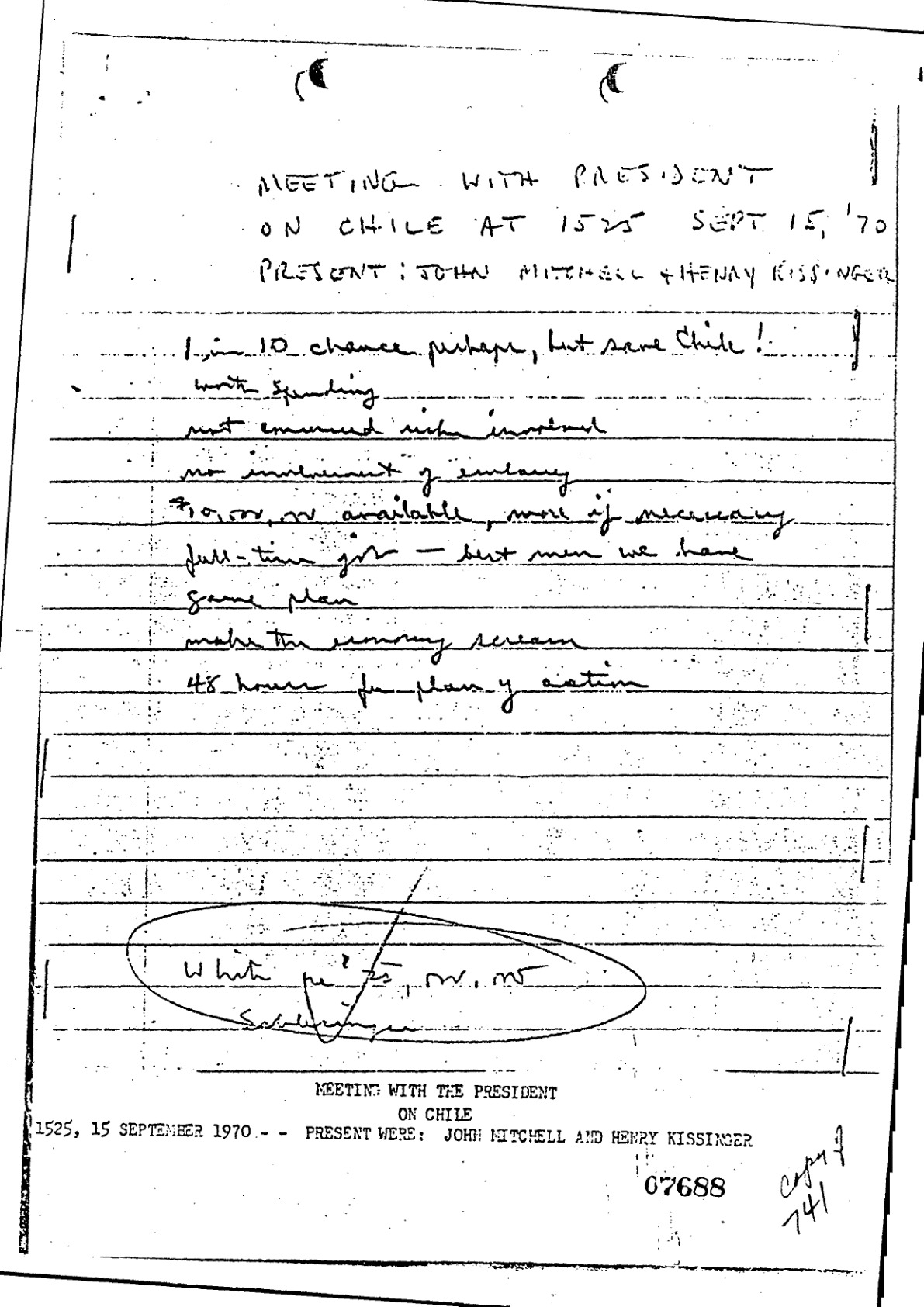
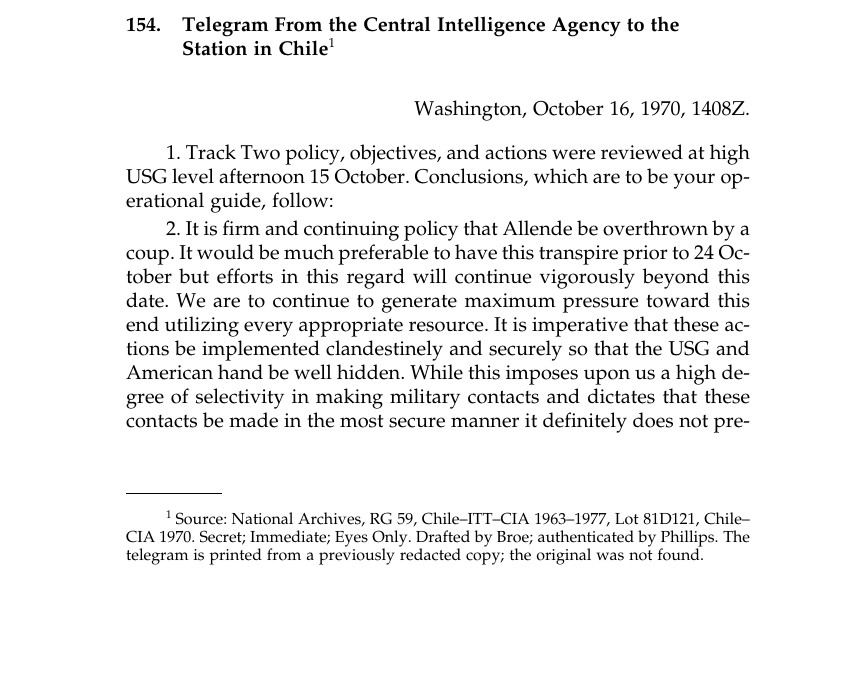
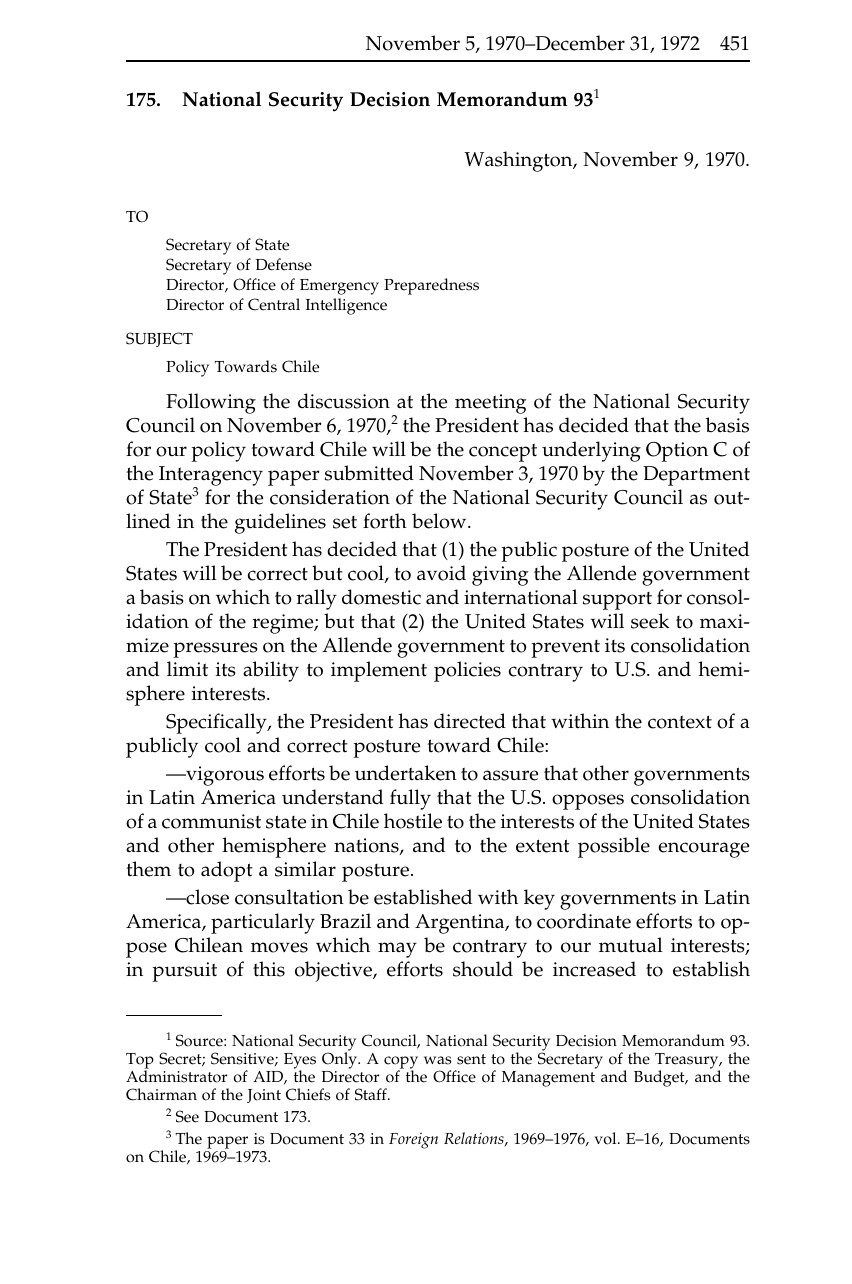
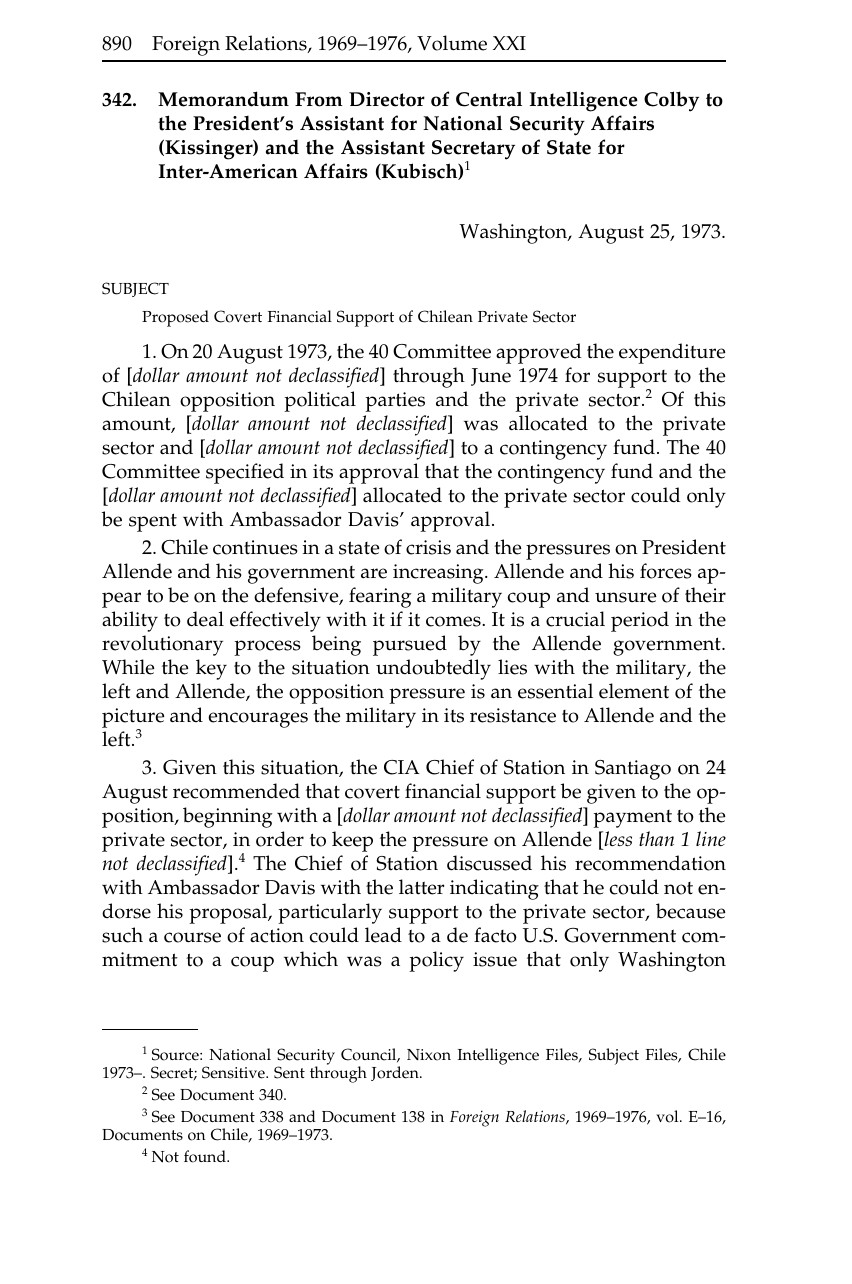
The 1970 authorization, kidnapping assistance, long political subsidies and financial pressure weakened Allende and encouraged his opponents. The successful coup was the culmination of an externally aided campaign even if the final military orders were Chilean.
Accepts
CP1–CP5 establish intervention; CP6–CP7 require a bridge from that campaign to the particular 1973 seizure. Chilean agency does not exclude foreign causal power.
Must still explain
Identify which resources, expectations or constraints were indispensable at the moment of decision rather than treating chronological succession as a complete mechanism.
Assessment
Contemporary orders and financial-pressure records strongly establish intent and action. August 1973 uncertainty and disagreement qualify a claim of complete control.
What would change the assessment
Authenticated operational messages, military unit orders or corroborated recipient ledgers connecting U.S. assistance to the final seizure would strengthen a direct-command claim. Evidence that decisive units acted wholly outside consequential aid channels would narrow, without erasing, the destabilization case.
Sources: S05 · S07 · S11 · S14 · S15 · S17 · S20 · S26
Interpretation 02
The decisive collapse was Chilean
Strong on domestic agency; incomplete if it excludes intervention
The strongest version
Allende’s economic choices, coalition divisions, opposition mobilization, constitutional conflict and armed-forces realignment explain why the 1973 coup succeeded after 1970 failed. Outside pressure mattered but did not substitute for the decisions of Chilean commanders and parties.
Accepts
CP3, CP4 and CP6 emphasize capacity, failed plans and changed command relationships; CP1, CP2 and CP5 remain documented external interventions.
Must still explain
Show the timing and independent motivation of decisive military commitments while accounting for opposition resources sustained covertly from abroad. Domestic causation does not entail American neutrality.
Assessment
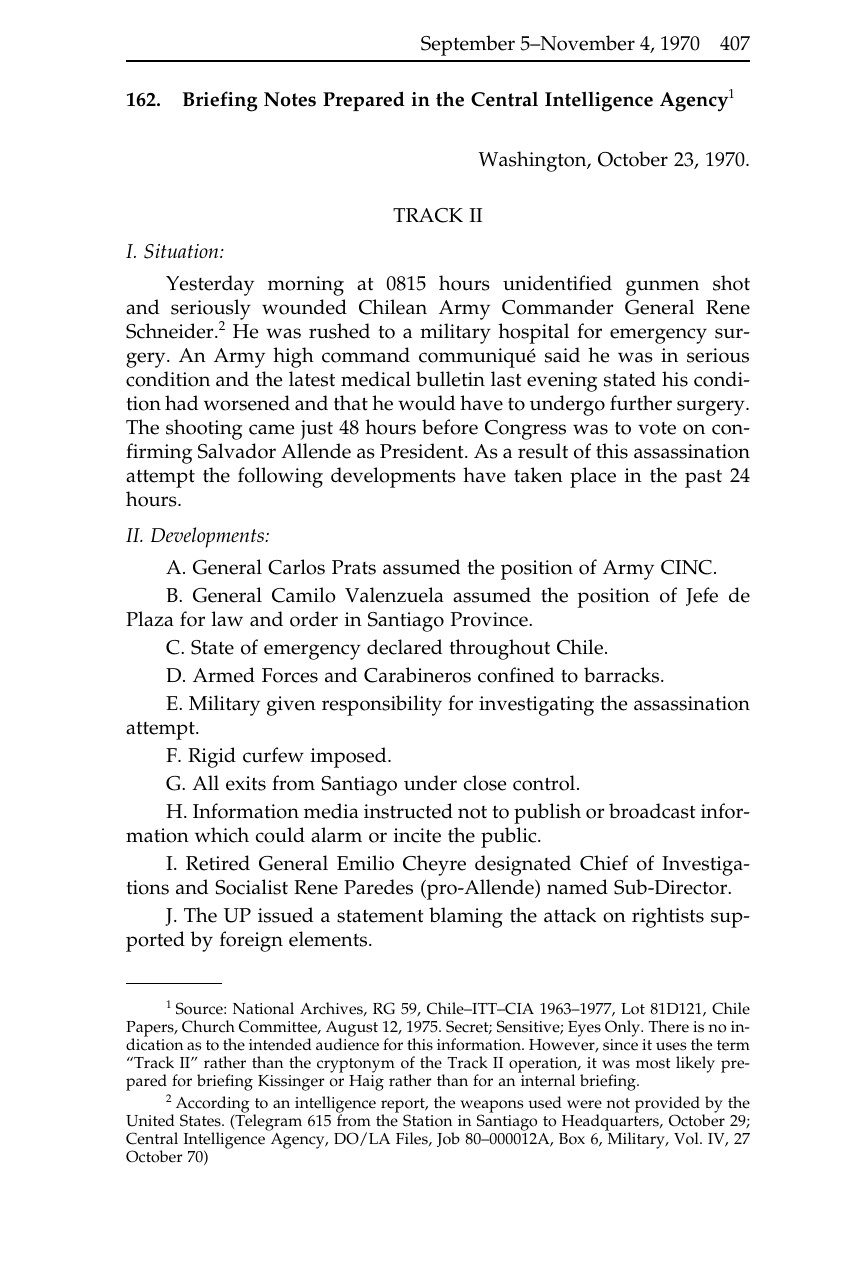
Korry’s feasibility warnings, the failure of TrackII and the August 1973 reports of uncertainty support contingent local choices. Sigmund’s 1974 argument foregrounds domestic economic and political failures but predates major later disclosures.
What would change the assessment
Detailed Chilean unit logs and unedited command communications could clarify independent initiation; a verified external operational chain or previously concealed recipient dependence would increase the weight given to outside direction.
Sources: S08 · S10 · S13 · S16 · S17 · S22 · S23 · S24 · S27
Interpretation 03
A defensive campaign protected pluralism
Describes stated motives; cannot excuse or explain away coup activity
The strongest version
Officials feared that an elected Marxist coalition would convert temporary authority into permanent control, restrict opposition media and align with hostile powers. Supporting parties and newspapers could preserve the chance of future competitive elections.
Accepts
CP1 and CP5 include real opposition organizations and political fears. The case need not assume every supported person wanted dictatorship.
Must still explain
Reconcile the objective of pluralism with CP2–CP4: a directive to defeat constitutional accession and support for removing the Army’s constitutionalist commander. Explain support for the junta after competitive politics were dismantled.
Assessment
Policy papers state security and consolidation fears, but Vaky’s contemporary objections and the coup instructions show that alternative judgments existed. Later agency labels such as democratic opposition do not resolve actual conduct.
What would change the assessment
Specific evidence that assistance was conditioned on effective preservation of competitive constitutional politics would strengthen the limited defense of particular programs; authenticated instructions prioritizing regime change regardless of civil rights weaken the broader claim.
Sources: S04 · S06 · S07 · S11 · S18 · S21
Interpretation 04
Economic strangulation was the decisive weapon
External pressure established; exclusive causation unsupported
The strongest version
A government dependent on exports, imports and foreign credit could be destabilized by restricting its financial room and sustaining disruptive opposition. Economic policy cannot be judged as though Washington had offered normal cooperation.
Accepts
CP5 supplies explicit creditor-pressure evidence, while CP6 shows opposition concern over any economic rescue. The argument is stronger than a bare assertion that shortages must have been sabotage.
Must still explain
Separate actual withheld finance, terms of credit and traceable strike assistance from domestic inflationary policy, compensation disputes, copper fluctuations and production problems. Identify their relative timing and size.
Assessment
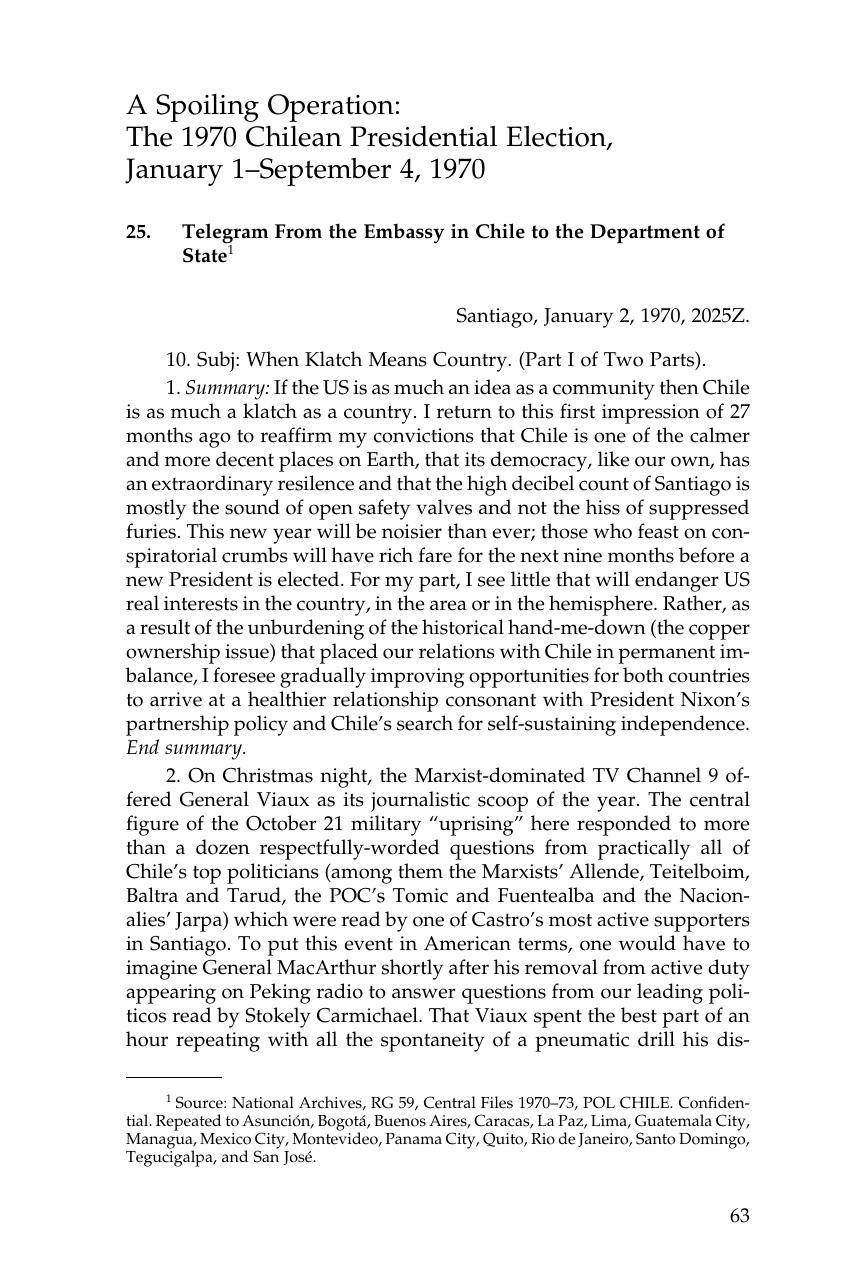
Connally’s memorandum documents pressure. The 1971 assessment already distinguishes short-term growth from emerging constraints. Sigmund disputes the blockade thesis, but his early publication cannot dispose of later declassified policy evidence.
What would change the assessment
A reconstructed credit and import ledger matched to dated production and price data, plus recipient-level strike funding, could materially alter relative causal weights. A general denial from either government cannot do that work.
Sources: S01 · S13 · S14 · S17 · S22 · S27