Chapter 01 / 1961–1963
A Brazilian crisis, a hemispheric calculation
João Goulart reached the presidency through a constitutional succession contested from the outset. When Jânio Quadros resigned in 1961, military opponents tried to prevent Vice President Goulart from taking office. A compromise reduced presidential power under a parliamentary arrangement; a January 1963 plebiscite restored presidential government. That history made military intervention a lived possibility. It also meant that the armed forces were divided institutions whose officers could claim competing obligations to discipline, constitutional succession and national security.
Goulart, widely known as Jango, sought structural reforms in an unequal society. Land reform, labor mobilization, economic nationalism and the political role of enlisted servicemen collided with the interests and fears of landowners, business groups, conservative politicians and much of the officer corps. Inflation and economic instability aggravated the conflict. His supporters were not one Communist organization; his opponents were not one American-controlled instrument. Civilian institutions, unions, students, churches, governors and military commands all helped create the crisis in which an outside power intervened.
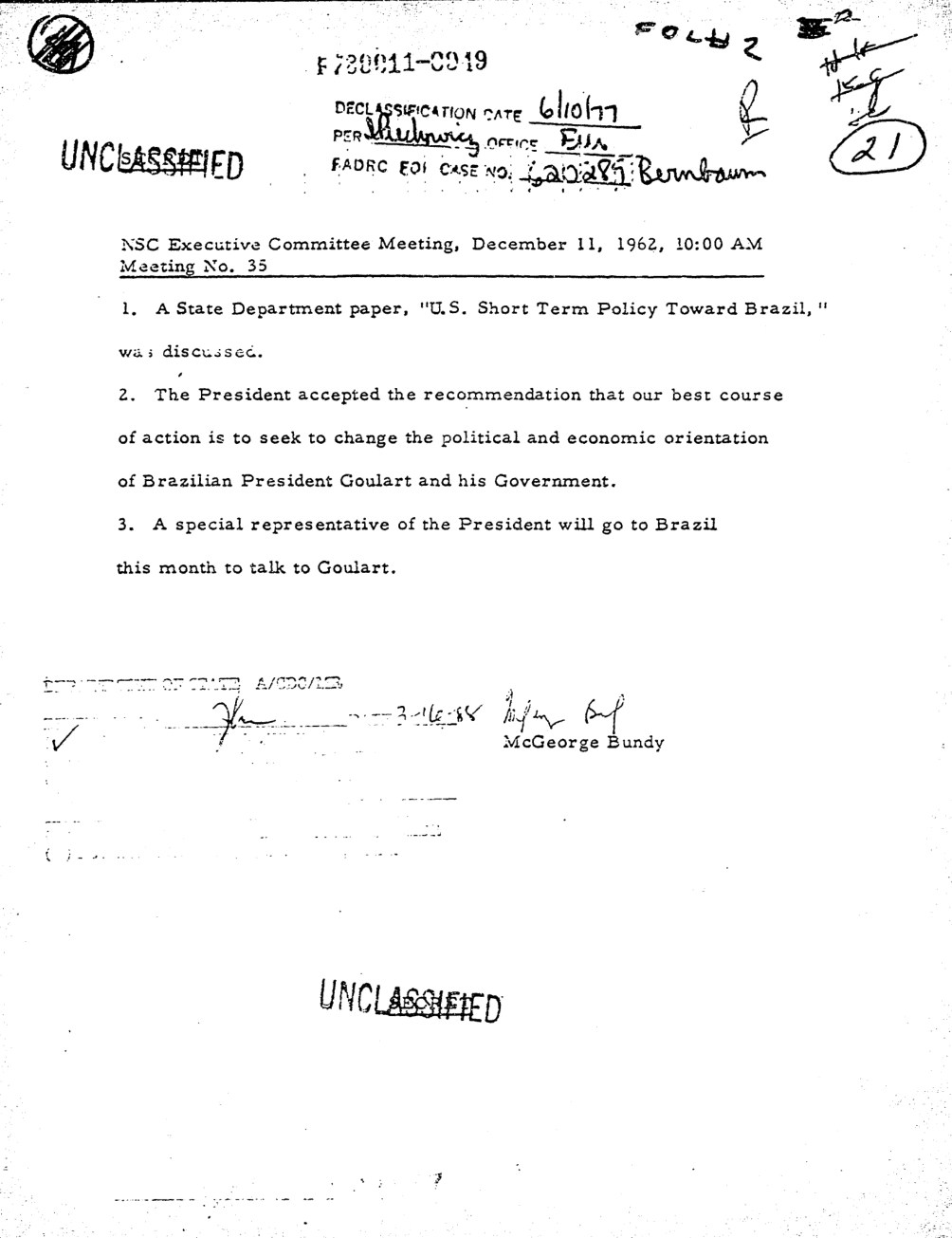
Washington’s concern combined Cold War ideology with economic and strategic interests. Brazil’s size made its direction unusually consequential. U.S. officials worried about Communist influence, foreign-policy independence and conflict over American-owned businesses. They could seek accommodation, use economic leverage, cultivate opponents or prepare to support a forcible change. These were connected possibilities, but their adoption changed over time. A December 1962 options paper retained overthrow for consideration while recommending that the immediate effort change Goulart’s policies. Kennedy accepted that recommendation and sent a special representative. Discussion of removal was already real; it was not yet the March 1964 naval deployment.
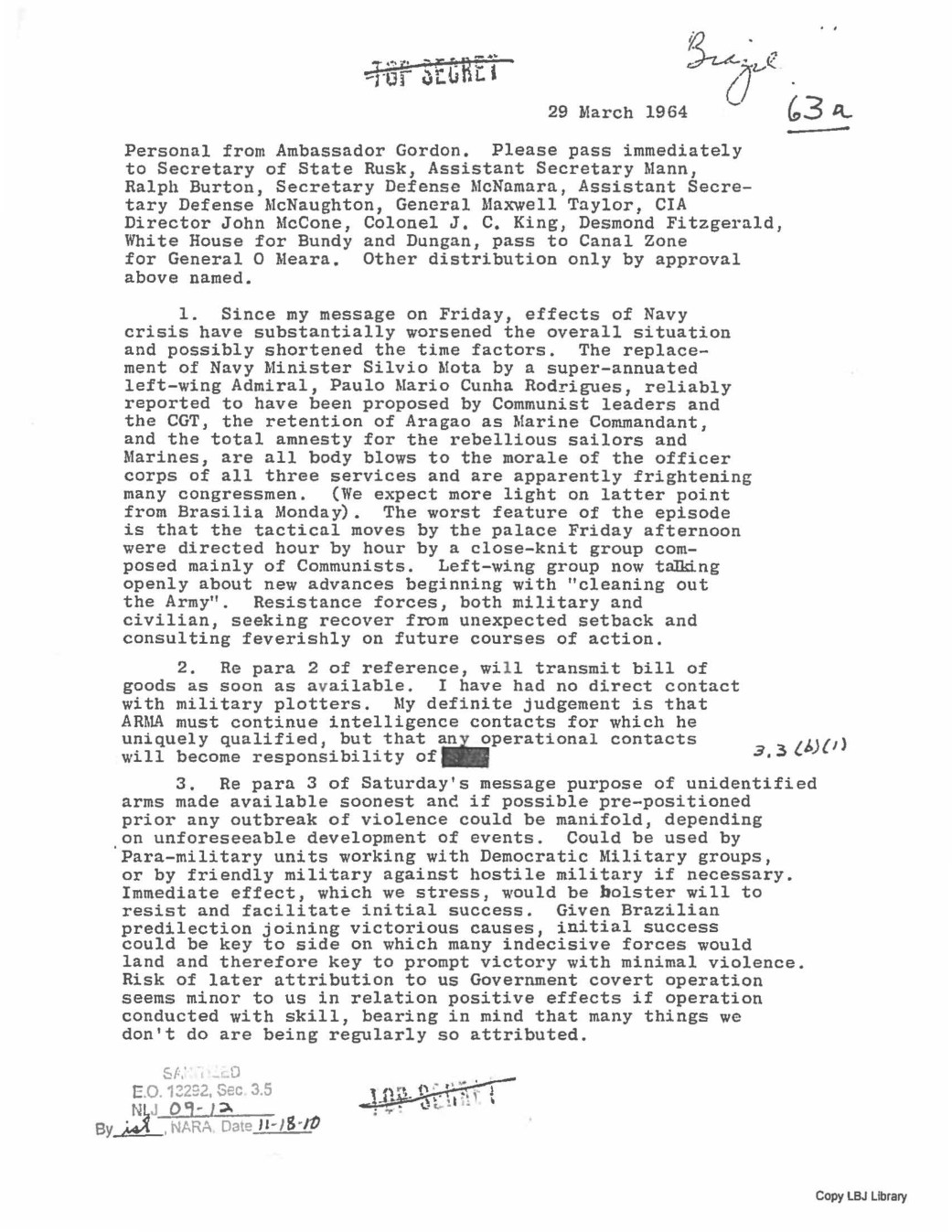
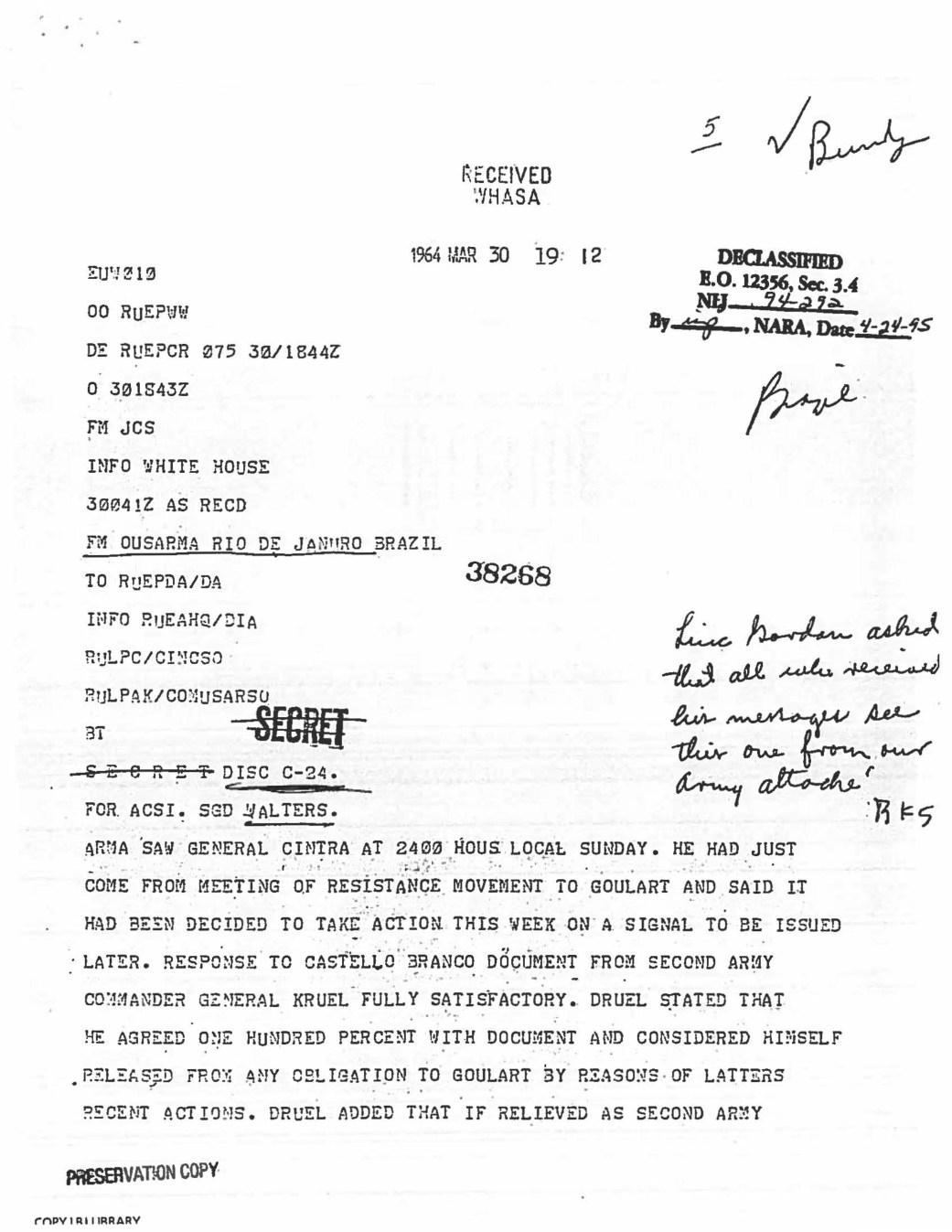
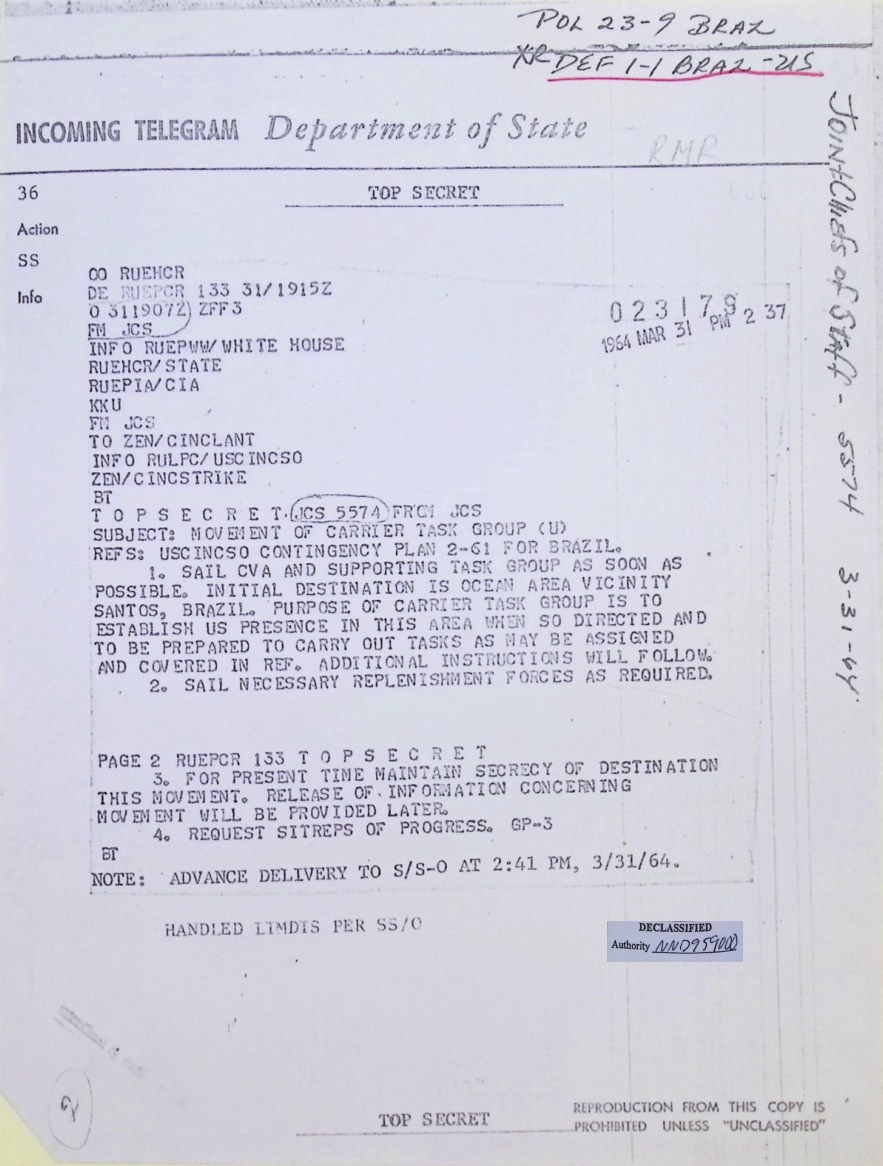
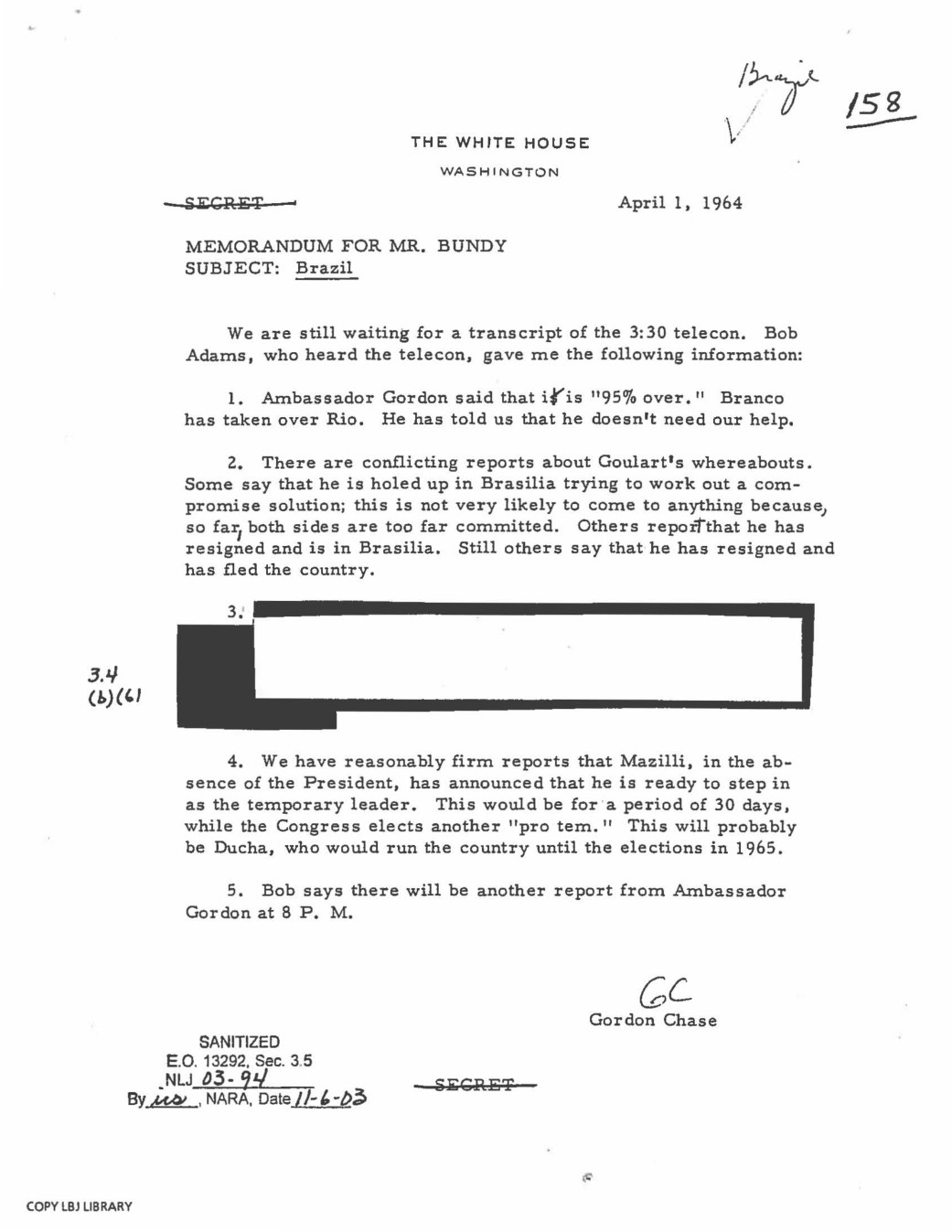
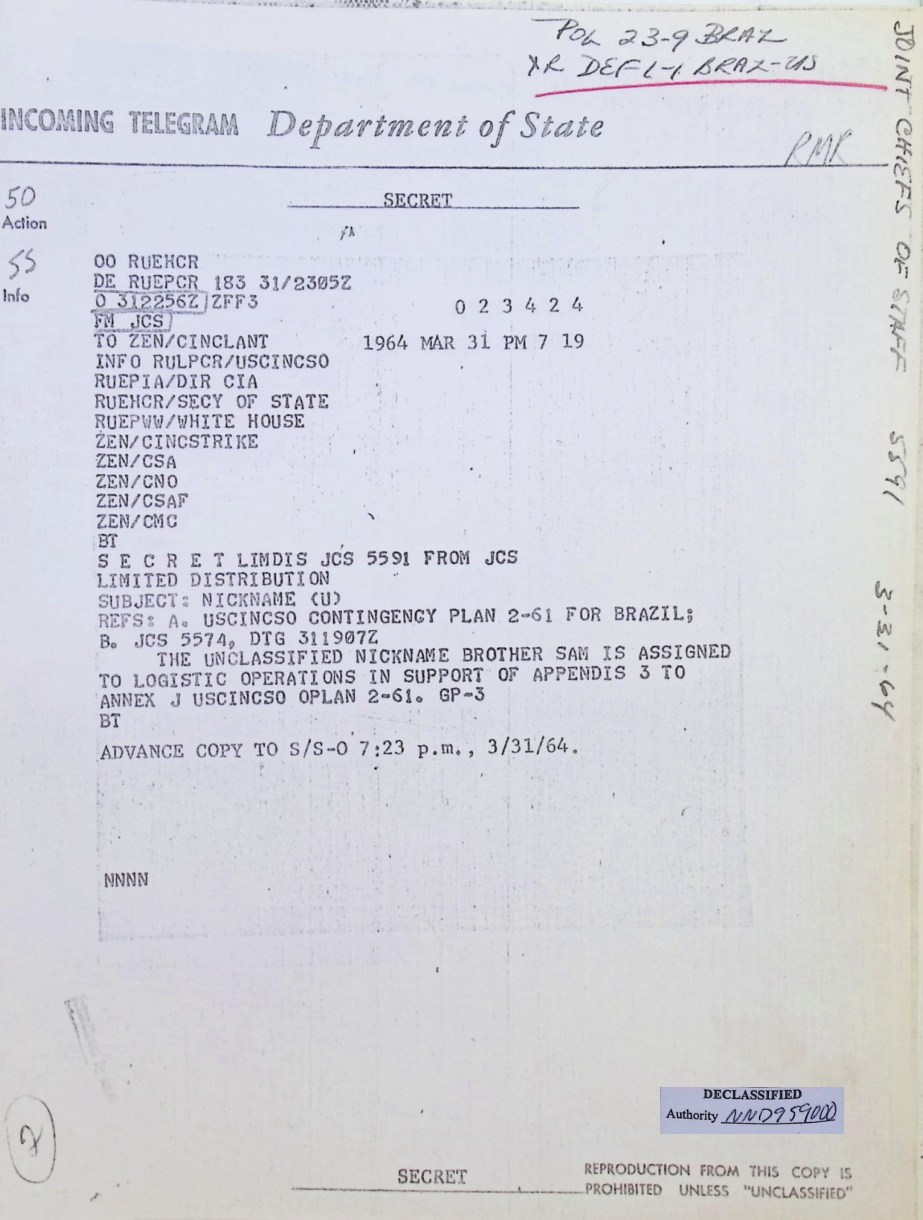
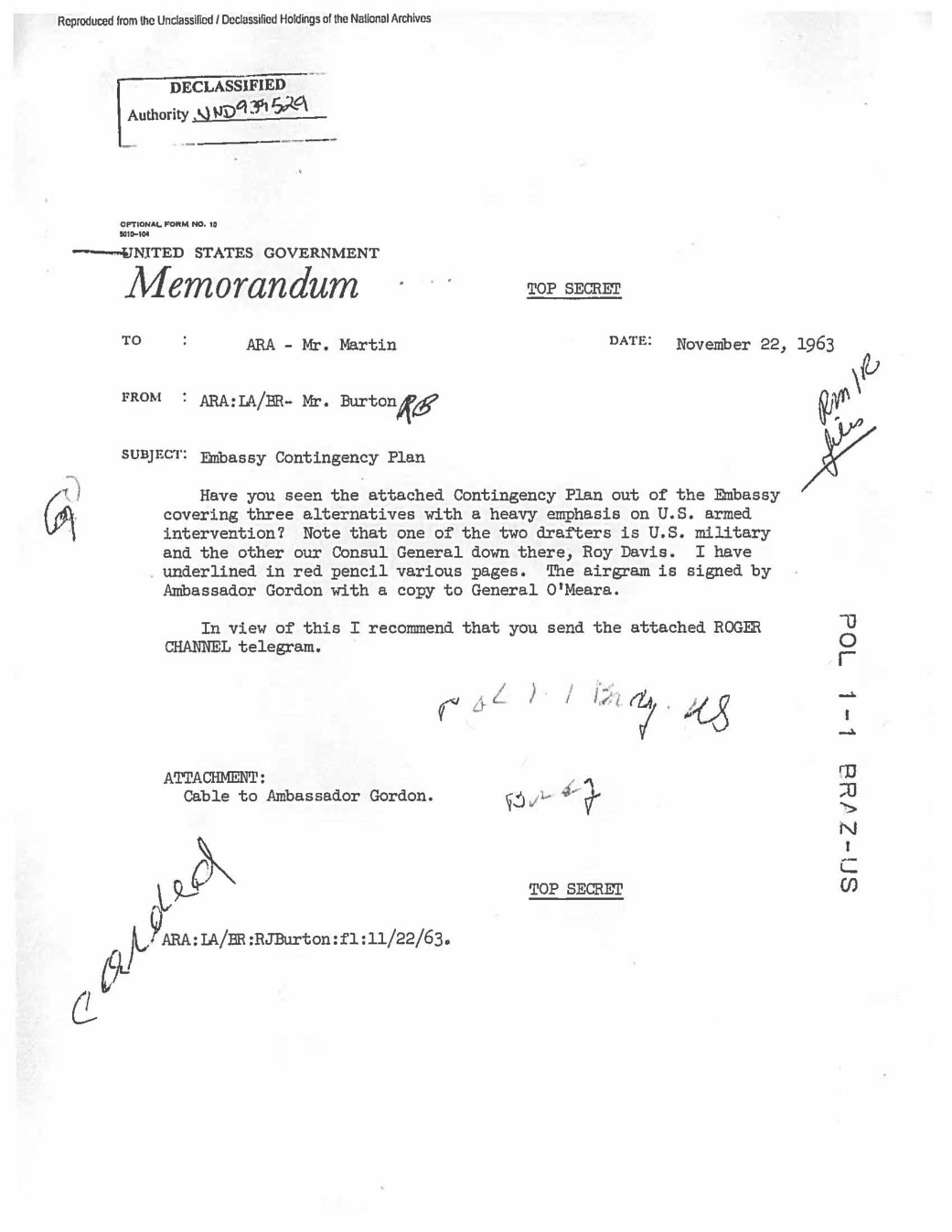
A CIA assessment of plotting in March 1963 shows that Brazilian officers were discussing action and that Washington was following them. An embassy cover memorandum from November described a contingency plan emphasizing armed intervention. These records place Brother Sam within a longer interventionist history. They do not establish that every Brazilian conspiracy originated at CIA headquarters, or that every contemplated measure was executed. The distinction becomes essential when the last days are reconstructed: preparatory influence, intelligence access, a decision to move ships and the conduct of a coup are different links in the chain.