The AI Files · The Delaware gun trial, the Los Angeles tax case, the plea that collapsed, Special Counsel Weiss, and the December 2024 pardon · plain reading edition
Hunter Biden prosecutions: every entry
All 56 entries of the guide, grouped by period and case, each with its bottom line and its sources. This page needs no JavaScript. The interactive guide adds the story in 17 chapters, the people, the timeline, the theories, the 40 checked claims and the media.
Visual timeline
52 dated events
The yardstick
The critical path
A critical path is the load-bearing chain any serious reading of Hunter Biden’s prosecutions must handle — the 2018 Form 4473 gun purchase, discard/recovery, Weiss’s investigation (including his Trump-era appointment), IRS whistleblower process claims, the collapsed 2023 plea deal, special-counsel appointment, gun and tax indictments, appointment upheld, gun verdict, no-pardon promises, tax guilty plea, the December 2024 pardon, case termination, and the Weiss report. Each card separates what a court/plea/pardon actually did from political slogans — especially verdict-vs-pardon .
1
12 Oct 2018DocumentOct 12 2018 purchase
Hunter buys a Colt Cobra .38 in Wilmington and answers No on Form 4473’s unlawful-user question.[1][2]
In the narrativeOct 12, 2018 — Form 4473 purchase of Colt Cobra .38; ‘No’ on unlawful-user question.
Why critical — if this fallsWithout this purchase and form answer, the federal gun-felony case has no charged act. Tax case can stand alone, but the gun spine starts here.
Any rival theory must account forHunter’s Wilmington purchase of the Colt Cobra and his Form 4473 answer denying unlawful user status.
Within about eleven days Hallie Biden finds and discards the gun; it is recovered from a trash area.[1][3]
In the narrativeGun discarded within ~11 days — Hallie Biden finds and discards; recovered from trash area.
Why critical — if this fallsExplains why the firearm was not in continuous possession and feeds investigation facts. Erase it and the recovery narrative breaks.
Any rival theory must account forHallie Biden’s discovery/discard of the gun and its recovery from a trash area within about eleven days of purchase.
Delaware U.S. Attorney David Weiss (Trump appointee) leads a multi-year investigation including tax years.[1][4]
In the narrativeDavid Weiss (Trump-appointed Delaware U.S. Attorney) leads multi-year tax/gun investigation.
Why critical — if this fallsIf Weiss were a Biden DOJ import invented for persecution, political-motive stories gain a false premise; his appointment history is load-bearing against that cartoon.
Any rival theory must account forWeiss’s role leading the investigation across administrations, including his prior Trump appointment as Delaware U.S. Attorney.
Some political talk treated the Hunter cases as a Biden DOJ self-deal from day one.Weiss was a Trump appointee who continued/was later named special counsel — motive claims must face that personnel fact.
July 2023 House hearing records Shapley/Ziegler process claims against DOJ handling.[5]
In the narrativeJuly 2023 IRS whistleblower hearing — Shapley/Ziegler process claims.
Why critical — if this fallsPuts process-interference allegations on a congressional record. Separate from whether tax/gun elements were later proven in court.
Any rival theory must account forHouse hearing testimony from IRS whistleblowers alleging DOJ process problems — claims on their own spine, not a substitute for the later verdicts/plea.
Judge Noreika probes immunity and linkage; no meeting of the minds; not-guilty plea entered.[7][6][8]
In the narrativeJuly 26, 2023 plea hearing collapse — Judge Noreika; no meeting of the minds.
Why critical — if this fallsKills the diversion deal. If this hearing hadn’t blown up, special-counsel indictment path might never have opened the same way.
Any rival theory must account forNoreika’s probing of immunity/linkage and the failure to reach a valid plea agreement; not-guilty plea entered.
Aug 11 2023 Garland appoints Weiss special counsel.[4][9]
In the narrativeAugust 11, 2023 — Garland appoints Weiss special counsel.
Why critical — if this fallsCreates the formal special-counsel authority for the gun and tax indictments that follow. Appointment challenges later target this step.
Any rival theory must account forAttorney General Garland’s appointment of Weiss as special counsel.
In the narrativeApril 2024 — Noreika upholds Weiss appointment against unlawful-appointment challenge.
Why critical — if this fallsIf appointment were unlawful, gun verdict could fall for process reasons; this ruling keeps the prosecution authority standing heading into trial.
Any rival theory must account forCourt rejection of the unlawful-appointment challenge to Weiss.
Jun 11 2024 jury convicts on all three gun felonies.[10][13][3]
In the narrativeJune 11, 2024 — jury convicts on all three gun felonies.
Why critical — if this fallsAdjudicated guilt on the gun spine. Pardon later ends punishment but does not erase that a jury convicted — keep those facts separate .
Any rival theory must account forJury verdicts of guilty on all three federal gun counts.
Joe Biden publicly says he will not pardon Hunter (Jun and Nov 2024 statements).[14][15]
In the narrativeJoe Biden’s public no-pardon promises (June and November 2024).
Why critical — if this fallsWithout these statements, the December pardon is just a late mercy; with them, the credibility/politics hinge of a broken promise becomes load-bearing for public judgment (not for legal validity of the warrant).
Any rival theory must account forJoe Biden’s June and November 2024 public statements that he would not pardon Hunter.
Dec 1 2024 full unconditional pardon for offenses 2014–2024 including both Weiss dockets.[18][19]
In the narrativeDecember 1, 2024 — full unconditional pardon for 2014–2024 offenses including both Weiss dockets.
Why critical — if this fallsEnds punishment path. Theories about ‘deep state conviction forever’ must face the pardon; theories that ‘the verdict never happened’ must not use the pardon to erase the jury/plea facts.
Any rival theory must account forThe written pardon warrant’s scope covering offenses from 2014–2024 including the gun and tax cases.
In the narrativeCases terminated — pending sentencings/proceedings end; historical verdict/plea remain facts.
Why critical — if this fallsClarifies legal end-state vs historical record. Confuses people who think pardon = expungement of the verdict narrative.
Any rival theory must account forTermination of pending criminal proceedings after the pardon while recognizing the prior verdict and tax plea as historical adjudications.
Casual talk that a pardon means ‘he was never really convicted.’Pardon ends punishment and pending proceedings; the gun verdict and tax plea remain facts of record unless separately vacated.
Jan 2025 special counsel report explains prosecution decisions; further charges barred by pardon window.[1]
In the narrativeJanuary 2025 Weiss special counsel report — explains decisions; further charges barred by pardon window.
Why critical — if this fallsProsecutorial decision record after the fact. Political ‘why didn’t they charge X’ fights should start from this report’s stated reasons, not vibes alone.
Any rival theory must account forWeiss’s special counsel report describing charging decisions and the pardon’s effect on further charges in the covered window.
Path checkpoint: purchase → discard → Weiss probe → whistleblower hearing → collapsed plea → special counsel → gun indictment → tax indictment → appointment upheld → gun verdict → no-pardon promises → tax plea → pardon → cases terminated → Weiss report. Any serious reading must keep indictment, conviction, plea, and pardon as separate labels. Denials and political talking points are noted; they do not auto-clear smoke. Gaps that remain (motive for the late pardon; process claims vs charging merits) belong on the cards, not as CNN-hedge swaps into unrelated family-business nests.
The revolver week 2018–2019
The gun case
Form 4473 and §922(g)(3)
The Wilmington purchase
Record · Documented
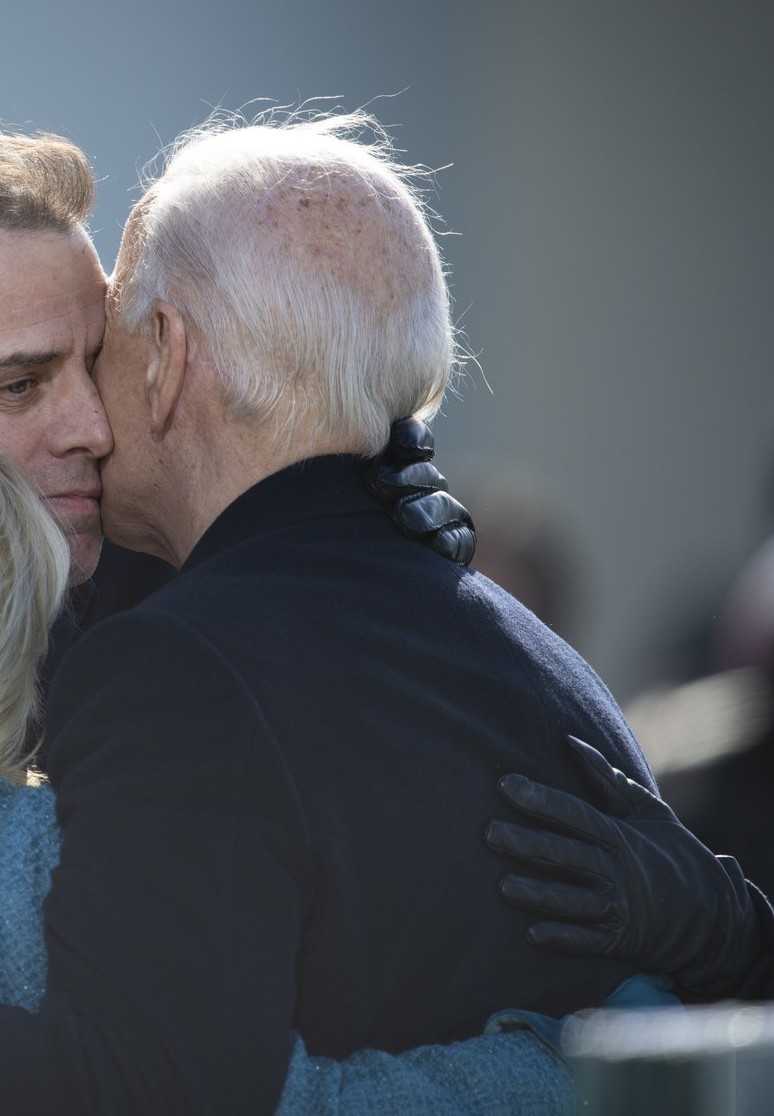
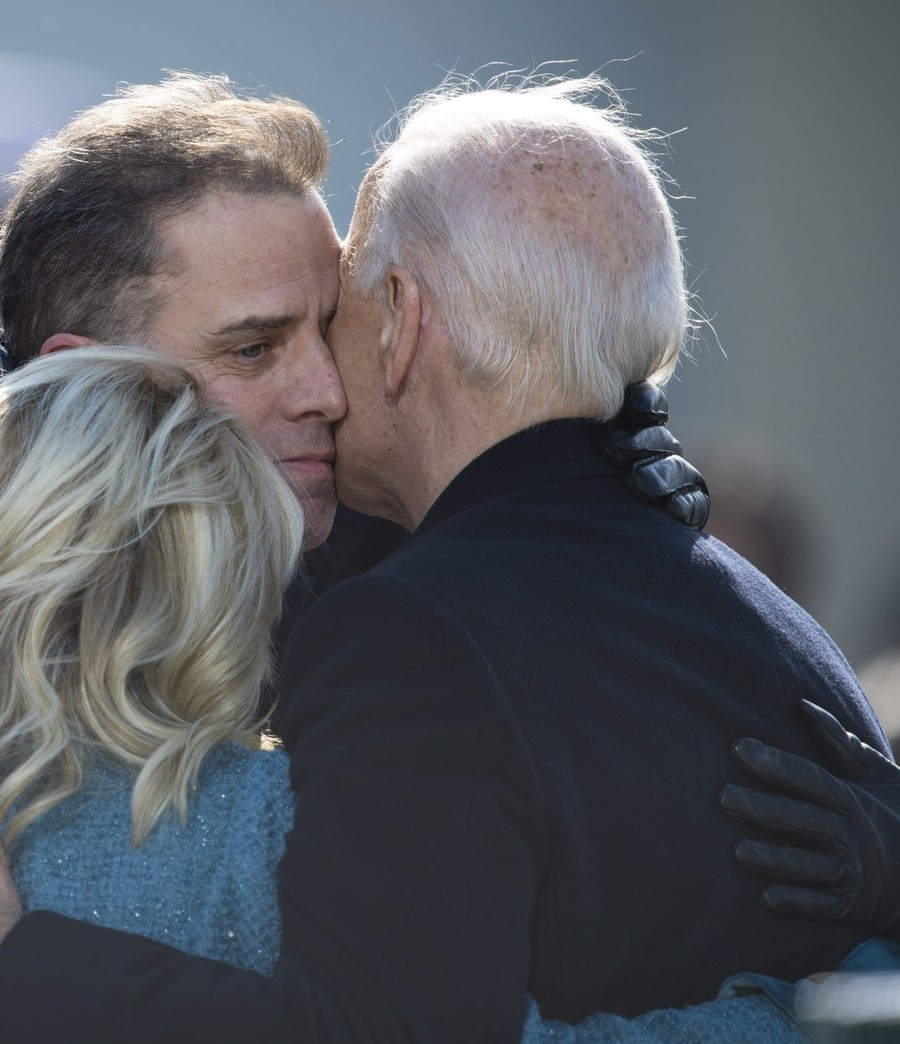
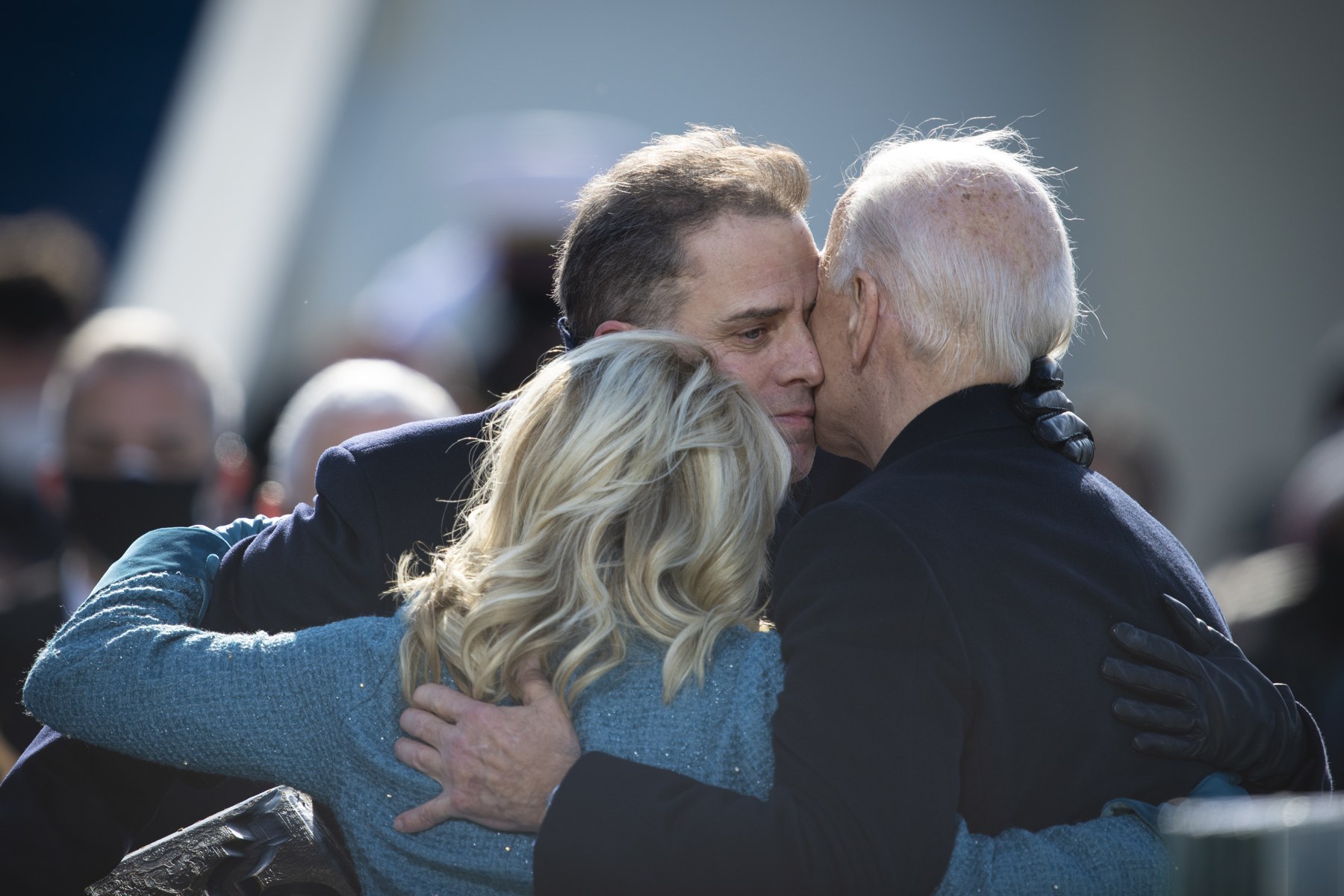
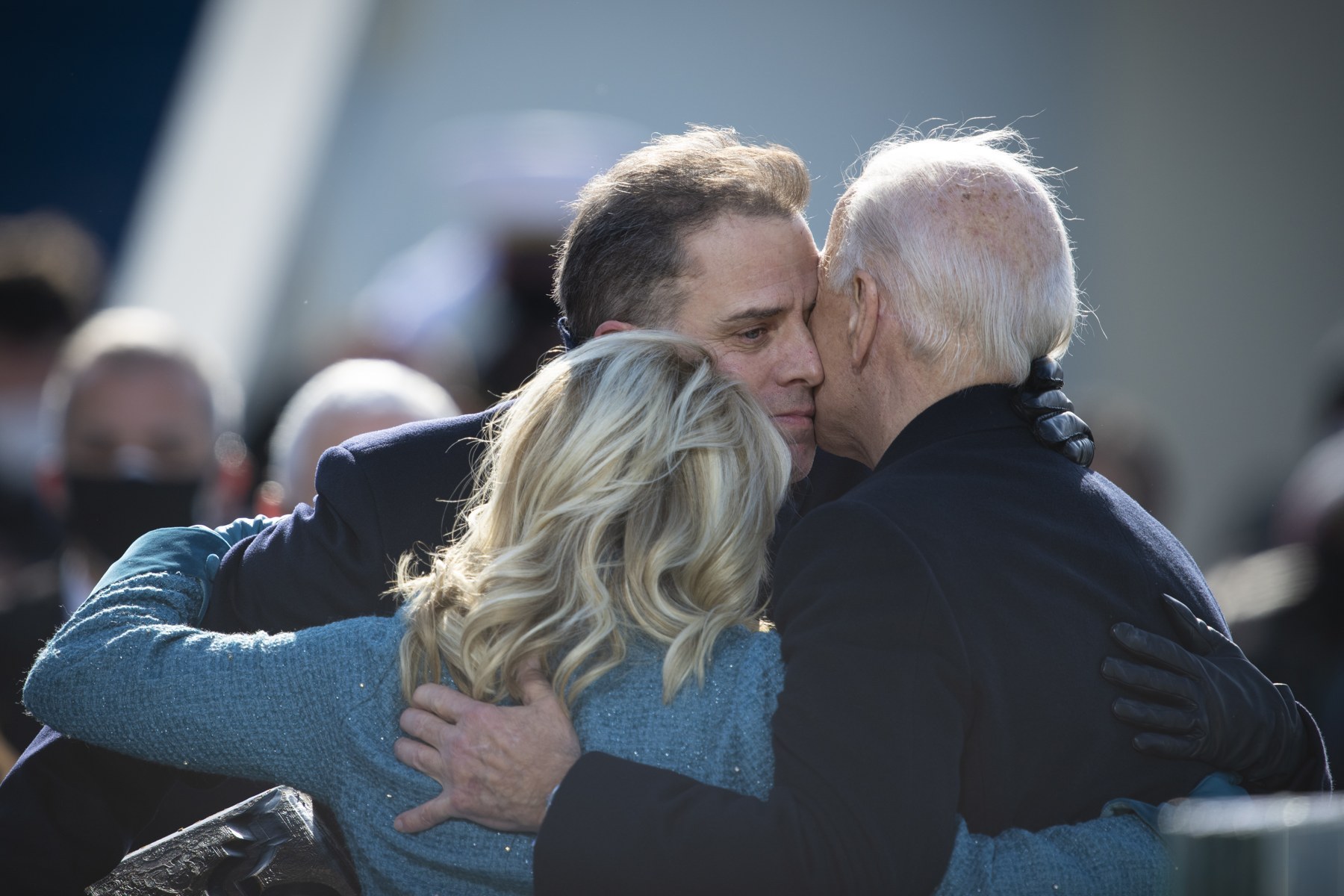
Hunter Biden (right cluster) at the January 20, 2021 inauguration — crop from DOD inauguration photograph. Navy Petty Officer 1st Class Carlos M. Vazquez II / DOD (crop) · CC BY 2.0
Oct 12 2018 — Colt Cobra and Form 4473.
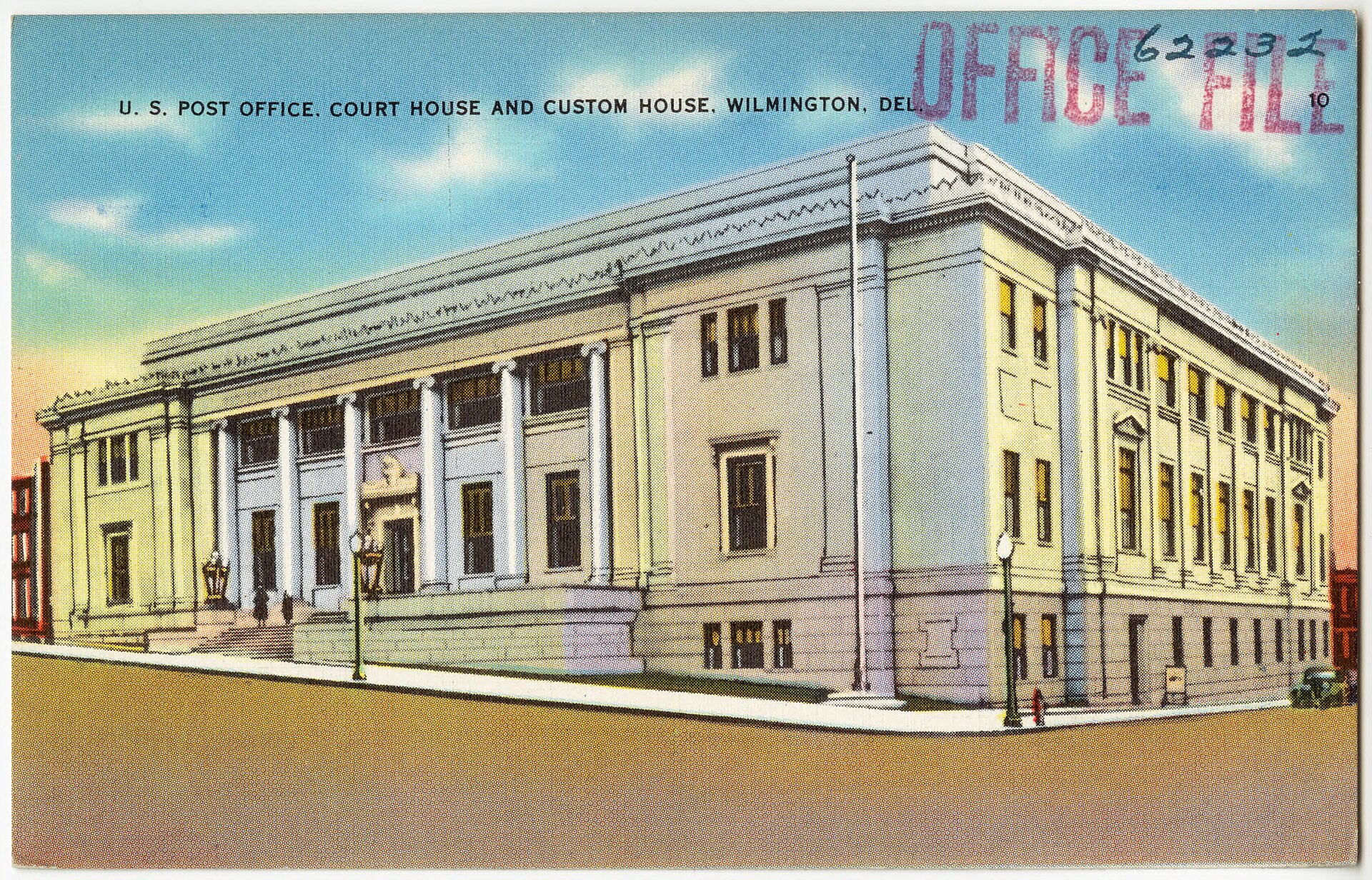
On 12 October 2018, at a Wilmington, Delaware firearms dealer, Robert Hunter Biden purchased a Colt Cobra .38 revolver, along with related ammunition equipment described in later charging papers. As part of that purchase he completed ATF Form 4473. [2][1]
The form asks whether the buyer is an unlawful user of, or addicted to, any controlled substance. Hunter answered “No.” That written answer — not the mere fact of addiction in the abstract — became the core of two false-statement felony counts. [1][3]
Special Counsel Weiss’s later report and the June 2024 trial treated the purchase day as the starting clock for possession and for the truth of the form answer. The mainstream path does not require proving a long gun-owning career; it requires proving that day’s answers and the days of possession that followed. [1][4]
Bottom line Documented
The purchase and the “No” answer are documented charging facts later found by a jury.
What the record can’t settle
The filled Form 4473 itself is case evidence; this guide cites the blank form type and DOJ/court descriptions rather than republishing sealed exhibits.
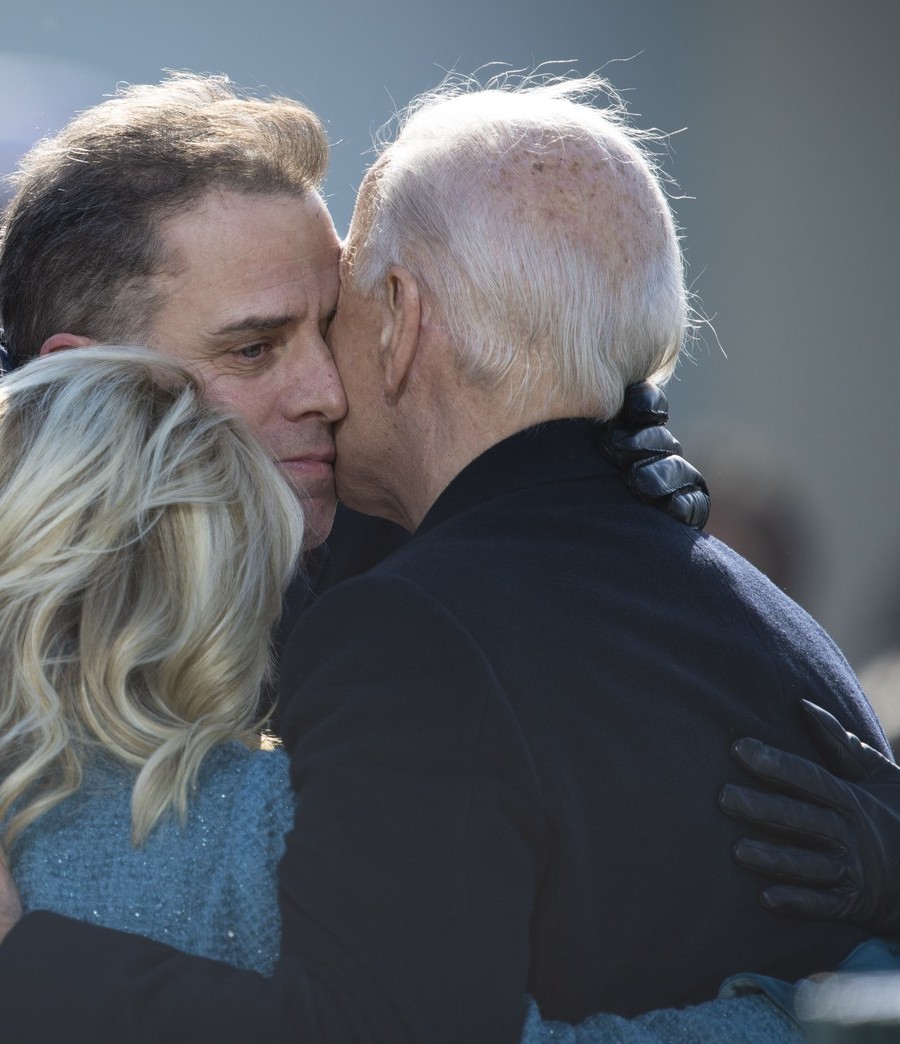
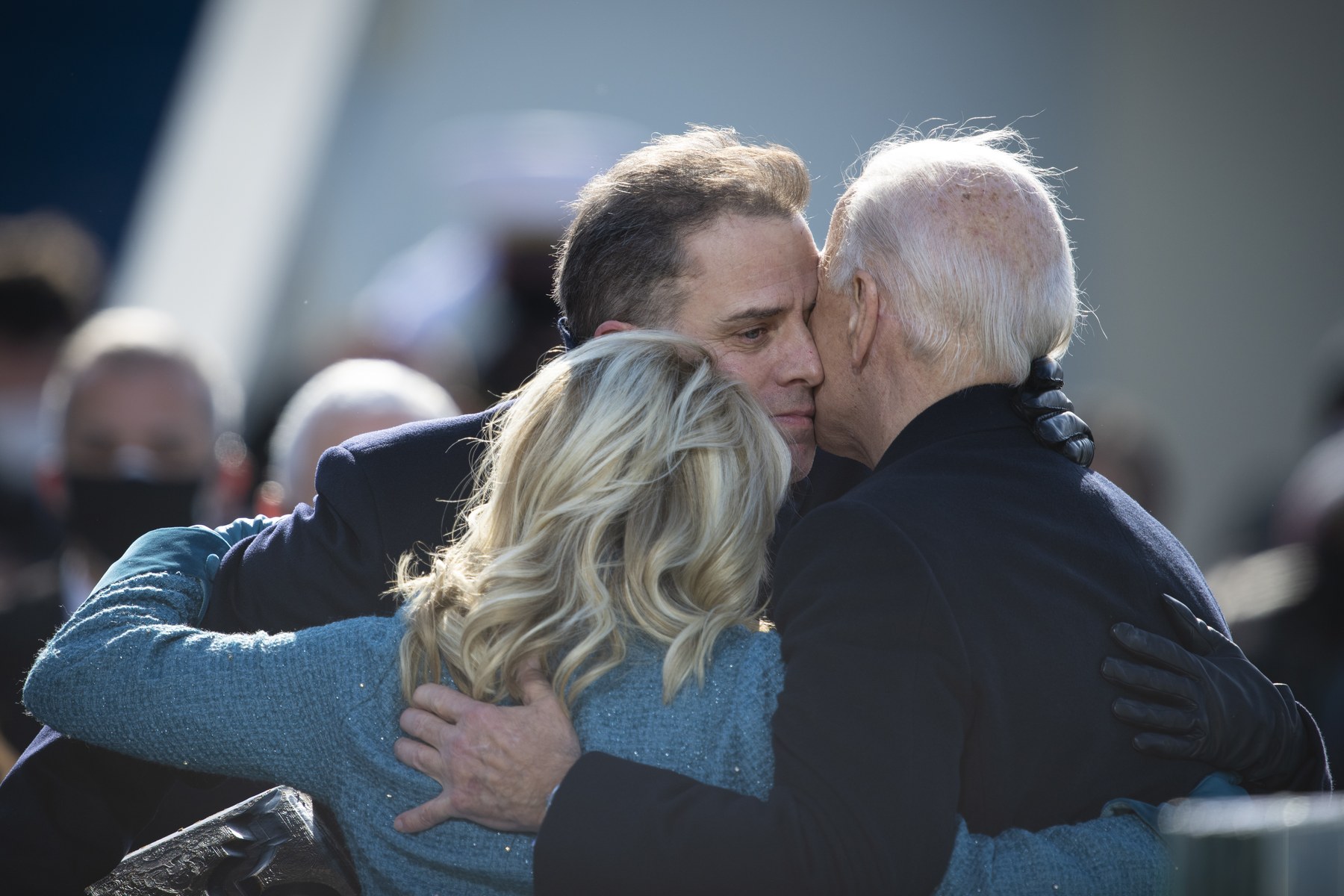
Wider inauguration crop including Hunter Biden. Navy Petty Officer 1st Class Carlos M. Vazquez II / DOD (crop) · CC BY 2.0
Hallie Biden discards the revolver.
Roughly eleven days after the purchase, Hallie Biden — Beau Biden’s widow, then in a personal relationship with Hunter — found the revolver in circumstances the trial proof tied to drug use, including descriptions of crack cocaine with the gun in an unlocked truck. [1][2]
She discarded the firearm in a trash receptacle near a supermarket. A person searching recyclables found it; law enforcement’s later recovery path became part of the case narrative. [1]
The discard episode matters because it bounds the possession period and supplies civilian witnesses. It is not itself the false-statement crime; it is how a short-lived gun left a paper and witness trail. [3]
Bottom line Documented
Documented in Weiss report and trial coverage.
What the record can’t settle
Private relationship details beyond the recovery facts are biography, not elements.
Hunter Biden (right cluster) at the January 20, 2021 inauguration — crop from DOD inauguration photograph. Navy Petty Officer 1st Class Carlos M. Vazquez II / DOD (crop) · CC BY 2.0
A memoir that prosecutors could point to.
In 2021 Hunter published Beautiful Things, a memoir that describes smoking crack with extreme frequency in 2018. Memoir is not a charging instrument, but at trial and in public briefing it functioned as defendant-authored context for addiction. [1][2]
The epistemological label here is careful: a published autobiography can be admissions-adjacent evidence; it is still literature shaped by the author. The jury also heard contemporaneous messages and witness testimony. [3]
Rival paths that claim there was “no addiction evidence” fail against this stack; rival paths that treat the memoir as the only proof overstate it. [2]
Bottom line Partly documented
Partly documented as public text; weight at trial was for the jury.
What the record can’t settle
Memoir page cites vary; use as context, not as a substitute for the verdict form.
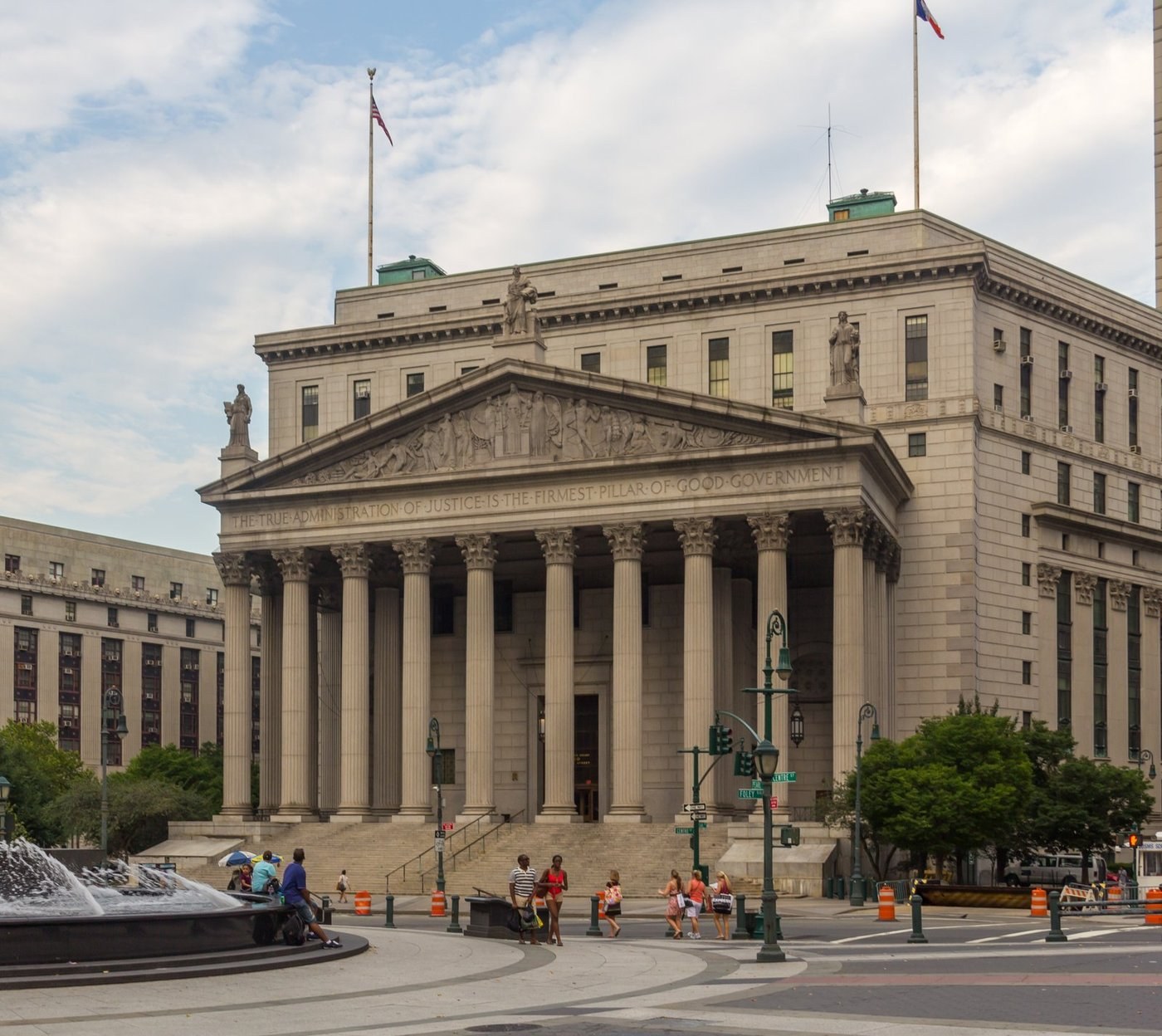
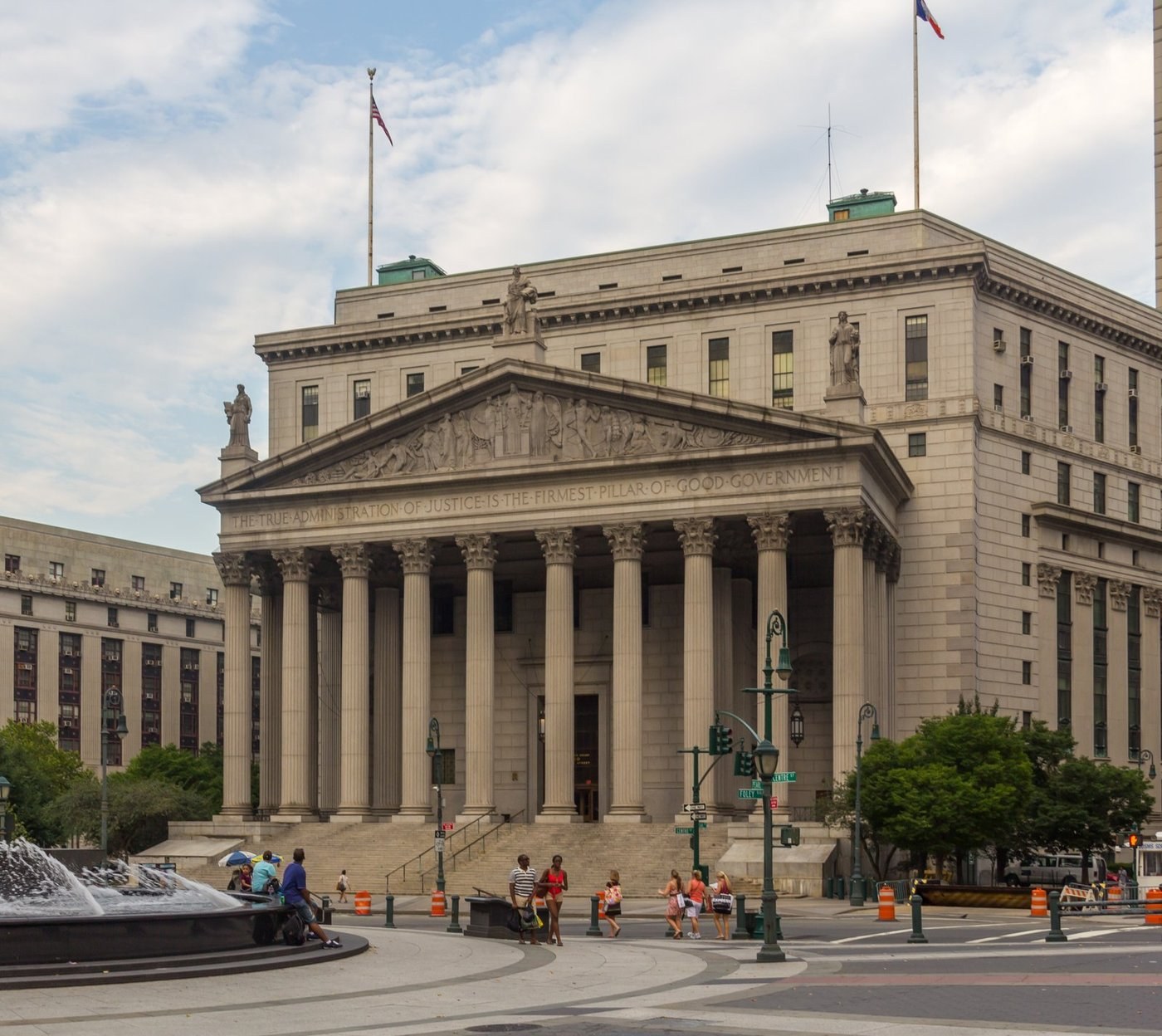
Federal courthouse exterior (guide asset pool) — place context for trial venues. AI Files image pool / Wikimedia-derived · Various free licenses; re-encoded
September 14 2023 indictment.
A Delaware grand jury indicted Hunter on three felonies: false statement in a firearms purchase (§922(a)(6)), false statement in records a dealer must keep (§924(a)(1)(A)), and possession of a firearm by an unlawful user/addict (§922(g)(3)). [1][2]
These are not “process crimes” invented after the fact of a collapsed misdemeanor deal; they are the gun conduct the diversion had tried to avoid adjudicating. [1]
Bottom line Documented
Indictment documented.
What the record can’t settle
Indictment allegations become findings only after verdict — which later happened.
Court gavel still — symbolic, not a photo of a specific hearing. AI Files image pool · Free-licensed pool asset
Pretrial attacks fail.
Hunter’s team filed multiple dismissal motions, including selective and vindictive prosecution theories — essentially arguing politics poisoned the decision to charge. Weiss’s report states the motions were rejected. [1]
Those denials matter for rival paths: a “pure Biden hit job” theory must explain why a Trump-appointed prosecutor’s charges survived judicial screening on selective-prosecution doctrine, which is famously defendant-unfriendly but not automatic. [1][2]
Bottom line Documented
Documented that motions were made and denied.
What the record can’t settle
Sealed exhibits/comparators may not all be public.
Federal courthouse exterior (guide asset pool) — place context for trial venues. AI Files image pool / Wikimedia-derived · Various free licenses; re-encoded
A week before hometown jurors.
In June 2024 the gun case was tried in Wilmington before Judge Noreika. Prosecutors emphasized illegal choices amid addiction; the defense contested elements and framed disease and family tragedy. [1][2]
Trying the president’s son in the family’s political hometown undercuts slogans that the case was only a show trial in enemy territory — whatever one thinks of the equities. [1][3]
Bottom line Documented
Trial occurrence and venue documented.
What the record can’t settle
Day-by-day transcript excerpts are not fully reproduced here.
Hunter Biden (right cluster) at the January 20, 2021 inauguration — crop from DOD inauguration photograph. Navy Petty Officer 1st Class Carlos M. Vazquez II / DOD (crop) · CC BY 2.0
June 11 2024.
After roughly three hours of deliberation, the jury convicted on all three felony counts. DOJ announced the verdict; wire services noted the historic first of a sitting president’s child being convicted. [1][2][3]
Weiss’s June 17 statement framed the case as about choices combining guns and drugs and said no one is above the law — while also saying Hunter should be no more accountable than any similarly situated defendant. [4]
YouTube verdict-day uploads are news coverage; the DOJ release and court result are primary. [5][1]
June 11, 2024 is a jury verdict on three federal gun felonies — adjudicated guilt on that spine. Defense arguments at trial and later pardon politics do not rewrite the verdict into an allegation. Keep sentencing exposure (later terminated) distinct from the historical fact of conviction. Rival readings that treat the gun case as ‘just process’ still must account for the jury’s findings.
What Form 4473 asks
Record · Documented
Court gavel still — symbolic, not a photo of a specific hearing. AI Files image pool · Free-licensed pool asset
The unlawful-user field.
ATF Form 4473 is the standard firearms transaction record; the controlled-substance question is a recurring federal field, not a bespoke trap written for one buyer. [1]
The case turned on whether Hunter’s “No” was knowingly false. A jury said yes on the false-statement counts and on unlawful-user possession. [2][3]
Court gavel still — symbolic, not a photo of a specific hearing. AI Files image pool · Free-licensed pool asset
Possession while an unlawful user.
Count Three charged firearm possession by an unlawful user or addict. [1][2]
Later Second Amendment climate (including Rahimi-era discussion) is background; nothing in this file is a Supreme Court vacatur of the Delaware verdict. [3]
Federal courthouse exterior (guide asset pool) — place context for trial venues. AI Files image pool / Wikimedia-derived · Various free licenses; re-encoded
U.S. Capitol west front — architectural context for congressional inquiry, not a photo of a hearing. Architect of the Capitol; derivative edit by O.J. · Public domain — U.S. federal work
Shapley and Ziegler’s process story.
On 19 July 2023, IRS supervisory agent Gary Shapley and agent Joseph Ziegler testified in a House hearing about alleged DOJ slowdowns, preferential treatment concerns, and investigative constraints in the Hunter tax probe. [1]
Their testimony is a primary **hearing record of claims**, not a court finding that DOJ broke the law. DOJ and its defenders disputed the interference narrative and pointed to eventual charges. [1][2]
This guide keeps the whistleblower path visible because it shaped the “two-tier justice” slogan before the plea collapsed and before felonies landed. It does not silently convert testimony into proven sabotage. [1]
Bottom line Claim-layer
Claim-layer with a congressional primary.
What the record can’t settle
Retaliation suits/settlements after 2024 are sibling threads — pointer only unless charged to these dockets.
U.S. Capitol west front — architectural context for congressional inquiry, not a photo of a hearing. Architect of the Capitol; derivative edit by O.J. · Public domain — U.S. federal work
Whistleblower-max path.
Steel-man: without whistleblowers and oversight heat, burial or permanent soft landing was the plan. [1]
Eventual felonies complicate permanent-burial claims without erasing every process complaint. [2]
Federal courthouse exterior (guide asset pool) — place context for trial venues. AI Files image pool / Wikimedia-derived · Various free licenses; re-encoded
Misdemeanors, diversion, and a political explosion.
In June 2023 prosecutors filed a package that would have resolved tax exposure with two misdemeanor failure-to-pay counts and routed the gun felony through a diversion agreement — if Hunter stayed clean and surrendered firearms rights for a term, the gun charge would go away. [1][2]
Republican critics called it a sweetheart deal; Donald Trump mocked it as a “traffic ticket.” Democrats often framed it as accountability without a circus. Neither slogan is the court record; the paper terms are. [2]
Weiss’s later report discusses why prosecutors structured the deal as they did. Preferential-treatment theories must grapple with the fact that the deal **died in court** rather than delivering the soft landing critics feared. [1][3]
Bottom line Documented
Filing and public terms documented.
What the record can’t settle
Motivations inside DOJ remain partly opaque even after the report.
Court gavel still — symbolic, not a photo of a specific hearing. AI Files image pool · Free-licensed pool asset
Noreika asks what immunity means.
On 26 July 2023, U.S. District Judge Maryellen Noreika walked through the linked tax plea and gun diversion in open court. The hearing transcript — circulated publicly via a House Oversight copy — shows her pressing both sides on unusual structure and on the scope of immunity language. [1][2]
Defense characterizations suggested broad protection against future charges tied to foreign business; prosecutors insisted the investigation, including possible foreign-agent issues, continued. Without a shared understanding, the deal could not be accepted. Hunter pleaded not guilty. [1][3]
News video from that day is **coverage**, not a courtroom camera feed; the transcript is the primary. [4][1]
Bottom line Documented
Collapse documented by transcript and contemporaneous reporting.
What the record can’t settle
Foreign-agent “continuing investigation” ≠ filed FARA/§951 charge in these dockets.
Court gavel still — symbolic, not a photo of a specific hearing. AI Files image pool · Free-licensed pool asset
August 2023 after-battle.
After July 26, the parties fought over whether any diversion agreement had legally taken effect despite the failed plea. AP coverage and later Weiss discussion show a live dispute, not a stipulation. [1][2]
If diversion never attached, Hunter remained exposed to gun indictment — which is what happened in September. If someone claims he was “already immunized,” they need a signed, effective agreement the court recognized. The record did not give them that. [2]
Bottom line Mixed
Mixed: dispute documented; legal effectiveness resolved by later indictment path.
What the record can’t settle
Contract-law nuances of diversion are specialized; this guide follows the docket outcome.
Federal courthouse exterior (guide asset pool) — place context for trial venues. AI Files image pool / Wikimedia-derived · Various free licenses; re-encoded
Leniency claim at full strength.
Steel-man: misdemeanors + diversion for this fact pattern would have been unusually gentle. [1][2]
Must still admit: collapse, indictments, convictions/plea, then pardon. [3][4][5]
U.S. Capitol west front — architectural context for congressional inquiry, not a photo of a hearing. Architect of the Capitol; derivative edit by O.J. · Public domain — U.S. federal work
Primary text, political host.
Widely used Jul 26 transcript copy is House Oversight-hosted. [1]
Federal courthouse exterior (guide asset pool) — place context for trial venues. AI Files image pool / Wikimedia-derived · Various free licenses; re-encoded
What the dead deal implied.
Contemporaneous coverage described the misdemeanor tax resolution as probation-oriented. [1]
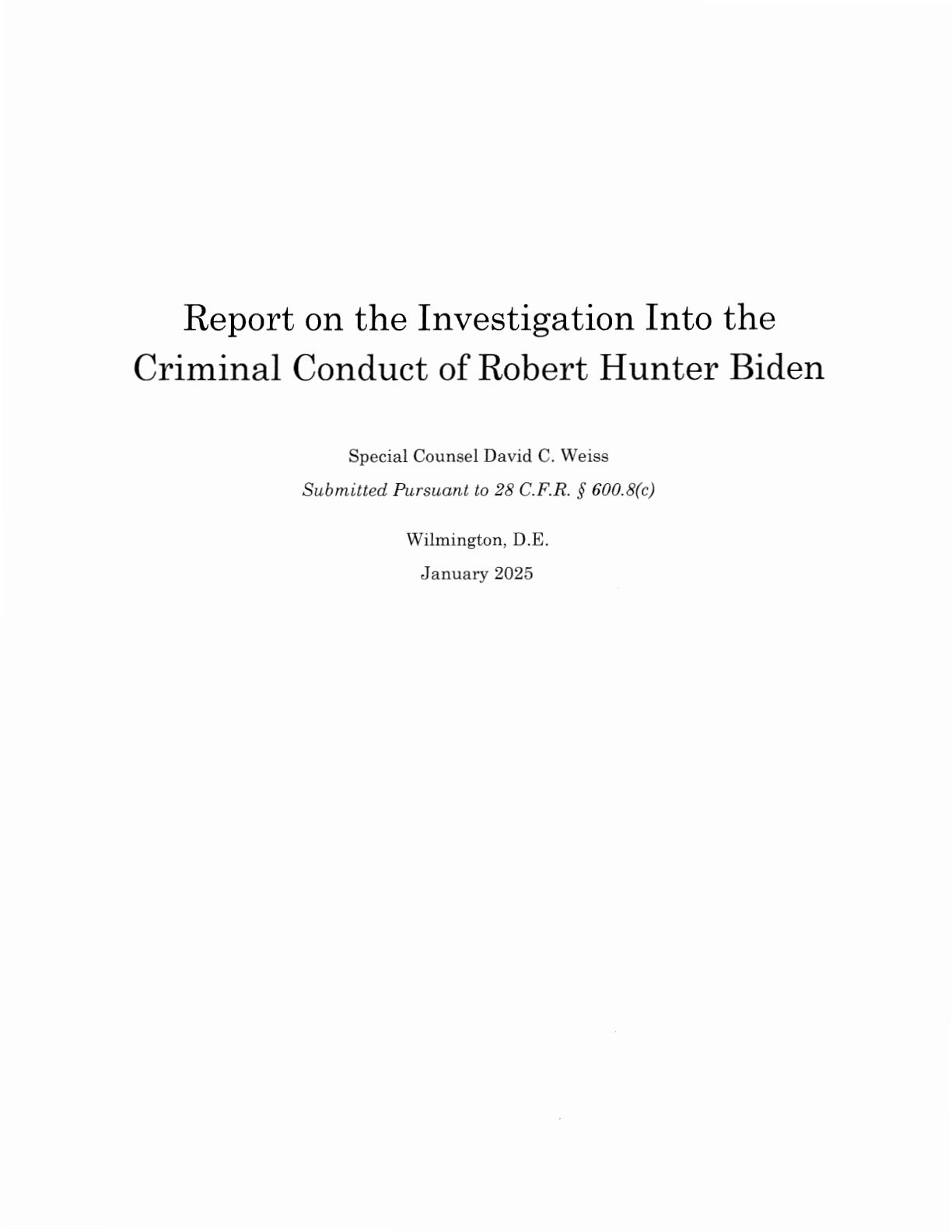
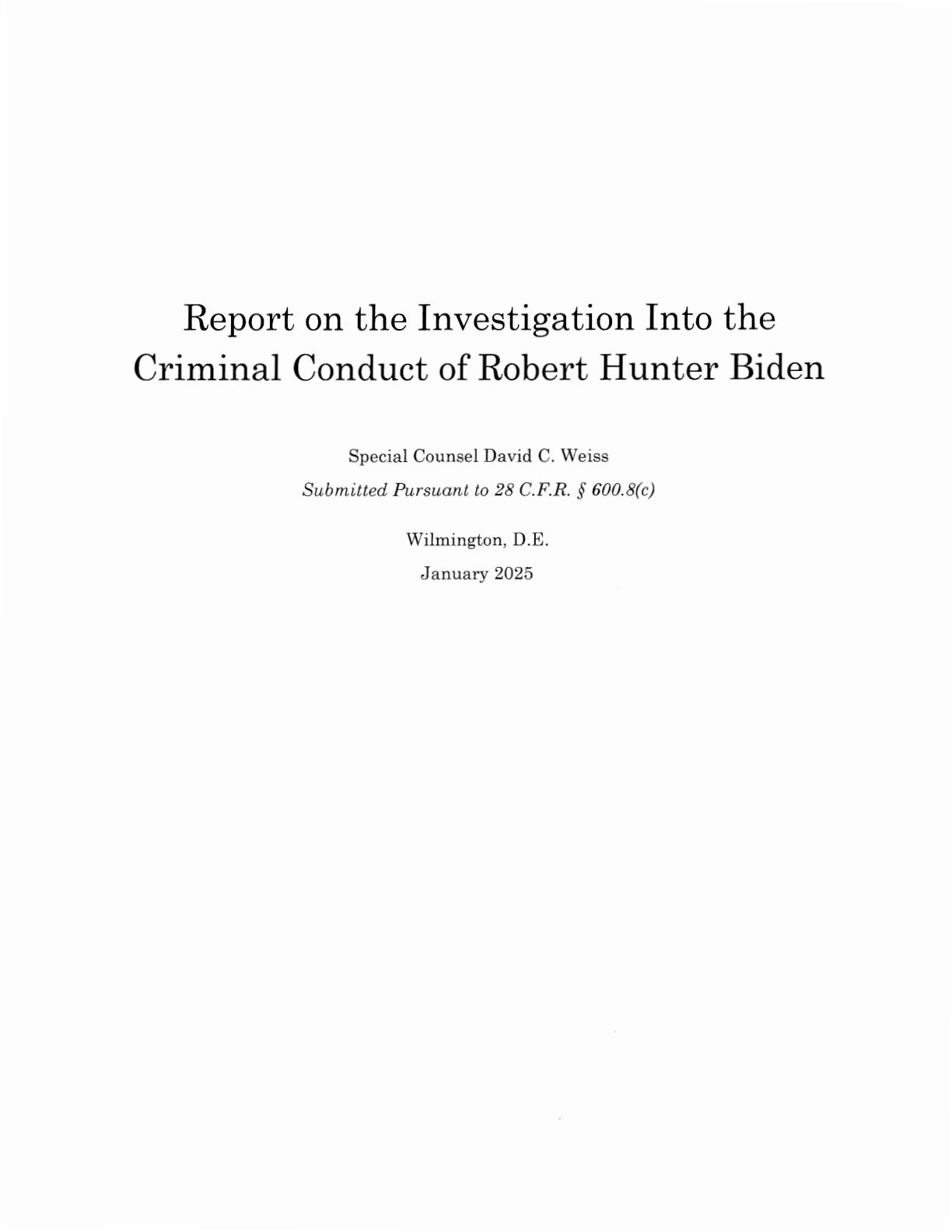
Title page area of David Weiss’s January 2025 special counsel report (document still). U.S. Department of Justice · Public domain — U.S. federal work
Weiss before special counsel.
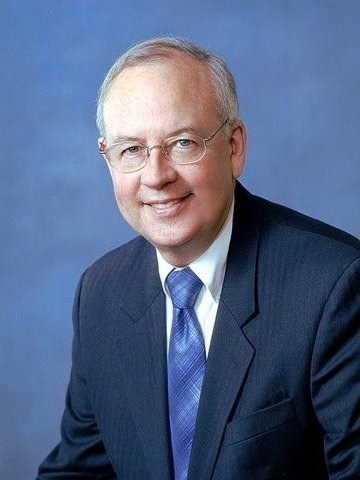
David C. Weiss was the presidentially appointed U.S. Attorney for Delaware under Donald Trump and remained in place into the Biden administration while the Hunter investigation continued — a fact both camps later weaponized. [1][2]
Supporters of the prosecution’s legitimacy stress that a Trump appointee is an odd vessel for a pure “Biden DOJ hit job” theory. Critics of DOJ process stress whistleblower claims that Weiss’s office still faced slow-walking and scope fights from above. [3][1]
Both can be stated without collapsing into each other: tenure is documented; interference claims are contested process narratives. [3]
Title page area of David Weiss’s January 2025 special counsel report (document still). U.S. Department of Justice · Public domain — U.S. federal work
Garland → Weiss, Aug 11 2023.
On 11 August 2023 Attorney General Merrick Garland appointed David Weiss special counsel, with an appointment order published by DOJ. [1][2]
The move answered a practical and political problem: after the plea collapse, Weiss sought nationwide charging authority clearer than a Delaware U.S. Attorney’s ordinary reach. Critics called it cosmetic; supporters called it insulation. [4]
Hunter later challenged the appointment’s lawfulness; Judge Noreika rejected that challenge in April 2024. [3]
Bottom line Documented
Appointment documents and court rejection of the challenge are documented.
What the record can’t settle
Broader academic debates about special-counsel regulations are background, not this case’s holding.
Court gavel still — symbolic, not a photo of a specific hearing. AI Files image pool · Free-licensed pool asset
April 12 2024 order.
In a memorandum order, Judge Noreika rejected the defense argument that Weiss’s special-counsel appointment was unlawful. [1]
That ruling cleared a major pretrial attack on the gun case’s institutional footing. Appeals noise continued around other motions, but the appointment survived in the District of Delaware. [2][1]
Bottom line Documented
Documented court order.
What the record can’t settle
Order’s full reasoning should be read in the PDF; summaries compress.
Title page area of David Weiss’s January 2025 special counsel report (document still). U.S. Department of Justice · Public domain — U.S. federal work
June 17 remarks.
Weiss thanked the jury and his team, declined questions because work continued, and stressed equal application of law. [1]
After the December pardon, both “rule of law” admirers and “two-tier” critics quoted this week against each other. The remarks remain what they are: a prosecutor’s post-verdict statement, not a veto on Article II clemency. [1][3]
Bottom line Documented
Documented primary speech.
What the record can’t settle
No press Q&A means limited clarification on open investigative threads.
Title page area of David Weiss’s January 2025 special counsel report (document still). U.S. Department of Justice · Public domain — U.S. federal work
Prosecution decisions, then a wall.
Weiss submitted his final report dated January 10 2025; DOJ released it days later. It recounts the plea collapse, the two prosecutions, the convictions/plea, and the pardon’s effect on further charges. [1]
It is a primary for institutional decision-making — written by the prosecutor, not by a neutral court of inquiry. Read it as such. Tax detail is constrained by §6103. [1]
Bottom line Documented
Report documented as DOJ primary.
What the record can’t settle
Declination discussions stop at the pardon’s legal wall.
Federal courthouse exterior (guide asset pool) — place context for trial venues. AI Files image pool / Wikimedia-derived · Various free licenses; re-encoded
December 7 2023 indictment.
A Central District of California grand jury charged three felony tax offenses and six misdemeanors tied to tax years 2016–2019. DOJ’s later plea release summarizes the alleged scheme: more than $7 million in income, at least $1.4 million in unpaid self-assessed federal tax, payroll subversion, lifestyle spending, late filing, and false business deductions when 2018 returns were filed. [1][2]
Income sources in the charging narrative include foreign business proceeds — cited here as **tax-base labels**, not as a rebuilt Burisma geopolitics guide. [1]
Kevin Morris appears in the payment-of-arrears narrative as a lender/friend — not as a co-defendant on these nine counts. [2]
Bottom line Documented
Indictment + DOJ summary documented; later admitted by guilty plea.
What the record can’t settle
§6103 limits how much return detail Weiss’s public report can restate.
September 5, 2024: open guilty plea to all nine tax counts with no cooperating plea agreement. That plea is a court-record admission on the tax spine — not a cable paraphrase. Sentencing never completed because the December pardon closed the punishment path; the plea as historical fact remains. Do not import Burisma or China business narratives from sibling nests as if they were elements of these tax counts.
Open guilty plea in Los Angeles
Record · Documented
Federal courthouse exterior (guide asset pool) — place context for trial venues. AI Files image pool / Wikimedia-derived · Various free licenses; re-encoded
September 5 2024.
As jury selection began, Hunter first attempted an Alford plea — guilty plea while maintaining innocence — which prosecutors opposed. That afternoon he pleaded guilty to all nine counts with no plea agreement. [1][2][3]
DOJ’s release restates the scheme allegations; by pleading guilty, Hunter admitted them for criminal-judgment purposes. Judge Scarsi set sentencing for mid-December — a date the pardon would erase. [1][3]
He publicly framed the choice as sparing his family a trial. That motive talk is his statement; the plea minutes are the legal act. [2]
Bottom line Documented
Guilty plea documented by DOJ and court reporting.
What the record can’t settle
No trial record developed on contested tax facts beyond the plea.
Federal courthouse exterior (guide asset pool) — place context for trial venues. AI Files image pool / Wikimedia-derived · Various free licenses; re-encoded
Burisma/CEFC as tax base only.
DOJ’s narrative ties large income to foreign business including Burisma and CEFC-related proceeds. [1][2]
Those labels explain the tax base; they are not a Ukraine-war or CEFC corruption guide. Sibling nests cover that. [1]
Federal courthouse exterior (guide asset pool) — place context for trial venues. AI Files image pool / Wikimedia-derived · Various free licenses; re-encoded
Lifestyle as “business.”
Prosecutors alleged false business deductions on filed 2018 returns, including personal lifestyle categories. [1]
Federal courthouse exterior (guide asset pool) — place context for trial venues. AI Files image pool / Wikimedia-derived · Various free licenses; re-encoded
The unpaid-tax story.
Charging theories emphasize access to funds while taxes went unpaid, plus evasion/false-return conduct for specified years. [1][2]
Later repayment can matter at sentencing; sentencing never occurred. [3]
Federal courthouse exterior (guide asset pool) — place context for trial venues. AI Files image pool / Wikimedia-derived · Various free licenses; re-encoded
Borrowed repayment.
Official narrative describes substantial loan help from Kevin Morris to cover tax arrears. [1][2]
Private loan papers are not fully public here. [1]
Hunter Biden (right cluster) at the January 20, 2021 inauguration — crop from DOD inauguration photograph. Navy Petty Officer 1st Class Carlos M. Vazquez II / DOD (crop) · CC BY 2.0
Motive speech.
Hunter said he pleaded to spare his family a trial. [1]
Claim-layer motive — compatible with, not a substitute for, guilt admissions. [2]
Federal courthouse exterior (guide asset pool) — place context for trial venues. AI Files image pool / Wikimedia-derived · Various free licenses; re-encoded
Scope discipline.
Site rule: no Ukraine-war content. Foreign income appears only as tax-base labeling. [1]
U.S. Capitol west front — architectural context for congressional inquiry, not a photo of a hearing. Architect of the Capitol; derivative edit by O.J. · Public domain — U.S. federal work
Pre-collapse politics.
Critics branded the June package as a slap on the wrist. [1]
Accurate as a description of the proposed path; poor as a description of the final felony docket. [2]
Hunter Biden (right cluster) at the January 20, 2021 inauguration — crop from DOD inauguration photograph. Navy Petty Officer 1st Class Carlos M. Vazquez II / DOD (crop) · CC BY 2.0
Sitting president’s child.
Wire services noted the first such conviction. [1]
U.S. Capitol west front — architectural context for congressional inquiry, not a photo of a hearing. Architect of the Capitol; derivative edit by O.J. · Public domain — U.S. federal work
Same inauguration embrace used as cover — Joe, Jill, and Hunter Biden, January 20, 2021. Navy Petty Officer 1st Class Carlos M. Vazquez II / DOD · CC BY 2.0
What this guide is not.
Laptop authenticity, the 51 former officials’ letter, China venture narratives, and Burisma board geopolitics are Biden Family collection siblings. [1]
This file is the court spine. [/files/people/biden-family/]
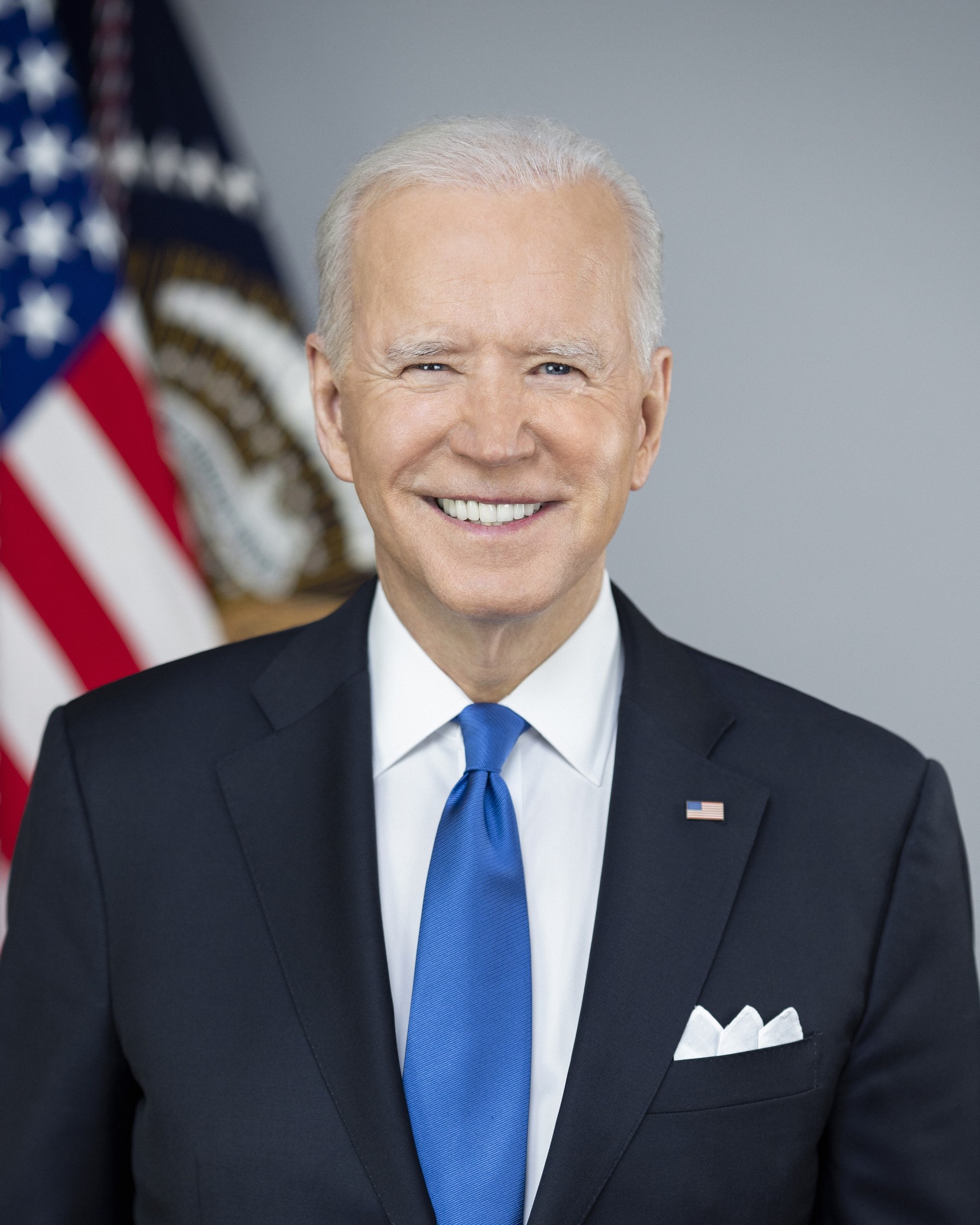
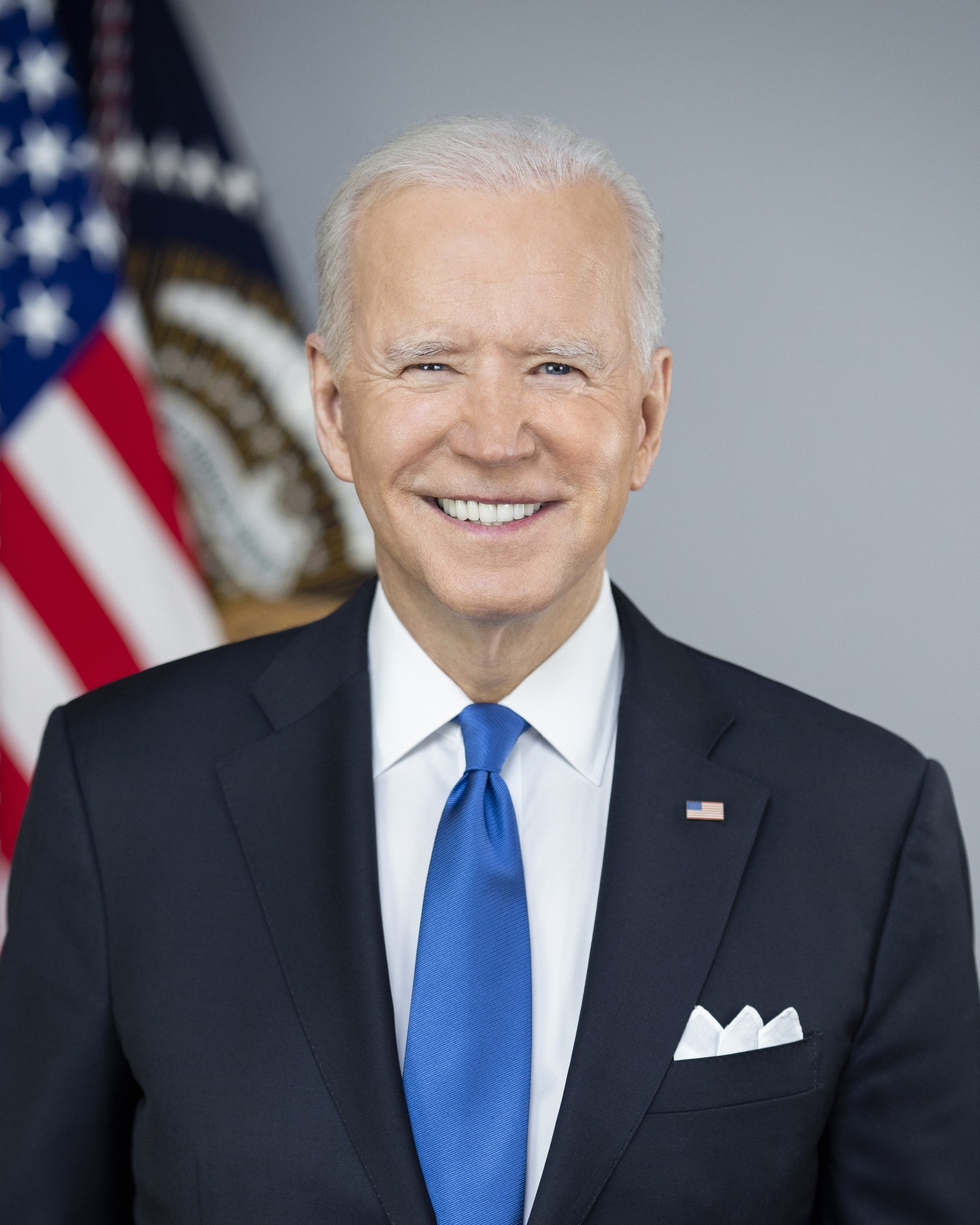
Official presidential portrait of Joe Biden, March 3, 2021. Adam Schultz / White House · Public domain — U.S. federal work
June and November public lines.
On 6 June 2024 — before the gun verdict — President Biden told ABC he would not pardon Hunter. In November, after the election, outlets again reported White House messaging that a pardon was not planned. [1][2]
Those statements are documented political facts. They do not legally estop a later pardon. They do destroy any claim that the December warrant was a long-telegraphed, consistently promised act. [3][4]
Rival mercy paths can still argue a father changed his mind under pressure; they should not pretend the public promises never happened. [4]
Bottom line Documented
Promises documented; later broken by warrant.
What the record can’t settle
Interview edits/context belong to the full ABC pieces.
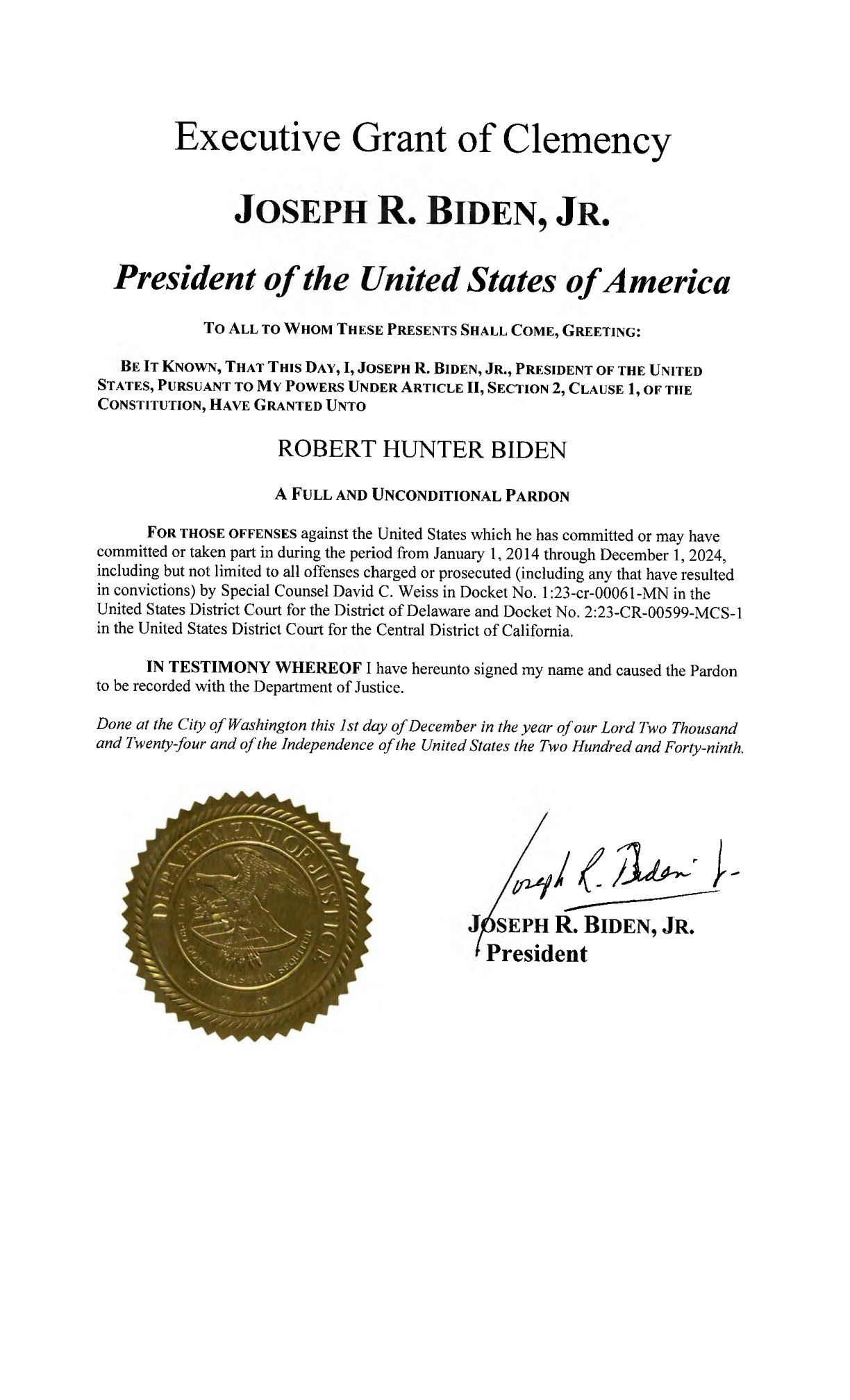
December 1, 2024 Executive Grant of Clemency for Robert Hunter Biden (document still). U.S. Department of Justice · Public domain — U.S. federal work
Full and unconditional.
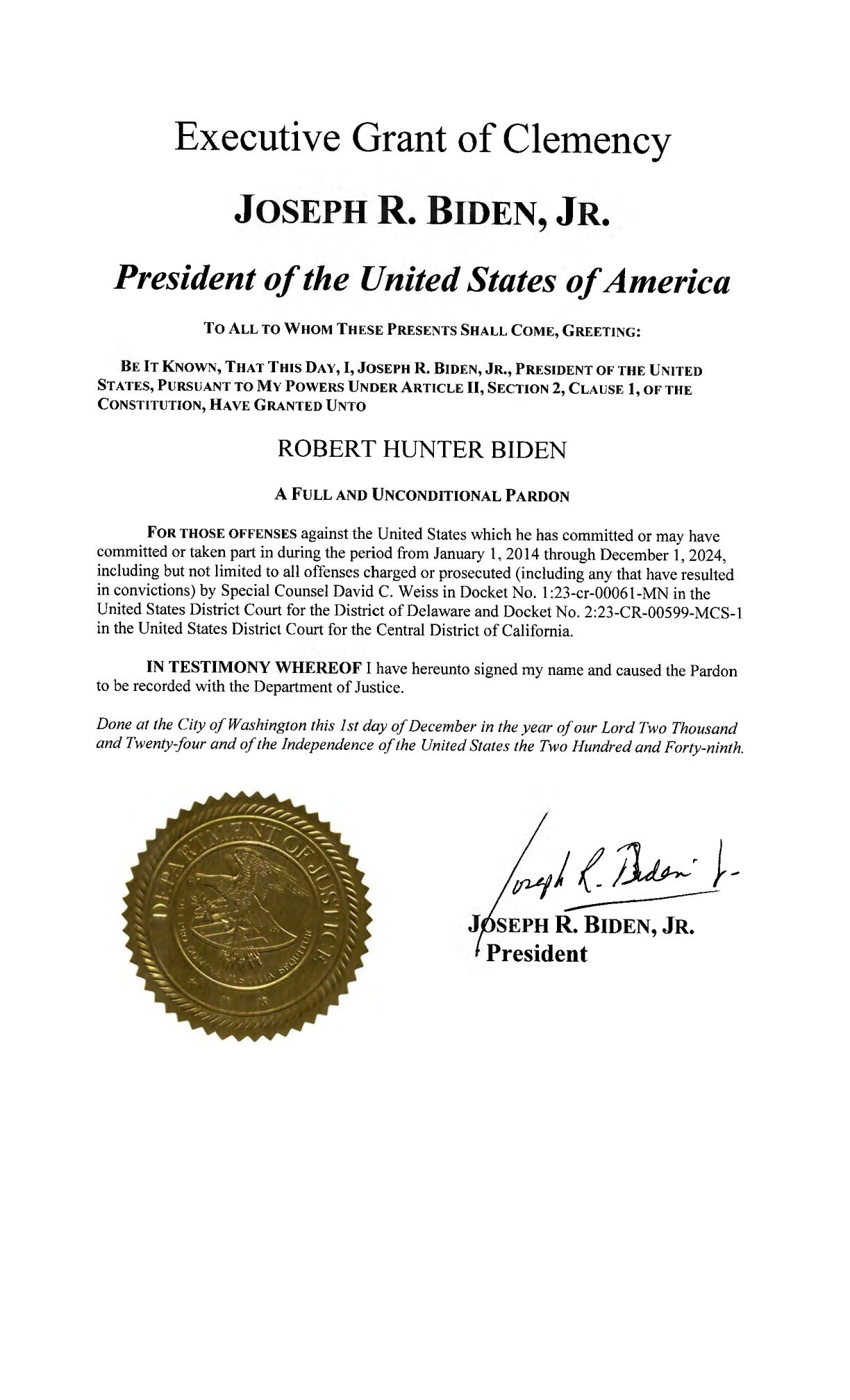
Joseph R. Biden Jr. signed an Executive Grant of Clemency giving Robert Hunter Biden a full and unconditional pardon for offenses against the United States he committed or may have committed from January 1 2014 through December 1 2024, expressly including both Weiss dockets. [1]
The White House statement cast the decision as a father’s response to a process infected by politics. Critics called it raw nepotism and a body blow to equal justice. Both are interpretations; the warrant’s text is not. [2][3]
Coverage video is secondary; the PDF warrant and govinfo statement are primary. [1][2]
Bottom line Documented
Warrant and presidential statement documented.
What the record can’t settle
State offenses and bar discipline are separate lanes.
December 1, 2024 pardon warrant — full and unconditional for offenses in the 2014–2024 window, including both Weiss dockets. Pair it with Joe Biden’s earlier public no-pardon promises; those statements are evidence of a credibility clash, not proof of a secret prior deal. Pardon ends punishment; it is not expungement and not a finding of innocence. Cases terminate; verdict and plea stay facts of record.
Broader than two cases
Record · Documented
December 1, 2024 Executive Grant of Clemency for Robert Hunter Biden (document still). U.S. Department of Justice · Public domain — U.S. federal work
The eleven-year window.
Because the warrant covers offenses “committed or may have committed” across eleven years, it is wider than a simple commutation of the gun and tax judgments. Weiss later wrote that the pardon foreclosed additional charging decisions in that window. [1][2]
Rival paths that say “he was only pardoned for the gun and taxes” undersell the text. Rival paths that invent specific secret crimes inside the window without evidence oversell it. [1][2]
Bottom line Documented
Scope text documented.
What the record can’t settle
“May have committed” language is standard clemency breadth — not a schedule of hidden counts.
December 1, 2024 Executive Grant of Clemency for Robert Hunter Biden (document still). U.S. Department of Justice · Public domain — U.S. federal work
What termination means.
After the pardon, defense filings in Los Angeles sought dismissal with prejudice and cancellation of sentencing; the gun proceeding was likewise terminated. [1][2]
DOJ’s general pardon FAQ explains that a full pardon remits punishment and can restore certain civil rights — it is not a judicial finding of innocence and does not require historians to pretend a jury never convicted. [3]
Headline writers who say the convictions were “tossed” in the sense of factual erasure blur a legal distinction this guide keeps sharp. [2][3]
Bottom line Documented
Termination documented; erasure-of-verdict claims false as stated.
What the record can’t settle
Civics debates about pardon power are older than this case.