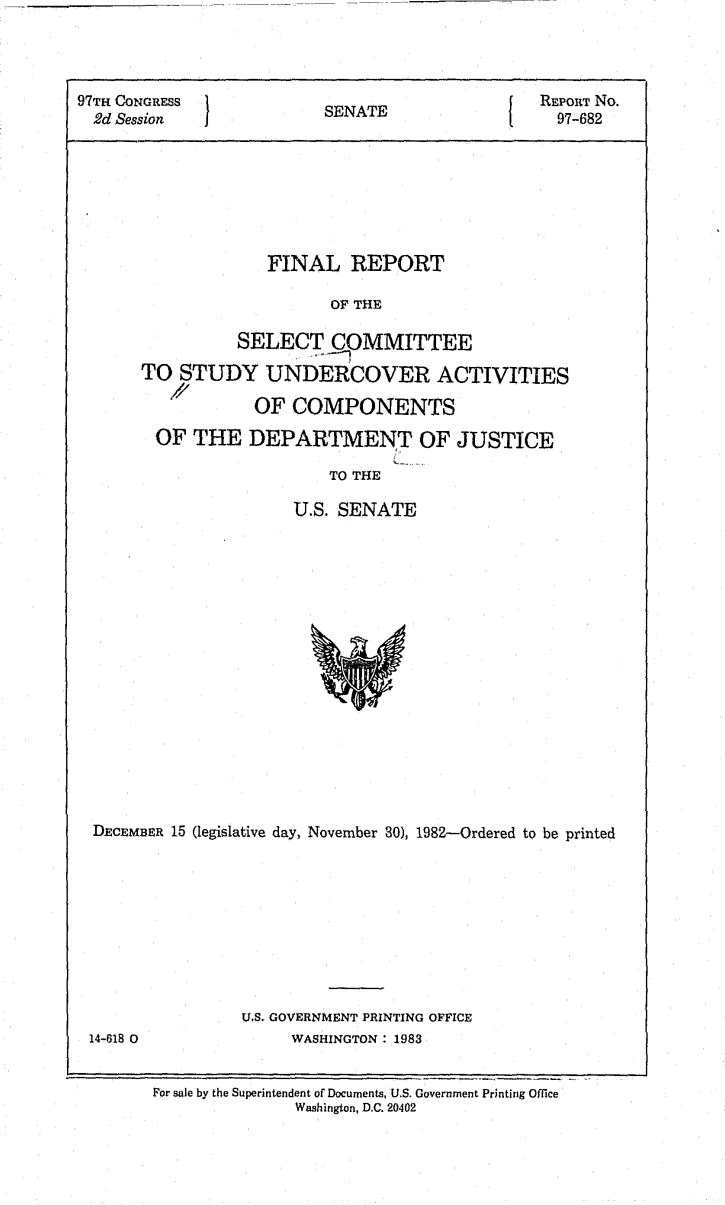
The claim that Congress simply outlawed future bribery stings against its members compresses a complicated history into a misleading conclusion. The DOJ Inspector General traces the first Attorney General undercover guidelines to January 5, 1981. Congressional hearings and reports sought stronger supervision, clearer standards and legislation. A recommendation for legislation is not evidence that a particular prohibition became law. [1]
The archived November 1992 guidelines contradict a blanket ban. It authorizes undercover public-corruption investigations and treats inquiries involving elected officials as sensitive circumstances, with FBI headquarters and a joint FBI–DOJ review committee involved in approval. It requires consideration of injury, privacy, financial and reputational risks. Its anti-entrapment provisions require a reasonably clear illegal proposal, a justified inducement and safeguards concerning predisposition. This is a permission-and-approval structure, not legislative immunity. This historical document is not the complete operational rulebook in force today. [2]
Later practice supplies a concrete check. In the 2005 William Jefferson investigation, a cooperating witness gave the sitting congressman cash during a recorded transaction; agents subsequently recovered $90,000 in his freezer. The FBI’s retrospective describes consensual monitoring and surveillance in that investigation. The example does not mean every post-ABSCAM method remained unchanged. It does show why “Congress stopped the FBI from ever doing this again” is too sweeping. [3]