PRPUBLIC RECORDAn independent history guide

File 026 / White Knights / Mississippi history

White Knights and Mississippi Burning

The murders.
The unfinished account.

A White Knights conspiracy involving a deputy sheriff killed James Chaney, Andrew Goodman and Michael Schwerner in 1964. Federal convictions, a later state manslaughter case and the surviving investigative record establish different parts of the story.

1964–2021 / organizing, trials and public memoryContext & afterlifeJune 1964–October 1967The central years7 chaptersOne continuous story
Atlantic City / 24 August 1964
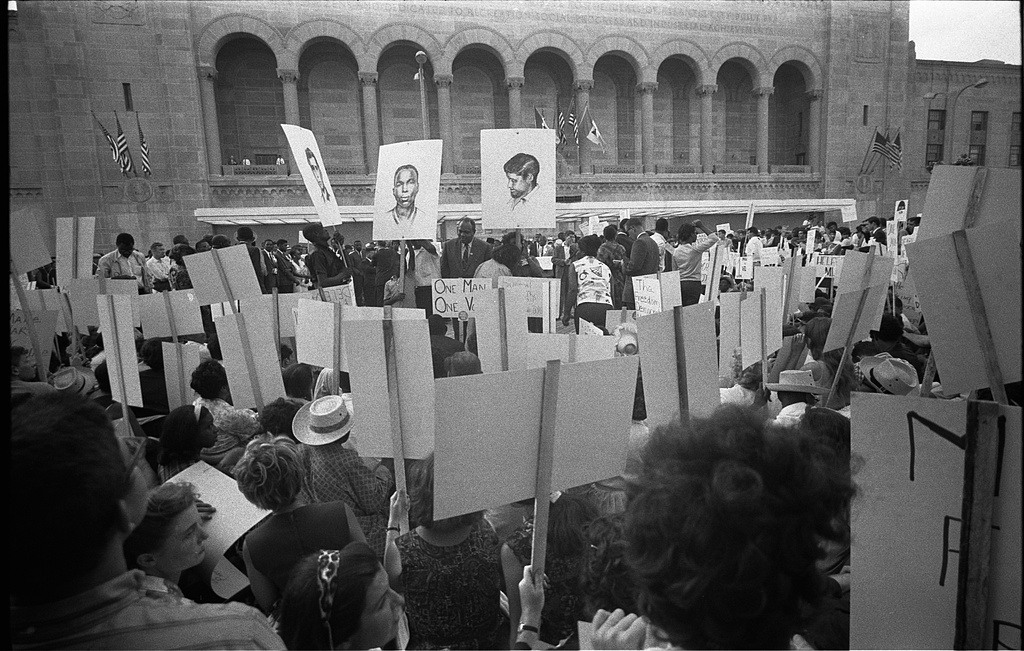
Mississippi Freedom Democratic Party supporters outside the Democratic National Convention, 24 August 1964
Organization
Individual acts
Legal outcomes

MFDP supporters carrying images of the murdered workers outside the Democratic National Convention, Atlantic City, 24 August 1964. Warren K. Leffler / Library of Congress. Image credit ↗

Scope & method / Edition 1.0

Follow custody, coordination, evidence and the actual judgment.

The White Knights organization is distinguished from other Klan bodies and each individual’s proven or alleged role. Federal 1967 civil-rights conspiracy outcomes are separated from Killen’s 2005 state manslaughter convictions and later case closure.

Read the chapters for a narrative; use the record below to test it. Established means the specific proposition is documented. Interpretation marks an inference or a historical argument. Unknown means the record here cannot decide. An archive’s possession of a document does not endorse its contents.

Research checked 25 October 2026. Primary judicial opinions and the Justice Department’s 2016 report lead; a contemporaneous Sovereignty Commission report is tested as a claim-bearing record. This is a curated history, not a complete trial-file, informant-file or Mississippi archive audit.

01 / The record

The story, in 7 chapters

Seven chapters follow the organizing targeted by violence, the crime, the proof, distinct legal outcomes and competing memories.

Mississippi Freedom Democratic Party supporters outside the Democratic National Convention, 24 August 1964
MFDP supporters carrying images of the murdered workers outside the Democratic National Convention, Atlantic City, 24 August 1964. Warren K. Leffler / Library of Congress. Image credit ↗

Chapter 01 / January–June 1964

The work the violence tried to stop

James Chaney was a twenty-one-year-old Black organizer from Meridian, Mississippi. Michael Schwerner, twenty-four, worked there with his wife Rita; Andrew Goodman, twenty, arrived from New York as a new summer volunteer. Their different histories matter. Chaney was not an outsider arriving to introduce a passive community to civil rights. Black Mississippians were already organizing, hosting workers and taking risks that continued after national attention moved elsewhere. Freedom Summer expanded that struggle through voter registration, education and community institutions. The three men were killed while working within it.

Rita Schwerner’s testimony, preserved in the Mississippi Supreme Court’s account of the 2005 trial, describes the practical work behind the later headlines. The Meridian community center offered children books unavailable in their segregated library. Chaney built shelves and arranged reading hours. Families who housed the Schwerners received threats, forcing repeated moves. Michael Schwerner and Chaney also worked beyond Meridian with people willing to host meetings and a planned Freedom School at Mount Zion Methodist Church in Neshoba County. Those local relationships explain their visit there more directly than the later image of three anonymous missing men.

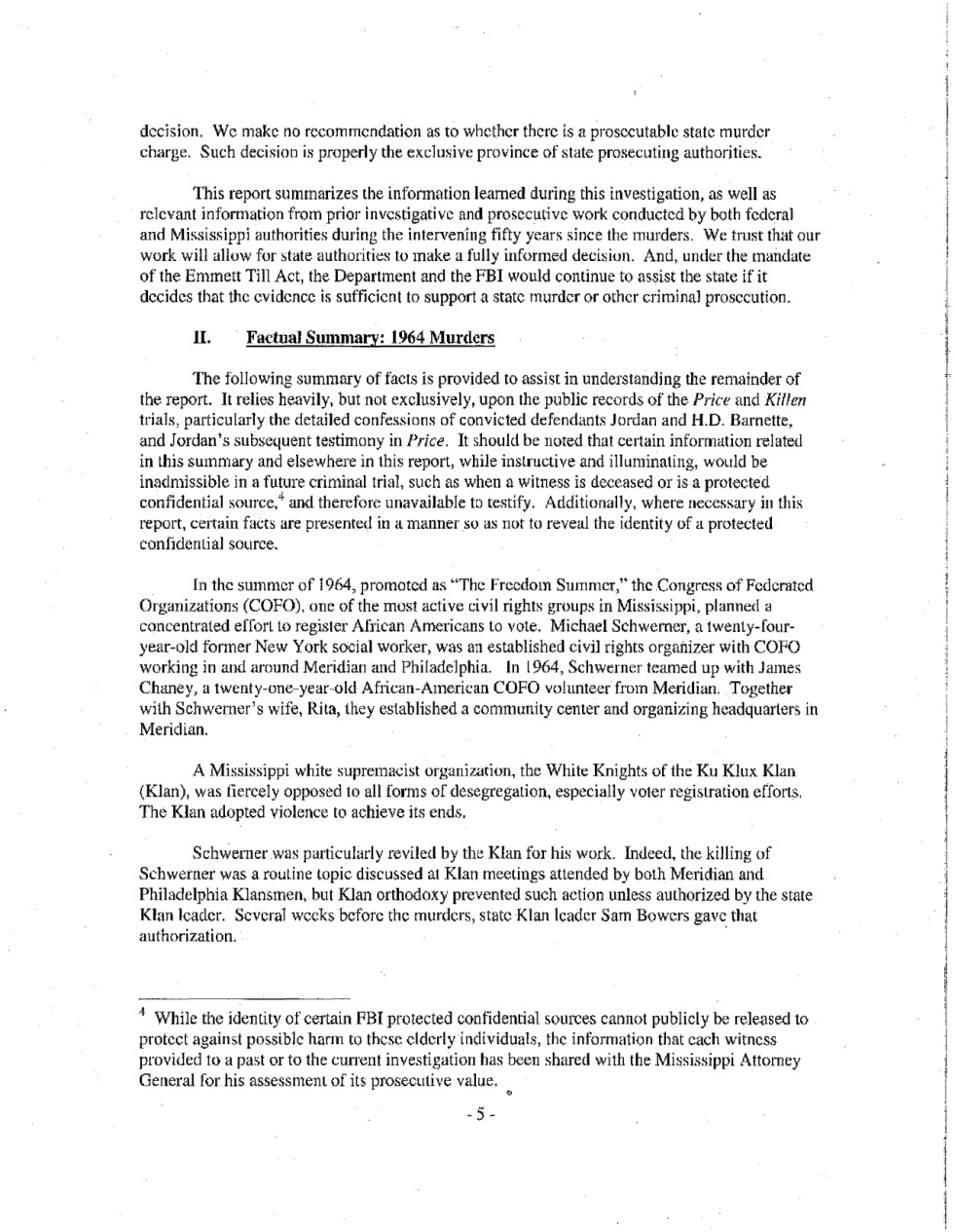
The White Knights of the Ku Klux Klan opposed that organizing through intimidation and violence. They were one organization within a divided Klan landscape, not a single national command embracing everyone who used the name. Historian David Cunningham traces the Mississippi group’s emergence from a split in the Original Knights and Sam Bowers’s rise to its leadership in spring 1964. The evidence about this crime becomes more specific still: Bowers’s state leadership, Edgar Ray Killen’s recruiting role and the connected Meridian and Philadelphia groups. Organizational membership alone does not establish an individual’s participation in the murders.

Trial witnesses described repeated discussion of killing Schwerner and represented Bowers as having approved it. The eventual federal conviction of Bowers rested on a conspiracy case, although he was not present at the killing. That distinction connects the organization to a particular decision without substituting a label for proof. It also explains why a complete account begins before the night of 21 June: the intended target’s work, the local movement and the leadership’s hostility were already in place. The causal question is how that hostility became a coordinated crime involving public authority.

Sources: S01 · S04 · S07 · S13

DOJ factual summary: organizing and White Knights targeting
The Justice Department’s retrospective factual summary describes organizing, the White Knights and the targeting of Schwerner. Official report, page 5; a reconstruction with stated evidentiary limits. Image credit ↗

Chapter 02 / 16–21 June 1964

Mount Zion was attacked before the three men returned

On 16 June, Klansmen attacked Black parishioners at Mount Zion Methodist Church and later burned the building. The civil rights workers they sought were absent. Schwerner and Chaney were attending a training program in Ohio when they learned of the attack. Goodman joined them on the return south; the three reached Meridian by 20 June. The following morning they went to the Longdale community to speak with the people who had been assaulted and to investigate the destruction of a church that had offered space for a Freedom School.

The attack was therefore a crime against an existing Black congregation as well as part of the hostility toward organizers. Making it merely scenery for the disappearance erases the people whose church, safety and educational plans had already been attacked. The 2016 Justice Department reconstruction, drawing on trial records and witnesses, places the assaults and arson before the trip that ended in the murders. The workers’ decision to visit the parishioners was a response to harm already done, not an unexplained excursion into a dangerous county.

The claim that the church was burned specifically as bait needs a narrower formulation. The Justice Department report says some Klansmen speculated afterward that the attack might bring Schwerner back. That supports awareness of a possible consequence. It is not the same evidence as a contemporaneous instruction establishing that luring him was the original, exclusive purpose of the arson. The prior targeting of Schwerner and the attack itself remain well supported even if that stronger account of the initial design is not established.

On 21 June the three men interviewed residents and then set out toward Meridian through Philadelphia. Deputy Sheriff Cecil Ray Price stopped them that afternoon. Chaney was booked for speeding; Schwerner and Goodman were held for investigation. The arrest put the men in official custody while members of the Klan could coordinate. This was the decisive transition from intimidation around a church and community project to a sequence controlled in part by a law-enforcement officer. A claim about the murders must explain that custody and what happened after release, rather than rest on an imagined predestined trap.

Sources: S01 · S04 · S15

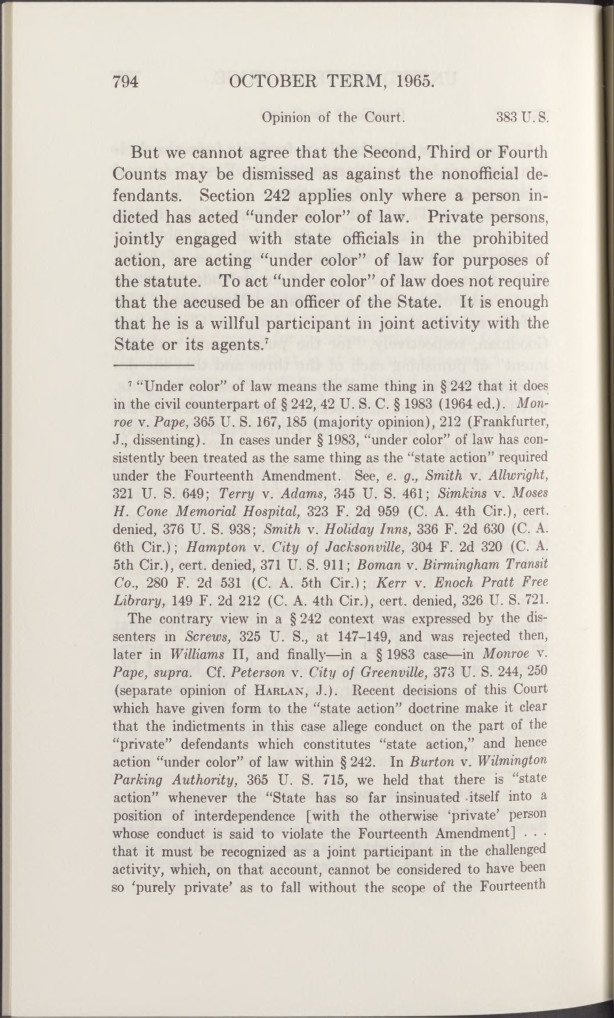
Supreme Court discussion of joint official and private action, printed 794
The Supreme Court explains joint official and private action under color of law. United States v. Price, printed page 794. This legal ruling preceded the trial verdicts. Image credit ↗

Chapter 03 / 21 June 1964

Official custody connected the conspirators

Price was a deputy sheriff and a Klansman. While the workers were held in Philadelphia’s jail, Killen went to Meridian to recruit men. Witnesses later described gatherings at the Longhorn establishment and another local business, followed by movement toward Philadelphia. The reconstructed sequence links local chapters, a recruiter and a public official. It does not require that every person at an earlier meeting knew every later act, nor that every accused man was proved guilty. Those distinctions became visible in the different verdicts.

The men were released at about 10:30 that night after Chaney paid twenty dollars. They left toward Meridian. Price joined the pursuing Klansmen, stopped the workers again and placed them in his patrol car. They were taken to an isolated place and shot. Their bodies were concealed in an earthen dam on Olen Burrage’s property, and their station wagon was burned. The broad chain is supported by participant accounts, other witnesses, physical discoveries and judicial review. Accounts differ on individual shooters; the proof of the broader conspiracy does not depend on resolving every disputed particular.

Burrage’s ownership of the burial property is a fact; his alleged assistance is a different proposition requiring evidence of knowledge and conduct. He was acquitted in the federal trial. Sheriff Lawrence Rainey was also acquitted. Killen’s federal case ended in a hung jury, not an acquittal. Price and six others were convicted by that jury. Preserving these outcomes does not require ignoring incriminating testimony, but it prevents a narrative from replacing adjudication with proximity, office, association or ownership.

In 1966 the Supreme Court would explain why the combination of official and private action mattered legally. Private participants could act under color of law by willfully joining state officers in prohibited conduct. The indictment described an alleged denial of life and liberty without due process. That ruling allowed prosecution; it did not itself convict the defendants or determine each person’s role. The later trial and appellate record supplied a different kind of finding. Separating the legal gateway from the verdict keeps a real state-assisted crime from becoming an undifferentiated accusation against every official or institution in Mississippi.

Sources: S01 · S02 · S03 · S04

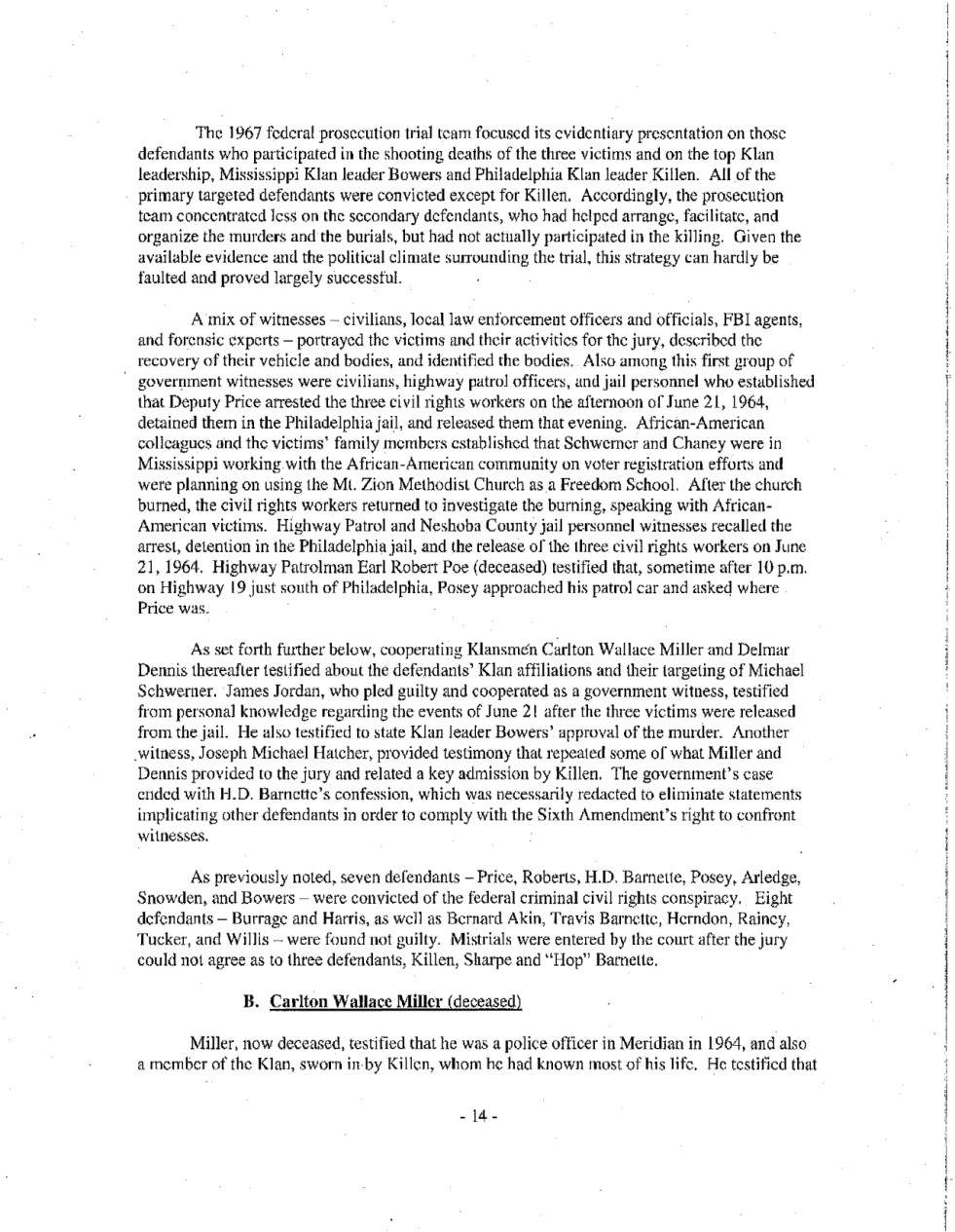
DOJ summary of the 1967 trial evidence and separate verdicts
The Justice Department’s summary distinguishes government witnesses, seven jury convictions, eight acquittals and three mistrials. Report, page 14. Image credit ↗

Chapter 04 / June–November 1964

The investigation depended on people with compromised knowledge

When the workers failed to return, movement colleagues contacted officials and pressed for action. Federal investigators confronted Price on 22 June. He acknowledged the detention but said he last saw the men leaving town after release. Their burned station wagon was found on 23 June. The FBI brought large resources into the state, opened its Jackson field office and drew on Navy personnel in the search. These actions were substantial. They did not make the movement’s earlier vulnerability, the local obstruction or the weeks without recovery disappear.

A contemporaneous state report shows how official paperwork could preserve a misleading account. Sovereignty Commission investigator A. L. Hopkins’s report of 29 June repeats Price’s denial that he alerted anyone to the workers’ custody. It records unconfirmed sightings and a hoax explanation, while claiming no physical evidence demonstrated foul play. Hopkins’s four pages establish that these assertions circulated inside a state investigation. They do not authenticate the rumors. His mistaken identification of the station wagon as a Chevrolet, rather than the independently documented Ford, is another reason to test the contents rather than accept an archive’s authority wholesale. The commission was a state agency created to resist federal intervention and maintain segregation; its reports are distinct from FBI records and from proof of an operational order.

An informant’s information led to a search warrant on 3 August and recovery of the bodies the next day. The 2016 report says the source’s identity was not preserved in a written record and the only agent who knew it had died. That is a genuine limit. The same report describes Carlton Miller’s paid relationship beginning in September 1964, James Jordan’s changing accounts and his signed statement on 5 November, and H. D. Barnette’s confession on 20 November. These are distinguishable source histories; later cooperation cannot simply be backdated into proven advance federal knowledge.

Payments, criminal exposure and self-interest bear directly on credibility. Jordan testified as a participant but minimized his own role; Barnette’s account instead implicated him as a shooter. Their stories converged on much of the crime while differing on important people and actions. Other witnesses and the physical evidence supplied checks. The strongest criticism of the investigation asks whether incentives, selective use and protection of sources narrowed accountability. It need not deny the bodies, the custody record or the convictions. Conversely, those convictions do not certify every investigative method or close every question about what officials knew and when.

Sources: S01 · S03 · S06 · S08 · S09 · S17 · S18

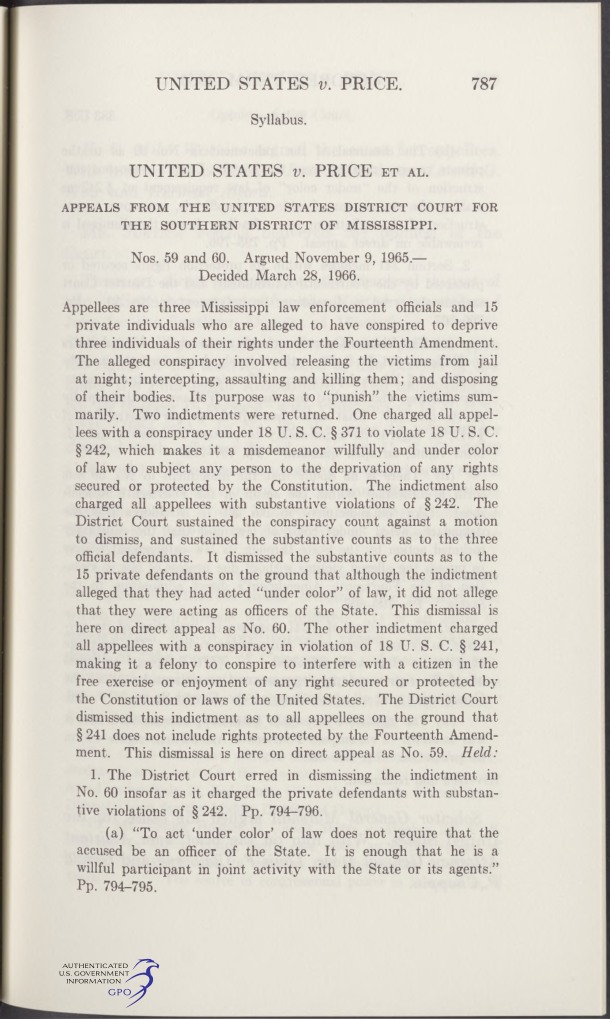
United States v. Price syllabus, 28 March 1966
United States v. Price, 28 March 1966: the Supreme Court reversed dismissals of charges. The opinion did not itself convict the accused. Image credit ↗

Chapter 05 / 1964–1969

A federal conspiracy conviction was not a murder judgment

Federal criminal complaints in December 1964 were followed by indictments in January 1965. District Judge William Harold Cox dismissed central charges on a narrow reading of the Reconstruction-era civil rights statutes. The Supreme Court reversed on 28 March 1966. United States v. Price held that private actors jointly participating with state officers could fall within the under-color-of-law requirement and that the conspiracy statute protected Fourteenth Amendment rights. The opinion addressed whether alleged conduct could be federally charged. A trial still had to establish guilt.

A new indictment in February 1967 led to the October trial in Meridian. On 20 October the jury convicted Cecil Price, Sam Bowers, Alton Wayne Roberts, H. D. Barnette, Billy Wayne Posey, Jimmy Arledge and Jimmy Snowden of the federal civil rights conspiracy. It acquitted eight defendants and could not agree on Killen, Jerry Sharpe and Ethal Glenn “Hop” Barnette. James Jordan had separately pleaded guilty and testified for the government. Thus seven jury convictions and eight federal convictions overall describe different, compatible totals. None was a federal murder conviction.

The defense challenged the reliability of participant evidence and the fairness of the proceedings. Barnette’s confession had been extensively redacted because he did not testify and his codefendants could not cross-examine him. The Fifth Circuit’s 17 July 1969 opinion, with rehearing denied in August, rejected the challenges and affirmed the convictions. It treated the confession as voluntary and the redactions as adequate, considered the judge’s instruction to a divided jury and found sufficient independent evidence. These are actual judicial outcomes, not merely prosecutors’ assurances that the trial was fair.

They remain bounded outcomes. The federal statute carried a ten-year maximum; Mississippi brought no contemporaneous state murder prosecution. Acquittals and hung juries left different procedural positions, and the survival of the conspiracy convictions did not convert them into findings against everyone who had been accused. Nor does the absence of a state trial in the 1960s mean no crime could be proved. The record instead reveals an uneven system: a federal route opened through litigation, successful convictions on limited charges, and a state failure to try the killings themselves for decades. That gap is central to the later campaign for accountability.

Sources: S01 · S02 · S03 · S06

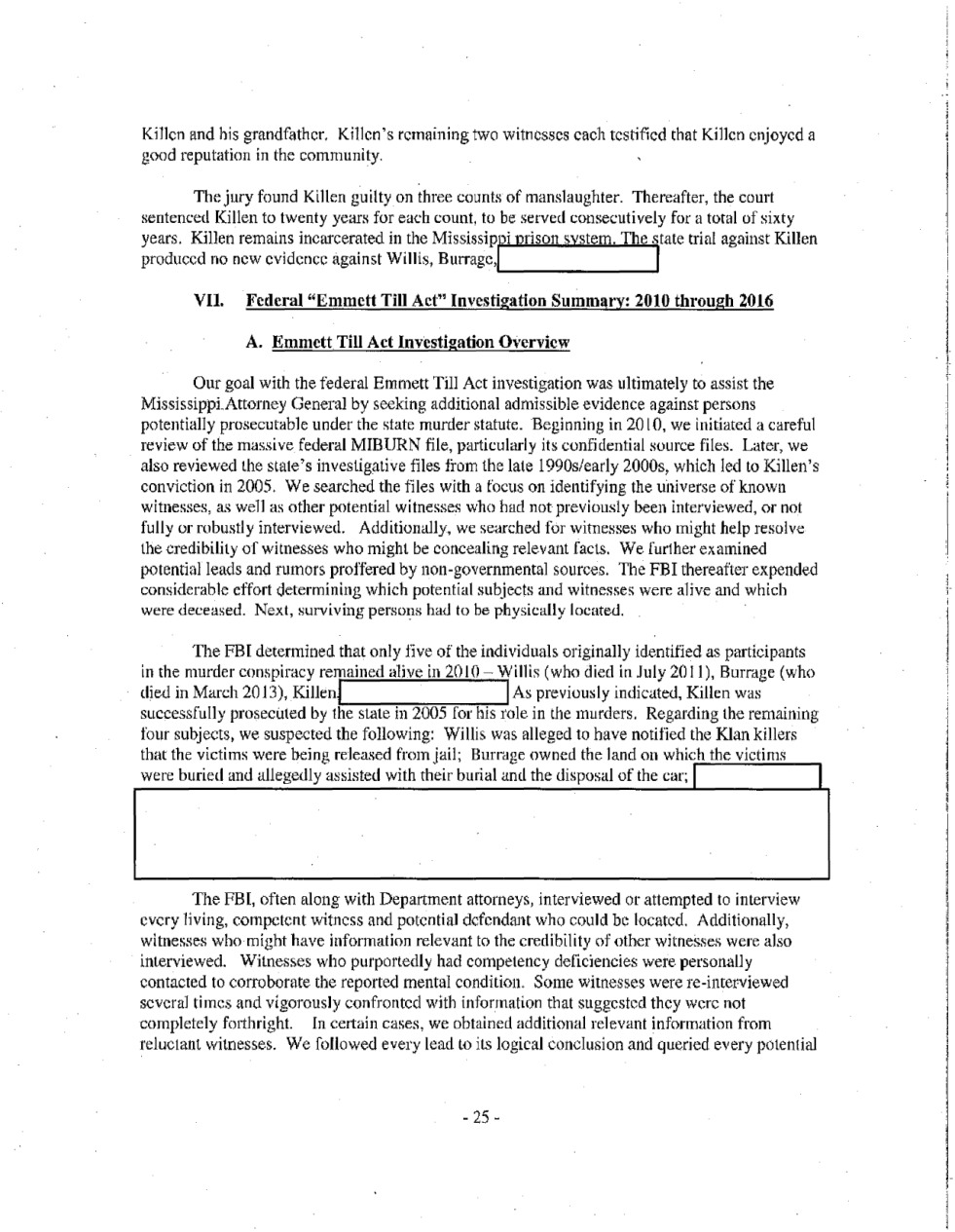
DOJ summary of Killen’s manslaughter sentence and later investigation
The Justice Department report records Killen’s three manslaughter counts and sixty-year sentence, then discusses the later investigation. Page 25; its present-tense descriptions belong to the report’s own period. Image credit ↗

Chapter 06 / 2000–2016

The later case reached Killen, but did not erase the delay

The case revived through renewed investigation around 2000 and later work by state prosecutors. The Justice Department report describes information obtained from Price after a separate false-statements prosecution and cooperation agreement. His new account did not become a new trial appearance: he died before the state case. Later investigation also sought information from Posey and other surviving people. These developments show why “new evidence” can mean a new account or opportunity to test an old one, rather than an entirely new physical discovery.

Mississippi indicted Killen in January 2005. On 21 June, exactly forty-one years after the killings, a state jury convicted him of three counts of manslaughter. He received three consecutive twenty-year sentences. The state Supreme Court affirmed on 12 April 2007. Its opinion identifies the evidentiary record and the standard favoring the verdict on appeal. It rejected Killen’s challenges to the manslaughter instruction and pre-indictment delay. The precise offense matters: neither the original murder charges nor loose later references to a murder conviction change the actual manslaughter judgments. The instruction concerned a killing without malice during a kidnapping; manslaughter here did not mean an innocent accident.

The later case was also built partly from the earlier one. Testimony from deceased federal-trial witnesses was introduced along with live witnesses, including Joseph Hatcher and members of the victims’ families. Killen’s defense argued that delay had prejudiced him through age, illness and lost witnesses. Those objections received a judicial answer; acknowledging them does not suspend the affirmed verdict. In a separate civil action filed in 2010, he alleged investigative and prosecutorial wrongdoing. The 2011 dismissal rested on pleading failures, barriers to damages claims challenging an intact conviction and immunity. It was not an evidentiary finding disproving every allegation about FBI methods.

The federal reinvestigation reported in 2016 examined remaining possibilities and the admissibility of old information. The applicable federal limitations period could not simply be displaced retroactively by later, harsher law. Mississippi retained its own prosecutorial authority. Deaths, witness availability, redactions and evidentiary weaknesses restricted further cases; the state investigation closed that year. Closure is an investigative and prosecutorial outcome, not a universal acquittal of uncharged people. The report explicitly describes information still believed to be concealed. The difference between historical knowledge and evidence usable against a living defendant explains both the importance and the limits of the accountability achieved.

Sources: S01 · S04 · S05 · S15 · S16

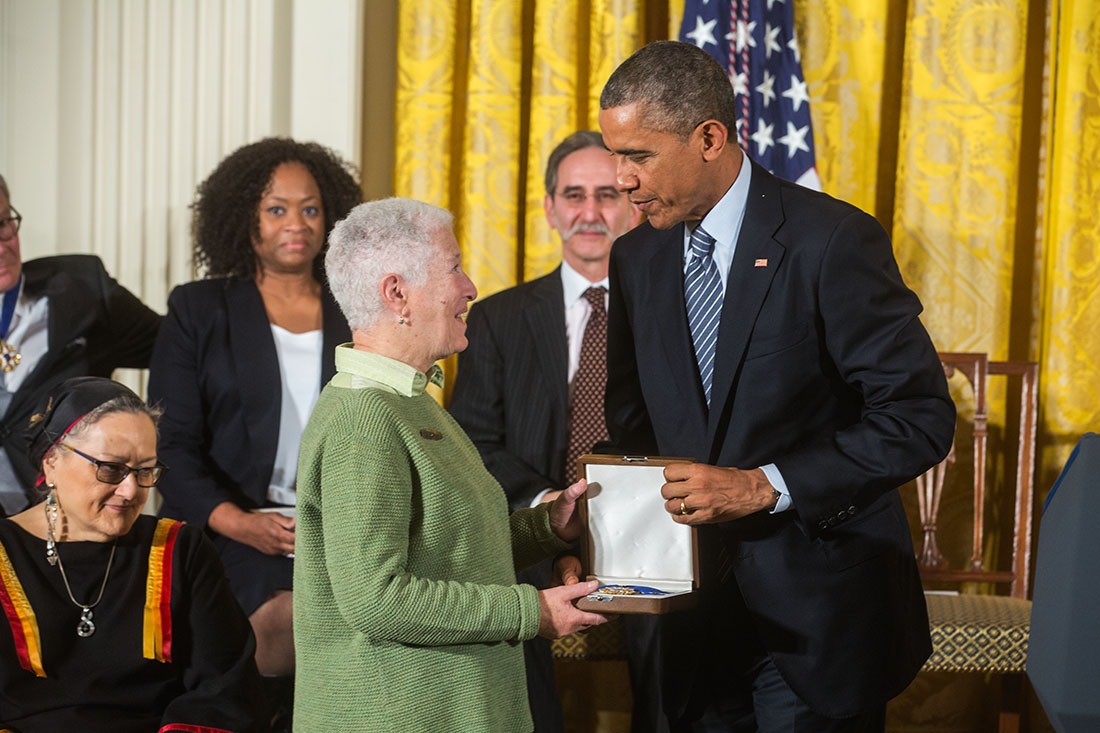
Relatives accept posthumous Presidential Medals of Freedom, 24 November 2014
Relatives accept posthumous Presidential Medals of Freedom for Chaney, Goodman and Schwerner, 24 November 2014. Official White House Photo by Chuck Kennedy. Image credit ↗

Chapter 07 / 1964–2021

The name of a case became a struggle over whose history survived

The FBI’s MIBURN designation became the title of the 1988 film Mississippi Burning. That reuse connected public memory to the investigation, but did not make the film a record of the case. Alan Parker’s own production essay calls its characters fictional and acknowledges its white heroes. His account also describes research in news footage and visits to the actual sites. This is documented adaptation with acknowledged departures, not evidence that every dramatic scene occurred.

Carol Hanisch’s January 1989 letter answered a defense of the film. She accepted its depiction of Klan terror and sheriff connections while objecting to its portrayal of Black people as passive and FBI agents as rescuers. Her criticism concerns whose work the drama centers; it does not negate the solved crime or establish every claim about investigative misconduct. The local center, congregation and organizing described in trial evidence supply a concrete test of that dispute.

Official memory has its own emphasis. The FBI’s retrospective case history presents a major investigative achievement. The fuller Justice Department report also celebrates successful prosecutions, yet records payments, inconsistent accounts, unpreserved source identity and limits on further charges. Reading those passages together permits two findings at once: federal work helped establish a real Klan and official conspiracy, and the institutional success story is incomplete as an account of the movement, unequal protection and all potential responsibility. A criminal verdict and a comprehensive history answer different questions.

In August 1964, Mississippi Freedom Democratic Party supporters demonstrated outside the national Democratic convention carrying images of the murdered workers. Their public use of the case was part of a political challenge, not only a request for investigators to solve it. Fifty years later, relatives accepted posthumous Presidential Medals of Freedom for Chaney, Goodman and Schwerner. Recognition honors their organizing; it does not reopen a trial or identify additional perpetrators. Neither commemoration substitutes for preserving evidence.

Mississippi’s archives announced public access to the attorney general’s case materials in 2021. The finding aid lists federal trial testimony, interviews, research and later prosecution files. That opens routes for further work without proving that every listed document has been examined here. The surviving record supports a specific conspiracy and distinct legal outcomes, while leaving bounded questions about intelligence, protection and missed prosecutions. Authenticated, dated records connecting particular people to prior knowledge or intervention would change those assessments more than either a cinematic scene or an institutional assurance.

Sources: S01 · S10 · S11 · S12 · S13 · S14 · S15 · S16

02 / The record

The critical path

Court opinions and the detailed investigative record establish a specific White Knights/official conspiracy and distinct federal/state judgments. Wider complicity, complete protection and complete disclosure require separate evidence.

Evidence support concerns the exact hinge within this selected record. Cultural familiarity/popularity is Unmeasured; grounds identify recurrence in inspected accounts, not invented polls or an ordinal audience ranking.

CP1

Targeting connects organization to a particular crime

Official-record yardstick

Witnesses and the appellate opinion connect Bowers’s leadership and approval to repeated discussion of killing Schwerner.

The 1969 appellate opinion identifies the evidence of Bowers’s approval and local targeting; it separately notes that he was not present at the slayings. Conspiracy responsibility is the proposition tested.

Why it is critical

A specific authorization and motive distinguish this conspiracy from guilt based simply on Klan membership.

If this step is removed

Without this evidence, the leadership-responsibility case and account of why Schwerner was targeted weaken. The detention, deaths and proof of participants do not disappear.

Dependencies

Local organizing and leadership evidence precede the 21 June sequence; organization is context until particular conduct connects it.

What rival readings must explain

An isolated-local-crime account must explain the documented authorization; an all-members-guilty account must still identify each person’s agreement or conduct.

Gaps and disputes

Witness accounts are retrospective and include paid insiders; the exact knowledge of every chapter member is not established.

Evidence support: High with defined scope

The precise documentary hinge as stated, within the reviewed record.

Court-reviewed testimony and the federal verdict support Bowers’s conspiracy role, not every allegation about every member.

Cultural prominence: Unmeasured

General cultural familiarity/popularity; distinct from evidentiary strength.

Inspected court and DOJ accounts foreground authorization. General public familiarity with that distinction is unmeasured.

Sources: S01 · S03 · S04

CP2

Custody becomes a joint official-private action

Official-record yardstick

Price’s detention, release and second seizure connect public authority with the participants who killed the workers.

The Supreme Court’s 1966 opinion explains the joint-action theory as an allegation capable of prosecution. The 1967 trial and 1969 appeal establish Price’s criminal outcome; they do not convict everyone who held public office.

Why it is critical

Official involvement makes the crime more than private intimidation and supplied the federal statutory gateway.

If this step is removed

Remove Price’s knowing participation and the specific state-assisted crime and Price legal route need major revision. The workers’ deaths would remain a separate established fact.

Dependencies

CP1 supplies context; jail personnel, other officers, participant testimony and physical findings independently support the custody/release chain.

What rival readings must explain

A rogue-private-actors account must confront Price’s conviction; a state-wide-command account must identify instructions beyond the deputy rather than infer them from his office.

Gaps and disputes

Rainey and other accused officials had different verdicts. The reviewed record does not establish every higher official’s knowledge or an authenticated commission murder order.

Evidence support: High

The precise documentary hinge as stated, within the reviewed record.

Official and private collaboration was charged, tried and supported on appeal; the scope of any wider direction needs separate proof.

Cultural prominence: Unmeasured

General cultural familiarity/popularity; distinct from evidentiary strength.

Inspected legal opinions make this hinge explicit. No audience survey measures whether readers distinguish local complicity from broader command.

Sources: S01 · S02 · S03

CP3

Recovery and corroboration test denial without resolving every source question

Official-record yardstick

Body recovery, witness accounts and physical discoveries contradict benign explanations while source incentives and contradictions remain visible.

The DOJ report separates the anonymous recovery source, Miller’s September payments and later participant accounts. Jordan’s disagreement with Barnette about his own role is a specific credibility issue, not a reason to discard every corroborated fact.

Why it is critical

This connects accusation to proof and identifies exactly where uncertainties about informants still matter.

If this step is removed

Without physical recovery and corroboration, the case against a hoax or innocent release would rely more heavily on contested testimony. Without source scrutiny, the account would overstate what any single witness proves.

Dependencies

CP2 establishes custody. The 3 August warrant/4 August recovery and later statements supply independent points against which accounts can be checked.

What rival readings must explain

A fabricated-case claim must explain physical and independent evidence; an unqualified FBI success story must address payments, account changes, missing identity and contested self-exculpation.

Gaps and disputes

The recovery source’s identity was not preserved in a written record according to DOJ. This is not proof of a named alternative source or advance orchestration.

Evidence support: High for recovery; mixed for particulars

The precise documentary hinge as stated, within the reviewed record.

The physical discoveries and core chain are strong; named-source attribution, individual shooter disputes and untested allegations have narrower support.

Cultural prominence: Unmeasured

General cultural familiarity/popularity; distinct from evidentiary strength.

The inspected FBI history centers recovery; the fuller DOJ report exposes source limits. Which account is culturally dominant is unmeasured.

Sources: S01 · S03 · S17

CP4

Statutory litigation and selective verdicts define the federal result

Official-record yardstick

Price 1966 opened the legal route; the 1967 jury convicted seven, acquitted eight and deadlocked on three. Jordan’s plea is additional.

The 1967 jury’s individual results and Jordan’s separate plea answer different counting questions. The 1969 appeal sustained seven convictions without changing their offense from civil-rights conspiracy to murder.

Why it is critical

The actual offense and individual outcomes determine what the federal case established and what it left unresolved.

If this step is removed

Without the 1966 reversal, this prosecution’s route would have been restricted. Without the 1967 verdicts, allegations could not be described as convictions; the deaths and evidence would remain.

Dependencies

CP2 supplied the alleged state action; CP3 supplied trial evidence. A ruling on statutory coverage is distinct from adjudication of guilt.

What rival readings must explain

Comprehensive-justice accounts must explain the limited charge and missing state prosecution; blanket-exoneration accounts must confront the sustained convictions.

Gaps and disputes

Not every accused was convicted; none of these federal judgments was a murder conviction. Missing trial holdings limit independent review of every evidentiary detail.

Evidence support: High

The precise documentary hinge as stated, within the reviewed record.

Primary opinions and the detailed verdict list distinguish legal gateway, jury verdicts and guilty plea.

Cultural prominence: Unmeasured

General cultural familiarity/popularity; distinct from evidentiary strength.

The inspected institutional summaries use seven/eight totals at different levels. Public understanding of that distinction is unmeasured.

Sources: S01 · S02 · S03 · S06

CP5

The state manslaughter case preserves a different legal judgment

Official-record yardstick

Killen’s 2005 three-count manslaughter conviction and 60-year sentence were affirmed 12 April 2007, after his 1967 hung jury.

The 2007 state opinion describes the manslaughter instruction based on a killing during kidnapping, addresses delay and affirms the sentence. The 2011 civil order addresses a different damages case and leaves the conviction intact.

Why it is critical

This supplies the later individual accountability without silently upgrading the offense or erasing decades of state inaction.

If this step is removed

Without the 2005 judgment, Killen’s record would retain a federal mistrial rather than a state conviction. Without its precise manslaughter label, the narrative would falsely describe the offense adjudicated.

Dependencies

CP3/CP4 preserved evidence and testimony; new investigation around 2000 and live witnesses supported a later state case.

What rival readings must explain

A no-accountability account must acknowledge the affirmed sentence; a full-resolution account must explain the long delay, deaths, other accused and limits of the state judgment.

Gaps and disputes

Appellate review favors the verdict. The 2011 civil dismissal did not conduct an evidentiary trial of all misconduct claims or vacate the conviction.

Evidence support: High for legal outcome

The precise documentary hinge as stated, within the reviewed record.

The 35-page 2007 opinion provides the operative offense, date, sentence and rejected appellate arguments.

Cultural prominence: Unmeasured

General cultural familiarity/popularity; distinct from evidentiary strength.

The inspected later court/report narratives use the conviction as a turning point. General cultural prominence and accuracy of recall are unmeasured.

Sources: S01 · S04 · S05

CP6

Case closure and public memory do not settle every responsibility question

Official-record yardstick

The 2016 report distinguishes historical information from admissible evidence for living defendants; public narratives and later archives pursue different questions.

The DOJ report’s admissibility and limitation analysis, MDAH’s later access notice, Parker’s adaptation account and Hanisch’s reply have distinct purposes. None substitutes for the specific evidence needed to extend responsibility.

Why it is critical

This prevents a procedural end or compelling screen account from becoming proof of complete disclosure, universal innocence or every claimed wider conspiracy.

If this step is removed

Without this distinction, limited prosecution would look like complete historical resolution. Removing a film or commemorative act would not undo the judicial and physical evidence.

Dependencies

CP1–CP5 identify the established crime and adjudications. Later source access, institutional memory and movement criticism should be tested against that foundation.

What rival readings must explain

Wider-complicity accounts need dated knowledge/action links; closure accounts must explain redactions and unpreserved identity; cinematic accounts must acknowledge fictionalization and local movement agency.

Gaps and disputes

Full FBI/source files, complete trial transcripts and all state holdings were not audited. General audience beliefs and relative narrative popularity are unmeasured.

Evidence support: High for stated limits; open for unproved links

The precise documentary hinge as stated, within the reviewed record.

The official report itself identifies barriers, while source-specific reading supports the bounded contrast between narrative emphases.

Cultural prominence: Unmeasured

General cultural familiarity/popularity; distinct from evidentiary strength.

A film, critical letter, official case histories and 2014 commemoration show public circulation in this sample. No comparative audience or polling rank is asserted.

Sources: S01 · S10 · S11 · S12 · S15 · S16 · S18

03 / The record

How the accounts developed

Documented reuse, contemporaneous competing accounts and explicit reception relationships are identified. Parallel inquiry is not represented as literary borrowing; later repetition is not independent corroboration.

June 1964

The publicity-stunt explanation meets an evidence trail

A presidential-call catalog and Hopkins’s state report preserve a benign or hoax account. Body recovery and later participant evidence contradict it.

Lineage

Contemporary official explanation → investigated contradiction.

Borrowing or relationship

Parallel circulation is documented; direct borrowing between Eastland and Hopkins is not established.

Evidence for the connection

The catalog identifies Eastland’s explanation; Hopkins records local claims as rumors, not verified sightings. The later inquiry reconstructs the contrary evidence.

Recurring path nodes

CP2CP3

Branches in this record

Testimony moves between trials and later reconstruction · An investigative title becomes a fictional drama

Sources: S01 · S08 · S09 · S17

1964–1969 → 2005–2007 → 2016

Testimony moves between trials and later reconstruction

The state case reused testimony from the federal trial, alongside live evidence. The 2016 report explicitly draws on both trials and later investigation.

Lineage

Participant/witness accounts → federal trial → state trial → retrospective investigative synthesis.

Borrowing or relationship

Direct evidentiary reuse is documented. A later report’s repetition does not create another independent witness.

Evidence for the connection

The 2007 opinion identifies six witnesses heard through 1967 transcripts; DOJ describes the trial material and its own source dependencies.

Recurring path nodes

CP1CP2CP3CP4CP5

Branches in this record

Movement criticism challenges the rescue frame · Honor, closure and archival access take different routes

Sources: S01 · S03 · S04

1964 case designation → 1988 adaptation

An investigative title becomes a fictional drama

The film adopted the MIBURN case name. Parker’s production account describes research in news archives and locations while explicitly acknowledging fiction and white protagonists.

Lineage

Named investigation and historical material → researched screen adaptation.

Borrowing or relationship

Parker describes use of research and footage; no claim is made that a particular unread book supplied a scene.

Evidence for the connection

The inspected production essay supplies the relationship. The film itself was not watched for this edition.

Recurring path nodes

CP2CP3CP6

Branches in this record

Movement criticism challenges the rescue frame

Sources: S10 · S12

January 1989

Movement criticism challenges the rescue frame

Hanisch’s letter directly answers a defense of the film, challenging its passive depiction of Black communities.

Lineage

Film → public defense → participant’s reply.

Borrowing or relationship

The response is explicit; the Royko column itself was not independently read.

Evidence for the connection

The letter identifies the column and dispute. It is reception evidence, not a witness statement about the murders.

Recurring path nodes

CP1CP3CP6

Sources: S11

2014–2021

Honor, closure and archival access take different routes

The medals honor the organizers; the investigation evaluates prosecutable evidence; the archives open holdings for research. These later acts do not have a common legal effect.

Lineage

Historical case → separate commemorative, prosecutorial and archival branches.

Borrowing or relationship

Parallel uses of the history are documented; no literary borrowing among these institutions is inferred.

Evidence for the connection

White House caption, DOJ report and MDAH release/finding aid specify their different actions and source bases.

Recurring path nodes

CP4CP5CP6

Sources: S01 · S14 · S15 · S16

04 / The record

Rival readings on the same path

The strongest versions, the steps they accept or revise, and the evidence they would need.

Interpretation 01

A limited Klan crime, not a wider institutional problem

Specific conspiracy established; isolation claim too narrow

The strongest version

A disciplined reconstruction should attribute the murders to identified conspirators, not indict every white Mississippian, Klan member or official. Different verdicts show the importance of individual proof.

Accepts

The criminal conspiracy, Price’s actions and the actual convictions; organizational labels alone cannot establish guilt.

Must still explain

Price used public office, and state prosecution failed for decades. The leadership evidence and institutional setting cannot be removed by calling the crime merely private.

Assessment

The specific joint action is judicially supported. Wider state or federal direction requires additional links and is not presumed.

Accept these path nodes

Remove or revise this inference

  • Do not remove Price’s proved official role or the documented gap in state prosecution to obtain an isolated-private-crime account.

Add this evidence

  • Individual agreement, tasking and response records for each proposed extension beyond the convicted participants.

What would change this assessment

Authenticated orders narrowing or expanding the participation chain, records of official knowledge and response, or reliable evidence excluding a disputed person from the relevant acts would alter that person’s assessment.

Sources: S01 · S02 · S03 · S04 · S18

Interpretation 02

A federal investigative success that delivered justice

Important achievement; comprehensive closure not established

The strongest version

A hostile local environment made federal intervention, source development and statutory litigation essential. Recovery and sustained convictions achieved accountability that contemporary state authorities did not pursue.

Accepts

The investigation’s scale, the judicial results and the importance of cooperative testimony.

Must still explain

Investigating after the killings is different from protection beforehand. Source incentives, incomplete accountability and limited charges constrain a complete-success narrative.

Assessment

The official report provides substantial support for the achievement and also documents its limits. Neither half cancels the other.

Accept these path nodes

Remove or revise this inference

  • Remove the inference from successful convictions to universal protection, flawless methods or complete accountability.

Add this evidence

  • Dated pre-crime requests and agency responses, source handling evidence and individual prosecution decisions.

What would change this assessment

Complete contemporaneous protection requests/responses, independently corroborated source files and disposition records resolving remaining responsibility questions could strengthen or weaken the broader institutional assessment.

Sources: S01 · S02 · S03 · S06 · S09 · S12

Interpretation 03

Informants and official protection narrowed who was held accountable

Documented credibility and accountability limits; wider causal links open

The strongest version

Paid sources, participant bargains, protected identities, selective prosecution and local obstruction can produce a true core case while leaving some responsibility obscured. Institutional self-praise should not define the full history.

Accepts

The deaths and convictions, while testing the completeness and incentives behind the evidence used to obtain them.

Must still explain

A payment or redaction does not by itself show foreknowledge, fabrication or a direction to commit murder. The exact time, handler knowledge, conduct and effect must be linked.

Assessment

DOJ records payments, inconsistent accounts, an unpreserved identity and serious later evidentiary limits. Hopkins’s report preserves misleading official claims. These justify scrutiny without proving every proposed cover-up.

Accept these path nodes

Remove or revise this inference

  • Revise any claim that an informant’s later cooperation automatically establishes earlier federal control, or that case closure means the historical record is complete.

Add this evidence

  • Contemporaneous handler logs, payment timing, unredacted communications and demonstrated effects on protection, testimony or prosecution.

What would change this assessment

Authenticated pre 21 June reports reaching a named responsible official, instructions to conceal or redirect evidence, and independently corroborated links to an act or failed intervention would materially change the causal assessment.

Sources: S01 · S03 · S05 · S17 · S18

Interpretation 04

The convictions rested on tainted evidence or an unfair process

Actual objections rejected; not every misconduct allegation adjudicated

The strongest version

Participant testimony can be self-serving, payments affect incentives, redacted confessions complicate confrontation and a forty-one-year delay can harm the defense. Killen formally alleged investigative and prosecutorial misconduct.

Accepts

The legal proceedings occurred and their integrity can be tested through the actual record rather than presumed from agency denials.

Must still explain

The 1969 appeal affirmed the seven convictions; the 2007 opinion rejected Killen’s instruction and delay claims. The 2011 civil dismissal did not invalidate his conviction and was not a full evidentiary trial of investigative methods.

Assessment

Credibility limits are real but do not by themselves overcome corroboration or erase affirmed judgments. Pleading, immunity and Heck grounds are not proof that every alleged act was disproved.

Accept these path nodes

Remove or revise this inference

  • To replace the current legal assessment, identify a demonstrated material error rather than treating any incentive or procedural dismissal as automatic innocence or vindication.

Add this evidence

  • Original statements and revisions, disclosure records, reliable proof of coercion or fabrication and the relevant court’s resolution.

What would change this assessment

Authenticated evidence of material fabrication or suppressed exculpatory information, supported by source provenance and linked to an identified judgment, would warrant reassessment; an actual judicial reversal would change the legal-outcome entry.

Sources: S01 · S03 · S04 · S05
05 / The record

What public accounts emphasize

Comparisons are bounded to actually read institutional narratives, production essay and letter. No full-film or unread-book omission claim is made.

The FBI’s retrospective case history

The accessible public-history text; raw route blocked.

Amplifies

The search, source development, recovery and convictions as an institutional achievement.

Recasts or leaves unresolved

Its compressed sequence leaves less room for the movement’s work and the fuller report’s source contradictions, payments and later evidentiary problems.

Scope and limits

Comparison concerns this short case page, not every FBI file or publication. Its achievement claims are tested against court opinions and the longer DOJ report.

CP3CP4CP6

Sources: S01 · S02 · S03 · S12

The 2016 Justice Department report

Introduction, factual/trial/reinvestigation sections and conclusion; selected detailed reading, not full confidential files.

Amplifies

Successful federal and state prosecutions, while identifying admissibility limits, witness incentives and barriers to further charges.

Recasts or leaves unresolved

Its account praises institutional work and judges prosecution possibilities. That frame does not exhaust questions about unequal protection or local movement agency.

Scope and limits

A report to assist a state charging decision, not a new judicial verdict or universal exoneration; source redactions remain.

CP1CP2CP3CP4CP5CP6

Sources: S01

Alan Parker’s making-of essay

Opening and research/narrative passages; no film playback.

Amplifies

The researched crime as dramatic inspiration, with white FBI protagonists.

Recasts or leaves unresolved

Parker calls it fiction and acknowledges the heroes’ race; adaptation cannot prove a scene occurred.

Scope and limits

The claim concerns the inspected essay, not an audit of the film or unread production sources.

CP2CP3CP6

Sources: S10

Carol Hanisch’s 1989 letter

Two-page reply read through the archive’s web-reader text.

Amplifies

Black communities’ agency and the movement’s work.

Recasts or leaves unresolved

Challenges an FBI rescue frame while recognizing depicted Klan terror.

Scope and limits

Her later movement experience and reception argument do not establish the 1964 facts or every allegation of agency misconduct.

CP1CP3CP6

Sources: S11

06 / The record

Find a thread in the file

Search the chapter and claim index. Every result leads to the full text and its sources.

Chapter 01The work the violence tried to stopChapter 02Mount Zion was attacked before the three men returnedChapter 03Official custody connected the conspiratorsChapter 04The investigation depended on people with compromised knowledgeChapter 05A federal conspiracy conviction was not a murder judgmentChapter 06The later case reached Killen, but did not erase the delayChapter 07The name of a case became a struggle over whose history survivedPersonJames ChaneyPersonMichael SchwernerPersonAndrew GoodmanPersonRita SchwernerPersonSam Holloway BowersPersonEdgar Ray KillenPersonCecil Ray PricePersonLawrence Andrew RaineyPersonJames Edward JordanPersonHorace Doyle “H.D.” BarnettePersonBilly Wayne PoseyPersonAlton Wayne RobertsPersonJimmy ArledgePersonJimmy SnowdenPersonOlen Lovell BurragePersonCarlton Wallace MillerPersonDelmar DennisPersonJoseph Michael HatcherPersonJohn DoarPersonWilliam Harold CoxPersonA. L. HopkinsPersonJames EastlandPersonAlan ParkerPersonCarol HanischTimelineA Meridian organizing centerTimelineKillen recruits into a local chapterTimelineBowers leads the White KnightsTimelineMount Zion attacked and burnedTimelineThe three reach MeridianTimelineVisit to the attacked communityTimelineOfficial detention and recruitmentTimelineRelease followed by abduction and killingTimelineFederal inquiry confronts PriceTimelineBurned station wagon foundTimelineEastland’s publicity-stunt explanationTimelineHopkins records rumors and denialTimelineSearch warrant obtainedTimelineBodies recoveredTimelineMFDP supporters carry the victims’ imagesTimelineMiller’s paid relationship beginsTimelineJordan signs a detailed statementTimelineBarnette signs a confessionTimelineFederal complaints and arrestsTimelineFederal grand jury indictsTimelineSupreme Court reverses dismissalsTimelineNew conspiracy indictmentTimelineSeven guilty jury verdictsTimelineFifth Circuit affirmsTimelineMississippi Burning film adaptationTimelineHanisch answers the film’s defenseTimelineRenewed state inquiry gains accountsTimelineKillen indicted by MississippiTimelineThree manslaughter convictionsTimelineKillen judgment affirmedTimelineCivil damages suit dismissedTimelinePosthumous Medals of FreedomTimelineReinvestigation and case closureTimelineState case files publicly availableClaimThe White Knights were the same organization as every contemporary Klan group.ClaimChaney, Goodman and Schwerner were murdered on 21 June 1964.ClaimThe three men’s trip was connected to an already organized local movement.ClaimPrice’s public office was merely incidental to the crime.ClaimThe church was conclusively proved to have been burned only as bait.ClaimEvery person named as a suspect was convicted.ClaimThe 1967 jury returned seven federal murder convictions.ClaimEight federal convictions overall is an error.ClaimBowers was convicted even though he was not present at the killings.ClaimKillen was acquitted in 1967.ClaimKillen was convicted of three counts of manslaughter in 2005.ClaimPaying an informant proves the FBI directed the murders.ClaimA later cooperation relationship can be backdated into proven foreknowledge.ClaimThe 2011 civil dismissal proved every investigative allegation false.ClaimThe Sovereignty Commission’s hoax/sighting report is reliable proof the men were alive.ClaimThe 2016 closure exonerated every uncharged person.ClaimThe 1988 film is a primary record of the actual investigation.ClaimAn acquittal can be replaced by guilt inferred from office or association.

07 / The record

People and institutions

Open a record for the person’s role and supporting sources. Names identify people; no unverified portrait is substituted for a participant.

ChaneyBiographical record
James ChaneyMeridian organizer

Worked with local communities and the Schwerners on education and civil rights; killed 21 June 1964. His local organizing and library work precede the missing-person narrative.

Sources: S01 · S04

SchwernerBiographical record
Michael SchwernerCORE/COFO organizer

Organized with Rita Schwerner and Chaney in Meridian and Neshoba County; repeatedly targeted by the White Knights before 21 June 1964.

Sources: S01 · S04

GoodmanBiographical record
Andrew GoodmanSummer volunteer

New volunteer who accompanied Chaney and Schwerner to visit attacked parishioners on 21 June 1964; killed that night.

Sources: S01 · S04

SchwernerBiographical record
Rita SchwernerOrganizer and later trial witness

Worked in the Meridian community center, faced threats and testified about the work and its risks. Her account in the 2007 opinion helps recover movement agency.

Sources: S04

BowersBiographical record
Sam Holloway BowersWhite Knights state leader

Federal jury convicted him of civil-rights conspiracy in 1967. The appellate court upheld evidence of authorization while distinguishing him from the men present at the killings. Do not merge later separate crimes into this verdict.

Sources: S01 · S03 · S07

KillenBiographical record
Edgar Ray KillenKlan recruiter; later state defendant

The 1967 jury deadlocked on him. In 2005 a state jury convicted him of three manslaughter counts; 60-year consecutive sentence affirmed 12 April 2007. His 2010 civil allegations did not overturn that judgment.

Sources: S01 · S04 · S05

PriceBiographical record
Cecil Ray PriceNeshoba County deputy sheriff

Arrested and detained the workers; federal jury convicted him of civil-rights conspiracy in 1967. Official participation is established specifically, not inferred from office alone.

Sources: S01 · S03

RaineyBiographical record
Lawrence Andrew RaineyNeshoba County sheriff

Accused in the federal prosecution and acquitted in 1967. Incriminating accounts and office relationships must be distinguished from a conviction that did not occur.

Sources: S01 · S03

JordanBiographical record
James Edward JordanParticipant and cooperating witness

Pleaded guilty separately, testified for the government and received payments. His minimization of his role conflicts with Barnette’s account; corroboration and incentives both matter.

Sources: S01 · S03

BarnetteBiographical record
Horace Doyle “H.D.” BarnetteParticipant and federal defendant

Confessed in November 1964; jury convicted him in 1967. Redacted confession and confrontation issues reviewed on appeal. Distinct from Travis Barnette and Ethal Glenn “Hop” Barnette.

Sources: S01 · S03

PoseyBiographical record
Billy Wayne PoseyFederal defendant

Convicted by the 1967 jury. Later information was sought in the renewed investigation; his name titles the 1969 appeal affirming seven convictions.

Sources: S01 · S03

RobertsBiographical record
Alton Wayne RobertsFederal defendant

Convicted of civil-rights conspiracy in 1967; participant evidence and the appellate record place him in the killing chain.

Sources: S01 · S03

ArledgeBiographical record
Jimmy ArledgeFederal defendant

Convicted of the civil-rights conspiracy in 1967. The verdict is distinct from a state murder judgment.

Sources: S01 · S03

SnowdenBiographical record
Jimmy SnowdenFederal defendant

Convicted of the civil-rights conspiracy in 1967; individual legal outcome preserved alongside the other defendants’ different results.

Sources: S01 · S03

BurrageBiographical record
Olen Lovell BurrageBurial-property owner; acquitted defendant

Bodies recovered on his property. Alleged assistance was disputed; he was acquitted in 1967. Ownership and later suspicions are not a substitute for proof of knowing participation.

Sources: S01

MillerBiographical record
Carlton Wallace MillerMeridian officer and paid source

Klan member who testified about organization and targeting; DOJ dates first FBI payment to September 1964. Later cooperation does not establish pre-murder handling.

Sources: S01 · S04

DennisBiographical record
Delmar DennisKlan insider and witness

Testified about meetings, leadership and targeting; payment exposed in cross-examination. Distinct from civil-rights organizer Dave Dennis.

Sources: S01 · S04

HatcherBiographical record
Joseph Michael HatcherMeridian officer and witness

Testified in both 1967 and 2005 about Klan meetings and Killen’s admissions. His surviving testimony was one connection between the trials.

Sources: S01 · S04

DoarBiographical record
John DoarFederal civil-rights prosecutor

Led the federal prosecution team through the civil-rights conspiracy route. Its achievements do not turn into a contemporaneous state murder trial.

Sources: S01 · S06

CoxBiographical record
William Harold CoxFederal district judge

Initial statutory dismissals reversed by Supreme Court; presided over 1967 trial. Appellate court later reviewed and rejected challenges to his trial rulings.

Sources: S02 · S03 · S06

HopkinsBiographical record
A. L. HopkinsSovereignty Commission investigator

Authored 29 June 1964 report repeating official denials and unverified rumors. Document checked as a contemporaneous assertion, not a reliable account of innocence.

Sources: S17

EastlandBiographical record
James EastlandU.S. senator

23 June 1964 presidential-call catalog and historical essay record his publicity-stunt explanation. Physical and trial evidence contradicts the hoax account. No playback claim.

Sources: S08 · S09

ParkerBiographical record
Alan ParkerFilmmaker

His production essay identifies fiction and white heroes; used here as a bounded statement about adaptation, not an evidentiary account of the crime.

Sources: S10

HanischBiographical record
Carol HanischMovement veteran and film critic

1989 letter objects to passive Black characterization and FBI-centered rescue; not an eyewitness account of the 1964 crime.

Sources: S11

08 / The record

The crime, the trials and the aftermath

Horizontal spacing shows elapsed time; separate rows keep close events selectable. Scroll the graph on narrow screens. Exact dates are attributed where records conflict; month- and year-only dates preserve source precision.

19641978199320072022
A Meridian organizing centerOrganizing

The Schwerners and Chaney build work around education, books and community contacts.

Sources: S04

Killen recruits into a local chapterOrganization

Dennis’s trial account dates his first meeting to March; later testimony connects leadership to violence. Month-only precision.

Sources: S04

Bowers leads the White KnightsOrganization

Cunningham dates Bowers’s assumption of leadership to April; do not treat rival Klan bodies as one command.

Sources: S07

Mount Zion attacked and burnedViolence

Parishioners assaulted and church destroyed while the workers were away.

Sources: S01 · S04

The three reach MeridianOrganizing

Chaney, Schwerner and Goodman return from the Ohio training program.

Sources: S01

Visit to the attacked communityCrime

The men interview victims of the church attack in Longdale, then leave toward Meridian.

Sources: S01 · S04

Official detention and recruitmentCrime

Price holds the workers; Killen recruits men while they are in custody.

Sources: S01 · S03

Release followed by abduction and killingCrime

After about 10:30 p.m. release, Price joins the pursuing group. The workers are abducted and killed.

Sources: S01 · S03

Federal inquiry confronts PriceInvestigation

Price admits detention and denies involvement after release. Movement colleagues had alerted officials.

Sources: S01

Burned station wagon foundInvestigation

Physical discovery contradicts growing benign explanations; bodies are not yet found.

Sources: S01

Eastland’s publicity-stunt explanationPublic account

Presidential-call catalog records the explanation; no audio playback is claimed.

Sources: S08 · S09

Hopkins records rumors and denialState record

Four-page state report repeats Price’s denial and unconfirmed sightings; later evidence contradicts its benign framing.

Sources: S17

Search warrant obtainedInvestigation

Informant information supports warrant for Old Jolly Farm.

Sources: S01

Bodies recoveredInvestigation

The bodies are found at the dam; source identity later unavailable in written record.

Sources: S01

MFDP supporters carry the victims’ imagesPublic memory

Leffler photograph documents political action outside the Democratic Convention.

Sources: S13

Miller’s paid relationship beginsInformant

DOJ dates initial FBI payment to September; exact day not asserted.

Sources: S01

Jordan signs a detailed statementEvidence

His account evolves after earlier denials; subsequent testimony is central but challenged.

Sources: S01

Barnette signs a confessionEvidence

Confession broadly corroborates Jordan but conflicts on Jordan’s own role.

Sources: S01

Federal complaints and arrestsProsecution

Preliminary charges are distinct from later indictments and actual trial defendants.

Sources: S01

Federal grand jury indictsProsecution

Civil-rights charges begin statutory litigation.

Sources: S01

Supreme Court reverses dismissalsJudgment

Price restores federal statutory routes; guilt remains for trial.

Sources: S02

New conspiracy indictmentProsecution

Superseding federal indictment precedes the October trial.

Sources: S01

Seven guilty jury verdictsJudgment

Eight acquittals and three hung jury outcomes; Jordan’s separate plea is additional.

Sources: S01 · S03

Fifth Circuit affirmsJudgment

Opinion affirms seven convictions; rehearing denied 28 August 1969.

Sources: S03

Mississippi Burning film adaptationPublic memory

Parker’s production account acknowledges fiction and white heroes; no full film viewing claimed.

Sources: S10

Hanisch answers the film’s defensePublic memory

Letter centers the movement agency obscured by the rescue narrative.

Sources: S11

Renewed state inquiry gains accountsInvestigation

Price’s cooperation and later investigation help revive case.

Sources: S01

Killen indicted by MississippiProsecution

State charges are murder; later verdicts must be identified separately.

Sources: S01 · S04

Three manslaughter convictionsJudgment

State jury convicts Killen; three consecutive 20-year terms follow.

Sources: S04

Killen judgment affirmedJudgment

Mississippi Supreme Court rejects instruction and delay challenges.

Sources: S04

Civil damages suit dismissedJudgment

Pleading/Heck/immunity grounds; not an evidentiary ruling clearing every investigative act.

Sources: S05

Posthumous Medals of FreedomCommemoration

Relatives accept medals for Chaney, Goodman and Schwerner.

Sources: S14

Reinvestigation and case closureInvestigation

Evidence, limitations and surviving witness constraints restrict further charges; closure is not universal exoneration.

Sources: S01 · S15

State case files publicly availableArchives

MDAH announces access to materials transferred in 2019.

Sources: S15 · S16

09 / The record

How the story changed

Public memory tends to compress contested histories into a turning point. The records leave a less tidy sequence.

Hoax claims versus physical recovery

ThenOfficials circulated benign explanations and unconfirmed sightings.

ReconsideredThe bodies, custody evidence and sustained convictions defeat the hoax account; original rumors remain evidence of contemporary framing.

Sources: S01 · S08 · S17

Seven versus eight

ThenThe jury convicted seven, while Jordan separately pleaded guilty.

ReconsideredEight federal convictions overall is compatible with seven jury convictions. Neither total means eight murder verdicts.

Sources: S01 · S03

A mistrial versus an acquittal

ThenKillen’s federal jury could not agree; eight other defendants were acquitted.

ReconsideredHis later state manslaughter case followed a different charge and proceeding. Do not relabel the federal mistrial as acquittal.

Sources: S01 · S04

Movie fiction versus movement agency

ThenThe case name became a drama centered on white investigators.

ReconsideredParker acknowledges fiction; Hanisch disputes the passive depiction of Black people.

Sources: S10 · S11

Case closure versus historical completion

ThenThe 2016 investigation faced legal and evidentiary limits.

ReconsideredLater archival access creates research possibilities without reversing judgments or validating every accusation.

Sources: S01 · S15 · S16

10 / The record

What the evidence supports

Ratings apply to the precise proposition on the page. Unsupported means the assembled evidence does not establish a claim; it is not interchangeable with false.

Unsupported

The White Knights were the same organization as every contemporary Klan group.

The organizational history distinguishes Original Knights, White Knights and UKA. Shared ideology and overlapping people do not erase institutional differences.

Sources: S07

Established

Chaney, Goodman and Schwerner were murdered on 21 June 1964.

Physical discoveries, trial records and sustained judgments establish the killings. A hoax account does not fit that evidence.

Sources: S01 · S03 · S04

Established

The three men’s trip was connected to an already organized local movement.

The Meridian center, library work and Mount Zion contacts preceded their return to investigate the church attack.

Sources: S01 · S04

Contradicted

Price’s public office was merely incidental to the crime.

Official custody, release and renewed seizure were central to the adjudicated conspiracy and the federal legal route.

Sources: S02 · S03

Not established as stated

The church was conclusively proved to have been burned only as bait.

DOJ describes speculation afterward that the attack might lure Schwerner back. That is narrower than proved original exclusive purpose.

Sources: S01

Contradicted

Every person named as a suspect was convicted.

Seven jury convictions, eight acquittals, three mistrials and Jordan’s separate guilty plea are distinct outcomes. Preliminary charging lists differed from trial defendants.

Sources: S01 · S03

Contradicted

The 1967 jury returned seven federal murder convictions.

The charge was civil-rights conspiracy, not federal murder.

Sources: S01 · S03

Contradicted

Eight federal convictions overall is an error.

Seven jury convictions plus Jordan’s separate plea yields eight; the levels must be identified.

Sources: S01

Established

Bowers was convicted even though he was not present at the killings.

The appellate court upheld the conspiracy evidence concerning leadership and authorization. Presence and responsibility were distinct issues.

Sources: S01 · S03

Contradicted

Killen was acquitted in 1967.

His jury deadlocked and a mistrial followed. The later state judgment was manslaughter.

Sources: S01 · S04

Established

Killen was convicted of three counts of manslaughter in 2005.

Mississippi Supreme Court affirmed 12 April 2007; three consecutive 20-year terms.

Sources: S04

Unsupported

Paying an informant proves the FBI directed the murders.

Payments and credibility risks are documented. Direction requires a dated knowledge/tasking/action chain not established by payment alone.

Sources: S01 · S03

Unsupported

A later cooperation relationship can be backdated into proven foreknowledge.

Miller’s first payment is dated September 1964 in DOJ report. Different sources have different histories; each requires contemporaneous proof.

Sources: S01

Not established as stated

The 2011 civil dismissal proved every investigative allegation false.

The dismissal addressed pleading, Heck and immunity barriers, not an evidentiary trial disproving every alleged method. It did not vacate Killen’s conviction.

Sources: S05

Contradicted

The Sovereignty Commission’s hoax/sighting report is reliable proof the men were alive.

The 29 June report explicitly contains unconfirmed claims contradicted by physical recovery and trial evidence. Archive possession does not endorse content.

Sources: S01 · S17

Unsupported

The 2016 closure exonerated every uncharged person.

Closure reflected prosecutorial/evidentiary limits. The report identifies possible concealment and information not usable in court.

Sources: S01

Contradicted

The 1988 film is a primary record of the actual investigation.

Its director explicitly acknowledges fiction; the essay is primary evidence for adaptation, not crime-scene fact.

Sources: S10

Unsupported

An acquittal can be replaced by guilt inferred from office or association.

Individual criminal outcomes remain facts. Historical allegations may be examined but need conduct-specific evidence and clear attribution.

Sources: S01 · S03

11 / The record

Watch, listen and read the witnesses

Recorded voices, reported history, and documentary context. External media need an internet connection.

Filmmaker’s production essay

Parker on adaptation ↗

Read the filmmaker’s acknowledged fictionalization and research account. No film playback is represented as verified.

Two-page critical letter

A movement veteran’s reply ↗

Hanisch’s response concerns the narrative’s allocation of agency; distinguish reception evidence from eyewitness proof.

External archival audio route

The presidential-call catalog ↗

Catalog 3836 indexes Eastland’s explanation. Playback was not verified here; listening requires the external provider and a network.

Archival finding aid

Open state holdings ↗

The inventory identifies transcripts and later research files for further investigation. Listed holdings were not audited in full.

12 / The record

The questions still open

A documented limit is more useful than a confident number or a sweeping lineage the evidence cannot carry.

  1. Which dated record connects a particular official’s knowledge to an action before the killings?
  2. What corroborates a participant’s account independently of payments or a plea agreement?
  3. Does an assertion concern organizational membership, individual conduct, an indictment or an actual conviction?
  4. What material information was unavailable or inadmissible for a later prosecution?
  5. How does the source identify a real investigative act rather than a fictional screen event?
  6. Would a new authenticated document change historical responsibility, a legal judgment, or both?

13 / The record

Go back to the sources

Records, reporting, and firsthand accounts have different evidentiary roles. Each source note explains what it can establish and where caution is needed. Sources consulted for this edition on 25 October 2026. Original records and attributed reporting have distinct evidentiary roles.

  1. S01

    Official investigation / primary

    Investigation of the 1964 murders: report to the Mississippi attorney general ↗

    U.S. Department of Justice, Civil Rights Division / USAO / FBI; 2016 reinvestigation report

    48-page original retained; pp 3–27, 42–48 read in detail, with redacted intervening sections sampled. Distinguishes seven 1967 jury convictions from Jordan’s guilty plea, source payments, conflicting participant accounts, admissibility and further-prosecution limits. Its historical reconstruction is not a new conviction; protected identities remain redacted. It contains minor inconsistencies including a Price citation ending 786 rather than 787 and a Sharpe label contradicted by its own verdict list. Judicial opinions control the legal descriptions here.

  2. S02

    Judicial opinion / primary

    United States v. Price, 383 U.S. 787 (1966) ↗

    U.S. Supreme Court, 28 March 1966; official U.S. Reports scan

    Original retained; syllabus and opinion pp 787–807 examined, especially 794–799. Statutory coverage and alleged state/private collaboration were decided before the criminal trial. The Court reversed dismissals; it did not enter guilt verdicts.

  3. S03

    Judicial opinion / primary

    Posey v. United States, 416 F.2d 545 (5th Cir. 1969) ↗

    U.S. Court of Appeals for the Fifth Circuit; 17 July 1969, rehearing denied 28 August; Justia transcription

    Opening facts, confession/Bruton issues, jury instruction and sufficiency sections actually read in web reader; retained reader snapshot, raw route 403. Affirms seven convictions. The catalog’s August date is rehearing, not the original opinion date. The appellate account uses a verdict-favorable standard, not a neutral transcript of every disputed fact.

  4. S04

    Judicial opinion / primary

    Edgar Ray Killen v. State, 2005-KA-01393-SCT ↗

    Supreme Court of Mississippi, 12 April 2007; judicial PDF mirrored by Justia

    35-page opinion retained; organization/organizing facts, trial sequence and instruction/delay analysis examined. Affirms three manslaughter counts and three consecutive 20-year terms. Explicitly describes the favorable-to-verdict review standard. This state work is not being reproduced under a federal public-domain claim.

  5. S05

    Judicial order / primary

    Killen v. Hood: order on dismissal, Doc. 23 ↗

    U.S. District Court, Southern District of Mississippi; Daniel P. Jordan III, 23 March 2011

    Eight-page original retained/read. Pleading deficiencies, Heck barriers to damages attacking an intact conviction and immunity supported dismissal. The court used allegations, not an evidentiary trial on every claimed investigative act. Its opening shorthand “murders” does not change the 2005 manslaughter judgments. Complaint and all underlying misconduct allegations were not independently proven by this order.

  6. S06

    Institutional judicial history / secondary

    Mississippi Burning: judicial-history account ↗

    Christine Lamberson, Federal Judicial Center

    Full narrative read: federal statutory litigation, trial and partial accountability. Useful independent institutional comparison with DOJ’s celebratory conclusion; sentencing-range shorthand differs from the full investigative report, so precise individual sentence figures are not inferred from that summary.

  7. S07

    Scholarly organizational history / secondary

    Ku Klux Klan during the Civil Rights Period ↗

    David Cunningham, Mississippi Encyclopedia

    Entry read in full. Distinguishes White Knights, Original Knights and United Klans of America, Bowers’s spring 1964 leadership and later organizational decline. Aggregate membership/violence estimates are not silently adopted as exact or attributed to every member; separate crimes are not merged into MIBURN verdicts.

  8. S08

    Contemporaneous recording catalog / primary metadata

    Johnson–Eastland conversation 3836: catalog record ↗

    Lyndon B. Johnson presidential recording, 23 June 1964; Miller Center catalog

    Catalog explicitly indexes Eastland’s publicity-stunt explanation. Audio playback was not verified here, so no verbatim quotation or full-conversation claim is made. The educational essay provides the contextual paraphrase; the later physical and trial record tests the hoax explanation.

  9. S09

    Historical interpretation / secondary with primary recording routes

    Mississippi Burning: White House tapes teaching essay ↗

    Kent Germany and David Carter, University of Virginia Miller Center

    Essay read, including movement calls, Johnson’s response, Eastland’s explanation and criticism of inadequate protection. Linked DeLoach 4693 page has conflicting heading 5 August/about-this-recording 4 August; no precise audio-date claim is inferred from that mismatch. Audio routes remain external and no listening is asserted.

  10. S10

    Filmmaker’s account / primary for adaptation

    The making of Mississippi Burning ↗

    Alan Parker, official filmmaker website; production essay reflecting 1988

    Opening and research/narrative passages actually read. Parker labels fiction, acknowledges white heroes and describes archive/site research. This is not film playback or a basis for asserting historical truth of scenes. Private copyrighted essay/stills remain outside the package.

  11. S11

    Participant’s critical letter / primary for reception

    Letter responding to Mississippi Burning, 31 January 1989 ↗

    Carol Hanisch; Civil Rights Movement Archive

    Two-page letter read through web reader and reader record retained; raw retrieval 406, not a locally downloaded authentic PDF. Criticizes passive depiction of Black communities and FBI-centered rescue. Her 1965–66 experience and later critique are not eyewitness testimony to the June 1964 crime. No full-film or Royko-column audit claimed.

  12. S12

    Institutional public history

    Mississippi Burning: retrospective case history ↗

    Federal Bureau of Investigation

    Accessible web-reader narrative read, raw route 403 retained. Centers investigation, recovery and convictions; compared with full DOJ report and court opinions. A June 20 transition in this condensed account must not replace the documented 21 June visit; none-on-murder-charges distinction is retained. AP-credit images on the page are not cleared as federal work.

  13. S13

    Contemporaneous photograph / item metadata

    MFDP supporters outside the 1964 Democratic convention ↗

    Warren K. Leffler, 24 August 1964; Library of Congress, U.S. News & World Report Collection

    Individual JSON and 1024 px original derivative retained and visually checked. Contact sheet 12470-I frame 35 and date 24 August 1964 specified in item notes. Individual advisory: No known restrictions on publication. This is the precise image-rights basis, not federal employee authorship or proof of every placard’s origin.

  14. S14

    Official commemoration / primary

    Presidential Medal of Freedom ceremony ↗

    White House, 24 November 2014; selected official photograph by Chuck Kennedy

    Selected caption, recipients paragraph and actual photograph read/checked. Relatives accepted posthumous medals for the three organizers. The page’s unrelated Medal of Honor heading is a label error; this event was the Medal of Freedom. Government-produced photo rights checked separately against archived copyright policy.

  15. S15

    Archival release notice / primary

    Mississippi Burning case files open at state archives ↗

    Mississippi Department of Archives and History, 21 June 2021

    Full notice read. Records gathered for the 2004 reopening/2005 trial transferred in 2019 and became available; dates 1964–2007. Establishes access/provenance, not independent confirmation of every document’s contents.

  16. S16

    Archival finding aid / primary metadata

    Series 2870: attorney general research files ↗

    Mississippi Department of Archives and History; Shaun Stalzer finding aid, August 2024

    Collection description and inventory read, including 1967 testimony, later interviews and prosecution work. Physical holdings were not visited or reviewed in full. Inventory titles are not findings that any listed allegation is true.

  17. S17

    Contemporaneous state investigative report / primary

    A. L. Hopkins report on the disappearance, SCR2-112-1-41 ↗

    Mississippi State Sovereignty Commission, 29 June 1964; MDAH four-page scan

    Approved browser name search→MICHAEL SCHWERNER id 691→120 indexed results→four-page document. All 4 actual PNGs retained and visually read. Repeats Price’s denial and unconfirmed hoax/sighting claims; mislabels the Ford as Chevrolet. Demonstrates what officials recorded, not truth of the claims, prior knowledge or an authenticated pre-murder tip. State pages remain private; no federal 105 claim.

  18. S18

    Institutional archival history

    Sovereignty Commission agency history ↗

    Mississippi Department of Archives and History

    Agency origins, investigative/public-relations functions, informant use and access chronology read. Establishes state surveillance context distinct from the FBI or Klan; does not by itself prove delivery of a particular intelligence item before 21 June 1964.

Local selected records: selected-federal-pages. These filenames match the source-and-rights ledger in the data folder.

Images, documents & licensing

Mississippi Freedom Democratic Party supporters outside the Democratic National Convention, 24 August 1964 (source page not applicable) — Warren K. Leffler / U.S. News & World Report; Library of Congress item 2014645505. Library of Congress individual item states: No known restrictions on publication. This is a collection-specific rights advisory, not a 17 USC 105 claim or warranty. Source & license ↗. Resized and re-encoded for this edition; embedded metadata removed. Each image has its own stated rights basis. Selected text pages are federal-authored; state records, private letters and film material remain private.

Relatives accept posthumous Presidential Medals of Freedom, 24 November 2014 (source page not applicable) — Chuck Kennedy / Official White House Photo. U.S. federal employee official White House photograph; 17 USC 105. Source & license ↗. Resized and re-encoded for this edition; embedded metadata removed. Each image has its own stated rights basis. Selected text pages are federal-authored; state records, private letters and film material remain private.

DOJ factual summary: organizing and White Knights targeting (source page 5) — U.S. Department of Justice, official federal report. U.S. federal employee-authored report or official federal judicial text; 17 USC 105. Source & license ↗. Resized and re-encoded for this edition; embedded metadata removed. Each image has its own stated rights basis. Selected text pages are federal-authored; state records, private letters and film material remain private.

Supreme Court discussion of joint official and private action, printed 794 (source page 8) — U.S. Supreme Court / official U.S. Reports. U.S. federal employee-authored report or official federal judicial text; 17 USC 105. Source & license ↗. Resized and re-encoded for this edition; embedded metadata removed. Each image has its own stated rights basis. Selected text pages are federal-authored; state records, private letters and film material remain private.

DOJ summary of the 1967 trial evidence and separate verdicts (source page 14) — U.S. Department of Justice, official federal report. U.S. federal employee-authored report or official federal judicial text; 17 USC 105. Source & license ↗. Resized and re-encoded for this edition; embedded metadata removed. Each image has its own stated rights basis. Selected text pages are federal-authored; state records, private letters and film material remain private.

DOJ summary of Killen’s manslaughter sentence and later investigation (source page 25) — U.S. Department of Justice, official federal report. U.S. federal employee-authored report or official federal judicial text; 17 USC 105. Source & license ↗. Resized and re-encoded for this edition; embedded metadata removed. Each image has its own stated rights basis. Selected text pages are federal-authored; state records, private letters and film material remain private.

Typefaces: Inter, Playfair Display and Source Serif 4, distributed locally under the SIL Open Font License. License texts are included in assets/fonts/. Images include one LOC photograph with an individual no-known-restrictions advisory, one credited official White House photograph and five individually checked federal report/court pages. No AI-generated photographs, portraits or document facsimiles are used.

Uniform evidence

One standard for every case.

Authorization, expectation, recommendation and executed action are different facts. Participant explanations and official commemorations are claims to test, never deciding proof. The same standard applies to Organizers, perpetrators, investigators and courts. Uncertainty remains labeled.

Publication status

Prepared for staging review.

This locally prepared package is intended for the ChatGPT submission lane under Spec v7. It has not received a Grok editorial grade or approval for promotion. The live submission manifest, when registered, records its review status. Submission queue and status ↗