← Interactive guidePUBLIC RECORD / READING EDITIONOffline ZIP ↓

The Base / 2018–2026

A network for collapse.

How a white-supremacist network turned talk of collapse into practical cooperation—and how a federal case disrupted one cluster.

An AI-written documentary guide to the prosecuted cluster, with distinct defendant roles, contested sentencing arguments and the wider organizational record.

Scope & method / Edition 1.2

A group label is a starting point, not a verdict.

This guide examines The Base through documented actions, investigations, and specific legal outcomes. It distinguishes organizational ideology from individual criminal responsibility and prosecution allegations from findings.

Read the chapters for a narrative; use the record below to test it. Established means the specific proposition is documented. Interpretation marks an inference or a historical argument. Unknown means the record here cannot decide. An archive’s possession of a document does not endorse its contents.

Research cutoff: 26 October 2026. This is a curated historical guide, not a complete membership census, current intelligence assessment, or audit of every trial exhibit. Current freedom or custody status is not inferred from an old sentence.

01 / The record

The story

The complete narrative, followed by the supporting record.

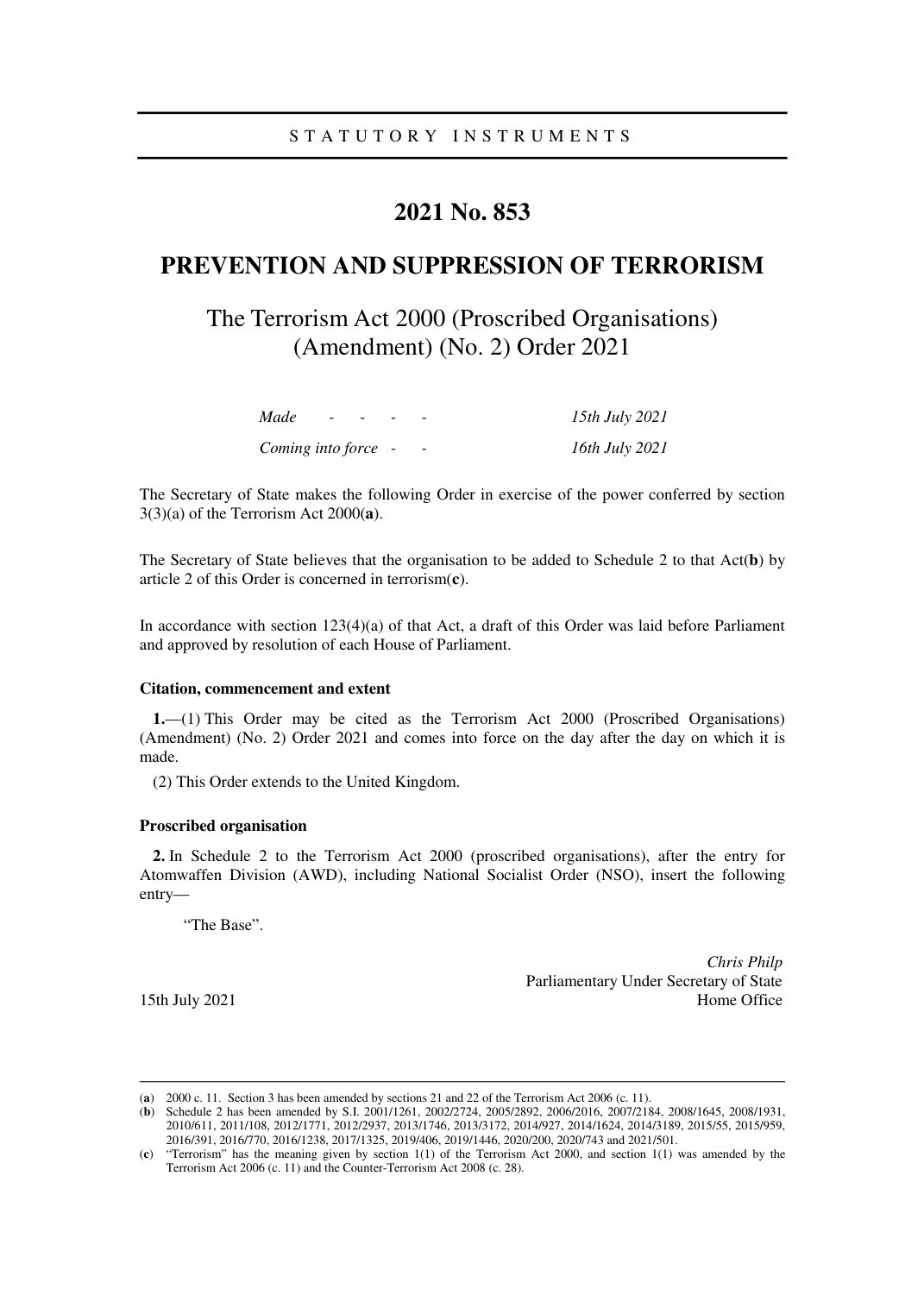
United States v. Bilbrough: April 7, 2020 pretrial detention memorandum, PDF page 1; not a final conviction
United States v. Bilbrough: April 7, 2020 pretrial detention memorandum, PDF page 1; not a final conviction. Image credit ↗

Chapter 01 / 2018–2019

A network organized around collapse

The Base emerged in 2018 as a white-supremacist network seeking a racial state through social breakdown. Online recruitment and private conversations brought together people who also met at training camps. The federal proceedings followed Brian Mark Lemley Jr., Patrik Jordan Mathews and William Garfield Bilbrough IV, whose cooperation crossed several states and the Canadian border. Their case shows how a dispersed organization could supply practical help even without a single, easily drawn command hierarchy.

The ideology commonly called accelerationism treated escalating conflict as a route to political transformation. Rhetoric about an impending collapse was joined to a desire to make that collapse happen. In the Maryland and Delaware record, investigators linked those ambitions to firearms activity, concealment and discussions of violence. The ideology helps explain the defendants’ stated purposes; the criminal case nevertheless depended on individual acts, knowledge and agreements.

The men did not enter the network with identical roles. Lemley was a U.S. Army veteran. Mathews had served as a Canadian military reservist. Bilbrough was a young Maryland man who attended camps and helped move Mathews after he entered the United States unlawfully. Reporting and the court record connect military experience, recruitment and training without establishing that every person with such a background accepted the group’s goals. The two veterans’ later firearms cases and Bilbrough’s transportation case would produce different judgments.

A regional Georgia camp in early August 2019 helped establish the relationships that later mattered. After the Winnipeg Free Press exposed Mathews’s affiliation that month, his movement into the United States gave Lemley and Bilbrough a concrete decision to make: whether to assist him while knowing he lacked lawful status. Their subsequent travel and sheltering arrangements turned a shared political identity into a support network. The case’s central evidence follows that transition rather than treating membership in a chat room as a complete explanation of criminal responsibility.

Sources: S01 · S03 · S04 · S07 · S09 · S12

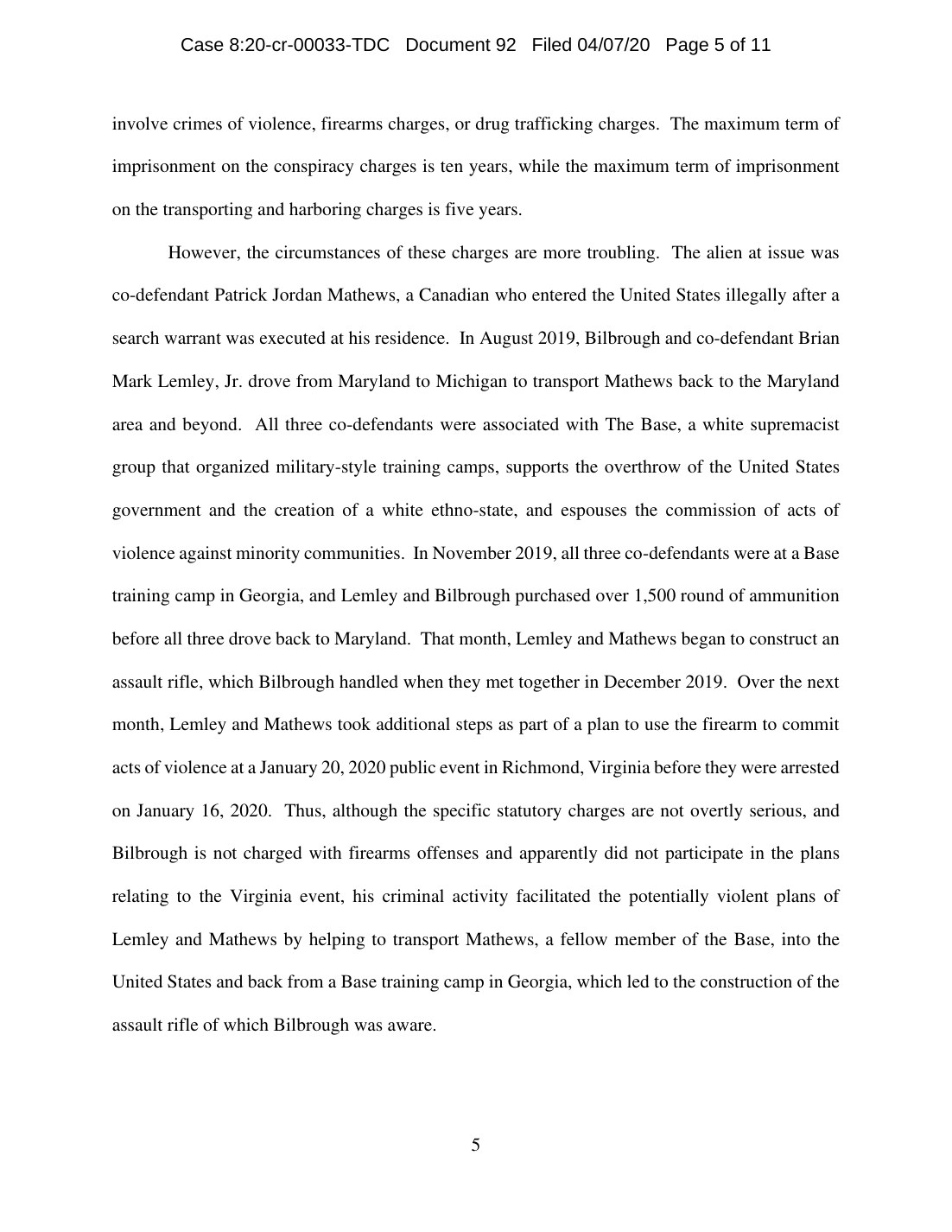
United States v. Bilbrough: April 7, 2020 pretrial detention memorandum, PDF page 5; not a final conviction
United States v. Bilbrough: April 7, 2020 pretrial detention memorandum, PDF page 5; not a final conviction. Image credit ↗

Chapter 02 / 2019–January 2020

Travel, shelter, and the move from talk to action

On 30 August 2019 Lemley and Bilbrough traveled from Maryland to southern Michigan to collect Mathews. Bilbrough later admitted that he knew Mathews had entered unlawfully and that the purpose was to let him remain safely on the East Coast and continue participating in The Base. The route through multiple states mattered because it demonstrated assistance rather than mere acquaintance. Later camp travel reconnected the same men in Georgia, and Lemley and Mathews established themselves in a Delaware apartment in November.

Firearms and ammunition became part of their practical cooperation. The plea records describe possession, construction of a rifle, range visits and the movement of a firearm across a state line with the intent to commit a felony. These admissions give the case an evidentiary foundation independent of a group label. They also require separate attribution: Bilbrough’s transportation plea was not a guilty plea to every weapons act committed by the other two.

Federal agents obtained court-authorized surveillance inside the Delaware apartment. The government later relied on recorded discussions of provoking violence around the planned 20 January 2020 gun-rights rally in Richmond. In January, agents also observed firearms activity outside the apartment. The men were arrested on 16 January. As agents arrived, Lemley and Mathews destroyed their phones; their obstruction pleas admitted that they intended to impede the investigation and prosecution.

The rally itself subsequently proceeded peacefully. Its participants and organizers were not interchangeable with the men discussing violence. Defense lawyers also disputed the government’s characterization of the conversations, describing them as fantasy and arguing that an undercover employee pushed the men toward a plan. Those arguments mattered to the sentencing dispute about intent. They did not undo the admitted transportation, possession and obstruction conduct. The later court findings would address whether the record supported something more serious than offensive talk.

Sources: S01 · S02 · S03 · S04 · S07 · S12

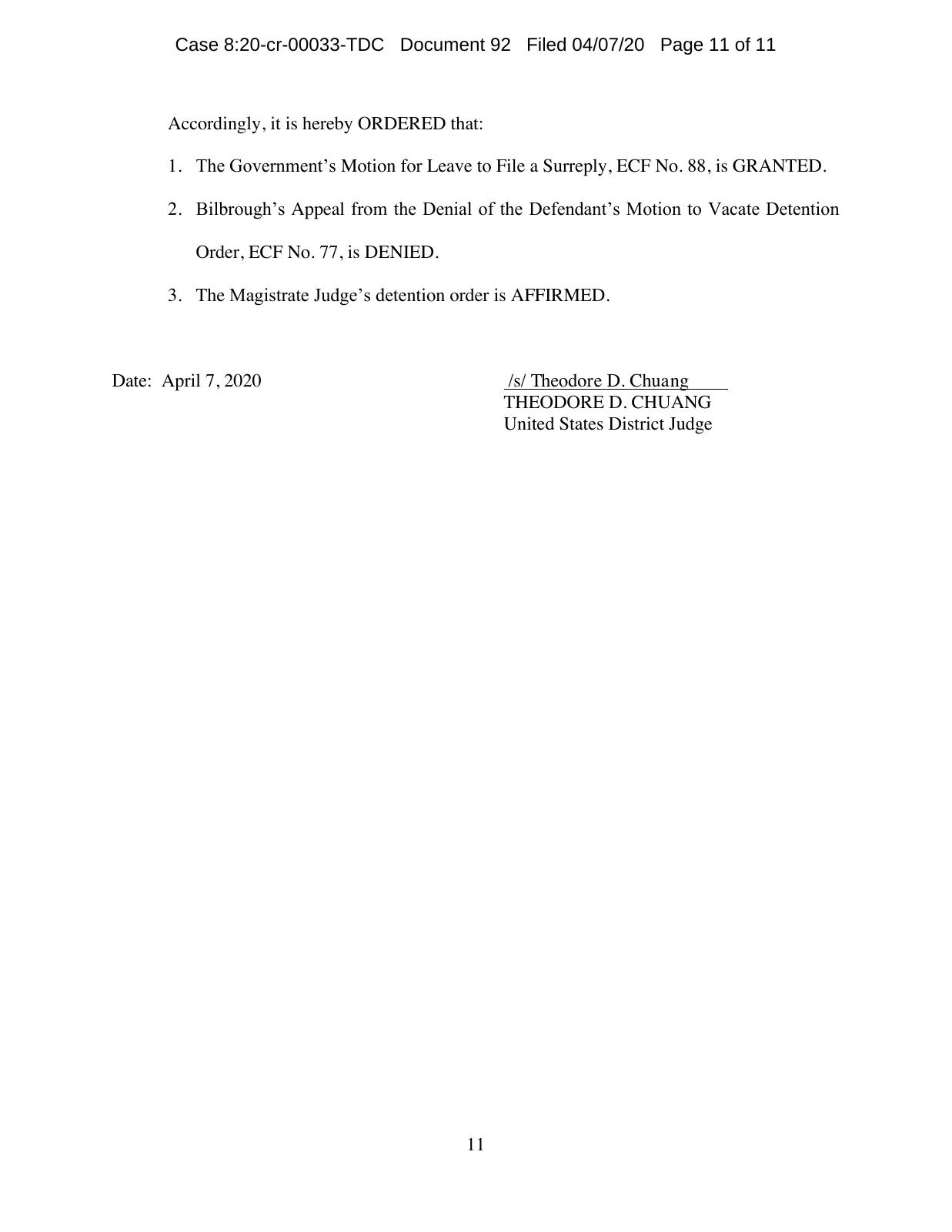
United States v. Bilbrough, 7 April 2020 detention-review disposition, original PDF page 11
Judge Chuang’s April 7, 2020 order affirms detention pending trial. Its disposition is not a conviction or the December sentence. Image credit ↗

Chapter 03 / January–April 2020

Before guilt, a different question about release

The arrests did not immediately produce the later guilty pleas. Bilbrough first faced a dispute over whether he would remain detained while his case proceeded. On January 22, 2020, a magistrate judge ordered detention. After further requests for review, Bilbrough asked District Judge Theodore Chuang to reconsider. The April 7 memorandum records an adversarial decision: the court reviewed earlier hearings, briefs and exhibits, then affirmed detention. The question at that point concerned release before trial, not whether a jury had found every allegation true.

Bilbrough’s charged role mattered inside that assessment. The opinion expressly says he was not charged with firearms offenses and apparently had not participated in the specific Virginia-event plans. Yet the court also concluded that his help transporting Mathews facilitated the other men’s potentially violent activity. This was a case in which a narrower role still had practical consequences. The distinction prevented two easy but conflicting summaries: that he was interchangeable with the firearms defendants, or that providing knowing assistance became inconsequential because he had not devised their particular plan.

The defense proposed release to his grandmother’s custody with financial security. The court considered his long-standing local ties and lack of a prior record, but found the proposed arrangement inadequate. It relied on evidence about his desire to travel abroad, his previous conduct despite family efforts to restrain him, and access to people who could help him evade detection. The network had become relevant in two different ways: as the means by which Mathews had received assistance, and as a reason the judge believed Bilbrough could obtain assistance himself. Those were judicial assessments of risk, not new completed crimes.

The coronavirus pandemic made the review more than an abstract debate about a network. The court treated detention conditions and the defendant’s individual circumstances as relevant, while rejecting an argument that the burden of other detainees seeking release should determine his case. It nevertheless kept him detained. Months later, his transportation-related guilty plea and five-year sentence supplied a different procedural outcome. Reading the dated decisions together preserves a development that a single conviction caption would hide: allegations were assessed for one purpose in April, and admissions resolved particular charges in December.

Sources: S04 · S03

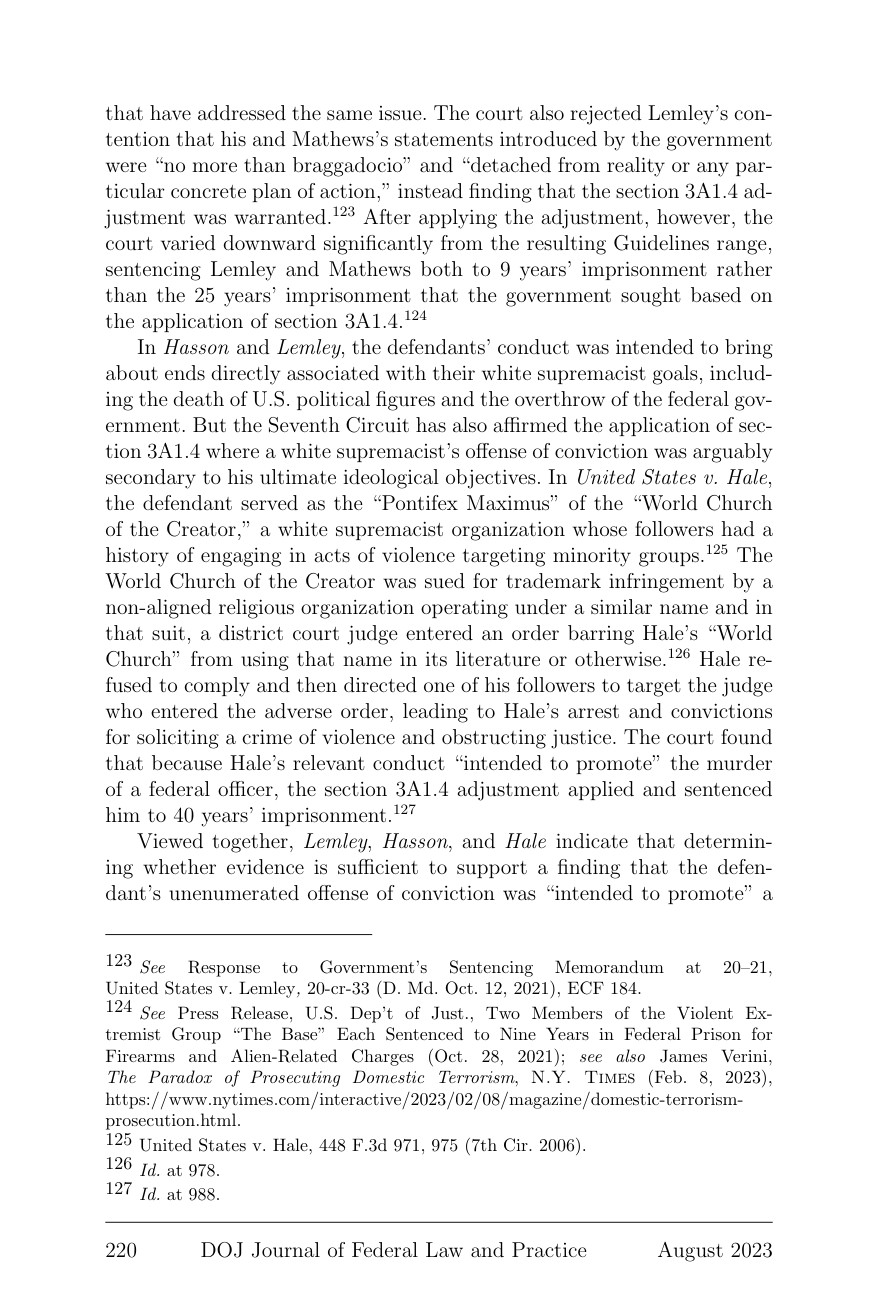
DOJ Journal of Federal Law and Practice, August 2023, printed page 220
DOJ Journal of Federal Law and Practice, August 2023, printed page 220: a prosecution-side legal analysis records the court’s rejection of the boasting argument and its sentence below the term sought by prosecutors. Image credit ↗

Chapter 04 / 2020–2021

Three defendants, distinct judgments

Bilbrough pleaded guilty on 8 December 2020 to conspiring to transport an alien and transporting an alien, and received five years in prison. His admissions included knowledge of Mathews’s unlawful entry and intended subversive or serious criminal activity. The earlier detention-review order had expressly distinguished his role: he was not charged with the firearms offenses and apparently did not participate in the specific Richmond plans. That narrower role did not make the assistance harmless, but it prevented a sound account from assigning all three defendants the same conduct.

Lemley and Mathews pleaded guilty in June 2021. Lemley’s offenses in Maryland and Delaware included transporting and harboring Mathews, firearm-related offenses and obstruction. Mathews’s offenses included unlawful firearm possession, interstate transportation of a firearm with intent to commit a felony and obstruction. The two men did not plead guilty to identical counts. Their firearm and obstruction admissions stood even as the parties disputed how the surrounding conversations should affect punishment.

At sentencing, Judge Theodore Chuang found that their crimes were intended to promote federal terrorism crimes. The government’s 2023 legal journal explains the disputed sentencing adjustment: a conviction need not itself bear a terrorism label when the proved conduct was intended to promote a specified terrorism offense. Defense counsel argued that the conversations were boasting detached from a concrete plan; the court rejected that reading. This was a sentencing determination, not a jury verdict that the men completed an attack in Richmond.

On 28 October 2021 each man received nine years, followed by three years of supervised release. The sentences were substantially below the twenty-five years sought by the government. That difference matters as much as the adjustment itself. The court accepted the terrorism-purpose finding while imposing a lower term than prosecutors requested. The legal record therefore contains admissions, contested intent, a judicial finding and an exercise of sentencing judgment, rather than an all-or-nothing choice between the prosecution’s rhetoric and the defense’s account.

Sources: S01 · S02 · S03 · S04 · S05 · S12

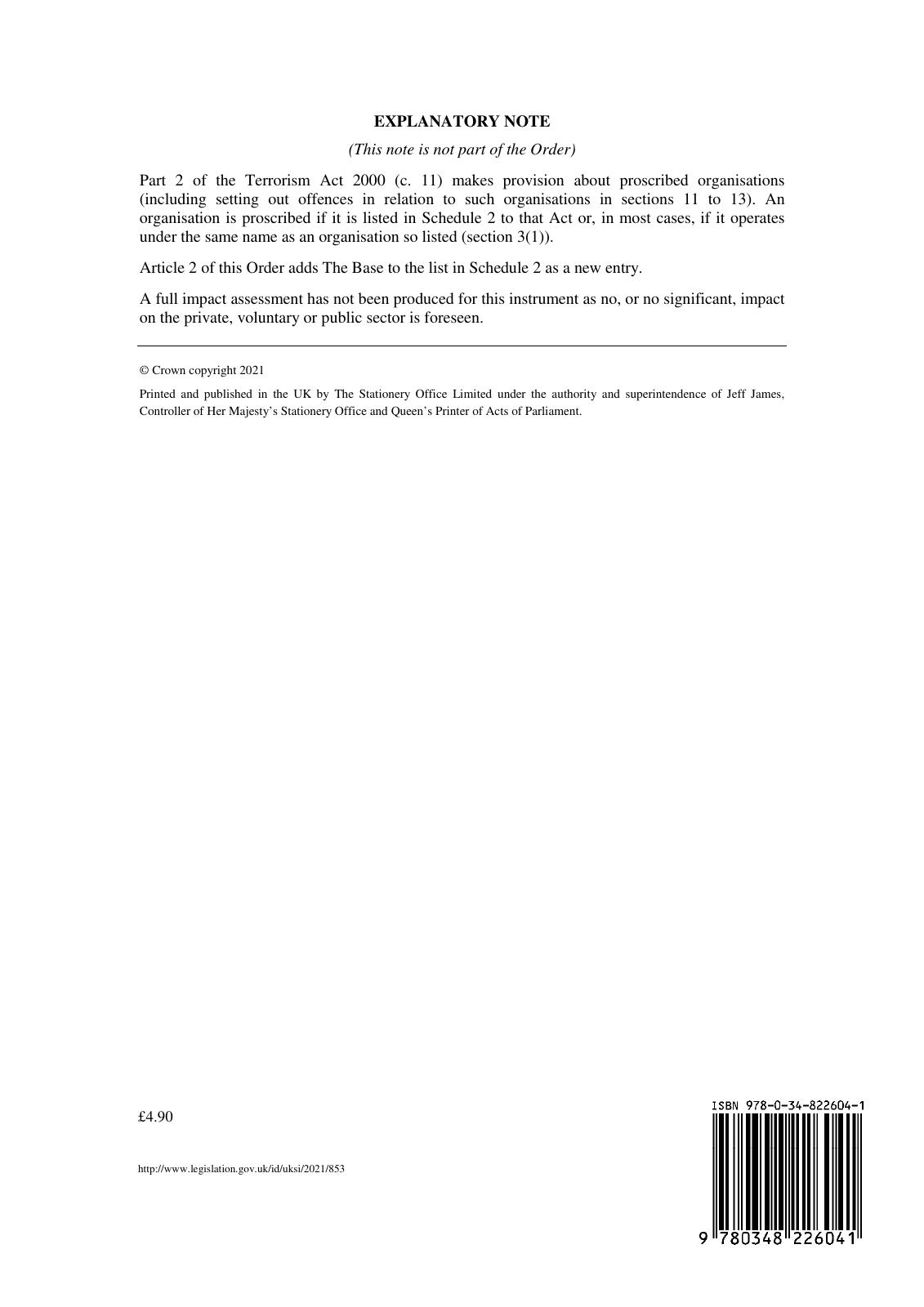
SI 2021/853, explanatory note on UK proscription, original PDF page 2
The UK instrument’s explanatory note says it is not part of the Order. The operative first page records the new entry and its 16 July 2021 commencement. Crown copyright 2021, OGLv 3. Image credit ↗

Chapter 05 / 2021–2024

The organization crosses a different legal threshold

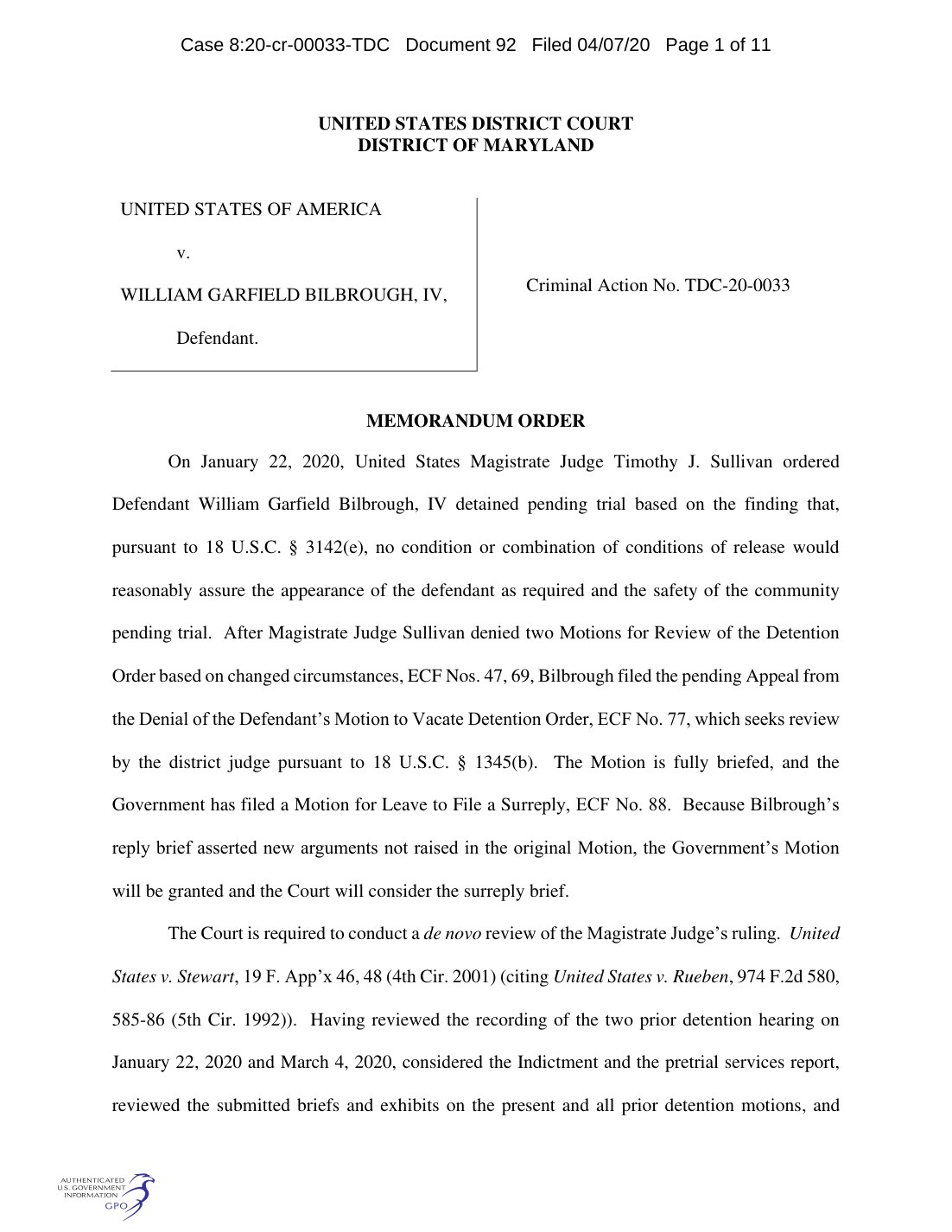
While the federal defendants awaited sentencing, the United Kingdom acted against the organization itself. The 2021 statutory instrument is brief: made on 15 July, effective on 16 July, it inserts The Base into Schedule 2 of the Terrorism Act 2000. It records the Secretary of State’s belief that the organization was concerned in terrorism and the approval of both Houses of Parliament. This was a change in the organization’s legal treatment in a specified jurisdiction, rather than another count in the Maryland prosecution.

The instrument’s second page explains the relationship between the amendment and the existing proscription framework, and explicitly identifies that explanation as a note rather than part of the Order. The Home Office’s 16 Julyannouncement presents proscription as a restriction on membership and inviting support, with criminal penalties under the applicable framework. Neither document supplies a judicial finding about each person ever associated with the name. The distinction becomes especially important when a transnational organization is discussed through individual cases: an organizational listing and an individual conviction are different legal acts.

On 26 July 2024, the Council of the European Union announced another kind of measure. Its official account says The Base was added to the EU Terrorist List, with asset-freezing and restrictions on making financial resources available. The accompanying Council Decision 2024/2056 places the group in its annex and takes effect on publication. The decision also describes regular review of the list and refers to decisions by competent authorities. It establishes a dated institutional determination. The English legal text and the Council’s explanation do not give this guide a complete account of every underlying national file.

These records make the wider history concrete without settling it through a single label. The British measure, the European financial restrictions and the American sentences address different subjects through different procedures. Their dates show that official attention exceeded one disrupted apartment cluster. They do not measure how many adherents remained, prove an unchanged international command structure, or decide the culpability of an uncharged person. This chapter describes the 2021 and 2024 actions as historical events; it does not treat an older order as a complete statement of the law or organizational membership in 2026.

Sources: S10 · S11 · S13 · S14

The Base UK proscription order, SI 2021/853, first page
UK Statutory Instrument 2021 No.853, first page: the proscription order took effect 16 July 2021. An organizational designation is a separate legal act from the U.S. defendants’ convictions. Image credit ↗

Chapter 06 / 2021–2026

A disrupted cell is not an erased movement

The federal arrests interrupted this cluster before the Richmond rally. The guilty pleas and sentences established serious criminal conduct, but neither a conviction nor a press announcement could measure precisely what would have happened without intervention. The evidence supports a documented prevention effort and a court finding about intended terrorism. It does not turn every proposed future act into a completed event or provide an exact count of lives saved.

The broader network also produced separate proceedings. In Michigan, Justen Watkins pleaded guilty in connection with intimidation at a family’s home in Dexter in December 2019. An August 2022 state announcement records a resentencing of 56 months to 20 years for gang-membership felonies. It also identifies a distinct civil-disorder training case. Those defendants, local acts and state-law judgments are evidence of a wider history; they are not additional counts in the Maryland and Delaware cases.

Other governments used organizational measures. A United Kingdom order made on 15 July 2021 added The Base to the list of proscribed organizations and took effect the following day. The order records the Home Secretary’s belief that the group was concerned in terrorism and approval by both Houses of Parliament. It establishes a legal designation in that jurisdiction. It is different from a U.S. criminal conviction of an individual, and its date does not establish when every member joined or which specific offense each committed.

These different records resist a simple “group eliminated” ending. A dispersed network can lose a dangerous cluster while retaining a name, relationships or adherents elsewhere. Conversely, the existence of another prosecution or a foreign designation does not prove that every later actor followed a common operational command. The historical conclusion is more specific: relationships supplied transport, shelter and training; two defendants’ admitted conduct was linked at sentencing to intended terrorism; intervention disrupted their preparations. A current membership count, present custody claim or 2026 command map would require newer and more comprehensive evidence than these dated records provide.

Sources: S01 · S05 · S06 · S10 · S11

02 / The record

The load-bearing chain

Relationships, knowing assistance, admitted acts and distinct legal decisions.

The strongest chain identifies named people, practical cooperation, particular plea admissions and the sentencing purpose finding. It preserves Bilbrough’s narrower role, the pretrial nature of his detention order, a peaceful rally and the difference between individual judgments and organizational measures. The record establishes a disrupted cluster; the global command structure and counterfactual casualties require separate evidence.

Sources: S01 · S02 · S03 · S04 · S05 · S10 · S13 · S14

Evidence support concerns the hinge as stated. Cultural prominence remains unmeasured. Official emphasis, an alarming recorded quotation and a podcast’s selection are not audience surveys. No popularity rank is silently borrowed from a legal finding.

P1

A dispersed network makes contact practical

Evidence support High for the named contacts; limited for global direction

Cultural prominence Unmeasured

Online communication and regional camps connected men who lived in different places. The August 2019 Georgia camp preceded their later efforts to move Mathews after public exposure of his affiliation. Network participation thus helps explain how potential helpers were found.

The documentary yardstick

DOJ plea/sentencing accounts and the detention opinion identify camps, contacts and travel. They support specific cooperation, not a fully reconstructed global hierarchy.

Where it fits

Chapters 1–2: relationships before assistance.

Why it is critical

Without these relationships, the case’s travel and shelter chain would be harder to explain. The network is relevant through what it enabled, rather than as a substitute for individual culpability.

If this hinge were removed

Without the relationships, the guide loses the documented explanation of how helpers were located. Removing a hypothesized central order would not remove evidence of those actual contacts.

Dependencies

The 2018 organizational history, camp accounts and each person’s contacts. Similar ideology alone cannot show that one person knew of another’s criminal plan.

What rival readings must explain

A speech-only account must explain later physical cooperation. A single-command account must establish actual directions and knowledge. Authenticated communications and recruitment records could clarify or change the command structure.

Gaps and disputes

No complete internal membership, recruitment or command archive; a coalition is not proof that all participants knew the same plans.

Evidence-rank grounds

The specific primary legal or official case records cited support the hinge as worded; attributed institutional claims and unresolved context remain distinct.

Cultural-rank grounds

No representative audience or reception measure ranks this hinge in cultural memory. A case’s inclusion in news, a podcast or an official announcement does not provide that measurement.

Sources: S01 · S03 · S04

P2

Knowledge turns a lift into criminal assistance

Evidence support High for the admitted individual conduct

Cultural prominence Unmeasured

Bilbrough admitted knowing that Mathews had entered unlawfully and helping transport him so he could remain and continue his activity. The August 2019 trip from Maryland to Michigan and later camp journeys anchor the assistance in time and place.

The documentary yardstick

The December 2020 official plea account identifies his admitted knowledge and transportation purpose. The April order is an earlier risk assessment, not the final plea.

Where it fits

Chapter 2 and the later Bilbrough outcome: knowing assistance.

Why it is critical

Knowledge and purpose distinguish the admitted offense from mere friendship or innocent transportation. This is also where Bilbrough’s case separates from the other defendants’ firearm cases.

If this hinge were removed

Without the knowledge and assistance, the case would have association and travel but lack this admitted offense. Removing Bilbrough from another man’s plan would not erase his own plea.

Dependencies

P1’s relationship; Mathews’s status, the helpers’ knowledge and actual travel. Plea admissions give these propositions a different status from earlier allegations.

What rival readings must explain

A benign-assistance theory needs evidence contradicting knowledge or the agreed purpose. New authenticated communications or a court order correcting admissions would matter; a general denial would not override a plea.

Gaps and disputes

No full plea colloquy or complete exhibit set; the record assembled here does not identify every helper.

Evidence-rank grounds

The specific primary legal or official case records cited support the hinge as worded; attributed institutional claims and unresolved context remain distinct.

Cultural-rank grounds

No representative audience or reception measure ranks this hinge in cultural memory. A case’s inclusion in news, a podcast or an official announcement does not provide that measurement.

Sources: S03 · S04

P3

Preparations and recordings provide evidence beyond belief

Evidence support High for admissions; context-sensitive for projected plans

Cultural prominence Unmeasured

Lemley and Mathews possessed and moved firearms, engaged in range activity and discussed violence while surveillance captured their conversations. Their later guilty pleas also admitted obstruction when they destroyed phones during the arrests.

The documentary yardstick

Official plea accounts establish particular firearms and obstruction admissions. Reporting and the later federal legal analysis preserve the disputed meaning of recorded discussions.

Where it fits

Chapters 2 and 4: conduct plus the context in which intent was disputed.

Why it is critical

The physical and admitted acts keep the case from resting entirely on racist beliefs. Recordings nevertheless require context: provocative or fantastical talk is not automatically an agreed, executable attack.

If this hinge were removed

Without preparations and admissions, the account would depend much more heavily on interpreting speech. Removing one contested conversation would not automatically erase the physical evidence or every admitted act.

Dependencies

P1–P2; authenticated recordings, dates, firearm observations and the exact pleas. The camera/microphone record and the undercover employee’s role should be distinguished.

What rival readings must explain

The strongest defense interpretation requires the complete sequence of recordings, prompts and responses. Evidence of editing or government initiation could change an intent assessment, but it would not by itself erase independently admitted firearms or obstruction offenses.

Gaps and disputes

No unabridged recording corpus or independent reconstruction of every undercover interaction. The guide does not treat discussion as a completed attack.

Evidence-rank grounds

The specific primary legal or official case records cited support the hinge as worded; attributed institutional claims and unresolved context remain distinct.

Cultural-rank grounds

No representative audience or reception measure ranks this hinge in cultural memory. A case’s inclusion in news, a podcast or an official announcement does not provide that measurement.

Sources: S01 · S02 · S04 · S12

P4

The court tests terrorism purpose at sentencing

Evidence support High for the reported disposition; bounded reconstruction of the hearing

Cultural prominence Unmeasured

The parties disagreed whether the statements reflected serious intended violence or fantasy encouraged by an undercover employee. The judge found intent to promote federal terrorism crimes, applied the adjustment and imposed nine-year terms rather than the twenty-five years sought by the government.

The documentary yardstick

The sentencing announcement and federal staff legal analysis distinguish the adjustment, the nine-year terms and the twenty-five years requested. The defense’s fantasy/pressure argument is reported, not a judicial holding.

Where it fits

Chapter 4: the legal purpose finding and the court’s sentencing judgment.

Why it is critical

The finding explains the sentencing result without rewriting the offense titles as a completed terrorist attack. The sentence below the request also shows that accepting the finding did not require accepting every prosecutorial demand.

If this hinge were removed

Without the finding, this account could report ordinary offense titles but not why the sentencing court treated the admitted conduct as intended to promote terrorism. The lower term would still require its own explanation.

Dependencies

P3’s conduct and context; the sentencing hearing and legal standard. The DOJ journal is an institutional analysis of the court’s decision, not an independent account of every contested fact.

What rival readings must explain

The fantasy/pressure account must handle both the recordings and preparatory acts; the prosecution account must preserve the court’s lower sentence. An appellate order, complete hearing transcript or authenticated omitted exchange could alter the assessment.

Gaps and disputes

Complete hearing transcript, original sentencing reasons and any later appeals not comprehensively acquired. A nine-year sentence is not a current custody check.

Evidence-rank grounds

The specific primary legal or official case records cited support the hinge as worded; attributed institutional claims and unresolved context remain distinct.

Cultural-rank grounds

No representative audience or reception measure ranks this hinge in cultural memory. A case’s inclusion in news, a podcast or an official announcement does not provide that measurement.

Sources: S01 · S05 · S12

P5

Disruption and designation have different reach

Evidence support High for the dated measures; current extent unknown

Cultural prominence Unmeasured

The January 2020 arrests stopped this cluster before the Richmond rally. Michigan prosecutions concerned other people and incidents. The 2021 UK order concerned the organization’s legal status in that jurisdiction. The Council of the EU added the organization to its terrorist list in July 2024, a separate historical financial-restrictions measure.

The documentary yardstick

The original UK order, actual EU 2024 decision and Council explanation identify different legal measures. Michigan’s official account identifies a separate state proceeding.

Where it fits

Chapters 5–6: separate organizational measures and remaining questions.

Why it is critical

These outcomes cannot be added together as if they were one verdict or proof of global dissolution. Their different reach is central to assessing what the intervention accomplished.

If this hinge were removed

Without these separate records, the wider history would be reduced to the federal apartment case. Removing an alleged continuing command would not undo a historical designation or prove worldwide dissolution.

Dependencies

P1–P4’s individual chain; separate state judgments and the original UK instrument. A dated designation does not provide a current membership census.

What rival readings must explain

A global-takedown theory needs evidence of dissolution across the network. A continued-network theory needs identifiable later people, communication or acts. New authenticated organizational records and later judgments could change the boundary.

Gaps and disputes

No 2026 membership/leadership audit or complete review of successor designation instruments. Historical listings are not a command map.

Evidence-rank grounds

The specific primary legal or official case records cited support the hinge as worded; attributed institutional claims and unresolved context remain distinct.

Cultural-rank grounds

No representative audience or reception measure ranks this hinge in cultural memory. A case’s inclusion in news, a podcast or an official announcement does not provide that measurement.

Sources: S01 · S06 · S10 · S11 · S13 · S14

P6

A pretrial decision recognizes unequal roles

Evidence support High for the ruling and its stated distinctions

Cultural prominence Unmeasured

The April 2020 Bilbrough order keeps him detained while expressly distinguishing his charges and apparent nonparticipation in the specific Virginia-event plans. It nevertheless finds his assistance and available network relevant to flight and danger.

The documentary yardstick

Actual Document 92 addresses release conditions, flight, danger and the pandemic, then affirms detention. The later December plea is a different event.

Where it fits

A parallel branch from P2/P3, developed in chapter 3 before the later plea and sentencing.

Why it is critical

This prevents the early detention decision from being displayed as a final conviction or proof that all three men had identical roles.

If this hinge were removed

The main conviction chain would survive, but the account would lose this contemporaneous judicial distinction between a narrower charged role and consequential assistance. It could no longer explain the actual release dispute from this order.

Dependencies

P2’s knowing assistance and P3’s surrounding conduct supply context; the order is not a substitute for the later plea or proof of every other defendant’s act.

What rival readings must explain

A collective-guilt reading must account for the court’s narrower description. A harmless-helper reading must address the specific risk reasoning; disagreement does not itself reverse the order.

Gaps and disputes

Earlier hearing recordings and the full submitted exhibits were not independently audited. The guide describes the judge’s written assessment, not a new finding of guilt.

Evidence-rank grounds

The original eleven-page federal opinion, including role discussion, proposed conditions and signed disposition, was read.

Cultural-rank grounds

No reception measure establishes how this detention decision ranks in public memory against the later sentencing or organizational designations.

Sources: S04 · S03

03 / The record

How the accounts branch

Documented source relationships, competing interpretations and recurring hinges. Similar concerns do not establish borrowing.

Contacts become a documented assistance chain

2019 camps and contacts → Mathews’s exposure and unlawful entry → transport and shelter → later plea admissions.

Borrowing and dependence

The detention order and official plea/sentencing accounts identify overlapping events, but serve different procedural purposes. The official sentencing account explicitly refers back to a Winnipeg reporter’s exposure of Mathews; that reference is not a full audit of the reporter’s investigation.

Branch and limit

Practical cooperation supports a network account. It does not, without instructions or knowledge records, prove a single international command for every participant.

Recurring hinges: P1 · P2 · P3

Sources: S01 · S03 · S04

One record passes through several legal thresholds

Investigation and arrest → Bilbrough detention review → distinct pleas → Lemley/Mathews sentencing-purpose finding → 2023 federal legal analysis.

Borrowing and dependence

Cella and Heeren’s article expressly cites plea agreements, defense response and case materials. Its discussion is an identifiable legal interpretation of an earlier proceeding, not a second independent trial of the allegations.

Branch and limit

A detention finding concerns release, a plea admits specified conduct, and a sentencing finding affects punishment. Their repeated appearance in later summaries does not merge the standards.

Recurring hinges: P2 · P3 · P4 · P6

Sources: S03 · S04 · S05

Fantasy and pressure form a real rival explanation

Recorded discussions → defense filing arguing imaginary scenarios and undercover pressure → sentencing court rejects the boasting account → contemporary reporting preserves the dispute.

Borrowing and dependence

The 2023 legal analysis quotes and cites the defense’s response. FOX5’s contemporaneous report also describes the pressure argument. This is a documented adversarial lineage rather than an invented theory assigned to unnamed skeptics.

Branch and limit

The argument challenges how speech and surrounding conduct demonstrate settled intent. It need not deny the admitted firearms or obstruction offenses; a broader claim that all evidence was manufactured requires additional proof.

Recurring hinges: P3 · P4

Sources: S05 · S12

Baseless retells several cases at different stages

Recordings and reporting → the Sounds Like Hate investigation → Baseless: Update transcript after the 2021 sentencing.

Borrowing and dependence

The actual update transcript combines hosts’ narration, a producer’s sentencing observations, Ryan Thorpe’s reporting and a prosecutor’s public remarks. These are identified contributions, not interchangeable independent corroboration for every claim.

Branch and limit

The update distinguishes gun-related convictions from a domestic-terrorism conviction and moves among state and federal cases. Its descriptions of ongoing cases are dated to the episode, not a 2026 case-status audit.

Recurring hinges: P1 · P3 · P4 · P5

Sources: S08 · S01 · S06

A network name enters separate national and European instruments

UK 2021 amendment and announcement → EU July 2024 decision and institutional explanation.

Borrowing and dependence

Each instrument identifies The Base, but the records inspected here do not demonstrate that the EU copied the UK’s underlying dossier. The EU decision refers to competent-authority decisions without giving this guide every underlying national file.

Branch and limit

The recurrence of a name is an actual documentary relationship. It is not a current membership total, an individual conviction or proof of direct operational control over every cell.

Recurring hinges: P1 · P5

Sources: S10 · S11 · S13 · S14

04 / The record

Four rival paths through the same record

The strongest version first, followed by the hinges it accepts, the inferences it would remove or revise and the evidence it needs to add. Rival is not endorsement.

Interpretation 01

A practical support network for intended violence

Supported for the prosecuted cluster

The strongest version

The group’s relationships provided transport, shelter and training, then connected to admitted firearms and obstruction conduct. The sentencing court found that Lemley and Mathews acted to promote terrorism crimes.

Accept

P1 · P2 · P3 · P4

P1–P4, while retaining Bilbrough’s narrower conduct and the distinct plea counts.

Remove or revise

Remove a speech-only explanation for admitted practical conduct, while also removing a presumption that every member shared every plan.

Add to the path

Add authenticated instructions and participant knowledge for any proposed higher command or additional actor.

What must be wrong or incomplete

A support-network explanation overreaches if it treats contacts as sufficient proof of a common plan; the person-specific links must do the work.

Must still explain

A network explanation cannot make every member responsible for every plan. It also cannot treat projected casualties as observed outcomes.

Assessment

Admissions, travel, observed activity and the sentencing finding support more than a speech-only account. They establish a specific cluster’s conduct rather than a complete global command map.

What would change this assessment

Authenticated instructions or additional participants’ communications could expand or narrow who knew and directed what. Later judicial orders could change the legal outcome.

Sources: S01 · S02 · S03 · S04

Interpretation 02

Boasting and undercover pressure overstated the attack plan

A documented defense argument; rejected at sentencing

The strongest version

Defense counsel argued that the men’s violent statements described imaginary scenarios and that an undercover employee pressed them to formulate a plan. Disturbing talk by troubled participants might overstate their settled intention or operational capacity.

Accept

P2 · P3

The admitted firearms, transport and obstruction acts at P2–P3. This interpretation challenges how surrounding discussions proved terrorism purpose; it does not require denying every offense.

Remove or revise

Revise the inference from conversations to settled attack purpose in P4; do not erase the separate admissions simply because a conversation is contested.

Add to the path

Add unabridged recordings, the full sequence of undercover prompts and responses, and evidence of actual capacity or material omission.

What must be wrong or incomplete

The argument must explain why the physical preparation and obstruction admissions coexist with the claimed fantasy. The court rejected the characterization; an alternative historical assessment needs more than a general denial.

Must still explain

It must reconcile the full sequence of recorded statements, preparations and destruction of phones. The court rejected the characterization of the discussions as mere boasting.

Assessment

Contemporary court reporting preserves the defense position; the DOJ legal analysis records the adverse judicial finding. Full recordings and a complete independent trial-level record would allow a richer assessment than the excerpts assembled here.

What would change this assessment

Authenticated unabridged exchanges showing government initiation, misleading editing or a significant omission would matter. A general assertion that everyone was joking would not settle the physical and admitted evidence.

Sources: S01 · S04 · S05 · S12

Interpretation 03

Ordinary offenses became a prevention tool

Supported legal mechanism, with limits

The strongest version

Firearms, transportation and obstruction laws permitted intervention before a completed attack. The sentencing adjustment could address intended terrorism even though the offenses of conviction were not themselves enumerated terrorism crimes.

Accept

P2 · P3 · P4 · P6

P2–P4 and the absence of a completed Richmond attack.

Remove or revise

Remove a completed-attack account and any conflation of pretrial risk, plea admissions and sentencing purpose.

Add to the path

Add complete hearing reasons and an evidence-based account of the capacities interrupted before estimating what intervention prevented.

What must be wrong or incomplete

A prevention account becomes too strong when it converts projected casualties into observed lives saved or assumes prosecutors’ requested sentence was the court’s judgment.

Must still explain

The mechanism must not collapse distinct legal standards. A detention assessment, plea admission and sentencing finding answer different questions, and prevention estimates remain counterfactual.

Assessment

The dated court order, plea accounts and later legal analysis explain those stages. The lower sentence than prosecutors sought demonstrates judicial assessment rather than automatic adoption of a demand.

What would change this assessment

The hearing transcript, appellate rulings or reliable evidence about the surveillance’s completeness could refine the legal and historical account. Evidence about actual capacity would bear on prevention claims.

Sources: S01 · S03 · S04 · S05

Interpretation 04

A disrupted cluster left a wider organizational question

Supported scope limit; current extent unknown

The strongest version

Other U.S. proceedings and a foreign proscription show that the group’s history exceeded the three federal defendants. A dispersed organization can lose a cell while its name or relationships survive elsewhere.

Accept

P1 · P5

The consequential federal disruption at P5 and the individual pleas at P2–P4.

Remove or revise

Remove worldwide elimination as an inference from a local arrest, and remove unchanged global command as an inference from a separate case or designation.

Add to the path

Add authenticated later recruitment, financing, leadership communications and actor-specific acts, with dates and jurisdiction.

What must be wrong or incomplete

A continuing-network claim must show continuity rather than repeated branding. A dissolution claim must account for the separate later measures without treating them as a current intelligence census.

Must still explain

Separate cases do not by themselves establish a unified operational command or prove an unchanged organization persists today.

Assessment

The Michigan account and original UK order establish specific additional acts and a designation. They are not a 2026 membership survey or evidence of every later allegation.

What would change this assessment

Authenticated later recruitment, direction, finances and participant records would test actual continuity. Conversely, credible organizational dissolution evidence would narrow it.

Sources: S01 · S06 · S10 · S11
05 / The record

Which account emphasizes which hinge

Six inspected voices: prosecutors, a pretrial judge, reported defense arguments, federal legal authors, the Baseless podcast hosts and the Council of the EU. Each card concerns a specific text; repeated claims are not automatically independent corroboration or a measured popularity rank.

The sentencing announcement: disruption as an institutional success

Actual retained substantive DOJ reader capture and relevant plea/sentence passages read; raw local HTML access responses are not treated as substantive originals.

Amplifies

Practical preparation, violent purpose and law-enforcement cooperation in disrupting the cluster.

Recasts

A detailed account of admitted conduct is framed as a successful prevention effort. The judicial purpose finding is distinct from agency rhetoric about what would have happened.

Does not establish in this inspected account

An observed casualty total prevented, a completed Richmond attack or a complete global takedown.

P1 · P3 · P4 · P5

Sources: S01

Chuang’s April order: individual role and release conditions

Original judicial PDF read, especially role, risk, proposed conditions and disposition; not the full exhibits or earlier hearing recordings.

Amplifies

Bilbrough’s narrower charges, actual assistance and the network’s relevance to flight and danger.

Recasts

The immediate question is whether proposed conditions adequately address risks before trial. A significant association is not automatically the same conduct as the other defendants’ plans.

Does not establish in this inspected account

A final conviction, an equal sentence for all three, or guilt for every allegation in the surrounding account.

P2 · P6

Sources: S04

The reported defense: talk, damage and undercover pressure

Actual contemporary FOX5/AP report’s defense passages read; not the complete defense filing or independent interview with counsel.

Amplifies

The argument that the scenarios were imaginary and an undercover employee pushed for a plan.

Recasts

Recorded language is offered as an unreliable measure of settled intent and capacity. This is the strongest documented rival to the prosecution’s interpretation of the discussions.

Does not establish in this inspected account

That a court accepted the argument, that all physical evidence was invented, or that the men withdrew their separate admissions.

P3 · P4

Sources: S12

Cella and Heeren: the sentencing mechanism in a later legal article

Actual selected article passages and federal-author affiliations/bios read; no full audit of the large journal or every underlying cited filing.

Amplifies

How conduct intended to promote terrorism can affect sentencing even when the conviction has another offense title.

Recasts

The case becomes a legal example. The same discussion records the rejection of boasting and the substantial downward variance from the government’s request.

Does not establish in this inspected account

An independent re-investigation of every conversation, a jury’s completed-attack verdict or every later appellate outcome.

P3 · P4

Sources: S05

Paksima and Latty’s Baseless: Update: a story across cases

Actual retained published full transcript read; no audio playback or audit of the complete earlier podcast season.

Amplifies

Connections among people, recorded extremist statements and cases in different states. It identifies a producer present at sentencing and reporting by Ryan Thorpe.

Recasts

Separate proceedings become part of a continuing investigation into the network. The transcript itself notes gun-related crimes rather than a domestic-terrorism conviction.

Does not establish in this inspected account

A current status for every then-pending state case, identical offenses among all defendants, or a representative measure of public belief.

P1 · P3 · P4 · P5

Sources: S08

The Council’s 2024 explanation: an organization enters a sanctions regime

Actual official July 2024 announcement read alongside the original decision’s operative text and annex. Historical action, not a current consolidated-list audit.

Amplifies

The addition of The Base and the financial restrictions associated with listing.

Recasts

The unit of action is an organization subject to a jurisdiction’s measures, rather than an individual’s American offense of conviction.

Does not establish in this inspected account

Every underlying national file, unchanged membership or leadership, or criminal guilt of an uncharged associate.

P5

Sources: S14

06 / The record

Find a thread in the file

Search the chapter and claim index; each result leads to the full passage and its sources.

07 / The record

People, not a single cast of mind

Open a record for the person’s role and supporting sources. Membership, speech or appearance in this record does not by itself establish an unlawful agreement.

LemleyBiographical record
Brian Mark Lemley Jr.Federal defendant

Pleaded guilty in 2021 to offenses in Maryland and Delaware and received a nine-year sentence. The court also made a finding about intent to promote terrorism crimes.

Sources: S01 · S02

MathewsBiographical record
Patrik Jordan MathewsFederal defendant

Canadian member who unlawfully entered the United States. His admitted firearms and obstruction offenses led to a nine-year sentence; the exact offense list differs from Lemley’s.

Sources: S01 · S02

IVBiographical record
William Garfield Bilbrough IVFederal defendant

Pleaded guilty to transportation-related offenses and received five years in December 2020. His detention review is reproduced as a pretrial record, not a conviction.

Sources: S03 · S04

ChuangBiographical record
Theodore D. ChuangU.S. district judge

Issued the detention-review order and sentenced the defendants. Distinguishing procedural decisions from final judgments is central to reading the case accurately.

Sources: S01 · S03 · S04

WatkinsBiographical record
Justen WatkinsDefendant in a separate Michigan case

The Michigan attorney general’s 2022 announcement records his guilty plea and resentencing for gang-membership felonies connected with intimidation in Dexter. That case and a separate civil-disorder training case are distinct from the Maryland/Delaware proceedings.

Sources: S06

08 / The record

Contacts, proceedings and separate measures

Horizontal spacing shows elapsed time; separate rows keep close events selectable. Scroll the graph on narrow screens. Exact dates are attributed where records conflict; month- and year-only dates preserve source precision.

20182020202220242026
A network emergesOrganization

The federal case describes online organizing and in-person connections beginning in 2018.

Sources: S01

Mathews’s affiliation is exposedReporting

The plea record describes the published reporting and the subsequent movement into the United States.

Sources: S01 · S02

The transport chain becomes concreteConduct

Bilbrough later admitted knowingly helping collect Mathews in Michigan and bring him east after unlawful entry so that he could continue his participation.

Sources: S03

Federal arrestsInvestigation

Three men are arrested before the Richmond rally. Charges at this stage are allegations.

Sources: S01 · S07

Bilbrough detention order affirmedPretrial court

Document 92 concerns release pending trial and does not itself constitute a conviction.

Sources: S04

Bilbrough pleads guilty and is sentencedCourt

His transportation-related plea results in five years in prison.

Sources: S03

Lemley and Mathews plead guiltyCourt

Their Maryland and Delaware charges include firearms, immigration, and obstruction-related conduct.

Sources: S02

UK proscription takes effectDesignation

SI 2021/853 adds The Base to the UKproscribed-organization list. It is an organizational legal measure, distinct from individual U.S. convictions.

Sources: S10 · S11

Two nine-year sentencesCourt

The judge also finds intent to promote federal terrorism crimes.

Sources: S01

A separate Michigan proceedingContext

Michigan announces a resentencing in a different Base-related case; the defendants and acts are not merged with the federal cluster.

Sources: S06

EU adds The Base to its terrorist listOrganizational measure

Council Decision 2024/2056 and the official announcement identify the historical listing and financial measures; not an individual U.S. conviction or current membership audit.

Sources: S13 · S14

09 / The record

What the evidence supports

Ratings apply to the precise proposition on the page. Unsupported means the assembled evidence does not establish a claim; it is not interchangeable with false.

Established

Lemley and Mathews each received nine years in 2021.

The October 28 sentencing announcement identifies the sentences and the judge’s terrorism-purpose finding.

Sources: S01

False

Bilbrough received the same sentence and offenses.

He received five years following a distinct transportation-related plea in December 2020.

Sources: S03

False

The April 2020 detention order was the final conviction.

Document 92 reviews detention pending trial. The guilty plea came later.

Sources: S04 · S03

Unsupported

The broader Richmond rally was a Base-organized operation.

The evidence establishes defendants’ discussions of violence around a separate public rally. The gathering itself proceeded peacefully. Those facts do not establish that its organizers or participants shared the defendants’ plan.

Sources: S07

Unsupported

The federal convictions prove every international branch vanished.

The record establishes the prosecution of this cluster. No comprehensive dissolution finding is claimed.

Sources: S01 · S06

Established

The court found intent to promote terrorism crimes.

The sentencing announcement and legal analysis identify that judicial finding; it is distinct from the precise offense titles.

Sources: S01 · S05

Established

Defense lawyers disputed the seriousness and origin of the violence discussions.

Contemporary court reporting records the fantasy and undercover-pressure arguments. The court rejected the mere-boasting interpretation at sentencing; recording the defense argument does not treat it as deciding proof.

Sources: S05 · S12

False

UK proscription was the same legal event as the U.S. defendants’ convictions.

The original order took effect 16 July 2021 and changed the group’s legal status in the UK. The American guilty pleas and sentences arose from different laws, conduct and proceedings.

Sources: S01 · S02 · S03 · S10

Unsupported

Bilbrough was convicted of participating in every Richmond attack discussion.

His plea concerned knowing transportation assistance. The detention order expressly distinguished his role from the specific Richmond planning attributed to the other two men.

Sources: S03 · S04

10 / The record

Hear the argument

Recorded voices, reported history, and documentary context. External media need an internet connection.

Reported audio and transcript

Baseless: Update ↗

Sounds Like Hate follows the investigation and other alleged cells. It supplies reported voices and context; allegations from other cases remain attributed and distinct.

11 / The record

How the story changed

Public memory tends to compress contested histories into a turning point. The records leave a less tidy sequence.

Arrest headlines

ThenInitial accounts describe an alleged threat.

ReconsideredPleas and sentences later established specific offenses; not every initial allegation should be copied forward as a conviction.

Sources: S01 · S02 · S03

A single takedown story

ThenThe three federal defendants offer a manageable narrative.

ReconsideredSeparate cells and state cases require separate records and outcomes.

Sources: S06 · S08

From an arrest label to distinct defendants

ThenEarly coverage placed three arrested men beneath one organizational name.

ReconsideredThe pleas and detention record distinguish Bilbrough’s transport assistance from the firearm offenses and sentencing findings concerning Lemley and Mathews.

Sources: S01 · S02 · S03 · S04

From competing sentencing claims to the actual result

ThenThe prosecution sought twenty-five-year terms while defense counsel disputed a concrete terrorist purpose.

ReconsideredThe court found the terrorism purpose but imposed nine years apiece. Acceptance of an adjustment and acceptance of the requested sentence were separate decisions.

Sources: S01 · S05 · S12

12 / The record

The questions still open

A documented limit is more useful than a confident number or a sweeping lineage the evidence cannot carry.

  1. What complete sentencing and appellate records further clarify contested factual findings?
  2. How did recruitment and exit differ across the network’s local clusters?
  3. Which later relationships can be documented without assuming continuity from a shared name?

13 / The record

Go back to the sources

Records, reporting, and firsthand accounts have different evidentiary roles. Each source note explains what it can establish and where caution is needed. Sources consulted for this edition on 25 October 2026; publisher restrictions may apply.

  1. S01

    Primary institutional record

    Two Members of The Base Each Sentenced to Nine Years ↗

    U.S. Attorney’s Office, District of Maryland

    October 28, 2021 announcement identifies convictions, sentences, and the separate judicial finding of intent to promote federal terrorism crimes.

  2. S02

    Primary institutional record

    Two Members of The Base Plead Guilty ↗

    U.S. Attorney’s Office, District of Maryland

    June 10, 2021 announcement distinguishes the offenses admitted by Lemley and Mathews.

  3. S03

    Primary institutional record

    Bilbrough Pleads Guilty and Receives Five Years ↗

    U.S. Attorney’s Office, District of Maryland

    December 8, 2020 account of Bilbrough’s plea, training-camp admissions, and sentence.

  4. S04

    Primary judicial order

    United States v. Bilbrough, Memorandum Order, April 7, 2020 ↗

    U.S. District Court for the District of Maryland

    Document 92 in TDC-20-0033: pretrial detention review, not a conviction or final sentencing judgment. Facsimiles in this guide retain that context.

  5. S05

    Primary institutional record

    DOJ Journal of Federal Law and Practice, August 2023 ↗

    U.S. Department of Justice

    Legal analysis at pages 219–220 discusses The Base case and the terrorism sentencing adjustment. It is a government legal analysis, not an independent historical assessment. Actual selected sentencing analysis printed 218–221 and author affiliations/bios read. Cella is DOJ Counterterrorism Trial Attorney; Heeren is EDNY Assistant U.S. Attorney. Selected page 220 is staff-authored analysis, not clearance of every article/privatework in volume.

  6. S06

    Primary institutional record

    The Base Leader Re-Sentenced in Washtenaw County ↗

    Michigan Department of Attorney General

    Separate state proceedings involving other defendants illustrate the network’s wider geography. Not merged with the Maryland federal case.

  7. S07

    Contemporary court reporting

    Neo-Nazi group members linked to Virginia attack plot plead guilty ↗

    Associated Press, via Maryland Daily Record

    Contemporary reporting distinguishes the extremist plans from the gun-rights rally, which proceeded peacefully.

  8. S08

    Reported audio / transcript

    Baseless: Update ↗

    Sounds Like Hate

    Reported audio and transcript about the investigation and other alleged cells. Allegations involving other cases are not imported as findings against these defendants. Actual retained full transcript read in this revision; no audio listened to or full earlier-season audit. Dated ongoing-case reports are not current status.

  9. S09

    Contextual analysis

    Accelerationism ↗

    Anti-Defamation League

    An advocacy organization’s framework for understanding the aim of provoking collapse through violence; not the legal basis for a conviction.

  10. S10

    Original statutory instrument

    Terrorism Act 2000 (Proscribed Organisations) (Amendment) (No.2) Order 2021, SI 2021/853 ↗

    UK Home Office / legislation.gov.uk

    Made 15 July 2021, in force 16 July 2021. Adds The Base to Schedule 2. Establishes dated UK designation, not a conviction of every member. Full two-page original included locally. Contains public sector information licensed under the Open Government Licence v 3.0.

  11. S11

    Contemporary government announcement

    Terror group The Base outlawed in the UK ↗

    UK Home Office,16 July 2021

    Confirms the order came into force that day. The orderS 10 is the primary legal source. Neither source is a present network census.

  12. S12

    Contemporary court reporting

    The Base defendants sentenced to nine years ↗

    FOX 5 DC with Associated Press contributions,28 October 2021

    Records prosecution and defense positions, including the claim of undercover pressure and the argument that conversations lacked a concrete plan. Those are attributed positions, weighed against admissions and the court’s terrorism-purpose finding.

  13. S13

    Original legal act / primary

    Council Decision (CFSP) 2024/2056, 26 July 2024 ↗

    Council of the European Union / Official Journal

    Actual English original HTML legal text read through the web reader: recitals, entry-into-force article and annex entry 22 for The Base. PDF/general record views presented a challenge; no CAPTCHA solved or complete underlying dossier acquired. Historical 2024 act, not a claim about current 2026 status.

  14. S14

    Official institutional explanation / primary

    Council adds The Base to EU Terrorist List, 26 July 2024 ↗

    Council of the European Union

    Actual official announcement read. Describes the addition, asset freeze and restriction on making funds available. Identifies Nazzaro as founder; institutional assertion distinguished from an individual criminal judgment. No 2026 membership or current-list audit.

Three selected federal judicial pages ↗ · Original two-page UK order ↗ · Open Government Licence v3.0 ↗

Images, documents & licensing

License ↗ · United States v. Bilbrough: April 7, 2020 pretrial detention memorandum, PDF page 1; not a final conviction — U.S. District Court, District of Maryland. Public domain in the United States: work of the U.S. federal government (17 USC 105).. Source & license ↗. Resized and re-encoded; embedded metadata removed. Each photograph retains the individual free license shown here; no endorsement is implied.

License ↗ · United States v. Bilbrough: April 7, 2020 pretrial detention memorandum, PDF page 5; not a final conviction — U.S. District Court, District of Maryland. Public domain in the United States: work of the U.S. federal government (17 USC 105).. Source & license ↗. Resized and re-encoded; embedded metadata removed. Each photograph retains the individual free license shown here; no endorsement is implied.

License ↗ · DOJ Journal of Federal Law and Practice, August 2023, printed page 220 — John D. Cella and Craig R. Heeren, U.S. Department of Justice; federal staff authors. Public domain: U.S. federal government authored work,17 USC 105. Source & license ↗. Resized and re-encoded; embedded metadata removed. Each photograph retains the individual free license shown here; no endorsement is implied.

License ↗ · The Base UK proscription order, SI 2021/853, first page — UK Home Office / legislation.gov.uk. Contains public sector information licensed under the Open Government Licence v 3.0. Crown copyright 2021. https://www.nationalarchives.gov.uk/doc/open-government-licence/version/3/. Source & license ↗. Resized and re-encoded; embedded metadata removed. Each photograph retains the individual free license shown here; no endorsement is implied.

License ↗ · United States v. Bilbrough, 7 April 2020 detention-review disposition, original PDF page 11 — U.S. District Court, District of Maryland / Judge Theodore D. Chuang. Public domain — U.S. federal judicial text, 17 U.S.C. 105. Source & license ↗. Resized and re-encoded; embedded metadata removed. Each photograph retains the individual free license shown here; no endorsement is implied.

License ↗ · SI 2021/853, explanatory note on UK proscription, original PDF page 2 — UK Home Office / The Stationery Office under Crown authority. Contains public sector information licensed under the Open Government Licence v3.0. Crown copyright 2021.. Source & license ↗. Resized and re-encoded; embedded metadata removed. Each photograph retains the individual free license shown here; no endorsement is implied.

Typefaces: Inter, Playfair Display and Source Serif 4, distributed locally under the SIL Open Font License. License texts are included in assets/fonts/. No AI-generated portraits are used.

Evidence

What each record establishes.

Plea accounts identify particular admissions. The written detention order concerns release before trial; the later sentencing-purpose finding is a different decision. Organizational instruments identify dated measures in particular jurisdictions. Those records do not make every associate guilty, establish a completed attack or provide a present membership census.

Publication status

Independent review copy.

This edition is prepared for submissions review. No official AI Files editorial grade or production promotion is claimed. Review manifest ↗