Chapter 01 / 1944–1953
The revolution reaches the land
Guatemala’s 1944 revolution opened a decade of political change after dictatorship. Juan José Arévalo’s presidency widened labor and social rights; Jacobo Árbenz, inaugurated in March 1951 after winning the 1950 election, made economic independence and land reform central to his program. Rural families’ access to land was a political question with immediate material consequences. United Fruit’s plantations, transport interests and shipping network gave a foreign company an unusually powerful position in the country’s economy. Nationalist resentment of that position extended beyond the Communist Party.
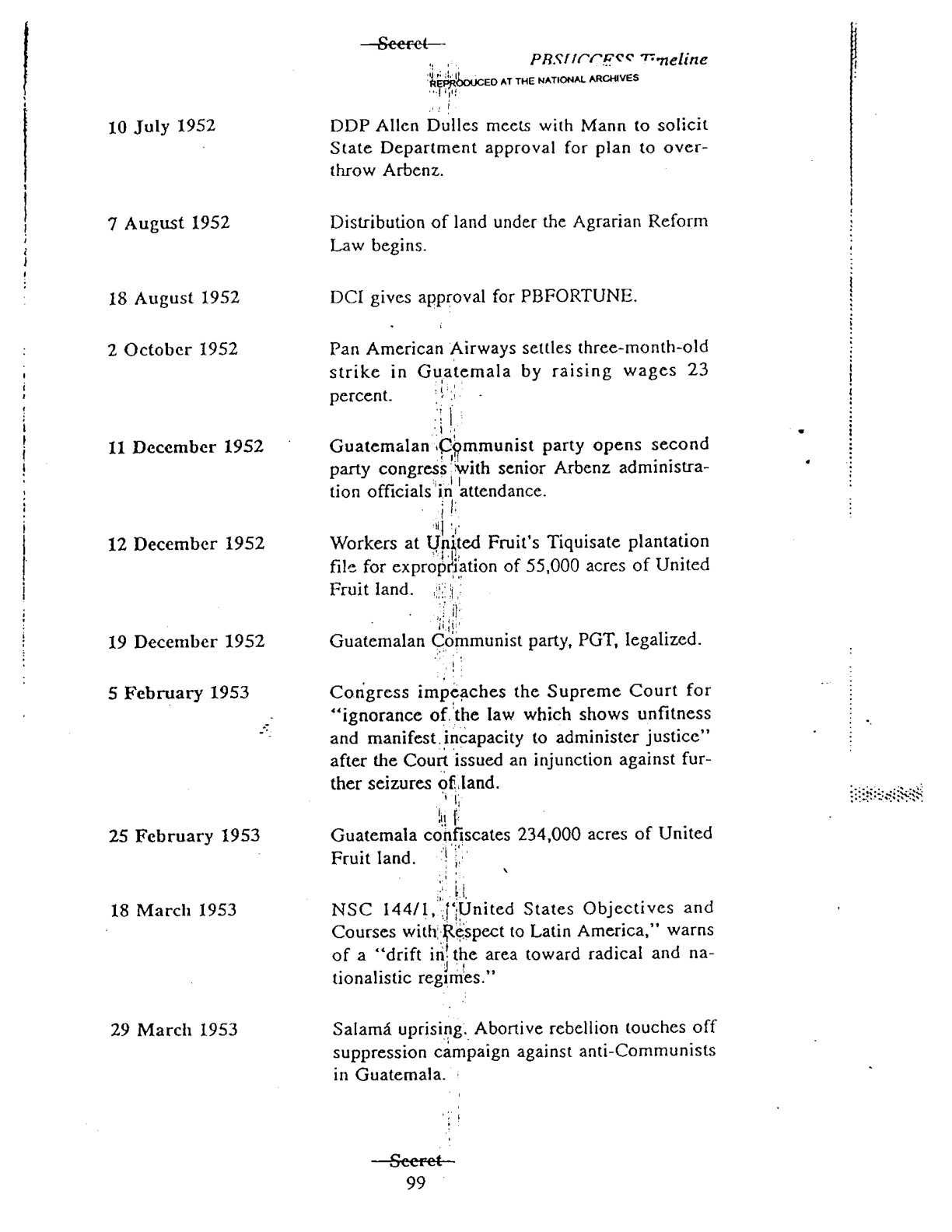
Decree 900, enacted on 17 June 1952, sought to replace dependent agricultural labor relations with a more productive agricultural economy. It did not order the confiscation of every private farm. Its exemptions protected small holdings and sufficiently cultivated medium-sized farms; the redistribution provisions reached uncultivated land on larger estates, state farms and other categories. Compensation took the form of long-term government bonds based on declared tax values. This formula became a central point of conflict when it reached United Fruit’s idle holdings. A company’s tax valuation and its demand for compensation were different measures, with very different financial consequences.
The first major expropriation of United Fruit land came in February 1953. Washington pressed the company’s compensation claim, while Guatemalan officials defended the reform as a matter of national law. The dispute concerned sovereignty, labor, valuation and future investment as well as acreage. The reform also changed domestic political power. Local agrarian committees and labor organizations helped rural people apply for land, and Communist organizers gained influence through that work. Landowners and anti-Communist officers saw a threat to property and authority; beneficiaries had reasons to defend a government that was changing their lives.
The contemporary U.S. record is revealing precisely because it was hostile. A March 1953 State Department analysis acknowledged that reform could free thousands from longstanding dependence even as it warned that it would expand Communist and state control. Its predictions of economic damage were predictions: it reported that agricultural production had not yet been affected. The reform’s reach, administration and local conflicts deserve scrutiny, but neither an American security label nor a later romantic memory substitutes for that history. The land program was a genuine domestic transformation. It also placed Guatemala in direct conflict with a company whose representatives had access to U.S. officials.