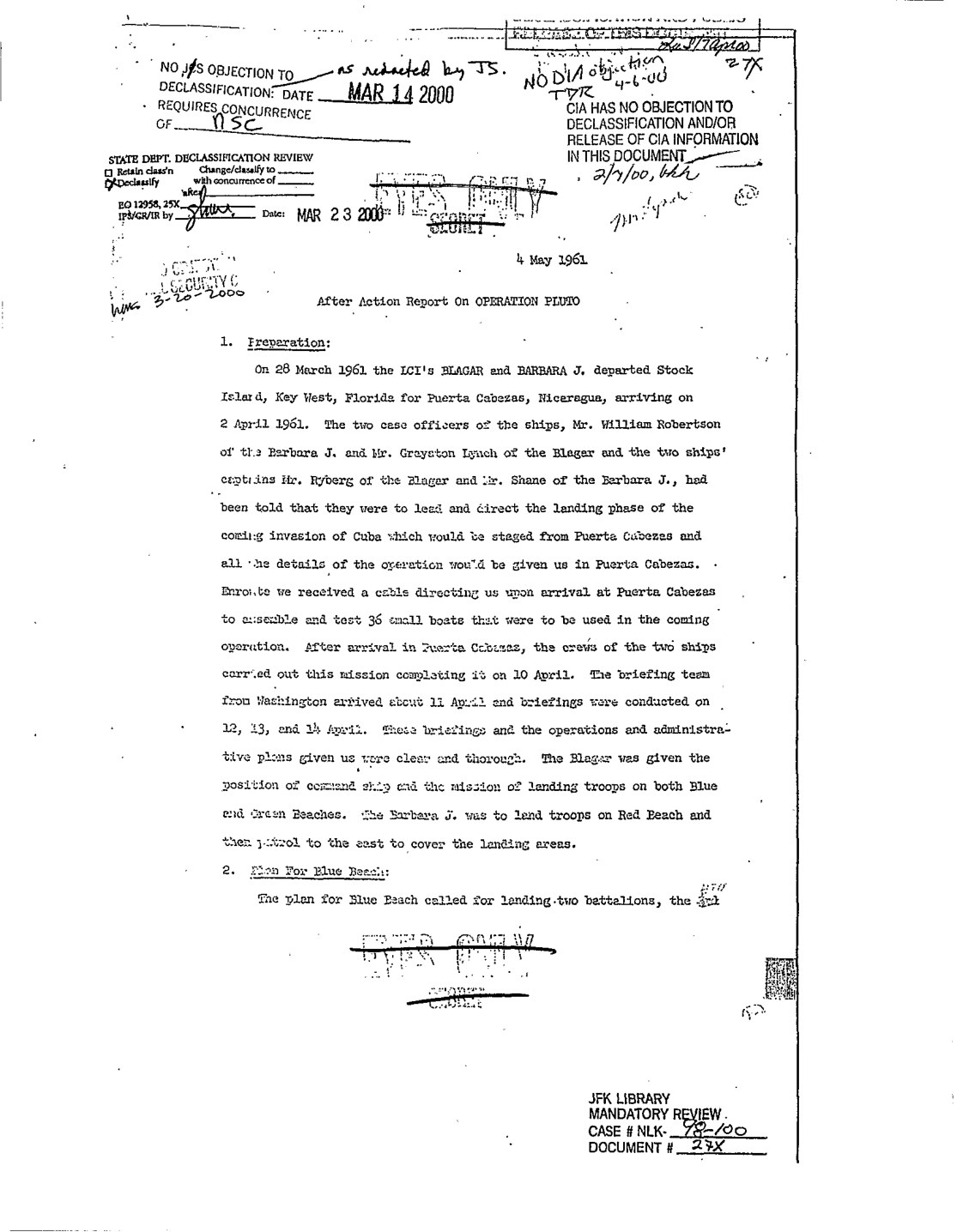
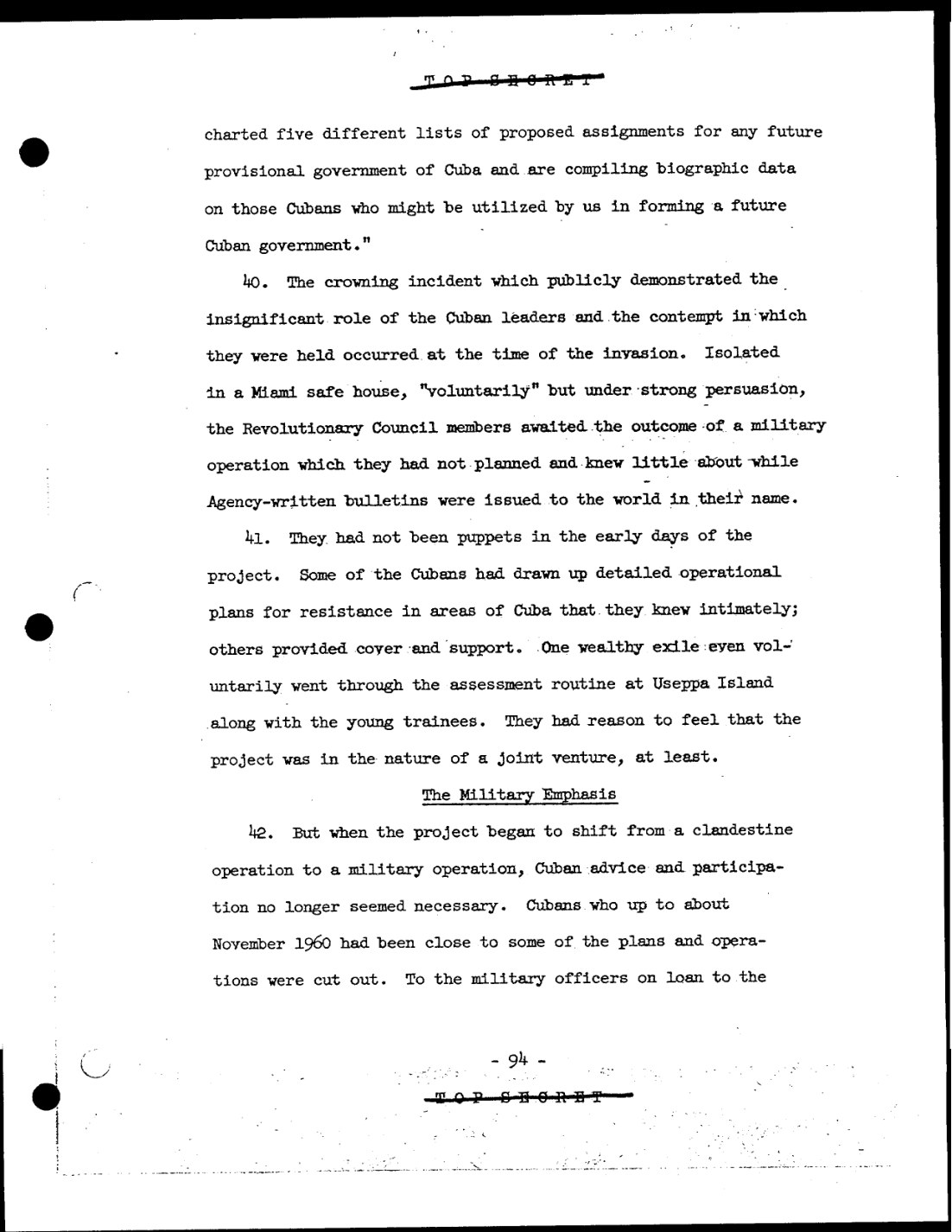
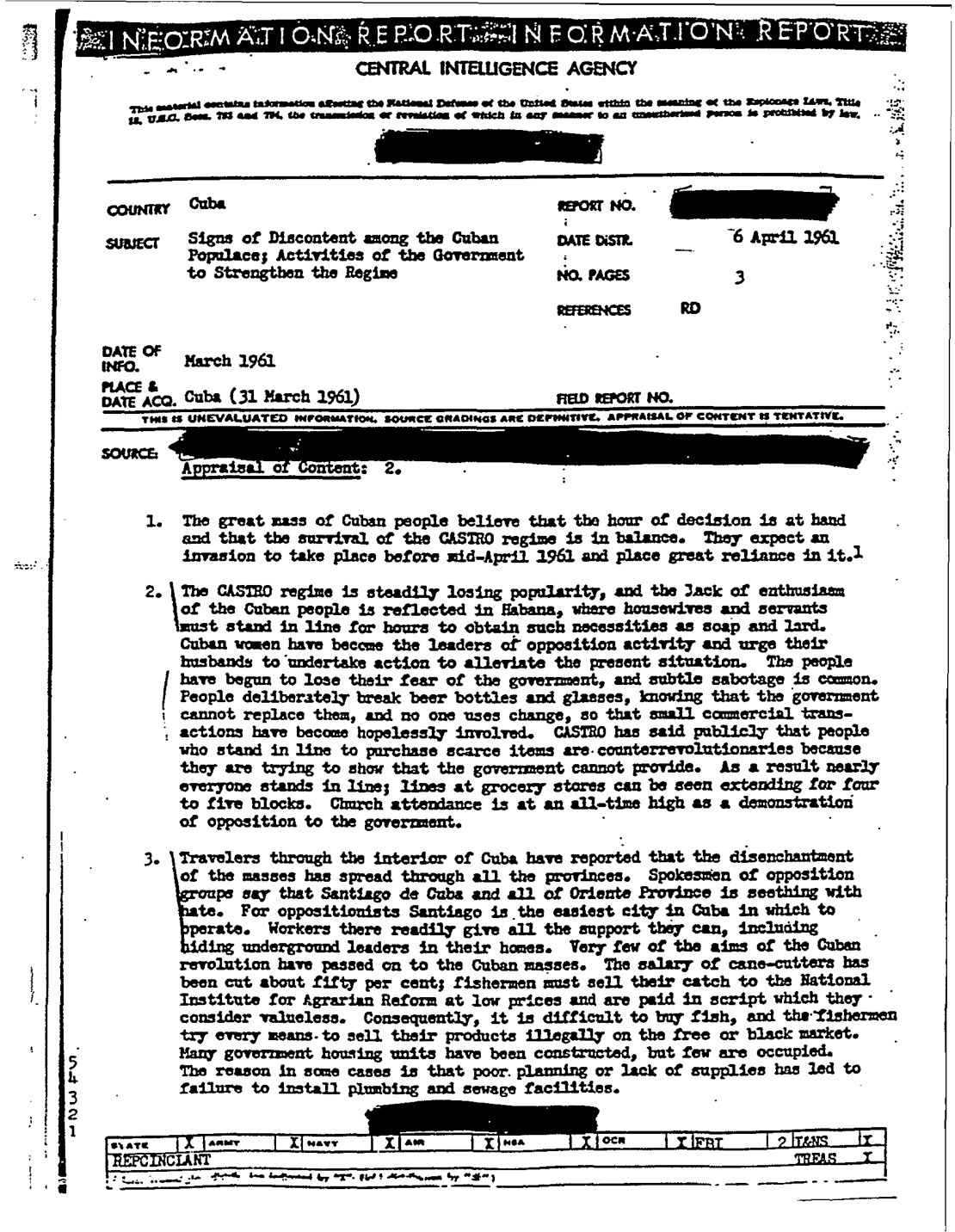
The cards compare read primary and public passages. A participant’s recollection, an investigator’s jurisdiction and a commemorative speech make different claims. The cited 1998 book appears through the forum’s explicit discussion; this edition does not claim full book reading.
Taylor inquiry /13 June 1961
The Cuba Study Group: immediate shortage with deeper causes
Amplifies
The immediate-causes memorandum starts with ammunition shortage, then traces ship losses and dispersal, air vulnerability and the failure to restore supply. It explicitly locates deeper causes in planning, organization and officials’ attitudes.
Recasts
A general failure story becomes a material sequence that connects command and policy with the force’s capacity to continue fighting. The proximate-cause formulation does not clear earlier decisions.
Not resolved in the selected passage
The inquiry does not replay a fully successful strike or prove that protected shipping would create a national political victory. Its judgments about troops and commanders remain attributed findings.
Full selected FRUS 232 text and relevant narrative/source context consulted; this card does not claim every underlying interview or classified annex was independently audited.
Path hinges: CP4 · CP5 · CP6
Sources: S13 · S14
Cabell memorandum /9 May 1961
Cabell and Bissell: the cancelled strike as a material warning
Amplifies
Cabell describes the late cancellation, the consultation with Rusk and the expected consequences for shipping, brigade aircraft and the beachhead. Bissell states that the account conforms to his recollection.
Recasts
The restriction becomes a concrete upstream cause rather than a vague accusation of withheld support. The memo’s later request for shipping cover is different from a pre-landing direct appeal to reverse the strike decision.
Not resolved in the selected passage
The two officials’ agreement is not two independent contemporary command logs. FRUS preserves Bundy’s later claim that Kennedy was available to hear an appeal and his different counterfactual judgment. An unlimited rescue promise is not established by this memo.
Full selected FRUS 108 memo and editorial footnotes consulted, including Bundy’s September recollection; no claim of a complete oral-history or memoir audit.
Path hinges: CP4 · CP5 · CP6
Sources: S06 · S07
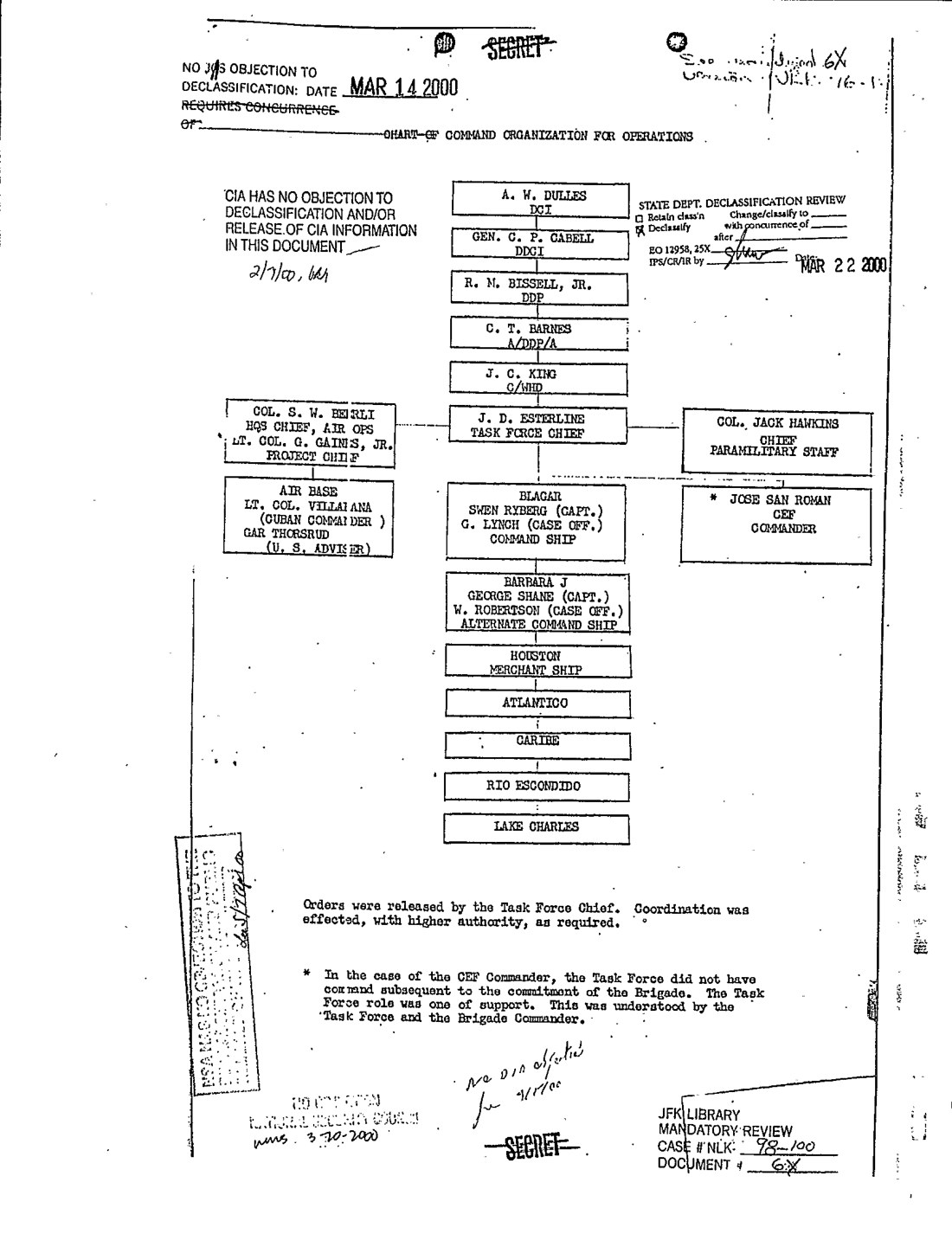
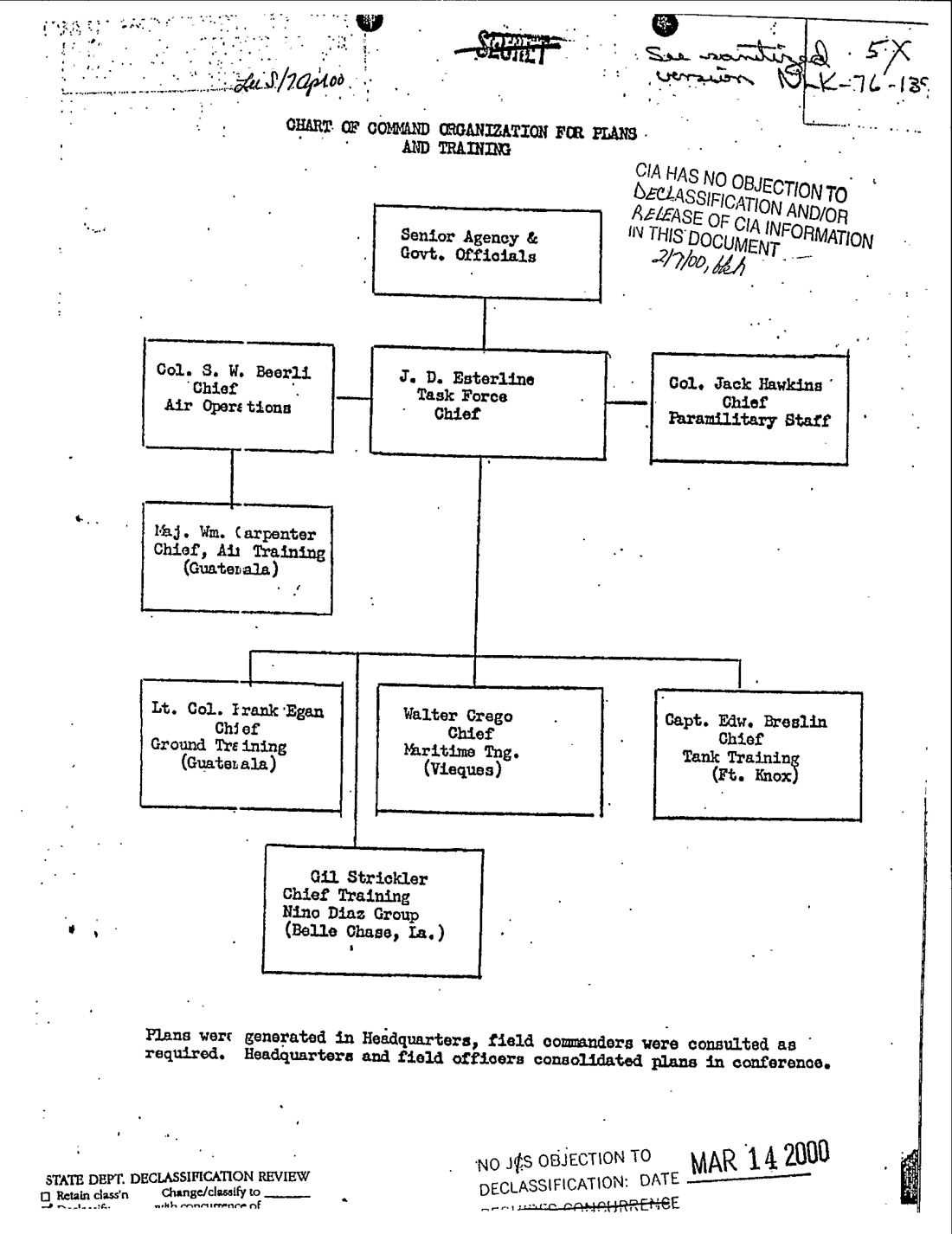
CIA Inspector General /October 1961
Kirkpatrick’s survey: the organization that accepted the project
Amplifies
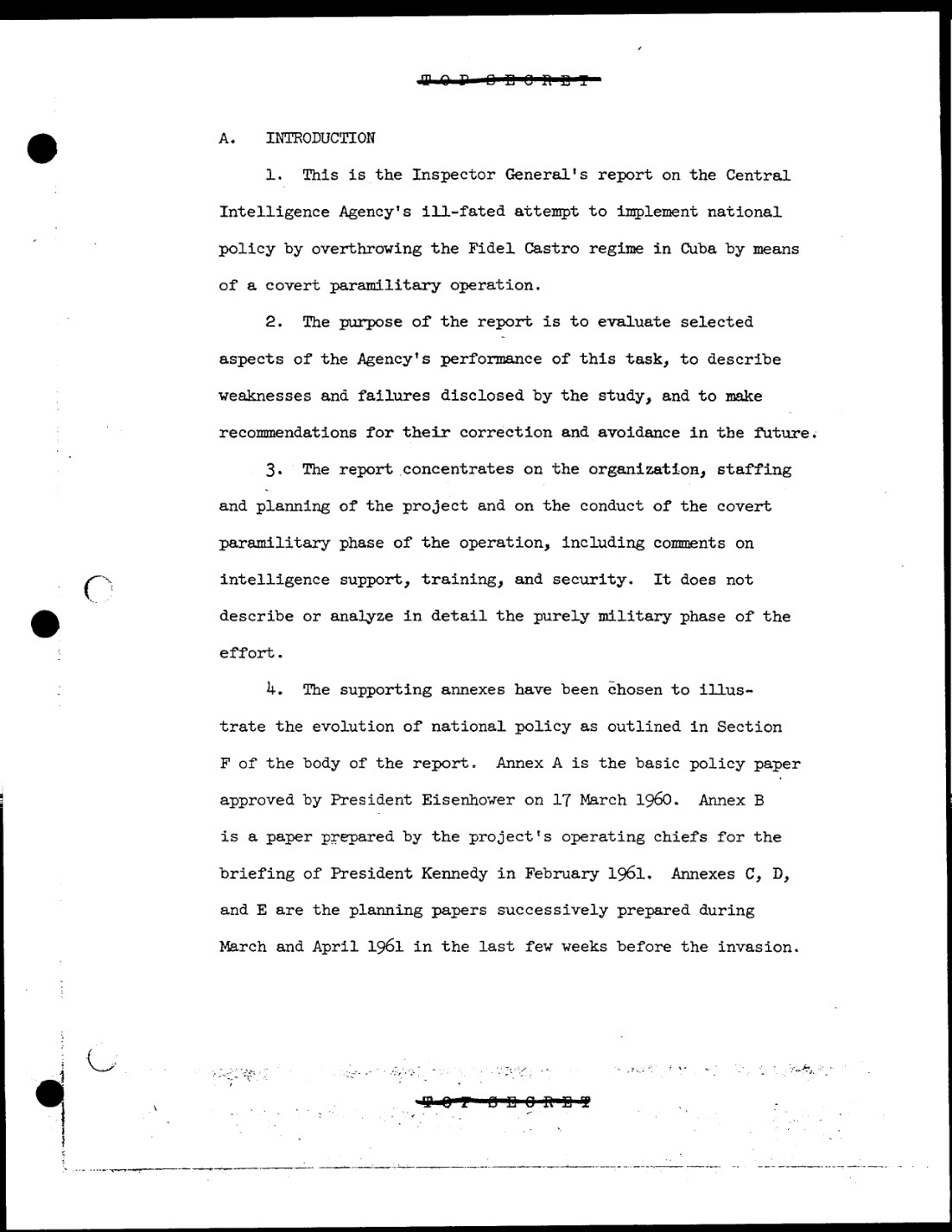
The introduction defines an inquiry into CIA organization, staffing, planning and covert-paramilitary performance. Its institutional critique connects the project’s growth, weak intelligence and fragile assumptions with the agency’s ability to conduct it.
Recasts
The last cancelled strike becomes one hinge inside a longer mismatch between political concealment, military scale and the desired political outcome. This does not make air losses immaterial.
Not resolved in the selected passage
The survey expressly excludes a detailed military-phase account and judgments on officials outside CIA. It cannot by jurisdiction alone allocate all presidential responsibility or prove every alternative hopeless. Dulles’s reply makes the strongest scope objection concrete; Kirkpatrick’s own letter acknowledges inadequate consultation with two senior operators while rejecting malicious-bias allegations.
Selected introduction, conclusions and relevant institutional sections of the retained official FRUS survey consulted; its military and jurisdictional limits remain explicit. No complete audit of all rebuttals or underlying interviews is claimed.
Path hinges: CP1 · CP2 · CP3 · CP6
Sources: S15 · S16 · S29 · S30
JFK Library /14 April 2011 transcript
The 2011 forum: disagreement within an actual public exchange
Amplifies
Duran recalls expected air and underground support; Bosch articulates the betrayal interpretation in her question; Kornbluh answers with earlier planning, managers’ warnings and his recollection of the 2001 meeting. Different speakers and kinds of knowledge remain distinct.
Recasts
The inquiry becomes a public dispute about promises, responsibility and the point at which the project became an invasion. The transcript explicitly links the discussion to Kornbluh’s 1998 book and to participant encounters.
Not resolved in the selected passage
Bosch’s informal Facebook observation is not a poll. Duran’s arrest estimates and recollected expectations are not independently verified nationwide counts or presidential orders. Kornbluh’s retelling of managers’ conversations remains an attributed account.
Selected transcript pp.12–17 and22–29 consulted; no wholebook or fullforum-video audit claimed. The transcript dates the event 14 April despite a differing date string in the PDF filename.
Path hinges: CP1 · CP3 · CP4 · CP6
Sources: S20 · S21
Reply to McCone /15 February 1962
Allen Dulles: a CIA-only inquiry cannot explain the whole failure
Amplifies
Dulles argues that Taylor examined the participating institutions more adequately, that the brigade reached the area with surprise and expected conditions, and that a broad exile coalition had been assembled. He accepts responsibility for CIA’s participation while defending important parts of its work.
Recasts
The failure becomes an interagency and policy problem rather than a finding that the IG’s principal organizational criticisms exhaust responsibility. This is a strong interested reply, not a denial that the operation failed.
Not resolved in the selected passage
Dulles explicitly calls success with a fully supplied brigade debatable. His objection to the IG’s jurisdiction does not prove the project viable, erase planning failures or establish that every operational assurance was candid. Kirkpatrick rejects bias charges and proposes a wider independent review.
Full selected 15 February memorandum and Kirkpatrick’s 22 January reply consulted; the complete 18 January DD/P response and every underlying interview were not independently audited.
Path hinges: CP1 · CP2 · CP4 · CP5 · CP6
Sources: S29 · S30